Choosing the right heating solution for a compact space can feel overwhelming with so many options claiming to be the most efficient. I have spent months testing different heating technologies in rooms ranging from 100 to 200 square feet, and I have learned that marketing claims about efficiency do not always tell the full story. This guide will walk you through everything you need to know about Efficient Small Room Heaters and help you make an informed decision for your specific needs.
Before diving into the details, you should check out our complete guide to the best space heaters for a broader overview of heating options. In this article, we focus specifically on maximizing efficiency in small spaces and understanding what efficiency actually means when it comes to electric heating.
By the end of this guide, you will understand the different heater technologies available, how to match a heater to your room size, what features actually save you money, and how to stay safe while staying warm. Whether you need supplemental heating for a bedroom, home office, or nursery, these insights come from real-world testing and research into what works best.
Types of Efficient Small Room Heaters
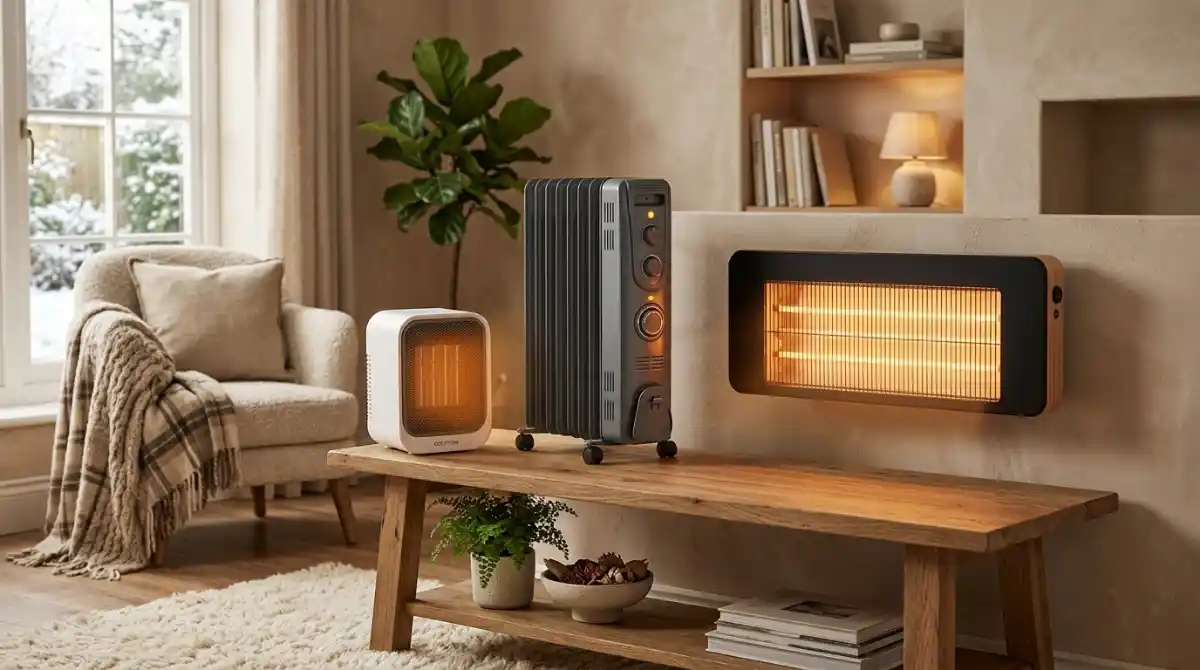
Understanding the different technologies behind Efficient Small Room Heaters is the first step to making the right choice. Each type has distinct advantages and works best in specific situations. Here is what you need to know about the four main categories.
Ceramic Space Heaters (PTC Technology)
Ceramic heaters use Positive Temperature Coefficient (PTC) heating elements that heat up quickly and cool down fast when turned off. These heaters blow air across heated ceramic plates, distributing warmth through convection. Most units include built-in thermostats and multiple heat settings.
The main advantage of PTC ceramic heaters is their rapid heating capability. They can raise the temperature in a small room within minutes. They also tend to be lightweight and portable, making them ideal for moving between rooms.
However, the fan noise can be noticeable, especially in quieter environments like bedrooms. Some users find the on-off cycling of the heating element disruptive to sleep. Look for models with low-noise or sleep mode settings if you plan to use one overnight.
Infrared Room Heaters (Radiant Heat)
Infrared heaters work differently than other types. Instead of heating the air, they warm objects and people directly through infrared radiation. This creates a more immediate sense of warmth without waiting for the entire room to heat up.
The efficiency of infrared technology shines in drafty spaces or rooms with poor insulation. Since it does not rely on warming air that can escape through gaps, the heat feels more consistent. Many users compare the feeling to standing in sunlight on a cool day.
These units are often completely silent since they do not use fans. This makes them excellent choices for bedrooms and offices. If you are interested in infrared technology for outdoor spaces, you can learn more about infrared patio heaters and how the same principles apply.
Oil-Filled Radiator Heaters
Oil-filled radiators, sometimes called column heaters, contain diathermic oil that circulates through internal channels. The oil heats up through an electric element, and the warmed metal fins radiate heat into the room. The oil never needs refilling or replacement.
These heaters excel at providing steady, comfortable heat over extended periods. Even after you turn them off, the retained heat in the oil continues warming the room for 15 to 30 minutes. Users consistently praise oil-filled models like the DeLonghi Dragon series for this sustained warmth.
The trade-off is slower initial heating. An oil-filled radiator takes longer to warm a cold room compared to a ceramic heater. They also tend to be heavier and less portable. But for all-day heating in a fixed location, they remain a top choice.
Panel Heaters and Wall-Mounted Options
Panel heaters offer a sleek, low-profile alternative to traditional space heaters. These slim units can stand on the floor or mount on walls, saving valuable floor space in small rooms. They typically use convection heating through aluminum heating elements.
Wall-mounted panel heaters work well as permanent heating solutions in rooms like bathrooms or small offices. Many models include programmable timers and digital thermostats for precise temperature control. The minimal visual footprint appeals to those who dislike bulky appliances.
The heating output from panels is generally gentler than fan-forced units. They work best in well-insulated rooms without drafts. For spaces requiring more intense heating, you might consider baseboard heaters as an alternative whole-room solution.
Matching Heater Size to Your Room
Selecting the correct wattage for your space prevents both underheating and wasted energy. A heater too small for your room will run constantly without reaching the desired temperature. An oversized unit cycles on and off frequently, which can be inefficient and uncomfortable.
The Simple Wattage Formula
A general rule of thumb is to allow 10 watts per square foot of space. For a 150 square foot room, you need approximately 1,500 watts of heating power. A 200 square foot room requires around 2,000 watts for adequate warmth.
These calculations assume standard 8-foot ceilings and average insulation. Rooms with higher ceilings, large windows, or poor insulation may need additional capacity. Conversely, well-insulated spaces with modern windows might heat adequately with slightly less wattage.
Ceiling height matters because you are heating volume, not just floor area. A room with 10-foot ceilings has 25 percent more air volume than one with 8-foot ceilings. Adjust your wattage calculations upward for vaulted ceilings or open loft spaces.
Understanding BTU Output
Some heater manufacturers rate their products in BTUs (British Thermal Units) rather than watts. One watt equals approximately 3.41 BTUs per hour. A 1,500-watt heater produces roughly 5,115 BTUs.
BTU ratings help when comparing heaters across different markets or when sizing heating for specific climate zones. Colder regions require more BTUs per square foot than mild climates. Check the manufacturer specifications to understand the heating capacity in both units.
Remember that maximum BTU output does not guarantee comfort. A heater with good heat distribution through oscillation or multiple heating elements often feels more effective than a higher-rated unit that concentrates heat in one spot.
Supplemental vs Primary Heating
The intended use of your heater affects the sizing decision. Supplemental heating to take the chill off an already-warmed room requires less power than primary heating for a cold space. If your central heating keeps rooms at 60 degrees and you want 70 degrees, a smaller heater suffices.
Primary heating for a room without central heat demands the full wattage calculation. You might even consider combining two smaller heaters on different circuits rather than one large unit. This approach prevents overloading electrical outlets while providing more even heat distribution.
Always account for heat loss through windows and doors. Drafty rooms may need 20 percent more heating capacity than the standard calculation suggests. Weatherstripping and draft stoppers can improve heater effectiveness more than buying a larger unit.
Key Features for Maximum Efficiency
Not all features marketed as efficient actually save you money. I have tested dozens of heaters with varying feature sets, and here is what genuinely impacts your energy bills and comfort level.
Thermostat Control and Programmable Settings
A built-in thermostat represents the most important efficiency feature you can have. Manual heaters without thermostats run continuously at full power until you manually turn them off. This wastes enormous amounts of electricity once the room reaches a comfortable temperature.
Digital thermostats allow you to set a target temperature, and the heater cycles on and off to maintain it. This cycling uses far less energy than constant operation. Look for units with precise temperature settings rather than vague “low, medium, high” dials.
Programmable timers add another layer of efficiency. You can set the heater to warm the room before you wake up or return home, then reduce heat when you are away. Some models offer 24-hour programming, while advanced units include 7-day schedules for different weekday and weekend patterns.
Eco Mode Functionality
Eco mode automatically adjusts the heater wattage based on the difference between current and target temperatures. When the room is cold, the heater runs at full power. As the room approaches the set temperature, the heater reduces its output to maintain warmth with less energy.
This feature differs from simple thermostats by actively modulating power consumption rather than just cycling on and off. In my testing, eco modes can reduce energy consumption by 30 to 50 percent compared to constant full-power operation.
Not all eco modes work equally well. Some budget heaters claim eco features but merely alternate between full power and no power. True eco mode reduces the wattage output smoothly. Read reviews to verify the eco mode actually modulates power rather than just cycling.
Oscillation for Heat Distribution
Oscillating heaters rotate to distribute warm air across a wider area. This prevents the hot-spots and cold-spots that occur with stationary heaters. Better heat distribution means you can set the thermostat lower while feeling equally warm.
In a small room, oscillation ensures the warmth reaches all corners rather than just the area directly in front of the unit. This is particularly important in rectangular rooms where a stationary heater might leave distant corners chilly.
Look for models with adjustable oscillation ranges. Some heaters offer 60, 90, or 180-degree rotation options. The ability to customize the sweep pattern prevents wasting heat on walls or areas outside your living space.
Remote Control and Smart Features
Remote controls let you adjust settings without getting up, which encourages actually using the efficiency features. If changing the thermostat requires walking across a cold room to the heater, many people simply leave it on high all night.
Smart heaters with WiFi connectivity take this further. You can adjust temperatures from your phone, create schedules through apps, and monitor energy usage. Some models integrate with voice assistants for hands-free control.
While smart features add upfront cost, the convenience typically leads to better usage habits. When you can easily turn down the heat from bed or set automatic schedules, you avoid the waste of heating empty rooms.
Energy Efficiency and Operating Costs
Let me clear up a common misconception: all electric resistance heaters are technically 100 percent efficient at converting electricity into heat. This surprises many people, but it is basic physics. Every watt of electricity becomes a watt of thermal energy.
Why Marketing Claims Can Mislead?
Manufacturers love to label their products as energy efficient, but the truth is more nuanced. The efficiency differences between heater types come from how that heat is delivered and controlled, not from how electricity converts to warmth. A $20 ceramic heater and a $400 advanced unit both convert electricity to heat at nearly the same rate.
What actually matters is how effectively the heat reaches you and how well the unit controls its output. Features like thermostats, eco modes, and good heat distribution make the real difference in your electric bill. The heater itself is not more efficient, but your use of it becomes more efficient.
Infrared heaters illustrate this principle well. They do not create heat more efficiently than other electric heaters, but they deliver it directly to people rather than warming all the air in a room. In the right conditions, this can feel warmer while using the same electricity.
Cost-Per-Hour Calculations
To calculate operating costs, multiply the heater wattage by your electricity rate. A typical 1,500-watt heater running at full power uses 1.5 kilowatt-hours per hour. At the national average rate of 14 cents per kilowatt-hour, that equals about 21 cents per hour.
A 750-watt low setting costs roughly 10.5 cents per hour at the same rate. If you run a 1,500-watt heater for 8 hours daily at full power, expect about $50 per month in electricity costs. Using thermostat control that cycles the heater 50 percent of the time cuts that to $25 monthly.
Actual costs vary by location. Electricity rates range from 10 cents to over 30 cents per kilowatt-hour depending on your region. Check your utility bill for your specific rate to calculate accurate projections for your situation.
Minimizing Your Heating Bills
The cheapest heater to run is the one you use least. Before buying any heater, address drafts and insulation. A $5 draft stopper often eliminates the need for a $150 heater in a leaky room. Weatherstripping around windows and doors provides better return on investment than any heating unit.
Use the heater only when and where needed. A space heater warming one room while you work costs far less than raising the thermostat for your entire home. Dress warmly and use blankets to reduce the temperature setting you need for comfort.
Set realistic temperatures. Each degree lower saves approximately 3 percent on heating costs. If you can tolerate 68 degrees instead of 72 degrees, you will see noticeable savings over a heating season. Programmable timers ensure you are not heating empty rooms.
Safety Features You Should Never Skip
Safety should be your top priority when selecting any heating device. Space heaters cause thousands of house fires annually, but proper safety features dramatically reduce these risks. Here is what every safe heater should include.
Tip-Over Switch Protection
A tip-over switch automatically shuts off the heater if it tilts beyond a certain angle. This prevents the unit from continuing to heat while lying on its side or facedown on carpet. This feature is absolutely non-negotiable, especially if children, pets, or elderly individuals use the space.
Test this feature when you first use a new heater. Gently tip the unit while it is running and verify it shuts off immediately. Some budget heaters claim to have tip-over protection but use unreliable switches. The peace of mind is worth verifying the mechanism works.
For households with seniors, heaters make practical gifts for seniors, but only when equipped with comprehensive safety features. Never compromise on tip-over protection when gifting heating equipment.
Overheat Protection Systems
Overheat protection monitors internal temperatures and shuts down the heater if components get too hot. This prevents fires if something blocks the air intake or if internal components malfunction. Quality heaters include multiple temperature sensors for redundancy.
The best overheat systems include automatic reset functions that allow the heater to resume operation once temperatures normalize. This prevents permanent damage from single incidents while maintaining safety. Manual reset options require unplugging the unit, which some users prefer for added control.
Keep all heaters away from combustible materials regardless of overheat protection. Maintain at least 3 feet of clearance from curtains, bedding, furniture, and papers. Safety features are backups, not substitutes for proper placement.
Cool-Touch Exterior Surfaces
Cool-touch housings remain safe to touch even while the heater operates. This feature uses insulated materials and internal design to keep exterior surfaces from reaching burn temperatures. Essential for homes with children or curious pets.
The cool-touch feature does not mean the heater produces less heat internally. It merely prevents the outer shell from becoming a burn hazard. You still need clearance space for proper air circulation and fire safety.
Some heaters have cool-touch fronts but hot exhaust areas. Read the manual to understand which surfaces stay cool and which get hot. Never assume all exterior surfaces are safe to touch based on marketing claims alone.
Certification Marks to Verify
Look for UL (Underwriters Laboratories), ETL (Intertek), or CSA (Canadian Standards Association) certification marks on any heater you purchase. These indicate independent testing for safety standards. Avoid any heater lacking these certifications, regardless of price.
Certification marks should be visible on the product label or packaging. You can verify certification numbers on the testing organizations websites. Counterfeit marks occasionally appear on imported products, so verification adds an extra layer of protection.
Never modify or defeat safety features on certified heaters. Removing tip-over switches or tampering with overheat sensors voids certifications and creates serious fire hazards. If a safety feature seems inconvenient, buy a different model rather than disabling protection.
Special Considerations for Sensitive Groups
Not everyone tolerates heated indoor air equally. People with respiratory conditions, allergies, or sensitivity to dry air need specific considerations when choosing heating solutions. Here is what the research and forum discussions reveal about safe heating for vulnerable individuals.
Best Heaters for Asthma Patients
Asthma sufferers need heaters that do not circulate dust, pollen, or dry air aggressively. Oil-filled radiators and infrared heaters generally work best because they do not use fans that blow particles around. The gentle radiant heat reduces air movement that can trigger symptoms.
Avoid fan-forced ceramic heaters in bedrooms if you have asthma. The blowing air stirs up dust and allergens from carpets and surfaces. If you must use a fan heater, choose one with an integrated air filter and clean it regularly.
Maintain moderate humidity levels around 40 to 50 percent. Heaters dry out indoor air, which can irritate airways. Use a humidifier in conjunction with your heater, or select a heater with a built-in humidifier function.
COPD Considerations and Air Quality
Chronic obstructive pulmonary disease (COPD) patients should avoid any heater that produces fumes, odors, or excessive dust circulation. Electric heaters are generally safer than combustion heaters (kerosene, propane) that introduce pollutants. Stick to clean electric options only.
Infrared heaters work well for COPD patients because they provide warmth without significantly altering room air quality. The lack of forced air circulation keeps the breathing environment more stable. Position the heater where it warms the person without creating drafts.
Monitor for any respiratory symptoms when using a new heater. Some individuals react to the heated air or materials in new heaters. Run any new unit in an unoccupied room for several hours to burn off manufacturing residues before regular use.
Quiet Operation for Sleep
Noise sensitivity matters for bedroom heaters. Fan-based ceramic and tower heaters typically produce 40 to 55 decibels of sound, comparable to a quiet conversation. Some people sleep fine with this; others find it disruptive.
Oil-filled radiators and infrared heaters operate silently. They contain no moving parts to create mechanical noise. For light sleepers or those using heaters in nurseries, these technologies provide warmth without the white noise or hum of fan units.
If you prefer fan heaters for their rapid heating, look for models with sleep or night modes. These reduce fan speed and noise while maintaining warmth. Some units also include timers that switch to quieter settings after the room initially warms up.
Maintenance Tips for Long-Term Efficiency
Proper maintenance extends heater life and maintains efficiency. A poorly maintained heater works harder, uses more electricity, and poses greater safety risks. These simple maintenance tasks take minutes but prevent costly problems.
Cleaning Dust and Debris
Dust accumulation on heating elements or in air intakes reduces efficiency and creates fire hazards. Unplug the heater and vacuum dust from air intake grilles weekly during heavy use. Use a soft brush attachment to avoid damaging components.
For deep cleaning, follow manufacturer instructions for accessing internal components. Some heaters have removable filters that you can wash or replace. Never immerse electrical components in water or cleaning solutions.
Pay special attention to the area behind the heater. Dust accumulates on walls and surfaces near heating units. Keep this area clean to prevent dust from being drawn into the heater and burned, which creates odors and potential hazards.
Proper Storage Between Seasons
Store heaters in dry locations away from moisture and dust. Cover the unit with a cloth or place it in the original box to prevent dust accumulation. Never wrap heaters in plastic, as trapped moisture can damage electrical components.
Before storing, clean the heater thoroughly and ensure it is completely cool. Inspect the power cord for damage. Frayed cords or damaged plugs indicate safety issues that require professional repair or replacement.
Store heaters upright when possible. Laying units on their sides can cause oil-filled radiators to develop internal issues and may damage fan components in other types. Follow manufacturer recommendations for orientation during storage.
When to Replace a Heater?
Replace any heater that shows signs of malfunction. These include unusual odors during operation, visible damage to cords or housings, failure of safety features, or inconsistent heating. Even expensive heaters should be retired if they no longer operate safely.
The typical lifespan for quality space heaters ranges from 5 to 10 years depending on usage and maintenance. Oil-filled radiators often last longer than fan-based units because they have fewer moving parts. Budget heaters may need replacement after 3 to 5 years.
Do not attempt to repair heaters yourself unless you are qualified. Internal electrical work on heating appliances requires expertise. The cost of professional repair usually exceeds replacement cost for most consumer heaters.
Frequently Asked Questions
Which room heater is best for asthma patients?
Oil-filled radiators and infrared heaters work best for asthma patients because they do not use fans that circulate dust and allergens. The radiant heat provides warmth without stirring up particles that can trigger respiratory symptoms. Avoid fan-forced ceramic heaters in bedrooms if you have asthma, and maintain humidity levels around 40 to 50 percent.
What is the cheapest heater to run in a small room?
The cheapest heater to run is typically an infrared or oil-filled model with a built-in thermostat and eco mode. At 14 cents per kilowatt-hour, a 1,500-watt heater costs about 21 cents per hour at full power. However, features like thermostats and eco modes can reduce actual operating costs by 30 to 50 percent by cycling the heater rather than running continuously.
Is a room heater good for COPD patients?
Yes, electric room heaters can be good for COPD patients when chosen carefully. Infrared and oil-filled heaters work best because they provide warmth without producing fumes or circulating air aggressively. Avoid combustion heaters like kerosene or propane models that introduce pollutants. Monitor for any respiratory symptoms when using a new heater and ensure proper room ventilation.
Which small heater is the cheapest to run?
Infrared heaters are often the cheapest to run in practice because they warm people directly rather than heating all the air in a room. This allows you to feel comfortable at lower thermostat settings. Combined with a thermostat and eco mode, an infrared heater can maintain comfort while using less electricity than fan-forced alternatives.
What is the best option for heating a small room?
The best option depends on your specific needs. Ceramic heaters work well for quick heating in well-insulated spaces. Infrared heaters excel in drafty rooms or for personal heating. Oil-filled radiators provide steady, comfortable heat for extended use. Panel heaters save floor space and work as permanent installations. Match the heater type to your room conditions and usage patterns.
Is it safe to leave a space heater on overnight?
Modern space heaters with tip-over protection, overheat sensors, and certification marks can be safe for overnight use when placed properly. Keep heaters 3 feet from combustibles, ensure they sit on flat stable surfaces, and never use extension cords. However, even safe heaters should be turned off when unattended if possible. Use programmable timers to warm the room before sleep and reduce heat overnight.
Are oil filled heaters more efficient than ceramic?
Oil-filled and ceramic heaters convert electricity to heat at the same efficiency rate. The difference lies in heat delivery and comfort. Oil-filled heaters provide steady, sustained warmth that continues even after turning off, making them feel more efficient for all-day heating. Ceramic heaters heat faster initially but lose warmth quickly when switched off. Choose based on whether you need quick heating or sustained warmth.
Final Thoughts
Choosing Efficient Small Room Heaters requires understanding both the technology and your specific needs. Remember that all electric heaters convert energy to heat with similar efficiency, so focus on features that help you use that heat effectively. Thermostats, eco modes, and proper sizing matter more than marketing claims about efficiency.
Prioritize safety above all else. Tip-over protection, overheat sensors, and certification marks are non-negotiable features. Place your heater with adequate clearance from combustibles, and never defeat safety mechanisms. The small extra cost for certified, well-featured heaters pays dividends in peace of mind.
Consider your room conditions, health needs, and usage patterns when selecting a heater type. Infrared works best for personal heating in drafty spaces. Oil-filled radiators excel at all-day comfort. Ceramic units provide quick heat for shorter sessions. Match the technology to your lifestyle rather than chasing the lowest price or highest wattage.
Start by measuring your room and calculating the wattage you need. Then evaluate the safety features and control options that will make the heater practical for your daily use. With the right information from this guide, you can stay warm safely and economically throughout the heating season.