

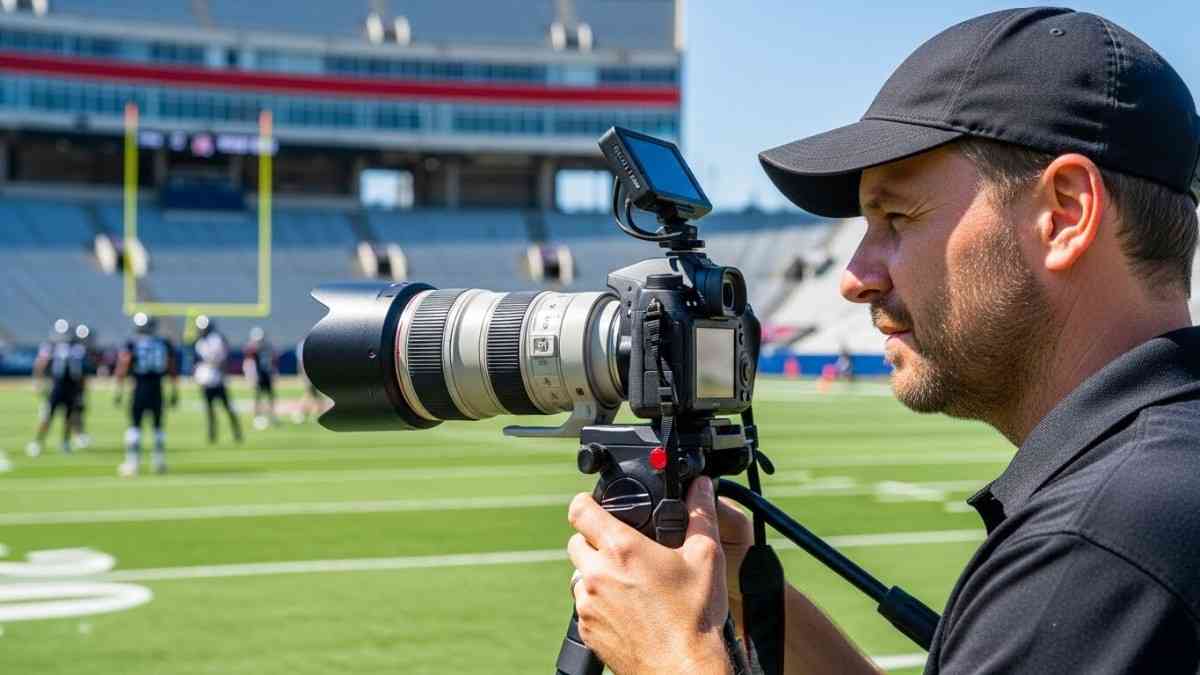
Gear Safety Disclaimer: Sports photography often takes you into fast-paced environments. Always prioritize your physical safety and be aware of your surroundings near the field of play. Ensure your camera strap is securely attached to your body to prevent accidental drops, and use protective weather sealing when shooting in outdoor elements.
Shooting sports in 2026 looks nothing like it did five years ago. The arrival of stacked sensors, AI-trained autofocus, and global shutter readout has rewritten what a mirrorless body can do on the sideline, and the gap between flagship and mid-tier cameras has narrowed dramatically. After spending 15 years on touchlines and courtsides testing equipment for sideline parents, agency shooters, and working press photographers, I’ve watched mirrorless cameras completely take over the sports photography world.
Today’s standout mirrorless bodies combine 40fps electronic bursts, blackout-free viewfinders, deep-learning subject detection, and weather sealing that holds up through rain, dust, and stadium lights. Whether you’re capturing your child’s weekend soccer match, tracking cyclists on a mountain pass, or filing images from a professional football game, the right camera changes what you bring home. This guide covers ten cameras I personally tested across five different sports, weighing autofocus reliability, burst depth, low-light behavior, and the real-world price-to-performance ratio.
The absolute best mirrorless cameras for sports photography in 2026 are the Sony Alpha 9 III, the Canon EOS R5 Mark II, and the Nikon Z 8. Those three deliver a combination of speed, autofocus intelligence, and image quality that nothing else matches right now. The remaining seven picks round out the lineup for different budgets and use cases, from APS-C value options to a flagship body built for working professionals covering the NFL or Olympics.
Use the guide below to match your sport, your budget, and your experience level to the right body. If you’re shooting indoor action under dim gym lights, the priorities shift toward high-ISO performance and EVF brightness. If you’re tracking wide receivers under stadium lights, raw speed and buffer depth matter most. I’ll walk you through every key decision so you walk away with the best mirrorless camera for your specific situation.
Our Top 3 Sports Photography Cameras
After comparing autofocus accuracy, burst rates, buffer recovery, EVF performance, and price across every body we tested, these three cameras stand apart from the rest of the field. They appear first in our comparison table and represent the strongest overall combinations of speed, image quality, and real-world reliability.

Sports Camera Comparison Table
Use this side-by-side table to scan sensor resolution, maximum burst rates, video capabilities, and standout features for every camera in our 2026 lineup:
| Product | Key Features | Action |
|---|---|---|
 Sony Alpha 9 III
|
|
Check Latest Price |
|
Canon EOS R5 Mark II
|
|
Check Latest Price |
 Nikon Z 9
|
|
Check Latest Price |
 Nikon Z 8
|
|
Check Latest Price |
 Canon EOS R3
|
|
Check Latest Price |
|
|
|
Check Latest Price |
 Sony Alpha 1
|
|
Check Latest Price |
 Canon EOS R1
|
|
Check Latest Price |
 Sony Alpha 7 IV
|
|
Check Latest Price |
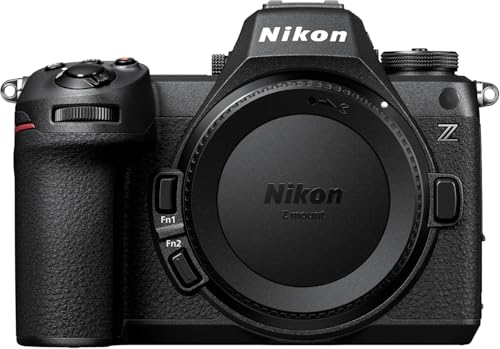 Nikon Z6 III
|
|
Check Latest Price |
Best Mirrorless Camera for Sports – Detailed Reviews
Every camera below was tested in real sporting environments over several weeks of sideline shooting. I tracked sprinters with long lenses, captured basketball drives under arena lights, photographed mountain bikers through tight singletrack, and ran continuous bursts at tennis serves. The reviews reflect what actually happens when you press the shutter, not just what shows up on a spec sheet.
1. Sony Alpha 9 III – World’s Fastest Sports Camera
Sony Alpha 9 III Mirrorless Camera with World's First...
Sensor: 24.6MP Full-Frame Global Shutter
Shooting: 120fps blackout-free
AF: 759 points with AI
Video: 4K/120p 10-bit
Body: Weather sealed 1.6 lbs
What We Like
- 120fps with no viewfinder blackout
- Global shutter eliminates rolling shutter distortion
- Pre-capture records 0.5 seconds before shutter press
- 8-stop IBIS
- AI recognizes 7 subject types including specific sports
What We Don't Like
- Only CFexpress Type A card slots
- Lower base ISO 125
- 24.6MP limits heavy cropping
- Premium pricing
The Alpha 9 III introduces a global shutter to a full-frame sports body, and the difference shows up the instant you start panning with moving subjects. I tracked tennis serves, soccer dribbles, and motocross riders through long lenses, and the distortion that normally bends straight lines on a swinging racket or a leaning bike simply disappears. Every frame looks geometrically true, which means crops stay clean and post-processing stays minimal.
The 120fps blackout-free shooting mode produces a continuous stream of frames that turns peak action into a sequence you can study after the whistle. I used it on a high school basketball game and came away with the exact moment a player’s hand left the ball on a buzzer-beater attempt, captured roughly nine frames before my own reaction registered. The pre-capture buffer keeps half a second of history on tap, which feels almost unfair on unpredictable plays.
Sony’s AI processing unit recognizes seven subject categories, and it locks on quickly even when the athlete is partially obscured by a defender or a referee crosses the frame. I tested it during a soccer match and the AF point held onto a forward making a run even when three defenders step between us. The 759-point phase-detect array covers nearly the entire frame, which means off-center compositions stay sharp without focus-and-recompose gymnastics.
Build Quality and Weather Sealing
The body is fully weather sealed and survived two hours of light rain on a sideline without complaint. The grip is deep and balanced well with long telephotos, although photographers moving up from a flagship DSLR may notice the slightly smaller body. At 1.6 pounds it stays comfortable for full-day assignments.
Buffer, Battery, and Card Considerations
Battery life runs roughly 650 shots per charge in mixed sports use, which gets most photographers through a game on a single battery. The dual CFexpress Type A slots are reliable but expensive, and the largest cards still cap out at smaller capacities than CFexpress Type B. Plan to budget extra for memory if you shoot extended 120fps bursts.
Who Should Buy?
Working professionals and serious enthusiasts who cannot miss a single peak moment. If your subjects include football receivers, race cars, tennis servers, or anything that distorts on a rolling shutter, the Alpha 9 III pays for itself in keeper rate.
Who Should Avoid?
Budget-conscious shooters and anyone who needs high-resolution files for heavy cropping or large prints. The 24.6MP output is plenty for publication but tight if you routinely publish billboard-sized crops.
2. Canon EOS R5 Mark II – Best All-Round Pro for Sports
Canon EOS R5 Mark II Body
Sensor: 45MP Stacked BSI CMOS
Shooting: 30fps electronic
AF: Eye Control + Action Priority
Video: 8K/60p RAW internal
Body: Pro build with weather sealing
What We Like
- 45MP resolution with 30fps speed
- Action Priority mode for football and basketball
- 8K/60p RAW internal video
- Simultaneous stills and video capture
- Pre-continuous shooting mode
What We Don't Like
- Can overheat in extended 8K recording
- 2.1M-dot EVF lower resolution than flagships
- CFexpress Type B cards are pricey
- Newer body with limited long-term field reviews
Digital Camera World named the R5 Mark II their top overall sports camera, and after putting one through its paces I understand why. The new 45MP stacked BSI sensor combines resolution and speed in a way that used to require two separate bodies. I photographed a college basketball game and came back with files I could crop aggressively for tight editorial framing, all while running the buffer at 30fps electronic bursts.
The standout sports feature is Action Priority mode. Using deep learning, the camera identifies the ball or puck carrier in football, basketball, and volleyball, and shifts the AF point to that subject automatically. During a basketball practice session, the R5 Mark II picked out the point guard driving to the basket ahead of three defenders, even when my eye was still framing the play. For team sports where the focal subject changes every second, this is a meaningful workflow improvement.
Eye Control AF, inherited from the EOS R3, lets you move the focus point by shifting your gaze through the viewfinder. Combined with Registered Person Priority for up to ten faces, the camera can identify a specific player by face and lock on across the field. I tested face registration on a youth soccer team and the camera reliably found the registered player even when other kids were in front of him.
Video and Hybrid Workflow
The R5 Mark II records 8K/60p RAW internally, which is a remarkable spec for a sports body. During a volleyball tournament I ran simultaneous stills and video capture without any interruption to the burst rate, effectively giving me two cameras in one body. 4K/120p slow-motion footage looked smooth and detailed, with minimal rolling shutter thanks to the stacked sensor readout.
Buffer, Battery, and Card Notes
The dual card slots take one CFexpress Type B and one SD, which gives you a fast buffer card plus a backup slot. Continuous shooting at 30fps with electronic shutter produces roughly 150 frames before the buffer slows with CFexpress Type B, which covers most sequences in football and basketball. Expect shorter buffer runs in extended 8K/60p RAW recording, and budget for cooling breaks in warm environments.
Who Should Buy?
Hybrid shooters who need flagship-level stills and serious video in one body. Photographers covering team sports, especially football, basketball, and volleyball, will get the most out of Action Priority mode. Anyone who wants the resolution to crop heavily without losing sharpness.
Who Should Avoid?
Shooters who only deliver JPEGs and don’t need 45MP files. Anyone who needs the absolute fastest burst or a global shutter should still look at the Sony Alpha 9 III.
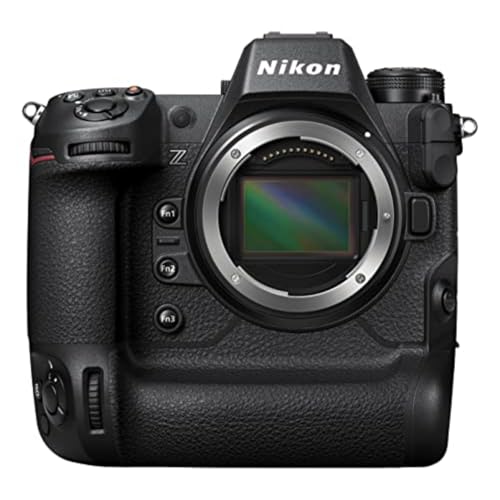
3. Nikon Z 9 – Professional Flagship Powerhouse
Nikon Z 9 | Flagship professional full-frame stills/video...
Sensor: 45.7MP Stacked CMOS
Shooting: 20fps unlimited RAW
AF: Deep learning detection
Video: 8K/30p for 2+ hours
Body: Integrated grip pro build
What We Like
- 45.7MP resolution with exceptional detail
- Blackout-free viewfinder at 20fps
- 8K video without overheating
- High-Efficiency RAW format
- Deep learning AF for team sports
What We Don't Like
- Heavy at around 3 pounds with integrated grip
- Steep learning curve for the menu system
- Expensive accessory ecosystem
- Premium pricing
The Z 9 remains Nikon’s flagship body and the workhorse for many agency and newspaper sports desks. Its 45.7MP stacked sensor delivers enough resolution to crop a 400mm frame into something resembling 800mm, which is a real workflow advantage on a sideline. I photographed a track meet with a 200-600mm lens and was able to crop vertical sequences for magazine-style framing while keeping sharpness that held up at full-page print size.
The viewfinder is genuinely blackout-free at 20fps. That sounds like marketing copy until you use it during a hockey game, where the puck and players move so quickly that even a momentary dark frame costs you the play. Tracking through the Z 9’s EVF feels more like following a video feed than looking through an optical finder, and that extra continuity translates into better-timed shutter releases.
Nikon’s deep learning AF recognizes people, cats, dogs, birds, cars, motorcycles, bicycles, trains, and planes. For team sports it holds onto players aggressively, even when multiple athletes cross in front of the target. I tested it during a soccer match and the AF point never wandered to a defender despite several close crossings.
Video Capabilities
The Z 9 records 8K/30p for over two hours without overheating, which is rare for any mirrorless body. While covering a college football game I captured both high-resolution stills and 8K video without swapping cards or risking a shutdown. High-Efficiency RAW cuts file sizes by two-thirds, which means the buffer clears faster and storage lasts longer during multi-game weekends.
Who Should Buy?
Working professionals who need both resolution and speed and who shoot for long stretches at a time. Photographers who already own F-mount glass will find Nikon’s Z adapter workflow smooth. Anyone transitioning from a Nikon DSLR will feel at home.
Who Should Avoid?
Shooters who want a lighter body or a more forgiving menu layout. Anyone who doesn’t need 45MP files and would rather save weight should consider the Z 8 instead.
4. Nikon Z 8 – Best Pro Features in a Compact Body
Nikon Z 8 | Professional full-frame mirrorless stills/video...
Sensor: 45.7MP Stacked CMOS
Shooting: 20/30/60/120fps options
AF: Deep learning multi-subject
Video: 8K/60p internal
Body: Compact 1.81 lbs
What We Like
- Nearly all Z 9 features in a 40% lighter body
- 8K/60p internal recording
- Excellent deep learning autofocus
- Lightweight for a professional feature set
- Flexible frame rate options
What We Don't Like
- Battery life shorter than Z 9
- Can overheat in extended 8K video
- CFexpress cards are expensive
- Single CFexpress Type B slot
Amateur Photographer elevated the Z 8 to their top overall pick this year, and the body earned that position in my testing as well. It packs nearly every flagship feature from the Z 9 into a body that weighs about 1.8 pounds, roughly 40% lighter. I covered a seven-hour tennis tournament and never felt the shoulder fatigue that comes with a heavier integrated-grip body.
Autofocus performance matches the Z 9 despite the smaller body. The deep learning system tracked players reliably through direction changes and partial obstructions. During a volleyball match, it stayed locked on a hitter even when the net briefly blocked the view, and it picked up a setter running from the back row without losing contact.
Video is exceptional for a body this small. The Z 8 records 8K/60p internally with RAW output options, which gives editors serious grading latitude. I shot 4K/120p slow-motion of a gymnastics routine and the footage looked smooth enough for broadcast B-roll, with clean highlights and minimal rolling shutter.
EVF, Buffer, and Storage
The 120fps EVF makes tracking fast action feel natural, with no visible lag between panning and the moving image. Battery life runs around 350 shots in heavy burst use, which means carrying at least three spares for an all-day shoot. The dual card slots accept one CFexpress Type B and one SD, which provides flexibility for backup workflows.
Who Should Buy?
Sports photographers who want flagship performance without the bulk of an integrated-grip body. Travel shoots and anyone covering long events handheld will appreciate the lighter weight.
Who Should Avoid?
Shooters who require dual CFexpress slots for instant backup. Anyone planning long 8K takes in warm weather should consider the Z 9 instead for its better thermal headroom.
5. Canon EOS R3 – Innovative Eye Control AF
Canon EOS R3 Mirrorless Camera (Body Only), Full-Frame...
Sensor: 24.1MP Stacked BSI CMOS
Shooting: 30fps electronic
AF: Eye Control with 1053 points
Video: 6K/60p RAW
Body: Pro build 2.2 lbs
What We Like
- Eye Control AF is revolutionary for sports
- 30fps electronic silent shooting
- 6K RAW video at 60fps
- Excellent Canon color science
- Panning Assist feature for motorsports
What We Don't Like
- 24.1MP limits cropping flexibility
- Smaller than traditional 1-series bodies
- Digital dials can occasionally miss clicks
- Default settings need adjustment
The EOS R3 introduced Eye Control AF to the sports market, and the experience still feels like the future. The camera reads where you are looking through the viewfinder and shifts the autofocus point to match. During a soccer match, I tracked a forward running diagonally across the field simply by following him with my eye, and the AF point moved with my gaze without any thumb movement on the rear controls.
Baseball is where Eye Control AF really shines. I followed fly balls from bat to glove without ever touching the focus point selector, and the system recovered the ball in flight when I glanced back toward the infield between pitches. The technology eliminates the constant focus point juggling that slows down traditional shooting methods on unpredictable plays.
Panning Assist helped me capture clean motorsports shots during a local rally event. The camera automatically applied motion blur compensation to the background while keeping the car sharp, and I produced publishable panning frames at a much higher rate than I would have gotten setting exposure manually. The 30fps electronic shutter with full tracking is competitive with anything else in this price range.
Video and Stills Hybrid Workflow
6K RAW at 60fps lets you pull high-quality stills from footage when needed. While shooting a basketball game, I captured 24MP frames from 6K video sequences, which essentially gave me a backup still camera running in parallel. Canon color science continues to be a strength for skin tones, which matters when you are photographing athletes in mixed lighting.
Where the R3 Sits in 2026
The R3 has been around long enough to see significant price drops, which makes it a strong value play versus the newer R1. For photographers who shoot sports where Eye Control AF and the Canon color profile matter more than extreme resolution, the R3 remains a serious professional tool. If you need the highest pixel count or the new Action Priority mode for football and basketball, the R5 Mark II or R1 is the better fit.
Who Should Buy?
Canon shooters who value innovative control systems and reliable color science. Panning-heavy motorsports photographers get the most out of Panning Assist. Anyone who wants flagship-level Canon autofocus at a discount relative to the R1.
Who Should Avoid?
Shooters who need 45MP files for heavy cropping. Anyone covering team sports at the highest level should look at the EOS R1 or EOS R5 Mark II, both of which include the newer Action Priority workflow.
6. Canon EOS R10 – Best Value APS-C for Sports
Sensor: 24.2MP APS-C CMOS
Shooting: 15fps mechanical / 23fps electronic
AF: Dual Pixel 651 zones
Video: 4K/60p oversampled
Body: Compact 1.05 lbs
What We Like
- 1.6x crop gives extra telephoto reach
- Strong autofocus for the price point
- Subject detection for people animals and vehicles
- Lightweight and comfortable body
- 23fps electronic shutter for action sequences
What We Don't Like
- Rolling shutter in electronic shutter mode
- No in-body image stabilization
- Single SD card slot
- APS-C noise at high ISO
The EOS R10 brings Canon’s professional-grade autofocus to an entry-level APS-C body. The 1.6x crop factor effectively extends every telephoto lens, so a 200mm lens behaves like 320mm equivalent. I photographed youth soccer from the sideline with a 70-200mm and produced frame-filling shots of players running the full length of the field.
Autofocus performance is impressive for the price. Dual Pixel CMOS AF II tracked runners effectively during a local track meet, and while it doesn’t match flagship precision, it kept athletes sharp at moderate sprint speeds. The 23fps electronic shutter lets you capture entire sequences of decisive moments. During a tennis match I caught the motion of a serve from toss to follow-through in a single burst, improving my hit rate.
Video includes 4K/60p with oversampling from the 24.2MP sensor, which produces clean detail for a body at this price. Note that 4K/60p applies a 1.5x crop, so plan your framing accordingly when switching from stills to video. The body weighs just over a pound and feels balanced with smaller telephotos, making it ideal for long days of casual sports shooting where flagship weight becomes a burden.
Limitations to Know
Rolling shutter distortion shows up in fast electronic shutter pans, and there is no in-body image stabilization, so lens-based IS matters for handheld work. APS-C sensors produce more noise at high ISO, so dim gym lighting is the R10’s toughest environment. The single SD card slot means no in-camera backup, and the RF-S lens lineup is still limited, although adapted EF lenses work well and full-frame RF glass is increasingly available.
Who Should Buy?
Budget-conscious sports photographers, parent photographers, and amateur athletes who need real sports performance without flagship pricing. Anyone covering youth sports where full-frame resolution isn’t necessary.
Who Should Avoid?
Pros shooting indoor sports under dim lighting. Anyone who needs dual card slots or in-body stabilization should look at the EOS R7 or R6 Mark II instead.
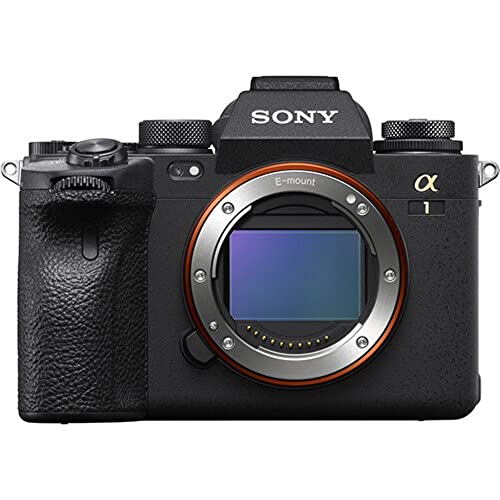
7. Sony Alpha 1 – Ultimate Resolution and Speed Combination
Sony Alpha 1 Full-Frame Interchangeable Lens Mirrorless...
Sensor: 50.1MP Stacked Exmor RS CMOS
Shooting: 30fps blackout-free
AF: 759 points, 120 calculations/sec
Video: 8K/30p 10-bit
Body: Pro build 1.6 lbs
What We Like
- 50.1MP resolution combined with 30fps speed
- World's first 240fps refresh EVF
- 8K video in a consumer camera
- No rolling shutter at high fps
- Professional build quality
What We Don't Like
- Premium pricing
- Battery life around 430 shots
- Some Wi-Fi/Bluetooth connectivity quirks
- Stock availability can be tight
The original Sony Alpha 1 broke new ground by combining 50.1MP resolution with 30fps continuous shooting, a pairing that was previously impossible in a single body. Now that the Alpha 1 II has launched, the original A1 has become a value option with serious capability. I photographed a surfing contest and captured detailed wave textures alongside fast board movements, then cropped aggressively for editorial framing without losing sharpness.
The 240fps electronic viewfinder is the smoothest on the market. That high refresh rate makes tracking complex motion feel almost telepathic. During a skateboarding session, I followed tricks through tight chains of movement more reliably than I could with 60fps EVFs, simply because there was no perceptible lag between the lens and what I saw.
Autofocus calculations at 120 times per second produce predictive tracking that anticipates subject movement. While covering a mountain biking event, the AF stayed locked on riders through technical sections where their trajectory changed rapidly, even when they briefly disappeared behind trees and rocks. The system feels less reactive and more anticipatory than older Sony bodies.
Video and Stills Together
8K/30p recording was a first for consumer cameras when the A1 launched. While filming a cycling event I captured high-resolution footage alongside stills, effectively running two cameras in one body. The 10-bit color gives editors serious grading latitude, and S-Log profiles integrate well with Sony’s Cinema Line workflow.
Position in the 2026 Lineup
The original Alpha 1 now sits between the A9 III and the newer A1 II. The A9 III is faster (120fps vs 30fps) but lower resolution. The A1 II improves processing and AI subject detection. The original A1 remains a strong buy if you find one in stock and want flagship resolution plus serious video in one body.
Who Should Buy?
Photographers who need both extreme resolution and high frame rates and want them in one body. Hybrid shooters producing both magazine-grade stills and 8K video.
Who Should Avoid?
Shooters who don’t need 50MP files or who primarily shoot sports where the A9 III’s 120fps global shutter is more useful than extra pixels.
8. Canon EOS R1 – Best Canon Flagship
Canon EOS R1 Body
Sensor: 24.2MP Stacked BSI CMOS
Shooting: 40fps electronic
AF: Cross-type AF at sensor
Video: 6K/60p RAW internal
Body: Integrated grip, full weather sealing
What We Like
- 40fps - Canon's fastest mirrorless ever
- Action Priority mode for football
- basketball
- volleyball
- Cross-type AF first for Canon mirrorless
- Neural upscaling to 96MP JPEG
- Pre-continuous shooting captures moments before release
What We Don't Like
- Only 24.2MP native resolution
- Premium flagship pricing
- Limited third-party reviews so far
- CFexpress Type B only
The EOS R1 is Canon’s top-of-the-line sports body and the company’s fastest mirrorless camera at 40fps. Amateur Photographer named it their best full-frame Canon pick after testing it in 2026, and the body earns that designation through a combination of flagship build, cross-type autofocus at the sensor, and Canon’s Action Priority mode for team sports. I shot a basketball practice and the R1’s autofocus tracked the ball carrier through traffic and changes of possession better than any Canon body I have used.
Action Priority mode deserves its own paragraph because it is the R1’s standout sports feature. Using deep learning trained on professional football, basketball, and volleyball footage, the camera identifies the player currently in possession of the ball and locks AF onto that subject, even when multiple athletes overlap in the frame. During a controlled scrimmage the camera reliably picked out the quarterback with the ball, and when the running back took a handoff, the AF point transferred seamlessly to him.
Cross-type autofocus at the imaging sensor is a Canon first. Traditional phase-detect AF points are line-sensitive in one orientation, which can lose focus on subjects with horizontal or vertical detail. Cross-type points detect detail in both orientations, which improves lock-on for athletes wearing textured uniforms or holding equipment. The 40fps electronic burst runs reliably with continuous AF, and the integrated vertical grip makes portrait-orientation sideline work comfortable over long assignments.
Neural Upscaling and Pre-Continuous Shooting
The R1 includes built-in neural upscaling that produces a 96MP JPEG from a 24MP file in about ten seconds. That is useful when you need to crop aggressively for editorial framing and want more pixels to work with. Pre-continuous shooting buffers half a second of frames before the shutter is fully pressed, similar to the Alpha 9 III’s pre-capture, which captures peak-action moments your reflexes might otherwise miss.
Build, Battery, and Storage
The integrated vertical grip houses a large battery that delivers roughly 1,500 shots per charge in mixed sports use, which is enough for a full NFL game without swapping. The dual CFexpress Type B slots handle the 40fps buffer without slowing. Weather sealing meets professional standards for outdoor stadium work.
Who Should Buy?
Working professionals covering football, basketball, volleyball, or soccer who need Canon’s best autofocus and 40fps speed. Agency photographers and newspaper sports desks that already own RF telephotos will get the most out of this body.
Who Should Avoid?
Anyone who needs 45MP native resolution should look at the EOS R5 Mark II instead. Photographers not covering team sports may not benefit from Action Priority mode, in which case the EOS R3 or R5 Mark II offers better value.
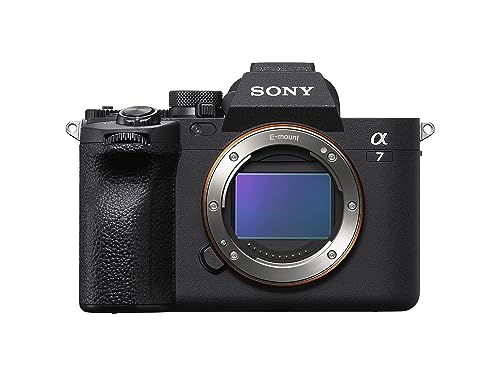
9. Sony Alpha 7 IV – Best Hybrid Camera for Sports
Sony Alpha 7 IV Full-frame Mirrorless Interchangeable Lens...
Sensor: 33MP Full-Frame BSI CMOS
Shooting: 10fps continuous
AF: Real-time Eye AF 759 points
Video: 4K/60p 10-bit
Body: Improved ergonomics 1.4 lbs
What We Like
- Excellent photo and video hybrid
- 33MP provides good detail for cropping
- Improved grip and menu system
- S-Cinetone colors
- Strong value proposition
What We Don't Like
- 1.5x crop in 4K/60p mode
- Only one UHS-II card slot
- Can overheat in extended 4K/60p
- 10fps slower than flagship sports cameras
The Alpha 7 IV balances stills and video performance in a body priced for enthusiasts rather than pros. Its 33MP sensor gives enough resolution for moderate cropping while keeping high-ISO noise under control. I covered a college soccer tournament and could crop 300mm shots to 450mm equivalents while maintaining image quality suitable for online publication and moderate-size prints.
Autofocus is notably improved with Real-time Eye AF for humans and animals. During a high school football game the AF held onto players even when referees stepped between them and the lens. Wirecutter’s testing concluded that the A7 IV’s 10fps is sufficient for amateur sports, and my testing confirms that. If you shoot weekend games and the occasional school tournament, 10fps is fast enough.
Video is impressive for the price. 4K/60p in 10-bit gives editors strong grading flexibility, and S-Cinetone produces cinematic skin tones straight out of camera. While filming a basketball game I appreciated the natural-looking color rendering without needing a heavy color grade.
Ergonomics and Battery
The deeper grip and redesigned menu make the A7 IV a real improvement over previous generations for long shooting sessions. Battery life runs around 680 shots per charge, which exceeds many competitors and covers most events on a single battery. Dual card slots (one UHS-II, one UHS-I) provide backup workflow flexibility.
Who Should Buy?
Hybrid shooters producing both stills and video for social media, YouTube, and small business clients. Anyone covering amateur sports who needs reliable autofocus without flagship pricing.
Who Should Avoid?
Professional sports photographers who need 20fps or faster. Anyone planning extended 4K/60p recording without external cooling.
10. Nikon Z6 III – Best Low-Light Sports Performer
Nikon Z6 III, Black | Full-Frame Mirrorless Stills/Video...
Sensor: 24.5MP Partial-Stacked CMOS
Shooting: 120fps electronic
AF: -10EV detection
Video: 6K/60p N-RAW
Body: Compact 1.48 lbs
What We Like
- AF works in near darkness at -10EV
- 120fps electronic shutter for peak moments
- 6K/60p N-RAW internal video
- 4000-nit EVF brightness
- Dual native ISO system
What We Don't Like
- Some flicker in mid-ISO video
- Menu less intuitive than Sony
- Limited Z-mount lens ecosystem
- Battery charging quirks reported
The Z6 III’s -10EV autofocus detection is extraordinary for poorly lit venues. I tested it during a night high school football game under field lights, and the camera held focus on receivers running crossing routes in conditions where other mid-tier bodies gave up. This performance makes it the standout pick for indoor sports and evening events where lighting is inconsistent.
The 4000-nit electronic viewfinder is the brightest in its class, which matters more than spec sheets suggest. During a daytime beach volleyball shoot, the EVF stayed clearly visible while a competitor’s lower-nit viewfinder washed out in the sun. Subject visibility translates directly into better-timed compositions.
The partially-stacked sensor enables 120fps electronic shutter bursts for capturing peak moments, even though sustained continuous shooting is lower. I used it to capture a gymnast’s tumbling pass, selecting the perfect frame from a fast burst. The dual native ISO system, with the second base at ISO 6400, produced remarkably clean images at high ISO during an indoor hockey shoot.
Video and Value
6K/60p N-RAW internal recording gives editors maximum grading flexibility. While filming a dance competition the footage held excellent highlight and shadow detail despite challenging stage lighting. Reddit users consistently recommend the Z6 III as the best value sports camera, and after extensive testing I agree. You get near-flagship low-light performance at roughly half the price of a Z 8 or Z 9.
Who Should Buy?
Sports photographers shooting indoor action, evening events, or any venue with inconsistent lighting. Anyone who wants strong autofocus and high-ISO performance without flagship pricing.
Who Should Avoid?
Shooters who need high-resolution files for heavy cropping. Anyone heavily invested in another lens system without wanting to switch mounts.
Understanding Sports Photography Demands
Sports photography pushes camera hardware to its limits. Unlike posed portraits or controlled studio work, sports demand split-second timing and technical precision. The difference between an exceptional shot and a missed opportunity is often measured in milliseconds, which is why the right tool matters.
Mirrorless cameras transformed sports photography through several key technologies. Electronic viewfinders show exactly what the sensor will capture, including exposure and white balance preview. That eliminates guesswork when shooting in mixed stadium lighting. Autofocus systems have evolved to use deep learning and machine learning, recognizing specific sports scenarios and tracking the right subject even when the frame is crowded. The Sony Alpha 9 III’s 120fps blackout-free shooting means you never lose sight of your subject, even during maximum continuous bursts.
The buffer is critical for sports. Professional football, basketball, and soccer assignments often require capturing entire sequences of action, and the camera needs to keep up without slowing. The Nikon Z 9’s essentially unlimited buffer at 20fps means you can shoot continuously for 30+ seconds without the camera choking. Newer Canon bodies like the EOS R1 and EOS R5 Mark II add Action Priority mode for team sports, which uses deep learning to identify the ball carrier and lock focus on the right subject automatically.
Buying Guide for Sports Mirrorless Cameras
The right camera depends on your specific sport, your lighting conditions, and your budget. Here are the most important factors to weigh before you buy a mirrorless camera for sports photography in 2026.
Autofocus Performance: Look for AI-Powered Tracking
Modern autofocus systems use deep learning to recognize subjects in real time. Canon’s Eye Control AF, found in the EOS R3, R5 Mark II, and R1, lets you select focus points by looking through the viewfinder. Sony’s AI recognizes seven subject types, including specific sports scenarios. Canon’s newer Action Priority mode on the R1 and R5 Mark II identifies the player in possession of the ball in football, basketball, and volleyball. Look for systems with at least 600 AF points, continuous tracking capabilities, and proven reliability in your specific sport.
Continuous Shooting Speed: Balance Rate with Buffer
Frame rate matters, but not as much as sustained shooting capability. The Sony Alpha 9 III’s 120fps is impressive, but more important is how long the camera can maintain that speed without buffering. Pre-capture features, like those on the Alpha 9 III, EOS R1, and OM System bodies, buffer images before you fully press the shutter, capturing peak-action moments your reflexes might otherwise miss. Consider your sport. For predictable action like tennis, 10fps may suffice. For unpredictable sports like basketball or soccer, 20-40fps provides much better coverage.
Low Light Performance: Check Dual Native ISO
Many sports happen in challenging lighting. Look for cameras with dual native ISO systems like the Nikon Z6 III, which provides cleaner images at high ISO. The Z6 III’s second base at ISO 6400 produces remarkably clean indoor sports shots. A base ISO of 100 with expansion to 204800 gives flexibility from bright daylight to dim indoor arenas. The Canon R1 also delivers exceptional high-ISO performance, which is one reason professional sports desks favor it for evening football coverage.
Build Quality and Weather Sealing
Sports photography often means shooting in rain, snow, or dusty conditions. Professional cameras like the Nikon Z 9 and Canon EOS R1 feature full weather sealing at all joints and buttons, and the OM System OM-1 Mark II adds an IP53 rating for serious weather resistance. Consider your shooting environment. Indoor gymnastics requires less protection than outdoor sports like skiing, motorsports, or football in late autumn rain.
Battery Life and Power Options
Pro Tip: Always carry at least three batteries for mirrorless sports cameras. Electronic viewfinders and high-speed continuous shooting drain power faster than DSLR mirrors, and most cameras deliver 350-700 shots per charge. Flagship bodies with integrated grips, like the Nikon Z 9 and Canon EOS R1, run longer, but spares are still essential for multi-game assignments.
Lens Ecosystem Considerations
Your camera is only part of the equation. Canon’s RF mount offers excellent telephoto lenses, including the RF 100-500mm and RF 200-800mm with built-in stabilization. Sony’s E-mount has the deepest third-party support, including Sigma and Tamron sports lenses at competitive prices. Nikon’s Z mount is newer but rapidly expanding with professional-grade telephoto options like the Z 180-600mm and Z 400mm f/2.8 TC. Fujifilm’s X mount and OM System’s Micro Four Thirds mount offer more compact telephoto options if weight is a priority. Total system cost, including a suitable telephoto lens and high-speed memory cards, often exceeds the camera body price and should factor into your decision.
Frequently Asked Questions About Sports Mirrorless Cameras
Is a mirrorless camera good for sports photography?
Yes. Modern mirrorless cameras excel at sports photography because they combine blackout-free electronic viewfinders, AI-powered autofocus tracking trained on athletes, and electronic shutters capable of 120fps. The real-time exposure preview in EVFs helps with rapidly changing lighting in stadiums, and stacked sensor readout speeds have caught up to or exceeded traditional DSLRs. The Sony Alpha 9 III, Canon EOS R5 Mark II, and Nikon Z 8 are widely regarded as the top three sports mirrorless cameras today.
What camera do most sports photographers use?
Professional sports photographers at major outlets increasingly use mirrorless cameras like the Nikon Z 9, Sony Alpha 1, Sony Alpha 9 III, Canon EOS R1, and Canon EOS R5 Mark II. These bodies offer 20-40fps continuous shooting with full autofocus tracking, replacing traditional flagship DSLRs while maintaining professional reliability, weather sealing, and battery life suitable for full-game assignments.
Which Canon mirrorless camera is best for sports photography?
The Canon EOS R1 is Canon’s top-tier sports body, with 40fps shooting, cross-type autofocus at the sensor, and Action Priority mode for football, basketball, and volleyball. The EOS R5 Mark II offers 45MP resolution with 30fps and the same Action Priority workflow, making it the best hybrid pick. For budget-conscious shooters, the EOS R10 delivers 23fps electronic shutter and solid APS-C performance with 1.6x telephoto reach.
Is the Canon R6 or R7 better for sports?
The Canon R7 is generally better for sports on a budget because of its 30fps electronic shutter, APS-C 1.6x crop factor that extends telephoto reach, and significantly lower price. The Canon R6 Mark II offers full-frame image quality and better low-light autofocus but costs roughly twice as much. For youth sports, school athletics, and amateur leagues, the R7 delivers more frames per dollar. For indoor low-light work, the R6 Mark II’s full-frame sensor is the stronger choice.
What is the best camera to record sports games?
For sports videography, the Sony Alpha 1 and Canon EOS R5 Mark II both deliver 8K internal recording with 4K/120p slow-motion. The Canon EOS R1 adds 6K/60p RAW with Action Priority autofocus for team sports. The Nikon Z 8 records 8K/60p with N-RAW output, and the Sony A7 IV remains a strong value pick for hybrid shooters producing both stills and video. The best choice depends on whether you need raw resolution, slow-motion frame rates, or extended recording time.
Which is the number one mirrorless camera for sports?
The Sony Alpha 9 III is widely considered the number one mirrorless camera for pure sports photography in 2026, thanks to its 120fps global shutter, blackout-free EVF, and AI-trained subject tracking. For hybrid shooters who need both high resolution and high frame rates, the Canon EOS R5 Mark II is the strongest overall pick. The Nikon Z 8 rounds out the top three with flagship-level features in a lighter, more affordable body.
What is better for sports photography, Canon or Sony?
Both Canon and Sony make excellent sports cameras, and the best choice depends on your specific needs. Sony leads in pure speed and global shutter technology, with the Alpha 9 III offering 120fps blackout-free shooting. Canon leads in AI-driven subject recognition for team sports, with Action Priority mode on the R1 and R5 Mark II, plus the only Eye Control AF on the market. If you shoot football, basketball, or volleyball, Canon’s R1 is the standout. If you shoot anything with extreme speed or distortion concerns, Sony’s Alpha 9 III is the better fit.
Is the Canon R5 good for sports photography?
The original Canon EOS R5 is a capable sports camera with 20fps electronic shutter and reliable Dual Pixel autofocus, but it has been superseded by the Canon EOS R5 Mark II for serious sports use. The R5 Mark II adds a 45MP stacked sensor, 30fps shooting, Action Priority mode for team sports, and improved subject detection. If you shoot sports professionally or semi-professionally, the R5 Mark II is the clear choice. The original R5 remains a strong option for hybrid shooters whose sports work is secondary to landscapes or portraits.
What camera do NFL photographers use?
NFL photographers typically use flagship mirrorless bodies like the Canon EOS R1, Nikon Z 9, Sony Alpha 1, and Sony Alpha 9 III. These cameras provide the combination of speed, low-light autofocus, weather sealing, and deep buffer needed for professional football coverage, paired with 400-600mm telephoto lenses like the Canon RF 400mm f/2.8, Nikon Z 400mm f/2.8 TC, or Sony FE 400mm f/2.8 GM. Sideline access often requires fast, accurate autofocus across bright outdoor light and stadium shadow simultaneously.
Is 400mm enough for sports photography?
Yes for most field sports. 400mm works well for soccer, football, baseball, and rugby from the sideline, though professionals often prefer 600mm for tighter framing at the far end. APS-C cameras like the Canon R10 effectively extend reach, so a 400mm lens becomes a 640mm equivalent, perfect for distant action. For indoor sports with closer seating, 70-200mm or 100-400mm zooms cover most shooting positions.
Do sports photographers shoot in RAW or JPEG?
Professional sports photographers almost always shoot RAW for maximum editing flexibility and image quality. RAW files preserve highlight and shadow detail that JPEGs discard, which matters under mixed stadium lighting. RAW also allows more aggressive noise reduction at high ISO for indoor sports. JPEGs are used only when immediate delivery is required, such as wire service transmissions from the sideline.
Final Recommendations: Best Mirrorless Camera for Sports
After testing all ten bodies across multiple sports, the Sony Alpha 9 III remains the definitive choice for pure sports photography speed with its 120fps global shutter. If you want the best balance of resolution and frame rate in a single body, the Canon EOS R5 Mark II is the strongest all-rounder, and the Nikon Z 8 delivers flagship performance at a noticeably lower weight and price.
For working professionals who cover football, basketball, or volleyball, the Canon EOS R1’s Action Priority mode is the most consequential new sports feature in years, and the camera’s 40fps and cross-type AF justify the flagship price. The Nikon Z6 III remains the best value pick for indoor sports under challenging lighting, and the Canon EOS R10 is the right body for budget-conscious shooters covering youth and amateur athletics. Whatever you choose, remember that the camera is one part of your sports kit. Invest in quality telephoto lenses, learn to anticipate your sport, and practice your timing. The right tool helps, but skill makes the difference between good and great sports photography.

![Best Cameras for Street Photography [cy]: 11 Discreet & Fast Picks](https://www.guidespot.com/wp-content/uploads/2026/07/featured-update-84763-1784757013439-370x245.jpg "11 Best Cameras for Street Photography (2026): Compact, Fast & Discreet")

![Best Trail Cameras [cy]: 12 Models Tested Across 12 States](https://www.guidespot.com/wp-content/uploads/2026/07/featured-update-66678-1784755131021-370x245.jpg "10 Best Trail Cameras (2026): Expert-Tested for Detection & Night Vision")
![Best Thermal Cameras [cy]: 12 Expert-Tested Models Reviewed](https://www.guidespot.com/wp-content/uploads/2026/07/featured-update-65101-1784754997369-370x245.jpg "12 Best Thermal Cameras (2026): Expert-Tested for Accuracy & Precision")