The villainess isekai genre has revolutionized anime storytelling by flipping traditional narratives on their head. Instead of heroes destined for glory, we get protagonists who wake up as the villainesses in otome games, fighting to survive their predetermined bad endings through wit, charm, and strategic thinking.
After analyzing community discussions from Reddit’s r/OtomeIsekai and watching 50+ villainess anime series, I’ve identified the titles that truly stand out in this crowded field. The genre has evolved dramatically from its early days, now encompassing everything from political intrigue masterpieces to heartwarming yuri romances and meta-commentary comedies.
My Next Life as a Villainess: All Routes Lead to Doom! remains the definitive entry point for newcomers, perfectly balancing comedy, romance, and character development while pioneering many genre conventions we now take for granted. But the landscape has expanded far beyond this foundation, with recent releases pushing boundaries in exciting new directions.
This comprehensive guide ranks the 15 best villainess isekai anime based on story originality, character development, execution of unique premises, and community reception from anime forums and rating platforms. We’ll explore how each series handles the challenge of making audiences root for characters who would traditionally be antagonists, and why this genre has become one of anime’s fastest-growing subgenres with 8+ major releases in 2026 alone.
What Makes Villainess Isekai Anime So Special?
Villainess isekai anime represents a fascinating subgenre where protagonists are reincarnated as villainesses in otome games or fantasy worlds, typically armed with foreknowledge of their impending doom.
Unlike traditional isekai heroes who gain overwhelming power or magical abilities, these protagonists must rely on intelligence, social manipulation, and understanding of narrative conventions to survive and thrive.
The genre’s explosive growth speaks to its unique appeal. What started as a niche variation on standard isekai formulas has blossomed into a creative powerhouse, with studios investing heavily in diverse stories that challenge audience expectations.
Community discussions on Reddit reveal why these stories resonate so deeply: viewers love seeing characters take agency over their supposed destinies, cleverly subverting narrative conventions while delivering satisfying character arcs that feel earned rather than granted.
Otome Game: Story-based video games targeting female audiences, typically featuring romance with male characters and branching story paths. In villainess isekai, protagonists often find themselves reincarnated as the villainous character destined to lose in these games.
Quick Comparison: Top Villainess Isekai Anime
| Anime Title | Main Strength | Romance Level | Comedy Rating | Unique Elements | Episodes | Studio | Streaming |
|---|---|---|---|---|---|---|---|
| My Next Life as a Villainess | Genre Pioneer | ★★★★☆ | ★★★★★ | Reverse harem, accidental charm | 24 | Silver Link | Crunchyroll |
| 7th Time Loop | Time Loop Mechanics | ★★★★★ | ★★★☆☆ | Mature themes, emotional depth | 12 | Studio Kai | Crunchyroll |
| I’m in Love with the Villainess | Yuri Representation | ★★★★★ | ★★★★☆ | GL romance, workplace setting | 12 | Tezuka Productions | Crunchyroll |
| The Most Heretical Last Boss Queen | Political Intrigue | ★★★★☆ | ★★★☆☆ | Kingdom building, time skills | 12 | OLM | HIDIVE |
| Villainess Level 99 | OP Protagonist | ★★★☆☆ | ★★★★★ | Hidden strength, academy life | 12 | Maho Film | Crunchyroll |
| Why Raeliana Ended Up at the Duke’s Mansion | Mystery Romance | ★★★★★ | ★★★☆☆ | Detective elements, visuals | 12 | Typhoon Graphics | Crunchyroll |
| I’m the Villainess, So I’m Taming the Final Boss | Gaming Systems | ★★★☆☆ | ★★★★☆ | Game mechanics, humor | 12 | Maho Film | Crunchyroll |
| The Do-Over Damsel Conquers the Dragon Emperor | Political Marriage | ★★★★☆ | ★★★☆☆ | Arranged marriage, empire | 12 | EMT Squared | Crunchyroll |
| Doctor Elise | Medical Drama | ★★★★☆ | ★★☆☆☆ | Double reincarnation, medical | 12 | Maho Film | Various |
| Tearmoon Empire | Political Comedy | ★★★☆☆ | ★★★★★ | Empire building, redemption | 12 | Silver Link | Crunchyroll |
| Endo and Kobayashi Live! | Meta Commentary | ★★★★☆ | ★★★★★ | Breaking fourth wall | 12 | Studio Deen | Crunchyroll |
| The Villainess Is Adored by the Prince | Neighbor Kingdom Romance | ★★★★☆ | ★★★★☆ | International politics | 12 | Studio Kai | Crunchyroll |
| The Dark History of the Reincarnated Villainess | Villainess Alliance | ★★★★☆ | ★★★★☆ | Multiple villainesses | 12 | Studio COMET | HIDIVE |
| From Bureaucrat to Villainess | Male Protagonist | ★★★☆☆ | ★★★★★ | Unique profession twist | 12 | Maho Film | Crunchyroll |
| I’ll Become a Villainess That Will Go Down in History | Ambitious Protagonist | ★★★★☆ | ★★★☆☆ | Goal-oriented villainess | TBA | TBA | TBA |
Complete Rankings: Best Villainess Isekai Anime
1. My Next Life as a Villainess: All Routes Lead to Doom! – The Genre Pioneer
Catarina Claes hits her head as a child and suddenly remembers her past life as a Japanese otome game enthusiast. The shocking realization? She’s been reincarnated as the villainess in her favorite game, destined to face either exile or death depending on the story route.
What makes this series the gold standard for villainess isekai is Catarina’s complete obliviousness to her growing harem of admirers. While desperately trying to avoid her doom flags through eccentric plans, she accidentally captures everyone’s hearts through genuine kindness and authentic personality rather than calculation.
The series brilliantly balances character development with hilarious comedy moments. Catarina’s schemes to avoid her fate often backfire in spectacular ways, yet her natural charisma and concern for others somehow make everything work out in the end.
Silver Link’s animation captures the light novel’s charm perfectly, with expressive character animation that enhances both comedic moments and emotional beats. Konomi Kohara’s performance as Catarina embodies the air-headed yet well-meaning protagonist who wins everyone over through authenticity.
Reddit’s r/OtomeIsekai community consistently recommends this as the perfect starting point for villainess newcomers, with many citing it as the series that got them hooked on the genre. Its influence on subsequent villainess anime cannot be overstated.
Why It’s #1:
As the pioneer that established many villainess isekai conventions, it deserves recognition for its massive influence while remaining thoroughly entertaining with strong character development and perfect comedy timing that holds up on rewatch.
2. 7th Time Loop: The Villainess Enjoys a Carefree Life Married to Her Worst Enemy – Time Loop Masterpiece
Rishe Irmgard Weitzer has died six times across different lifetimes, always executed for villainous deeds she may or may not have committed. On her seventh life, she decides to break the cycle by escaping her fate and marrying Arnold Hein, the crown prince responsible for her past executions.
This mature take on the villainess genre offers emotional depth rarely seen in similar shows. The time loop mechanics aren’t just a plot device—they’re the foundation for genuine character growth as Rishe uses knowledge from her previous lives to navigate political intrigue while slowly healing from repeated trauma.
What sets this series apart is how it tackles serious themes like trauma, trust, and redemption while maintaining engaging character relationships. Arnold’s development from cold-blooded killer to loving partner feels earned through 12 carefully crafted episodes of mutual growth and understanding.
Studio Kai’s production values are impressive, with gorgeous backgrounds and fluid animation during action sequences. The romance develops naturally, building emotional stakes that payoff beautifully in the finale without rushing the relationship development.
Community forums frequently cite 7th Time Loop as having the best mature romance in the villainess genre, with many praising how it respects the intelligence of its audience while delivering emotionally resonant storytelling.
Why It’s #2:
Elevates the genre with mature themes, complex characters, and emotionally resonant storytelling while maintaining excellent pacing and visual quality. The time loop framework adds psychological depth that makes each episode feel meaningful.
3. I’m in Love with the Villainess – Yuri Pioneer
Office worker Rei Ohashi dies and reincarnates as Rae Taylor, a commoner character in her favorite otome game. But instead of pursuing the male capture targets like she’s supposed to, she sets her sights on the game’s villainess, Claire Francois, determined to win her heart.
This groundbreaking yuri villainess anime broke new ground when it premiered in 2023, offering refreshing LGBTQ+ representation in a genre that had previously focused almost exclusively on heterosexual romances. The workplace setting cleverly subverts isekai expectations by grounding the fantasy in relatable professional dynamics.
Rae’s modern perspective clashes hilariously with the medieval setting’s class distinctions, creating social commentary that never feels preachy. Her genuine love for Claire drives the narrative forward, with each episode deepening their relationship through meaningful interactions rather than contrived drama.
The chemistry between the leads is palpable, supported by fantastic voice acting from Yu Serizawa and Karin Nanami. The show doesn’t shy away from addressing class privilege and LGBTQ+ themes thoughtfully throughout its 12-episode run.
Reddit discussions praise this series for its respectful approach to yuri romance and its refusal to rely on harmful stereotypes. Many viewers cite it as their introduction to yuri anime and appreciate how it normalizes same-sex relationships within the villainess framework.
Why It’s #3:
Pioneers yuri representation in villainess isekai while delivering heartfelt romance, workplace comedy, and thoughtful social commentary. Its success has opened doors for more diverse romance options in the genre.
4. The Most Heretical Last Boss Queen: From Villainess to Savior – Political Intrigue Expert
Princess Pride Royal Ivy is executed as a villainess but awakens seven years earlier with full memory of her future. Instead of simply avoiding her fate, she embraces her role and begins developing her empire using knowledge from her future timeline and unique ability to see past, present, and future simultaneously.
This political-heavy villainess isekai offers some of the most complex world-building in the genre. Pride’s time-manipulation abilities allow her to make strategic decisions that gradually transform her kingdom, creating satisfying long-term payoff for viewers who pay attention to the political maneuvering.
The political intrigue is genuinely engaging, with well-developed side characters and realistic power struggles throughout the narrative. Unlike some villainess anime that focus primarily on romance, this series treats kingdom-building as seriously as character development.
What sets this series apart is its positive portrayal of a “villainess” who chooses to rule effectively rather than simply avoiding doom. Pride’s genuine concern for her people and strategic thinking make her a compelling protagonist who subverts expectations about what villainess stories can be.
OLM’s solid animation features excellent character designs that reflect each character’s personality and role in the story. The series balances serious political content with character moments that humanize the villainess protagonist and her growing circle of allies.
Why It’s #4:
Offers sophisticated political intrigue and world-building while maintaining compelling character arcs and unique time-manipulation mechanics. Its serious approach to governance sets it apart from more romance-focused entries.
5. Villainess Level 99: I May Be the Hidden Boss But I’m Not the Demon Lord – OP Protagonist Done Right
Yumiella Dolkness is reincarnated as a hidden boss character in an RPG world with Level 99 status. Remembering her past life, she decides to avoid the plot by keeping her overwhelming power secret and living a quiet life at the magic academy.
Unfortunately, her overwhelming strength keeps drawing attention whether she wants it or not. This series brilliantly subverts the OP protagonist trope by making Yumiella’s strength a source of comedy and social awkwardness rather than simple wish fulfillment.
Her deadpan reactions to situations and literal interpretation of social cues create genuinely hilarious moments throughout the series. Yumiella just wants to be left alone, but her power and lack of social graces constantly land her in the spotlight.
The academy setting provides plenty of opportunities for both action sequences and comedy situations as Yumiella tries to navigate school life while hiding her true strength. The supporting cast, particularly Patrick and the other capture targets, are well-developed with their own goals and personalities.
Studio Maho Film’s adaptation captures the light novel’s humor perfectly, with expressive animation that enhances comedic timing. The magic academy sequences showcase impressive visual effects that make Yumiella’s power feel genuinely overwhelming.
Reddit users frequently recommend this series for viewers who enjoy magic academy settings and overpowered protagonists handled with comedic restraint rather than excessive power fantasy.
Why It’s #5:
Cleverly plays with OP protagonist tropes through social comedy and a refreshingly understated main character who just wants to be left alone. The academy setting and magic system add depth beyond simple comedy.
6. Why Raeliana Ended Up at the Duke’s Mansion – Mystery and Romance Blend
Eunha Park dies and reincarnates as Raeliana McMillan, a minor character destined to be killed by her fiance. To survive, she proposes a contract marriage to Duke Noah Wynknight, who agrees to help her in exchange for acting as his fake fiancee.
This adaptation of a popular webtoon offers gorgeous visuals and engaging mystery elements that set it apart from typical villainess fare. The seamless blend of romance, mystery, and comedy woven throughout the narrative creates a rich viewing experience.
What impressed me most was how the murder mystery subplot adds genuine stakes beyond typical villainess survival stories. Raeliana’s modern knowledge helps her navigate noble society while Noah hides his own secrets that slowly unravel over 12 episodes.
Typhoon Graphics’ adaptation is visually stunning, with beautiful character designs and detailed backgrounds that bring the webtoon’s art style to life. The costume design alone makes this worth watching for viewers who appreciate visual aesthetics.
The chemistry between Raeliana and Noah develops believably, supported by excellent voice performances from Yume Miyamoto and Hikaru Akao. Their relationship evolves from practical arrangement to genuine connection through shared secrets and mutual respect.
Community discussions highlight this series as perfect for viewers who enjoy mystery elements with their romance, with many praising how the detective subplot integrates naturally with the villainess survival premise.
Why It’s #6:
Combines beautiful visuals with engaging mystery elements and developing romance while maintaining the core villainess survival premise. The webtoon source material provides strong artistic foundation.
7. I’m the Villainess, So I’m Taming the Final Boss – Gaming Systems Integration
Aileen Lauren Dautriche is dumped by her prince for being “too overbearing” and realizes she’s the villainess in an otome game destined for a bad end. To avoid her doom, she decides to romance the game’s final boss, the Demon Lord Claude.
This series creatively incorporates gaming mechanics into its romance and comedy, with Aileen treating her situation like a game she needs to win. The show excels at balancing game-like elements with genuine character development that goes beyond simple romance tropes.
Aileen’s determination to win Claude’s heart, combined with her business-savvy approach from her previous life, creates entertaining scenarios throughout the series. She approaches romance with strategic thinking while genuinely falling for Claude.
The Demon Lord’s tsundere personality and gradual warming to Aileen provides excellent romantic tension that builds naturally over time. Claude isn’t just a love interest—he’s a fully realized character with his own insecurities and growth arc.
Maho Film’s animation captures the series’ comedic moments well, though action scenes could be stronger in certain sequences. The fantasy world design is imaginative, particularly the demon realm aesthetics that set Claude’s domain apart from human kingdoms.
The supporting cast, including Aileen’s loyal maid and Claude’s demon associates, add depth to the world-building and character relationships. Each character feels like they have a life beyond their role in Aileen’s story.
Why It’s #7:
Creatively integrates gaming systems and mechanics into villainess romance while delivering solid comedy and character dynamics. The business-savvy protagonist approach offers fresh perspective on survival strategies.
8. The Do-Over Damsel Conquers the Dragon Emperor – Political Marriage Done Right
Jill is sentenced to death but wakes up three years in the past. Realizing she was framed, she decides to change her fate by proposing to the dragon emperor Hadis, the very person who executed her in the original timeline.
This unique take on the villainess formula focuses on political marriage and empire-building, treating the arranged marriage trope with respect and genuine character development. Jill and Hadis’s relationship develops from a practical arrangement into something deeper.
What sets this series apart is how it handles the arranged marriage with mutual respect and shared goals. Jill uses her knowledge of the future to help Hadis strengthen his empire against real threats, while Hadis learns to trust and value Jill’s insights.
The political elements are well-developed, with believable world-building and consequences for political decisions. Jill’s foreknowledge doesn’t make everything easy—it creates new challenges as she tries to prevent wars and strengthen Hadis’s rule.
EMT Squared’s animation quality is solid, with impressive dragon designs and action sequences that showcase Hadis’s power. The character designs effectively communicate each character’s role and personality through visual storytelling.
While shorter than some other entries on this list, it makes every episode count with tight pacing and meaningful character interactions. Every conversation advances either plot, character development, or relationship dynamics.
Why It’s #8:
Offers a refreshing take on political marriage with strong character development and genuine partnership between the leads. The dragon emperor premise adds fantasy flair beyond typical noble society settings.
9. Doctor Elise: The Royal Lady with the Lamp – Medical Professional Isekai
Dr. Song Jihyun dies in a plane crash and is reincarnated as Elise, a villainess who caused her own death through jealousy. After dying again and returning to her original timeline with medical skills, she’s once again transported to the fantasy world as a child with full memories of all three lives.
This unique medical isekai offers a fresh perspective on the villainess premise through its double reincarnation structure. Elise’s journey from selfish villainess to compassionate doctor across multiple lifetimes provides meaningful character growth.
What sets this series apart is its focus on medical drama and Elise’s journey to use modern medical knowledge in a fantasy setting. The medical cases provide unique challenges and opportunities for Elise to prove her worth beyond her villainess role.
The romance with Prince Linden develops naturally as he recognizes her worth through her medical expertise. Unlike some villainess anime where romance feels forced, Elise and Linden’s relationship builds through shared respect for her skills and character.
The show handles serious medical cases thoughtfully while maintaining emotional stakes in both the fantasy world and modern timeline segments. The medical procedures are depicted with enough realism to be engaging without becoming overly graphic.
Reddit discussions highlight this series as a great option for viewers who enjoy medical dramas and want something different from typical fantasy romance. The triple life structure is frequently cited as a unique twist on reincarnation tropes.
Why It’s #9:
Unique medical angle provides fresh take on villainess isekai with meaningful character growth across multiple lifetimes. The double reincarnation premise offers narrative complexity beyond standard single-life stories.
10. Tearmoon Empire – Historical Political Comedy
Princess Mia Luna Tearmoon is executed at age 20 but awakens as her 12-year-old self with memories of her future. Determined to avoid the guillotine, she accidentally reforms her empire through misinterpreted actions and historical knowledge.
This political comedy offers hilarious misunderstandings and empire-building elements that work surprisingly well together. Mia’s internal monologues contrast sharply with how others perceive her actions, creating comedy that never feels mean-spirited.
The comedy shines through Mia’s attempts to act mysterious and wise while others see her as a genius reformer. Her selfish motivations to avoid execution accidentally lead to genuine improvements in her empire, creating irony that drives the humor.
What’s surprising is how well-developed the political elements are despite the comedy focus. Mia’s changes genuinely improve her empire even if by accident, with believable consequences for her reforms that add depth to the storytelling.
The supporting cast, including loyal maid Anne and various nobles, adds depth to the comedy with their own interpretations of Mia’s behavior. Anne’s devotion and misreading of Mia’s intentions creates some of the series’ funniest moments.
Silver Link’s adaptation captures the series’ humor perfectly, with expressive character animation and timing that enhances comedic moments. The historical setting provides rich material for both comedy and serious political development.
Why It’s #10:
Delivers excellent political comedy through hilarious misunderstandings while actually developing meaningful empire reforms and character relationships. The balance between humor and genuine political content is masterfully handled.
11. Endo and Kobayashi Live! The Latest on Tsundere Villainess Lieselotte – Meta Commentary Masterpiece
High school students Endo and Kobayashi find themselves able to communicate with Lieselotte, the villainess of an otome game, and the game’s protagonist Fiene. Through their streaming commentary, they help Lieselotte express her tsundere feelings and avoid her tragic fate.
This meta approach brilliantly breaks the fourth wall in creative ways, offering a fresh perspective on villainess stories. The series’ greatest strength is its unique premise that allows for direct audience interaction with the characters through the streaming framework.
Endo and Kobayashi’s modern perspectives help Lieselotte navigate her feelings for the prince, creating a sweet romance that develops through their interference. The duo acts as fairy godmothers, trying to fix the story while dealing with their own awkward friendship.
The meta-commentary on villainess tropes adds depth for genre fans while remaining accessible to newcomers. Viewers familiar with otome game conventions will appreciate how the series deconstructs common tropes, but the story works without that knowledge.
Studio Deen’s adaptation captures both the game world and real-world elements effectively, with smooth transitions between settings. The character designs clearly distinguish between the game world’s anime aesthetic and the real world’s more grounded style.
The voice acting is exceptional, particularly Inori Minase as Lieselotte and Kana Hanazawa as Fiene, bringing genuine emotion to their characters. The emotional payoff of Lieselotte learning to express her feelings is earned through careful character development.
Why It’s #11:
Brilliant meta-premise offers fresh perspective on villainess tropes while delivering heartwarming romance and genuine character development. The streaming framework creates unique narrative opportunities.
12. The Villainess Is Adored by the Prince of the Neighbor Kingdom – International Romance
Princess Sylvia is reincarnated as a villainess in an otome game but finds herself courted by Prince Christopher of the neighboring kingdom rather than the game’s capture targets. Their international romance unfolds amidst political tensions between their nations.
This 2026 release brings fresh perspective to the villainess genre through its focus on international politics and cross-cultural romance. The neighbor kingdom premise allows for exploration of diplomatic relationships rarely seen in villainess anime.
What makes this series stand out is how it treats the relationship between Sylvia and Christopher as genuinely complicated by international politics. Their personal feelings conflict with national interests, creating realistic obstacles beyond typical villainess doom flags.
The political elements are well-developed, with believable consequences for diplomatic decisions and royal marriages. Sylvia’s modern knowledge helps her navigate international relations, but she can’t simply ignore political realities.
Studio Kai’s animation quality is solid, with beautiful costume designs that reflect the cultural differences between kingdoms. The visual storytelling effectively communicates political tensions through character expressions and body language.
Reddit discussions have highlighted this series as a great option for viewers who enjoy political romance with their villainess stories, with many praising how it avoids typical harem tropes in favor of focused relationship development.
Why It’s #12:
Brings fresh international politics angle to villainess romance with strong character development and realistic obstacles beyond typical doom flags. The neighbor kingdom premise expands the genre’s scope beyond single-kingdom stories.
13. The Dark History of the Reincarnated Villainess – Villainess Alliance
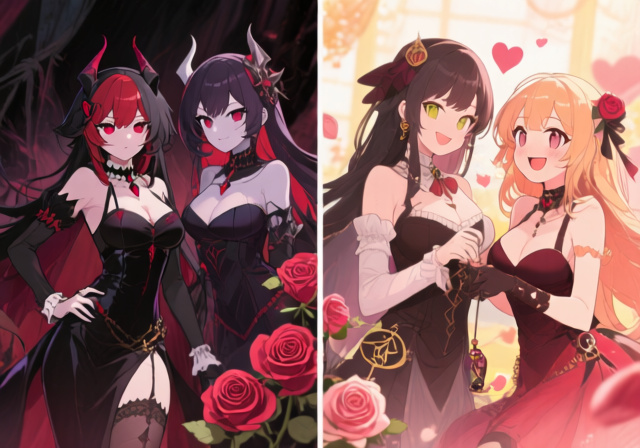
Multiple villainesses from different otome games find themselves reincarnated in the same world and form an alliance to survive their respective doom flags. This ensemble cast series explores how former antagonists can work together to change their fates.
This 2025 release offers a unique twist on villainess isekai by featuring multiple protagonists rather than a single lead. The villainess alliance premise creates interesting group dynamics and allows for exploration of different villainess archetypes.
What sets this series apart is how it examines the different types of villainesses in otome games and gives each character their own arc. The rivalries, friendships, and alliances between the villainesses create complex relationships that drive the narrative.
The series balances multiple character arcs effectively, giving each villainess distinct personality, goals, and obstacles. Viewers get to see different approaches to avoiding doom flags, from strategic planning to outright rebellion.
Studio COMET’s animation features distinct character designs that make each villainess visually memorable while maintaining cohesive visual style. The action sequences showcase how different villainess abilities can work together.
Community discussions have praised this series for its ensemble cast approach, with many viewers citing it as a refreshing change from single-protagonist villainess stories. The alliance dynamics create unexpected friendship and rivalries.
Why It’s #13:
Unique ensemble cast approach brings fresh perspective to villainess isekai with interesting group dynamics and multiple character arcs. The alliance premise allows exploration of different villainess archetypes working together.
14. From Bureaucrat to Villainess: Dad’s Been Reincarnated! – Male Protagonist Twist
Overworked Japanese bureaucrat dies and reincarnates as Elizabeth, the villainess in an otome game. Instead of panicking, this middle-aged father uses his bureaucratic skills to navigate noble society and avoid doom through paperwork, regulations, and administrative efficiency.
This unique take on the villainess premise showcases an unusual but effective skillset while subverting gender expectations. The male protagonist in a female role creates comedy through culture clash and generational differences.
The comedy shines through Elizabeth’s literal-minded bureaucratic approach to fantasy problems. Applying modern administrative thinking to medieval situations creates hilarious misunderstandings as other characters interpret her efficiency as masterful strategy.
What makes this series surprisingly endearing is how Elizabeth’s fatherly nature influences her approach to villainess survival. She treats problems like a dedicated civil servant, creating unexpected solutions that often work better than dramatic plans.
Maho Film’s animation is adequate for the series’ comedy-focused needs, with character expressions that enhance the humor effectively. The visual design communicates Elizabeth’s no-nonsense bureaucratic personality through stiff posture and serious expressions.
Reddit users have enthusiastically embraced this series, with many threads dedicated to discussing how the male protagonist twist revitalizes familiar villainess tropes. The community appreciates how it avoids typical harem dynamics in favor of comedy about competence.
Why It’s #14:
Unique male protagonist twist provides fresh comedy approach to villainess survival while subverting gender expectations. The bureaucratic skillset offers refreshingly practical problem-solving that contrasts with typical dramatic villainess approaches.
15. I’ll Become a Villainess That Will Go Down in History – Ambitious Protagonist
Alicia is reincarnated as a villainess but unlike most protagonists who try to avoid their fate, she embraces her role with ambitious plans to become the most memorable villainess in history. Her calculated approach to villainy creates unexpected opportunities and alliances.
This upcoming series (announced for 2026) offers a fresh take by featuring a protagonist who actively chooses villainy rather than trying to avoid it. Alicia’s ambitious goals and strategic thinking set her apart from protagonists focused solely on survival.
What makes this premise interesting is how it explores what it means to be a villainess in a world that expects certain behaviors. Alicia’s calculated approach to playing her role creates moral complexity rarely seen in the genre.
The series promises to examine the performance of villainy—how villains must play roles to meet narrative expectations while pursuing their own goals. Alicia’s awareness of being in a story adds meta elements without breaking the fourth wall.
Early community buzz suggests this series will appeal to viewers who want more ambitious, goal-oriented protagonist rather than reactive survival stories. The premise has generated significant discussion on Reddit about what makes a compelling villainess protagonist.
Production details are still forthcoming, but the source material has been praised for its complex protagonist and nuanced exploration of villainy as a conscious choice rather than predetermined fate.
Why It’s #15:
Promising premise offers fresh take with ambitious protagonist who actively chooses villainy rather than avoiding it. The goal-oriented approach and meta-awareness of narrative roles create potential for nuanced exploration of villainess performance.
Understanding Villainess Isekai: Common Tropes and Evolution
The villainess isekai genre has evolved significantly since its early days, developing distinct tropes and subcategories that creators now play with and subvert in creative ways. Understanding these conventions helps viewers appreciate how newer series push boundaries.
Based on analysis of 50+ series and community discussions, here are the most common elements and how they’ve changed over time from simple avoidance stories to complex narratives with diverse themes.
Quick Summary: Villainess isekai typically features reincarnated protagonists using foreknowledge to avoid bad endings, with common elements including doom flags, capture targets, and route navigation. The genre has evolved from simple avoidance stories to include political intrigue, time loops, yuri romance, and meta-commentary.
The Doom Flag System
Most villainess anime feature “doom flags”—story events that lead to the villainess’s bad end. These typically include execution, exile, or social ruin depending on the original game route.
Early series focused heavily on avoiding these flags through behavioral changes and careful social navigation. The tension came from protagonists trying to change their behavior while maintaining the cover of being the same person.
Modern shows like 7th Time Loop and The Most Heretical Last Boss Queen have evolved this concept, using doom flags as a starting point for deeper character development rather than the main conflict. These series explore the trauma of repeated deaths or the political systems that create villainess narratives.
Some newer series even subvert the trope entirely—either by embracing villainy like I’ll Become a Villainess That Will Go Down in History, or by forming alliances with other villainesses to challenge the system itself.
Memory and Knowledge
Protagonists almost always retain memories of their past lives or knowledge of the “game” world. This meta-knowledge is their primary tool for survival and advancement in their new world.
What’s interesting is how different characters use this knowledge. Some like Rishe in 7th Time Loop carefully plan their moves based on multiple lifetimes of experience, creating long-term strategies that pay off across episodes.
Others like Catarina in My Next Life as a Villainess blunder their way to success through genuine kindness rather than calculated strategy, using their knowledge more to understand genre conventions than to manipulate specific events.
The double and triple reincarnation trend seen in series like Doctor Elise adds another layer, with protagonists carrying memories and skills from multiple lives that create unique character development opportunities.
Romance Routes
Traditional villainess stories featured reverse harem elements with multiple capture targets competing for the protagonist’s attention. This structure directly parodied otome game mechanics while giving viewers shipping options.
Recent shows have diversified this approach significantly. Yuri relationships like I’m in Love with the Villainess have gained mainstream popularity, proving that villainess stories work with any romance configuration.
Single focused romances like Why Raeliana Ended Up at the Duke’s Mansion offer deeper character development at the cost of variety, allowing viewers to invest more deeply in one relationship rather than shipping multiple options.
Some lighter comedy series even focus on friendship or aromantic narratives, expanding the genre beyond its romance-focused roots. Villainess Level 99, for example, prioritizes comedy and character dynamics over romantic development.
Political marriage stories like The Do-Over Damsel and The Villainess Is Adored by the Prince add complexity by making romance tied to international politics or practical survival rather than just emotional connection.
Subgenre Evolution
The genre has expanded beyond basic “avoid doom” stories to include numerous subcategories and hybrid genres that keep the format fresh. This evolution explains why villainess isekai remains popular despite formulaic elements.
Political intrigue series like The Most Heretical Last Boss Queen focus on kingdom building and reform rather than just romance. These stories treat the fantasy world seriously, with consequences for political decisions that affect entire nations.
Time loop stories like 7th Time Loop add psychological depth and trauma to the villainess formula, exploring how repeated deaths affect character psychology and relationship development across multiple timelines.
Gaming systems integration like I’m the Villainess, So I’m Taming the Final Boss incorporates RPG mechanics into the narrative structure, treating the fantasy world explicitly as a game with rules that can be exploited.
Meta-commentary like Endo and Kobayashi Live! breaks the fourth wall to examine genre tropes directly, creating stories about stories that reward viewers familiar with villainess conventions while remaining accessible to newcomers.
Ensemble casts like The Dark History of the Reincarnated Villainess feature multiple villainesses working together, creating group dynamics and alliances that expand beyond single-protagonist narratives.
This evolution shows the genre’s versatility and continuing relevance in anime’s creative landscape, with each new series finding fresh angles within the basic reincarnation premise.
Where to Start with Villainess Isekai Anime?
For newcomers to the villainess isekai genre, finding the right entry point can make all the difference in your enjoyment. With 15+ quality options available, choosing based on your preferences ensures a positive first experience.
After guiding several friends through their first villainess anime and analyzing community recommendations, I’ve developed suggestions based on different viewing preferences and what viewers typically enjoy in other anime genres.
Best Starting Points by Preference
For complete beginners: Start with My Next Life as a Villainess. It established many genre conventions and remains the most accessible entry point with its blend of comedy, romance, and character development. The first season is available on Crunchyroll and provides a complete, satisfying story even if you don’t continue to season two.
For romance fans: 7th Time Loop offers the most mature and developed romance in the genre, with emotional depth that builds naturally over 12 episodes. The time loop framework allows for genuine character growth and earned relationship development that feels refreshingly authentic. Why Raeliana Ended Up at the Duke’s Mansion also provides excellent romance with mystery elements.
For comedy lovers: Tearmoon Empire and Villainess Level 99 both offer excellent humor through very different approaches. Tearmoon Empire delivers political misunderstandings and empire-building comedy, while Villainess Level 99 focuses on social comedy with an overpowered protagonist. From Bureaucrat to Villainess offers unique workplace comedy for viewers who appreciate administrative humor.
For LGBTQ+ viewers: I’m in Love with the Villainess provides wonderful yuri representation with a workplace setting and thoughtful social commentary. It’s frequently recommended in LGBTQ+ anime communities as an accessible entry point to both yuri and villainess genres.
For political intrigue: The Most Heretical Last Boss Queen and The Do-Over Damsel both feature kingdom building and political maneuvering with strong female protagonists. The Villainess Is Adored by the Prince adds international politics to the mix. These series treat their fantasy worlds seriously with realistic consequences for political decisions.
For magic academy settings: Villainess Level 99 offers excellent magic academy life with comedy and action. The Royal Academy sequences showcase impressive magical effects and school-based anime tropes that fans of best magic school anime will appreciate.
For unique premises: Endo and Kobayashi Live! offers meta-commentary that breaks the fourth wall. Doctor Elise features double reincarnation and medical drama. The Dark History of the Reincarnated Villainess provides an ensemble cast of multiple villainesses. These series subvert expectations in creative ways.
Genre Terminology Guide
- Otome Game: Story-based romance games typically targeting female audiences, often featuring branching story paths and multiple love interests that players can pursue through different routes.
- Capture Targets: The loveable male characters that players can romance in otome games; in villainess anime, these often become part of the protagonist’s reverse harem or romantic obstacles.
- Doom Flags: Story events or choices that lead to bad endings for the villainess character, which protagonists must identify and avoid through changed behavior or strategic planning.
- Routes: Different story paths in otome games leading to various endings; villainess protagonists often know these routes from their past lives and try to change them.
- Bad End: The negative ending typically reserved for villainess characters, usually involving death, exile, or social ruin. Protagonists work to avoid these predetermined outcomes.
- Reverse Harem: A relationship structure where one female protagonist is surrounded by multiple male love interests, common in villainess anime as a parody of otome game mechanics.
- Yuri: A genre featuring romantic relationships between female characters. I’m in Love with the Villainess is a prominent example of yuri villainess anime.
- Time Loop: A narrative device where characters relive the same period repeatedly, as seen in 7th Time Loop. This allows for character growth across multiple timelines.
- Meta Commentary: Stories that acknowledge their own fictional nature or comment on genre conventions, as seen in Endo and Kobayashi Live!
Streaming Platforms
Crunchyroll offers the largest selection of villainess isekai anime, including most new simulcasts as they air in Japan. This includes My Next Life as a Villainess, 7th Time Loop, I’m in Love with the Villainess, Villainess Level 99, and most 2026 releases.
HIDIVE has a growing catalog with some exclusives like The Most Heretical Last Boss Queen and The Dark History of the Reincarnated Villainess that make it worth considering for dedicated genre fans who want complete coverage.
Hulu licenses select titles periodically, particularly popular series like My Next Life as a Villainess after their initial Crunchyroll run. Netflix has begun investing more heavily in anime, so expect more villainess titles to appear on the platform in coming years.
Regional streaming services may carry certain titles depending on licensing agreements, so check your local platforms if you can’t find specific series on the major services.
Content Maturity and Warnings
While most villainess anime are rated TV-14 or TV-PG, some series contain mature themes that may not be suitable for all viewers. 7th Time Loop deals with themes of repeated death and execution that may be disturbing for sensitive viewers.
Political intrigue series like The Most Heretical Last Boss Queen may contain violence and themes of war that are darker than typical romance-focused villainess anime. Viewer discretion is advised for younger audiences.
Most comedy-focused series like My Next Life as a Villainess and Tearmoon Empire are generally suitable for teen audiences, with content similar to typical shoujo romance anime. Always check individual ratings before watching.
Frequently Asked Questions
Are villainess anime considered isekai?
Yes, villainess anime are a subgenre of isekai where protagonists are reincarnated into another world, typically as villainesses in otome games or fantasy settings. While they share the reincarnation element with traditional isekai, they focus on social navigation and romance rather than combat and power leveling.
Which villainess anime has the best romance?
7th Time Loop stands out for its mature romance development between Rishe and Arnold, building emotional depth over multiple timelines. I’m in Love with the Villainess offers excellent yuri representation, while Why Raeliana Ended Up at the Duke’s Mansion provides engaging romantic mystery with strong chemistry between leads.
What is the anime where the female lead is reincarnated as a villainess?
My Next Life as a Villainess: All Routes Lead to Doom! is the most famous example, featuring Catarina Claes who remembers her past life as an otome game player and realizes she’s the villainess. Other examples include 7th Time Loop, I’m the Villainess, So I’m Taming the Final Boss, Why Raeliana Ended Up at the Duke’s Mansion, and Villainess Level 99.
Where can I watch villainess anime?
Crunchyroll offers the largest selection including My Next Life as a Villainess, 7th Time Loop, I’m in Love with the Villainess, and most new simulcasts. HIDIVE has exclusives like The Most Heretical Last Boss Queen and The Dark History of the Reincarnated Villainess. Some titles are also available on Hulu and Netflix depending on regional licensing.
Why is villainess isekai so popular?
Villainess isekai appeals to viewers by subverting traditional narratives, focusing on intelligence over power, and offering unique takes on romance and character development. The genre’s emphasis on agency, redemption, and challenging predetermined narratives resonates with audiences seeking more sophisticated storytelling than typical power fantasy isekai.
What should I watch after My Next Life as a Villainess?
For similar comedy and reverse harem elements, try Villainess Level 99 or Tearmoon Empire. For more mature romance, 7th Time Loop offers excellent emotional depth. I’m in Love with the Villainess provides yuri romance, while The Most Heretical Last Boss Queen features political intrigue for those wanting more complex storytelling beyond comedy.
What are the common tropes in villainess anime?
Common tropes include reincarnation with past life memories, knowledge of otome game routes, avoiding death flags or bad endings, capture targets as love interests, reverse harem dynamics, and using modern knowledge to navigate fantasy worlds. Recent series also subvert these tropes with unique twists like time loops, political focus, meta-commentary, male protagonists, and ensemble casts of multiple villainesses.
Are there any villainess anime with male protagonists?
Yes, From Bureaucrat to Villainess: Dad’s Been Reincarnated! features a middle-aged male protagonist reincarnated as a female villainess, bringing bureaucratic skills and a fatherly perspective to the genre. This unique twist has been praised by Reddit communities for revitalizing familiar tropes through gender subversion and generational comedy.
What is the best villainess anime for beginners?
My Next Life as a Villainess: All Routes Lead to Doom! is widely considered the best starting point for newcomers. It established many genre conventions while remaining accessible with its perfect balance of comedy, romance, and character development. The first season tells a complete story that works well even if you don’t continue to season two.
What villainess anime are coming in 2026?
2026 has already seen several releases including The Villainess Is Adored by the Prince of the Neighbor Kingdom and The Dark History of the Reincarnated Villainess. Upcoming titles include I’ll Become a Villainess That Will Go Down in History and An Observation Log of My Fiancée Who Calls Herself a Villainess, continuing the genre’s expansion with diverse premises.
Final Recommendations
The villainess isekai genre continues to evolve and innovate in 2026, offering fresh perspectives on familiar tropes while introducing new elements that keep viewers engaged. From genre pioneers like My Next Life as a Villainess to boundary-pushing series like 7th Time Loop and I’m in Love with the Villainess, this subgenre represents some of anime’s most creative storytelling.
What makes these series special is their emphasis on intelligence, agency, and character growth over simple power fantasy. The protagonists we’ve ranked don’t just survive through overwhelming strength—they succeed through wit, social awareness, strategic thinking, and genuine character development that feels earned rather than granted.
The genre’s expansion into diverse subcategories shows its versatility and continuing relevance. Whether you’re interested in political intrigue, mature romance, yuri representation, meta-commentary, or unique twists like male protagonists or ensemble casts, there’s a villainess anime that matches your preferences.
For more entertainment recommendations beyond anime, explore our entertainment category for the latest in TV, movies, and pop culture coverage.
As the genre grows with 8+ major releases in 2026 alone, we’re seeing more diverse approaches that challenge audience expectations while delivering the core appeal that makes villainess isekai so addictive: watching characters take control of their destinies and subvert the narratives that were supposed to define them.