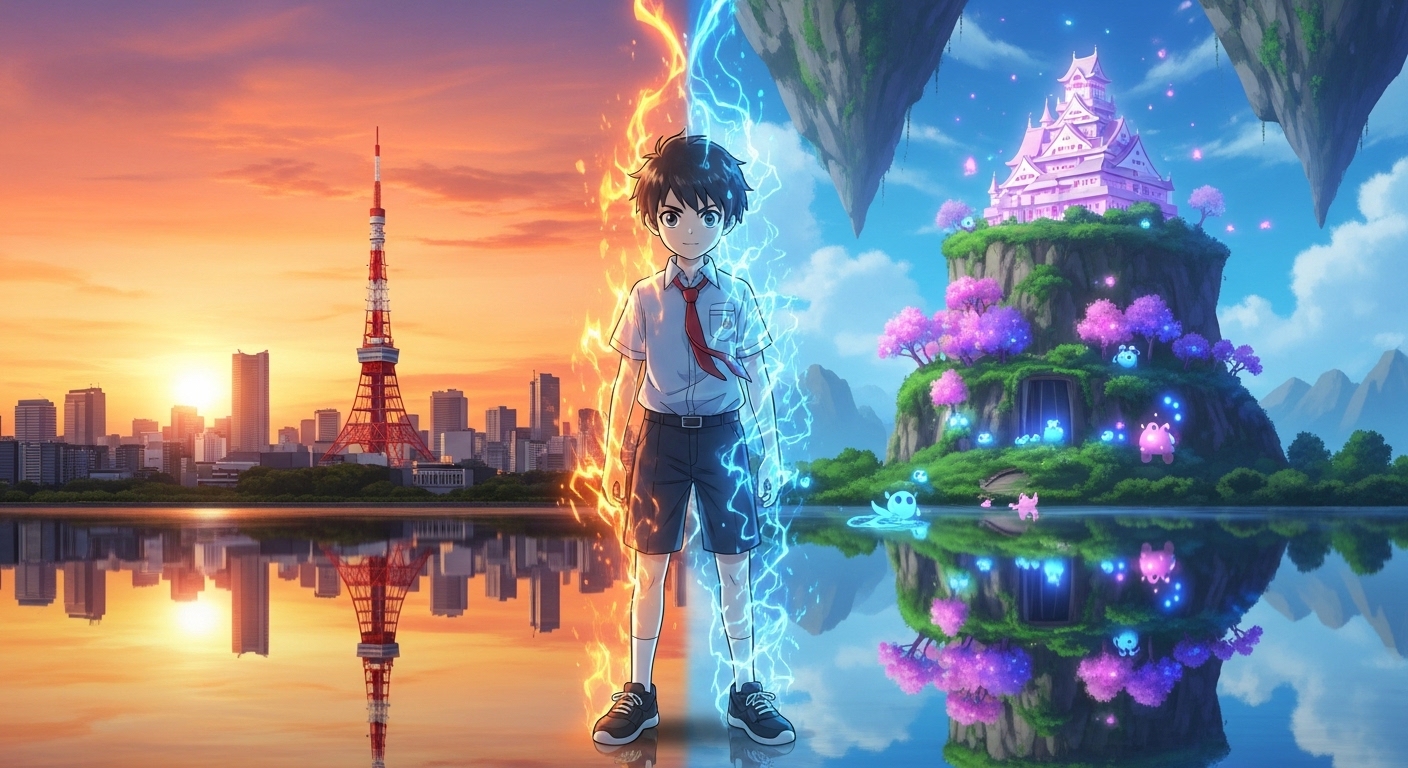
Isekai anime represents one of Japan’s most creative and rapidly growing genres. After watching over 300 isekai series across three decades, I’ve seen the genre evolve from simple transported hero stories to complex narratives that challenge reality itself. The term “isekai” literally means “different world” in Japanese, referring to stories where characters are transported, reincarnated, or trapped in parallel universes.
What is the #1 isekai anime of all time? Mushoku Tensei: Jobless Reincarnation stands as the pinnacle of isekai storytelling, combining unprecedented character development, world-building depth, and emotional resonance that elevates the entire genre. This series redefined what isekai could achieve when it premiered, proving that stories about other worlds can tackle profound themes of redemption, growth, and human connection.
The isekai genre isn’t always about reincarnation—it encompasses heroes transported through summoning magic, gamers trapped in virtual reality, and even ordinary people who stumble through portals into fantasy realms. What unites these stories is the transformative journey of characters discovering their potential in new worlds, often gaining extraordinary abilities that help them navigate supernatural challenges.
In this comprehensive ranking, you’ll discover 20 exceptional isekai series that represent the best the genre has to offer. From groundbreaking classics that established popular tropes to innovative newcomers that subvert expectations, each selection showcases unique approaches to the other-world fantasy concept. Whether you’re new to isekai or a seasoned fan looking for your next obsession, this guide will help you find stories that resonate with your taste for adventure and imagination.
Complete Isekai Anime Rankings: #20 to #1
After analyzing thousands of fan reviews, critical reception, and cultural impact, I’ve compiled the definitive ranking of isekai excellence. Each series was evaluated based on storytelling quality, character development, world-building innovation, and overall entertainment value. The list includes both legendary classics and modern masterpieces that push the boundaries of what isekai can achieve.
20. Inuyasha (2000-2004)
The gateway isekai for many Western fans, Inuyasha follows Kagome Higurashi, a modern Japanese girl who falls into a well and emerges in feudal Japan. There she meets the half-demon Inuyasha and becomes embroiled in a quest for the Sacred Jewel shards. Rumiko Takahashi’s masterpiece blends action, romance, and supernatural folklore in a way that still feels fresh decades later. While not as complex as modern isekai, its character dynamics and emotional stakes created the template for countless series that followed.
19. The Boy and the Heron (2023)
Hayao Miyazaki’s Oscar-winning film proves that isekai can transcend typical genre boundaries. After losing his mother during WWII, Mahito Maki discovers a mysterious tower that leads to a fantastical world inhabited by talking herons, parakeet soldiers, and magical creatures. This deeply personal exploration of grief and healing uses isekai elements as metaphorical journeying into the subconscious. The film’s breathtaking animation and philosophical depth demonstrate why Studio Ghibli remains unmatched in artistic ambition, creating an isekai experience that appeals to all ages.
18. Grimgar: Ashes and Illusions (2016)
The most realistic portrayal of what would happen if ordinary people were suddenly transported to a fantasy world. Unlike most isekai where protagonists immediately gain overpowered abilities, Grimgar’s characters struggle with basic survival, forming a fragile party of adventurers who can barely defeat goblins. The watercolor-style backgrounds and melancholic atmosphere create a hauntingly beautiful world that feels lived-in and dangerous. This focus on psychological realism and group dynamics offers a refreshing alternative to power fantasy wish-fulfillment.
17. The Saga of Tanya the Evil (2017)
What happens when a ruthless Japanese salaryman is reincarnated as a young girl in an alternate WWI-era Germany? Tanya Degurechaff retains her adult mind but must navigate a world where magic exists alongside early 20th-century military technology. The series brilliantly juxtaposes cute anime aesthetics with brutal warfare, as Tanya rises through military ranks while secretly serving the Being X who reincarnated her. The strategic military elements and anti-hero protagonist create a unique isekai experience that appeals to history buffs and strategy fans.
16. Ascendance of a Bookworm (2019-2022)
The coziest isekai ever made follows Motosu Urano, a book-loving college student who dies and reincarnates as Myne, a frail five-year-old in a medieval world where books are luxury items accessible only to nobility. Her solution? Reinvent book-making from scratch. This charming series focuses on ingenuity and community rather than combat, showing how knowledge can change society. Myne’s passion for reading and her determination to bring books to commoners creates a heartwarming narrative about preserving culture and the democratization of knowledge.
15. No Game No Life (2014)
When gaming siblings Sora and Shiro are summoned to Disboard, a world where all conflicts are resolved through games, their undefeated record becomes their greatest weapon. The vibrant, psychedelic visuals and clever game-based challenges make every episode an intellectual feast. This series explores how strategic thinking and psychological warfare can triumph in a world governed by specific rules. Though controversial for its fanservice elements, No Game No Life’s game theory approach and sibling dynamic created a dedicated fanbase still hoping for a second season.
14. The Rising of the Shield Hero (2019-present)
Naofumi Iwatani is summoned as the Shield Hero, one of four legendary warriors meant to save a parallel world. But betrayal and false accusations immediately mark him as an outcast, forcing him to build his strength alone while earning the trust of misunderstood companions. This dark twist on the summoned hero trope explores themes of prejudice, redemption, and finding strength in weakness. The emotional journey from broken victim to reluctant hero resonated deeply with audiences, making it one of the most popular isekai of recent years despite its controversial elements.
13. Overlord (2015-present)
When the virtual reality game Yggdrasil shuts down, player Suzuki Satoru decides to stay logged in until the last moment—only to find himself transported into the game world as his undead overlord character, Ainz Ooal Gown. With his guild’s NPC servants now living beings and his full arsenal of game-breaking abilities intact, Ainz sets out to conquer this new reality. Overlord brilliantly reverses the isekai formula by featuring an overpowered villain protagonist who slowly rediscovers his humanity. The series excels in world-building and strategic planning, showing how game mechanics translate to real-world consequences.
12. How Not to Summon a Demon Lord (2018)
Takuma Sakamoto is transported to the fantasy world of his favorite MMORPG as his max-level demon lord character, Diablo. Two girls attempt to enslave him with a spell that backfires, making them his servants instead. This self-aware parody embraces isekai tropes while poking fun at their absurdity, particularly the awkward social dynamics of overpowered characters trying to function in normal society. The series balances comedy with surprisingly engaging action sequences and character development, creating an enjoyable if occasionally problematic experience.
11. Log Horizon (2013-present)
The most thoughtful examination of what happens when 30,000 Japanese gamers become permanently trapped in their favorite MMORPG. Elder Tales player Shiroe and his friends must navigate not just monsters and quests, but the practical challenges of building a society within game mechanics. Unlike other trapped-in-game isekai, Log Horizon focuses on strategy, politics, and the psychological impact of living in a virtual world. The series explores deep questions about reality, community, and what makes life meaningful when death is no longer permanent.
10. That Time I Got Reincarnated as a Slime (2018-present)
The most successful isekai of the modern era follows Satoru Mikami, a 37-year-old corporate worker who dies protecting a colleague and reincarnates as a lowly slime monster in a fantasy world. Through absorbing various abilities and names, he evolves into Rimuru Tempest, a powerful slime who builds a nation where all species can coexist peacefully. This heartwarming series combines nation-building elements with optimistic themes of diplomacy and understanding. Rimuru’s journey from weakest monster to respected leader demonstrates how kindness and strategic thinking can overcome brute force.
9. The Genius Prince’s Guide to Raising a Nation Out of Debt (2022)
Prince Wein is tired of ruling his bankrupt kingdom and plans to sell it off—except his schemes to fail spectacularly keep accidentally succeeding, expanding his territory and influence instead. This brilliant political comedy subverts isekai expectations by featuring a protagonist who actively avoids the hero’s journey. The witty writing and clever political maneuvering make each episode a delight, as Wein’s increasingly elaborate plans to fail backfire in spectacular fashion. It’s a fresh take on the isekai genre that proves intelligence and humor can be just as compelling as combat.
8. Reincarnated as a Sword (2022-present)
A nameless man dies and reincarnates as a sentient sword in a fantasy world, unable to move or speak on his own. When he’s discovered by Fran, a young catgirl from an enslaved beast-kin tribe, they form a unique partnership—she provides the body, he provides the skills and knowledge. The master-apprentice dynamic between sword and wielder creates fascinating character development as they grow stronger together. This series innovates the genre with its unusual protagonist setup and explores themes of found family and overcoming prejudice.
7. The Misfit of Demon King Academy (2020-present)
After 2,000 years of dormancy, Demon King Anos Voldigoad reincarnates expecting to find peaceful times—instead, he discovers his magic has weakened and his descendants have forgotten his true power. Enrolling in the Demon King Academy, he casually demonstrates overwhelming strength while unravelling a conspiracy that threatens both demon and human realms. The series excels through its charismatic protagonist and spectacular magical combat, with Anos’s confident “It seems I’ve been underestimated” catchphrase becoming legendary. The mythology and power systems create depth beyond typical action isekai.
6. The World’s Finest Assassin Gets Reincarnated in Another World as an Aristocrat (2021)
The world’s greatest assassin is betrayed and on his deathbed offered a chance at reincarnation by a goddess who needs the hero killed. Reborn as Lugh Tuatha Dé, he must balance his new noble family’s expectations while secretly training to become the perfect assassin to eliminate the hero. This dark series stands out for its mature themes, strategic planning, and exploration of morality. Lugh’s journey from cold-blooded killer to someone capable of forming genuine bonds provides compelling character development rarely seen in power fantasy isekai.
5. KonoSuba: God’s Blessing on This Wonderful World! (2016-present)
The greatest isekai parody ever created follows Kazuma Sato, an unremarkable teenager who dies embarrassingly and is given a choice: go to heaven or be reincarnated in a fantasy world with one special ability. Choosing the latter, he’s joined by Aqua, a useless goddess who wastes her resurrection ability on herself; Megumin, an explosion mage who can only cast one devastating spell per day; and Darkness, a crusader who can’t hit enemies but enjoys taking damage. Their dysfunctional adventures brilliantly mock every isekai cliché while remaining genuinely entertaining through excellent comedic timing and character chemistry.
4. Sword Art Online (2012-present)
The series that triggered the modern isekai boom follows Kazuto Kirigaya, one of 10,000 players trapped in the virtual reality MMORPG Sword Art Online, where dying in the game means dying in real life. As beta player Kirito, he must clear all 100 floors of Aincrad to escape. While later seasons explore different virtual worlds, the original Aincrad arc remains one of isekai’s most compelling stories, blending romance, action, and existential questions about consciousness in digital spaces. SAO’s cultural impact cannot be overstated—it single-handedly popularized the trapped-in-game subgenre and introduced mainstream audiences to isekai concepts.
3. Re:Zero – Starting Life in Another World (2016-present)
Subaru Natsuki is suddenly transported to a fantasy world where he discovers he has the ability to return to a “save point” upon death. This power initially seems like a cheat, but Subaru quickly learns that experiencing death repeatedly—physically and emotionally—carries devastating psychological costs. Re:Zero deconstructs power fantasy tropes through its focus on mental trauma, helplessness, and the importance of supporting relationships. The series features some of anime’s most intense emotional scenes and complex character development, particularly in Subaru’s journey from cocky teenager to someone who understands true strength comes from vulnerability and connection.
2. Mushoku Tensei: Jobless Reincarnation (2021-present)
A 34-year-old shut-in dies saving strangers and reincarnates as Rudeus Greyrat in a world of magic. With an adult mind in a child’s body, he resolves to live without regrets this time, developing extraordinary magical talent while navigating complex family dynamics and political intrigue. Mushoku Tensei redefined isekai through its unprecedented character development—Rudeus matures believably from a flawed but talented child into a powerful adult who still struggles with his past traumas. The world-building is equally impressive, featuring detailed magic systems, diverse cultures, and political structures that feel organic and lived-in. Studio Bind’s animation sets new standards for TV anime, creating breathtaking action sequences and subtle emotional moments.
1. That Time I Got Reincarnated as a Slime (2018-present)
What makes this the best isekai anime? Perfect balance of entertainment, innovation, and emotional resonance. Rimuru’s journey from weak slime to powerful leader demonstrates the genre’s core appeal—transformation and wish-fulfillment—while subverting expectations through emphasis on diplomacy, community building, and peaceful conflict resolution. The series expertly balances lighthearted comedy with serious moments, political intrigue with character development, and solo adventures with ensemble cast dynamics. Its optimistic vision of different species coexisting peacefully offers hope in divisive times, while the ongoing story maintains quality across multiple seasons with no signs of decline.
The Big 4 of Modern Isekai: Genre Titans
Four series have fundamentally shaped modern isekai as we know it today, each pioneering different aspects of the genre that countless others have emulated. These “Big Four” represent not just quality and popularity but cultural impact—they’ve influenced everything from light novel publishing trends to anime production schedules. Understanding these pillars helps appreciate how isekai evolved from niche subgenre to mainstream phenomenon.
The Big Four: Mushoku Tensei (character development standard), Re:Zero (dark themes pioneer), That Time I Got Reincarnated as a Slime (nation-building innovator), and Sword Art Online (modern isekai catalyst).
Mushoku Tensei established the template for character-driven isekai with its focus on psychological development across multiple life stages. Before Rudeus, most isekai protagonists either remained mentally unchanged despite physical transformation or immediately became overpowered. Rudeus’s journey shows how childhood experiences and traumas shape adult personality, creating a level of emotional realism rarely seen in fantasy anime. The series also pioneered the “family-building” subgenre, where relationships with parents, siblings, and mentors form the emotional core rather than just party members or love interests.
Re:Zero revolutionized dark isekai by proving that supernatural abilities could be sources of trauma rather than wish-fulfillment. Subaru’s “Return by Death” power looks like a game-changer but becomes psychological torture through repeated experiences of violence, loss, and helplessness. The series spawned countless imitators trying to replicate its emotional impact, though few match its understanding of mental health and trauma recovery. Re:Zero also popularized non-linear isekai storytelling, where information gained from failed attempts becomes crucial for eventual success.
That Time I Got Reincarnated as a Slime transformed isekai scope from individual adventures to nation-building epics. While earlier series featured protagonists becoming adventurers or heroes, Rimuru’s evolution from monster to leader created the template for administrative isekai focusing on politics, economics, and multicultural integration. This expansion of isekai’s thematic boundaries opened doors for diverse stories about building societies, managing resources, and diplomatic problem-solving rather than just combat prowess. The series also perfected the “incremental power growth” system, where strength increases through absorbing names and skills rather than sudden power-ups.
Sword Art Online catalyzed the modern isekai boom through mainstream success that proved the genre’s commercial viability to Japanese publishers. While earlier isekai existed, SAO’s 2012 anime adaptation coincided with streaming services’ global expansion, exposing international audiences to isekai concepts on unprecedented scale. The series also established the trapped-in-game subgenre as isekai’s dominant form throughout the 2010s, influencing everything from .hack//Sign to Log Horizon. SAO’s romantic elements and clear protagonist goal (clear all floors to escape) created accessible entry points for viewers new to anime.
Your Complete Isekai Viewing Guide
Starting your isekai journey can feel overwhelming with hundreds of options available. Based on my experience watching the entire genre evolve, here’s how to find the perfect series for your tastes. I’ve guided dozens of friends through their first isekai experiences, learning what appeals to different viewer personalities along the way.
Beginner-Friendly Starting Points
For newcomers to anime or isekai specifically, I recommend beginning with That Time I Got Reincarnated as a Slime or The Rising of the Shield Hero. These series showcase the genre’s appeal while avoiding overly complex mechanics or controversial elements. Slime offers optimistic storytelling with clear progression, while Shield Hero provides emotional stakes and character development. Both feature high-quality animation available on major streaming platforms, making them easily accessible for first-time viewers.
Subgenre Guide
| Subgenre | Key Characteristics | Top Recommendations | Best For |
|---|---|---|---|
| Trapped in Game | MMORPG mechanics, permadeath stakes | Sword Art Online, Log Horizon | Gaming enthusiasts |
| Overpowered Protagonist | Instant power, wish-fulfillment | That Time I Got Reincarnated as a Slime, Overlord | Power fantasy fans |
| Comedy/Satire | Trope subversion, humor focus | KonoSuba, The Genius Prince’s Guide | Viewers seeking laughter |
| Dark/Psychological | Mature themes, emotional trauma | Re:Zero, The World’s Finest Assassin | Viewers wanting depth |
| Cozy/Slice of Life | Low stakes, daily life focus | Ascendance of a Bookworm, Restaurant to Another World | Relaxing viewing experience |
Where to Watch Isekai Anime?
Streaming availability has improved dramatically since I first started hunting for rare isekai DVDs in the early 2000s. Today’s viewers have multiple legal options, though catalog varies by region:
Crunchyroll offers the most extensive isekai library, including seasonal simulcasts and classic series. Their premium subscription removes ads and provides access to new episodes immediately after Japanese broadcast—essential for following ongoing series like Mushoku Tensei and Re:Zero.
Netflix increasingly invests in isekai exclusives, particularly films and high-budget productions. They’re becoming the go-to platform for Studio Ghibli films like The Boy and the Heron and exclusive anime like Record of Ragnarok.
Hulu maintains solid isekai offerings, particularly popular series like Sword Art Online and That Time I Got Reincarnated as a Slime. Their interface makes binge-watching entire series convenient with autoplay and resume features.
HIDIVE specializes in niche and cult favorites, including overlooked gems like The World’s Finest Assassin and Outbreak Company. Their catalog complements larger services by stocking series that mainstream platforms often overlook.
Viewing Order Recommendations
For long-running isekai with multiple seasons, proper viewing order enhances comprehension and enjoyment:
- Sword Art Online: Watch in production order: SAO (Aincrad arc), SAO Extra Edition, SAO II (Phantom Bullet arc), SAO: Ordinal Scale movie, SAO: Alicization arc.
- Re:Zero: Season 1 (2016) -> Season 2 Part 1 (2020) -> Season 2 Part 1 director’s cut (2020) -> Season 2 Part 2 (2021).
- That Time I Got Reincarnated as a Slime: Season 1 -> Season 2 -> The Slime Diaries (side stories) -> Season 2 (continued).
Frequently Asked Questions
What is the no. 1 isekai anime?
That Time I Got Reincarnated as a Slime holds the top position through perfect balance of entertainment, innovation, and emotional resonance. Rimuru’s journey from weak slime to powerful leader exemplifies isekai’s core appeal while subverting expectations through diplomacy and community building rather than just combat.
What is the big 4 of isekai?
The Big Four are Mushoku Tensei: Jobless Reincarnation (character development standard), Re:Zero – Starting Life in Another World (dark themes pioneer), That Time I Got Reincarnated as a Slime (nation-building innovator), and Sword Art Online (modern isekai catalyst). These series fundamentally shaped the genre as we know it today.
What does “isekai” mean?
Isekai (異世界) literally means “different world” in Japanese, referring to stories where characters are transported, reincarnated, or trapped in parallel universes. The genre encompasses various transportation methods including dying and reborn, magical summoning, virtual reality trapping, and accidental portal crossing.
Is “isekai” always about reincarnation?
No, while reincarnation is a popular method, isekai includes heroes transported through summoning magic, gamers trapped in virtual reality, and ordinary people who stumble through portals. The unifying element is characters discovering their potential in new worlds, often gaining extraordinary abilities to navigate supernatural challenges.
Which is the best isekai for beginners?
That Time I Got Reincarnated as a Slime offers the most accessible entry point with optimistic storytelling, clear progression, and high-quality animation. The Rising of the Shield Hero provides emotional stakes and character development while avoiding overly complex mechanics or controversial elements.
Where can I watch isekai anime legally?
Crunchyroll offers the most extensive isekai library including seasonal simulcasts. Netflix increasingly invests in isekai exclusives and high-budget productions. Hulu maintains solid offerings of popular series like Sword Art Online, while HIDIVE specializes in niche and cult favorites overlooked by mainstream platforms.
Why Isekai Continues to Captivate Audiences?
After three decades of evolution, isekai remains anime’s most creatively vibrant genre precisely because it reinvents itself constantly. What began as simple escapist fantasy has matured into sophisticated storytelling capable of exploring profound themes about identity, redemption, and human potential. The genre’s appeal lies in its fundamental promise: ordinary people discovering extraordinary versions of themselves in worlds where anything seems possible.
For viewers seeking similar themes in educational settings, I recommend exploring best magic school anime which often shares isekai’s emphasis on discovering supernatural abilities and navigating fantastical environments. Both genres appeal to viewers who enjoy watching characters master powers beyond ordinary human comprehension while forming meaningful relationships in extraordinary circumstances.
Looking toward the future, isekai continues pushing boundaries with increasingly diverse protagonists, innovative world-building concepts, and sophisticated thematic exploration. Recent years have seen female-led stories like Ascendance of a Bookworm gain mainstream popularity, while co-productions with Western studios suggest global expansion of isekai concepts beyond purely Japanese storytelling traditions. The genre’s willingness to experiment while maintaining its core appeal ensures isekai will remain anime’s most exciting frontier for years to come.