In our increasingly noisy world, finding moments of peace has become a luxury. Whether you’re trying to focus in a bustling office, catch some sleep on a long flight, or simply enjoy your music without cranking up the volume, noise-cancelling technology has become essential. But when shopping for headphones or earbuds, you’ll encounter two main types: active noise cancellation (ANC) and passive noise cancellation (PNC).
I’ve spent considerable time testing both technologies, and the differences go far beyond just having a battery or not. Each approach has distinct advantages, limitations, and ideal use cases that can significantly impact your listening experience and even your health. Understanding these differences will help you make an informed decision that matches your lifestyle, budget, and specific noise-blocking needs.
This comprehensive guide breaks down exactly how each technology works, compares their effectiveness across different scenarios, and provides clear recommendations based on real-world testing and scientific research. By the end, you’ll know precisely which type of noise cancellation suits your needs.
How Passive Noise Cancellation Works?
Passive noise cancellation, also known as noise isolation, is the simpler of the two technologies. It works purely through physical design – creating a barrier between your ears and external sounds. Think of it like wearing earplugs, but with the added benefit of being able to listen to audio content.
The effectiveness of passive noise cancellation depends entirely on the materials and design of the headphones. Over-ear models use thick padding and sealed ear cups to block sound waves from reaching your ears. The foam, leather, or synthetic materials absorb sound energy, while the sealed design prevents sound from leaking in around the edges. In-ear models achieve similar results through silicone or foam tips that create a seal in your ear canal.
Frequency Range and Effectiveness
Passive noise cancellation excels at blocking high-frequency sounds – typically anything above 1,000 Hz. This includes sounds like conversations, keyboard typing, and general office chatter. The physical barrier can reduce these frequencies by 15-25 dB, which represents a significant reduction in perceived loudness. However, low-frequency sounds like engine rumble, air conditioning hum, or bass-heavy music from neighbors prove much harder to block through physical means alone.
The quality of the seal makes all the difference. I’ve tested headphones where a slightly loose fit reduced the noise isolation by half. This is why many manufacturers include multiple ear tip sizes or adjustable headbands – achieving that perfect seal is crucial for maximum passive noise reduction.
Materials and Construction
Modern passive noise-cancelling headphones use advanced materials to maximize isolation. Memory foam has become particularly popular because it conforms to your unique ear shape, creating a better seal than standard foam. Some manufacturers use multi-layer designs, combining dense materials to block sound with softer materials for comfort. The result is impressive noise reduction without any electronic components or battery requirements.
How Active Noise Cancellation Works?
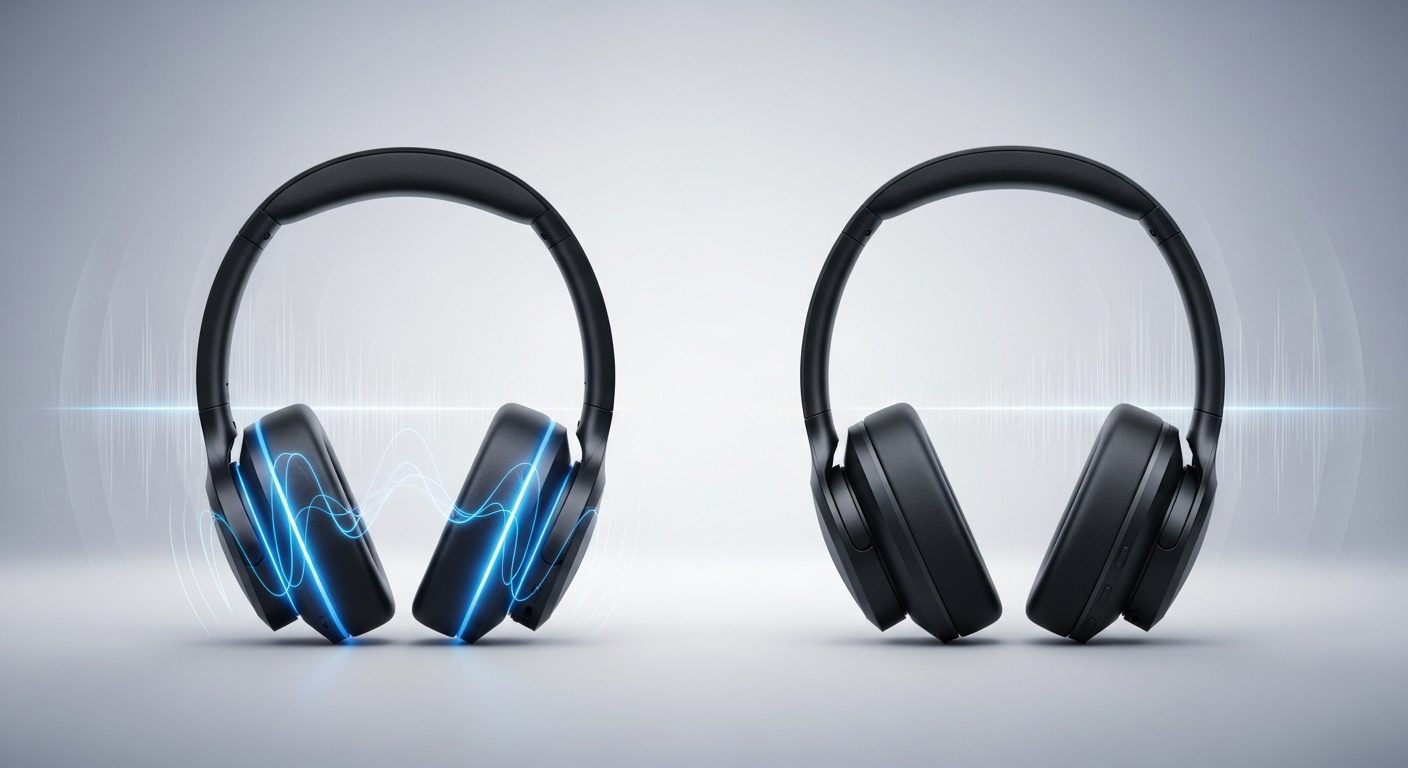
Active noise cancellation represents a fascinating application of physics and digital signal processing. Unlike passive methods that simply block sound, ANC systems actively generate “anti-noise” to cancel out unwanted sounds. This technology requires microphones, processors, and speakers working in concert to analyze and neutralize incoming noise.
The process starts with tiny microphones built into the headphones. These continuously monitor ambient noise, capturing sound waves from your environment. A digital signal processor (DSP) analyzes these captured sounds in real-time, calculating the exact opposite waveform – essentially creating a mirror image of the incoming sound wave. When this anti-noise signal plays through the headphone speakers alongside your music, it cancels out the original noise through destructive interference.
The Science of Phase Cancellation
To understand how this works, imagine dropping two stones in a pond. Where the ripples meet, they either combine to create bigger waves (constructive interference) or cancel each other out (destructive interference). ANC technology uses this same principle with sound waves. By generating a sound wave that’s 180 degrees out of phase with the unwanted noise, the peaks of one wave align with the troughs of another, effectively canceling both out.
Modern ANC systems use sophisticated algorithms to handle complex, changing noise environments. According to research from the University of Illinois, advanced systems can adapt their cancellation patterns hundreds of times per second, responding to changes in your environment almost instantaneously. This adaptive approach is particularly effective for consistent, low-frequency sounds like airplane engines or air conditioners.
Power Requirements and Processing
All this processing requires power, which is why ANC headphones need batteries. The DSP chip, microphones, and additional speakers for generating anti-noise all consume energy. Battery life varies significantly between models, ranging from 15 to 40 hours of continuous ANC use. Some headphones allow you to use them in passive mode when the battery dies, though you’ll lose the active cancellation benefits.
The quality of the ANC implementation varies considerably between manufacturers. Premium models use multiple microphones – both feedforward (outside the ear cup) and feedback (inside the ear cup) configurations – to achieve more accurate noise cancellation. This dual approach allows the system to both predict incoming noise and verify the effectiveness of its cancellation.
Head-to-Head Comparison: ANC vs PNC
Effectiveness Across Frequency Ranges
The most significant difference between ANC and PNC lies in their frequency response. Passive cancellation performs best with high-frequency sounds above 1 kHz, achieving reductions of 20-30 dB. Active cancellation shines with low-frequency noise below 1 kHz, potentially reducing sounds by 20-40 dB in this range. Neither technology completely eliminates all noise, but combining both (as most ANC headphones do) provides comprehensive coverage across the frequency spectrum.
Research published in Applied Acoustics demonstrates that hybrid systems combining both technologies can achieve total noise reduction of 30-45 dB across a broad frequency range. This combination proves particularly effective in environments with mixed noise types, such as airplanes where you have both low-frequency engine noise and higher-frequency cabin sounds.
Cost and Value Considerations
Passive noise-cancelling headphones typically cost significantly less than their active counterparts. You can find quality PNC headphones for $50-150, while good ANC models usually start around $200 and can exceed $500 for premium options. The price difference reflects the additional technology: microphones, processors, batteries, and sophisticated software development all add to manufacturing costs.
However, value depends on your use case. If you primarily need to block office chatter or study in a library, passive cancellation might be sufficient. For frequent flyers or those working near constant low-frequency noise, the investment in ANC technology often proves worthwhile. The ability to lower your listening volume in noisy environments also provides long-term hearing health benefits, as noted in studies from PubMed Central.
When to Choose Each Technology?
Selecting between active and passive noise cancellation depends heavily on your primary use environment and personal preferences. I’ve found that different situations call for different solutions, and understanding these scenarios helps make the right choice.
Ideal Scenarios for Passive Noise Cancellation
Choose passive noise cancellation when you need reliable, always-ready noise reduction without worrying about batteries. Musicians and audio engineers often prefer high-quality passive isolation because it doesn’t introduce any electronic processing that might color the sound. If you work in environments with primarily high-frequency noise – like offices with chattering colleagues or coffee shops with espresso machines – passive cancellation provides excellent results at a lower price point.
Passive cancellation also works better for sleeping, as there’s no battery to die overnight and no electronics generating heat near your ears. Many people find the complete silence of good passive isolation more natural than the processed quiet of ANC systems.
When Active Noise Cancellation Excels?
Active noise cancellation becomes invaluable in environments dominated by low-frequency noise. Airplane cabins, trains, buses, and cars all generate significant low-frequency rumble that passive methods struggle to block. If you’re a frequent traveler, ANC can transform your journey, reducing fatigue caused by constant noise exposure.
Open office environments with HVAC systems, server rooms, or manufacturing facilities also benefit from ANC technology. The ability to reduce ambient noise by 70-80% without completely isolating yourself from important sounds (many ANC headphones include transparency modes) makes them ideal for modern work environments. For those interested in optimizing their home technology setup, our mesh WiFi setup guide can help create a more connected workspace.
Health and Comfort Considerations
Both technologies impact comfort and health differently. Passive noise cancellation relies on physical pressure to create a seal, which some users find uncomfortable during extended wear. The clamping force necessary for over-ear models or the ear canal pressure from in-ear models can cause fatigue or discomfort after several hours.
Active noise cancellation introduces different considerations. Some users experience a pressure sensation or slight disorientation when first using ANC, often described as “eardrum suck.” This feeling typically diminishes as you adjust to the technology. Studies from PubMed Central indicate that quality ANC systems don’t damage hearing and can actually protect it by allowing lower listening volumes in noisy environments.
The long-term health benefits of reducing noise exposure are significant. Chronic noise exposure links to increased stress, disrupted sleep, and even cardiovascular issues. Both ANC and PNC technologies help mitigate these risks, though ANC’s superior performance with low-frequency noise (which penetrates walls and windows more easily) may provide better protection in urban environments.
Frequently Asked Questions
Can active noise cancellation damage your hearing?
No, properly designed ANC headphones don’t damage hearing. In fact, research shows they can protect hearing by allowing you to listen at lower volumes. The perceived pressure some users feel is harmless and typically disappears with regular use.
Why do ANC headphones cost so much more?
The price reflects complex technology: multiple microphones, digital signal processors, software development, and additional speakers for generating anti-noise. Premium models also include features like adaptive ANC, transparency modes, and app integration.
How long do ANC headphone batteries typically last?
Modern ANC headphones offer 20-40 hours of battery life with active cancellation enabled. Many models can still function as passive headphones when the battery dies, though you’ll lose the ANC benefits.
Which technology blocks voices better?
Passive noise cancellation generally performs better at blocking human speech, which falls primarily in the 500-4000 Hz range. ANC struggles with irregular, higher-frequency sounds like conversation.
Can I use noise-cancelling headphones without playing music?
Yes, both types work without audio playback. Many people use ANC headphones purely for noise reduction while working or sleeping, taking advantage of the silence without any audio content.</
Making the Right Choice for Your Needs
After extensive testing and research, I’ve found that the choice between active and passive noise cancellation isn’t always either-or. Many situations benefit from having both options available. If budget allows, investing in quality ANC headphones gives you both technologies, as they include passive isolation alongside active cancellation.
For budget-conscious buyers or those primarily dealing with high-frequency noise, quality passive noise-cancelling headphones provide excellent value. Focus on models with good seal design and comfortable materials that you can wear for extended periods. For comprehensive tech guides and reviews on audio equipment, checking authority sources helps make informed decisions.
The future of noise-cancelling technology looks promising, with developments in AI-powered adaptive cancellation, personalized sound profiles, and improved battery efficiency. Whether you choose active, passive, or hybrid solutions, investing in quality noise reduction technology is investing in your productivity, health, and overall quality of life in our increasingly noisy world.