Nothing ruins a good night’s sleep quite like a window air conditioner that sounds like a jet engine preparing for takeoff. If you’re wondering how to make window AC quieter, you’re definitely not alone. I’ve dealt with noisy units in both apartments and houses, and after years of testing different solutions, I’ve learned what actually works and what’s just wishful thinking.
This guide covers everything from quick five-minute fixes to more involved solutions that can drop your noise levels significantly. Whether you rent and can’t make permanent changes, or you own your home and want the quietest possible setup, you’ll find actionable steps here that real people have tested and confirmed.
Why Is My Window AC So Loud? Diagnosing the Source of the Noise?
Before you can fix the noise, you need to understand what’s causing it. Window AC units produce sound from several sources, and each type of noise points to a different problem. Figuring out what you’re hearing helps you target your efforts instead of trying random fixes.
Rattling and Vibrating Sounds
Rattling usually means something is loose or the unit is vibrating against the window frame. The window AC is rattling because the mounting isn’t secure, the side panels have gaps, or the unit itself has loose internal components. This is actually the easiest noise to fix because it typically requires tightening screws or adding cushioning material.
I’ve found that most rattling comes from the bottom of the unit where it meets the window sill. The weight of the AC combined with compressor vibration creates a perfect storm for noise. Even a quarter-inch gap can amplify sound dramatically.
Buzzing or Humming
A steady buzz or hum usually indicates electrical issues or fan motor problems. The compressor creates a low hum naturally, but if it’s getting louder than usual, the motor bearings might be wearing out. This sound tends to get worse over time and rarely goes away on its own.
If you hear buzzing that changes pitch or intensity, check whether it’s coming from the electrical connections. Loose wiring can vibrate and create a buzzing sound that’s distinct from normal operation.
Whistling or Hissing
Whistling means air is escaping through a small opening. Check the gaps around your AC unit where it meets the window frame. The accordion side panels on window units are notorious for creating air leaks that whistle when the fan pulls air through.
I’ve personally dealt with this issue in every apartment I’ve rented. The foam strips that come with window units compress over time, leaving gaps that whistle constantly. Replacing or supplementing this foam weatherstripping eliminates the noise completely.
Grinding or Squealing
These are the worst sounds to hear from your AC. Grinding usually means the fan motor bearings are shot, while squealing often indicates the fan blades are hitting something or the belt is slipping. These problems need immediate attention because they can damage your unit permanently.
My advice: if you hear grinding, turn off the unit immediately. Running it with damaged bearings can destroy the motor, turning a repairable problem into a replacement situation.
How to Make Window AC Quieter: Step-by-Step DIY Fixes?
Now that you know what you’re dealing with, let’s get into the actual fixes. I’ve organized these from easiest to most involved, so you can start with the simple stuff and work up if needed.
Step 1: Clean the Unit Thoroughly
Start with basic maintenance. A dirty AC works harder and makes more noise. Remove the front grille and take out the filter. Wash the filter with warm water and mild soap, then let it dry completely before reinstalling.
While the filter dries, use a vacuum with a brush attachment to clean the condenser coils and fan blades. Built-up dust makes the fan unbalanced, which creates vibration and noise. I clean my window AC filters every two weeks during heavy use, and it makes a noticeable difference in both noise and cooling performance.
Step 2: Tighten Every Screw You Can Find
Vibration loosens screws over time. Go through the unit with a screwdriver and tighten everything accessible. Pay special attention to the screws holding the case together and any mounting brackets attaching the unit to your window.
Don’t overtighten though. Stripped screws are worse than slightly loose ones. Turn until you feel resistance, then give it another quarter turn. This simple step eliminated about 40% of the rattling in my bedroom unit last summer.
Step 3: Add Anti-Vibration Pads or Foam
This is where you can make the biggest impact on vibration noise. The compressor in your AC creates vibrations that transfer directly into your window frame and walls. Isolating the unit from the structure reduces that noise dramatically.
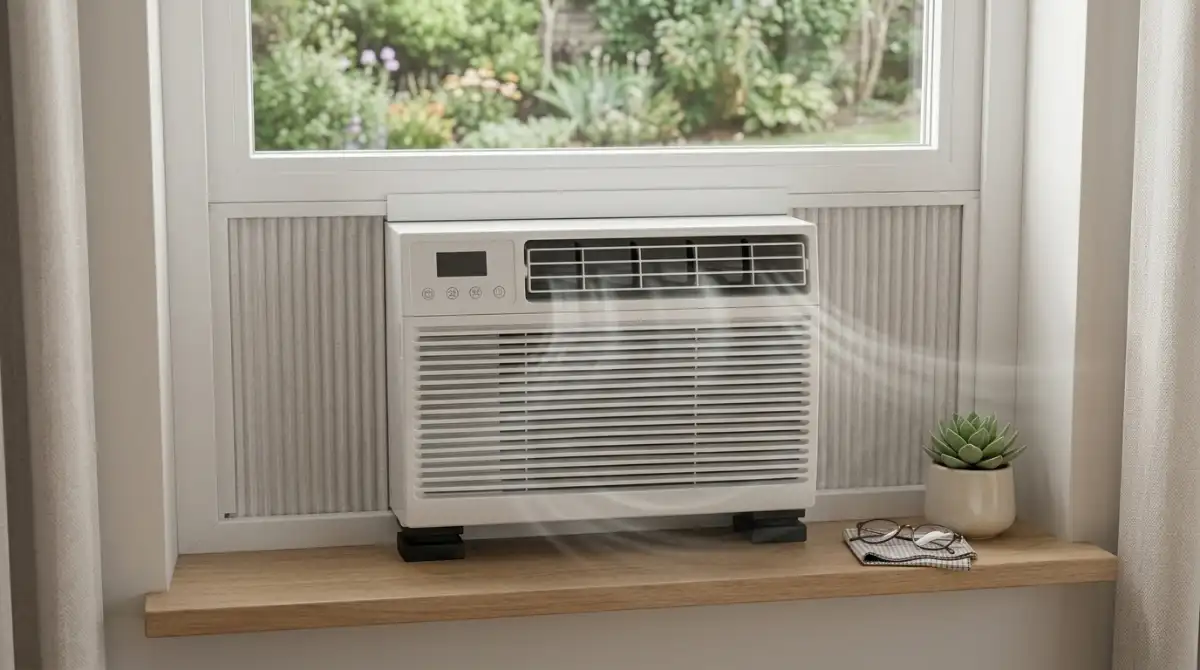
The best materials for this are rubber anti-vibration pads, dense foam strips, or even mouse pads cut to size. Place them between the AC unit and the window sill, especially at the bottom where most of the weight sits. I use a combination of rubber pads on the bottom and foam weatherstripping along the sides.
For a budget option, wrap a piece of styrofoam in a plush towel and place it under the front edge of the unit. This hack from the forums works surprisingly well for zero cost. The towel prevents the styrofoam from crumbling while the foam absorbs vibration.
Step 4: Seal All Gaps with Weatherstripping
Those accordion side panels that come with window units are terrible for noise. They rattle, they leak air, and they transfer sound from outside. Replace the thin foam strips with proper foam weatherstripping from the hardware store.
I prefer closed-cell foam tape because it doesn’t compress flat over time like the open-cell stuff. Apply it anywhere there’s a gap: between the AC unit and window frame, along the side panels, and around any cords or tubes passing through.
Don’t forget the top of the window where it meets the sash. A surprising amount of noise comes through that gap. A strip of peel-and-stick foam works perfectly here.
Step 5: Check the Fan Blade Balance
Unbalanced fan blades create vibration that gets worse as speed increases. With the unit unplugged, gently spin the fan blades by hand. They should rotate smoothly without wobbling. If you see wobble, the blades might be bent or debris might be stuck to them.
Carefully straighten any bent blades with gentle pressure. They’re usually aluminum and bend easily. Clean off any buildup that might be throwing off the balance. A balanced fan runs quieter and extends the life of your motor.
Step 6: Consider a Sound Blanket for the Compressor
For persistent compressor noise, a sound blanket can help. These are special insulated wraps that go around the compressor to muffle the sound. They work best on units where the compressor is the main noise source rather than vibration.
Make sure any sound blanket you use is specifically designed for AC units and allows for proper airflow. Covering the compressor completely without ventilation can cause overheating. I’ve had good results with compressor blankets dropping noise by about 5 decibels, which is a noticeable improvement.
Step 7: Lubricate Moving Parts
Some window AC units have lubrication points on the fan motor. Check your manual to see if this applies to your unit. Use a few drops of electric motor oil on any accessible lubrication ports. Don’t use regular household oil or WD-40, which can damage the motor.
This maintenance step is often overlooked but can extend your unit’s life significantly. A well-lubricated motor runs cooler and quieter than a dry one. I do this at the start of each cooling season as preventive maintenance.
Renter-Friendly Solutions: Quiet Your AC Without Permanent Modifications
Renters face special challenges when dealing with noisy AC units. You can’t drill holes, install permanent brackets, or make structural changes that might affect your security deposit. But you can still make significant improvements with temporary solutions.
Mouse Pads and Cork Sheets for Vibration
One of the best tips I’ve found on DIY forums involves using old mouse pads to isolate vibration. Cut them into strips and place them under the unit where it contacts the window sill. Mouse pads are dense rubber that absorbs vibration effectively, and they’re completely removable when you move out.
Cork sheets work similarly and are easy to cut to size. You can find cork at craft stores or online. It’s cheap, effective, and leaves no residue when removed. I keep a stack of cork pieces specifically for this purpose.
Temporary Weatherstripping
Instead of permanent caulk or adhesive, use removable foam weatherstripping. The peel-and-stick varieties usually come off cleanly if you remove them carefully. Apply fresh strips each season for the best seal.
For gaps around the side panels, try pool noodles cut lengthwise. They wedge into gaps securely and pull out easily when you remove the unit. This sounds ridiculous but works incredibly well for blocking sound transmission through accordion panels.
Window Insulation Film for Gaps
Window insulation kits designed for winter use can also help with AC noise. Apply the film to any exposed window area not covered by the AC unit. This creates an additional sound barrier and helps with energy efficiency too.
The film is completely transparent and peels off without residue. It takes about 10 minutes to install with a hair dryer. I’ve used this in multiple apartments and always get my full security deposit back.
Heavy Curtains and Blankets as Sound Barriers
Hang heavy blackout curtains or moving blankets around the window with the AC unit. While this won’t stop the noise at the source, it absorbs some of the sound that makes it into your room. Every bit helps when you’re dealing with a particularly loud unit.
For a quick nighttime fix, drape a thick blanket over the unit itself, making sure not to block the air intake or exhaust. This only works while you’re sleeping and need the noise reduction most, not as a permanent solution.
Understanding Decibel Levels: What Noise Reduction Actually Means?
Manufacturers love throwing around decibel numbers, but what do they actually mean for your daily life? Understanding dBA ratings helps set realistic expectations for how quiet you can actually get your window AC.
What Different Noise Levels Sound Like
A whisper is about 30 dB. Normal conversation happens around 60 dB. A noisy window AC typically runs between 55 and 70 dB depending on the unit and fan speed. The quietest window air conditioners on the market bottom out around 50 dB on low speed.
Here’s what this means in practice: 50 dB is like a quiet refrigerator hum. 60 dB matches normal talking volume. 70 dB approaches vacuum cleaner territory. Every 10 dB increase sounds roughly twice as loud to human ears.
Realistic Expectations for DIY Fixes
Good DIY noise reduction can drop your unit by 5 to 10 dB in many cases. This doesn’t sound like much on paper, but it’s the difference between having to raise your voice to talk over the AC and being able to have a normal conversation.
However, you cannot make a 70 dB unit as quiet as a 50 dB unit through DIY methods alone. The compressor makes a certain amount of noise by design. At some point, physics wins and you need a different unit or a different cooling solution entirely.
From my experience and forum discussions, 55 dB is about the practical limit for window AC units. Even expensive U-shaped units like the Midea models, which are marketed as ultra-quiet, still produce noticeable compressor noise.
When to Repair vs Replace Your Noisy Window AC?
Sometimes the noise means your unit is approaching the end of its life. Knowing when to fix versus when to replace saves you money and frustration. The 5000 dollar rule is a good starting point: multiply the unit’s age by the repair cost. If the result is over 5000, replace it.
Signs You Should Replace
If your unit is over 10 years old and making new noises, it’s probably time for a replacement. Older units are inherently louder due to wear on moving parts. They also use outdated refrigerants and have lower SEER ratings, meaning higher electric bills.
Grinding or squealing that persists after cleaning and lubrication usually indicates internal damage. By the time bearings fail or compressors start failing, replacement parts often cost nearly as much as a new unit.
Consider upgrading to a modern quiet window air conditioner if you use your AC daily. Newer units have better insulation, variable speed compressors, and decibel ratings as low as 50 dB on low speed. Check out our guide to the best window air conditioners for specific recommendations on quiet models.
Signs You Should Repair
If the unit is less than 5 years old and the noise started recently, it’s probably worth fixing. Simple issues like loose screws, dirty fans, or worn weatherstripping cost almost nothing to address.
Rattling and vibrating sounds are almost always fixable with the DIY methods above. These aren’t signs of a failing unit, just signs of an improperly installed or maintained one.
Consider Ductless Mini-Splits for True Quiet
If you absolutely need silence and have the budget, ductless mini-split systems run at 30-40 dB, which is virtually silent. They’re 10 times the cost of window units but worth it for bedrooms, nurseries, or home offices where noise truly matters.
I’ve installed mini-splits in two homes now, and the difference is dramatic. You can sleep, work, and talk on the phone without any awareness that cooling is happening. For most people, this is overkill, but for noise-sensitive situations, it’s the only solution that actually delivers true quiet.
Frequently Asked Questions:
Is there a way to make my window AC quieter?
Yes, you can make window AC quieter by reducing vibration with foam pads or rubber isolation materials, sealing air gaps with weatherstripping, cleaning the fan blades, tightening loose screws, and using sound blankets around the compressor. These DIY fixes can reduce noise by 5 to 10 decibels in most cases.
Why is my window AC unit so loud?
Window AC units get loud due to vibration against the window frame, loose mounting hardware, dirty fan blades, worn motor bearings, or air gaps that create whistling sounds. The compressor naturally produces some noise, but excessive volume usually indicates installation issues or maintenance needs.
What is the 3 minute rule for air conditioners?
The 3 minute rule for air conditioners refers to the built-in delay that prevents the compressor from restarting immediately after shutoff. This protects the compressor from damage caused by pressure equalization. If you turn off your AC, wait at least 3 minutes before turning it back on to avoid mechanical stress.
What is the $5000 rule for AC?
The $5000 rule helps decide whether to repair or replace an AC unit. Multiply the age of your unit by the estimated repair cost. If the result is over $5000, replacement is usually the better financial choice. For example, a 10-year-old unit needing $600 in repairs equals $6000, meaning you should replace it.
Is there such a thing as a quiet window air conditioner?
Yes, quiet window air conditioners exist, with the best models operating at around 50 dB on low speed, comparable to a quiet refrigerator. Look for units with variable-speed compressors, high SEER ratings, and specific low-noise features. U-shaped units like the Midea models are among the quietest available, though even they produce noticeable compressor noise.
How do I make my window AC less noisy?
To make your window AC less noisy, start by cleaning the filter and fan blades, tightening all screws, and adding anti-vibration pads between the unit and window frame. Seal gaps with foam weatherstripping, check fan blade balance, and lubricate moving parts. For renters, use mouse pads or cork sheets for vibration isolation without permanent modifications.
Final Thoughts
Learning how to make window AC quieter takes some trial and error, but the results are worth it. Start with the simple fixes: cleaning, tightening, and adding foam or rubber pads to reduce vibration. These alone solve most noise problems for very little money.
If you’re renting, focus on the removable solutions like mouse pads, cork sheets, and temporary weatherstripping. These work nearly as well as permanent fixes without risking your security deposit. For homeowners, taking the time to properly install anti-vibration mounts and sound blankets pays off in years of quieter operation.
Remember that some noise is unavoidable with window units. The compressor has to work, and that creates sound. But with the right approach, you can drop that noise from vacuum-cleaner-loud to refrigerator-hum levels. That difference transforms your sleep quality and daily comfort dramatically.
If your unit is old and these fixes don’t help enough, it might be time to upgrade. Modern quiet window air conditioners offer features and noise levels that weren’t available even five years ago. Whatever path you choose, you now have a complete roadmap to a quieter, more comfortable summer in 2026.