If your air conditioner keeps turning on and off every few minutes instead of running through complete cooling cycles, you’re dealing with a problem called short cycling. This frustrating issue wastes energy, drives up your utility bills, and can cause serious damage to your AC system if left unaddressed.
I spent 15 years working in HVAC service before switching to full-time home improvement writing, and short cycling is one of the most common calls we received during summer months. The good news? Some causes have simple DIY fixes. The bad news? Others require professional intervention and can cost thousands if ignored.
In this guide, I’ll walk you through exactly what short cycling is, why your air conditioner turns on and off repeatedly, how to troubleshoot the issue yourself, and when you absolutely need to call a professional. By the end, you’ll know whether that clicking sound from your outdoor unit is a quick filter change or a sign of impending compressor failure.
What Is Air Conditioner Short Cycling?
Short cycling is when your air conditioner turns on and off in rapid bursts, running for less than 10 minutes per cycle instead of the normal 15-20 minutes. This prevents your system from completing a full cooling cycle, leading to poor temperature control, humidity problems, and excessive wear on critical components.
To understand why this matters, you need to know how a normal AC cycle works. When your thermostat detects the temperature has risen above your set point, it signals the compressor to start. The compressor pumps refrigerant through the system, absorbing heat from indoor air and releasing it outside. A complete cycle runs long enough to lower the temperature AND remove humidity from the air.
Short cycling interrupts this process. Your AC starts up, runs for a few minutes, then shuts off before properly dehumidifying or cooling your home. Minutes later, the thermostat calls for cooling again, and the cycle repeats. This constant starting and stopping strains your compressor and drives up energy consumption.
Normal AC Cycling vs Short Cycling
Here’s how to tell if your air conditioner is short cycling or operating normally:
| Characteristic | Normal Cycling | Short Cycling |
|---|---|---|
| Cycle Duration | 15-20 minutes per cycle | Under 10 minutes per cycle |
| Cycle Frequency | 2-3 times per hour | 4-8+ times per hour |
| Energy Use | Standard consumption | 20-30% higher bills |
| Humidity Control | Effective removal | Poor, clammy feeling |
| Comfort Level | Consistent temperature | Uneven cooling, hot spots |
| Compressor Wear | Normal aging | Accelerated failure risk |
If you time your AC cycles and consistently see run times under 10 minutes, you have a short cycling problem that needs attention.
8 Common Causes of Air Conditioner Turning On and Off
After troubleshooting hundreds of short cycling cases, I’ve identified eight root causes. Starting with the simplest and moving to more complex issues, here’s what might be causing your air conditioner to turn on and off repeatedly.
1. Dirty or Clogged Air Filter (Most Common)
A dirty air filter is the number one cause of AC short cycling, accounting for roughly 40% of the cases I’ve diagnosed. When your filter becomes clogged with dust, pet hair, and debris, it restricts airflow across the evaporator coil. This causes the coil to get too cold, potentially freezing up and triggering safety mechanisms that shut down the compressor.
Your AC system has a low pressure switch that monitors refrigerant pressure. When airflow is restricted, pressures drop abnormally low, and this switch turns off the compressor to prevent damage. Once pressures equalize (usually within minutes), the system tries to start again, creating the on-off pattern you’re experiencing.
How to check: Remove your air filter and hold it up to a light source. If you cannot see light passing through, it’s clogged and needs replacement. During heavy use months, check monthly. During lighter use, every 60-90 days is sufficient.
2. Low Refrigerant Levels
Low refrigerant, usually caused by a leak in the system, is the second most common culprit behind air conditioner short cycling. Refrigerant is the lifeblood of your AC system. When levels drop, pressures fall below normal operating ranges, and safety switches shut down the compressor to prevent damage.
Unlike a car that needs oil added periodically, your AC system is a closed loop. Refrigerant doesn’t get “used up.” If levels are low, you have a leak that needs professional repair. Simply adding refrigerant without fixing the leak is a temporary band-aid that will cost you more money long-term.
Signs of low refrigerant: Your home takes longer to cool, air from vents isn’t as cold as it used to be, you hear hissing sounds from refrigerant lines, or you see ice buildup on the outdoor unit’s larger refrigerant line. Only a licensed HVAC technician can legally handle refrigerant and properly repair leaks.
3. Frozen Evaporator Coil
When your evaporator coil freezes over, it blocks airflow and triggers the system to shut down. The coil can freeze due to restricted airflow (dirty filter), low refrigerant, or running the AC when outdoor temperatures are too cool. Once frozen, your system cannot transfer heat effectively, causing the compressor to work harder and overheat.
The thermal overload switch detects excessive heat and shuts off the compressor as a protective measure. Once the compressor cools down, it attempts to restart, but if the coil is still frozen, the cycle repeats.
What to do: Turn your AC off completely and switch the thermostat to “fan only” mode. This will circulate warm indoor air across the frozen coil and help it thaw. Depending on the severity, thawing can take 2-8 hours. Do not try to chip away ice, as this damages the delicate fins on the coil. If freezing recurs, you have an underlying issue requiring professional diagnosis.
4. Oversized AC System
An oversized air conditioner is like using a sledgehammer to hang a picture. It cools your home too quickly, satisfying the thermostat before the system can run long enough to remove humidity. The result? Your house reaches the set temperature in 5-7 minutes, the AC shuts off, but you feel clammy because humidity remains high.
Within minutes, the humidity makes you feel warmer than the actual temperature, so the thermostat calls for cooling again. This rapid on-off pattern is textbook short cycling caused by poor system sizing.
Proper sizing matters: HVAC contractors should perform a Manual J load calculation before recommending equipment. This calculation considers your home’s square footage, insulation levels, window efficiency, local climate, and other factors. If your AC was installed without this calculation, or if a previous contractor simply matched the old unit’s size without evaluating your home, you might have an oversized system. Unfortunately, the only true fix is system replacement with properly sized equipment.
5. Thermostat Issues
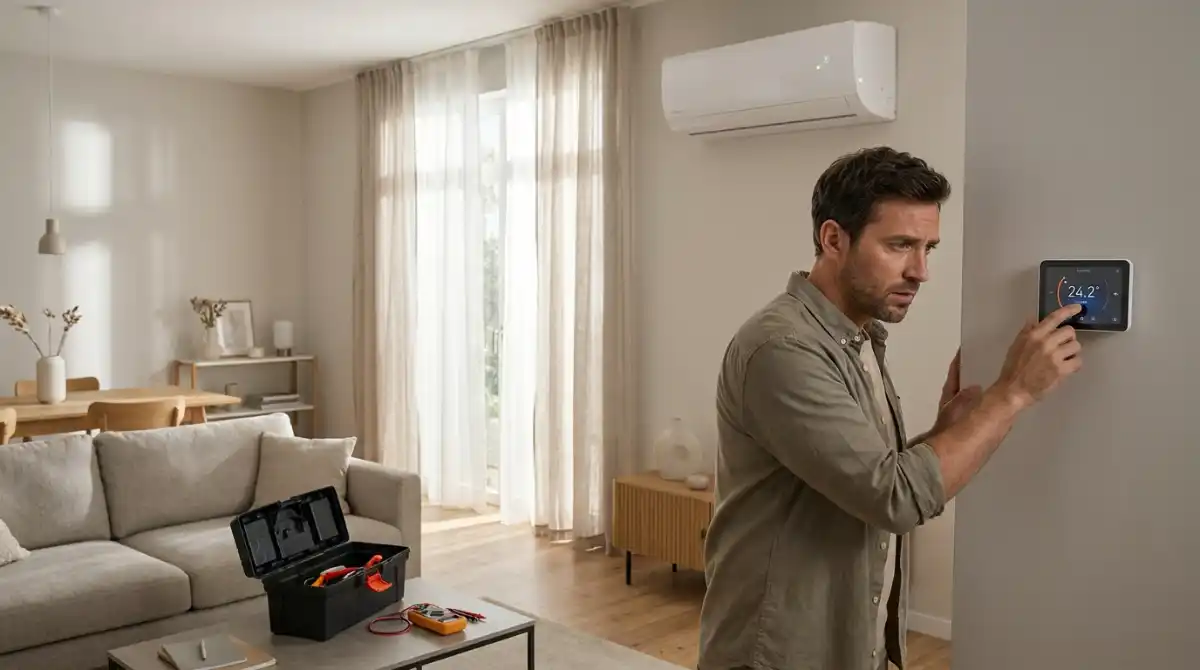
Your thermostat is the brain of your AC system. When it malfunctions or is poorly placed, it can cause your air conditioner to turn on and off erratically. Common thermostat-related causes include improper location, calibration drift, dying batteries, or internal component failure.
Thermostat placement is critical. If installed near a heat source (direct sunlight, kitchen appliances, lamps), it reads temperatures warmer than the rest of your home. The AC runs until that specific spot cools, then shuts off while the rest of the house remains warm. Similarly, placement near a drafty window or air vent causes premature shutoff.
Troubleshooting steps: Replace batteries if your thermostat uses them. Clean dust from inside the unit using compressed air. Verify the temperature reading matches a separate thermometer placed nearby. If readings differ by more than 2-3 degrees, your thermostat may need recalibration or replacement. Consider whether the location makes sense, interior wall away from direct heat and drafts is ideal.
6. Dirty Condenser Coils
The condenser coils in your outdoor unit release heat absorbed from inside your home. When these coils become covered with dirt, grass clippings, pollen, and debris, they cannot dissipate heat efficiently. The system works harder, pressures rise, and the high pressure switch shuts down the compressor to prevent damage.
This is particularly common in spring after pollen season and in fall when leaves accumulate. Homes near construction sites or dirt roads also experience faster coil contamination.
What you can do: Turn off power to the outdoor unit at the disconnect box. Remove visible debris by hand or with a soft brush. Use a garden hose with a gentle spray nozzle to clean the coils from the outside in, working between the fins. Never use a pressure washer, as the high pressure bends the aluminum fins and permanently damages the coil. For heavily soiled coils, a foaming cleaner from a hardware store helps break down grime. Professional deep cleaning may be needed if the unit hasn’t been serviced in years.
7. Electrical Component Failure
Several electrical components can cause short cycling when they fail. The run capacitor provides the electrical boost your compressor needs to start. When it weakens or fails, the compressor struggles to start, overheats, and the thermal overload switch shuts it down. The contactor is a heavy-duty relay that controls power to the compressor. Pitted or welded contacts can cause erratic operation.
Loose wiring connections anywhere in the system create resistance, heat buildup, and intermittent operation. Safety switches, including high and low pressure switches, thermal overloads, and freeze stats, can malfunction and shut down the system prematurely.
Warning: Electrical diagnostics and repairs require training and proper safety equipment. Capacitors can hold lethal electrical charges even when power is disconnected. If you suspect an electrical issue, call a professional. The risk of injury or causing additional damage isn’t worth attempting DIY electrical repairs on HVAC equipment.
8. Compressor Overheating
Your compressor is the heart of your AC system and the most expensive component to replace. When it overheats, a thermal overload switch shuts it down to prevent permanent damage. Once it cools sufficiently, the compressor attempts to restart, creating the short cycling pattern.
Compressor overheating has several causes. Dirty condenser coils prevent heat rejection. Low refrigerant forces the compressor to work harder moving less material. Poor airflow from dirty filters or blocked ducts increases system pressure. Electrical issues like failing capacitors cause hard starts that generate excess heat. Even extreme outdoor temperatures on very hot days can push a marginal system over the edge.
Why this matters: A compressor replacement costs between $1,500 and $3,000 depending on your system size and location. If short cycling continues unchecked, the repeated hard starts and overheating cycles will eventually kill your compressor. Address short cycling promptly to avoid this expensive repair.
Why Air Conditioner Turning On and Off Is a Serious Problem?
Short cycling isn’t just an annoyance. It creates real problems that affect your comfort, wallet, and the longevity of your HVAC system. Here’s what you’re risking if you ignore that air conditioner turning on and off repeatedly.
Higher Energy Bills
Your compressor draws the most power during startup. A normal AC system starts 2-3 times per hour during hot weather. A short cycling system might start 6-8 times per hour or more. Each startup surge consumes significantly more electricity than steady operation, and the frequent stopping prevents the system from reaching peak efficiency.
Homeowners with short cycling AC systems typically see energy bills increase 20-30% compared to normal operation. During peak summer months, this can mean an extra $100-200 on your electric bill depending on your home size and local utility rates.
Compressor Damage and Premature Failure
The compressor experiences the most stress during startup. Bearings are dry before oil circulates, pressures equalize abruptly, and electrical inrush current is highest. Frequent short cycling multiplies these stress events, accelerating wear on internal components.
Under normal conditions, a compressor should last 12-15 years. Short cycling can cut this lifespan in half or worse. When a compressor fails in a system over 10 years old, many homeowners face the decision of expensive repair versus full system replacement.
Poor Humidity Control
Removing humidity from your home takes time. As warm indoor air passes across the cold evaporator coil, moisture condenses and drains away. A complete cooling cycle needs to run 15-20 minutes for adequate dehumidification. Short cycling stops this process early, leaving your home feeling clammy even when the temperature reads correctly.
High indoor humidity isn’t just uncomfortable. It promotes mold growth, damages wood furniture and flooring, and makes your home feel warmer than it actually is. You might find yourself lowering the thermostat further, exacerbating the short cycling problem.
Uneven Cooling and Comfort Issues
When your AC runs for only a few minutes at a time, air doesn’t circulate long enough to reach all rooms evenly. Areas far from the air handler or on upper floors stay warmer while rooms near the thermostat get over-cooled. You end up with hot spots, cold spots, and a home that never feels quite right.
In my service days, I frequently heard homeowners complain that their upstairs bedrooms were unbearable while the downstairs was freezing. Often this traced back to short cycling caused by an oversized system or restricted airflow that prevented proper air distribution.
DIY Troubleshooting: Steps You Can Try First
Before calling a professional, there are several diagnostic steps and simple fixes you can attempt. About half of short cycling cases have DIY solutions. Work through these steps systematically to identify or resolve the issue.
Step 1: Check and Replace Your Air Filter
This is the easiest and most common fix. Turn off your AC, locate your return air filter (usually near the air handler or in a return vent), and remove it. Hold it up to a light source. If light barely passes through or doesn’t pass at all, replace it immediately with a new filter of the same size.
Choose a filter with a MERV rating between 8 and 13 for residential use. Lower ratings don’t filter well enough, while higher ratings can restrict airflow in systems not designed for them. Write the installation date on the filter frame so you know when to change it next.
Step 2: Inspect Your Thermostat
Verify your thermostat settings are correct. Ensure it’s set to “cool” and “auto” rather than “on” (which runs the fan continuously). Replace batteries if applicable. Place a separate thermometer next to the thermostat and compare readings after 30 minutes. If they differ by more than a few degrees, calibration or replacement may be needed.
Consider whether your thermostat’s location makes sense. Is it near a heat source? In direct sunlight? Close to a supply vent blowing cold air? Any of these can cause false readings and short cycling. Relocating a poorly placed thermostat requires professional help but can solve persistent issues.
Step 3: Clear the Area Around Your Outdoor Unit
Walk outside to your condenser unit. Remove leaves, grass clippings, and debris from the top and sides. Trim back vegetation to maintain 2-3 feet of clearance on all sides. Ensure nothing blocks airflow through the coils. If the unit sits under a tree that drops debris, consider protective mesh that allows airflow while catching leaves.
Once cleared, you can gently clean the coils with a garden hose as described earlier. This simple maintenance step often resolves short cycling caused by overheating and high pressure issues.
Step 4: Check for Ice on the Evaporator Coil
Locate your indoor air handler unit, usually in the attic, basement, or a closet. Look for any ice buildup on the refrigerant lines or the coil itself. If you see ice, turn the AC off immediately and switch to “fan only” mode to begin the thawing process.
While thawing, check your filter and replace if dirty. Once thawed completely (this can take several hours), try running the AC again. If it operates normally, the frozen coil was likely caused by restricted airflow. If it freezes again within 24 hours, you have a refrigerant or airflow issue requiring professional diagnosis.
Step 5: Monitor Cycle Timing
After performing the above steps, time your AC cycles for an hour. Note when the compressor starts and stops. Normal cycles run 15-20 minutes with 2-3 cycles per hour in hot weather. If your system still runs under 10 minutes and cycles more than 4 times per hour, the issue likely requires professional attention.
Keep a log of your findings. This information helps HVAC technicians diagnose the problem faster, potentially saving you diagnostic time charges. Note the outdoor temperature, how long each cycle runs, how long between cycles, and any unusual noises.
When to Call an HVAC Professional?
Some short cycling causes require professional tools, training, and certifications to properly diagnose and repair. Here’s when to pick up the phone and what you can expect to pay.
Issues Requiring Professional Repair
Refrigerant leaks and recharging: EPA regulations require Section 608 certification to handle refrigerant. Leak detection requires specialized equipment like electronic leak detectors and nitrogen pressure testing. Simply adding refrigerant without finding and repairing the leak violates federal regulations and wastes money.
Electrical component replacement: Capacitors, contactors, control boards, and wiring repairs require electrical knowledge and safety protocols. Capacitors can retain lethal charges even when power is disconnected. Leave electrical work to trained technicians.
Compressor replacement: When compressors fail or experience terminal damage, replacement is a major repair requiring system evacuation, brazing, pressure testing, and proper refrigerant charging. This is never a DIY job.
System sizing evaluation: If you suspect your system is oversized, a professional can perform a Manual J load calculation and recommend appropriate solutions, which may include equipment replacement or zoning modifications.
Typical Repair Costs
Understanding repair costs helps you make informed decisions about whether to repair or replace your system:
- Service call and diagnosis: $75-150 (often waived if you proceed with repair)
- Air filter replacement: $15-40 (DIY is cheaper)
- Thermostat replacement: $150-400 including installation
- Capacitor replacement: $150-400
- Contactor replacement: $150-350
- Condenser coil cleaning: $100-200
- Evaporator coil cleaning: $200-400
- Refrigerant leak repair and recharge: $500-1,500 depending on leak location
- Compressor replacement: $1,500-3,000
- System replacement: $5,000-12,000 depending on size and efficiency
The $5000 Rule for Repair vs Replace
HVAC professionals use a simple formula to help homeowners decide whether to repair an aging system or invest in replacement. Multiply the age of your AC system by the quoted repair cost. If the result exceeds $5,000, replacement is usually the better financial decision.
For example, if your 12-year-old system needs a $1,500 compressor repair, the calculation is 12 x $1,500 = $18,000. This far exceeds the $5,000 threshold, making replacement the wiser choice. Conversely, if your 5-year-old system needs a $400 capacitor, the calculation is 5 x $400 = $2,000, well below the threshold, so repair makes sense.
This rule of thumb helps prevent throwing good money after bad on systems nearing the end of their service life. The average air conditioner lasts 12-15 years with proper maintenance. Major repairs on systems over 10 years old rarely make financial sense.
Considering a Portable Alternative
If you’re facing expensive repairs or replacement and need immediate cooling while deciding, a portable air conditioner can provide temporary relief for specific rooms. These units don’t require installation and can supplement your struggling system while you arrange professional service or replacement.
Preventing Short Cycling: Maintenance Tips
Regular maintenance prevents most causes of air conditioner short cycling. Follow this schedule to keep your system running smoothly and avoid the frustration of rapid cycling.
Monthly Tasks
Check your air filter and replace it when dirty. During heavy cooling season, this might be monthly. Homes with pets or high dust levels may need more frequent changes. Keep the area around your outdoor unit clear of debris, vegetation, and obstructions.
Seasonal Tasks (Spring and Fall)
Clean your outdoor condenser coils with a garden hose. Check indoor vents and returns for blockages. Test your thermostat for accuracy. Inspect visible refrigerant lines for damage or insulation deterioration. Listen for unusual noises during operation that might indicate developing problems.
Annual Professional Maintenance
Schedule a professional tune-up once per year, ideally in spring before cooling season begins. A technician will check refrigerant levels, test electrical components, clean coils thoroughly, verify system pressures, lubricate moving parts, and identify potential issues before they cause short cycling or breakdowns.
Annual maintenance typically costs $100-200 and pays for itself through improved efficiency, prevented breakdowns, and extended equipment life. Many contractors offer maintenance agreements that include priority service and repair discounts.
Proper System Sizing at Installation
If you’re replacing your AC system, insist on a Manual J load calculation. Any contractor who sizes equipment based solely on square footage or simply replaces what you have with the same size should raise red flags. Proper sizing prevents short cycling from day one and ensures efficient, comfortable operation for the life of your system.
Frequently Asked Questions About Air Conditioner Turning On and Off
Why does my AC unit keep cycling on and off?
Your AC unit keeps cycling on and off due to short cycling, which occurs when something interrupts the normal cooling cycle. Common causes include dirty air filters restricting airflow, low refrigerant from a leak, frozen evaporator coils, an oversized system, thermostat problems, dirty condenser coils, electrical component failure, or compressor overheating. Each of these issues triggers safety mechanisms that shut down the compressor prematurely.
What is the most common cause of short cycling?
The most common cause of AC short cycling is a dirty or clogged air filter. When airflow is restricted, the evaporator coil gets too cold and may freeze, or pressures drop low enough to trigger safety switches that shut off the compressor. This simple issue accounts for approximately 40% of short cycling cases and can be fixed by replacing the filter with a clean one.
Is AC short cycling dangerous?
AC short cycling is not immediately dangerous to your safety, but it poses significant risks to your system and home. It causes compressor damage that can lead to $1,500-$3,000 in repair costs, increases energy bills by 20-30%, and creates humidity problems that promote mold growth. If short cycling is caused by electrical issues, there is a small risk of fire, making prompt attention important.
Should I turn my AC off if it’s short cycling?
Yes, you should turn your AC off if it’s short cycling, especially if you suspect a frozen coil or compressor overheating. Running a short cycling system can cause permanent compressor damage. Turn the system off and switch the thermostat to fan-only mode to help thaw any ice. Check your air filter and outdoor unit for obvious issues. If the problem persists after these checks, call a professional before running the AC again.
Will low refrigerant cause short cycling?
Yes, low refrigerant is a common cause of short cycling. When refrigerant levels drop due to a leak, system pressures fall below normal ranges. Low pressure switches detect this abnormal condition and shut down the compressor to prevent damage. The system attempts to restart after pressures equalize, creating rapid on-off cycles. Low refrigerant requires professional repair because EPA regulations mandate certified technicians handle refrigerant.
What is the $5000 rule for AC?
The $5000 rule helps homeowners decide between repairing or replacing an aging AC system. Multiply the age of your air conditioner by the quoted repair cost. If the result exceeds $5,000, replacement is usually the better financial choice. For example, a 12-year-old system needing a $1,500 compressor repair equals $18,000 (12 x $1,500), far exceeding the threshold. A 5-year-old system needing a $400 repair equals $2,000, making repair the wiser option.
What is the 3 minute rule for AC?
The 3 minute rule (also called a time delay) is a built-in safety feature in most modern AC systems. After the compressor shuts off, the system waits approximately 3 minutes before allowing it to restart. This prevents short cycling damage by allowing pressures to equalize and preventing overheating. If your AC attempts to start before this delay completes, it may indicate a malfunctioning time delay relay or thermostat issue.
Why does my AC keep turning off and on by itself?
Your AC keeps turning off and on by itself due to short cycling triggers including restricted airflow from dirty filters, low refrigerant levels causing pressure switches to activate, frozen coils, an oversized unit cooling too quickly, faulty thermostat readings, dirty condenser coils causing overheating, or failing electrical components like capacitors or contactors. Each cause creates a condition where safety controls shut down the system prematurely.
Conclusion: Don’t Ignore Air Conditioner Turning On and Off
Air conditioner turning on and off repeatedly is a problem that demands attention. Whether it’s a simple fix like replacing a dirty filter or a complex issue requiring professional repair, addressing short cycling promptly saves money, preserves comfort, and protects your HVAC investment.
Start with the DIY troubleshooting steps outlined in this guide. Check your filter, inspect your thermostat, clear debris from your outdoor unit, and monitor your cycle timing. If these steps don’t resolve the issue within a day, call a licensed HVAC professional. Remember, continuing to run a short cycling system can destroy your compressor and turn a $200 repair into a $3,000 replacement.
The key is taking action quickly when you notice that telltale pattern of your air conditioner turning on and off every few minutes. Your comfort, your wallet, and the longevity of your cooling system depend on it.