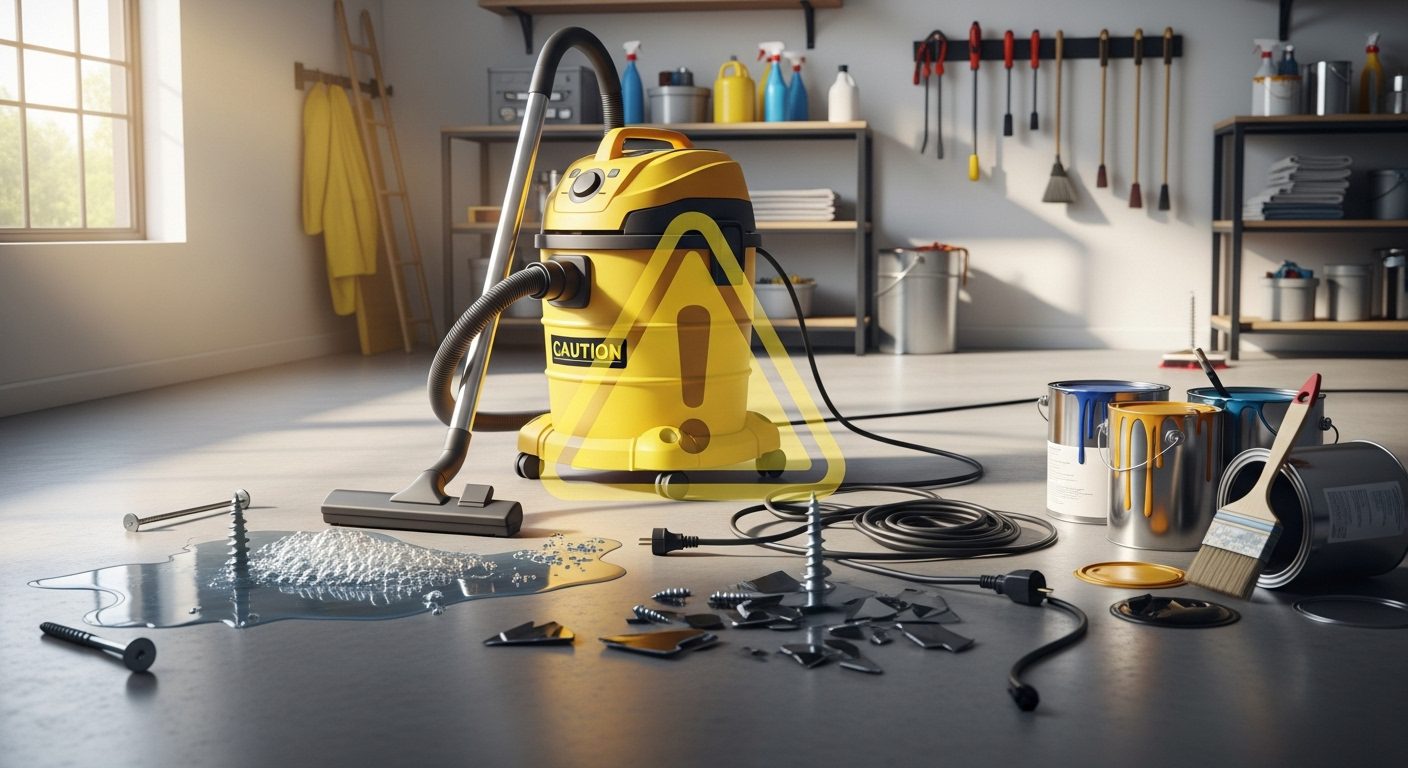
I’ve been using wet/dry vacuums professionally for over a decade, and I can’t tell you how many times I’ve seen people destroy their equipment or put themselves in danger by vacuuming the wrong materials. What makes wet/dry vacuums particularly risky is that their versatility gives people a false sense of security – just because they can handle both wet and dry materials doesn’t mean they can handle everything.
Last month, a contractor friend called me after his shop vac literally caught fire while cleaning up after a renovation project. The culprit? Hot ashes from a fireplace he thought had cooled down enough. His $300 vacuum was toast, and he narrowly avoided burning down his client’s garage. This kind of scenario happens more often than you’d think.
The reality is that wet/dry vacuums, despite their industrial strength and versatility, have serious limitations that many users overlook. Understanding what you should never vacuum isn’t just about protecting your equipment – it’s about preventing fires, explosions, toxic exposures, and costly damage to both your vacuum and your property. Let me walk you through the 15 most dangerous things people commonly try to vacuum, along with safe alternatives for each.
1. Hot Ashes and Embers
This is the number one cause of wet/dry vacuum fires, and it happens year-round. Even ashes that appear cold on the surface can harbor hot embers deep inside for up to 72 hours after a fire has been extinguished. When you vacuum these seemingly cool ashes, the hot embers get exposed to the oxygen-rich environment inside your vacuum, reigniting instantly.
The plastic components in most wet/dry vacuums will melt at temperatures as low as 250°F, and embers can reach 1,100°F. I’ve seen the aftermath of these fires – melted vacuum housings, damaged filters, and in worst cases, garage fires that spread to homes. The risk isn’t worth it.
Safe Alternative: Wait at least 72 hours after your last fire, then use a dedicated ash vacuum with metal components and specialized heat-resistant filters. These vacuums cost around $150-300 and are specifically designed to handle warm ashes safely. For immediate cleanup, use a metal shovel and ash bucket with a tight-fitting lid, storing the ashes outside away from combustibles.
2. Flammable Liquids (Gasoline, Paint Thinner, Alcohol)
Your wet/dry vacuum’s motor creates sparks during normal operation – it’s an inherent characteristic of electric motors. When flammable vapors from gasoline, paint thinner, acetone, or high-proof alcohol enter the vacuum chamber, they create an explosive mixture that needs only a tiny spark to ignite.
The explosion risk is real and immediate. In 2026, fire departments respond to dozens of vacuum-related fires annually, many involving flammable liquids. Even small amounts can be dangerous – just one tablespoon of gasoline can produce enough vapor to equal the explosive force of several sticks of dynamite in a confined space.
Safe Alternative: Use absorbent materials like cat litter, sand, or commercial spill absorbents to soak up flammable liquids. Once absorbed, sweep up the material with a broom and dustpan, then dispose of it according to local hazardous waste guidelines. For large spills, contact a professional hazmat cleanup service.
3. Fine Dust Without Proper Filtration (Drywall, Concrete, Plaster)
Fine construction dust particles are typically 1-10 microns in size – small enough to pass right through standard wet/dry vacuum filters. When you vacuum drywall dust, concrete powder, or plaster without a HEPA filter, you’re essentially turning your vacuum into a dust redistribution machine, spreading harmful particles throughout your space.
These fine particles don’t just make a mess; they pose serious health risks. Silica dust from concrete can cause silicosis, an incurable lung disease. Drywall dust contains gypsum and can irritate respiratory systems. I’ve worked on job sites where improper dust control led to workers developing chronic respiratory issues.
Safe Alternative: Invest in a HEPA-rated filter for your wet/dry vacuum (usually $30-50) or use a dedicated dust extractor with built-in HEPA filtration. For small amounts, use a damp mop or cloth to capture dust without making it airborne. Always wear an N95 mask when dealing with construction dust.
4. Wet Materials Without Removing the Paper Filter
This might seem like common sense, but I see this mistake constantly. Standard paper filters in wet/dry vacuums will disintegrate when exposed to water, clogging your system and potentially damaging the motor. Once wet, these filters lose all filtration capability and can develop mold within 24-48 hours.
The damage goes beyond just ruining a $20 filter. Water that bypasses a damaged filter can reach the motor compartment, causing electrical shorts or corrosion. I’ve tested vacuums that lost 50% of their suction power after just one incident of vacuuming water with a paper filter installed.
Safe Alternative: Always switch to a foam sleeve filter or remove the filter entirely (if manufacturer-approved) before vacuuming liquids. Keep separate filters for wet and dry use, clearly labeled. Some newer models have automatic filter detection – if yours doesn’t, create a simple checklist and tape it to your vacuum.
5. Large Volumes of Water Beyond Capacity
Every wet/dry vacuum has a maximum liquid capacity, typically marked inside the tank. Exceeding this limit causes water to reach the float valve or, worse, get sucked into the motor. Modern wet/dry vacuums have float valves that should shut off suction when the tank is full, but these can fail or stick.
When water reaches the motor, it’s game over. Motor replacement often costs more than buying a new vacuum. Additionally, overfilled tanks can tip over, creating slip hazards and water damage. I once saw a contractor flood an entire finished basement because his overfilled 16-gallon shop vac tipped while he was upstairs.
Safe Alternative: For large water volumes, use a submersible pump or wet vacuum specifically designed for flood recovery. Empty your wet/dry vacuum when it reaches 75% capacity to prevent overflow. For flooding situations, rent professional water extraction equipment that can handle hundreds of gallons.
6. Glass Shards and Sharp Metal Objects
Broken glass and metal shards can puncture vacuum hoses, damage impellers, and create dangerous projectiles inside the vacuum chamber. The high-speed impeller in your wet/dry vacuum can turn small glass fragments into shrapnel, potentially shooting them back out through tears in the hose or filter.
Beyond equipment damage, vacuuming sharp objects creates serious safety hazards. Punctured hoses can develop sudden tears during use, and glass dust becomes embedded in filters, making them dangerous to handle. I’ve seen workers need stitches from handling filters contaminated with glass particles.
Safe Alternative: Use a broom and dustpan for large pieces, followed by a damp mop for fine fragments. For extensive glass cleanup, use thick work gloves and a dedicated scoop and brush set. Consider keeping a “sharps container” – a rigid plastic container for safe disposal of glass and metal pieces.
7. Toxic Chemicals and Pesticides
Vacuuming toxic substances like pesticides, herbicides, or chemical spills doesn’t contain them – it aerosolizes them. Your wet/dry vacuum’s exhaust turns these dangerous chemicals into a fine mist that you and anyone nearby will breathe. The contamination doesn’t stop there; these chemicals coat the inside of your vacuum and contaminate every future use.
Professional hazmat teams never use standard vacuums for chemical cleanup for good reason. The health effects from inhaling aerosolized pesticides include immediate symptoms like headaches and nausea, plus potential long-term effects including neurological damage and cancer.
Safe Alternative: For chemical spills, use appropriate absorbent materials while wearing proper PPE including respirators and chemical-resistant gloves. Follow the product’s Safety Data Sheet (SDS) for cleanup procedures. For significant spills, contact professional hazmat cleanup services. Never attempt to clean unknown chemicals.
8. Human or Pet Waste
Beyond the obvious hygiene issues, biological waste contains pathogens that can become aerosolized when vacuumed. E. coli, salmonella, parasites, and viruses can survive in your vacuum’s warm, moist environment, creating a breeding ground for dangerous microorganisms.
Once contaminated with biological waste, your vacuum becomes permanently compromised. No amount of cleaning can guarantee complete sanitization of all internal components. The liability issues alone – potentially spreading disease to other areas you clean – make this a absolute no-go.
Safe Alternative: Use disposable materials like paper towels for initial cleanup, followed by appropriate disinfectants. Wear disposable gloves and wash hands thoroughly. For large-scale contamination, contact professional biohazard cleanup services who have proper equipment and training.
9. Asbestos or Lead Paint Dust
If your home was built before 1980, you may encounter asbestos or lead paint during renovations. Disturbing these materials without proper containment is illegal in many jurisdictions and extremely dangerous. Standard wet/dry vacuums will spread these toxic materials throughout your space and into the air.
Asbestos fibers are microscopic and can remain airborne for days. Once inhaled, they lodge permanently in lung tissue, potentially causing mesothelioma decades later. Lead dust causes irreversible neurological damage, especially in children. No vacuum filter available for consumer wet/dry vacuums can safely contain these materials.
Safe Alternative: Stop work immediately if you suspect asbestos or lead paint. Hire certified abatement professionals who use specialized HEPA vacuums with absolute filters, negative air pressure systems, and proper disposal protocols. The cost of professional abatement is minimal compared to the health risks and potential legal liability.
10. Cigarette Butts and Smoking Materials
Like fireplace ashes, cigarette butts can smolder for hours. The synthetic filters in cigarettes are particularly dangerous – they melt at low temperatures and can reignite when exposed to airflow. Combine this with the paper and tobacco residue in your vacuum’s collection chamber, and you have a recipe for fire.
Insurance companies report that vacuum fires from smoking materials cause millions in property damage annually. The fires often start hours after vacuuming, when the vacuum is stored in a garage or closet, making them particularly dangerous as they can spread undetected.
Safe Alternative: Always fully extinguish smoking materials with water before disposal. Use a designated metal container with sand for cigarette disposal in smoking areas. Empty these containers into sealed bags for disposal, never into your vacuum. For large-scale cleanup after parties or events, use manual pickup methods.
11. Wet Soil, Mud, and Clay
Wet soil seems harmless, but it creates a concrete-like sludge inside your vacuum that’s nearly impossible to remove once it dries. Clay is especially problematic – it expands when wet and contracts when dry, potentially cracking plastic components. The weight of wet soil can also overwhelm your vacuum’s capacity quickly.
I learned this lesson the hard way after trying to clean up after a basement flood. The mud completely clogged my vacuum’s inlet, and what did make it through formed a cement-like coating throughout the tank. The cleanup took hours, and the vacuum never worked properly again.
Safe Alternative: Allow mud to dry completely, then sweep or shovel the dried material. For wet cleanup, use a squeegee to push mud toward floor drains or collection points. For large areas, rent a trash pump designed for slurry removal. Prevention is key – use walk-off mats and boot scrapers to minimize tracked-in mud.
12. Cooking Oil and Grease
Oil and grease coat everything they touch inside your vacuum, creating a sticky film that attracts dirt and debris. This coating is nearly impossible to remove completely and will go rancid over time, creating foul odors. The oil can also damage rubber seals and gaskets, leading to loss of suction.
Grease is particularly problematic because it solidifies at room temperature, potentially blocking hoses and filters. Mixed with dust and debris, it forms stubborn clogs that resist normal cleaning methods. Commercial kitchens never use standard vacuums near cooking areas for these reasons.
Safe Alternative: Absorb oil and grease with materials like flour, cornstarch, or commercial oil absorbents before sweeping up. For large spills, use dedicated oil-only absorbent pads. Dispose of oil-soaked materials according to local regulations – never in regular trash as they can spontaneously combust.
13. Coffee Grounds When Wet
Wet coffee grounds might seem harmless, but they cause multiple problems in wet/dry vacuums. They clump together forming dense blocks that clog hoses and filters. The oils in coffee can damage rubber components, and wet grounds quickly develop mold, creating health hazards and persistent odors.
The acidity in coffee (pH 4.5-5.0) can also corrode metal components over time. Once coffee oils penetrate plastic components, the smell is permanent. I’ve seen vacuums that still smell like stale coffee years after a single incident of vacuuming wet grounds.
Safe Alternative: Let coffee grounds dry completely before vacuuming, or better yet, compost them. For immediate cleanup of wet grounds, use paper towels or a dedicated coffee ground container. Many coffee shops give away used grounds for gardening – they make excellent fertilizer when properly composted.
14. Fireplace Soot Without Proper Filtration
Fireplace soot contains ultra-fine carbon particles that standard filters can’t capture. These particles are also potentially carcinogenic and can cause severe respiratory irritation. Soot is also incredibly messy – it stains everything it touches and spreads easily through a vacuum’s exhaust.
The oily nature of soot makes it stick to vacuum components, reducing efficiency and potentially causing motor overheating. Professional chimney sweeps use specialized vacuum systems with triple-stage filtration for good reason – standard equipment simply can’t handle soot safely.
Safe Alternative: Use a vacuum specifically rated for soot removal with appropriate filtration, or hire professional chimney cleaning services. For small amounts, use slightly damp cloths that can be disposed of after use. Never dry sweep soot as it becomes airborne easily.
15. Baking Soda in Large Quantities
While small amounts of baking soda won’t harm your vacuum, large quantities create serious problems. Baking soda is extremely fine and can pass through standard filters, potentially reaching and damaging the motor. It’s also hygroscopic (absorbs moisture), forming clumps that block airflow.
The alkaline nature of baking soda (pH 9) can corrode aluminum components found in some vacuums. When mixed with moisture, it forms a paste that’s difficult to remove. I’ve seen motors completely seized after vacuuming large amounts of baking soda used for odor control.
Safe Alternative: For large baking soda spills, sweep up the majority with a broom first. Use a vacuum with a HEPA filter for the remainder, and clean the filter immediately after use. Consider using alternative odor control methods that don’t require vacuuming, like activated charcoal in containers.
Best Practices for Wet/Dry Vacuum Safety
After covering what not to vacuum, let me share essential safety practices I’ve developed over years of professional use. First, always read your vacuum’s manual thoroughly – each model has specific limitations and requirements. Create a pre-use checklist that includes checking the filter type, tank capacity, and hose condition.
Maintain separate filters for wet and dry use, clearly labeled and stored properly. Inspect hoses and seals regularly for damage that could reduce suction or create hazards. Empty the tank when it reaches 75% capacity for liquids or 50% for fine dust to maintain optimal performance.
Keep your wet/dry vacuum clean and dry when not in use. After wet pickup, thoroughly dry all components to prevent mold and corrosion. Store the vacuum with the lid slightly open to allow air circulation. Replace filters according to manufacturer recommendations or sooner if damaged or excessively dirty.
When to Call Professionals
Recognize when a cleanup job exceeds your wet/dry vacuum’s capabilities or your expertise. Professional cleanup services have specialized equipment and training for hazardous materials, biohazards, and large-scale water damage. The cost of professional service is minimal compared to potential health risks or property damage from improper cleanup.
Contact professionals immediately for asbestos, lead paint, chemical spills, sewage backups, or extensive mold. These situations require specific safety protocols, containment procedures, and disposal methods that consumer-grade equipment can’t provide. Many homeowner’s insurance policies cover professional cleanup services for covered incidents.
Frequently Asked Questions
Can I vacuum up small nails and screws with my wet/dry vacuum?
While wet/dry vacuums can technically handle small hardware, it’s not recommended. Metal objects can damage the impeller, create holes in the hose, and turn into dangerous projectiles. Use a magnetic sweeper or pick up hardware by hand to protect your equipment and ensure safety.
How long should I wait before vacuuming cooled ashes?
Wait at least 72 hours after your last fire before attempting to vacuum ashes, and even then, use a specialized ash vacuum. Regular wet/dry vacuums should never be used for ash removal, regardless of how long the ashes have cooled. The risk of hidden embers is too great.
What’s the difference between a wet/dry vacuum and a shop vacuum?
These terms are often used interchangeably – both refer to vacuums designed to handle wet and dry materials. “Shop vac” is actually a brand name that’s become generic, like “Kleenex” for tissues. The key is ensuring your vacuum is specifically rated for both wet and dry use.
Can I use my wet/dry vacuum to unclog drains?
Some wet/dry vacuums can be reversed to blow air, but using them for drain cleaning isn’t recommended. The pressure can damage older pipes, and sewage backup into your vacuum creates serious health hazards. Use proper plumbing tools or hire a professional plumber for drain issues.
Is it safe to vacuum sawdust from treated lumber?
Treated lumber contains chemicals like copper azole or chromated copper arsenate (in older lumber) that become airborne when vacuumed. Use a vacuum with HEPA filtration and wear appropriate respiratory protection. Better yet, use dust collection at the source when cutting treated lumber.
How often should I replace my wet/dry vacuum filters?
Replace paper filters every 3-6 months with regular use, or immediately if they become wet or damaged. Foam filters can be washed and reused but should be replaced annually or when they lose shape. HEPA filters typically last 6-12 months but require replacement if efficiency drops or they become contaminated with hazardous materials.
Conclusion
Understanding what you should never vacuum with your wet/dry vacuum is crucial for safety, equipment longevity, and effective cleaning. The 15 items I’ve covered represent the most common and dangerous mistakes I see people make. Remember, just because your wet/dry vacuum seems powerful and versatile doesn’t mean it’s invincible or appropriate for every cleanup task.
The key to safe wet/dry vacuum use is respecting its limitations and recognizing when specialized equipment or professional help is needed. Your vacuum is a valuable tool when used correctly, but it can become a liability when used improperly. Take time to educate anyone who might use your equipment about these hazards.
Stay safe, protect your investment, and when in doubt, choose the conservative approach. The few extra minutes spent using proper cleanup methods will save you from potential disasters, health hazards, and expensive equipment replacement. Your wet/dry vacuum will serve you well for years when you respect what it can and cannot do.