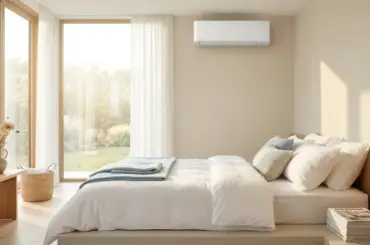
Window air conditioner units typically last between 8 and 10 years, though they can last 5 to 15 years depending on usage, maintenance, and climate. I have seen well-maintained units push past 15 years in moderate climates, while neglected units in harsh environments sometimes fail within 3 to 5 years. Understanding what affects your unit’s longevity can save you hundreds of dollars in premature replacement costs.
In this guide, I will walk you through everything you need to know about window AC lifespan. We will cover the factors that determine how long your unit will run, the warning signs that indicate replacement time, and proven maintenance strategies to squeeze every possible year out of your investment.
Average Window Air Conditioner Lifespan
The industry standard for window air conditioner lifespan sits at 8 to 10 years according to ENERGY STAR and most HVAC professionals. This figure represents the typical expectancy for a unit receiving basic care and operating under normal conditions. However, this number is not a hard limit.
I have encountered Sharp and Friedrich units from the early 2000s still cooling effectively in 2026, nearly two decades after installation. Conversely, I have replaced store-brand units that failed after just 4 seasons of Texas summer heat. The variance comes down to four primary factors: build quality, maintenance, climate severity, and installation quality.
The 8-10 Year Standard
Most manufacturers design window AC units with a 10-year service life in mind. This aligns with warranty periods, which typically range from 1 year for basic parts to 5 years for the compressor. When manufacturers calculate these timeframes, they assume average use in moderate climates with minimal maintenance.
After the 10-year mark, efficiency begins declining noticeably. Even if the unit still runs, it may consume 20-30% more electricity than a modern equivalent. This increased power draw often makes replacement the smarter financial choice, even if repairs are technically possible.
Why Some Units Last 15+ Years
Quality brands like Friedrich, LG, and Sharp consistently outlast budget alternatives by 5 years or more. These manufacturers use better compressors, thicker copper coils, and more robust electronic components. The upfront cost premium of $100-200 often pays for itself through extended service life.
Regular maintenance doubles or triples the effective lifespan of any unit regardless of brand. Cleaning filters monthly, deep-cleaning coils annually, and proper winter storage prevent the three main failure modes: compressor burnout, refrigerant leaks, and electrical corrosion.
Moderate climate zones like the Pacific Northwest and Upper Midwest impose minimal stress on cooling systems. Units in these regions often last 12-15 years with basic care because they run fewer annual hours and face less humidity-related corrosion.
Why Some Fail in 5 Years or Less
Hot, humid climates like Florida, Texas, and Arizona punish window AC units. When a unit runs 12+ hours daily for 6 months straight, wear accelerates dramatically. Compressors work harder, capacitors degrade faster, and moisture intrusion becomes a constant threat.
Poor installation causes more early failures than most owners realize. A unit tilted incorrectly causes water pooling and rust. Gaps around the unit let in hot attic air, forcing the compressor to overwork. Vibration from loose mounting eventually cracks refrigerant lines.
Neglect kills units quickly. A clogged filter restricts airflow, causing the evaporator coil to freeze and the compressor to overheat. Dirty condenser coils cannot reject heat efficiently, raising internal pressures until something fails. I have replaced 3-year-old units that died solely from filter neglect.
Factors That Affect Window AC Lifespan
Several variables determine whether your unit lasts 5 years or 15. Understanding these factors helps you set realistic expectations and identify which elements you can control.
Climate and Usage Patterns
Climate impacts lifespan more than any other factor. Units in hot, humid regions accumulate 2-3 times the annual operating hours of those in mild climates. The compressor, the heart of any AC system, has a finite number of start-stop cycles before wear becomes critical.
Coastal areas present unique challenges. Salt air corrodes aluminum fins and copper tubing rapidly. I recommend rinsing coils monthly in beachfront locations to prevent salt buildup. Even with diligent care, coastal units typically last 20-30% shorter lifespans than inland equivalents.
Usage patterns matter beyond simple climate. A unit cooling a home office that runs 10 hours daily will outlast one in a bedroom that cycles on and off 20 times per day. Frequent starting creates electrical and mechanical stress on compressors. Setting wider thermostat deadbands reduces cycling and extends life.
Quality of the Original Unit
Not all window AC units are built equally. Budget units under $200 often use aluminum coils instead of copper, single-stage compressors that run at full power constantly, and thinner gauge wiring. These cost-cutting measures show up in shortened lifespans.
Premium units typically include copper coils with better heat transfer, variable-speed compressors that adjust to demand, and more robust circuit boards. The compressor alone in a quality unit often costs more than an entire budget unit. This component quality difference becomes apparent after year 5 when budget units begin failing.
BTU ratings also affect longevity. An undersized unit runs constantly, never reaching the set temperature, and burns out prematurely. An oversized unit short-cycles, starting and stopping frequently, which wears electrical components. Proper sizing extends life.
Installation Quality
Installation errors reduce lifespan immediately. The unit must tilt slightly backward, about 1/4 inch, to ensure condensate drains outside rather than pooling inside. Pooling water rusts the base pan and can reach electrical components.
Support brackets matter more than most owners realize. A unit resting on a window sill without proper support vibrates continuously. This vibration loosens refrigerant connections, cracks solder joints, and fatigues sheet metal. Quality brackets that secure the unit firmly add years of service life.
Weather sealing around the unit prevents hot air infiltration. When attic air leaks around a window AC, the unit works 20-40% harder to maintain temperature. This invisible overwork shortens lifespan without owners realizing why their unit died early.
Maintenance Frequency
Maintenance represents the factor most under your control. Regular filter cleaning, coil cleaning, and inspection prevent 80% of premature failures. The cost of maintenance is negligible compared to early replacement.
I recommend a tiered maintenance approach: weekly filter checks during heavy use, monthly cleaning during cooling season, and annual deep cleaning before storage. Units following this schedule routinely outlive neglected units by 5-7 years.
Professional maintenance catches issues before they become fatal. An HVAC technician can spot refrigerant leaks, test capacitor health, and identify compressor strain. Annual professional service costs $75-150 but prevents $400-800 replacements.
Signs Your Window AC Needs Replacement
Recognizing replacement indicators early prevents emergency breakdowns during heat waves. Some signs indicate immediate replacement need; others suggest monitoring and preparation.
Age-Related Decline
Once a window AC passes 10 years, watch it closely. Efficiency drops significantly after this point. ENERGY STAR recommends considering replacement at 10 years even if the unit still runs, due to energy savings from newer, more efficient models.
Older units using R-22 refrigerant (Freon) present special concerns. The EPA banned R-22 production in 2020, making repairs increasingly expensive and difficult. If your unit was manufactured before 2010, check the nameplate for refrigerant type. R-22 units needing refrigerant work should usually be replaced rather than repaired.
Physical deterioration signals approaching end-of-life. Rust spreading across the base pan, bent or missing condenser fins, and cracked plastic housings all indicate a unit nearing failure. These cosmetic issues often precede functional failures by 1-2 seasons.
Performance Issues
Blowing warm air or barely cooling indicates compressor or refrigerant problems. Before assuming failure, clean the filters and coils thoroughly. If performance does not improve after cleaning, the unit likely needs professional diagnosis.
Ice formation on the evaporator coils indicates either low refrigerant or restricted airflow. Persistent icing despite clean filters usually means a refrigerant leak. Repairing leaks in window units often costs nearly as much as replacement due to labor intensity.
Humidity control failure accompanies cooling problems in aging units. If your space feels clammy despite the AC running, the unit may be oversized, short-cycling, or losing refrigerant. Poor humidity control creates mold risks and comfort issues.
Unusual Noises and Smells
Grinding, squealing, or rattling noises indicate mechanical distress. Grinding often means compressor bearings failing. Squealing suggests fan motor or blower issues. Rattling may indicate loose components or refrigerant line damage.
Musty smells indicate mold or mildew growth inside the unit. This happens when water does not drain properly or when units sit unused in humid conditions. While cleanable in early stages, persistent mold indicates internal deterioration requiring replacement.
Burning smells demand immediate shutdown and inspection. Electrical overheating, failing capacitors, or motor windings breaking down all produce acrid odors. Continuing to run a unit with burning smells risks fire hazards and complete compressor failure.
Rising Energy Bills
Compare your summer electricity bills year-over-year. An aging AC unit working harder to produce less cooling consumes significantly more power. A 15% increase in cooling-season bills often indicates declining unit efficiency.
Newer ENERGY STAR certified units use 20-40% less energy than decade-old models. When combined with declining efficiency in your old unit, the savings from replacement can reach 50%. Calculate the payback period; often the new unit pays for itself in 2-3 summers.
The $5,000 Rule and Repair vs Replace Decision
The $5,000 rule provides a simple framework for repair versus replacement decisions. Multiply the unit’s age by the repair estimate. If the result exceeds $5,000, replacement is usually the smarter choice.
Understanding the $5,000 Rule
A 5-year-old unit needing $200 repair scores 1,000 (5 x 200), well below the threshold. Repair makes sense. An 8-year-old unit needing $650 repair scores 5,200, suggesting replacement consideration. A 12-year-old unit needing any significant repair almost certainly warrants replacement.
This rule originated in the HVAC industry for central systems but applies equally to window units. It balances the probability of future repairs against the certain cost of current repair plus the remaining expected lifespan.
Consider the $5,000 rule a guideline rather than absolute law. For a premium unit with excellent maintenance history, you might stretch the threshold. For a budget unit with patchy care, replace earlier.
When Repair Makes Sense
Minor repairs on young units almost always make sense. Replacing a capacitor ($50-100), fan motor ($100-200), or control board ($150-300) on a unit under 5 years old extends service life economically.
Units under warranty obviously warrant repair attempts first. Most window AC warranties cover 1 year parts and labor, with 5 years on the sealed system (compressor and refrigerant components). Always check warranty status before authorizing repairs.
Isolated failures with clear causes suggest repair viability. A blown capacitor after a power surge, a damaged power cord, or a clogged drain line are fixable issues that do not indicate general unit deterioration.
When Replacement Is Better
Multiple component failures indicate systemic problems. If the compressor, fan motor, and control board all fail within a short period, the unit is telling you its time has come. Patching one failure just reveals the next.
Refrigerant leaks in window units present special challenges. Finding and repairing leaks requires removing the unit, accessing the sealed system, and recharging with refrigerant. Labor costs often exceed $300, approaching replacement territory for budget and mid-range units.
Consider portable air conditioners as an alternative when replacement window units will not fit your space or when you need flexibility. Modern portable units with dual hoses cool nearly as effectively as window units while offering mobility.
How to Extend Your Window AC Lifespan?
Proper maintenance can add 5-7 years to any window AC unit’s service life. The following schedule breaks down tasks by frequency, showing exactly what to do and when.
Weekly Maintenance Tasks
Check the air filter every week during heavy use periods. A clogged filter restricts airflow, causing the evaporator coil to freeze and the compressor to work harder. Cleaning takes 5 minutes and prevents hours of headaches.
Remove the filter according to your unit’s manual—usually by popping open a front panel or sliding out a mesh screen. Rinse reusable filters under warm water until clean. Let dry completely before reinstalling. Replace disposable filters monthly or as specified.
Inspect the unit exterior for debris, leaves, or insect nests blocking the rear coils. Clear any obstructions immediately. Even small blockages reduce efficiency and increase operating temperatures.
Monthly Deep Cleaning
Clean the evaporator coils monthly during cooling season. These indoor coils collect dust that insulates them and reduces cooling capacity. Access varies by model; consult your manual for panel locations.
Use foaming cleaner designed for AC coils, available at hardware stores. Spray the foam on, let it sit 10-15 minutes, then wipe away with a soft cloth. Never use wire brushes or abrasive cleaners that damage delicate fins.
Clean the condenser coils on the rear of the unit. These outdoor-facing coils release heat and collect outdoor dirt. Rinse gently with a garden hose from the inside out, pushing debris away from the coils. Never use high pressure that bends fins.
Check and clear the drain holes or channels. Clogged drains cause water to back up, creating mold and rust issues. Use a pipe cleaner or thin wire to clear blockages.
Annual Professional Service
Hire an HVAC technician for annual inspection and maintenance. Professional service costs $75-150 but catches issues before they become expensive failures. Technicians test refrigerant levels, check electrical connections, measure amp draw, and verify thermostat calibration.
Professional cleaning reaches areas DIY methods cannot. Technicians clean deep inside the unit, straighten bent condenser fins with special combs, and apply protective coatings where appropriate. This deep cleaning restores efficiency lost over the cooling season.
The pre-season inspection identifies problems while repair options remain open. Finding a weak capacitor in spring allows planned replacement. Discovering the same issue during a July heat wave means emergency service at premium rates.
Proper Winter Storage
Remove and store window AC units before heating season begins. Leaving units in windows during winter exposes them to cold drafts, moisture intrusion, and structural stress from the weight bearing on window frames through freeze-thaw cycles.
Before storage, run the unit on fan-only mode for several hours to dry internal components thoroughly. Moisture left inside causes mold and corrosion during storage. Remove batteries from remotes and store them separately.
Clean the unit completely before storage following the monthly deep cleaning procedure. Starting the next season with a clean unit prevents carrying over accumulated grime. Cover the unit with a breathable fabric cover or store in the original box if available.
Store in a dry location protected from freezing temperatures. Garages and sheds work if they stay above freezing and relatively dry. Basements often work well if humidity stays moderate. Avoid attics with extreme temperature swings.
If removal is impossible, cover the exterior with a weatherproof AC cover. Insulate around the unit interior to prevent heat loss. Tower fans can help distribute air and reduce the heating load on rooms with covered AC units.
Climate-Specific Lifespan Expectations
Where you live significantly impacts how long your window AC will last. Understanding regional factors helps set realistic expectations and prioritize appropriate maintenance.
Hot and Humid Climates (Texas, Florida, Arizona)
Units in the southern United States face the harshest conditions. Texas summers push window AC units to run 12-16 hours daily for 5-6 months. This usage accumulates in compressor wear and electrical fatigue.
Expect 5-8 years in these climates for average units, 8-12 years for quality units with excellent maintenance. The difference between budget and premium units becomes most apparent here. A $150 big-box unit may not survive 3 Texas summers. A $400 Friedrich unit might last 10 years with care.
Increase maintenance frequency in hot climates. Clean filters every 2 weeks instead of monthly. Deep clean coils every 6 weeks rather than monthly. The extra effort pays for itself in extended lifespan and reduced energy bills.
Consider supplemental cooling strategies to reduce AC workload. Ceiling fans, tower fans, and strategic shading reduce the cooling load. Every degree you can tolerate on the thermostat setting extends compressor life significantly.
Moderate Climates
The Upper Midwest, Pacific Northwest, and Mountain West regions impose minimal stress on cooling equipment. Short cooling seasons mean fewer annual operating hours and less continuous wear.
Expect 10-15 years routinely in these climates, with 15-20 years achievable for quality units. The limiting factor becomes component aging rather than wear-induced failure. Capacitors dry out, seals harden, and electronics degrade even when unused.
Maintenance remains important but less critical. Monthly filter checks suffice rather than weekly. Annual deep cleaning rather than monthly. However, do not neglect units entirely—mold and mildew thrive in humid summers even in moderate climates.
Coastal Areas (Salt Air Concerns)
Beachfront locations present unique corrosion challenges. Salt air attacks aluminum fins, copper tubing, and steel components aggressively. Even quality units show degradation within 3-5 years in salt air environments.
Rinse the exterior monthly with fresh water during cooling season. This simple step removes salt buildup before it causes damage. Apply corrosion-resistant spray to accessible metal components annually.
Expect 30-40% shorter lifespans in coastal areas compared to inland locations. A unit lasting 10 years in Kansas might last only 6-7 years in Florida beachfront conditions. Budget accordingly and prioritize corrosion-resistant models.
Window AC vs Central AC Lifespan Comparison
Window units and central air systems have fundamentally different lifespan expectations. Understanding these differences helps contextualize your window AC’s performance.
Central AC systems typically last 15-20 years with proper maintenance. They benefit from professional-grade components, protected outdoor condensers, and controlled indoor environments for air handlers. The sealed system design also reduces refrigerant leak risks.
Window units face harsher conditions. They hang in windows exposed to direct sun, rain, and temperature extremes. Installation quality varies widely. They receive less maintenance attention. All these factors contribute to shorter expected lifespans.
However, window units offer advantages in replacement flexibility. When a window unit fails, you replace a $200-600 appliance. When central AC fails, you face a $3,000-7,000 system replacement. The lower replacement cost offsets the shorter lifespan for many homeowners.
Efficiency comparisons favor modern equipment in both categories. A 10-year-old window unit uses significantly more electricity than a 2026 ENERGY STAR model. Similarly, old central systems pale in efficiency compared to modern heat pumps. The upgrade economics often favor replacement around the 10-year mark regardless of functional status.
Frequently Asked Questions
When should a window AC unit be replaced?
Replace your window AC when it reaches 10-12 years old, requires repairs exceeding $300-400, blows warm air despite proper maintenance, makes grinding or squealing noises, or causes energy bills to rise significantly. Also consider replacement if the unit uses R-22 refrigerant, which is no longer produced and makes repairs costly.
What is the $5000 rule for AC?
The $5000 rule helps decide between repair and replacement. Multiply the unit’s age by the repair cost estimate. If the total exceeds $5000, replacement is usually the smarter financial choice. For example, an 8-year-old unit needing $650 repair scores 5200, suggesting replacement consideration.
What is the 20 rule for air conditioning?
The 20 rule (or 5000 rule variation) suggests that if repair costs exceed 20% of a new unit’s price and the unit is over 5 years old, replacement makes more sense. This rule helps avoid sinking money into aging equipment when newer, more efficient models offer better value.
How efficient is a 20 year old window air conditioner?
A 20-year-old window air conditioner operates at roughly 30-50% of the efficiency of modern units. It likely uses R-22 refrigerant and consumes 2-3 times the electricity per BTU of cooling compared to 2026 ENERGY STAR models. Replacement typically pays for itself in 2-3 years through energy savings alone.
How often should window AC be serviced?
Service your window AC annually with professional inspection and cleaning. Perform monthly maintenance yourself including filter cleaning and coil inspection. In hot climates or heavy use situations, increase filter cleaning to every 2 weeks during peak season.
Is it okay to leave a window AC in all year?
While possible in mild climates, removing window AC units for winter storage extends lifespan significantly. Year-round exposure subjects units to freeze-thaw cycles, moisture intrusion, and cold drafts that accelerate corrosion and component degradation. If removal is impossible, cover the exterior with a weatherproof AC cover and insulate the interior.
Should I run my AC in winter to maintain it?
Running your window AC in winter for 5-10 minutes monthly helps circulate oil and refrigerant, which some technicians recommend. However, this is unnecessary if you store the unit properly indoors. The practice originated for central systems with hard-to-move compressors and applies less to portable window units.
How long do window AC units last in hot climates?
In hot climates like Texas, Florida, and Arizona, window AC units typically last 5-8 years with average maintenance and 8-12 years with excellent care. The heavy usage hours—often 12-16 hours daily for 5-6 months—accelerate compressor wear. Quality brands and frequent maintenance make the difference between early failure and extended service life.
Conclusion
Window air conditioner lifespan typically ranges from 8 to 10 years, with well-maintained quality units lasting 12-15 years and neglected budget units failing in 5 years or less. Your specific results depend on climate severity, maintenance diligence, installation quality, and the original unit’s build quality.
The key takeaway is that maintenance matters more than brand. A cheap unit with excellent care outlasts an expensive unit that is ignored. Clean filters every 2-4 weeks, deep clean coils monthly, and store units properly each winter. These simple habits add years of service life.
Apply the $5,000 rule when facing repair decisions. Consider replacement when units reach 10 years, show declining efficiency, or require significant repairs. Remember that modern units use 20-40% less energy than decade-old models, making replacement an investment that pays dividends in comfort and electricity savings.
If your window AC has reached the end of its lifespan, explore our recommendations for the best window air conditioners available in 2026. Modern units offer improved efficiency, quieter operation, and smart features that make the upgrade worthwhile beyond simple cooling capacity.