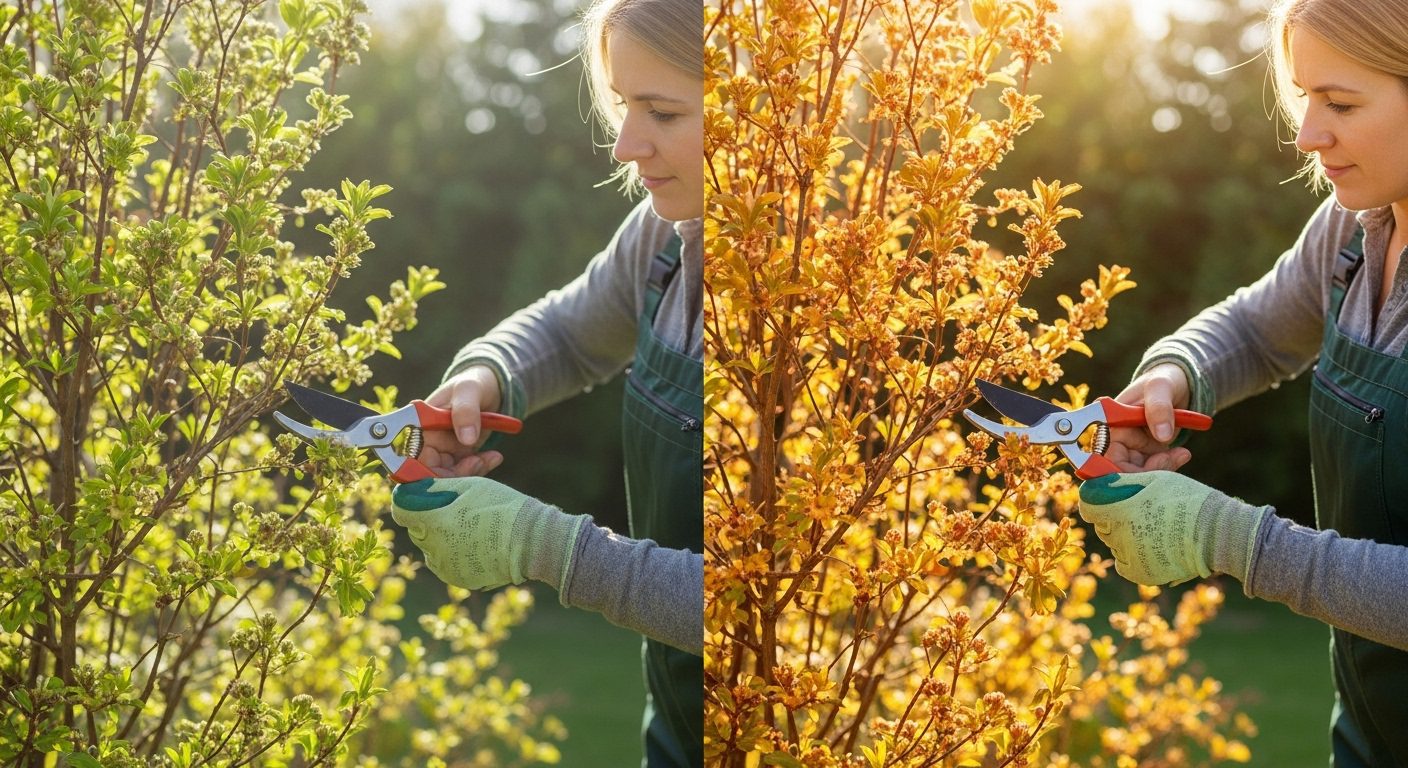
Pruning at the right time can make the difference between a thriving garden and struggling plants. Whether you’re caring for fruit trees, flowering shrubs, or evergreens, timing your pruning correctly promotes healthy growth, abundant blooms, and prevents disease. I’ve learned through years of gardening that understanding when to prune is just as important as knowing how to make the cuts.
The general rule I follow is to prune most plants during their dormant season, typically late winter or early spring before new growth begins. However, the best pruning time varies significantly depending on your specific plants, their flowering patterns, and your climate zone. Spring-flowering shrubs need different timing than summer bloomers, and evergreens have their own unique schedule.
In this comprehensive guide, we’ll explore the science behind pruning timing, create a month-by-month calendar for your garden tasks, and identify the specific windows for different plant types. You’ll learn why dormant season pruning reduces disease risk, how to identify the right time for each plant in your yard, and what happens when pruning is done at the wrong time.
Understanding the Science of Pruning Timing
The timing of pruning directly affects how plants heal, grow, and defend themselves against pests and diseases. When we prune during the dormant season, plants experience less stress because they’re not actively growing or transporting nutrients. According to research from the University of Minnesota Extension, dormant pruning allows plants to compartmentalize wounds more effectively before the growing season begins.
Plants have evolved sophisticated wound response mechanisms that work best at certain times of year. During dormancy, trees and shrubs can allocate energy to forming protective barriers around pruning cuts without diverting resources from growth or flowering. This compartmentalization process, known as CODIT (Compartmentalization of Decay in Trees), creates chemical and physical barriers that prevent decay organisms from spreading into healthy tissue.
The relationship between pruning timing and disease transmission is particularly important. Many fungal and bacterial pathogens are most active during warm, humid conditions. Pruning during the dormant season, when these organisms are less active and wounds dry quickly, significantly reduces infection risk. For example, oak wilt and Dutch elm disease are primarily spread during the growing season, making dormant season pruning essential for these species.
The Dormant Season Advantage
Late winter pruning, just before spring growth begins, offers numerous advantages for most deciduous trees and shrubs. Without leaves, I can clearly see the plant’s structure, identify crossing branches, and make strategic cuts that shape future growth. The bare branches reveal dead wood, damaged areas, and the overall architecture that summer foliage often conceals.
Dormant pruning stimulates vigorous spring growth because plants channel their stored energy into fewer buds. When we remove branches before bud break, the tree redirects its resources to the remaining buds, resulting in stronger, more robust growth. This response is particularly beneficial for fruit trees, where we want to encourage productive new wood.
Research from Colorado State University Extension shows that wounds made during dormancy close faster once growth resumes compared to cuts made during active growth. The rapid callus formation in spring helps seal wounds before insects and diseases become active. Additionally, dormant season pruning minimizes sap flow from cuts, reducing the attraction of pests and the loss of valuable plant resources.
Monthly Pruning Calendar
January – February: Deep Winter Pruning
These coldest months are ideal for major structural pruning of deciduous trees. I tackle fruit trees like apples and pears now, removing dead wood, crossing branches, and opening the canopy for better air circulation. Grapes also benefit from late winter pruning, as they can bleed excessively if pruned after sap begins flowing.
However, avoid pruning plants that bloom on old wood during this time. Spring-flowering shrubs like forsythia, lilac, and rhododendron have already set their flower buds, and winter pruning would remove this year’s blooms. Also, skip pruning during extreme cold snaps below 20°F, as frozen wood can shatter and create jagged wounds.
March – April: Late Winter to Early Spring
This transitional period is prime time for pruning most deciduous trees and summer-flowering shrubs. Roses (except climbing varieties that bloom on old wood) should be pruned just as buds begin to swell but before leaves emerge. I also prune butterfly bush, beautyberry, and other shrubs that bloom on new growth during this window.
Watch for signs of growth resuming – once buds begin opening, shift to lighter pruning only. Early spring is also when I prune evergreen shrubs like yews and junipers, but only if necessary, as they require minimal pruning. Never remove more than one-third of an evergreen’s growth in a single season.
May – June: Post-Bloom Pruning
Spring-flowering shrubs should be pruned immediately after blooming ends. This timing allows plants to develop new growth that will mature and set flower buds for next year. I prune azaleas, forsythia, weigela, and mock orange during this period, focusing on shaping and removing old wood to encourage vigorous new shoots.
This is also the time for pruning spring-flowering trees like dogwood, redbud, and magnolia if needed. However, these trees typically require minimal pruning beyond removing dead or damaged branches. Avoid heavy pruning during active growth, as it can stress plants and attract pests.
July – August: Summer Maintenance
Summer pruning should be limited to light maintenance tasks. I focus on deadheading spent flowers, removing water sprouts and suckers, and addressing any storm damage. Light summer pruning can help control size and shape without stimulating excessive new growth that won’t harden off before winter.
Fruit trees benefit from selective summer pruning to improve fruit color and reduce disease by increasing air circulation. However, avoid heavy pruning during drought stress or heat waves, as plants need their foliage for photosynthesis and cooling through transpiration.
September – October: Fall Considerations
Fall pruning should generally be avoided for most plants. New growth stimulated by pruning won’t have time to harden off before winter, making it susceptible to frost damage. Additionally, many fungi release spores in fall, increasing disease transmission risk through fresh wounds.
The exception is removing dead, damaged, or diseased wood, which should be addressed whenever noticed. I also lightly prune perennials after they’ve died back naturally, though many gardeners prefer leaving seed heads for winter interest and wildlife food.
November – December: Early Winter Tasks
As plants enter dormancy, you can begin pruning deciduous trees and shrubs again. However, in regions with harsh winters, I prefer waiting until late winter to avoid exposing fresh cuts to extreme cold. This is a good time to inspect plants and plan your late winter pruning strategy.
Evergreens can be lightly shaped now if needed, but major pruning should wait until late winter or early spring. Focus on removing any branches damaged by early winter storms to prevent further breakage from snow and ice accumulation.
Plant-Specific Pruning Guidelines
Fruit Trees
Apple and pear trees thrive with late winter pruning, typically February through early March before bud break. This timing promotes vigorous growth and allows you to shape the tree for optimal fruit production. Stone fruits like cherries, plums, and peaches are best pruned in late spring after blooming to reduce disease risk, particularly bacterial canker.
Young fruit trees need formative pruning to establish strong structure, while mature trees require maintenance pruning to maintain productivity. Remove vertical water sprouts, inward-growing branches, and any wood showing signs of disease. The goal is creating an open canopy that allows sunlight penetration and air circulation.
Flowering Shrubs
The key to timing shrub pruning is understanding whether they bloom on old wood (last year’s growth) or new wood (current season’s growth). Spring bloomers like azalea, forsythia, lilac, and viburnum flower on old wood and should be pruned immediately after flowering. Waiting too long removes next year’s flower buds.
Summer and fall bloomers including butterfly bush, rose of Sharon, and panicle hydrangeas bloom on new wood. These should be pruned in late winter or early spring to encourage vigorous new growth that will produce flowers. Some shrubs like endless summer hydrangeas bloom on both old and new wood, requiring careful selective pruning.
Evergreen Trees and Shrubs
Evergreens generally require less pruning than deciduous plants. Pines should be pruned in late spring when new growth (candles) appears – pinch back half the candle length to control size. Spruces, firs, and Douglas firs can be pruned in late winter or early spring before new growth begins.
Broadleaf evergreens like rhododendrons and mountain laurels need minimal pruning beyond deadheading spent flowers. If shaping is needed, prune immediately after flowering. Evergreen shrubs like yews and junipers tolerate pruning well and can be shaped in early spring before growth begins.
Roses
Rose pruning timing depends on type and climate. Hybrid teas, floribundas, and grandifloras should be pruned in late winter or early spring when forsythia blooms. In cold climates, wait until danger of hard frost passes. Remove dead canes, crossing branches, and weak growth, cutting just above outward-facing buds.
Climbing roses and old garden roses that bloom once annually should be pruned after flowering, as they bloom on old wood. Modern climbing roses that repeat bloom can be pruned in early spring. Shrub roses and landscape roses need minimal pruning beyond removing dead wood and light shaping.
Ornamental Grasses
Most ornamental grasses should be cut back in late winter or early spring before new growth emerges. I typically prune them in March, cutting warm-season grasses like miscanthus and fountain grass to 4-6 inches. Cool-season grasses like fescue and blue oat grass need only light combing to remove dead material.
Leaving grasses standing through winter provides visual interest, wildlife habitat, and insulation for the crown. However, in fire-prone areas or where grasses become unsightly, fall pruning may be preferred. Never burn ornamental grasses without checking local regulations and taking proper safety precautions.
Regional and Climate Considerations
USDA hardiness zones significantly influence pruning timing. In zones 3-5, late winter pruning typically occurs in March-April, while zones 8-10 can begin in January. Spring arrives weeks earlier in southern regions, requiring earlier pruning to catch plants before growth begins.
Coastal areas with mild winters may have extended pruning windows, but high humidity increases disease risk. Desert regions should avoid pruning during extreme heat and drought stress. Mountain areas need to account for late spring frosts that can damage new growth stimulated by pruning.
Microclimates within your yard also affect timing. South-facing areas warm earlier than northern exposures, and plants near buildings may break dormancy sooner than those in open areas. Observe your individual plants’ growth patterns rather than relying solely on calendar dates.
Common Pruning Timing Mistakes
Pruning Too Early in Fall
Fall pruning stimulates new growth when plants should be preparing for dormancy. This tender growth lacks time to harden off, making it vulnerable to winter damage. Additionally, many diseases are active in fall, and fresh wounds provide entry points for pathogens.
Late Spring Pruning of Early Bloomers
Pruning spring-flowering shrubs in late winter or early spring removes flower buds, eliminating that year’s blooms. I’ve seen gardeners wonder why their lilacs or forsythias don’t flower, not realizing they pruned off the buds months earlier. Always wait until after flowering for these plants.
Summer Pruning During Drought
Heavy pruning during drought stress compounds plant stress. Leaves help cool plants through transpiration and produce energy through photosynthesis. Removing significant foliage during hot, dry periods can weaken or even kill stressed plants.
Pruning Frozen Wood
Pruning when wood is frozen causes it to shatter rather than cut cleanly, creating jagged wounds that heal poorly. Wait for temperatures above freezing, ideally above 20°F, before pruning. Frozen wood is also more difficult to cut and can damage tools.
Over-Pruning at Any Time
Removing more than 25-30% of a plant’s foliage in one season stresses the plant regardless of timing. This is especially true for evergreens, which are slower to recover. Make major reductions over multiple years rather than all at once.
Tools and Safety Considerations
Proper tools make clean cuts that heal quickly. Hand pruners work for branches up to 3/4 inch diameter, loppers handle branches up to 2 inches, and pruning saws tackle larger limbs. Keep tools sharp and clean, disinfecting between plants if disease is present using 70% isopropyl alcohol or 10% bleach solution.
Safety equipment includes gloves, safety glasses, and sturdy footwear. When using pole pruners or chainsaws, additional protective gear is essential. Never prune near power lines – contact utility companies for this dangerous work. Use proper ladder placement and consider hiring certified arborists for large trees or hazardous situations.
Special Situations and Exceptions
Storm Damage
Storm-damaged branches should be removed immediately regardless of season to prevent further damage and eliminate safety hazards. Make clean cuts back to healthy wood, avoiding leaving stubs that invite decay. If damage is extensive, prioritize safety cuts and delay cosmetic pruning until the optimal season.
Disease Management
Diseased wood should be removed whenever noticed, but timing can minimize spread. Fire blight in apples and pears is best pruned in winter when bacteria are dormant. Oak wilt and Dutch elm disease require avoiding pruning during active transmission periods (typically April through July). Always disinfect tools between cuts when removing diseased material.
Rejuvenation Pruning
Severely overgrown shrubs may benefit from rejuvenation pruning – cutting the entire plant back to 6-12 inches. This drastic pruning is best done in late winter for shrubs that bloom on new wood. For spring bloomers, sacrifice one year of flowers by pruning in late winter, or spread renovation over three years, removing one-third of old stems annually.
Creating Your Pruning Schedule
Developing a personalized pruning calendar ensures tasks aren’t forgotten and are completed at optimal times. Start by listing all plants requiring pruning, noting their bloom times and pruning requirements. Group plants by pruning season and create reminders for each pruning window.
Keep records of when you prune each plant and how it responds. This information helps refine timing for your specific conditions. Note weather patterns, as unusually warm winters or late springs may require adjusting standard timing recommendations.
Consider factors like your available time, as late winter pruning often coincides with a narrow window before spring gardening tasks begin. Spreading pruning tasks across appropriate seasons prevents overwhelming workloads and ensures each plant receives proper attention.
Frequently Asked Questions
What happens if I prune at the wrong time?
Pruning at the wrong time rarely kills healthy plants but can cause various problems. Spring bloomers pruned in winter won’t flower that year. Fall pruning may stimulate growth vulnerable to winter damage. Summer pruning during drought can stress plants. While plants usually recover, improper timing reduces vigor and flowering.
Can I prune during the growing season?
Light pruning during the growing season is generally safe. Remove dead, damaged, or diseased wood anytime. Deadheading, pinching tips, and removing suckers are routine summer tasks. However, avoid heavy pruning during active growth, especially during stress periods like drought or extreme heat.
How do I know if my plant blooms on old or new wood?
Observe when flower buds form and open. Plants blooming before June typically flower on old wood (last year’s growth). Summer and fall bloomers usually flower on new wood (current season’s growth). When in doubt, wait to prune until after flowering to preserve blooms.
Should I seal pruning cuts?
Research shows that wound dressings and pruning paints don’t improve healing and may actually slow the natural compartmentalization process. Trees and shrubs seal wounds naturally from the inside out. Only use wound dressings when specifically recommended for disease prevention in your area.
How much can I safely remove in one pruning session?
The one-third rule is a safe guideline – never remove more than one-third of a plant’s foliage in a single year. For evergreens, limit removal to one-quarter or less. Young, vigorous plants tolerate heavier pruning than mature or stressed plants. When major reduction is needed, spread it over 2-3 years.
Is it better to prune in morning or evening?
Morning pruning is generally preferable. Wounds dry quickly in morning sun, reducing disease risk. Plants are also fully hydrated in morning, making cleaner cuts easier. Avoid pruning during rain or when plants are wet, as moisture spreads disease and makes tools slippery.
When should I prune newly planted trees and shrubs?
Limit pruning of new plants to removing dead, damaged, or crossing branches for the first year. Plants need maximum foliage to establish root systems. Wait until the second or third year for formative pruning. The exception is bare-root plants, which may need heading back at planting to balance top growth with reduced roots.
Can I prune during a warm spell in winter?
Yes, warm days during the dormant season are actually ideal for pruning. Temperatures above freezing allow clean cuts and comfortable working conditions. However, ensure plants are still dormant – if buds are swelling or opening, you’ve missed the dormant pruning window.
Conclusion
Mastering pruning timing transforms garden maintenance from guesswork into strategic plant care. By understanding the science behind pruning timing and following seasonal guidelines, we can promote healthy growth, abundant flowering, and disease resistance in our landscapes. The key is recognizing that each plant has an optimal pruning window based on its growth patterns, flowering habits, and response to wounding.
Remember that these guidelines provide a framework, but observation of your specific plants and conditions should guide final decisions. Weather patterns, microclimates, and individual plant health all influence ideal timing. Start with conservative pruning as you learn each plant’s response, gradually developing confidence and expertise.
Creating and following a pruning calendar tailored to your garden ensures tasks are completed at optimal times. With proper timing, appropriate tools, and good technique, pruning becomes a rewarding practice that enhances both plant health and garden beauty throughout the seasons.