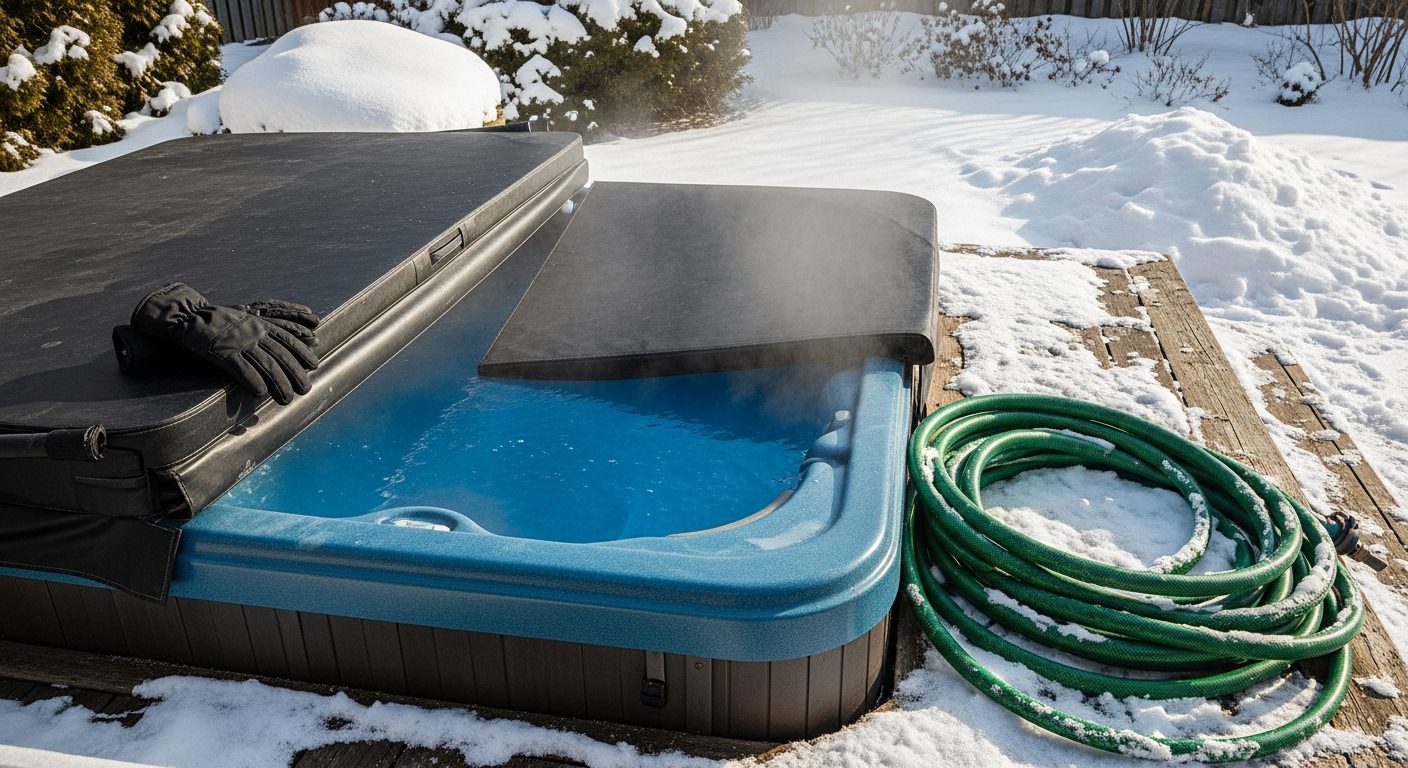
When the temperature starts dropping and you’re not planning to use your hot tub through the winter months, properly winterizing it becomes essential. I learned this the hard way after watching a neighbor deal with $3,000 in freeze damage repairs because they simply turned off their spa and walked away. The truth is, winterizing your hot tub isn’t complicated, but skipping critical steps can lead to burst pipes, damaged pumps, and expensive repairs come spring.
After helping dozens of homeowners through this process and consulting with spa technicians from major manufacturers, I’ve developed a comprehensive winterization method that protects your investment while saving you money on energy costs. Whether you own a basic plug-and-play model or a luxury multi-jet system, this guide walks you through every step needed to properly shut down your hot tub for winter.
The decision to winterize versus keeping your hot tub running year-round depends on several factors. If you’re facing months of non-use, winterization can save you $100-200 monthly in electricity costs. Plus, proper shutdown prevents the freeze damage that affects thousands of hot tub owners each year when temperatures plummet unexpectedly.
When Should You Winterize Your Hot Tub?
Timing your hot tub winterization correctly prevents both freeze damage and unnecessary maintenance headaches. The ideal window starts when nighttime temperatures consistently drop below 50°F but before the first hard freeze hits your area. For most northern regions, this means late September through early November, depending on your specific climate zone.
I recommend starting the process at least two weeks before your area’s average first freeze date. This buffer gives you time to gather supplies, complete the job properly, and address any unexpected issues that arise. Weather patterns have become increasingly unpredictable, so checking extended forecasts helps avoid getting caught by an early cold snap.
Several situations clearly indicate it’s time to winterize rather than maintain winter operation. If you’ll be away for more than two weeks during freezing weather, winterization provides better protection than relying on freeze protection systems. Vacation homes and seasonal properties almost always benefit from complete shutdown. Similarly, if your hot tub needs major repairs that won’t be addressed until spring, winterizing prevents additional damage while it sits unused.
The cost comparison often drives the decision. Running a hot tub through winter typically costs $75-150 monthly in moderate climates, but can exceed $200 in extreme cold regions. Add chemical treatments and occasional maintenance visits, and you’re looking at $500-1,000 to keep an unused spa operational through winter. Professional winterization costs $200-400 once, while DIY winterization runs about $50 in supplies.
Essential Supplies and Tools Checklist
Having the right supplies on hand makes winterization smoother and ensures you don’t miss critical steps. I’ve refined this list after winterizing various hot tub models and consulting with service professionals who handle hundreds of shutdowns annually.
Required Supplies:
- Hot tub antifreeze (4-6 gallons) – Use only propylene glycol antifreeze specifically labeled for pools and spas. Never use automotive antifreeze containing ethylene glycol, which is toxic and can damage spa components. Plan on 1 gallon per jet plus 2 gallons for plumbing lines.
- Spa system flush (1 bottle) – Removes biofilm and mineral deposits from plumbing before shutdown. This step prevents bacterial growth and makes spring startup cleaner.
- Filter cleaner solution – Deep cleans filters before storage, extending their lifespan and ensuring clean water at spring startup.
- Absorbent towels (10-12) – For drying surfaces and soaking up residual water in hard-to-reach areas.
- Cover cleaner and protectant – Preserves your cover through winter weather and prevents mold growth.
Required Tools:
- Wet/dry shop vacuum with hose attachments – Essential for removing water from plumbing lines. A standard household vacuum won’t work.
- Submersible pump or sump pump – Speeds up draining significantly compared to gravity drainage.
- Garden hose (25-50 feet) – For draining water away from your foundation.
- Phillips and flathead screwdrivers – For accessing drain plugs and equipment compartments.
- Adjustable wrench or channel locks – For removing drain plugs and fittings.
- 5-gallon bucket – Useful for bailing remaining water and mixing cleaning solutions.
Safety Equipment:
- Rubber gloves – Protects hands from chemicals and cold water.
- Safety glasses – Prevents splashing chemicals or debris from entering eyes.
- Non-slip footwear – Wet surfaces become extremely slippery during this process.
The total cost for these supplies typically runs $150-200 for your first winterization, with subsequent years costing only $50-75 for consumables like antifreeze and cleaning products. This one-time investment protects equipment worth thousands of dollars.
Complete Step-by-Step Winterization Guide
After winterizing hot tubs ranging from simple two-person models to complex eight-jet systems, I’ve developed this systematic approach that ensures no critical step gets missed. Follow these steps in order, as each builds upon the previous one for complete protection.
Step 1: Turn Off Power at the Breaker
Safety comes first in any hot tub maintenance. Locate your spa’s dedicated circuit breaker in your home’s electrical panel and switch it to the OFF position. This isn’t just unplugging the unit or using the topside control panel – you need complete power disconnection at the breaker level. Lock out the breaker if possible, or place tape over it with a note to prevent anyone from accidentally turning it back on during the winterization process.
I’ve seen too many close calls where someone assumed the spa was off because the display was dark, only to have pumps suddenly activate during maintenance. Complete power disconnection eliminates this risk entirely.
Step 2: Clean and Balance the Water
While it might seem counterintuitive to treat water you’re about to drain, this step protects your plumbing from biofilm buildup and mineral deposits. Add a spa system flush product according to manufacturer directions – typically one bottle per 400 gallons. Run the jets on high for 15-20 minutes with all air controls open to circulate the cleaner through every line.
This cleaning cycle removes oils, lotions, and organic matter that would otherwise sit in your pipes all winter, potentially causing staining or bacterial growth. The small investment in flush product saves hours of cleaning during spring startup.
Step 3: Drain the Hot Tub Completely
After the cleaning cycle, turn off power again at the breaker. Connect your drainage method – either the built-in drain valve or a submersible pump. Direct water at least 10 feet from your foundation to prevent basement flooding or foundation issues. A submersible pump drains a 400-gallon tub in about an hour, while gravity drainage takes 3-4 hours.
Never drain hot tub water onto grass or gardens if you’ve recently added chemicals. The high chemical concentration can damage plants and alter soil pH. Storm drains or designated drainage areas work best. Check local regulations, as some municipalities have specific requirements for spa water disposal.
Step 4: Remove and Clean Filters
Once water drops below the filter housing, remove all filter cartridges. Even if they look clean, filters harbor bacteria and debris that multiply during storage. Spray filters thoroughly with filter cleaner, let them soak for 15 minutes, then rinse completely with a garden hose. Allow filters to dry completely before storing them indoors – never leave filters in the spa over winter as freeze-thaw cycles destroy the filter media.
This is an excellent time to assess filter condition. If they’re over a year old or show signs of damage, replace them now rather than discovering failed filters during spring startup.
Step 5: Blow Out All Plumbing Lines
This critical step requires patience and attention to detail. Water hiding in plumbing lines causes the most expensive freeze damage. Using your wet/dry vacuum in blow mode (or reverse mode for suction), systematically clear each line.
Start with the jets. Place the vacuum hose over each jet opening and blow air through for 30 seconds. You’ll hear gurgling as water exits through the equipment area. Work methodically around the tub, including waterfall features, air injectors, and any specialty jets. For suction fittings like skimmers and main drains, use the vacuum in suction mode to pull out trapped water.
Don’t forget these often-missed areas: the blower air lines (if equipped), ozone injector lines, waterfall pipes, and drain lines from the equipment to the tub. Each requires individual attention to ensure complete water removal.
Step 6: Remove Drain Plugs from Equipment
Access your equipment compartment and locate all drain plugs. Most hot tubs have plugs on the pump(s), heater, and any additional features like blowers or circulation pumps. These plugs are usually white plastic or brass fittings on the bottom of each component. Remove them carefully – they’re often tight and may require channel locks.
Keep all drain plugs in a labeled bag taped inside the equipment compartment. You’ll need them for spring startup, and they’re easy to misplace over winter. Let equipment drain for at least 30 minutes, then use your wet/dry vacuum to remove any remaining water from pump housings.
Step 7: Add Antifreeze to Plumbing Lines
Pour propylene glycol antifreeze into each opening where water might collect. Start with 8-12 ounces in each jet, using a funnel to avoid spills. Add 16 ounces to the filter housing, skimmer, and any water features. Pour antifreeze into removed drain plug openings until you see pink liquid at the lowest point of each component.
The pink color helps you track coverage and confirm protection in spring. Don’t dilute the antifreeze – use it at full strength for maximum protection. In extremely cold climates (below -20°F), consider using RV/Marine antifreeze rated for lower temperatures.
Step 8: Clean and Protect the Shell
Wipe down the entire shell with a non-abrasive spa surface cleaner. Pay special attention to the waterline where oils and minerals accumulate. Clean jet faces, control panels, and any crevices where water might pool. Once dry, apply a protective coating designed for your shell material – acrylic shells benefit from a UV protectant, while rotomolded tubs need products that prevent fading.
Remove any removable headrests and store them indoors. These expensive accessories deteriorate quickly when exposed to freeze-thaw cycles. If headrests aren’t removable, clean and protect them with appropriate conditioners.
Step 9: Secure the Cover Properly
Your hot tub cover provides the primary defense against winter weather. Clean both sides with cover cleaner, paying attention to the seam where the two halves meet. Apply a protective conditioner to prevent UV damage and repel moisture. Ensure the cover sits properly with no gaps where animals might enter.
Install cover clips or hurricane straps to prevent wind damage. I’ve seen covers blown completely off during winter storms, exposing the tub to snow and debris. For areas with heavy snow, consider a cover support that prevents sagging under snow load. Never use a tarp over your regular cover – it traps moisture and accelerates cover deterioration.
Step 10: Final Inspection and Documentation
Walk through a final checklist to ensure nothing was missed. Confirm power remains off at the breaker, all water is drained, antifreeze is visible in key locations, drain plugs are removed and stored, filters are stored indoors, and the cover is secured. Take photos of your equipment area showing drain plug locations and antifreeze levels – these references prove invaluable during spring startup.
Create a simple winterization record noting the date, antifreeze amount used, and any maintenance needs discovered. This documentation helps with warranty claims if issues arise and reminds you of specific steps for your particular model.
Critical Mistakes to Avoid
Through years of fixing winterization problems, I’ve identified the most damaging mistakes that lead to expensive repairs. Understanding these pitfalls helps ensure your hot tub survives winter intact.
Using automotive antifreeze ranks as the most dangerous error. Ethylene glycol antifreeze is toxic and can damage spa components. It leaves residue that’s difficult to flush out and may void your warranty. Always verify you’re using propylene glycol antifreeze specifically designed for pools and spas.
Incomplete water removal causes the majority of freeze damage. Water hides in elbows, check valves, and low points throughout the plumbing system. Rushing through the blow-out process or skipping hard-to-reach jets leaves pockets of water that expand when frozen, cracking pipes and fittings. Take time to thoroughly clear every line.
Leaving filters installed destroys expensive filter cartridges and can crack filter housings. Wet filters left in freezing conditions expand and contract, tearing filter media and potentially damaging the housing. Always remove, clean, and store filters indoors.
Forgetting hidden components leads to surprise damage. Ozone generators, air blowers, waterfalls, and LED light housings all contain water that needs removal. Check your owner’s manual for model-specific components that require winterization.
Improper chemical disposal creates environmental and legal issues. Draining highly chlorinated or brominated water onto lawns kills grass and beneficial soil organisms. Some municipalities fine homeowners for improper disposal. Plan your drainage location carefully and consider neutralizing chemicals before draining if required by local regulations.
Professional vs. DIY Winterization
The choice between professional service and DIY winterization depends on your comfort level, available time, and hot tub complexity. After comparing both approaches across dozens of situations, I can offer clear guidance on making this decision.
Professional winterization typically costs $200-400, depending on your location and spa size. Technicians bring commercial-grade equipment, complete the job in 60-90 minutes, and often guarantee their work against freeze damage. They also identify developing problems you might miss, potentially saving money on future repairs. For complex systems with multiple pumps, elaborate water features, or uncommon configurations, professional service provides peace of mind.
DIY winterization saves money if you’re comfortable with basic maintenance tasks. The first year requires a $150-200 supply investment, with subsequent years costing only $50-75. Plan on 3-4 hours for your first winterization, reducing to 2-3 hours once you’re familiar with your system. The knowledge gained helps with general maintenance and spring startup.
Consider professional service if your hot tub is under warranty (some require professional winterization), you’re physically unable to access all components, you lack proper tools like a wet/dry vacuum, or your schedule doesn’t allow adequate time for thorough winterization. Many DIY installation guide enthusiasts still hire professionals for complex tasks.
Choose DIY if you enjoy hands-on maintenance, want to understand your system better, have successfully completed other home maintenance guide projects, or need to minimize costs. The skills translate to other home maintenance tasks and give you confidence handling minor repairs.
Alternative Approach: Running Your Hot Tub Through Winter
Not everyone needs to winterize their hot tub. Keeping it operational through winter offers year-round enjoyment and eliminates startup hassles. However, this approach requires commitment to regular maintenance and acceptance of ongoing costs.
Running costs vary significantly by climate and usage. In moderate climates, expect $75-125 monthly for electricity, plus $20-30 for chemicals. Extreme cold regions see costs reach $200-250 monthly. Modern energy-efficient models with good insulation cost less to operate than older units. Upgrading your cover to a high-R-value model can reduce heat loss by 30%.
Maintenance requirements increase during winter operation. Check water chemistry weekly, as cold water affects chemical balance differently. Monitor water levels more frequently – evaporation increases with greater temperature differentials. Clear snow from the cover regularly to prevent structural damage and maintain insulation efficiency.
Freeze protection systems in modern hot tubs automatically activate pumps when temperatures drop, circulating water to prevent freezing. These systems work well but aren’t foolproof. Power outages during ice storms leave your spa vulnerable. Installing a backup generator or at least having a portable generator available protects your investment during extended outages.
For vacation homes or extended absences, hiring a service company to check your hot tub weekly costs $50-100 per visit but prevents freeze damage if systems fail. Some home technology guide solutions now offer smart monitoring systems that alert you to temperature drops or equipment failures.
Regional Considerations and Climate Zones
Your geographic location significantly impacts winterization timing and methods. Understanding regional variations helps you adapt these guidelines to your specific situation.
In northern states and Canada, where temperatures regularly drop below 0°F, complete winterization by early October is essential. Use extra antifreeze and consider adding insulation to exposed plumbing. Double-check all water removal, as even small amounts cause damage in extreme cold.
Mid-Atlantic and middle states face variable weather that makes timing tricky. You might winterize in November only to see 70°F days in December. These regions benefit most from partial winterization – maintaining minimal heat settings while reducing chemical use and filtration cycles.
Southern states rarely need full winterization but should prepare for occasional freezes. Keep antifreeze on hand for emergency protection during unexpected cold snaps. Running pumps continuously during freeze warnings usually provides adequate protection.
Coastal areas deal with salt air corrosion along with temperature concerns. Extra attention to cover maintenance and equipment protection prevents accelerated deterioration. Consider professional-grade covers designed for marine environments.
Mountain regions face unique challenges with extreme temperature swings and heavy snow loads. Reinforced covers or cover support systems prevent collapse under snow weight. Earlier winterization accommodates unpredictable early storms.
Spring Startup Preparation
Proper winterization makes spring startup straightforward, but planning ahead ensures a smooth transition back to regular use. Mark your calendar for startup 2-3 weeks before you want to use the hot tub, allowing time for any unexpected issues.
Begin by inspecting the equipment area for any signs of rodent activity or weather damage. Reinstall all drain plugs removed during winterization, using thread seal tape for secure connections. Vacuum out any antifreeze from the footwell using your wet/dry vacuum before filling.
Fill the tub slowly with a garden hose placed in the filter compartment to prevent air locks in the plumbing. As water rises, check for leaks at all connection points. Once full, restore power at the breaker and run pumps in short bursts to clear remaining antifreeze from lines.
Install clean filters and balance water chemistry before heating. The first heating cycle may take 24-48 hours depending on starting water temperature. Run all jets and features to ensure proper operation, checking for unusual noises or vibrations that might indicate problems.
Frequently Asked Questions
How much does professional hot tub winterization cost?
Professional winterization typically runs $200-400 depending on your location, hot tub size, and complexity. Some companies offer package deals including spring startup for $500-600. Get quotes from multiple providers, ensuring they guarantee their work against freeze damage.
Can I partially winterize my hot tub?
Partial winterization works in moderate climates where hard freezes are rare. Lower the temperature to 80°F, reduce filtration cycles, and maintain basic chemical balance. This approach saves energy while keeping the spa ready for occasional use. However, it still requires weekly monitoring and doesn’t work in regions with sustained freezing temperatures.
What happens if I don’t winterize my hot tub?
Unwinterized hot tubs in freezing climates suffer extensive damage. Water in pipes expands when frozen, cracking PVC fittings, splitting pumps, and destroying heaters. Repair costs typically range from $1,500-5,000, often exceeding the value of older spas. Even one hard freeze can cause irreparable damage.
Is it better to winterize or keep a hot tub running?
The decision depends on usage patterns and climate. Winterize if you won’t use it for 2+ months, live in extreme cold climates, want to minimize costs, or travel frequently in winter. Keep it running if you use it occasionally in winter, live in moderate climates, don’t mind the monthly costs, or have someone to monitor it regularly.
How do I know if my hot tub has freeze damage?
Signs of freeze damage include visible cracks in PVC fittings, water leaking from equipment during spring fill, pumps that hum but don’t move water, heater error codes, and jets that don’t function properly. Sometimes damage isn’t apparent until you attempt spring startup, which is why proper winterization is so important.
Can I use a tarp instead of winterizing?
Never rely on just a tarp for winter protection. Tarps trap moisture, accelerating cover deterioration and promoting mold growth. They don’t prevent freezing and can actually make things worse by hiding developing problems. Proper winterization or maintaining operating temperature are the only reliable protection methods.
What type of antifreeze should I use?
Use only propylene glycol antifreeze specifically labeled for pools and spas. This non-toxic pink antifreeze is safe for spa components and the environment. Never use automotive antifreeze (ethylene glycol), which is toxic and damages spa equipment. RV/Marine antifreeze works if it’s propylene glycol based.
How long does winterization take?
DIY winterization takes 3-4 hours for first-timers, reducing to 2-3 hours with experience. Professional technicians complete the job in 60-90 minutes using commercial equipment. Complex systems with multiple pumps and water features require additional time. Don’t rush the process – thorough winterization prevents expensive repairs.
When should I start winterizing my hot tub?
Begin winterization when nighttime temperatures consistently drop below 50°F but before the first hard freeze. For most northern regions, this means late September through early November. Check your area’s average first freeze date and start the process two weeks earlier to avoid weather surprises.
Do inflatable hot tubs need different winterization?
Inflatable hot tubs require special consideration because their vinyl construction is more vulnerable to freeze damage. Drain completely, dry thoroughly, and deflate for indoor storage if possible. If you must leave it outdoors, ensure complete water removal and consider adding extra antifreeze to jet housings. The thin walls provide minimal insulation, making freeze damage more likely than with traditional acrylic spas.
Final Thoughts and Next Steps
Winterizing your hot tub protects a significant investment while saving money on unnecessary operating costs during unused months. The process seems daunting initially, but following this systematic approach ensures complete protection against freeze damage. Whether you choose DIY winterization or professional service, the key is thoroughness – rushing through steps or skipping seemingly minor details often leads to expensive spring surprises.
I’ve walked you through every critical step based on real experience winterizing various hot tub models in different climates. The 3-4 hours invested in proper winterization saves thousands in potential repair costs and extends your hot tub’s lifespan. Remember that each hot tub model has unique features, so consulting your owner’s manual for model-specific requirements adds an extra layer of protection.
Start gathering your supplies now if winter is approaching. Having everything ready prevents the last-minute scramble when temperatures suddenly drop. Consider this process an opportunity to thoroughly inspect your hot tub, identifying minor issues before they become major problems. The knowledge gained from DIY winterization helps you better understand your spa’s operation and maintenance needs.
For those keeping their hot tubs operational through winter, commit to regular maintenance and monitoring. The enjoyment of winter hot tubbing can be worth the extra cost, especially if you use it regularly. Just ensure you have contingency plans for power outages and extreme weather events.
Your hot tub represents a significant investment in relaxation and home value. Protecting it through proper winterization ensures years of continued enjoyment. Whether you’re closing it for the season or maintaining year-round operation, taking the right steps now prevents headaches and expenses when warm weather returns.