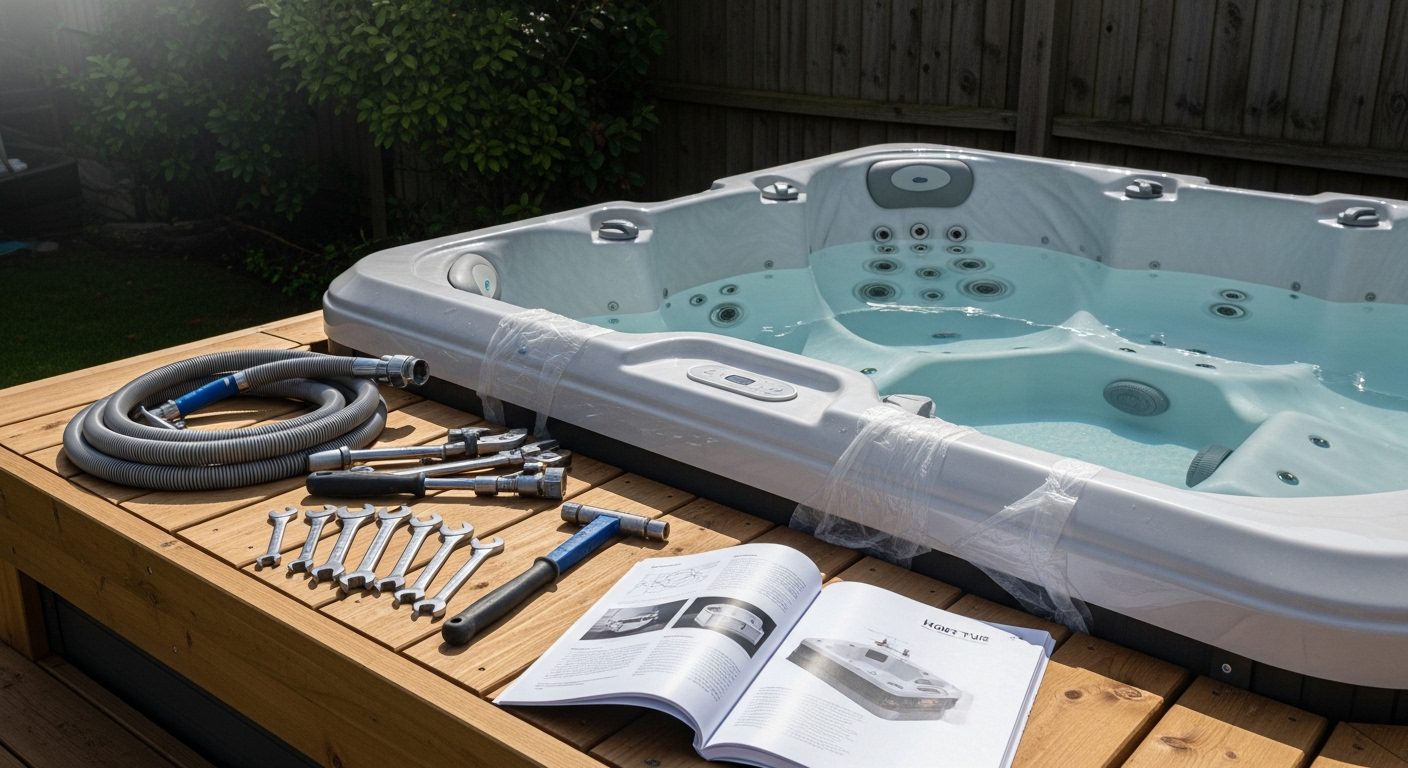
Installing a hot tub at home transforms your backyard into a personal spa retreat, but the process requires careful planning and execution. After helping dozens of homeowners through their hot tub installations over the past decade, I’ve learned that success depends on proper preparation and understanding each critical step.
The average hot tub installation costs between $500 and $2,000 for DIY projects, compared to $1,500 to $5,000 for professional installation. While the savings appeal to many homeowners, safety and code compliance should always take priority. In this comprehensive guide, we’ll walk through every aspect of hot tub installation, from initial planning to your first soak.
Whether you’re planning a complete DIY installation or coordinating with professionals for specific tasks, this guide provides the knowledge you need to ensure a safe, code-compliant installation that will provide years of relaxation and enjoyment.
Planning Your Hot Tub Installation
The foundation of any successful hot tub installation starts with thorough planning. I recommend beginning this process at least 2-3 months before your intended installation date, especially if permits and electrical work are involved.
Choosing the Right Location
Location selection impacts every other aspect of your installation. Start by walking your property and identifying potential spots that meet these essential criteria:
Your chosen location needs level ground or the ability to create level ground economically. The spot should provide privacy from neighbors while remaining accessible for both delivery and regular use. Consider the distance from your home’s electrical panel, as longer runs increase installation costs significantly.
I always advise homeowners to think about their typical usage patterns. A location closer to the house encourages more frequent use, especially during colder months. However, placing the hot tub too close to bedroom windows might create noise concerns. Most installations work best 10-20 feet from the home’s back entrance.
Check for overhead power lines, tree branches, and other obstacles that could interfere with delivery or create safety hazards. Your delivery path needs at least 8 feet of width for most hot tubs, though some models require 10 feet or more. Gates, fences, and landscaping features often need temporary removal.
Understanding Local Building Codes and Permits
Building codes vary significantly between jurisdictions, but most areas require permits for hot tub installations. Contact your local building department before purchasing your hot tub to understand specific requirements in your area.
Typical permit requirements include electrical permits for new circuits or panel upgrades, building permits for permanent structures or decks, and plumbing permits if connecting to existing water systems. Some areas also require setback compliance, ensuring your hot tub sits the required distance from property lines.
The permit process typically costs $100 to $500 and takes 1-3 weeks for approval. While tempting to skip this step, unpermitted installations can create problems during home sales, insurance claims, or if accidents occur. Licensed electricians often handle electrical permits as part of their service.
Budget Planning and Cost Breakdown
Creating a realistic budget prevents surprises during installation. Based on current 2026 pricing, here’s what to expect for various installation components:
Foundation preparation ranges from $600 to $1,200 for a concrete pad, though alternatives like reinforced decking or gravel bases may cost less. Electrical work represents the largest variable cost, typically running $800 to $1,500 for a dedicated circuit installation, more if your panel needs upgrading.
Additional costs often overlooked include delivery fees ($200-$500), crane rental if needed ($400-$800), permits and inspections ($100-$500), and initial chemical startup kit ($100-$200). Factor in accessories like steps, covers, and cover lifters ($300-$800 total).
I recommend adding a 20% contingency to your budget for unexpected issues. Older homes frequently need electrical panel upgrades, and site access challenges can require specialized equipment or additional labor.
Foundation Requirements and Preparation
A proper foundation prevents settling, shifting, and structural damage to your hot tub. Most manufacturers void warranties if the hot tub isn’t installed on an adequate base, making this step critical for long-term success.
Foundation Options Comparison
Concrete pads remain the gold standard for hot tub foundations. A 4-inch thick reinforced concrete pad provides excellent weight distribution and longevity. The pad should extend at least 6 inches beyond the hot tub’s footprint on all sides. For an 8×8 foot hot tub, plan on a 9×9 foot pad minimum.
Reinforced gravel bases offer a more budget-friendly alternative for many installations. This option requires excavating 6-8 inches deep, laying landscape fabric, then filling with compacted crushed stone or pea gravel. A layer of sand on top creates a smooth, level surface. While less expensive than concrete, gravel bases require periodic releveling.
Existing decks can support hot tubs if properly reinforced. Consult a structural engineer to verify load capacity, as a filled hot tub can weigh 6,000 pounds or more. Most decks need additional posts and beams directly under the hot tub location. Never assume a deck can handle this weight without professional evaluation.
Spa pads, made from high-density polymer, provide another option for level ground installations. These prefabricated pads typically cost $300-$500 and install quickly. However, they work best on already-level ground and may not suit all soil conditions.
Calculating Weight Load Requirements
Understanding weight distribution helps ensure your foundation adequacy. Calculate total weight by adding the hot tub’s dry weight (typically 500-900 pounds), water weight (approximately 8.34 pounds per gallon), and maximum occupancy (average 185 pounds per person).
For example, a 400-gallon hot tub weighing 750 pounds empty, filled with water (3,336 pounds) and six people (1,110 pounds) totals nearly 5,200 pounds. This weight must distribute evenly across your foundation to prevent stress points and potential cracking.
Most hot tubs require foundations supporting at least 115 pounds per square foot. High-end models with additional features may require 150 pounds per square foot or more. Your hot tub’s installation manual specifies exact requirements.
Site Preparation Steps
Begin site preparation by marking your hot tub’s exact location with spray paint or stakes. Include the foundation’s extended dimensions and any required setbacks from property lines or structures.
Call 811 for utility marking before any excavation. Utility companies mark underground lines for free, preventing dangerous and expensive accidents. Wait the required time (typically 2-3 business days) before beginning excavation.
Remove all vegetation, including grass, roots, and organic material from the foundation area. Organic material decomposes over time, creating voids that lead to settling. Excavate to the required depth for your chosen foundation type, ensuring the bottom remains level.
For concrete pads, create forms using 2×4 or 2×6 lumber, ensuring they’re level and square. Install rebar grid or wire mesh reinforcement according to local codes. Most installations require #4 rebar on 12-inch centers or 6×6 wire mesh.
Proper drainage prevents water accumulation around your hot tub. Grade the surrounding area to slope away from the foundation at least 1/4 inch per foot. Consider installing French drains in areas with poor natural drainage or high water tables.
Electrical Installation Requirements
Electrical work represents the most technical and potentially dangerous aspect of hot tub installation. While some jurisdictions allow homeowner-performed electrical work with proper permits, I strongly recommend hiring a licensed electrician for safety and code compliance.
Understanding NEC Requirements for Hot Tubs
The National Electrical Code (NEC) Article 680 governs hot tub electrical installations. These requirements ensure user safety around water and electricity. Key NEC requirements include dedicated circuit installation, proper grounding and bonding, and GFCI protection.
Most hot tubs require a 220-240V, 50-amp dedicated circuit, though smaller models may operate on 30-amp circuits. The circuit must originate from your main electrical panel and serve only the hot tub. No other outlets or appliances can share this circuit.
GFCI (Ground Fault Circuit Interrupter) protection is mandatory for all hot tub installations. The GFCI breaker detects current leakage and shuts off power within milliseconds, preventing electrocution. Install the GFCI breaker in your main panel or use a spa disconnect panel with built-in GFCI protection.
Bonding requirements ensure all metal components maintain the same electrical potential, preventing shock hazards. Bond the hot tub’s equipment, metal piping within 5 feet, metal fittings, and any metal structures within reach of hot tub users.
Installing the Spa Disconnect Panel
A disconnect panel provides a convenient shutoff point for maintenance and emergencies. NEC requires the disconnect to be visible from the hot tub, at least 5 feet away but no more than 50 feet distant. Mount the disconnect at least 4 feet above ground level.
Run appropriate gauge wire from your main panel to the disconnect location. For 50-amp circuits at typical residential distances, 6-gauge copper wire usually suffices, though longer runs may require larger wire. Always consult wire sizing charts for your specific installation distance.
The disconnect panel installation involves mounting the panel securely to a post or structure, running conduit from the main panel to the disconnect, pulling wire through the conduit, and making proper connections. Use liquid-tight flexible conduit for the final connection from the disconnect to the hot tub, allowing for vibration and minor movement.
Wiring and Safety Considerations
Proper wire sizing prevents voltage drop and overheating. Calculate voltage drop based on circuit length and amperage. Voltage drop shouldn’t exceed 3% for optimal hot tub performance. Online calculators simplify this process, but when in doubt, use larger wire.
Underground wiring requires specific installation methods. Direct burial cable must be at least 18 inches deep for GFCI-protected circuits. Conduit installations can be shallower: 6 inches for rigid metal conduit or 18 inches for PVC conduit.
Always use copper wire for hot tub installations, as aluminum wire requires special connections and may void warranties. Ensure all connections are tight and properly torqued to manufacturer specifications. Loose connections create resistance, heat, and potential fire hazards.
Install a ground rod if your disconnect panel is more than 50 feet from your main panel. The ground rod provides additional protection against electrical faults and lightning strikes. Drive an 8-foot copper ground rod fully into the earth near the disconnect panel.
Hot Tub Delivery and Placement
Successful delivery requires coordination between you, the dealer, and the delivery crew. Most delivery problems stem from inadequate preparation or communication about site access challenges.
Preparing for Delivery Day
Two weeks before delivery, confirm all site preparation is complete, including foundation curing (for concrete) and electrical rough-in. Measure your delivery path again, noting any tight spots, slopes, or obstacles. Share photos with your dealer if access appears challenging.
Clear the delivery path of all movable obstacles. This includes outdoor furniture, potted plants, garden hoses, and children’s toys. Trim overhanging branches to provide at least 8 feet of vertical clearance. Remove fence sections if necessary, marking underground sprinkler lines to prevent damage.
On delivery day, ensure someone knowledgeable about the installation stays on-site. The delivery crew needs guidance about placement specifics and may have questions about your preparation. Have your installation manual ready for reference.
Protect your lawn by laying plywood sheets along the delivery path if the ground is soft or wet. This prevents ruts and damage from the hot tub’s weight. Most delivery crews appreciate this consideration and take extra care when homeowners show preparation.
Access Requirements and Challenges
Standard delivery requires a minimum 8-foot wide clear path from the street to the installation site. Measure gate openings, side yards, and any narrow passages. Remember that the delivery crew needs room to maneuver, not just squeeze through.
Slopes exceeding 15 degrees create significant challenges. Steep slopes may require additional crew members or specialized equipment. Stairs are generally impossible for standard delivery; crane service becomes necessary.
Overhead obstacles often surprise homeowners. Power lines, cable TV lines, and tree branches can block delivery paths. The hot tub needs to clear these obstacles by at least 2 feet for safety. Consider the hot tub on its side – most units are taller than they are wide.
When standard delivery isn’t possible, crane service provides an alternative. Cranes can lift hot tubs over houses, fences, and other obstacles. While adding $400-$800 to installation costs, crane delivery sometimes represents the only viable option.
Positioning and Leveling
Once on the foundation, precise positioning ensures proper operation and longevity. The hot tub must be level within 1/2 inch across its entire base. Even slight tilting affects water circulation, jet performance, and component life.
Use a long level (at least 4 feet) to check level in multiple directions. Place shims under the hot tub’s base as needed, using pressure-treated wood or composite materials that won’t rot or compress. Never use regular lumber or materials that degrade when wet.
Position access panels for easy maintenance reach. Most hot tubs have one or two access panels for equipment service. Ensure at least 18 inches of clearance at these panels. If against a wall or fence, leave enough room to remove panels completely.
Consider the view from inside the hot tub when finalizing position. Small adjustments now can dramatically improve your enjoyment for years to come. Think about privacy, scenery, and sun exposure at your typical usage times.
Filling and Initial Startup
Proper startup procedures protect your hot tub’s equipment and ensure safe, trouble-free operation. Rushing this process risks equipment damage and water chemistry problems that take weeks to correct.</ественного
Pre-Fill Inspection Checklist
Before adding water, inspect every aspect of your installation. Check that all drain valves are closed and secured. Open equipment compartment and verify all unions and connections are hand-tight plus 1/4 turn. Never over-tighten plastic fittings.
Inspect the shell for shipping damage, checking especially around jet faces and the footwell. Small cracks or chips should be reported immediately, as they’re easier to address before filling. Take photos of any concerns for your records.
Remove all construction debris from the hot tub interior, including foam pieces, plastic strips, and packaging materials. These items can clog filters and damage pumps if left in place. Wipe down the shell with a soft, damp cloth to remove dust.
Install filters according to manufacturer directions, ensuring they’re properly seated and secured. Some hot tubs include multiple filters that must be installed in specific locations. Mixing up filter placement can affect filtration efficiency and water flow.
Proper Filling Procedures
Fill your hot tub through the filter compartment rather than directly into the footwell. This method prevents airlocks in the plumbing system. Remove filter cartridges temporarily and place your garden hose directly into the filter housing.
Use a clean hose dedicated to potable water. Avoid hoses used for lawn chemicals or sitting in the sun for extended periods. Run water for 30 seconds before filling to flush any stagnant water or debris from the hose.
Fill slowly to prevent air entrapment in plumbing lines. A moderate flow rate works best – full blast isn’t necessary and can cause problems. Monitor the filling process, checking for leaks at equipment and underneath the hot tub.
Stop filling when water reaches the midpoint of the skimmer opening or the level specified in your manual. Overfilling causes operational problems and water waste. Underfilling can damage pumps and heaters. Most hot tubs require 300-500 gallons, taking 1-3 hours to fill depending on flow rate.
Initial Water Chemistry Setup
Test your source water before adding any chemicals. Understanding your starting point helps achieve proper balance more quickly. Test for pH, alkalinity, calcium hardness, and metals if you’re on well water.
Begin with alkalinity adjustment, targeting 80-120 parts per million (ppm). Alkalinity acts as a pH buffer, making other adjustments more stable. Add alkalinity increaser gradually, allowing circulation between additions.
Adjust pH after alkalinity stabilizes. Ideal pH ranges from 7.2 to 7.8, with 7.4-7.6 optimal. Low pH corrodes equipment and irritates skin. High pH causes scaling and reduces sanitizer effectiveness. Make small adjustments and retest frequently.
Balance calcium hardness to 150-250 ppm to prevent corrosion (low calcium) or scaling (high calcium). This parameter changes slowly, so get it right initially. Add calcium increaser if needed, following package directions for your hot tub’s volume.
Add sanitizer last, after other parameters balance. Choose between chlorine or bromine systems based on your preference. Follow manufacturer startup procedures, which often require higher initial doses. Don’t enter the hot tub until sanitizer levels stabilize within recommended ranges.
Equipment Testing and Commissioning
Turn on power at the GFCI breaker only after the hot tub fills completely. The control panel typically runs through a priming sequence, cycling pumps to remove air from lines. Follow on-screen prompts or manual instructions for your specific model.
Listen for unusual noises during initial operation. Grinding sounds indicate bearing problems, while gurgling suggests air in the system. Loud vibrations might mean equipment isn’t properly secured. Address any concerns before proceeding.
Test each pump speed and jet zone systematically. Verify water flows from all jets evenly. Weak or pulsing jets indicate air locks requiring additional priming cycles. Some jets have adjustable faces – ensure they’re open during testing.
Program your filtration cycles according to manufacturer recommendations. Most hot tubs filter 4-8 hours daily in two cycles. Set temperature to your desired level, remembering that heating takes 8-24 hours depending on starting temperature and heater size.
Check for leaks after equipment runs for several hours. Look underneath the hot tub and in the equipment compartment. Small drips from unions often stop after gaskets swell. Persistent leaks require immediate attention.
Safety Considerations and Best Practices
Safety must remain paramount throughout installation and subsequent use. Hot tubs combine electricity, water, and heat – a potentially dangerous combination without proper precautions.
Electrical Safety Measures
Never work on electrical components with power connected. Always turn off the breaker and verify power is off with a non-contact voltage tester. Post a sign at the breaker panel when working to prevent others from restoring power unexpectedly.
Maintain proper clearances around electrical equipment. The NEC specifies minimum distances for outlets, lights, and other electrical devices near hot tubs. No outlets within 10 feet, no overhead power lines within 22.5 feet, and underground wiring at specified depths.
Test GFCI protection monthly once installation completes. Press the test button to verify the breaker trips, then reset. If the GFCI fails to trip or won’t reset, disconnect hot tub use immediately and contact an electrician. Faulty GFCI protection creates serious electrocution risk.
Install proper lighting for nighttime safety without compromising electrical safety. Low-voltage LED outdoor solar lighting provides an excellent option around hot tubs, eliminating electrical connections near water. Position lights to illuminate steps and pathways without causing glare.
Structural Safety Requirements
Install proper barriers to prevent unauthorized access, especially important with children nearby. Many jurisdictions require locking covers meeting ASTM F1346 standards. These covers support significant weight and lock in place, preventing accidental entry.
Provide stable, slip-resistant steps for hot tub entry and exit. Steps should include handrails and non-slip treads. Position steps on the foundation or equally stable surface, securing them to prevent movement. Wide steps accommodate users of varying mobility levels.
Ensure adequate ventilation for indoor installations. Hot tubs produce significant humidity that can damage structures and create mold problems. Install exhaust fans rated for the space volume, venting moisture directly outside. Consider a dehumidification system for year-round indoor use.
Plan emergency access and egress routes. Emergency responders need clear access if accidents occur. Keep gates unlocked or provide lock boxes with combinations. Ensure nothing blocks access to electrical disconnects and emergency shutoffs.
Water Safety and Hygiene
Maintain proper water chemistry to prevent bacterial growth and disease transmission. Test water 2-3 times weekly initially, adjusting to weekly once you understand your hot tub’s patterns. Keep sanitizer levels within recommended ranges continuously.
Shower before hot tub use to reduce contaminant introduction. Body oils, lotions, and deodorants quickly overwhelm sanitizer systems. A quick rinse dramatically improves water quality and reduces chemical usage. Consider installing an outdoor shower near your hot tub.
Limit soak duration and monitor water temperature. Most adults safely enjoy 104°F water for 15-30 minutes. Pregnant women, children, and those with health conditions should consult physicians about safe temperatures and durations. Install an accurate thermometer independent of the control system.
Never use the hot tub alone if you have any medical conditions or after consuming alcohol. Drowning can occur in just inches of water if someone loses consciousness. Establish household rules about hot tub use and ensure everyone understands safety protocols.
Common Installation Mistakes to Avoid
Learning from others’ mistakes saves time, money, and frustration. These common errors occur regularly, even among experienced DIY installers.
Foundation and Site Preparation Errors
Inadequate foundation thickness ranks among the most serious mistakes. Saving money with a 2-inch concrete pad instead of the required 4 inches leads to cracking and settling. The cost difference is minimal compared to replacement costs. Never compromise on foundation specifications.
Forgetting about drainage creates ongoing problems. Water from rain, splashing, and draining must go somewhere. Without proper grading and drainage, water pools around the hot tub, creating slip hazards and potential foundation damage. Install French drains or dry wells in problem areas.
Choosing locations without considering maintenance access causes long-term headaches. Equipment eventually needs service or replacement. Positioning hot tubs too close to structures or in corners makes repairs difficult and expensive. Always preserve access to all sides, especially equipment panels.
Failing to account for mature landscaping growth surprises many homeowners. Small trees and shrubs grow, eventually creating shade, dropping leaves, or damaging covers. Consider 10-year growth projections when selecting locations. Plant appropriately sized vegetation or maintain aggressive trimming schedules.
Electrical Installation Mistakes
Undersizing wire for circuit length causes voltage drop and poor performance. Online calculators make proper sizing easy, yet many installations use inadequate wire gauge. Voltage drop exceeding 3% affects heater performance and can damage circuit boards. When uncertain, use larger wire.
Incorrect GFCI installation or testing creates serious safety hazards. Some installers place GFCIs too far from hot tubs or fail to test after installation. Others connect loads to the wrong terminals, bypassing protection entirely. Always verify proper GFCI function before use.
Improper bonding leaves users vulnerable to electrical shock. All metal components within 5 feet must be bonded together and to the hot tub’s ground system. This includes metal gas lines, fences, and outdoor kitchen appliances. Bonding prevents voltage differences that cause shocks.
Sharing circuits with other loads violates code and creates problems. Hot tubs require dedicated circuits from panel to equipment. Adding “just one outlet” for convenience can trip breakers and damage sensitive electronics. Maintain circuit dedication regardless of convenience temptation.
Equipment and Plumbing Issues
Over-tightening fittings cracks plastic components. Hand-tight plus 1/4 turn suffices for most unions and connections. Using pipe wrenches or excessive force creates stress fractures that fail later. Replace any fittings showing stress marks or discoloration.
Creating air locks during filling prevents proper operation. Filling through the footwell instead of filter housing traps air in pumps and heaters. While usually correctable through priming cycles, severe air locks require partial draining and refilling. Follow manufacturer filling procedures exactly.
Mixing incompatible chemicals causes dangerous reactions and equipment damage. Never add chemicals directly to skimmers or mix different products. Add chemicals separately, allowing complete circulation between additions. Keep detailed logs of all chemical additions.
Ignoring winterization requirements in cold climates leads to freeze damage. Water expands when freezing, cracking pipes, pumps, and manifolds. Either maintain hot tub operation through winter or properly winterize following manufacturer procedures. Half-measures guarantee expensive repairs.
Long-term Maintenance Preparation
Setting up proper maintenance routines from the start extends equipment life and improves user experience. Good habits developed early become second nature.
Creating a Maintenance Schedule
Daily tasks take just minutes but prevent major problems. Check water temperature and clarity each day. Verify the cover is properly secured when not in use. Listen for unusual sounds that might indicate developing problems.
Weekly maintenance includes comprehensive water testing and adjustment. Test pH, sanitizer, and alkalinity at minimum. Clean the waterline with approved products to prevent scum buildup. Check and clean skimmer baskets, removing debris before it decomposes.
Monthly tasks focus on deeper cleaning and prevention. Rinse or rotate filters according to manufacturer schedules. Most filters benefit from monthly rinsing and quarterly deep cleaning. Inspect cover condition, treating vinyl with protectants to prevent UV damage and cracking.
Quarterly maintenance addresses less frequent but important tasks. Drain and refill hot tubs every 3-4 months, depending on use. This prevents dissolved solid buildup that clouds water and damages equipment. Clean and inspect jet faces, checking for calcium buildup or damage.
Annual professional service, while optional for DIY enthusiasts, provides valuable equipment inspection and preventive maintenance. Technicians check elements average homeowners might miss, potentially catching problems early. Consider professional service even if you handle routine maintenance yourself.
Record Keeping and Documentation
Maintain detailed installation records for warranty and resale purposes. Document the installation date, serial numbers, and installer information for all components. Take photos during installation showing foundation, electrical, and equipment placement. These prove invaluable for warranty claims or troubleshooting.
Create a chemical log tracking all additions and test results. This history reveals patterns and helps diagnose problems. Note any unusual events like heavy use, storms, or equipment issues. Digital apps simplify logging, but paper works equally well.
Keep all manuals, warranties, and receipts in one location. Create digital copies for backup, storing them in cloud services for easy access. Include dealer contact information, service company details, and emergency shutdown procedures.
Document any modifications or repairs performed. Include dates, parts replaced, and costs. This information helps service technicians and improves resale value. Buyers appreciate comprehensive maintenance history demonstrating proper care.
Frequently Asked Questions
How much does it cost to install a hot tub at home?
DIY hot tub installation typically costs $500-$2,000, including foundation materials, electrical supplies, and permits. Professional installation ranges from $1,500-$5,000, with electrical work representing the largest variable. Concrete foundations add $600-$1,200, while electrical installation runs $800-$1,500. Additional costs include permits ($100-$500), delivery ($200-$500), and potentially crane service ($400-$800) for difficult access situations.
Do I need a permit to install a hot tub?
Most jurisdictions require permits for hot tub installation, typically including electrical permits for new circuits and building permits for permanent structures. Some areas also require plumbing permits and compliance with setback requirements. Contact your local building department before installation to understand specific requirements. Permit costs usually range from $100-$500 and take 1-3 weeks for approval. Licensed electricians often handle electrical permits as part of their service.
What type of foundation do I need for a hot tub?
Hot tubs require foundations supporting at least 115 pounds per square foot, with popular options including 4-inch reinforced concrete pads (the gold standard), compacted gravel bases 6-8 inches deep, properly reinforced existing decks, or prefabricated spa pads. The foundation should extend 6 inches beyond the hot tub footprint and provide completely level support. Your choice depends on budget, soil conditions, and local codes. Consult your hot tub manual for specific requirements, as some models need stronger support.
What are the electrical requirements for hot tub installation?
Most hot tubs require a 220-240V, 50-amp dedicated circuit with GFCI protection, though smaller models may operate on 30-amp circuits. Installation includes running appropriate gauge wire (typically 6 AWG copper), installing a disconnect panel 5-50 feet from the hot tub, and ensuring proper grounding and bonding per NEC Article 680. The disconnect must be visible from the hot tub but not closer than 5 feet. Underground wiring requires specific burial depths: 18 inches for direct burial cable or 6 inches for rigid metal conduit.
Can I install a hot tub myself or should I hire professionals?
While handy homeowners can handle foundation preparation and basic installation tasks, electrical work should typically be performed by licensed electricians for safety and code compliance. Consider your skills honestly: concrete work and site preparation are manageable for most DIYers, but electrical installation requires specific knowledge and tools. Many homeowners use a hybrid approach, preparing the site themselves then hiring professionals for electrical and crane services if needed. This balances cost savings with safety.
How long does hot tub installation take?
Complete installation typically spans 2-4 weeks from start to finish. Site preparation and foundation work take 2-3 days, with concrete requiring 7 days to cure properly. Electrical installation requires 1-2 days, depending on complexity. Delivery and placement take 2-4 hours, while filling and startup require another 4-6 hours. Factor in permit approval time (1-3 weeks) and scheduling contractors. Rush installations are possible but may compromise quality or safety.
What size concrete pad do I need for my hot tub?
The concrete pad should extend at least 6 inches beyond your hot tub’s footprint on all sides. For an 8×8 foot hot tub, plan a minimum 9×9 foot pad. The pad must be 4 inches thick with proper reinforcement (rebar or wire mesh). Calculate the hot tub’s total weight including water and occupants, ensuring your pad supports at least 115 pounds per square foot. Some installers recommend larger pads for easier maintenance access and aesthetic appeal.
Do I need an electrician for hot tub installation?
While some jurisdictions allow homeowner electrical work with proper permits, hiring a licensed electrician is strongly recommended for safety and code compliance. Electricians ensure proper wire sizing, GFCI installation, and bonding requirements are met. They handle permit applications and coordinate inspections. The cost ($800-$1,500) is reasonable considering the safety implications and potential warranty requirements. Many hot tub warranties require professional electrical installation.
How do I prepare my yard for hot tub delivery?
Clear a path at least 8 feet wide from the street to your installation site, removing furniture, plants, and obstacles. Measure gate openings and narrow passages, removing fence sections if necessary. Protect lawns with plywood on delivery day if ground is soft. Ensure 8 feet of vertical clearance, trimming branches as needed. Mark sprinkler lines and have someone knowledgeable present during delivery. For challenging access, discuss crane service with your dealer in advance.
What’s the best location for a hot tub in my yard?
The ideal location balances privacy, convenience, and practical requirements. Choose level ground 10-20 feet from your home’s entrance for convenient access while minimizing noise near bedrooms. Ensure the spot allows for equipment access and maintenance, with no overhead power lines or overhanging branches. Consider privacy from neighbors, views from inside the hot tub, and proximity to your electrical panel. Southern or western exposure provides afternoon sun, while patio heaters can extend seasonal use in cooler locations.
Final Tips for Success
After completing numerous hot tub installations, I’ve learned that success comes from patience and attention to detail. Never rush any phase of installation, especially foundation and electrical work. Taking extra time during installation prevents years of problems.
Start planning your installation during winter months when contractors have more availability and prices may be lower. This also allows unhurried preparation, ensuring everything’s ready for spring installation and summer enjoyment.
Join online hot tub forums and local Facebook groups for your hot tub brand. These communities provide invaluable troubleshooting help, maintenance tips, and moral support during installation challenges. Experienced owners freely share knowledge that saves newcomers significant time and money.
Consider your hot tub’s long-term impact on your property and lifestyle. A well-installed hot tub adds home value and provides years of enjoyment. Poor installation creates ongoing problems and potentially dangerous situations. Invest appropriately in quality installation, even if it means waiting longer to save money.
Remember that hot tub installation is just the beginning. Regular maintenance, proper water chemistry, and seasonal care determine your long-term satisfaction. Develop good habits early, and your hot tub will reward you with years of relaxation and enjoyment.
Don’t forget to celebrate your accomplishment once installation completes! Installing a hot tub, whether DIY or professionally assisted, represents a significant home improvement. Take pride in creating your personal oasis, and enjoy the fruits of your careful planning and hard work. Proper lawn care guide around your new hot tub area will help maintain the beauty of your backyard retreat for years to come.