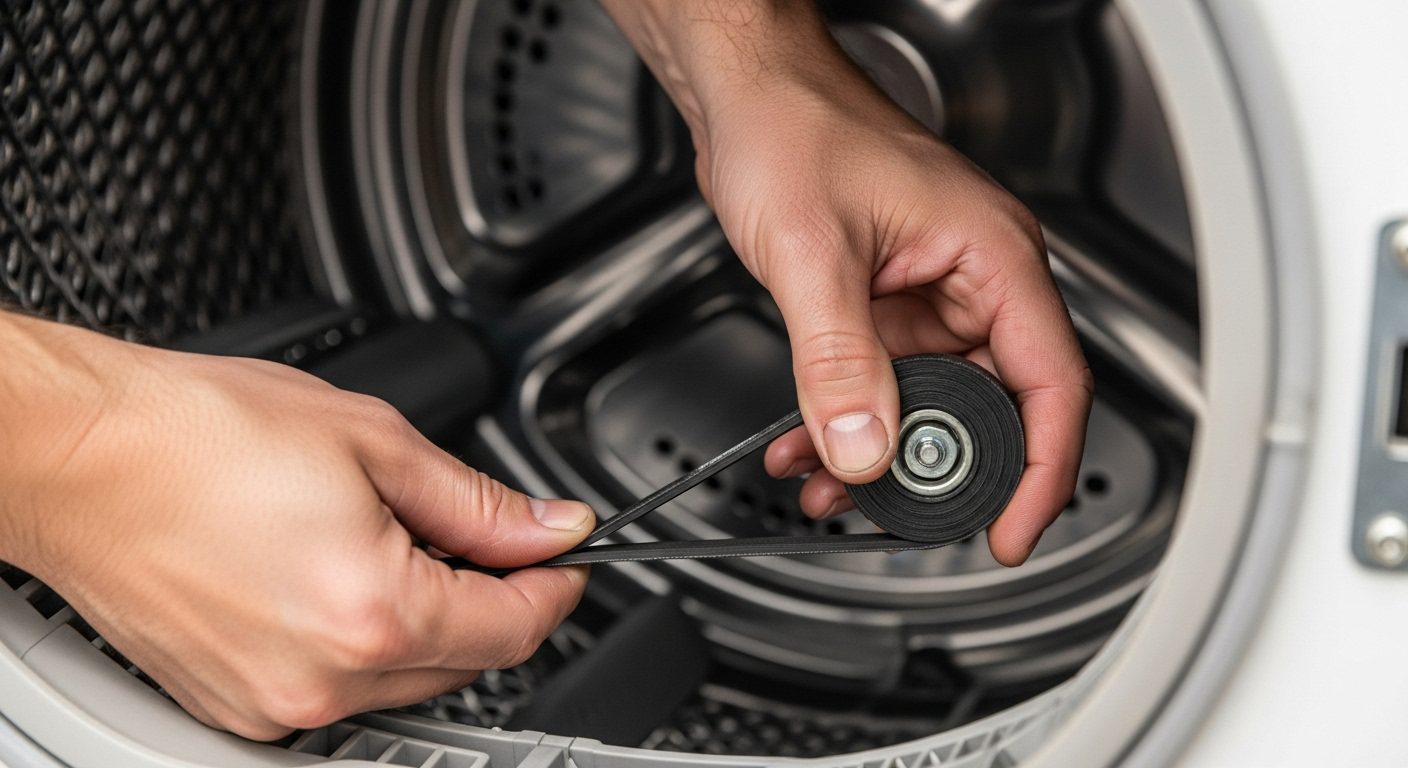
When your dryer suddenly stops tumbling but still heats up, there’s a good chance you’re dealing with a broken drive belt. I’ve replaced dozens of these belts over the years, and the good news is that this repair is completely doable for most homeowners. With the right approach and about 30-60 minutes of your time, you can save yourself the $150-300 that professional repair services typically charge.
A dryer belt replacement is one of those repairs that looks intimidating at first, but once you understand the process, it becomes surprisingly straightforward. The belt itself usually costs between $10 and $40, depending on your dryer model, making this one of the most cost-effective appliance repairs you can tackle yourself. Before we dive into the repair procedure, though, it’s crucial to understand what we’re dealing with and how to stay safe throughout the process.
This guide covers everything from identifying the problem to completing the repair, with special attention to safety protocols that many other guides overlook. Whether you have a Whirlpool, Kenmore, Maytag, GE, or another major brand, the basic principles remain the same, though I’ll point out important model-specific variations along the way.
Signs Your Dryer Belt Needs Replacement
The most obvious sign of a broken dryer belt is when the drum stops turning while the motor still runs. You’ll hear the motor humming, and the dryer might still produce heat, but your clothes stay in one spot instead of tumbling. This happens because the belt that connects the motor to the drum has either snapped completely or stretched beyond its useful limit.
Sometimes the symptoms are more subtle. Your dryer might make unusual noises during operation – squealing, thumping, or scraping sounds often indicate a belt that’s wearing out but hasn’t completely failed yet. I’ve seen belts that develop cracks or fraying along their edges, causing them to slip intermittently. In these cases, the drum might turn slowly or stop mid-cycle.
Another telltale sign is finding small pieces of black rubber inside your dryer drum or lint trap. These rubber shavings come from a deteriorating belt that’s literally falling apart as it runs. If you notice this, stop using the dryer immediately – continuing to run it with a damaged belt can damage the motor or other components.
Age plays a significant role too. Most dryer belts last between 10-20 years with regular use, though heavy usage can shorten this lifespan considerably. If your dryer is approaching this age range and showing any performance issues, the belt should be your first suspect. Some models also have a belt switch that stops the motor if the belt breaks, preventing damage but leaving you with a completely non-functional dryer.
Critical Safety Precautions
Before touching anything on your dryer, unplug it from the electrical outlet. This isn’t optional – it’s the single most important safety step in this entire process. Even if your dryer uses gas for heat, it still requires electricity to operate the motor and controls. Pull the plug completely out of the outlet and verify there’s no power by attempting to turn the dryer on.
For gas dryers, you have an additional critical step: shut off the gas supply valve. This valve is typically located behind the dryer on the gas line. Turn it perpendicular to the pipe to close it. While we won’t be disconnecting the gas line for a belt replacement, this precaution prevents any accidental gas release if you bump or move components during the repair.
The edges of dryer cabinets and internal components can be surprisingly sharp. I learned this lesson the hard way years ago and now always wear work gloves during dryer repairs. These sheet metal edges can cause deep cuts, especially when you’re working in tight spaces or applying force to remove panels.
Create a safe workspace by moving the dryer away from the wall – you’ll need at least 2-3 feet of clearance to work comfortably. Place a blanket or cardboard on the floor to protect both your flooring and the dryer’s finish. Good lighting is essential; a headlamp or work light prevents you from working blind in the darker recesses of the appliance.
If you have any doubts about electrical safety, use a non-contact voltage tester to verify there’s no power present before beginning work. These inexpensive tools can detect voltage without direct contact and provide an extra layer of safety assurance.
Tools and Materials You’ll Need
Having the right tools ready before you start makes this repair much smoother. The basic tool list is relatively short, but using the proper equipment prevents damage to your dryer and makes the job safer. Here’s what you’ll need for most dryer belt replacements:
Essential Tools:
- Phillips head screwdriver (for most dryer models)
- Flathead screwdriver (for prying clips and panels)
- 5/16″ nut driver or socket (common size for dryer screws)
- 1/4″ nut driver (alternative size for some models)
- Putty knife or thin pry tool (for top-loading dryer lids)
- Work gloves (protect against sharp edges)
- Flashlight or headlamp (essential for seeing inside the cabinet)
Materials Needed:
- Replacement dryer belt (specific to your model)
- Vacuum cleaner (for cleaning lint and debris)
- Digital camera or smartphone (for reference photos)
- Masking tape and marker (for labeling wires if needed)
- Shop towels or rags (for cleaning)
The most critical item is getting the correct replacement belt for your specific dryer model. Dryer belts aren’t universal – they vary in length, width, and the number of ribs on the underside. Check your dryer’s model number (usually found on a sticker inside the door frame or on the back panel) and order the exact replacement belt specified for that model. Using the wrong belt might seem to work initially but will lead to premature failure or damage to other components.
Some dryer repairs benefit from specialized tools, though they’re not absolutely necessary. A belt installation tool (essentially a long, thin hook) can make threading the new belt easier on some models. Similarly, a magnetic parts tray prevents losing screws in the inevitable crevices of your laundry room.
Step-by-Step Belt Replacement Procedure
Step 1: Access the Dryer Cabinet
The method for opening your dryer depends entirely on its design. Top-loading models (where the lint filter is on top) typically have a lid that lifts up after releasing hidden clips. I slide a putty knife under the front corners of the lid, about 2 inches from each edge, and push in to release these spring clips. You’ll hear a distinct pop when each clip releases.
Front-loading dryers usually require removing the top panel first. Look for two or three screws at the back of the top panel. Remove these, then slide the top panel back about an inch and lift it off. This exposes the screws holding the front panel, which you’ll remove next.
For many Whirlpool and Kenmore models, the front panel comes off as one piece including the door. Remove the screws at the top (now visible with the top panel off) and lift the entire front panel up and away from the bottom clips. Set it aside carefully – the door adds significant weight to this assembly.
Some GE and Hotpoint models have a different approach where you remove the front lower access panel first, then work your way up to the main drum area. Always consult your model’s diagram if you’re unsure, as forcing panels can break plastic clips that are difficult to replace.
Step 2: Document and Remove the Old Belt
Before removing anything, take several photos showing how the existing belt (if still intact) routes around the drum, motor pulley, and idler pulley. Even if the belt is broken, photograph the pulley positions and any tensioner assemblies. These references prove invaluable during reassembly, especially if this is your first belt replacement.
If the belt is still intact, release tension by pushing the idler pulley toward the motor. This creates slack allowing you to slip the belt off the motor shaft and idler pulley. Then simply lift the belt off the drum. If the belt has snapped, you’ll find pieces of it lying in the bottom of the dryer cabinet – remove all fragments to prevent them from interfering with the new belt.
While you have access, this is the perfect time to clean accumulated lint from inside the cabinet. I’m always amazed at how much lint bypasses the filter and accumulates around the motor and inside corners. A vacuum with a crevice tool works perfectly for this cleaning. Pay special attention to the area around the motor and blower assembly – excess lint here reduces efficiency and poses a fire risk.
Step 3: Inspect Related Components
With the belt removed, spin the drum by hand. It should rotate smoothly without grinding, scraping, or wobbling. Any roughness indicates worn drum rollers or bearings that should be replaced while you have the dryer apart. These components often wear out around the same time as the belt, and replacing them now prevents another repair in the near future.
Check the idler pulley by spinning it with your finger. It should turn freely without wobbling or making noise. A seized or noisy idler pulley will quickly destroy your new belt. If you notice any issues, replace the idler pulley assembly – they’re relatively inexpensive and easy to change while you’re already inside the dryer.
Examine the motor pulley for any damage or wear. Look for grooves worn into the pulley by the old belt, cracks, or accumulated debris. Clean the motor pulley thoroughly with a rag, ensuring no old belt material remains that could cause the new belt to slip or wear prematurely.
Step 4: Install the New Belt
Start by positioning the new belt around the drum with the grooved side against the drum surface. The belt should sit in the same position as the old one – typically about an inch from the rear of the drum. Make sure the belt lies flat without any twists, as a twisted belt will fail quickly and make noise during operation.
Here’s where model differences become important. On most Whirlpool, Kenmore, and Maytag dryers, you’ll route the belt under the idler pulley and around the motor pulley in a zig-zag pattern. The belt goes straight down from the drum, under the idler pulley (which you’ll need to push toward the motor to create slack), then loops around the motor pulley.
GE dryers often use a different configuration where the belt makes a simple loop around both the idler and motor pulleys. Some Samsung and LG models have unique routing patterns, so consulting your model’s diagram is crucial if you’re unsure. The key is ensuring proper tension – the idler pulley should spring back when released, creating the right amount of belt tension.
Once routed correctly, rotate the drum by hand several complete revolutions. Watch the belt track on the drum and pulleys to ensure it stays centered and doesn’t walk off to one side. If the belt tries to climb off the pulleys or drum, you’ve likely got it routed incorrectly or there’s a problem with pulley alignment.
Step 5: Reassemble the Dryer
Reassembly is essentially the reverse of disassembly, but there are important checks along the way. Start by ensuring all internal components are secure and no tools or debris remain inside the cabinet. I once left a screwdriver inside a dryer (not my proudest moment) and the resulting noise when first started was quite alarming.
When replacing the front panel, make sure it seats properly on the bottom clips before installing the top screws. These clips support significant weight, and forcing the panel can break them. The door should align perfectly with the door strike – if it doesn’t, the panel isn’t seated correctly.
Replace the top panel by sliding it forward into position and securing it with the original screws. Don’t overtighten these screws as they thread into relatively thin metal that strips easily. The top should sit flush with no gaps that could allow lint to escape.
Before pushing the dryer back into position, reconnect the power and run a brief test. For gas dryers, turn the gas supply back on first. Start the dryer and listen carefully. You should hear the motor start and the drum begin turning smoothly without any squealing, thumping, or grinding noises.
Testing Your Repair
The moment of truth comes when you run your first full cycle. Start with a small load of towels or similar items – nothing delicate in case something isn’t quite right. Select a normal drying cycle and let it run for at least 10-15 minutes while you observe and listen.
The drum should tumble smoothly and consistently throughout the cycle. Listen for any unusual noises that weren’t present before the repair. A properly installed belt runs nearly silently – if you hear squealing or slipping sounds, the belt may be too loose or routed incorrectly.
Check that the dryer maintains proper heat (if you’re running a heated cycle) and that the drum rotation doesn’t slow down or stop under the weight of wet clothes. The door should stay securely latched, and you shouldn’t notice any unusual vibrations or movement of the appliance.
After the test cycle, open the door immediately and feel the belt area (carefully – it may be warm). The belt shouldn’t feel excessively hot, and you shouldn’t smell burning rubber. Either of these symptoms indicates a problem with belt tension or alignment that needs immediate attention.
Troubleshooting Common Installation Problems
Even experienced DIYers occasionally encounter issues during belt replacement. The most common problem I see is the drum turning but making a loud thumping noise. This usually means the belt isn’t seated properly on the drum or has a twist in it. The solution is to open the dryer again and ensure the belt lies completely flat around the drum.
If the drum doesn’t turn at all after installation, first verify the belt routing. On many models, it’s surprisingly easy to route the belt in a way that looks correct but doesn’t provide proper engagement with the motor pulley. Compare your routing carefully with the photos you took earlier or the manufacturer’s diagram.
Sometimes the drum turns for a few seconds then stops, often accompanied by a burning smell. This indicates the belt is slipping, usually because it’s either too loose or the wrong belt for your model. Double-check the belt part number against your dryer’s requirements. Even a belt that’s just slightly too long won’t maintain proper tension.
A squealing noise that persists after belt replacement often points to a worn idler pulley or drum rollers rather than the belt itself. While frustrating to discover after completing the repair, these components are relatively easy to replace now that you know how to access the dryer’s interior. Many repair professionals recommend replacing the idler pulley and drum rollers whenever you replace the belt, as they tend to wear out around the same time.
If your dryer door won’t stay closed after reassembly, the front panel likely isn’t seated correctly on its mounting clips. Remove the front panel completely and reinstall it, ensuring it drops fully onto the bottom clips before securing the top.
Model-Specific Variations and Tips
While the basic belt replacement process remains similar across brands, each manufacturer has its quirks. Whirlpool and Kenmore dryers (often made by Whirlpool) typically have the most straightforward design. Their cabinets usually open from the front after removing the top panel, and the belt routing follows a standard pattern that hasn’t changed much in decades.
Samsung and LG dryers, particularly newer models, sometimes feature more complex cabinet designs with multiple access panels. Some require removing the entire front panel assembly including the control panel, which means dealing with electrical connectors. Always take photos of connector positions before unplugging anything, and never force a connector – they usually have a release tab that needs to be pressed.
GE dryers often have a different belt routing pattern than other brands, with the belt making a simple loop rather than the zig-zag pattern common in Whirlpool-made units. GE also tends to use a bearing strip rather than drum rollers on some models, which can affect how the drum sits and rotates.
Maytag dryers, especially older models, might have a different door mechanism where the door remains attached to the main cabinet while the front panel comes off around it. This design requires more careful maneuvering but actually makes the repair easier once you understand the process.
For European brands like Bosch or Miele, expect to encounter metric fasteners and potentially more complex electronics. These dryers often have diagnostic modes that should be run after any repair to ensure all systems are functioning correctly. The belt routing might also be more complex, sometimes involving additional tensioning mechanisms.
Preventive Maintenance to Extend Belt Life
Once you’ve successfully replaced your dryer belt, taking steps to maximize its lifespan makes sense. The biggest enemy of dryer belts is overloading. When you stuff too many clothes into the dryer, the extra weight strains the belt and can cause premature stretching or breaking. I recommend filling the drum no more than 3/4 full, allowing clothes to tumble freely.
Regular lint removal goes beyond just cleaning the filter after each load. Every few months, disconnect the dryer vent from the back of the machine and clean it thoroughly. Restricted airflow causes the dryer to run longer and hotter, which accelerates belt wear. A well-maintained home includes regular appliance maintenance that prevents major repairs.
Level installation is crucial but often overlooked. If your dryer rocks or vibrates excessively, it puts uneven stress on the belt and support components. Use a level to check your dryer both front-to-back and side-to-side, adjusting the leveling feet as needed. This simple adjustment can add years to your belt’s life.
Listen to your dryer during normal operation. New noises often indicate developing problems that, if addressed early, can prevent belt damage. A squealing sound might mean the idler pulley needs lubrication or replacement. Thumping could indicate worn drum rollers that are causing the belt to track improperly.
Keep the area around your dryer clean and free from debris. Dust and lint accumulation around the motor and pulleys can cause overheating and premature belt failure. Every time you clean your lint filter, take a moment to peek behind the dryer and vacuum any visible lint accumulation.
When to Call a Professional?
While belt replacement is a manageable DIY repair for most homeowners, certain situations warrant professional help. If you encounter electrical problems beyond simply unplugging the dryer – such as damaged wiring, burnt connectors, or control board issues – stop and call a technician. Electrical repairs require expertise and can be dangerous if done incorrectly.
Gas dryer repairs involving anything beyond the belt replacement should generally be left to professionals. If you smell gas at any point during the repair, stop immediately, avoid using any electrical switches, and call your gas company. Gas leaks are serious safety hazards that require immediate professional attention.
Sometimes what seems like a belt problem is actually a symptom of a more serious issue. If you’ve replaced the belt but the dryer still doesn’t work properly, the motor might be failing, or there could be control board problems. Professional technicians have diagnostic tools and experience to quickly identify these complex issues.
Consider the age and value of your dryer. If it’s over 15 years old and requires multiple repairs beyond just the belt, replacement might be more economical. Modern dryers are significantly more energy-efficient, and the savings on your utility bills can help offset the purchase cost. Check out current appliance reviews and comparisons to find energy-efficient models if you decide to upgrade.
Warranty considerations also matter. If your dryer is still under warranty, attempting DIY repairs might void that coverage. Check your warranty terms before opening the cabinet – sometimes it’s worth paying for professional service to maintain warranty protection.
Cost Analysis: DIY vs Professional Repair
Let’s talk real numbers. A dryer belt typically costs between $10 and $40, depending on your model and where you purchase it. OEM (Original Equipment Manufacturer) belts cost more but generally last longer than generic alternatives. I usually recommend spending the extra $10-15 for an OEM belt – the peace of mind is worth it.
Professional dryer repair services charge between $150 and $300 for belt replacement, with the national average around $200. This price includes the service call fee (usually $50-100), labor, and the part. Some companies charge additional fees for same-day service or repairs needed outside normal business hours.
The time investment for DIY replacement is typically 30-60 minutes for your first attempt, dropping to about 20-30 minutes once you’re familiar with your dryer’s design. Factor in another 30 minutes for cleaning the interior while you have it open – something professional services rarely include but significantly improves dryer efficiency.
Beyond the immediate cost savings, learning this repair provides ongoing value. Dryer belts typically need replacement every 10-20 years, and knowing how to do it yourself saves money each time. Plus, the knowledge you gain about your dryer’s internal workings helps diagnose other problems before they become major repairs.
Consider the tool investment if you don’t already own them. Basic tools for this repair cost about $30-50 total if purchased new, but these are tools you’ll use for many other home repairs. Many homeowners already have most of these tools, making the actual out-of-pocket cost just the belt itself.
Frequently Asked Questions
How do I know if my dryer belt is broken versus another problem?
The telltale sign of a broken belt is when the motor runs (you can hear it humming) but the drum doesn’t turn. If neither the motor nor drum operates, you likely have an electrical issue, door latch problem, or control failure rather than a belt problem. Opening the dryer door and manually turning the drum – if it spins freely with no resistance, the belt is definitely broken.
Can I replace just the belt, or should I replace other parts at the same time?
While you can replace just the belt, I recommend inspecting and potentially replacing the idler pulley and drum rollers while you have the dryer open. These parts often wear out around the same time as the belt, and replacing them together prevents another repair in the near future. The additional parts cost about $20-40 but can save you from repeating the entire disassembly process.
What causes dryer belts to break?
Age is the primary factor – rubber deteriorates over time even with perfect use. Overloading the dryer accelerates wear by putting excess strain on the belt. Poor ventilation causing the dryer to overheat can also deteriorate the belt faster. Sometimes a seized idler pulley or drum roller causes excessive friction that breaks the belt prematurely.
Is it safe to run my dryer with a damaged but not completely broken belt?
No, continuing to use a dryer with a damaged belt is not safe. A fraying or slipping belt can suddenly break completely, potentially damaging other components. Pieces of deteriorating belt can also interfere with the motor or create a fire hazard. Stop using the dryer immediately if you notice any belt damage symptoms.
How can I find the right belt for my specific dryer model?
Locate your dryer’s model number on the door frame sticker or back panel. Enter this model number on appliance parts websites or provide it to your local appliance parts store. The correct belt will be listed specifically for your model. Never guess or use a “close enough” belt – even small differences in length or width can cause problems.
What’s the difference between OEM and aftermarket belts?
OEM belts are made by or for the dryer manufacturer to exact specifications. Aftermarket belts are made by third parties to fit the same applications. OEM belts typically last longer and fit more precisely but cost more. Quality aftermarket belts from reputable manufacturers can be good alternatives, but avoid the cheapest options as they often fail prematurely.
Can I prevent future belt problems?
Regular maintenance significantly extends belt life. Don’t overload the dryer, clean the lint filter after every load, ensure proper ventilation, and keep the dryer level. Annual cleaning of the vent system and interior cabinet prevents overheating that accelerates belt wear. Listen for unusual noises that might indicate developing problems.
What if my dryer is hardwired instead of plugged in?
For hardwired dryers, you’ll need to turn off the circuit breaker controlling the dryer circuit. Locate your electrical panel and flip the appropriate breaker to the OFF position. Use a non-contact voltage tester to verify power is off before beginning work. If you’re not comfortable working with hardwired appliances, consider hiring a professional.
How long should a dryer belt last?
Most dryer belts last 10-20 years with normal household use. Heavy use (multiple loads daily) shortens this lifespan to perhaps 5-10 years. Premium OEM belts generally last longer than budget aftermarket options. Proper maintenance and avoiding overloading can extend belt life significantly.
Why does my new belt smell like burning rubber?
A slight rubber smell during the first few uses is normal as the new belt seats itself. However, a strong burning smell indicates a problem – usually incorrect routing, improper tension, or misaligned components. Stop the dryer immediately and recheck your installation if you notice a strong burning odor.
Final Thoughts and Safety Reminders
Replacing a dryer belt ranks among the most satisfying DIY appliance repairs. You save significant money, gain valuable knowledge about your appliance, and experience the satisfaction of fixing something yourself. The skills you develop during this repair transfer to other appliance maintenance tasks, building your confidence as a DIY homeowner.
Safety remains paramount throughout this process. Never skip the step of disconnecting power, even if you think you’ll be quick. Take your time during disassembly and reassembly – rushing leads to broken clips, stripped screws, and potential injury. If anything seems unusual or unsafe during the repair, stop and reassess rather than pushing forward.
Remember that successful repair depends on three key factors: having the correct replacement belt for your specific model, following the proper routing pattern for your dryer design, and ensuring all components are in good working order. Take photos throughout the process, work methodically, and don’t hesitate to consult your dryer’s technical documentation when needed.
This repair also presents an excellent opportunity to perform other maintenance tasks. Clean the entire vent system from the dryer to the outside exhaust. Vacuum accumulated lint from areas you normally can’t reach. Inspect and tighten any loose screws or connections you notice. These extra steps improve your dryer’s efficiency and safety while extending the life of your new belt and other components.
For those considering whether to attempt this repair, I encourage giving it a try if you’re comfortable with basic tools and following instructions. The worst-case scenario is that you need to call a professional anyway, but the potential savings and knowledge gained make it worthwhile for most homeowners. Start when you have plenty of time, work in good lighting, and approach the task with patience.
Keep this guide handy for future reference. Dryer designs don’t change dramatically over time, so these instructions will likely remain relevant for your next belt replacement. Consider creating a maintenance log for your appliances, noting when repairs were performed and which parts were replaced. This information proves valuable when deciding whether to repair or replace aging appliances.
Finally, don’t forget about the importance of regular maintenance in preventing future problems. A well-maintained dryer not only lasts longer but operates more efficiently, saving money on energy costs. Just as you might maintain other home appliances, your dryer deserves regular attention to keep it running smoothly for years to come.
Successful dryer belt replacement comes down to preparation, patience, and following proper procedures. With these elements in place, you’ll complete this repair successfully and gain the confidence to tackle other DIY projects around your home. The money saved on this single repair often pays for the tools needed, making future DIY repairs pure savings.