The debate between electric and gas cooktops has taken a dramatic turn in recent years. What was once a simple preference about cooking style has evolved into a complex decision involving health concerns, energy efficiency, and environmental impact. With new research from Stanford University revealing that gas stoves emit nitrogen dioxide at levels that would be illegal outdoors, and energy costs fluctuating significantly, choosing between electric and gas has never been more consequential.
I’ve spent considerable time analyzing the latest research, including the groundbreaking 2025 Stanford study on indoor air quality, EPA guidelines, and real-world performance data from professional kitchens and home cooks alike. This comprehensive comparison will help you understand not just the surface-level differences, but the deeper implications of your choice for your health, wallet, and cooking experience.
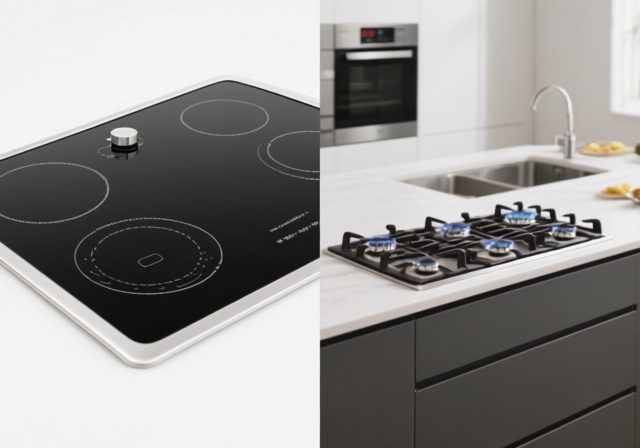
We’ll examine three main types of cooktops in this analysis: traditional electric coil, modern glass-top electric (including radiant), and gas burners. I’ll also include insights about induction technology, which represents the cutting edge of electric cooking and deserves special attention for its unique advantages.
The Health Impact: What Recent Research Reveals
The health implications of gas versus electric cooktops have become impossible to ignore following multiple peer-reviewed studies published in 2025. The Stanford University research found that gas stoves increase nitrogen dioxide exposure by an average of 4 parts per billion annually – that’s 75% of what the World Health Organization considers unsafe for outdoor air. Think about that: the air in your kitchen could be worse than what’s legally allowed on a busy street.
Gas stoves release multiple pollutants during operation. According to Harvard Health Publishing, these appliances emit benzene, formaldehyde, carbon monoxide, and nitrogen dioxide directly into your home. The Colorado Department of Public Health reports that children in homes with gas stoves face a 20% increased risk of respiratory illness. This isn’t speculation – it’s based on meta-analyses of multiple studies involving thousands of households.
Electric cooktops, by contrast, produce no combustion byproducts. While they can still generate particulate matter from the food itself during high-temperature cooking, they don’t add the cocktail of gases that come from burning natural gas. The difference is particularly significant for those with asthma, allergies, or other respiratory conditions.
What’s particularly concerning is that many homes lack adequate ventilation for gas stoves. The EPA hasn’t set indoor air quality standards for nitrogen dioxide from gas stoves, leaving homeowners to navigate this health risk without clear guidelines. Professional-grade range hoods can help, but they need to vent outside (not just recirculate) and move at least 100 cubic feet per minute per linear foot of cooktop to be effective.
Energy Efficiency: The Numbers That Matter
When we talk about energy efficiency in cooktops, we need to distinguish between energy transfer efficiency and overall energy costs. The Rocky Mountain Institute’s analysis shows that induction cooktops achieve about 84% efficiency in transferring energy to your cookware. Traditional electric cooktops reach approximately 70% efficiency, while gas cooktops lag significantly at just 35-40% efficiency.
Why does gas perform so poorly? Simple physics: when you cook with gas, most of the heat goes around your pan rather than into it. You can feel this waste heat warming your kitchen – that’s energy you’re paying for but not using for cooking. Electric cooktops, especially modern radiant and induction models, transfer heat directly to the cookware with minimal waste.
However, efficiency doesn’t tell the whole cost story. Natural gas has historically been cheaper per BTU than electricity in many regions. Using average U.S. energy prices, gas cooktops cost approximately $2.34 per month to operate, while electric cooktops average $5.94 per month. But these figures vary dramatically by region and are shifting as natural gas prices become more volatile and electricity generation becomes cleaner and cheaper.
The equation changes further when you factor in the total energy footprint. If your electricity comes from renewable sources, an electric cooktop becomes the clear environmental winner. Even with a typical U.S. electricity mix, the higher efficiency of electric cooking often results in lower total carbon emissions compared to burning gas directly in your home.
Cooking Performance: Speed, Control, and Consistency
Professional chefs have traditionally preferred gas for its instant heat adjustment and visual flame control. Turn the knob, and the heat changes immediately. This responsiveness makes gas excellent for techniques requiring rapid temperature changes, like stir-frying or flambéing. The visible flame also provides immediate visual feedback about heat levels.
Electric cooktops have made tremendous strides in performance, though. Induction technology, in particular, offers even faster heating than gas – it can boil water in roughly half the time of a gas burner. Induction also provides incredibly precise temperature control, maintaining exact temperatures for delicate tasks like melting chocolate or simmering sauces.
Traditional electric coil and radiant cooktops have a significant drawback: thermal mass. Once heated, they take time to cool down, making rapid temperature adjustments challenging. This lag can be frustrating when you need to quickly reduce heat to prevent burning or boiling over. However, this same thermal mass provides extremely even, consistent heat once stabilized – excellent for long simmering or maintaining steady temperatures.
Temperature consistency across the cooking surface differs notably between types. Gas flames create hot spots, especially on larger pans, leading to uneven cooking. Electric coil and radiant cooktops provide more uniform heat distribution across the bottom of the pan. Induction offers the best of both worlds: rapid response with excellent heat distribution.
Installation Requirements and Infrastructure Costs
The installation requirements for electric versus gas cooktops can significantly impact your total investment. Electric cooktops typically need a 240-volt circuit, which most homes already have in the kitchen. If your electrical panel and wiring are up to code, installation costs range from $100 to $300 for a straightforward replacement.
Gas cooktop installation becomes complex if you don’t already have a gas line in your kitchen. Running a new gas line costs between $300 and $800 on average, but can exceed $1,500 if significant work is needed. You also need proper ventilation – while recommended for all cooktops, it’s essential for gas to remove combustion byproducts. A quality range hood with external venting adds $500 to $2,000 to your project.
Consider your home’s existing infrastructure carefully. If you’re switching from electric to gas, you’ll need both the gas line installation and likely electrical work to add a standard outlet for the ignition system. Switching from gas to electric might require upgrading your electrical service, especially for high-powered induction cooktops that can demand 40-50 amps.
Rental properties and condominiums present special challenges. Many buildings prohibit gas appliances for safety reasons, or simply don’t have gas service. Even when allowed, the cost and complexity of running new gas lines in multi-unit buildings often make it impractical. Electric cooktops offer much more flexibility in these situations.
Safety Considerations: Beyond the Obvious
Gas cooktops present several safety risks beyond air quality concerns. The open flame poses obvious burn and fire hazards, particularly concerning with loose clothing or when children are present. Gas leaks, while rare with proper maintenance, can create explosion risks. The Consumer Product Safety Commission reports that gas stoves are involved in a disproportionate number of kitchen fires compared to electric models.
Electric cooktops eliminate flame-related risks but introduce their own safety considerations. Radiant and coil cooktops remain hot long after turning off, creating burn risks that aren’t visually obvious. Many modern electric cooktops include residual heat indicators to address this issue. The smooth surface of glass-top electric cooktops can also become slippery when wet, potentially causing pots to slide.
Induction cooktops offer the best safety profile. They only heat magnetic cookware, not the cooktop surface itself. The cooking surface remains relatively cool – you can often touch it immediately after cooking without burning yourself. They also automatically shut off when cookware is removed, eliminating the risk of accidentally leaving a burner on.
Power outages affect these cooktops differently. Gas cooktops with manual ignition can still function without electricity, providing cooking capability during outages. Electric cooktops become completely non-functional without power. This consideration matters more in areas prone to severe weather or unreliable electrical service.
Maintenance and Cleaning: Daily Reality
The cleaning and maintenance requirements between gas and electric cooktops differ substantially. Gas cooktops require more frequent deep cleaning due to their complex design. Food and spills fall onto and around burner components, grates need regular scrubbing, and burner ports can clog with debris. The multiple removable parts mean more pieces to clean but also easier access to problem areas.
Smooth-top electric cooktops win the ease-of-cleaning competition hands down. Their flat surface wipes clean easily, with no crevices for food to hide. However, they require special care to avoid scratching and can develop permanent stains from sugary spills if not cleaned promptly. Specialized cleaning products are often necessary to maintain their appearance.
Traditional electric coil cooktops fall somewhere in between. The coils lift up for cleaning underneath, but the drip pans require regular attention. Coils themselves can be wiped but never submerged in water, limiting deep cleaning options.
Long-term maintenance costs favor electric cooktops. Gas burners require periodic professional inspection for safety, and components like igniters and valves may need replacement over time. Electric cooktops have fewer mechanical parts to fail, though glass-top models can crack if heavy objects are dropped on them – a costly repair that essentially means replacement.
Environmental Impact: The Bigger Picture
The environmental comparison between gas and electric cooktops extends beyond simple energy efficiency. Natural gas is a fossil fuel that releases carbon dioxide when burned, contributing directly to greenhouse gas emissions in your home. Methane leaks throughout the gas supply chain – from extraction to distribution to your home – amplify the climate impact significantly.
Electric cooktops’ environmental impact depends entirely on your local electricity grid. In regions with clean electricity from solar, wind, or hydroelectric sources, electric cooking produces minimal emissions. Even with the current U.S. average electricity mix, which includes fossil fuels, the higher efficiency of electric cooking often results in lower total emissions than gas.
The trajectory clearly favors electric cooktops as electrical grids become cleaner. Many utilities are rapidly increasing renewable energy generation, making electric appliances cleaner over time without any action from homeowners. Gas appliances, conversely, will always burn fossil fuels regardless of broader energy transitions.
Manufacturing and disposal impacts also differ. Gas cooktops involve more complex mechanical components and materials, while modern electric cooktops, especially induction models, use more electronic components. Both require responsible recycling, but the simpler design of many electric models can mean less material waste.
Cost Analysis: Total Ownership Perspective
Understanding the true cost of gas versus electric cooktops requires looking beyond purchase prices to total ownership costs over the appliance’s lifetime. Let’s break down a realistic 10-year ownership scenario.
| Cost Category | Gas Cooktop | Electric Radiant | Induction |
|---|---|---|---|
| Initial Purchase | $800-2000 | $600-1500 | $1200-3000 |
| Installation | $300-800 | $100-300 | $100-400 |
| 10-Year Energy Cost | $280 | $713 | $570 |
| Maintenance | $200-400 | $50-150 | $50-100 |
| Cookware Replacement | $0 | $0 | $200-400 |
| Total 10-Year Cost | $1580-3480 | $1463-2663 | $2120-4470 |
These figures assume average use and energy prices, but your actual costs will vary based on local energy rates, cooking frequency, and specific models chosen. Note that induction requires magnetic cookware, potentially necessitating cookware replacement – a hidden cost many buyers overlook.
Making Your Decision: A Framework for Choice
Choosing between electric and gas cooktops isn’t a one-size-fits-all decision. Your specific situation, priorities, and constraints should guide your choice. Let me provide a framework to help you evaluate your options systematically.
Choose gas if you meet ALL these conditions: you have existing gas lines or easy installation access, proper ventilation already installed or budgeted, no household members with respiratory sensitivities, and you prioritize traditional cooking techniques with visual flame control. Gas makes the most sense when infrastructure is already in place and health concerns are minimal.
Choose traditional electric (coil or radiant) when you need the most budget-friendly option, want easy cleaning and maintenance, have standard electrical service already available, and don’t require instant temperature response for your cooking style. These cooktops offer proven reliability and widespread compatibility with all cookware types.
Choose induction when you want the best cooking performance regardless of cost, prioritize safety and energy efficiency, have or can install adequate electrical service, and are willing to invest in compatible cookware. Induction represents the pinnacle of cooking technology, combining the responsiveness of gas with the efficiency and safety of electric.
Consider your long-term plans carefully. If you’re planning to sell your home soon, local market preferences matter – some regions strongly prefer gas, while others are moving toward all-electric homes. Check with local real estate professionals about buyer preferences in your area.
The Role of Ventilation: Critical for All Cooktops
Regardless of your cooktop choice, proper ventilation deserves serious consideration. While gas cooktops absolutely require good ventilation for health reasons, all cooking produces airborne particles, moisture, and odors that affect indoor air quality.
For gas cooktops, ventilation isn’t optional – it’s essential for safety. The range hood should vent to the outside, not recirculate air through filters. Size matters too: aim for a hood that moves at least 100 cubic feet per minute (CFM) per linear foot of cooktop. A 30-inch cooktop needs at least a 250 CFM hood, though 400-600 CFM provides better protection.
Electric cooktop users shouldn’t ignore ventilation either. While you won’t have combustion gases, cooking still releases particles from food, oil vapors, and steam. These contribute to indoor air pollution and can deposit grease throughout your kitchen over time. A good range hood protects your health and home regardless of cooktop type.
Modern range hoods offer features beyond basic exhaust: LED lighting for better cooking visibility, multiple speed settings for different cooking intensities, and even automatic sensors that adjust fan speed based on heat and smoke detection. Some integrate with smart home systems for automated operation.
Future Trends: Where Cooking Technology Is Headed
The future of cooking technology clearly favors electric solutions, particularly induction. Major manufacturers are investing heavily in induction technology, with improvements in efficiency, cost reduction, and user interface design. Some European countries are already phasing out gas appliances in new construction, a trend that may spread globally as climate policies tighten.
Smart features are becoming standard across all cooktop types but integrate particularly well with electric models. Temperature sensors, automatic shut-off, recipe-guided cooking programs, and energy monitoring are easier to implement in electric appliances. Some induction cooktops now offer precision temperature control that maintains exact temperatures for sous vide-style cooking directly on the cooktop.
Battery backup systems are addressing the power outage concern for electric cooktops. As home battery systems become more common for solar energy storage and grid resilience, the traditional advantage of gas during outages diminishes. Some manufacturers are even developing portable induction units with built-in batteries for emergency cooking.
The cookware industry is adapting to induction’s growth with new materials and designs optimized for magnetic cooking. Prices for induction-compatible cookware continue to fall as demand increases, reducing this barrier to adoption.
Frequently Asked Questions
Do professional chefs really prefer gas cooktops?
While gas has been traditional in professional kitchens, many high-end restaurants are switching to induction for its precision, efficiency, and improved kitchen comfort. The preference often depends on cooking style and cuisine type rather than a universal rule.
Can I use my existing pots and pans on an induction cooktop?
Only if they’re magnetic. Test your cookware with a magnet – if it sticks strongly to the bottom, it will work on induction. Cast iron and most stainless steel work well, while aluminum, copper, and glass won’t work without a magnetic base.
How much will switching from gas to electric affect my home’s resale value?
This varies significantly by region. In areas prioritizing environmental sustainability or with strong all-electric building movements, electric can increase value. In regions with cheap natural gas and traditional cooking preferences, gas might be preferred. Consult local real estate professionals for area-specific insights.
Are electric cooktops really safer for indoor air quality?
Yes, definitively. Electric cooktops produce no nitrogen dioxide, carbon monoxide, or other combustion byproducts. While all cooking creates some particles from food, electric cooking eliminates the additional pollutants from burning gas indoors.
What’s the real difference in cooking speed between gas and induction?
Induction is significantly faster for heating – it can boil water in about half the time of gas. For temperature reduction, both respond instantly, though induction offers more precise control. Traditional electric is slowest for both heating and cooling.
Is it worth upgrading electrical service for an induction cooktop?
If your current electrical panel can’t support it, factor in $500-2000 for electrical upgrades. However, the long-term benefits of efficiency, safety, and performance often justify this investment, especially if you cook frequently.
How concerned should I be about the health effects of gas stoves?
The research is clear that gas stoves negatively impact indoor air quality. The level of concern depends on factors like ventilation quality, cooking frequency, and household members’ health. Children, elderly, and those with respiratory conditions face higher risks.
Can I install a gas cooktop in my apartment?
Most apartments prohibit gas cooktop installation due to safety concerns and building codes. Even if allowed, the cost and complexity of running gas lines in multi-unit buildings usually make it impractical. Check with building management and local codes before considering this option.
Conclusion: Weighing Your Priorities
The choice between electric and gas cooktops in 2025 involves far more than cooking preferences. Health research has fundamentally changed this conversation, with clear evidence that gas stoves impact indoor air quality in ways we’re only beginning to fully understand. The Stanford and Harvard studies aren’t outliers – they’re part of a growing body of research confirming what many environmental health experts have long suspected.
From a pure performance standpoint, modern electric options, especially induction, match or exceed gas in most metrics. They heat faster, offer better temperature control, provide superior energy efficiency, and eliminate indoor air pollution from combustion. The old assumption that serious cooks need gas no longer holds true.
Yet practical considerations matter too. If you have existing gas infrastructure, excellent ventilation, and no health concerns, gas remains a viable option. The lower operating costs in many regions and cooking style preferences are valid factors in your decision.
For most households, especially those considering new installations or major renovations, electric cooktops – particularly induction – represent the better long-term investment. They align with the direction of energy policy, offer superior safety and health profiles, and provide excellent cooking performance. As electrical grids become cleaner and gas prices more volatile, this advantage will only grow.
Whatever you choose, prioritize proper ventilation, understand the total costs involved, and consider your household’s specific needs. The best cooktop is one that fits your budget, cooking style, and health requirements while providing years of reliable service. Take time to visit showrooms, test different options if possible, and make an informed decision based on your unique circumstances rather than outdated assumptions about cooking technology.