Coffee brewing has evolved from simple boiling methods to sophisticated extraction systems that precisely control temperature, pressure, and contact time. With the global coffee market continuing its 5+ year growth streak according to NPD Group research, understanding different coffee maker types has become essential for both enthusiasts and casual drinkers seeking their perfect cup.
I’ve spent considerable time researching the science behind each brewing method, from the Specialty Coffee Association’s technical standards to peer-reviewed studies on extraction parameters. This comprehensive guide explains 15 different coffee maker types, their brewing mechanisms, and the scientific principles that make each unique. Whether you’re interested in the precise 9-bar pressure of espresso machines or the gentle immersion of cold brew systems, understanding these differences will help you choose the right brewing method for your preferences.
According to SCA certification standards, optimal coffee extraction occurs at 197-204.8°F with an 18-22% extraction yield. However, recent research published in Scientific Reports reveals that total dissolved solids (TDS) and extraction percentage matter more than temperature alone for sensory profile. This guide explores how different coffee makers achieve these parameters through various mechanical and thermal processes.
1. Drip Coffee Makers (Automatic Filter Coffee)
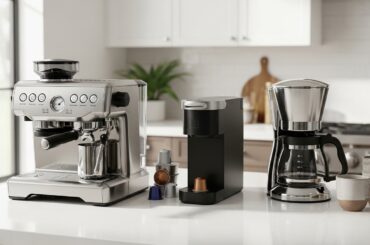
Drip coffee makers represent the most common household brewing method, utilizing gravity-fed hot water distribution over ground coffee. These machines heat water to approximately 200°F (93°C) in an internal reservoir, then pump it through a shower head mechanism that disperses water evenly over the coffee grounds contained in a paper or metal filter.
The brewing process relies on percolation physics, where heated water passes through coffee grounds at a controlled rate determined by grind size and filter design. Standard drip makers maintain a 4-6 minute contact time, achieving the SCA’s recommended brewing parameters when properly calibrated. The extraction occurs through dissolution of soluble compounds, with water acting as the solvent to extract oils, acids, and aromatic compounds from the coffee particles.
Technical specifications typically include 900-1500 watt heating elements, 8-14 cup capacity reservoirs, and programmable features like delayed start and automatic shut-off. Modern units often incorporate thermal carafes that maintain serving temperature without continued heating, preventing the bitter compounds that develop when coffee sits on a hot plate. The consistency and convenience of drip makers make them ideal for households requiring multiple cups with minimal effort.
2. Espresso Machines
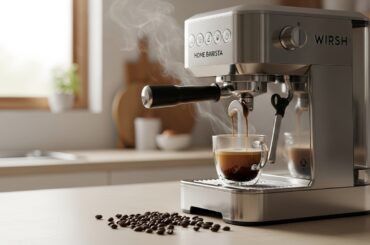
Espresso machines force hot water through finely ground coffee at 9 bars of pressure (130 psi), creating the concentrated beverage that forms the foundation of cappuccinos, lattes, and other specialty drinks. This high-pressure extraction method produces a 1-2 ounce shot in 25-30 seconds, achieving a unique concentration and crema layer impossible with other brewing methods.
The physics of espresso extraction involves creating resistance through fine grinding and tamping, forcing water to interact intensively with coffee particles. Temperature stability at 190-196°F (88-91°C) proves critical, as variations affect extraction rate and flavor development. Professional machines utilize E61 group heads or saturated group designs to maintain thermal stability, while home machines employ thermoblock or boiler systems with varying degrees of temperature control.
Three main categories exist: manual lever machines requiring physical force to generate pressure, semi-automatic machines with electric pumps but manual extraction control, and super-automatic machines handling grinding through milk frothing automatically. Pressure profiling capabilities in advanced models allow baristas to manipulate extraction dynamics by varying pressure throughout the shot, influencing sweetness, body, and acidity balance.
3. French Press (Press Pot/Cafetière)
French press brewing employs full immersion extraction, where coarsely ground coffee steeps in hot water for 4 minutes before a metal mesh plunger separates grounds from the liquid. This method produces a full-bodied cup with more oils and sediment than filtered methods, as the metal screen allows particles smaller than 100 microns to pass through.
The immersion process ensures uniform extraction as all grounds maintain constant contact with water at the same temperature. Optimal brewing occurs at 195-205°F (90-96°C), with a 1:15 coffee-to-water ratio producing balanced extraction. The coarse grind (1000-1200 microns) prevents over-extraction during the extended contact time while allowing proper plunger operation.
Heat retention becomes critical in French press brewing, as temperature drop during steeping affects extraction rate. Double-walled glass or insulated stainless steel designs maintain temperature better than single-wall versions. The manual nature provides complete control over variables like water temperature, steep time, and agitation, allowing experienced users to fine-tune extraction to their preferences.
4. Pour Over Coffee Makers
Pour over brewing represents manual percolation where the user controls water flow rate, distribution pattern, and contact time by hand-pouring heated water over coffee grounds. Popular devices include the Hario V60, Chemex, and Kalita Wave, each featuring unique filter geometry and flow characteristics that influence extraction dynamics.
The conical V60 design with its 60-degree angle and spiral ridges creates a vortex effect, channeling water through the coffee bed at varying speeds depending on pour technique. Flat-bottom brewers like the Kalita Wave promote more even extraction through restricted flow and wave-pattern filters that minimize channeling. Chemex’s thick paper filters remove more oils and particles, producing a cleaner cup profile.
Precision in pour over requires controlling multiple variables: water temperature (195-205°F), grind size (medium-fine, 600-800 microns), pour rate (4-7 g/s), and total brew time (2:30-4:00 minutes). The bloom phase, where 2x coffee weight in water saturates grounds for 30-45 seconds, allows CO2 degassing that improves subsequent water penetration. Gooseneck kettles provide the flow control necessary for consistent extraction across the coffee bed.
5. Single-Serve Pod Machines
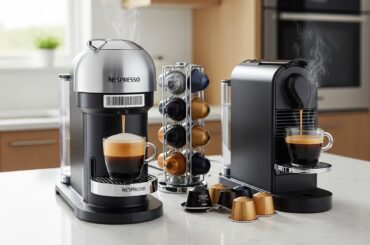
Single-serve coffee makers utilize pre-portioned pods or capsules, brewing individual cups through pressurized hot water injection. These systems, popularized by brands like Keurig and Nespresso, prioritize convenience and consistency over customization, with brewing occurring in 30-60 seconds.
The brewing mechanism punctures the pod, injecting water at 1-19 bars of pressure depending on the system. K-Cup style machines operate at lower pressures (1-2 bars) similar to drip brewing, while Nespresso’s system reaches 19 bars for espresso-style extraction. Water temperature typically ranges from 170-192°F (77-89°C), lower than optimal for traditional brewing but sufficient for the pre-ground, portion-controlled format.
Pod design influences extraction through controlled perforation patterns, internal filters, and coffee preparation. Nitrogen-flushed packaging preserves freshness by preventing oxidation, though pre-ground coffee inherently loses volatile compounds faster than whole beans. Environmental considerations have led to recyclable and compostable pod development, addressing the significant waste concerns associated with single-use systems.
6. Cold Brew Coffee Makers
Cold brew systems extract coffee using room temperature or cold water over extended periods (12-24 hours), producing a concentrate with 67% less acidity than hot-brewed coffee. The slow extraction at low temperatures selectively dissolves compounds, emphasizing sweetness and chocolate notes while minimizing acidic and bitter elements.
Two primary methods exist: immersion and slow drip. Immersion systems like the Toddy or mason jar methods steep coarse grounds in water, while slow drip towers control water flow rate for consistent extraction. The extended contact time compensates for reduced kinetic energy at lower temperatures, with optimal extraction occurring at 1:4 to 1:8 coffee-to-water ratios for concentrate.
Scientific research indicates cold brewing extracts different compound profiles than hot methods, with lower chlorogenic acid lactones and quinides responsible for reduced bitterness. The concentrate’s stability allows refrigerated storage for up to two weeks without significant flavor degradation, unlike hot coffee which oxidizes within hours. Dilution ratios of 1:1 or 1:2 with water or milk create ready-to-drink beverages from the concentrate.
7. Percolator Coffee Makers
Percolators cycle boiling water repeatedly through coffee grounds using convection and gravity, creating a distinctive brewing process that dominated American coffee culture before drip makers. The mechanism involves a central tube that channels steam pressure to lift water over a perforated basket containing coffee grounds.
The brewing physics relies on continuous extraction as water reaches boiling point (212°F/100°C), exceeding SCA recommended temperatures. This high-temperature cycling extracts more bitter compounds and tannins, producing the characteristically bold, sometimes harsh flavor profile associated with percolated coffee. Modern electric percolators include thermostats to regulate temperature, though most still operate above optimal extraction temperatures.
Stovetop and electric versions function identically in principle, with electric models offering automatic shut-off and keep-warm functions. The visible percolation through glass knobs provides visual brewing feedback, though the bubbling action indicates temperatures too high for ideal extraction. Despite technical limitations, percolators remain popular for large-batch brewing and outdoor use where their simple mechanism proves reliable.
8. Moka Pot (Stovetop Espresso Maker)
Moka pots generate steam pressure to force water through coffee grounds, producing a concentrated brew often called stovetop espresso despite operating at 1.5-2 bars versus true espresso’s 9 bars. The three-chamber aluminum or stainless steel design uses physics principles similar to percolators but with pressurized extraction.
The brewing process begins when heated water in the bottom chamber produces steam, increasing pressure that forces water up through the funnel containing medium-fine ground coffee. The extracted coffee collects in the upper chamber, with a pressure release valve preventing dangerous over-pressurization. Optimal extraction occurs when water temperature reaches 190-200°F (88-93°C) before pressure builds, preventing bitter over-extraction.
Proper technique involves preheating water to minimize coffee exposure to heat, using a medium-fine grind (400-600 microns), and removing from heat immediately when gurgling indicates extraction completion. The concentrated output serves as a base for milk drinks or can be enjoyed as-is for a strong, full-bodied cup with characteristics between drip coffee and espresso.
9. Siphon Coffee Makers (Vacuum Pot)
Siphon brewers utilize vapor pressure and vacuum suction to move water between chambers, creating a theatrical brewing process that produces exceptionally clean, aromatic coffee. The two-chamber glass construction connected by a filter and tube demonstrates fundamental thermodynamic principles while extracting coffee.
The process begins with heated water in the lower chamber creating vapor pressure that forces water into the upper chamber containing coffee grounds. Maintaining consistent heat keeps water in the upper chamber for immersion brewing at 195-205°F (90-96°C). Removing heat creates a vacuum that draws brewed coffee through the filter back to the lower chamber, leaving grounds behind.
Temperature control proves critical, as excessive heat causes violent bubbling that disrupts extraction, while insufficient heat fails to maintain proper immersion. The cloth or paper filters provide clarity similar to pour over methods, while the immersion phase ensures complete extraction. Medium grind size (600-800 microns) and 1:15 brew ratios optimize the 2-3 minute contact time typical of siphon brewing.
10. Turkish Coffee Pot (Cezve/Ibrik)
Turkish coffee represents one of humanity’s oldest brewing methods, using ultra-fine ground coffee (50-100 microns) mixed directly with water and sugar in a specialized pot called a cezve or ibrik. This unfiltered method produces an intensely concentrated beverage with grounds settling at the cup’s bottom.
The brewing technique involves combining room temperature water with powder-fine coffee at approximately 1:10 ratio, then heating slowly to develop foam without boiling. The fine grind creates massive surface area for rapid extraction, while the direct heating method requires careful temperature control to prevent burning. Traditional preparation involves bringing the mixture to near-boiling three times, developing the characteristic foam layer.
The physics of Turkish coffee differs fundamentally from other methods as no filtration occurs. Suspended particles contribute to body and mouthfeel, while the serving temperature around 158°F (70°C) continues extraction in the cup. The cultural significance extends beyond brewing mechanics, with UNESCO recognizing Turkish coffee culture as an Intangible Cultural Heritage.
11. Aeropress
The Aeropress combines immersion and pressure brewing in a portable plastic cylinder, creating a hybrid extraction method that produces coffee with characteristics between espresso and filter coffee. The device uses air pressure generated by manual plunging to force water through coffee and a paper filter.
Operating at 0.35-0.75 bars of pressure, far below espresso machines, the Aeropress achieves rapid extraction through fine grinding and agitation. Standard recipes involve 30-second immersion followed by 20-30 second plunging, though inverted methods allow extended steeping. Water temperature flexibility from 175-205°F (79-96°C) enables different flavor profile development.
The microfilter removes particles down to 10-20 microns, producing clarity exceeding French press while retaining more oils than pour over. Competition recipes demonstrate the device’s versatility, with winning formulas ranging from 30-second pressure extraction to 4-minute immersion brewing. The portability and durability make it popular among travelers and office workers seeking quality without complex equipment.
12. Vietnamese Phin Filter
The Vietnamese phin employs gravity-fed percolation through a metal filter chamber that sits atop individual cups, producing strong coffee traditionally mixed with condensed milk. This single-serving brewer consists of a perforated plate, brewing chamber, gravity press, and lid that work together for controlled extraction.
Brewing mechanics involve placing medium-coarse grounds in the chamber, gently compressing with the gravity press, then adding hot water in stages. The initial bloom with 20-30ml of water allows degassing before filling the chamber. The metal filter’s perforation size determines flow rate, with extraction typically taking 4-6 minutes for 4-6 ounces of concentrated coffee.
The slow drip rate at 195-200°F (90-93°C) produces high extraction despite the metal filtration allowing oils and fine particles through. Robusta beans traditionally used in Vietnamese coffee provide additional caffeine and crema, while the concentrated output pairs perfectly with sweetened condensed milk for cà phê sữa đá. The simple design requires no paper filters or electricity, making it sustainable and portable.
13. Clever Dripper
The Clever Dripper merges immersion and percolation brewing through a valve mechanism that releases coffee only when placed on a cup or carafe. This hybrid approach combines French press-style steeping with pour over filtration, offering control over both contact time and filtration clarity.
The shut-off valve allows full immersion brewing at precise temperatures and times before releasing through a paper filter. This eliminates pour technique variables while maintaining the clean profile of filtered coffee. Standard recipes involve 3-4 minute steeping at 195-205°F (90-96°C) with medium grind (700-900 microns), achieving 18-22% extraction yields consistently.
The design addresses common brewing challenges: channeling in pour over, sediment in French press, and technique sensitivity in manual methods. The BPA-free plastic construction provides durability and heat retention during steeping. Paper filter compatibility with standard #4 filters ensures easy sourcing, while the wide opening accommodates various grind sizes and coffee doses from 15-30 grams.
14. Nitro Cold Brew Systems
Nitro cold brew infuses cold brew concentrate with nitrogen gas, creating a creamy, cascading beverage reminiscent of draft beer. The nitrogen infusion occurs through specialized taps or whipped cream dispensers that force gas through coffee at high pressure, creating microscopic bubbles that alter mouthfeel and visual presentation.
The science involves nitrogen’s low solubility in water compared to CO2, causing bubbles to remain small and stable. These micro-bubbles create the characteristic creamy head and smooth texture without dairy addition. The cascade effect results from density differences as nitrogen bubbles rise through the liquid, creating visual appeal similar to Guinness beer.
Commercial systems utilize kegerator-style setups with nitrogen tanks at 30-40 PSI, while home versions use N2O cartridges in whipped cream dispensers or specialized nitro brew makers. The cold brew concentrate base typically uses 1:4 ratios steeped for 16-24 hours, then diluted before nitrogenation. The resulting beverage contains approximately 30% more caffeine than traditional cold brew due to the concentrated preparation method.
15. Smart Coffee Makers
Smart coffee makers integrate WiFi connectivity, app control, and precision sensors to automate and optimize brewing parameters. These devices range from connected versions of traditional drip makers to sophisticated systems that adjust extraction based on bean type and roast level.
Advanced models incorporate precision heating elements maintaining temperature within ±1°F, flow rate sensors for consistent extraction, and scale integration for automatic dosing. Machine learning algorithms in premium systems analyze user preferences and environmental factors like altitude and water hardness to optimize brewing parameters automatically.
IoT connectivity enables remote brewing initiation, inventory tracking for automatic reordering, and integration with smart home ecosystems. Some systems include built-in grinders with particle size analysis, ensuring consistent grind distribution. Data logging capabilities track extraction metrics over time, allowing users to refine their brewing through quantitative feedback previously available only in commercial settings.
How to Choose the Right Coffee Maker Type?
Selecting an appropriate coffee maker depends on multiple factors including desired flavor profile, convenience requirements, technical expertise, and budget constraints. Understanding how each brewing method affects extraction helps match equipment to preferences.
For convenience-focused users, automatic drip makers and single-serve systems provide consistency with minimal effort. These suit households needing multiple cups quickly or individuals with limited morning preparation time. The trade-off involves less control over extraction variables and potentially higher per-cup costs with pod systems.
Enthusiasts seeking flavor optimization should consider manual methods like pour over, French press, or Aeropress. These provide complete control over temperature, timing, and technique, allowing experimentation with different beans and roast levels. The learning curve and time investment pay dividends in cup quality and brewing knowledge development.
Espresso-based drink lovers need machines capable of generating sufficient pressure, whether manual, semi-automatic, or super-automatic. Moka pots offer an affordable entry point for concentrated coffee, while true espresso machines require significant investment but enable café-quality beverages at home.
Consider practical factors like counter space, cleaning requirements, and serving capacity. Large households benefit from high-capacity drip makers or percolators, while single-person homes might prefer compact pour over or Aeropress setups. Maintenance varies significantly, from simple French press cleaning to complex espresso machine descaling and backflushing.
Understanding Coffee Extraction Science
Coffee extraction represents a complex interplay of chemistry and physics, with water acting as a solvent to dissolve soluble compounds from roasted coffee. The SCA defines optimal extraction as 18-22% of coffee mass dissolved into the brew, achieving strength of 1.15-1.35% total dissolved solids (TDS).
Temperature affects extraction rate and compound solubility differently. Acids extract quickly at lower temperatures, while bitter compounds require higher heat. This explains why cold brew tastes less acidic despite extended extraction time. Research in Scientific Reports demonstrates that TDS concentration impacts flavor more than temperature within reasonable ranges.
Grind size influences extraction through surface area exposure. Finer grinds increase surface area, accelerating extraction but risking over-extraction if contact time isn’t adjusted. The relationship between grind size, contact time, and water temperature determines extraction efficiency and flavor balance.
Water quality significantly impacts extraction, with mineral content affecting both extraction efficiency and flavor. The SCA recommends 150 mg/L total dissolved solids in brewing water, with specific mineral ratios optimizing extraction. Calcium and magnesium act as extraction aids, while bicarbonates buffer acidity.
Frequently Asked Questions
What is the most popular type of coffee maker?
Drip coffee makers remain the most popular in American households, found in approximately 45% of homes. However, single-serve pod machines have shown the fastest growth according to NPD Group market research, with ownership increasing significantly over the past five years. The popularity varies by region and demographic, with espresso machines more common in European households and pour over methods gaining traction among specialty coffee enthusiasts.
Which coffee maker type produces the strongest coffee?
Espresso machines produce the highest concentration at 8-10% TDS, followed by moka pots at 2-4% TDS. However, “strength” depends on whether you mean concentration or total caffeine. Turkish coffee and French press produce high caffeine content due to extended extraction and lack of paper filtration. Cold brew concentrate can reach 3-5% TDS and contains more caffeine per volume when undiluted.
What’s the difference between immersion and percolation brewing?
Immersion brewing involves coffee grounds steeping in water for a set time (French press, Aeropress, cold brew), ensuring uniform extraction across all particles. Percolation methods pass water through coffee grounds via gravity or pressure (drip makers, pour over, espresso), creating a gradient extraction where water contacts different grounds for varying times. Immersion typically produces fuller body, while percolation offers cleaner, more nuanced flavors.
Do expensive coffee makers really make better coffee?
Price correlates with build quality, temperature stability, and features more than inherent brewing superiority. A $30 French press can produce excellent coffee with proper technique, while a $3000 espresso machine requires skill to optimize. Expensive machines offer consistency, convenience, and precision control that help achieve optimal extraction more easily, but don’t guarantee better coffee without proper beans, grind, and technique.
How important is water temperature for different brewing methods?
Water temperature critically affects extraction rate and compound solubility. The SCA recommends 195-205°F for most methods, but optimal temperature varies: espresso performs best at 190-196°F to prevent over-extraction under pressure, while light roasts may benefit from 207°F to fully extract complex acids. Cold brew demonstrates that temperature is one variable among many, achieving full extraction through extended time rather than heat.
Which brewing method is healthiest?
Paper-filtered methods (drip, pour over) remove cafestol and kahweol, compounds that can raise cholesterol. Metal-filtered methods (French press, espresso) retain these oils but provide antioxidants. Cold brew’s lower acidity benefits those with digestive sensitivity. Health impacts depend more on consumption quantity and additives than brewing method, with moderate consumption of any properly brewed coffee offering potential health benefits.
Can I use the same grind size for all coffee makers?
No, grind size must match the brewing method’s contact time and filtration type. Espresso requires fine grind (200-400 microns) for proper resistance, French press needs coarse (1000-1200 microns) to prevent over-extraction and filter clogging, while drip makers work best with medium grind (700-900 microns). Using incorrect grind size leads to under or over-extraction, producing sour or bitter flavors respectively.
What’s the ideal coffee-to-water ratio?
The SCA Golden Cup Standard recommends 1:15 to 1:17 (coffee:water) for most brewing methods, roughly 60 grams of coffee per liter of water. Espresso uses 1:2 to 1:3, French press often uses 1:12 for fuller body, and cold brew concentrate requires 1:4 to 1:8. Personal preference ultimately determines ideal ratios, but these standards provide starting points for optimization.
Conclusion
Understanding coffee maker types extends beyond simple categorization to encompass the physics, chemistry, and engineering principles that define each brewing method. From the precise pressure dynamics of espresso extraction to the gentle immersion of cold brew, each system offers unique advantages for specific preferences and situations.
The science of coffee extraction, validated through SCA standards and peer-reviewed research, demonstrates that no single brewing method proves objectively superior. Instead, the optimal choice depends on individual priorities: convenience versus control, body versus clarity, tradition versus innovation. Modern developments in smart brewing technology and precision equipment continue expanding possibilities while fundamental brewing principles remain constant.
As coffee culture evolves in 2026, we see increased appreciation for both technical precision and traditional methods. Whether you prefer the ritual of pour over brewing, the convenience of pod machines, or the intensity of espresso, understanding the mechanics behind your chosen method empowers you to optimize extraction and enhance your daily coffee experience. The key lies not in finding the “best” coffee maker type, but in matching brewing method to your lifestyle, preferences, and coffee journey.