If you are diving into the world of Blue Lock Rivals and wondering how to rise from a struggling beginner to a competitive player, this Blue Lock Rivals Guide covers everything you need. I have spent countless hours testing different styles, experimenting with Flow States, and grinding ranked matches to bring you strategies that actually work in 2026.
Blue Lock Rivals is a competitive Roblox soccer experience inspired by the hit anime Blue Lock. The game combines fast-paced football action with unique character abilities called Styles and power-up mechanics called Flows. Whether you are playing on mobile or PC, mastering these systems is the difference between scoring game-winning goals and watching from the sidelines.
In this guide, I will walk you through the complete Blue Lock Rivals experience. You will learn which styles work best for beginners, how to trigger Flow State at the perfect moment, the optimal formations for 3v3 and 5v5 matches, and every active code you can redeem right now for free rewards.
Quick Overview: Blue Lock Rivals at a Glance
Blue Lock Rivals launched on Roblox in July 2024 and quickly became one of the platform’s most popular competitive sports games. The game puts you in the shoes of aspiring strikers competing in the infamous Blue Lock program from the anime, where only the most egoistic players survive.
The core gameplay loop involves selecting a Style (which determines your character’s special abilities), filling your Flow meter through successful plays, and activating Flow State to gain temporary buffs. Matches come in two formats: 3v3 for quick competitive sessions and 5v5 for full tactical experiences.
Before diving deep into strategies, here is what every new player should understand. The game rewards aggressive, confident play. Pass completion, successful dribbles, and shots on target all build your Ego meter. Once filled, you can enter Flow State for enhanced abilities, and eventually Awakened Flow for maximum power.
Understanding the Styles System
Styles are the foundation of your Blue Lock Rivals identity. They determine your character’s unique skills, animations, and playstyle. Each style draws inspiration from characters in the Blue Lock anime, offering distinct advantages that can completely change how you approach matches.
Style Rarity Tiers Explained
The game organizes styles into seven rarity tiers that determine their power level and acquisition difficulty. Understanding these tiers helps you set realistic goals and prioritize which styles to pursue first.
Rare styles are your entry-level options, offering basic but functional abilities perfect for learning the game. Epic styles introduce more specialized mechanics and represent a noticeable step up in power. Legendary styles bring signature moves from major anime characters and become your first serious competitive options.
Mythic styles feature some of the most powerful characters in the game, typically requiring significant grinding or luck to obtain. World Class styles represent elite-tier options that can dominate matches when played correctly. Master styles are the pinnacle of power, often with unique mechanics that require practice to master.
Finally, Vault styles are limited-time exclusives that rotate in and out of availability. These often become highly sought after by collectors and competitive players alike.
Best Styles for Beginners
Starting with the right style makes your learning curve much smoother. Based on community feedback and personal testing, certain styles stand out as particularly beginner-friendly while still offering competitive viability.
Otoya is frequently recommended as the ultimate beginner style. His straightforward abilities focus on speed and direct attacking play, making it easy to understand what you should be doing at any given moment. The learning curve is gentle, but the ceiling remains high enough to carry you into competitive ranks.
Bachira offers another excellent entry point, especially for players who enjoy creative dribbling. His style teaches you ball control mechanics that transfer well to other characters. Plus, Bachira’s abilities work consistently across different match situations, reducing the frustration of feeling useless in certain scenarios.
Karasu has gained a reputation as one of the most accessible yet effective styles in the game. Despite being relatively easy to obtain, his toolkit provides everything you need to contribute meaningfully to your team. Many experienced players still main Karasu because his fundamentals are so solid.
How to Unlock New Styles?
Acquiring new styles primarily happens through the spin system. You earn spins by playing matches, completing daily objectives, redeeming codes, and occasionally through special events. Each spin gives you a chance at unlocking a random style, with higher rarities having lower drop rates.
The game also offers a pity system that guarantees certain rarities after a set number of spins without success. This prevents players from going completely dry, though grinding for specific high-rarity styles still requires patience or premium currency.
Special events occasionally make specific styles available through limited-time challenges or missions. Keeping an eye on update announcements helps you grab exclusive styles while they are available.
Flow State Mechanics Explained
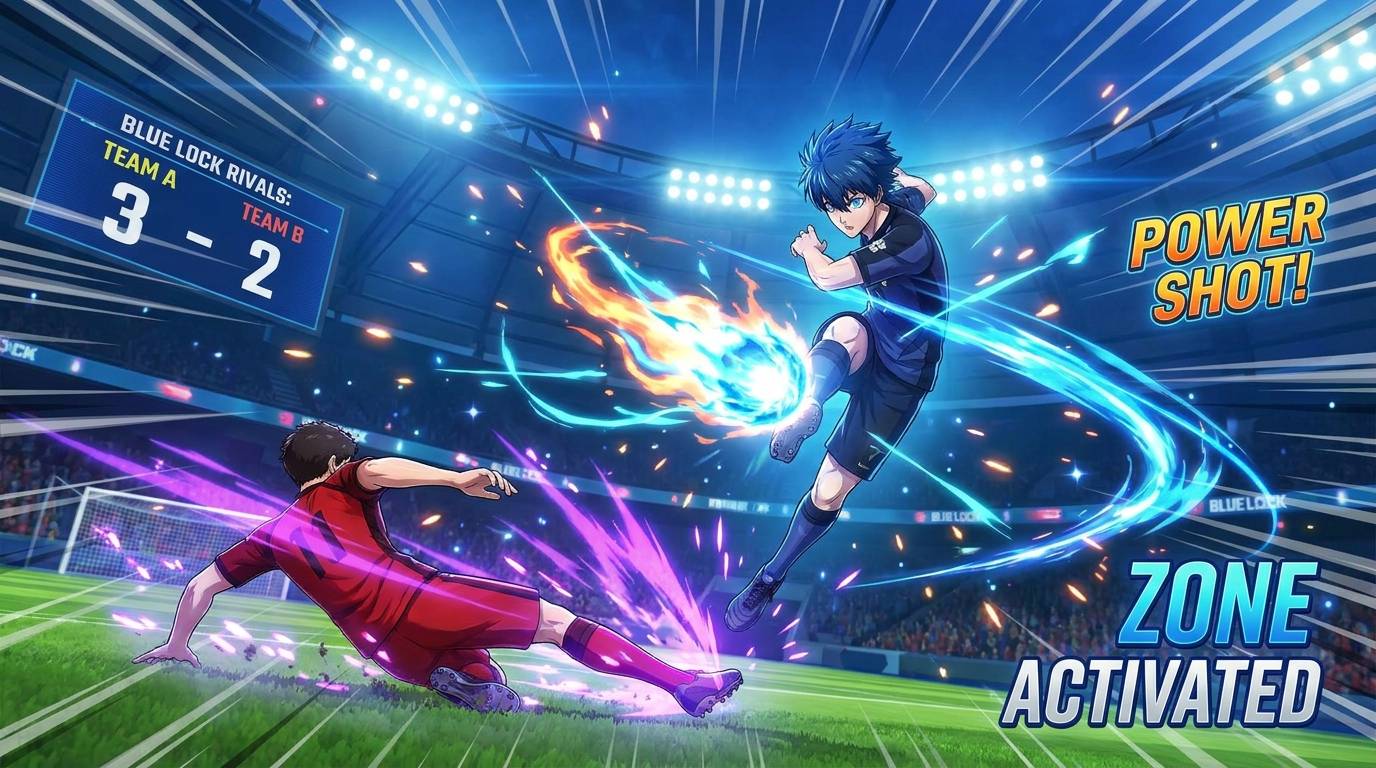
Flow State is where Blue Lock Rivals separates casual players from competitive ones. This mechanic lets you temporarily enhance your abilities, turning ordinary plays into game-changing moments. Understanding when and how to use Flow State effectively will dramatically improve your match impact.
The Three Flow States
Your character operates in three distinct states during matches. Normal State is your baseline, where you play with standard stats and abilities. This is where you spend most of your time building resources and setting up opportunities.
Flow State activates once you have built enough Ego through successful plays. In this state, your character receives significant buffs to speed, shooting power, and special ability effectiveness. The visual transformation makes it obvious to everyone when you have entered Flow State, often causing opponents to play more defensively.
Awakened Flow represents the ultimate power level, accessible only to certain high-tier styles. This state amplifies your abilities even further, often unlocking completely new moves or dramatically enhanced versions of your standard kit. Learning how to reach and utilize Awakened Flow separates good players from great ones.
Building Your Ego Meter
Filling your Ego meter requires consistent, confident play. Every successful action contributes to your meter, while mistakes can set you back. The fastest way to build Ego is through aggressive, high-risk plays that succeed.
Successful dribbles past opponents provide substantial Ego gains, especially when you beat multiple defenders in sequence. Completed passes to teammates also contribute, though less dramatically than individual plays. Shots on target, even when saved by the goalkeeper, build your meter significantly.
Goals obviously provide the biggest Ego boost, but do not underestimate the value of defensive plays. Successful tackles, interceptions, and clearances also build your meter, making Flow State accessible to all positions, not just attackers.
When to Activate Flow State?
Timing your Flow State activation is critical. Using it at the wrong moment wastes the buff and leaves you vulnerable while waiting to rebuild your meter. The best players save Flow State for high-impact moments where the temporary power spike creates scoring opportunities.
Ideal activation moments include breakaway runs toward goal, defensive emergencies where you must stop a certain goal, and clutch situations in the final minutes of close matches. Avoid wasting Flow State when your team is already dominating or when the match outcome is decided.
Some advanced players intentionally build Ego without activating immediately, waiting for the perfect moment to surprise opponents who have forgotten you have Flow State ready. This patience often pays off in critical late-game situations.
Flow Tier List for 2026
Not all Flow States are created equal. Based on current meta and community consensus, here is how the various Flow options rank for competitive play in 2026.
S-Tier Flows include those that provide comprehensive buffs across speed, power, and ability enhancement. These Flows work well in virtually any situation and represent the current competitive standard. Styles like NEL Isagi and NEL Rin access these top-tier Flows.
A-Tier Flows offer excellent power but may be more situational or require specific playstyles to maximize. These are absolutely viable for competitive play and often preferred by specialists who have mastered their particular Flow’s quirks.
B-Tier and below Flows may lack the raw power of higher tiers but can still win matches in skilled hands. Beginners should not feel pressured to only chase S-tier options, as player skill matters far more than Flow tier in most situations.
Position Roles and Responsibilities
Blue Lock Rivals features four distinct positions, each with unique responsibilities and optimal style choices. Understanding your role helps you make better decisions during matches and select styles that complement your preferred playstyle.
Forward (Striker)
Forwards are the primary goal-scorers, responsible for finishing attacks and putting the ball in the net. This position demands excellent positioning, timing, and shooting accuracy. You will spend most of your time near the opponent’s goal, looking for opportunities to receive passes and convert chances.
Best styles for Forward include those with powerful shooting abilities and speed to beat defenders. Isagi, Rin, and Shidou all offer excellent striker toolkits. Focus on styles that enhance your finishing and give you tools to create space from defenders.
The Forward position teaches you the importance of off-ball movement. Great strikers are constantly repositioning to find gaps in the defense, even when they do not have the ball. Learning when to make runs and when to hold position is fundamental to success.
Midfielder
Midfielders serve as the connection between defense and attack, controlling the tempo of matches. This is the most versatile position, requiring you to contribute in all phases of play. Strong midfielders dictate match flow and create opportunities for teammates.
Many experienced players recommend Center Midfielder as the best position for beginners because it teaches you all aspects of the game. You will practice passing, dribbling, defending, and positioning, building skills that transfer to any position.
Styles like Sae and Kaiser excel in midfield roles, offering exceptional passing range and playmaking ability. Look for styles that enhance your vision and distribution, allowing you to control the ball and find teammates in dangerous positions.
Defender
Defenders focus on stopping opposing attacks and protecting your goal. This position rewards anticipation, positioning, and timing. A great defender reads the game, intercepts passes before they reach dangerous areas, and makes crucial tackles when necessary.
Defensive styles typically offer enhanced tackling abilities, physical presence, and tools for winning aerial duels. While less glamorous than scoring goals, defensive plays build Ego just as effectively, and a solid defender can completely shut down opposing attacks.
The key to defending in Blue Lock Rivals is patience. Rushing in for tackles often leaves you exposed to skilled dribblers. Instead, focus on positioning yourself to cut off passing lanes and force opponents into less dangerous areas.
Goalkeeper
Goalkeepers are the last line of defense, responsible for saving shots and organizing the defense. This unique position requires different skills than outfield roles, emphasizing reaction time, positioning, and reading shooter intentions.
Goalkeeping in Blue Lock Rivals can be incredibly rewarding. A single great save can completely shift match momentum, and goalkeepers often have the best view of the entire field, allowing them to direct teammates and organize defensive shape.
Styles for goalkeepers typically enhance diving range, reflexes, or positioning. The best goalkeeper styles also offer tools for distributing the ball after saves, turning defensive stops into counter-attacking opportunities.
Match Strategy and Formations
Winning matches in Blue Lock Rivals requires more than individual skill. Team coordination, formation awareness, and strategic understanding often overcome raw mechanical ability. Here is how to approach both match formats effectively.
3v3 Formation Strategy
The 3v3 format emphasizes individual skill and quick decision-making. With fewer players on the field, each mistake is more costly, and individual brilliance can completely change matches. Most competitive 3v3 teams use a 1-1-1 formation with one defender, one midfielder, and one forward.
In this setup, the midfielder acts as the pivot, connecting defense to attack. The forward focuses on positioning for passes and finishing chances, while the defender stays home to prevent counter-attacks. Communication is essential, as the small team size means everyone must contribute in all phases.
Some teams experiment with more aggressive 0-2-1 or 1-2-0 formations, but these require exceptional coordination and are riskier for random matchmaking. Stick to balanced approaches until you have established chemistry with regular teammates.
The key to 3v3 success is maintaining possession under pressure. With fewer passing options available, your dribbling and ball retention skills are constantly tested. Practice protecting the ball and finding space even when surrounded by opponents.
5v5 Formation Strategy
5v5 matches allow for more complex tactical setups and role specialization. The standard formation is 1-2-1-1, featuring a goalkeeper, defender, two midfielders, and a forward. This balanced approach provides defensive solidity while maintaining attacking threat.
Defensive formations like 1-3-1 work well for teams that want to absorb pressure and counter-attack. The extra midfielder provides defensive cover while still offering outlets for quick transitions. This setup punishes over-aggressive opponents who leave space behind their defense.
Aggressive teams might prefer 1-1-3 or 1-2-2 formations that overload the attacking third. These setups generate more scoring chances but leave you vulnerable to fast breaks. Only use aggressive formations if your team has strong defensive fundamentals and good communication.
In 5v5, set pieces become more important. Corner kicks and free kicks offer structured scoring opportunities that can break open tight matches. Practice coordinated routines with your teammates to maximize these chances.
Team Coordination Tips
Even in random lobbies, basic coordination significantly improves your win rate. Simple callouts like “passing left” or “defending” help teammates understand your intentions. Watch your teammates’ positioning and adapt your play to complement what they are doing.
When playing with friends or regular teammates, develop set plays for common situations. Knowing that your midfielder will always make a specific run, or that your defender prefers to pass to a certain side, creates automatic connections that confuse opponents.
Rotating positions during matches keeps opponents guessing. If your forward drops deep to collect the ball, a midfielder should push up to fill the attacking space. This interchangeability makes your team harder to mark and creates mismatches against rigid opponents.
Mobile and Controller Tips
Blue Lock Rivals supports multiple control schemes, and each has advantages and challenges. Whether you are playing on mobile with touch controls or using a controller on PC, optimizing your setup improves your performance significantly.
Mobile Control Optimization
Mobile players face unique challenges with touch controls, but the game is absolutely playable and competitive on phones and tablets. The key is customizing your control layout and sensitivity settings to match your preferences.
Start by adjusting the button size and position in the settings menu. Larger buttons are easier to hit accurately but take up more screen space. Find the balance that works for your device size and finger size.
Many successful mobile players use claw grip techniques, positioning their fingers to access multiple buttons simultaneously. This allows for more complex inputs like sprinting while dribbling or using abilities while moving. Practice this grip in casual matches before trying it in ranked.
Consider investing in mobile gaming accessories if you play seriously. Phone triggers, gaming grips, and cooling fans all improve the mobile experience. While not required for success, these accessories can give you an edge in extended play sessions.
Controller and Keyboard Settings
PC players using controllers or keyboards have more customization options. Controller players should experiment with sensitivity settings to find the responsiveness that matches their reflexes. Higher sensitivity allows quicker turns but requires better fine control.
Keyboard players benefit from remapping keys to comfortable positions. The default layout works for many, but customizing your ability keys, sprint, and special move buttons to match your hand position reduces reaction time and prevents misinputs during intense moments.
Regardless of your input method, practice mode is your friend. Spend time drilling basic movements, ability activations, and shooting timing without the pressure of ranked matches. Muscle memory developed in practice translates directly to better performance when it counts.
Beginner to Pro Progression Path
Improving at Blue Lock Rivals follows a predictable path. Understanding this progression helps you set realistic goals and focus your practice time effectively.
Phase one is fundamentals. Learn basic movement, passing, and shooting mechanics. Focus on understanding your chosen style’s abilities and when to use them. Do not worry about winning every match, instead focus on executing plays correctly.
Phase two introduces Flow State management. Practice building Ego efficiently and timing your Flow activations for maximum impact. Start paying attention to positioning and begin developing game sense about when to attack versus when to defend.
Phase three is competitive refinement. At this stage, you understand the game and need to optimize your decision-making. Study opponents’ tendencies, develop counter-strategies, and work on team coordination. This is where small improvements in timing and positioning yield big results.
The final phase is mastery, where you are comfortable with multiple styles and positions. Great players can adapt their playstyle to any match situation and elevate their teammates’ performance through leadership and example.
Active Codes and Redemption Guide
Redeeming codes is the fastest way to get free spins, cash, and other rewards in Blue Lock Rivals. Developers regularly release new codes during updates, events, and milestones.
Current Active Codes for 2026
Here are the active codes you can redeem right now for free rewards. These codes expire periodically, so use them quickly.
NELUPDATE – Redeem for free spins and rewards
THANKYOU – Redeem for bonus cash
500KLIKES – Redeem for special rewards
FIXES – Redeem for compensation rewards
Codes are case-sensitive, so enter them exactly as shown. If a code does not work, it may have expired or been redeemed already on your account.
How to Redeem Codes?
Redeeming codes in Blue Lock Rivals is straightforward. Follow these steps to claim your rewards.
Step 1: Launch Blue Lock Rivals and wait for the main menu to load completely.
Step 2: Look for the Codes button, usually located on the main screen or accessible through a menu option.
Step 3: Click the Codes button to open the redemption interface.
Step 4: Enter the code exactly as it appears, including any capital letters.
Step 5: Click the redeem button to claim your rewards. The items should appear in your inventory immediately.
New codes are typically announced on the game’s official social media channels, Discord server, and during livestreams. Following these sources ensures you never miss a code drop.
Game Modes Overview
Blue Lock Rivals offers multiple game modes to suit different playstyles and time commitments. Understanding each mode helps you choose the right experience for your current goals.
Ranked Matches
Ranked mode is where serious competition happens. You will be matched against players of similar skill level, and your performance affects your rank placement. The ranking system provides clear progression goals and bragging rights as you climb the ladder.
Ranked matches use a skill-based matchmaking system that attempts to create balanced teams. However, queue times may be longer during off-peak hours, especially at higher ranks where fewer players are available.
Seasonal rewards give additional incentive to play ranked. Reaching certain ranks typically unlocks exclusive cosmetics, styles, or other rewards that cannot be obtained elsewhere. Check the current season’s reward track to see what is available.
Casual Mode
Casual mode offers a relaxed environment to practice new styles, experiment with different positions, or simply play without rank pressure. Matchmaking is faster, and opponents may vary more widely in skill level.
Use casual mode to warm up before ranked sessions or to learn new mechanics without consequences. Many players alternate between casual and ranked, using casual to drill specific skills and ranked to test their progress.
Tournament Mode
Tournament mode features structured competitive events with brackets and elimination formats. These events often have entry requirements and offer the best rewards for skilled players.
Tournaments test not just individual skill but endurance and consistency. Winning requires maintaining high performance across multiple matches against increasingly difficult opponents. The pressure is higher, but so are the rewards for success.
Watch for special tournament announcements in-game and on official channels. Limited-time tournaments often feature unique rules or formats that differ from standard play.
Frequently Asked Questions
What is the best style to have in Blue Lock Rivals?
The best style depends on your position and playstyle, but currently NEL Isagi, NEL Rin, and Kaiser are considered top-tier for competitive play. For beginners, Otoya, Bachira, and Karasu offer excellent value and easier learning curves. The ‘best’ style is ultimately the one that matches how you want to play.
Who’s the best in Blue Lock Rivals?
There is no single ‘best’ character in Blue Lock Rivals, as the game maintains relatively balanced gameplay. However, NEL Isagi, NEL Rin, and Kaiser consistently rank at the top of competitive tier lists due to their versatile abilities and strong Flow States. Player skill matters more than style choice.
What is the best skill in Blue Lock Rivals?
The best skill depends on your position. Forwards benefit from powerful shooting abilities, midfielders need strong passing and vision, defenders want tackling and interception tools, and goalkeepers need diving and positioning enhancements. Flow State activation timing is arguably the most important skill to master.
How do I get better at Blue Lock Rivals?
Improvement comes from consistent practice and focused learning. Start by mastering one beginner-friendly style, learn to build and manage your Flow meter effectively, practice your positioning for your chosen role, and study how skilled opponents play. Use Practice Mode to drill mechanics without pressure.
How do I redeem codes in Blue Lock Rivals?
Open Blue Lock Rivals, click the Codes button on the main menu, enter the code exactly as shown (codes are case-sensitive), and click redeem. Rewards appear immediately in your inventory. Check official social media and Discord for new codes.
What is Flow State and how do I use it?
Flow State is a temporary power-up activated when your Ego meter fills from successful plays. You build Ego by completing passes, dribbling past opponents, making tackles, and scoring goals. Once activated, Flow State enhances your speed, power, and abilities for a limited time. Save it for crucial moments.
Which position is best for beginners?
Center Midfielder is generally recommended for beginners because it teaches all aspects of the game. You will practice passing, dribbling, defending, and positioning, building skills that transfer to any position. Alternatively, Forward is straightforward if you prefer focusing on scoring goals.
Is Blue Lock Rivals pay-to-win?
Blue Lock Rivals is not pay-to-win. While you can purchase spins with Robux, all styles can be earned through free gameplay, and skill matters far more than style rarity. Many free-to-play styles like Karasu are competitive at the highest ranks. Player ability determines success more than spending.
Blue Lock Rivals Guide: Final Thoughts
Mastering Blue Lock Rivals takes time, practice, and patience. This Blue Lock Rivals Guide has covered the essential systems you need to understand: the Styles system and which options work best for beginners, Flow State mechanics and timing strategies, position roles and how to excel in each, formation strategies for both 3v3 and 5v5 matches, mobile and controller optimization tips, and all active codes for free rewards.
The most important advice I can give is to focus on fundamentals before worrying about having the rarest styles. A skilled player with a Rare style will consistently beat an inexperienced player with a Master style. Practice your positioning, learn when to activate Flow State, and study how great players approach different situations.
Keep grinding, keep learning from your mistakes, and do not be afraid to experiment with different styles and positions. The journey from beginner to pro is different for everyone, but with the knowledge from this guide, you have everything you need to start climbing the ranks in Blue Lock Rivals.