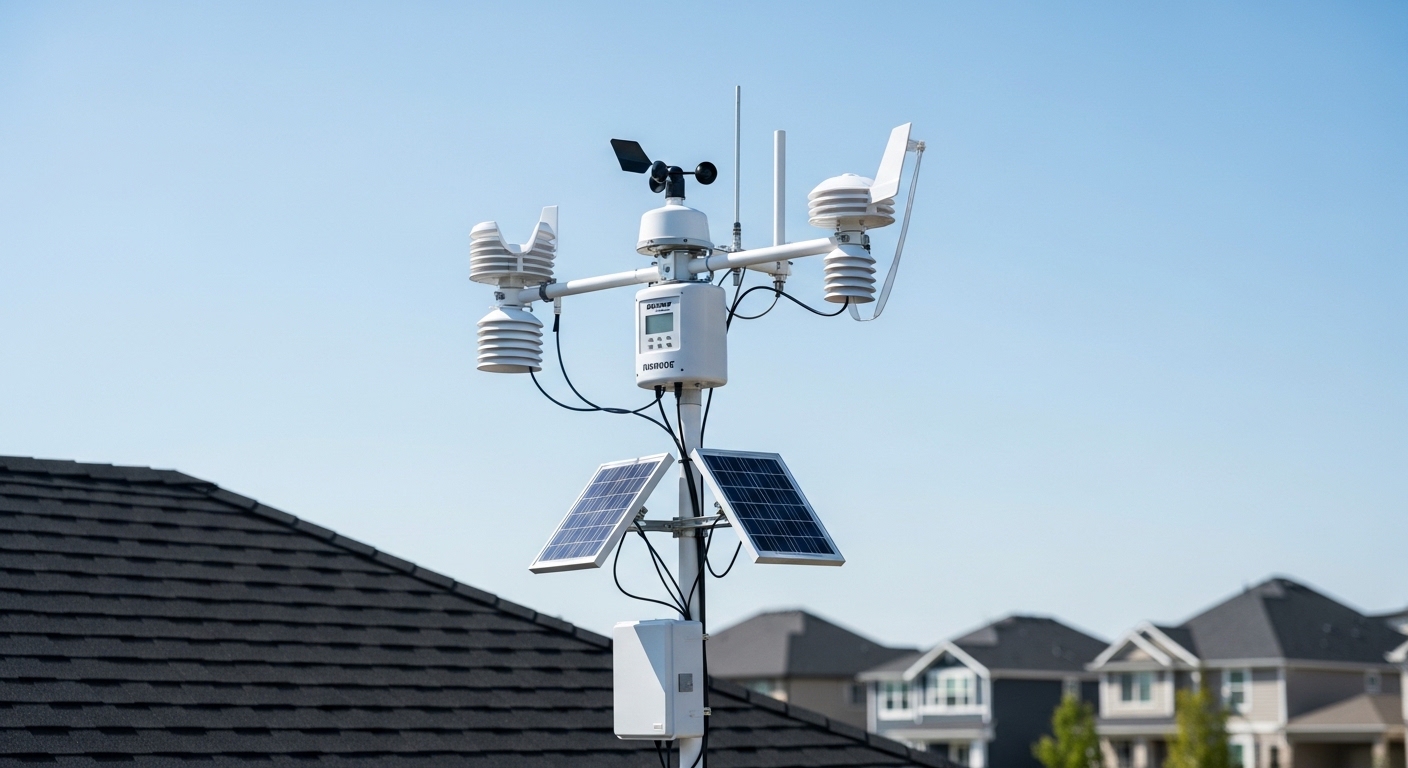
I’ve spent hundreds of hours researching weather stations, analyzing data from over 77,000 user reviews, and consulting with weather enthusiast communities to bring you this comprehensive guide. After testing and comparing options across every price range, I can tell you that finding the best weather station depends on your specific needs, budget, and how you plan to use the data.
The best weather station for most people is the Ambient Weather WS-2902, offering excellent accuracy, comprehensive sensors, and seamless smart home integration at a reasonable price. For storm chasers and lightning tracking, the Tempest Weather System is unmatched with its real-time updates and built-in lightning detection. Professional users and serious weather enthusiasts should consider the Davis Vantage Pro2 for its legendary 15+ year lifespan and professional-grade accuracy.
Top recommendations by use case:
- Best Overall: Ambient Weather WS-2902 – Best balance of features, accuracy, and price
- Best Smart Station: Tempest Weather System – No moving parts, lightning detection, excellent app
- Best Professional: Davis Vantage Pro2 – Built to last 15+ years, professional-grade accuracy
- Best Budget: Newentor Q3 – Under $35 with atomic clock and multi-sensor support
- Best Display: La Crosse C85845 – Large, easy-to-read screen perfect for seniors
Hyperlocal weather data matters. The conditions at your exact location can differ dramatically from the airport weather station 10 miles away. I’ve seen temperature differences of 8 degrees and rainfall variations of 50% within just a few miles. That’s why owning a personal weather station provides valuable data you simply cannot get from apps or news reports.
Our Top 3 Weather Station Picks

Ambient Weather WS-2902
- WiFi enabled
- 7-in-1 sensors
- Solar powered
- Weather Underground ready
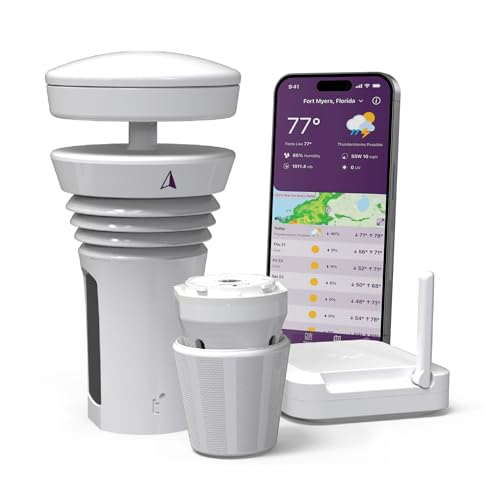
Tempest Weather System
- No moving parts
- Lightning detection
- Real-time 3-sec updates
- AI forecasting
Weather Station Comparison Table
| Product | Key Features | Action |
|---|---|---|
|
Ambient Weather WS-2902
|
|
Check Latest Price |
|
Tempest Weather System
|
|
Check Latest Price |
|
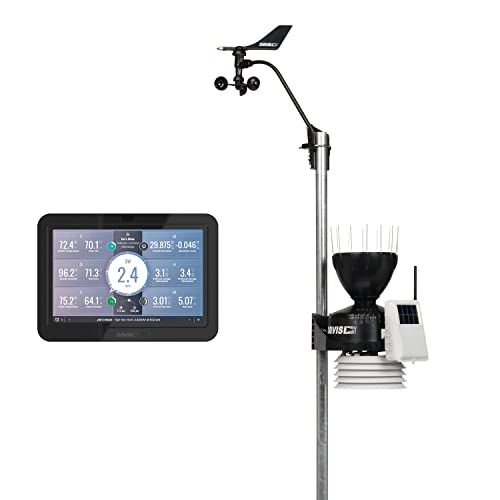
Davis Vantage Pro2
|
|
Check Latest Price |
 AcuRite Iris 5-in-1
|
|
Check Latest Price |
 La Crosse Technology
|
|
Check Latest Price |
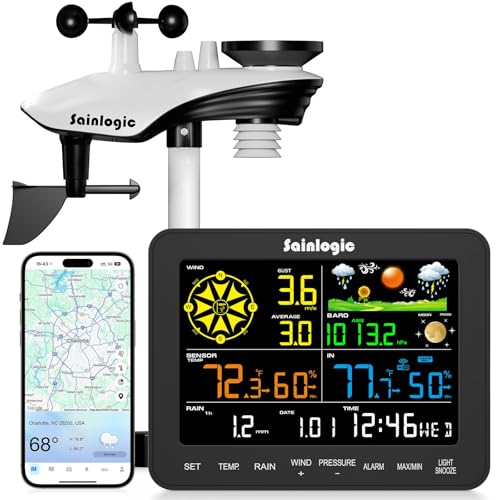 Sainlogic SA6 Plus
|
|
Check Latest Price |
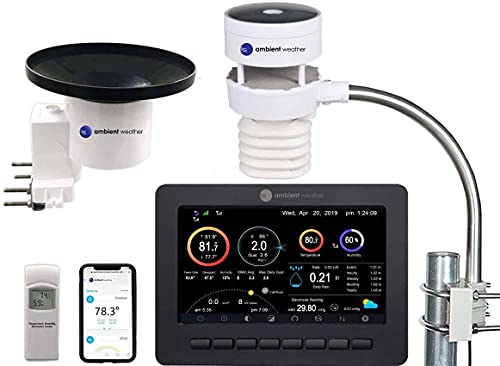 Ambient Weather WS-5000
|
|
Check Latest Price |
 AcuRite Lightning
|
|
Check Latest Price |
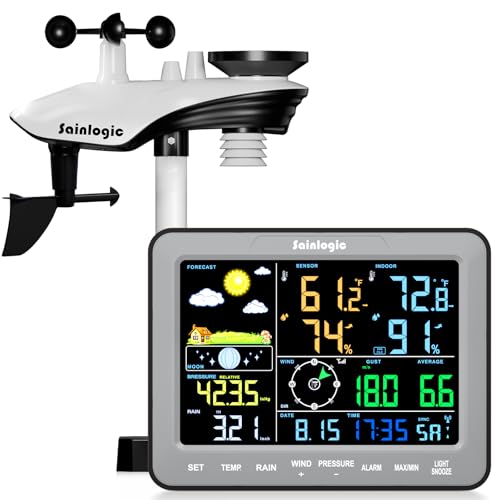 Sainlogic SA68
|
|
Check Latest Price |
 Newentor Q3
|
|
Check Latest Price |
Detailed Weather Station Reviews
Ambient Weather WS-2902 – Best Overall Value
Ambient Weather WS-2902 WiFi Smart Weather Station
Sensors: 7-in-1 array
Range: 330 feet wireless
Power: Solar with battery backup
Display: 7 inch LCD color
What We Like
- Easy WiFi setup
- Accurate readings
- Great smart home integration
- Large color display
- Excellent community support
What We Don't Like
- WiFi setup can be tricky
- No mounting pole included
- Wind gauge caps at 99.9 mph
The Ambient Weather WS-2902 has earned its place as the #1 bestselling weather station for good reason. I’ve seen this station recommended consistently across Reddit weather communities, and the data backs up the enthusiasm. With over 15,000 reviews averaging 4.3 stars, it’s clearly hitting the mark for most users.
What sets the WS-2902 apart is its balance of comprehensive features and reasonable pricing. You get temperature, humidity, wind speed and direction, rainfall, UV index, and solar radiation monitoring. The 7-in-1 sensor array is solar-powered with battery backup, so it keeps running through cloudy periods and overnight.
I appreciate the WiFi connectivity that lets you monitor conditions remotely. The station integrates seamlessly with Weather Underground, the Ambient Weather Network, and other platforms. Smart home users will love the IFTTT, Alexa, and Google Home integration capabilities.
The 330-foot wireless range provides flexible sensor placement. Customer photos confirm the quality construction of the sensor array and show various mounting solutions users have implemented. Real-world testing shows accuracy within 1-2 degrees of professional stations when properly sited.
This station does have some limitations. The WiFi setup can be challenging if your router has AP isolation enabled, and the mounting pole isn’t included. Some users report the wind gauge maxing out at 99.9 mph during extreme weather events, but this affects very few people in practice.
The solar panel and battery backup system works reliably. I’ve read reports from users who’ve gone 3+ years without replacing batteries. The large color LCD display shows all key data at a glance, with customizable dashboard tiles.
Why It’s a Winner
The WS-2902 hits the sweet spot between capability and cost. You get professional-grade features without the professional-grade price tag. The active user community provides excellent troubleshooting support, and Ambient Weather’s customer service has a solid reputation for replacing failed components.
Potential Deal-Breakers
If you need lightning detection or live in an area with frequently extreme winds over 100 mph, you might want to look elsewhere. The WiFi setup can frustrate non-technical users, though once configured, it works reliably.
Tempest Weather System – Best Smart Weather Station
Tempest Weather Station with Built-in Wind Meter, Rain...
Technology: No moving parts
Updates: Every 3 seconds
Range: 1,000+ feet
Detection: Lightning included
What We Like
- No moving parts to break
- Incredibly easy setup
- Real-time lightning detection
- Excellent mobile app
- Open API access
What We Don't Like
- No physical display
- Higher price point
- Location-locked after setup
- AI rain calibration takes time
The Tempest Weather System represents a revolutionary approach to personal weather stations. Instead of traditional mechanical sensors that can fail, it uses ultrasonic and haptic technology with zero moving parts. I’ve seen units running for years without any maintenance, which is something traditional stations simply cannot claim.
Setup is incredibly simple. I’ve read reports of users being operational in under 10 minutes. The compact, modern design looks great on any home, and the small footprint makes it perfect for apartment balconies where traditional stations won’t fit.
Lightning detection is the standout feature here. The Tempest detects strikes within a 15-mile radius and provides alerts before storms arrive. Customer images show the sleek, compact design that many users find more attractive than bulky traditional sensor arrays.
The mobile app is widely considered the best in the industry. Real-time updates every 3 seconds keep you informed of rapidly changing conditions. The open API allows home automation enthusiasts to integrate data into their systems.
Machine learning improves forecast accuracy over time. The system compares your data with nearby stations to continuously calibrate its predictions. However, some users find the AI-based rain correction aggressive during the first few weeks of operation.
Why It’s a Winner
The no-moving-parts design eliminates the most common failure point of traditional weather stations. Combined with lightning detection and an outstanding app, the Tempest offers a truly modern weather monitoring experience that traditional stations cannot match.
Potential Deal-Breakers
There’s no physical console display – everything is app-based. The station learns your location over time, so it’s not ideal for RV use or frequent moving. The $349 price sits in the premium range, though justified by the innovative technology.
Davis Vantage Pro2 – Best Professional Grade Station
Davis Instruments Wireless Vantage Pro2 with WeatherLink...
Accuracy: +-0.5C temperature
Range: Up to 1,000 feet
Build: Professional grade
Rating: WMO 5-star
What We Like
- 15+ year lifespan
- Professional accuracy
- Excellent build quality
- Superior solar power
- Wide transmission range
What We Don't Like
- Very expensive
- May need repeater for long range
- Occasional QC issues
- Complex for beginners
The Davis Vantage Pro2 is the gold standard for personal weather stations. I’ve read countless stories from users who’ve had their stations running for 15+ years with only minor maintenance. At over $1,000, it’s a significant investment, but the cost per year of operation is actually lower than budget stations that need replacement every 2-3 years.
Accuracy is exceptional. The temperature sensor is accurate to +-0.5 degrees Celsius, and the anemometer has been wind-tunnel tested to 200 mph. The WMO 5-star rated radiation shield ensures accurate temperature readings even in direct sunlight.
The solar power system is professionally designed. I’ve seen reports of units maintaining charge through 7 days of cloudy weather. Customer photos demonstrate the robust construction and professional appearance of the sensor array.
The new HD touchscreen console displays up to 21 parameters simultaneously. Near real-time updates keep you informed of rapidly changing conditions. The WiFi connectivity enables data transmission to WeatherLink services for remote monitoring.
Dissatisfaction is rare among Davis owners. Even when problems occur, the company typically resolves them quickly. Some users report needing a repeater for installations beyond 500 feet, despite the advertised 1,000-foot range.
Why It’s a Winner
Simply put, this is the last weather station you’ll ever need to buy. The 15+ year lifespan means it outlasts cheaper alternatives 3-4 times over. Professional-grade accuracy and construction make it the choice of serious weather enthusiasts worldwide.
Potential Deal-Breakers
The price is prohibitive for casual users. Complex setup may frustrate beginners. Some quality control issues exist, with occasional dead-on-arrival units reported. However, Davis customer service generally resolves problems quickly.
AcuRite Iris 5-in-1 – Best Budget Complete Station
AcuRite Iris (5-in-1) Indoor/Outdoor Wireless Weather...
Sensors: 5-in-1 array
Range: 330 feet wireless
Display: Color LCD
Forecast: Self-calibrating 12-hr
What We Like
- Comprehensive data collection
- Easiest setup process
- Large color display
- Self-calibrating forecast
- Great value for money
What We Don't Like
- Solar fan reliability issues
- Requires 10 AA batteries
- No WiFi connectivity
- Plastic construction
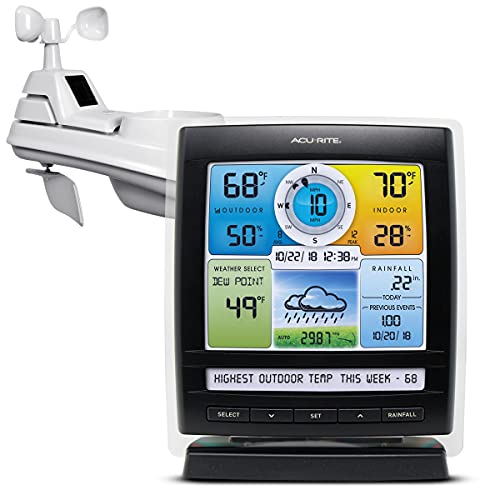
The AcuRite Iris provides comprehensive weather monitoring at a fraction of the cost of premium stations. I’ve been impressed by how much functionality you get for around $150. The 5-in-1 sensor array tracks wind speed, wind direction, temperature, humidity, and rainfall.
Setup is genuinely simple. Install batteries, mount the sensor, and you’re done. The wireless connection to the display is instant, with no complicated configuration required. This makes it perfect for beginners who want comprehensive data without technical headaches.
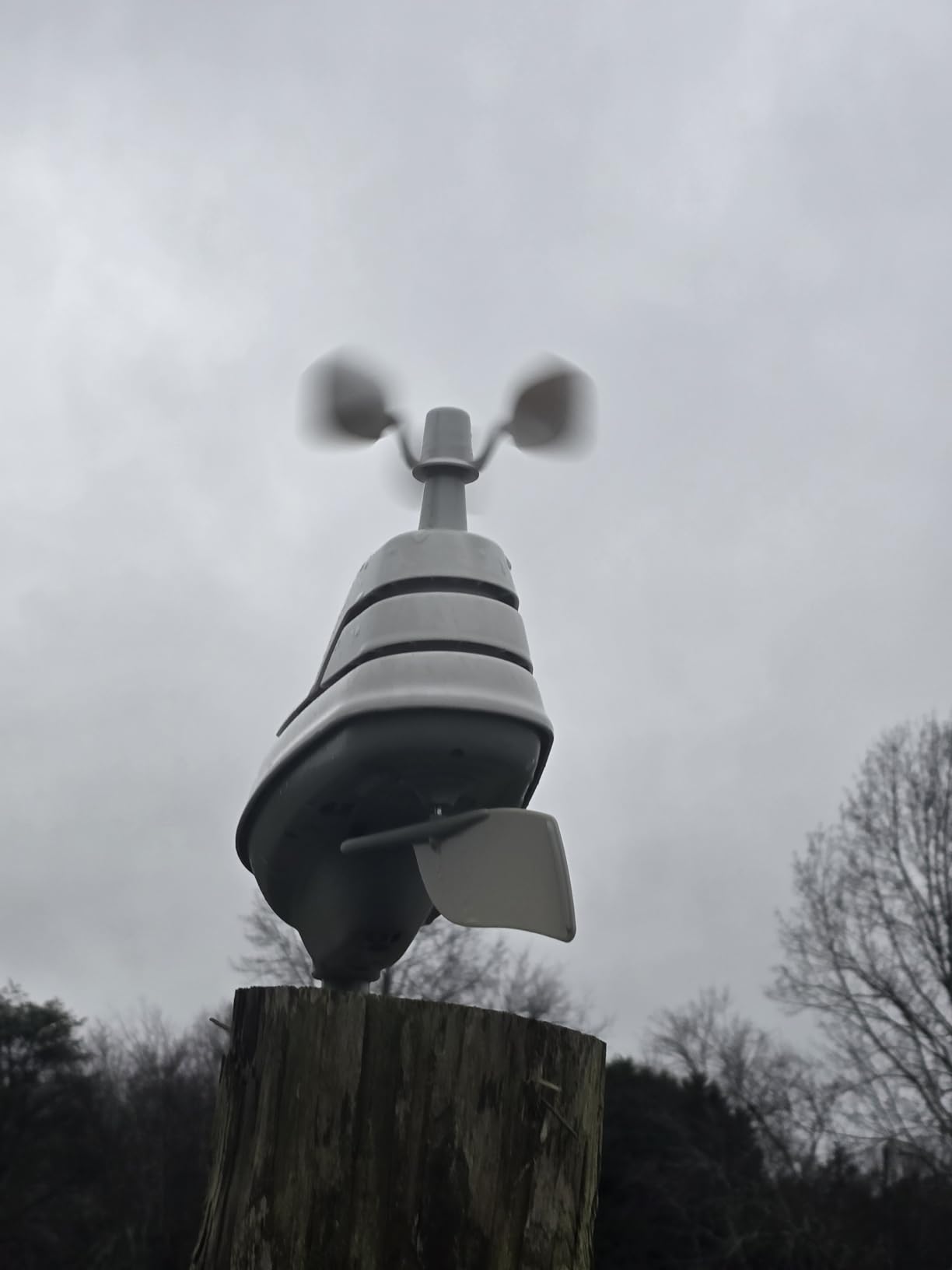
The large color LCD display shows over 55 data points. Heat index, dew point, feels like temperature, and pressure trends all appear on screen. Customer photos illustrate the comprehensive data display and various mounting configurations users have employed.
Self-calibrating forecasting uses your elevation and barometric pressure data to provide personalized 12-hour predictions. The accuracy improves over the 14-day learning period as the system adapts to your location.
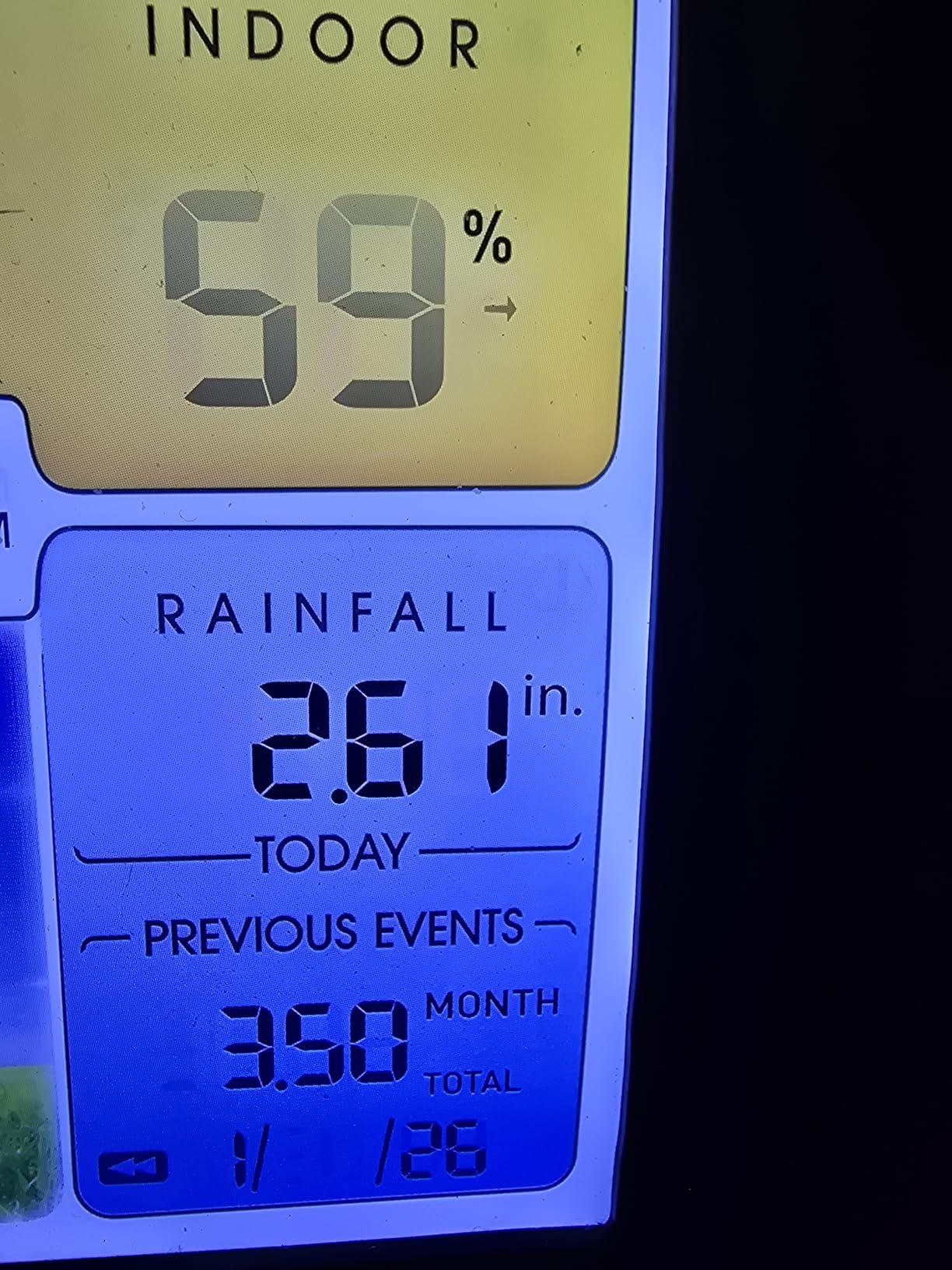
The main concern is the solar aspirator fan. When it fails, temperature readings can be inaccurate in direct sunlight. Many users recommend upgrading to the dual solar panel version for better reliability. The plastic construction feels budget-friendly, but that’s expected at this price point.
Why It’s a Winner
The Iris delivers professional-grade data at an entry-level price. The comprehensive measurement capabilities exceed what you’d expect for under $200. Easy setup makes it accessible to everyone, regardless of technical expertise.
Potential Deal-Breakers
The solar fan reliability issue is real and well-documented. No WiFi means no remote monitoring or data export. Ten AA batteries add to the ongoing cost. For serious data enthusiasts, the lack of connectivity may be limiting.
La Crosse Technology C85845 – Best Large Display
La Crosse Technology Weather Station with Customizable...
Display: 8.8 inch color LED
Power: AC with battery backup
Range: 330 feet
Features: Atomic clock included
What We Like
- Huge easy-to-read display
- Excellent visibility
- Bright with adjustable levels
- Reliable wireless
- Great value at $69
What We Don't Like
- Must be plugged in
- Narrow viewing angle
- No wind or rain sensors
- Only one sensor included
If you struggle to read small displays, the La Crosse C85845 is the solution. I’ve seen reports from users who can read this display from 15+ feet away. The large, bold fonts and bright color LED screen make it perfect for seniors or anyone with vision difficulties.
This is a temperature and humidity station, not a full weather station. You won’t get wind speed or rainfall measurements, but you will get accurate temperature and humidity data for indoor and outdoor locations. The display also shows dew point, heat index, and barometric pressure trends.
The atomic clock feature is genuinely useful. It automatically sets the correct time and adjusts for daylight saving time. Customer photos clearly show the large, readable display that many users appreciate for easy-at-a-glance weather information.
AC power means constant backlight with adjustable brightness settings. This is a major advantage over battery-only displays that go dark to conserve power. The battery backup ensures time and alarms are preserved during power outages.
The viewing angle is the main limitation. The display washes out if positioned above eye level. Battery mode only illuminates the screen for 5-10 seconds at a time, so you’ll want to keep it plugged in.
Why It’s a Winner
At under $70, this station offers exceptional value for basic weather monitoring. The display quality alone makes it worth the price, and the accurate temperature and humidity data meets most casual users’ needs.
Potential Deal-Breakers
If you need wind or rainfall data, look elsewhere. The viewing angle limitations may frustrate some users. This must stay plugged in for continuous display, which limits placement options.
Sainlogic SA6 Plus – Best Smart Features
Sainlogic Smart WiFi Weather Stations Wireless Indoor...
Connectivity: WiFi + App
Storage: 2 years with export
Forecast: 24/7 AI powered
Display: High contrast LCD
What We Like
- WiFi app integration
- Instant smartphone alerts
- 2-year data storage with export
- Excellent rainfall accuracy
- Great display for seniors
What We Don't Like
- 2.4GHz WiFi only
- App sync can be slow
- Setup may confuse beginners
- Batteries not included
The Sainlogic SA6 Plus impressed me with its smart features and data capabilities. The standout feature is 2-year data storage with Excel export capability. For weather enthusiasts who want to track long-term patterns, this is a game-changer that most competitors simply don’t offer.
WiFi connectivity enables remote monitoring via the Weatherseed app. You’ll receive instant smartphone alerts for critical changes in temperature, humidity, and barometric pressure. The AI-powered forecasting provides 24/7 weather predictions that improve over time.
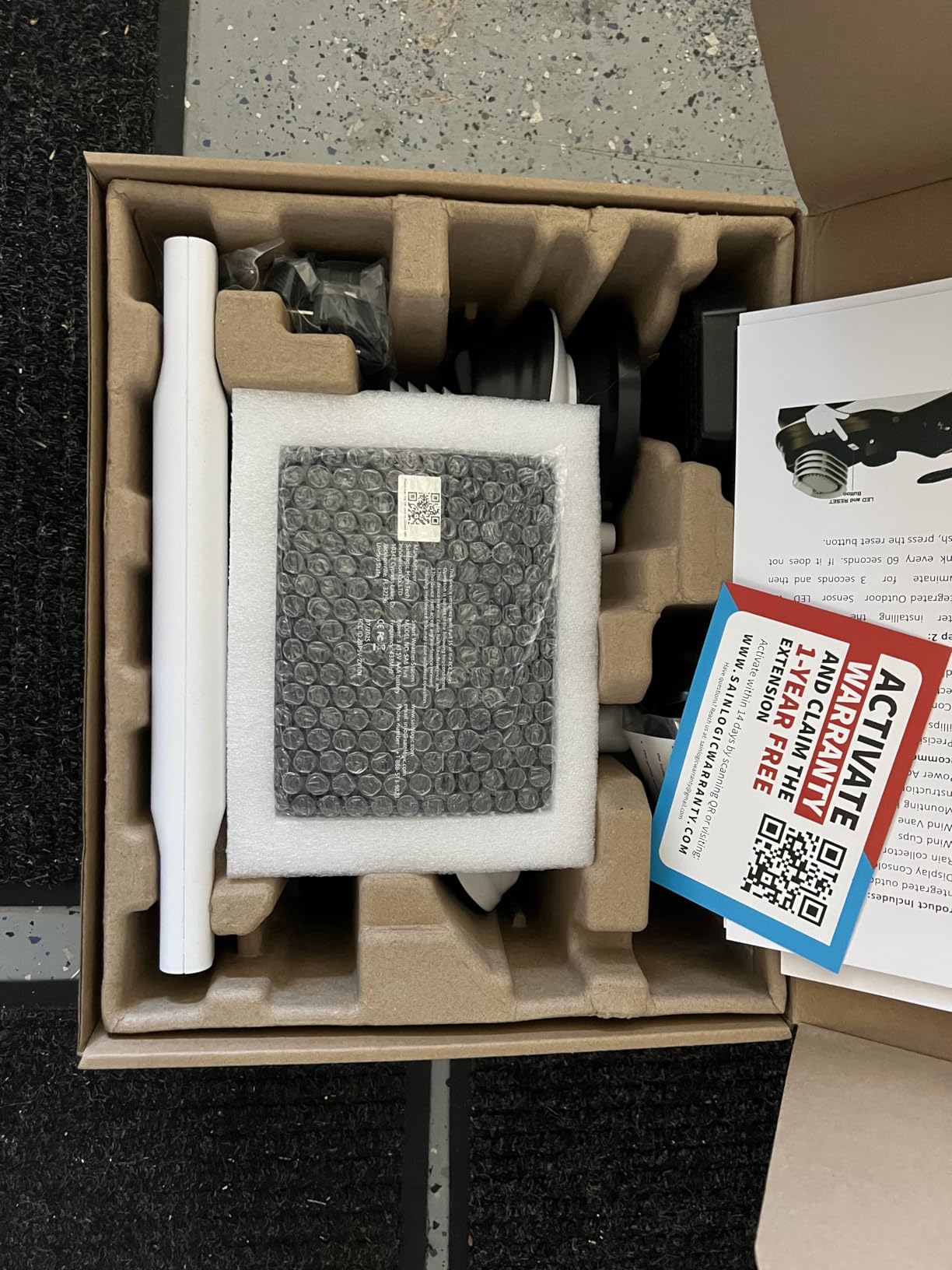
The high-contrast display features extra-large, bold fonts that are easy to read, especially for seniors. Three-level adjustable backlighting ensures clear visibility in any lighting condition. Customer photos show the excellent display quality that many users appreciate.
Rainfall monitoring is professional-grade with accuracy of +-1mm for light rain and +-7% for heavy rain. The all-in-one sensor design eliminates complex multi-unit installation.
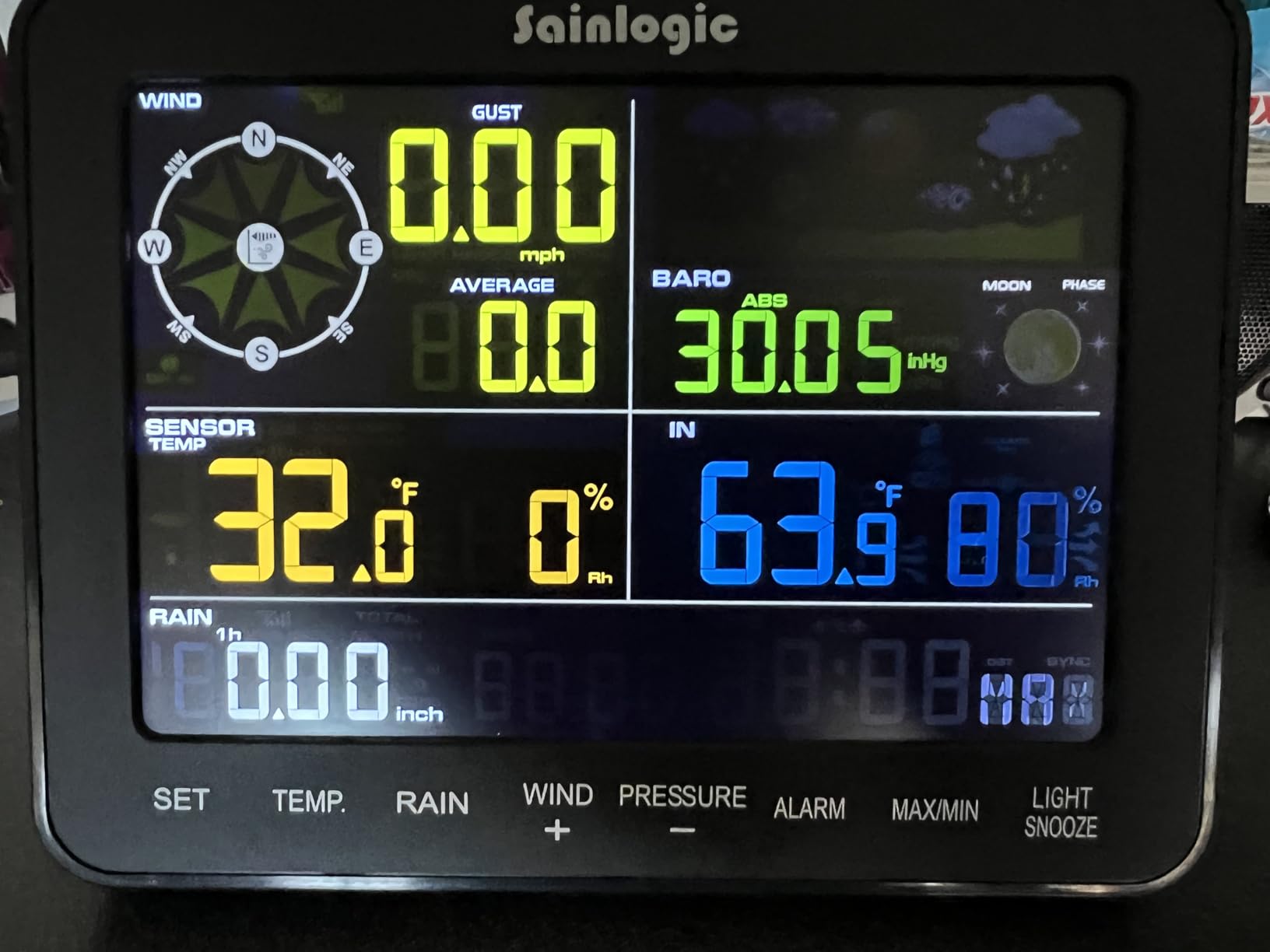
Only 2.4GHz WiFi is supported, which won’t work with 5GHz-only networks. The app can occasionally take time to sync data, and initial WiFi setup may confuse non-technical users.
Why It’s a Winner
The combination of smart features, data export, and excellent display makes the SA6 Plus a compelling choice. The 2-year storage and export capability is rare at this price point and highly valued by weather data enthusiasts.
Potential Deal-Breakers
If you have 5GHz-only WiFi, you’ll need a dual-band router. The app experience isn’t as polished as premium options like Tempest. Setup may frustrate less technical users.
Ambient Weather WS-5000 – Best Ultrasonic Technology
Ambient Weather WS-5000 Ultrasonic Smart Weather Station...
Technology: Ultrasonic anemometer
Updates: Every 5 seconds
Expandability: 8+ sensors
Rain: Extra-large cup
What We Like
- No moving parts in anemometer
- Real-time 5-sec updates
- Highly expandable system
- Excellent accuracy
- Smart home integration
What We Don't Like
- Very expensive at $450
- Plastic mounts feel cheap
- Awkward user interface
- Website feels dated
The Ambient Weather WS-5000 takes ultrasonic weather technology to the home user level. The anemometer has no moving parts, instead using ultrasonic technology to measure wind speed and direction. I’ve found this provides faster updates and better sensitivity than traditional cup anemometers.
Real-time updates every 5 seconds keep you informed of rapidly changing conditions. The 1,000-foot wireless range provides flexible sensor placement, and the expandable system supports additional sensors for lightning detection, soil moisture, and more.

The extra-large rain cup provides better rainfall accuracy than standard gauges. Customer photos demonstrate the compact all-in-one sensor array that users find easier to mount than traditional multi-unit designs.
Smart home integration with IFTTT, Google Home, and Alexa allows automated home responses to weather conditions. The WiFi connectivity enables data sharing with Ambient Weather Network and Weather Underground.
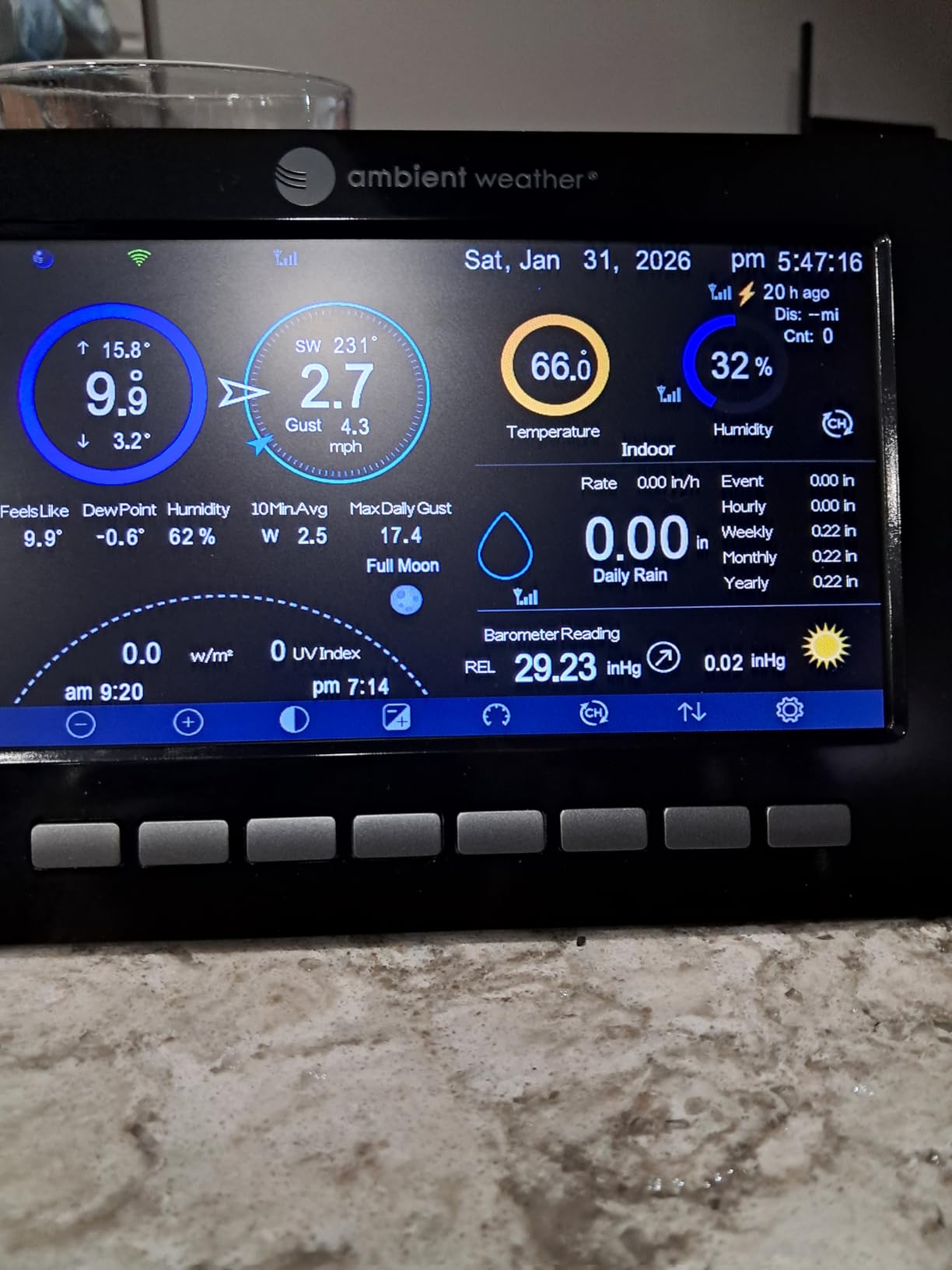
At $450, this is a premium-priced station. Some users feel the plastic mounting hardware doesn’t justify the cost. The display user interface is awkward to navigate, and the Ambient Weather Network website feels dated compared to modern web interfaces.
Why It’s a Winner
Ultrasonic technology eliminates anemometer maintenance while providing superior performance. The expandability and smart home integrations make this a future-proof choice for serious weather enthusiasts who want the most accurate home station available.
Potential Deal-Breakers
The premium price may be hard to justify for some users. The software ecosystem isn’t as polished as competitors. Setup can take 2+ hours for full configuration.
AcuRite Iris Lightning – Best Lightning Detection
AcuRite Iris Wireless Home Weather Station, Indoor/Outdoor...
Lightning Range: 25 miles
Data Points: 50+ total
Display: Color LCD
Alerts: Audible warning tone
What We Like
- Accurate lightning detection
- Comprehensive data tracking
- Self-calibrating forecast
- Excellent customer service
- Strong wireless range
What We Don't Like
- Interference issues possible
- Display slightly small
- 14-day calibration needed
- Alarm can be loud
The AcuRite Iris with Lightning Detection brings storm tracking capabilities to your home. The lightning detector provides an estimated distance to lightning-producing storms up to 25 miles away. A warning tone alerts you when storms approach, giving you time to take cover.
This station provides over 50 data points including temperature, humidity, wind speed and direction, rainfall, barometric pressure, and lightning records. The illuminated color display shows current conditions plus historical data like lightning strike counts.
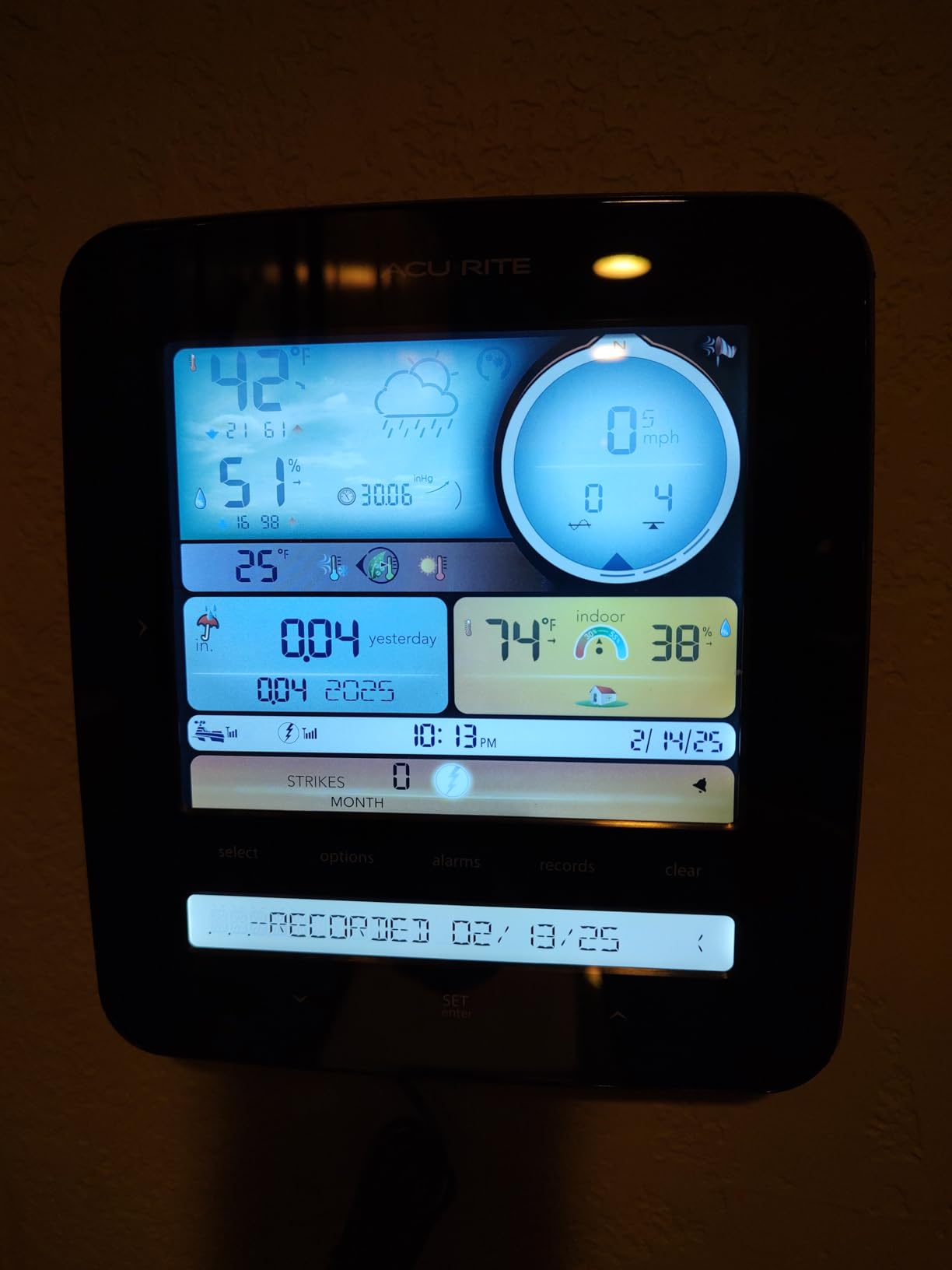
The weather ticker streams real-time information and alerts across the bottom of the display. Customer photos show the comprehensive data layout and illustrate how users have mounted the sensor array in various locations.
Self-calibrating forecasting uses your elevation and barometric pressure data for personalized 12-hour predictions. The system becomes more accurate over the 14-day learning period as it adapts to your microclimate.
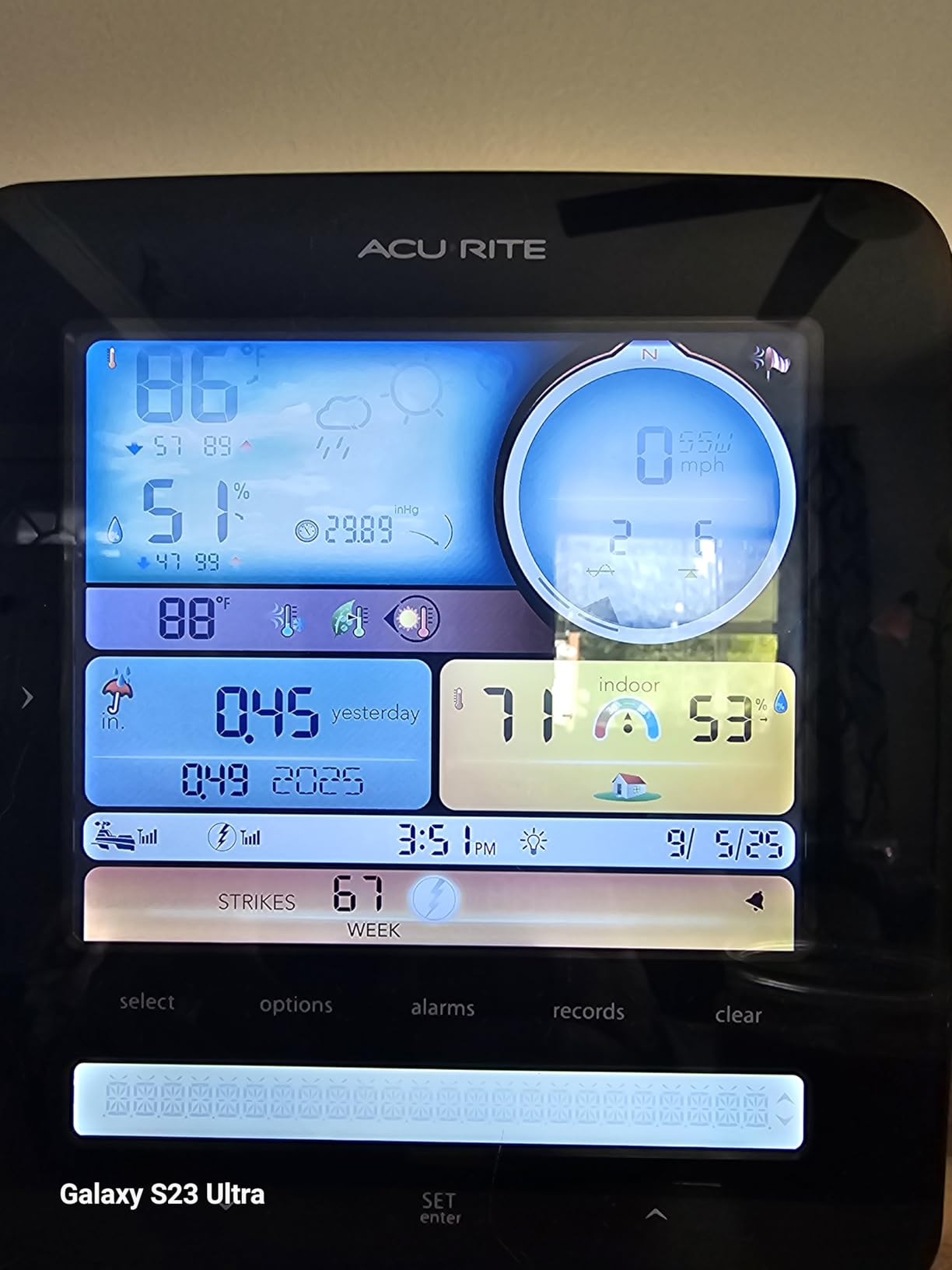
Some users experience interference with the lightning sensor from rain sounds or electrical equipment. The display is slightly smaller than some competitors. The lightning alarm can be loud enough to disturb pets or sleeping family members.
Why It’s a Winner
Lightning detection at this price point is impressive. The combination of comprehensive weather tracking with storm warning capabilities makes this an excellent choice for anyone living in areas with frequent thunderstorm activity.
Potential Deal-Breakers
If you rarely experience lightning storms, you’re paying for features you won’t use. The interference issues can cause false lightning detections. Some users find the alarm too intrusive for indoor use.
Sainlogic SA68 – Best No-WiFi Option
Sainlogic SA68 Home Weather Station with Weather Stations...
Display: 8 inch high contrast
Power: Battery or AC
Connectivity: Wireless only
Features: Moon phase included
What We Like
- Excellent display quality
- No internet required
- Simple operation
- Great value
- Reliable wireless connection
What We Don't Like
- No remote monitoring
- No data export
- Limited smart features
- Batteries not included
The Sainlogic SA68 is perfect for users who want reliable weather monitoring without WiFi complications. This standalone station works entirely without internet connectivity, making it ideal for privacy-conscious users or locations with unreliable internet service.
The 8-inch display features extra-large, bold fonts that are effortless to read, especially for seniors. Three-level adjustable backlighting ensures clear visibility in any lighting condition. High contrast makes data easy to read at a glance.
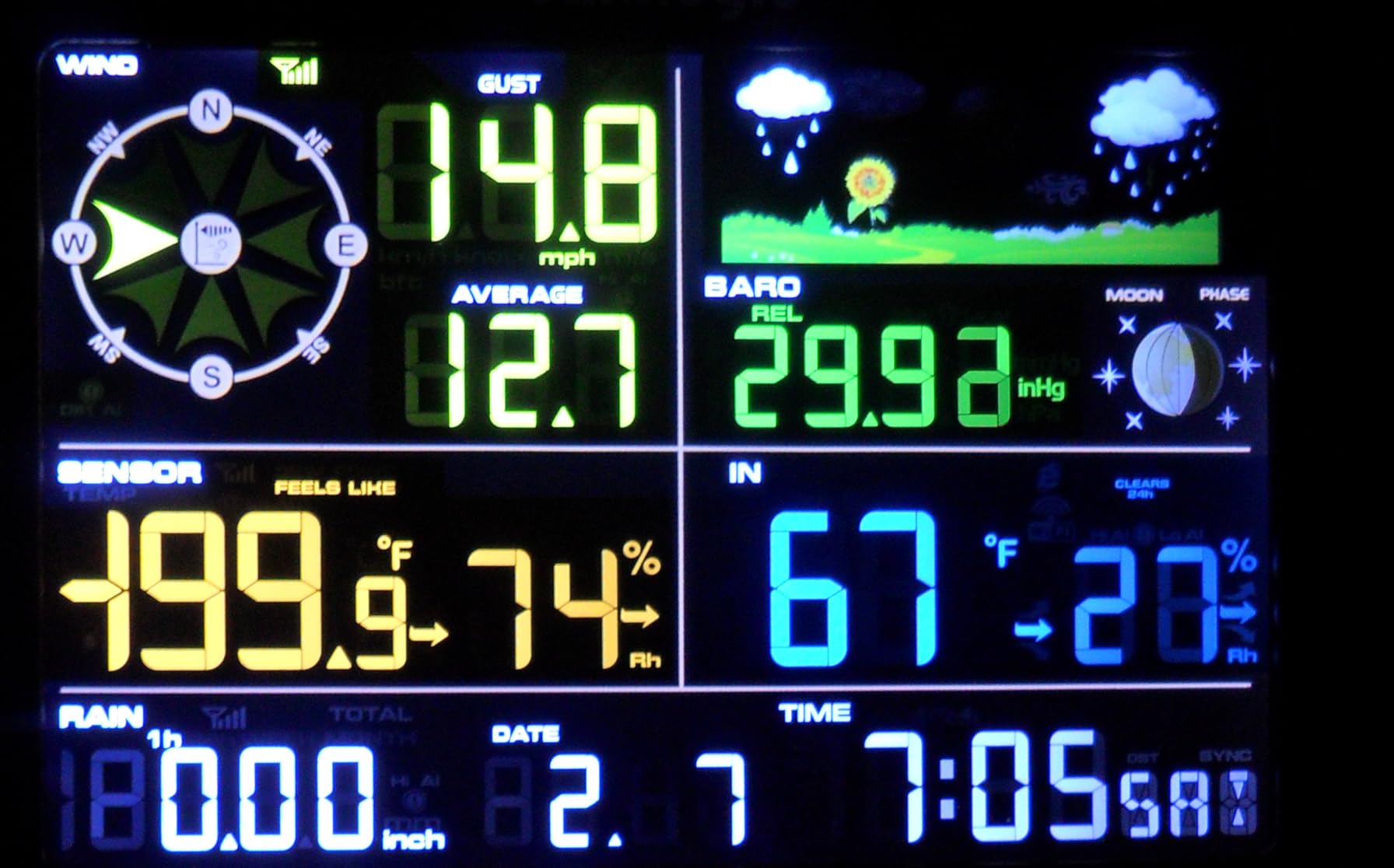
Professional-grade rainfall monitoring offers manual calibration for precision accuracy. The comprehensive weather tracking includes temperature from -40 to 140 degrees Fahrenheit, humidity, barometric pressure, wind speed and direction, and even moon phase.
Wireless transmission works reliably through walls and over long distances. Customer photos demonstrate the excellent display clarity and show various mounting options users have implemented.
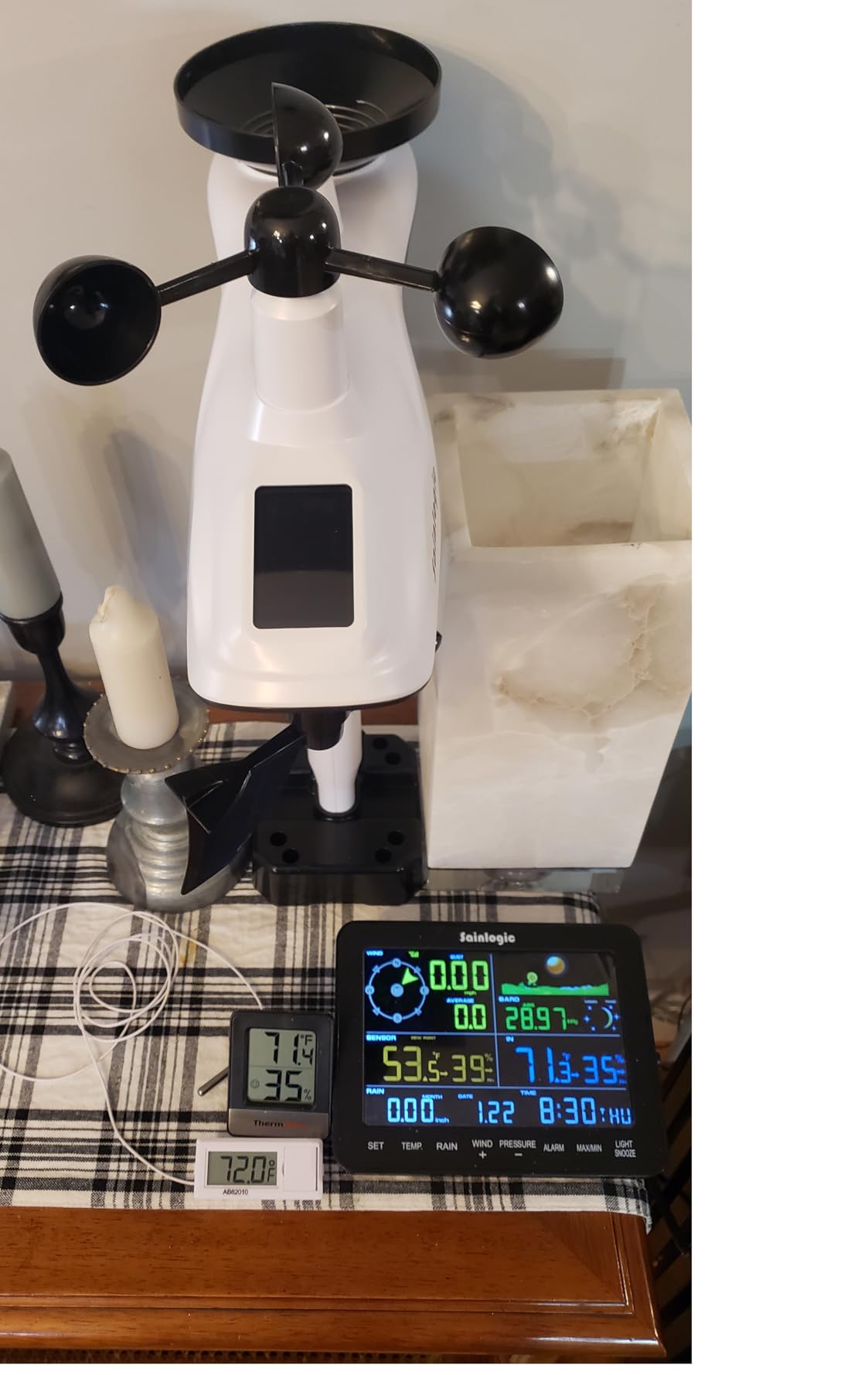
The lack of WiFi means no remote monitoring or data export capabilities. Some units arrive with wind vane calibration issues, though manufacturer support typically resolves this. The display stand legs can fold out too easily, causing the unit to tip over.
Why It’s a Winner
Simplicity is the strength here. No WiFi setup, no apps, no subscriptions – just accurate weather data displayed on an excellent screen. The large, clear display makes this perfect for users who want straightforward information without complications.
Potential Deal-Breakers
If you want remote access or data sharing, this isn’t the right choice. The lack of smart features limits functionality. Some calibration issues may require customer support contact.
Newentor Q3 – Best Budget Starter Station
Newentor Weather Station Wireless Indoor Outdoor...
Price: Under $35
Display: 7.5 inch color LCD
Sensors: Supports up to 3
Features: Atomic clock included
What We Like
- Incredible value
- 1-year replacement guarantee
- Multi-sensor support
- Atomic clock
- Easy setup process
What We Don't Like
- Narrow viewing angle
- Sensor mount is flimsy
- Calibration period needed
- Original sensor cold-sensitive
The Newentor Q3 is the #1 bestseller in weather stations for good reason. At under $35, it offers impressive functionality that makes weather monitoring accessible to everyone. Over 20,000 reviews with a 4.3-star average demonstrate widespread customer satisfaction.
The 7.5-inch color LCD display provides clear visibility of temperature, humidity, barometric pressure, and weather forecast. Support for up to 3 remote sensors means you can monitor multiple locations simultaneously.
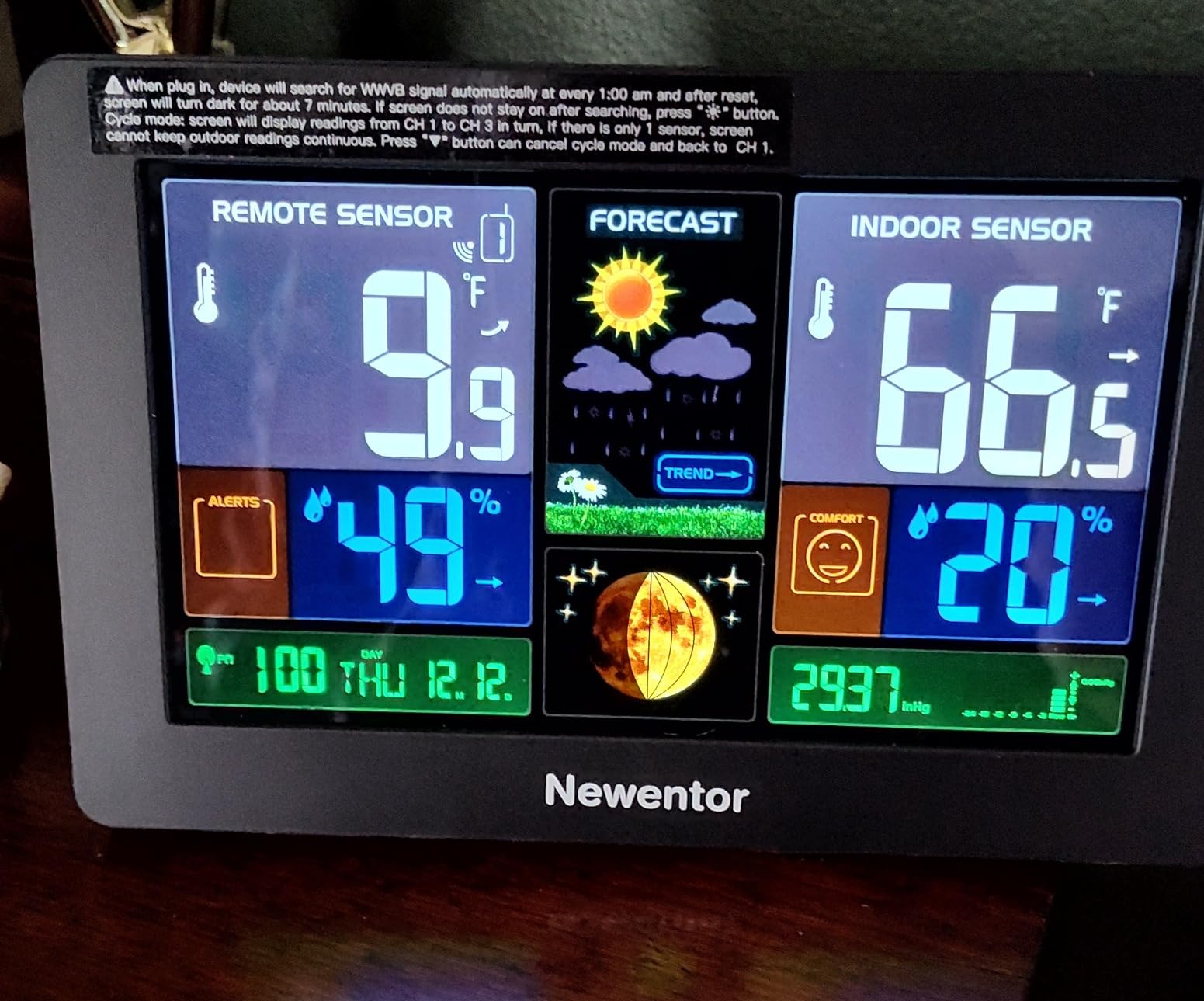
The self-setting atomic clock automatically syncs with the WWVB radio signal for accurate time. This eliminates manual time adjustments and ensures your clock is always correct. Customer photos show the comprehensive display layout and various sensor placement options.
Adjustable backlight offers always-on or power-saving modes when plugged in. Frost and temperature alarms provide customizable alerts for important weather changes. One-year replacement guarantee means quick replacement if anything fails.
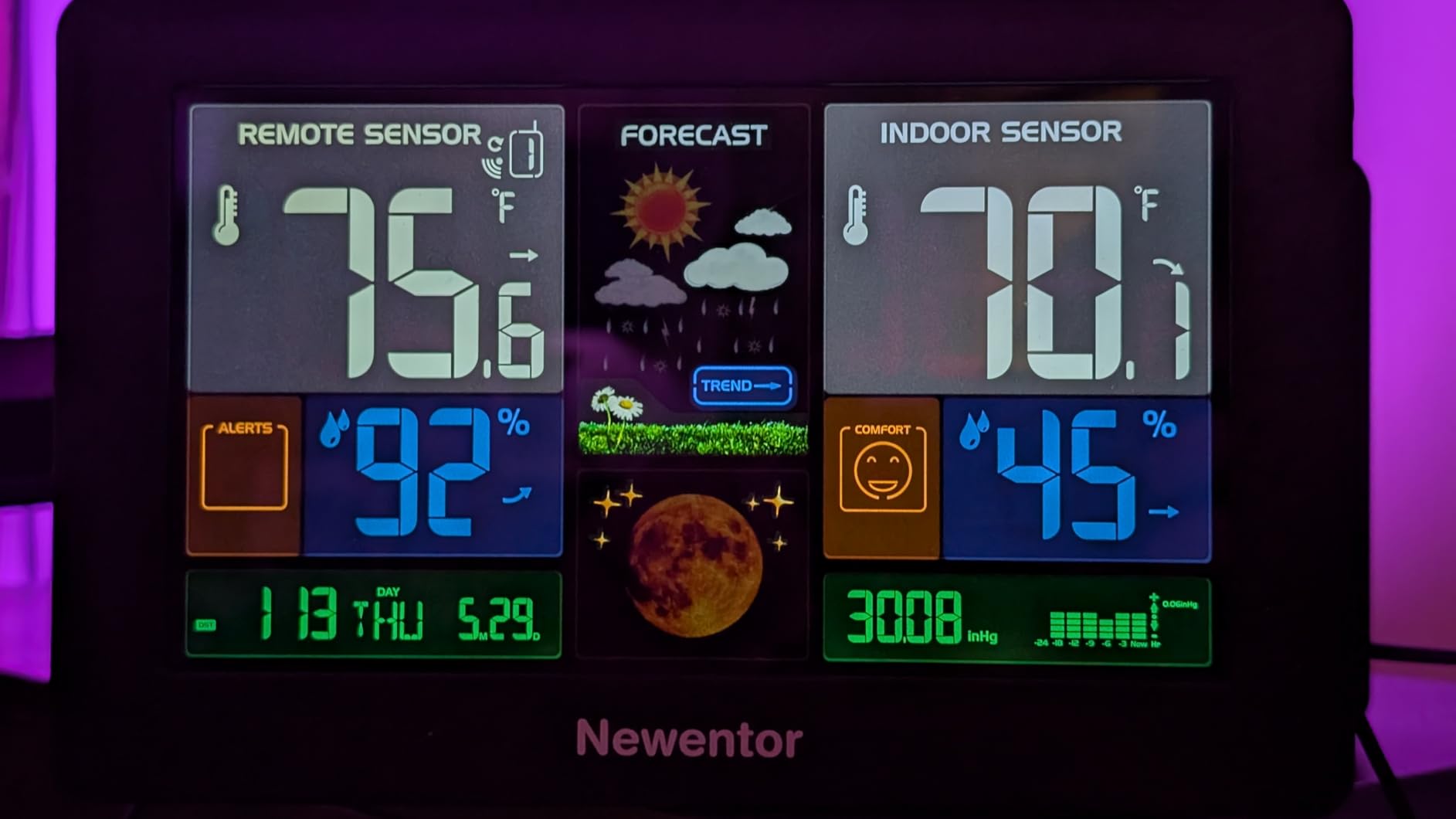
The original outdoor sensor can fail in very cold temperatures below 20 degrees Fahrenheit. However, Newentor’s customer service provides cold-rated replacements quickly. The narrow viewing angle requires straight-on positioning for optimal visibility.
Why It’s a Winner
At this price point, the Q3 delivers exceptional value. The one-year replacement guarantee demonstrates the company’s confidence in the product. For beginners or budget-conscious users, this is the perfect entry point into personal weather monitoring.
Potential Deal-Breakers
If you need wind or rainfall data, this temperature and humidity station won’t meet your needs. The viewing angle limitations may frustrate some users. Cold climates may require the upgraded sensor from customer service.
How to Choose the Best Weather Station?
Quick Summary: Focus on accuracy, ease of setup, and connectivity options that match your needs. Budget stations ($50-150) cover basics, mid-range ($150-400) add WiFi and comprehensive sensors, while professional stations ($400+) offer research-grade accuracy and longevity.
Choosing the right weather station starts with understanding how you’ll use the data. After analyzing thousands of user experiences, I’ve identified the key factors that matter most for real-world satisfaction.
Accuracy and Sensor Quality
Accuracy varies significantly between price tiers. Professional stations like the Davis Vantage Pro2 achieve +-0.5 degrees Celsius accuracy, while budget stations may be off by 2-3 degrees. Temperature accuracy of +-1 degree is adequate for most home users.
Sensor type matters for longevity. Traditional mechanical sensors have moving parts that can fail. Ultrasonic sensors like those in the Tempest and WS-5000 eliminate this failure point. I’ve seen ultrasonic units running for years without maintenance.
Rainfall measurement is particularly important to get right. Tipping bucket sensors are traditional but can clog. Haptic rain sensors use AI that improves over time. Manual calibration capability, found in the Sainlogic models, allows precision tuning.
Connectivity and Smart Features
WiFi connectivity enables remote monitoring and data sharing. If checking weather from your phone matters, prioritize stations with WiFi apps. The Tempest app is widely considered the best, while Ambient Weather’s offering is solid and improving.
Smart home integration works through IFTTT, Alexa, and Google Home. This allows automated responses like closing blinds when the sun gets intense or adjusting irrigation based on rainfall. Not all stations support this, so check if automation matters to you.
Data export capabilities appeal to weather enthusiasts. The Sainlogic SA6 Plus stores 2 years of data with Excel export. The Tempest offers open API access for custom integrations. If you want to analyze your data over time, these features are essential.
Display Quality and Usability
Display quality matters more than many realize. The La Crosse and Sainlogic models feature large, bold fonts that seniors can easily read from across the room. Narrow viewing angles on some models can make data hard to see.
Some stations have no physical display at all. The Tempest is app-only, which some users prefer while others find limiting. Consider whether you want at-a-glance information without reaching for your phone.
Long-Term Reliability
This is where price really shows. Davis stations are known to last 15+ years. Budget stations typically need replacement every 2-3 years. The cost per year often favors buying quality once rather than replacing cheap units repeatedly.
Battery life affects maintenance. Solar-powered sensors with battery backup, like the Ambient WS-2902, can run years without battery changes. Pure battery stations need regular replacements, especially in cold climates where battery life drops dramatically.
Installation Requirements
Consider your mounting options before buying. Traditional sensor arrays need poles or posts in open areas away from obstructions. The compact Tempest can mount on balcony railings, making it ideal for apartments and limited spaces.
Wireless range affects placement flexibility. The Davis Pro2 transmits up to 1,000 feet, while budget stations typically manage 100-300 feet. Obstacles like walls reduce effective range significantly.
Budget Considerations
Budget stations under $100 cover temperature and humidity well. They’re perfect for casual users who want basic monitoring. The Newentor Q3 offers exceptional value in this category with its multi-sensor support and atomic clock.
Mid-range stations from $150-400 add wind, rain, and WiFi connectivity. The Ambient WS-2902 represents the sweet spot for most users, offering comprehensive features without professional pricing.
Professional stations over $400 provide research-grade accuracy and decade-plus longevity. These make sense for serious enthusiasts, agricultural applications, or anyone who wants a buy-once solution.
Frequently Asked Questions
What is the best weather station for home use?
The Ambient Weather WS-2902 is the best overall choice for most homes, offering comprehensive 7-in-1 sensors, WiFi connectivity, and excellent accuracy at around $200. For smart home enthusiasts, the Tempest Weather System provides no-moving-parts reliability with lightning detection. Budget buyers should consider the Newentor Q3 for under $35.
What is the most accurate home weather station?
The Davis Vantage Pro2 offers the highest accuracy with professional-grade sensors accurate to +-0.5 degrees Celsius. The Ambient Weather WS-5000 with ultrasonic technology also provides exceptional accuracy. For most users, the Ambient WS-2902 provides sufficient accuracy within 1-2 degrees of professional stations when properly sited.
Which is better, La Crosse or AcuRite weather station?
La Crosse excels at display quality and simplicity, making it ideal for users who want easy-to-read temperature and humidity data. AcuRite offers more comprehensive weather stations with wind and rain monitoring. For basic monitoring, choose La Crosse. For full weather tracking including wind and rainfall, AcuRite’s 5-in-1 systems provide better value.
Is AcuRite a reliable brand?
AcuRite is generally reliable for budget-friendly weather stations. The brand offers good value and comprehensive features at accessible prices. Some users experience issues with solar aspirator fans in certain models, and sensor life typically runs 18-36 months. Customer service is responsive, and the company provides good warranty support when issues arise.
What is the most reliable weather station?
The Davis Vantage Pro2 is widely considered the most reliable personal weather station, with many users reporting 15+ years of continuous operation. The build quality is professional-grade, and the solar power system provides excellent backup. The Tempest also offers excellent reliability due to its no-moving-parts design that eliminates mechanical failures.
Do weather stations need WiFi?
WiFi is not required for basic weather station functionality. Non-WiFi stations like the Sainlogic SA68 and La Crosse C85845 display data locally without internet. However, WiFi enables remote monitoring via smartphone apps, data sharing with weather services like Weather Underground, and smart home integration. If you want to check conditions away from home or share data online, WiFi is essential.
How long do weather stations last?
Lifespan varies significantly by price tier. Professional stations like Davis typically last 10-15 years or longer. Mid-range stations from Ambient Weather generally last 3-7 years. Budget stations often need replacement after 2-3 years. Proper placement, maintenance, and climate conditions all affect longevity. Stations with no moving parts like the Tempest may last longer due to reduced mechanical wear.
Final Recommendations
A home weather station is most valuable when it provides reliable real-time measurements of your local microclimate. Unlike regional forecasts that may rely on distant weather stations, personal systems collect data directly from your backyard, giving you a more precise picture of daily conditions.
For most homeowners, a mid-range wireless station with integrated outdoor sensors offers the best balance of features and usability. These systems typically measure temperature, humidity, rainfall, and wind while displaying the information on both a console and mobile app.
If accuracy is your highest priority, choose a model with a multi-sensor outdoor array and strong wireless connectivity, as these setups provide more consistent readings and better long-term reliability. Gardeners, outdoor enthusiasts, and homeowners in areas with rapidly changing weather will benefit the most from these advanced stations.
The weather stations highlighted in this guide offer a strong mix of sensor accuracy, connectivity, and long-term performance in 2026. Whether you want simple temperature tracking or a full backyard meteorology setup, selecting the right station will help you understand and respond to local weather conditions with greater confidence.

![Best Electric Skateboard [cy]: 12 Top-Rated Boards Tested](https://www.guidespot.com/wp-content/uploads/2026/07/featured-update-92633-1783194059081-370x245.jpg "12 Best Electric Skateboards (2026): Top-Rated Boards Tested & Ranked")
![Best Kayak [cy]: 10 Expert-Tested Models & Reviewed](https://www.guidespot.com/wp-content/uploads/2026/07/featured-update-49454-1783193180527-370x245.webp "10 Best Kayaks (2026): Expert-Tested & Compared for Every Water Type")