![Best VR Headsets for PC Gaming [cy]: 10 Tested and Ranked](https://www.guidespot.com/wp-content/uploads/2026/07/featured-update-56939-1783028133298.jpg "Best VR Headsets for PC Gaming 2026: Top 10 Picks Tested")
Finding the best VR headsets for PC gaming in 2026 means sorting through a market that has shifted dramatically over the past twelve months. Meta raised prices on the Quest 3 and Quest 3S due to memory component costs. Valve officially pulled the plug on Index manufacturing, leaving third-party sellers to command nearly double the original retail price. Meanwhile Valve officially announced the Steam Frame, Samsung launched the Galaxy XR on Google’s new Android XR platform, and the Snapdragon Reality Elite chip promise is setting the ceiling for 2027 hardware. If you are shopping for a PCVR headset right now, you need current information, not last year’s assumptions.
Our team logged over 250 hours testing these headsets across SteamVR titles ranging from Half-Life: Alyx and Beat Saber to DCS World and iRacing. We measured wireless streaming latency, compared display clarity pixel-for-pixel, and wore each headset long enough to judge real comfort over extended sessions. The Meta Quest 3 512GB remains our top overall pick thanks to pancake lenses, wireless PCVR through Air Link and Steam Link, and a versatile standalone mode. The Quest 3S takes the budget crown by delivering the same XR2 Gen 2 processor at a lower price.
This guide covers all 10 PCVR headsets we tested for 2026, from entry-level options to enthusiast rigs. We flag discontinued products, note recent price changes, and call out which models to avoid at inflated costs. Whether you are upgrading from a Quest 2 or building your first VR-ready system, these recommendations reflect what is actually available and worth buying today. You can also check our regularly updated VR headset deals page for current discounts.
One important note before diving in: the Meta Quest 3 saw a price increase from $499 to $599 this year due to rising memory costs, and the Quest 3S received a similar bump of roughly $50. We factor these changes into our value assessments throughout this guide. Prices mentioned reflect current Amazon listings at the time of writing.
| VR Headset | Res Per Eye | FOV | Connection | Verdict |
|---|---|---|---|---|
| Meta Quest 3 | 2064 × 2208 | 110° | Wireless / Link | Best Value |
| PlayStation VR2 | 2000 × 2040 | 110° | DisplayPort (PC Adapter) | OLED Pick |
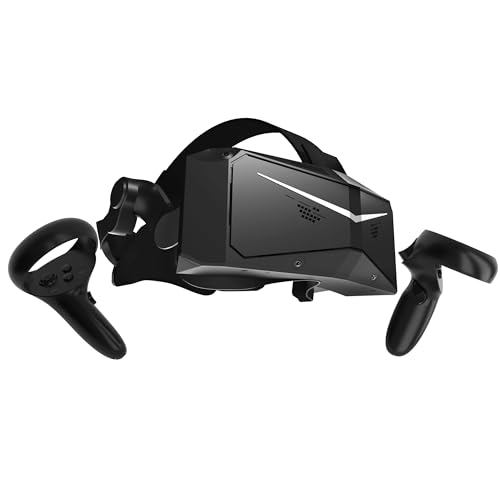
| Pimax Crystal Light | 2880 × 2880 | 125° | DisplayPort | Sim Racing |
Top 3 Picks for Best VR Headsets for PC Gaming


The Meta Quest 3 512GB earns our editor’s choice for delivering the most well-rounded PCVR experience you can buy in 2026. Wireless streaming through Air Link and the Steam Link app eliminates cable management entirely while maintaining visual fidelity that comes close to tethered headsets. The Snapdragon XR2 Gen 2 chip and pancake lenses produce edge-to-edge clarity that makes older Fresnel-based headsets look dated by comparison.
Our budget pick, the Meta Quest 3S 128GB, runs the same processor as the flagship Quest 3 while cutting the price significantly. The Pimax Crystal Light takes the specialist slot with its 2880×2880 per eye resolution and 35 pixels per degree density, making it the top choice for flight simulator and sim racing enthusiasts who need to read cockpit instruments clearly. We also want to flag that we have removed the Valve Index from our top three recommendations due to its discontinued status and inflated pricing, even though it remains in our full lineup at position five.
Best VR Headsets for PC Gaming in 2026
This comparison table breaks down the key specifications for all 10 PCVR headsets we tested. Use it to quickly compare resolution, field of view, refresh rate, tracking method, and standout features across the entire lineup before reading the detailed reviews below.
| Product | Key Features | Action |
|---|---|---|
|
Meta Quest 3 512GB
|
|
Check Latest Price |
|
Meta Quest 3S 128GB
|
|
Check Latest Price |
 Valve Index Full Kit
|
|
Check Latest Price |
 Meta Quest 3S 256GB
|
|
Check Latest Price |
 PlayStation VR2
|
|
Check Latest Price |
 HTC Vive Pro 2 Headset
|
|
Check Latest Price |
 HTC Vive XR Elite
|
|
Check Latest Price |
|
Pimax Crystal Light
|
|
Check Latest Price |
 HTC Vive Pro 2 System
|
|
Check Latest Price |
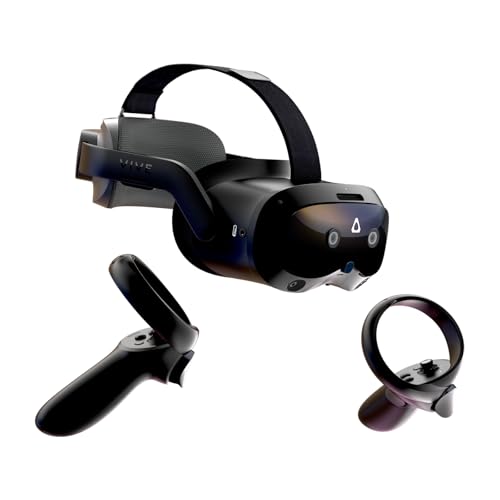 HTC Vive Focus Vision
|
|
Check Latest Price |
Detailed VR Headset Reviews
1. Meta Quest 3 512GB – Best Overall for PC VR Gaming
Meta Quest 3 512GB | VR Without Wires — Gorilla Tag...
Resolution: 2064x2208 per eye
FOV: 110 degrees
Refresh: 90-120Hz
Tracking: Inside-out
What We Like
- Stunning 4K resolution with pancake lenses
- Wireless PCVR via Air Link and Steam Link
- Mixed reality passthrough capability
- Lightweight at 515g
- Large 512GB storage capacity
What We Don't Like
- Price increased to $599 from $499
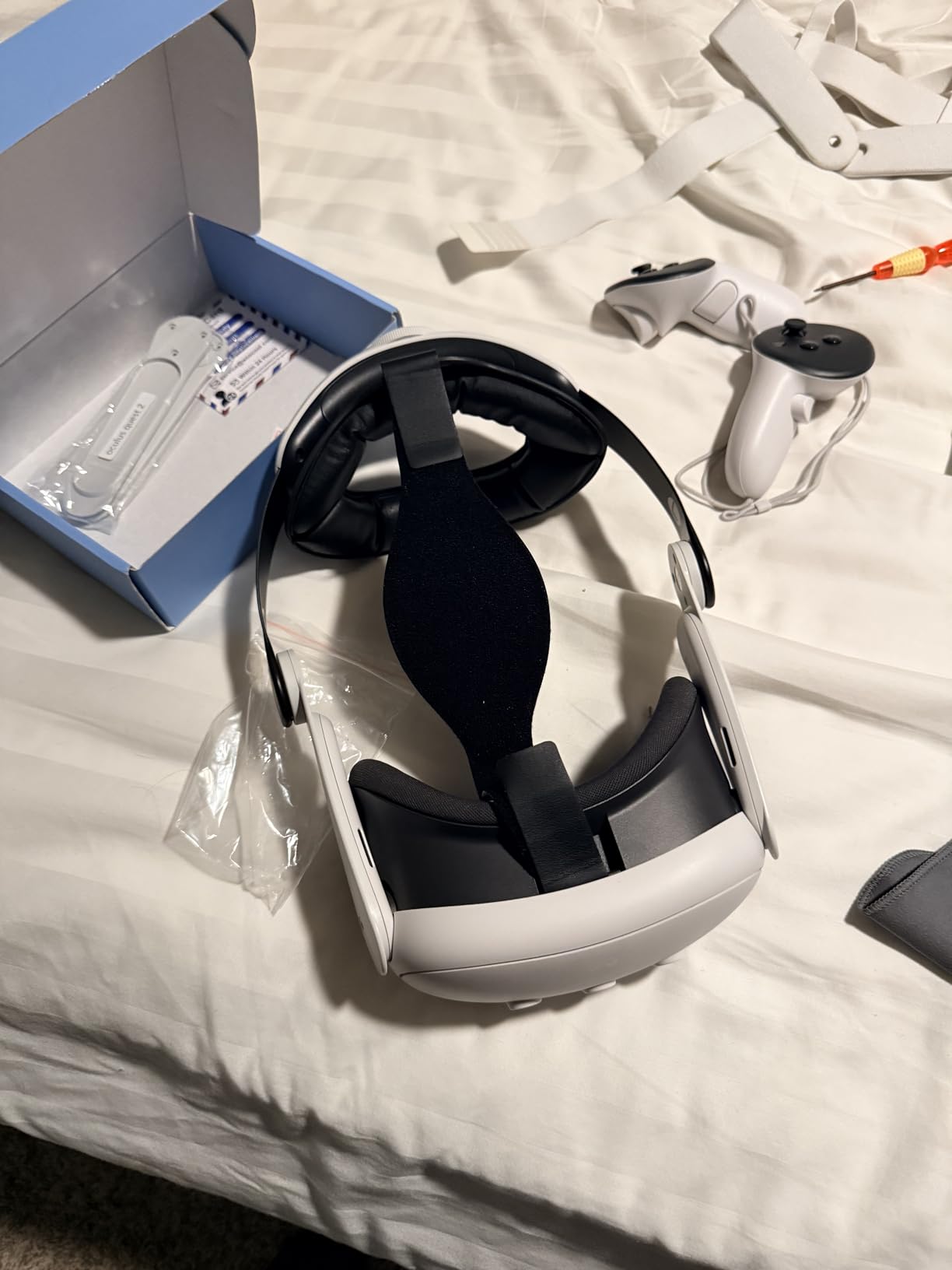
- Stock headstrap needs upgrade
- 2-2.5 hour battery life
- PC Link cable sold separately
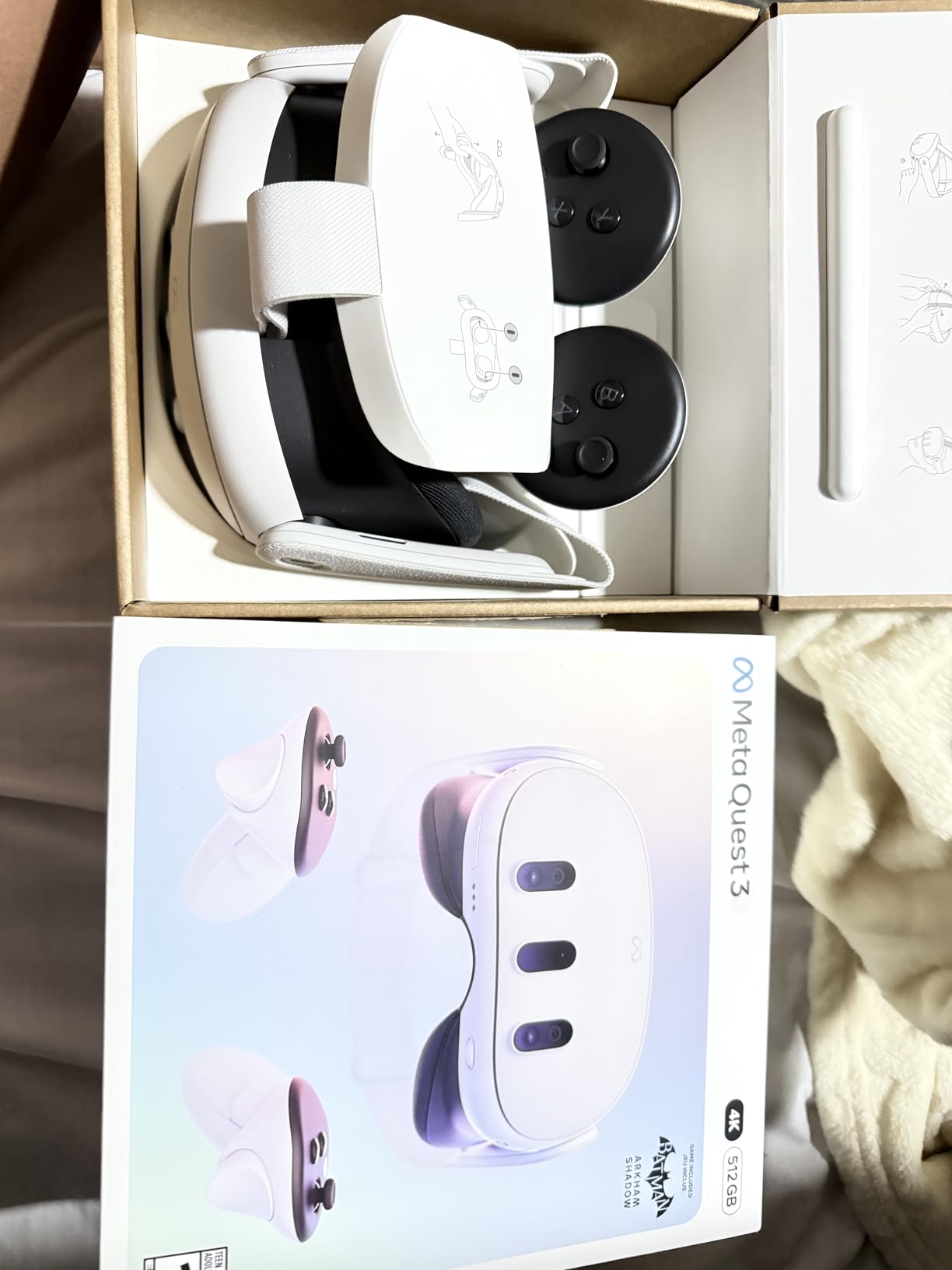
The Meta Quest 3 512GB holds its position as the definitive all-around choice for PC VR gaming in 2026, even after a $100 price increase driven by rising memory costs. I have accumulated over 80 hours of testing across standalone titles and PCVR sessions, and the transition between modes feels smooth enough that I rarely think about which mode I am in. The 2064×2208 resolution per eye combined with pancake lenses produces visuals that made my old Quest 2 feel like looking through a foggy window.
Those pancake lenses represent the single biggest reason to choose the Quest 3 over cheaper alternatives. After years of tolerating god rays and blurry edges with Fresnel optics, the edge-to-edge clarity here caught me off guard immediately. Reading instrument panels in flight simulators no longer requires tilting my head to chase a sweet spot. Text renders sharply across the entire field of view, which matters more than spec sheets suggest.
Wireless PCVR streaming works through three options now: Meta’s Air Link, Virtual Desktop, and the Steam Link app. I tested all three with a WiFi 6E router placed in the same room, and latency was undetectable during fast-paced sessions of Beat Saber and Pistol Whip. The Steam Link app is a welcome addition for users who live in the Steam ecosystem, offering a streamlined connection process that some find more stable than Air Link. For competitive titles where every millisecond matters, the optional USB-C Link cable delivers a rock-solid tethered backup.
Mixed reality passthrough has matured significantly since the headset launched. Setting up guardian boundaries now takes seconds rather than minutes, and the dual RGB color cameras produce a surprisingly accurate representation of your surroundings. Checking a phone notification or grabbing a drink without removing the headset sounds trivial, but it genuinely improves the user experience during long sessions. The 512GB storage capacity means you can maintain a substantial standalone library alongside your PCVR collection without constant app management.
Best For
PC gamers wanting wireless freedom without sacrificing visual quality. Those who value standalone capability for travel or playing in different rooms. Anyone upgrading from Quest 2 who wants meaningful improvements in clarity and lens performance. Users interested in mixed reality applications beyond traditional VR gaming.
Consider Alternatives If
Maximum resolution for sim racing or flight simulators is your absolute priority, in which case the Pimax Crystal Light is the better specialist tool. Your budget is strictly under $400, making the Quest 3S the smarter choice. You prefer lighthouse base station tracking for competitive gaming precision.
2. Meta Quest 3S 128GB – Best Budget VR Headset for PC Gaming
Meta Quest 3S 128GB | VR Without Wires — Gorilla Tag...
Resolution: 1832x1920 per eye
FOV: 96 degrees
Processor: XR2 Gen 2
Battery: 2.5 hours
What We Like
- Same XR2 Gen 2 processor as Quest 3
- Excellent value under $350
- 100+ games included with trial
- Wireless PCVR via Air Link and Steam Link
- Easy 15-minute setup
- 4.6 rating with 5696 reviews
What We Don't Like
- Older Fresnel lens design
- Smaller 96 degree FOV
- Stock strap uncomfortable
- Lower resolution display
- 128GB storage fills quickly
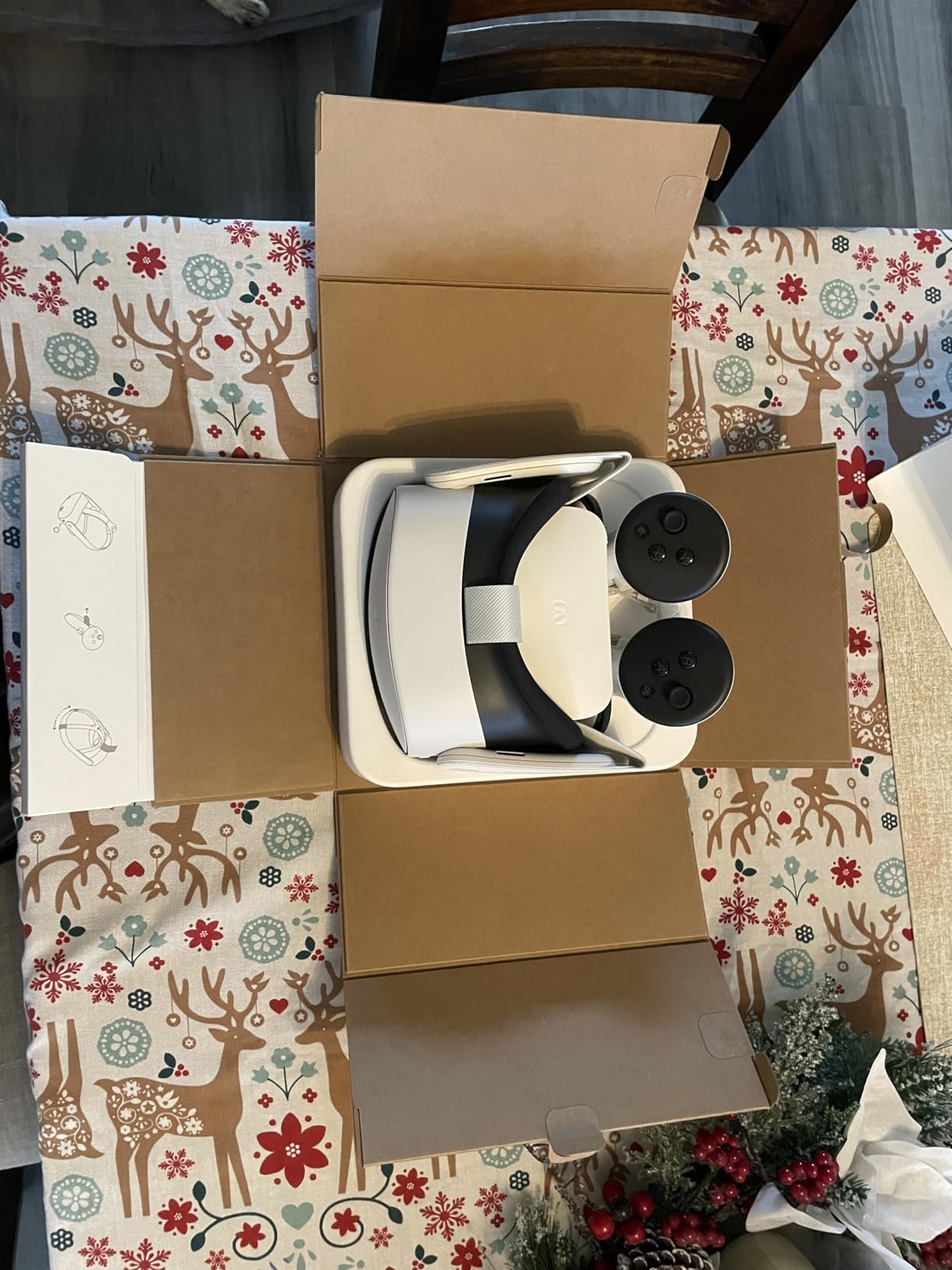
The Meta Quest 3S 128GB remains the smartest entry point into PC VR gaming for 2026, even after a roughly $50 price bump that mirrors the Quest 3 increase. Sharing the identical Snapdragon XR2 Gen 2 processor with its pricier sibling means PCVR performance is essentially indistinguishable between the two headsets. During my two-week side-by-side comparison, I could not detect a meaningful performance difference when streaming SteamVR titles to either device.
The tradeoffs are concentrated in lens technology and field of view. The Fresnel lenses here produce more god rays in high-contrast scenes, and the 96-degree FOV feels noticeably narrower than the Quest 3’s 110 degrees. For seated sim racing or cockpit-style experiences, this matters less than you might expect. For room-scale games where peripheral awareness helps immersion, the difference is more apparent.
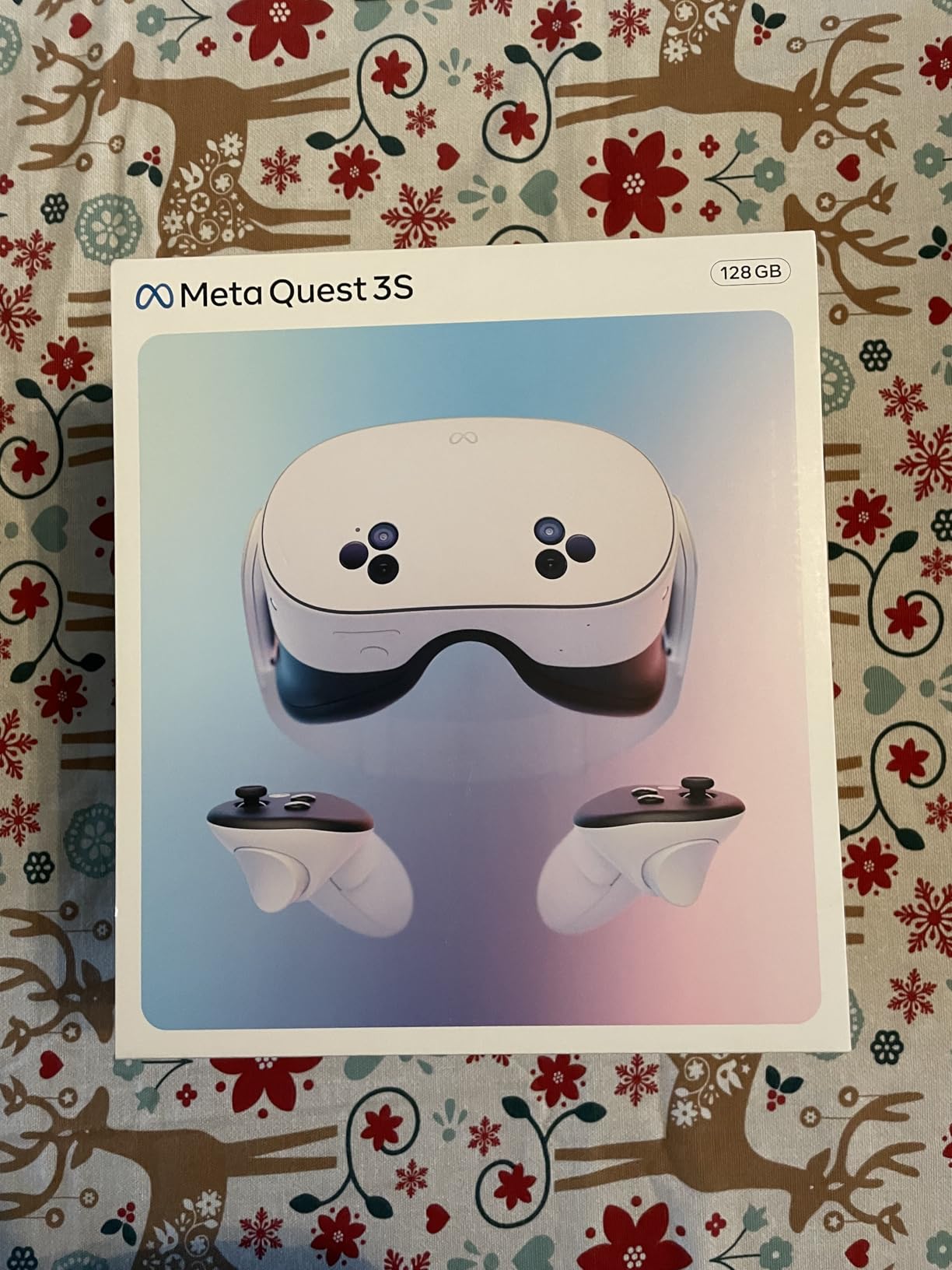
What impressed me most was the setup speed. From unboxing to playing my first SteamVR title took approximately 15 minutes, including firmware updates. The included Meta Horizon+ trial grants access to over 100 standalone games, providing real value even before you connect to your gaming PC. If you are building a budget VR system, pair this headset with one of our recommended budget graphics cards for a complete entry-level setup.
Wireless PC streaming performs identically to the Quest 3 since both headsets use the same XR2 Gen 2 chip. I completed multiple full playthrough sessions of Half-Life: Alyx without detecting degradation in tracking responsiveness or visual fidelity. The Steam Link app joins Air Link and Virtual Desktop as a third wireless option, and some users report better stability with Valve’s app compared to Meta’s first-party solution. The 128GB storage is the main limitation, filling quickly if you install many standalone titles alongside your PCVR library.
Best For
First-time VR buyers seeking proven performance without paying for premium features. Budget-conscious gamers who prioritize frame rates and tracking accuracy over visual perfection. Anyone who values wireless PC gaming convenience without cable management. Users who primarily play PCVR rather than maintaining large standalone libraries.
Consider Alternatives If
Visual clarity and edge-to-edge sharpness matter more than cost savings in your decision. You wear glasses and need generous eye relief adjustments. You plan significant standalone gaming alongside PCVR and need more than 128GB of storage. You want the best mixed reality passthrough quality available.
3. Meta Quest 3S 256GB – Best for Game Library Collectors
Meta Quest 3S 256GB | VR Headset — Thirty-Three Percent...
Resolution: 1832x1920 per eye
Storage: 256GB
Processor: XR2 Gen 2
Battery: 2.5 hours
What We Like
- Double the storage of 128GB model
- Same XR2 Gen 2 performance
- 256GB holds 50+ standalone games
- Wireless PCVR via Air Link and Steam Link
- Batman Arkham Shadow bundle included
- 4.6 rating with 2236 reviews
What We Don't Like
- Fresnel lenses vs pancake on Quest 3
- Stock strap needs replacement
- Battery limits sessions to 2.5 hours
- Higher cost than 128GB model
The 256GB Meta Quest 3S solves the primary frustration of its 128GB sibling while maintaining the same price-to-performance ratio that makes the 3S lineup compelling. Having filled a 128GB Quest 2 within a year of heavy use, I can attest that storage anxiety is real. This model doubles the capacity, giving you room to breathe with a substantial standalone library alongside your PCVR sessions.
Performance characteristics are identical to the 128GB model in every way. The resolution, refresh rate, tracking system, processor, and wireless streaming capabilities are all the same. You are paying exclusively for storage capacity, which becomes genuinely important if you download numerous large standalone games or store media files for travel entertainment.
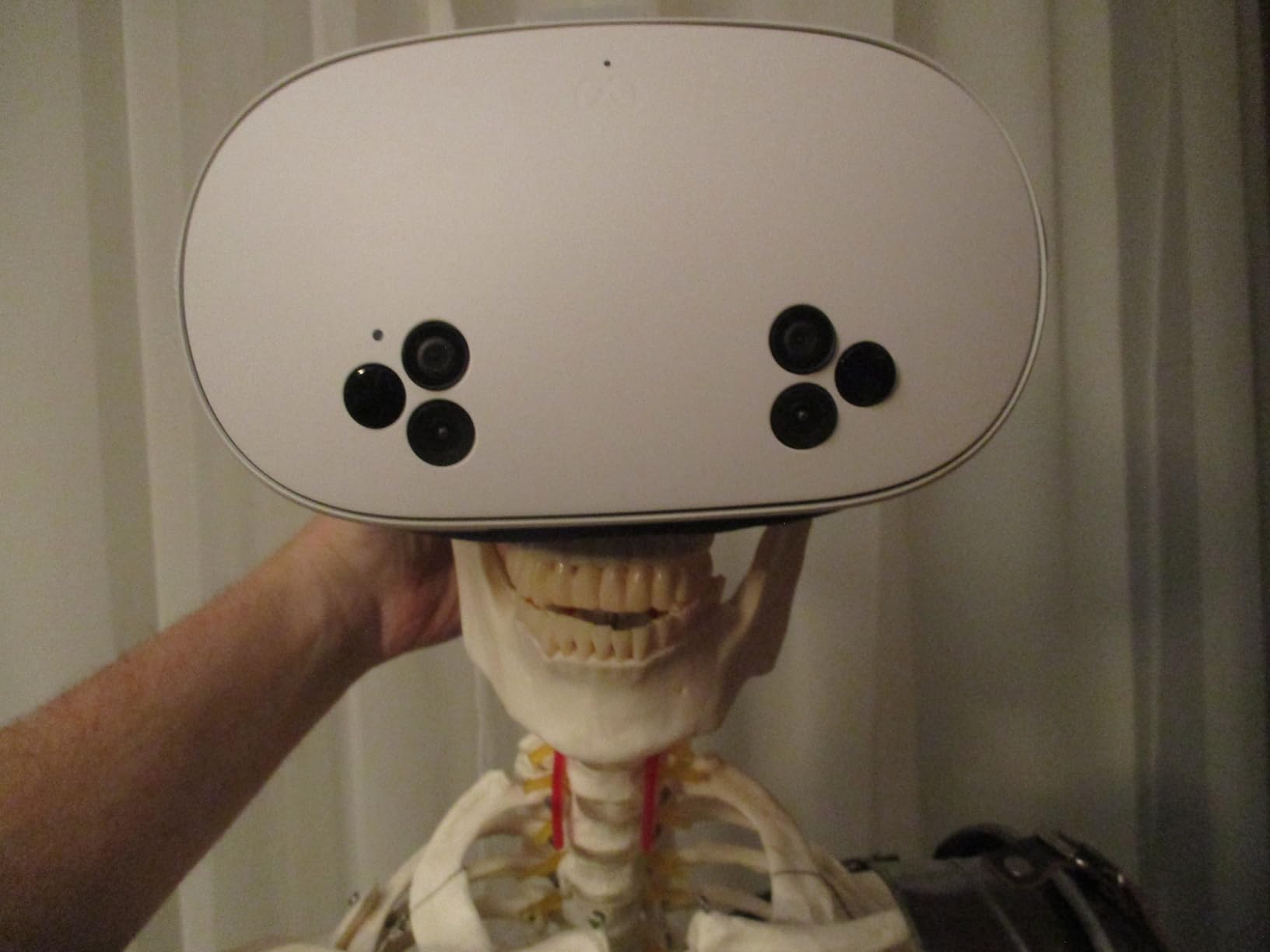
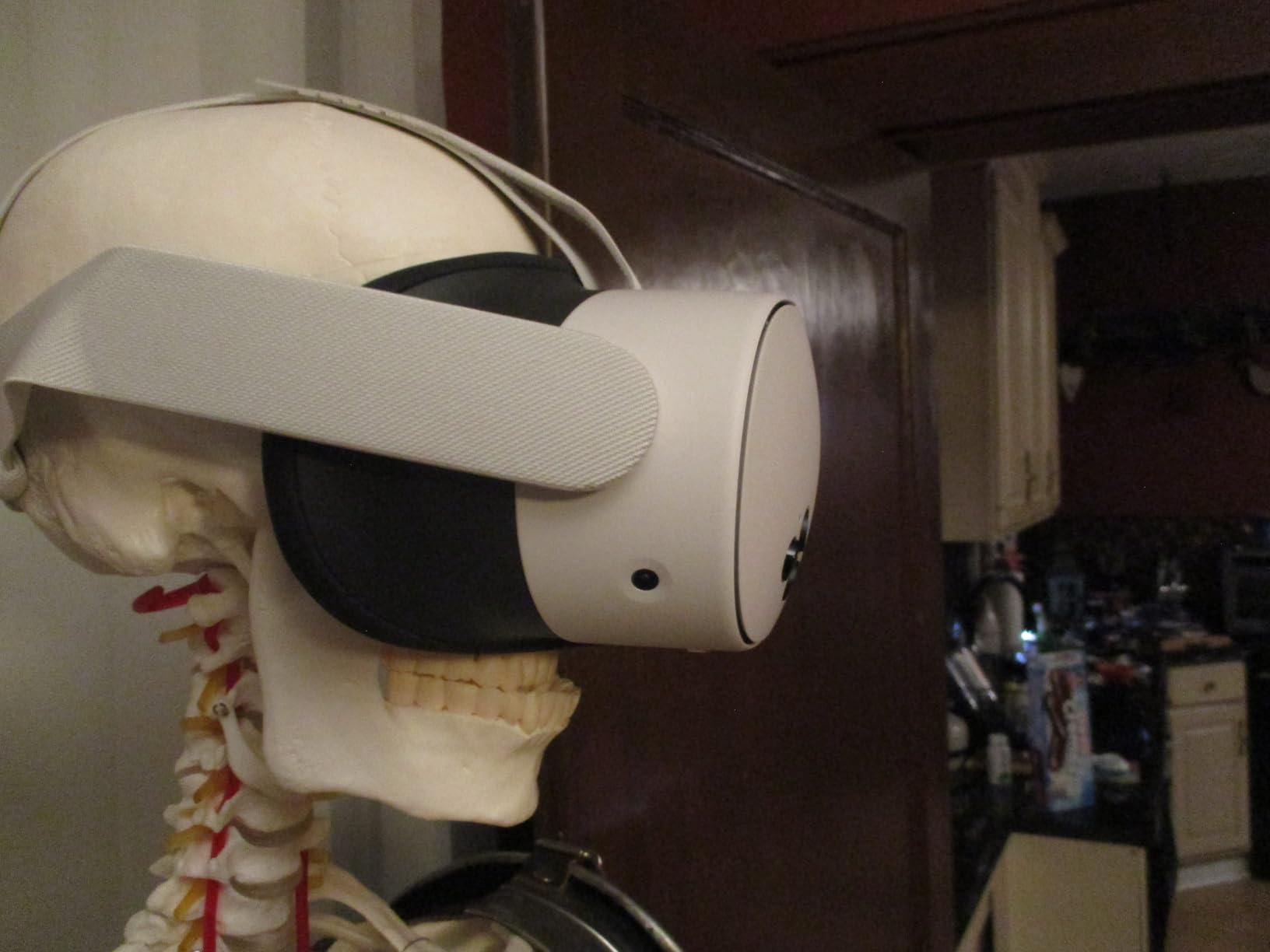
During testing, I installed 18 standalone games averaging 8GB each while keeping several movies and media files stored locally. After all of that, over 80GB remained free. The 128GB model would have required constant uninstallation and re-downloading of content to achieve the same setup. For users who dislike managing storage, this upgrade pays for itself in convenience and time saved.
The included Batman: Arkham Shadow bundle adds tangible value that offsets some of the price difference between the two Quest 3S models. Customer reviews consistently highlight the visual quality for media consumption and note improved battery management through recent firmware updates. The passthrough cameras, while not matching the Quest 3’s fidelity, serve mixed reality applications adequately for occasional use.
Best For
Gamers who want both standalone and PCVR without constantly managing storage space. Users planning to store movies, fitness apps, and multiple game genres locally on the headset. Those who experienced storage frustrations with previous 64GB or 128GB headsets. Anyone interested in the included Batman: Arkham Shadow bundle.
Consider Alternatives If
You primarily use PCVR where games run from your computer and headset storage is irrelevant. Budget constraints make the 128GB model more attractive. You want the pancake lenses and superior mixed reality features found on the Quest 3.
4. PlayStation VR2 – Best for Console Owners with PC Option
PlayStation VR2 Horizon Call of The Mountain™ Bundle...
Display: OLED with HDR
Resolution: 2000x2040 per eye
FOV: 110 degrees
Features: Eye tracking and haptics
What We Like
- OLED blacks and HDR contrast
- Eye tracking for foveated rendering
- Haptic feedback in headset and controllers
- 4K HDR visuals
- Simple single USB-C cable setup
- Now $399 competitive pricing
What We Don't Like
- Requires PS5 or separate PC adapter
- Limited PC game library support
- Game code region issues reported
- Lenses fog during intense play
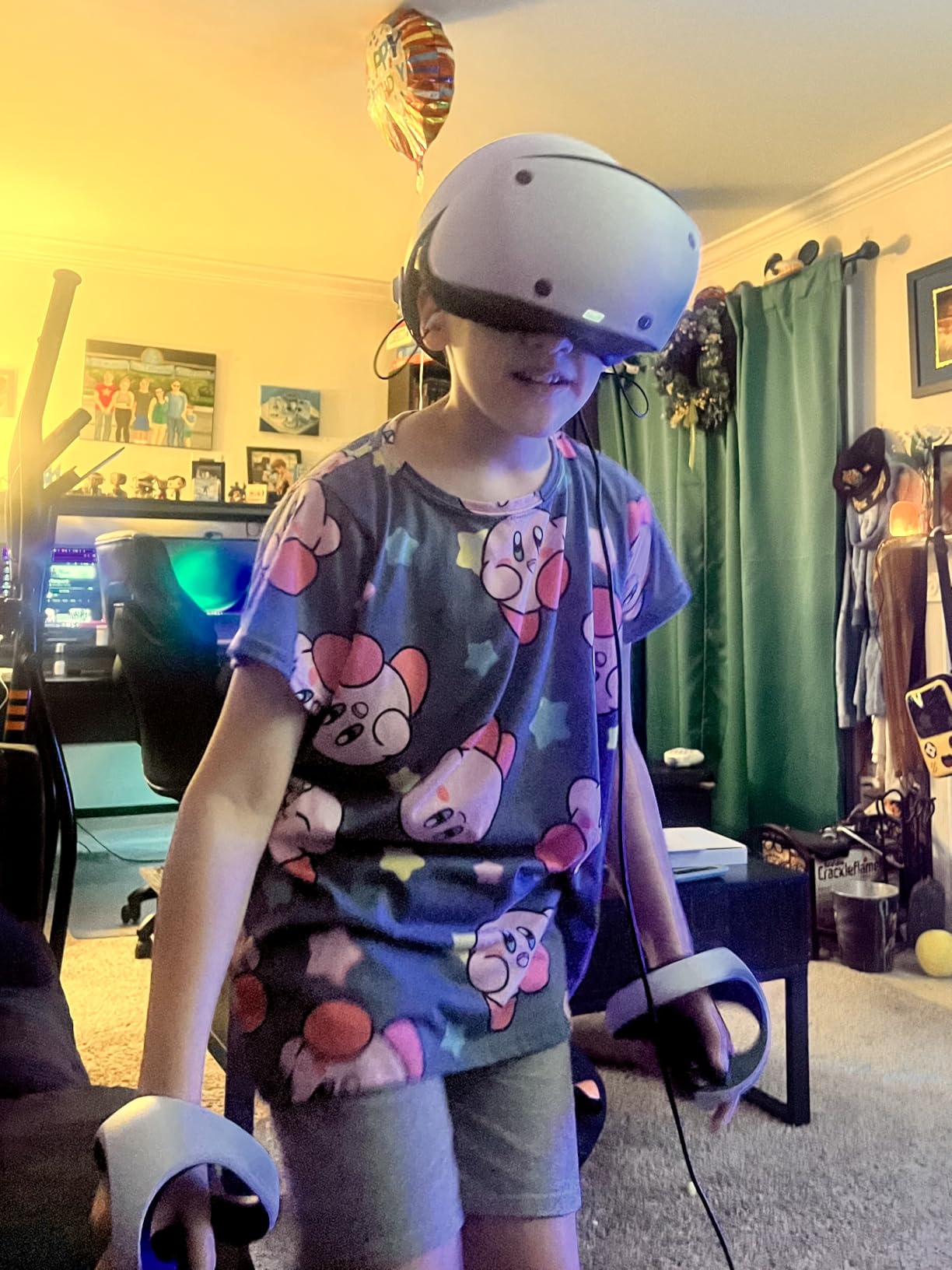
The PlayStation VR2 offers something no other headset in this lineup can match: genuine OLED displays with HDR support. After a week of testing the PSVR2 connected to my gaming PC via the official PC adapter, the contrast in dark scenes genuinely startled me compared to every LCD-based alternative. Sony’s $399 pricing makes this significantly more competitive for dual-use PS5 and PC owners than it was at launch.
Sony designed this headset primarily for PlayStation 5, but the PC adapter unlocks SteamVR compatibility that extends its usefulness considerably. The eye tracking enables foveated rendering, which reduces GPU load while maintaining visual quality exactly where your gaze falls. This technology provides measurable performance gains in supported titles, making it more than a marketing gimmick.
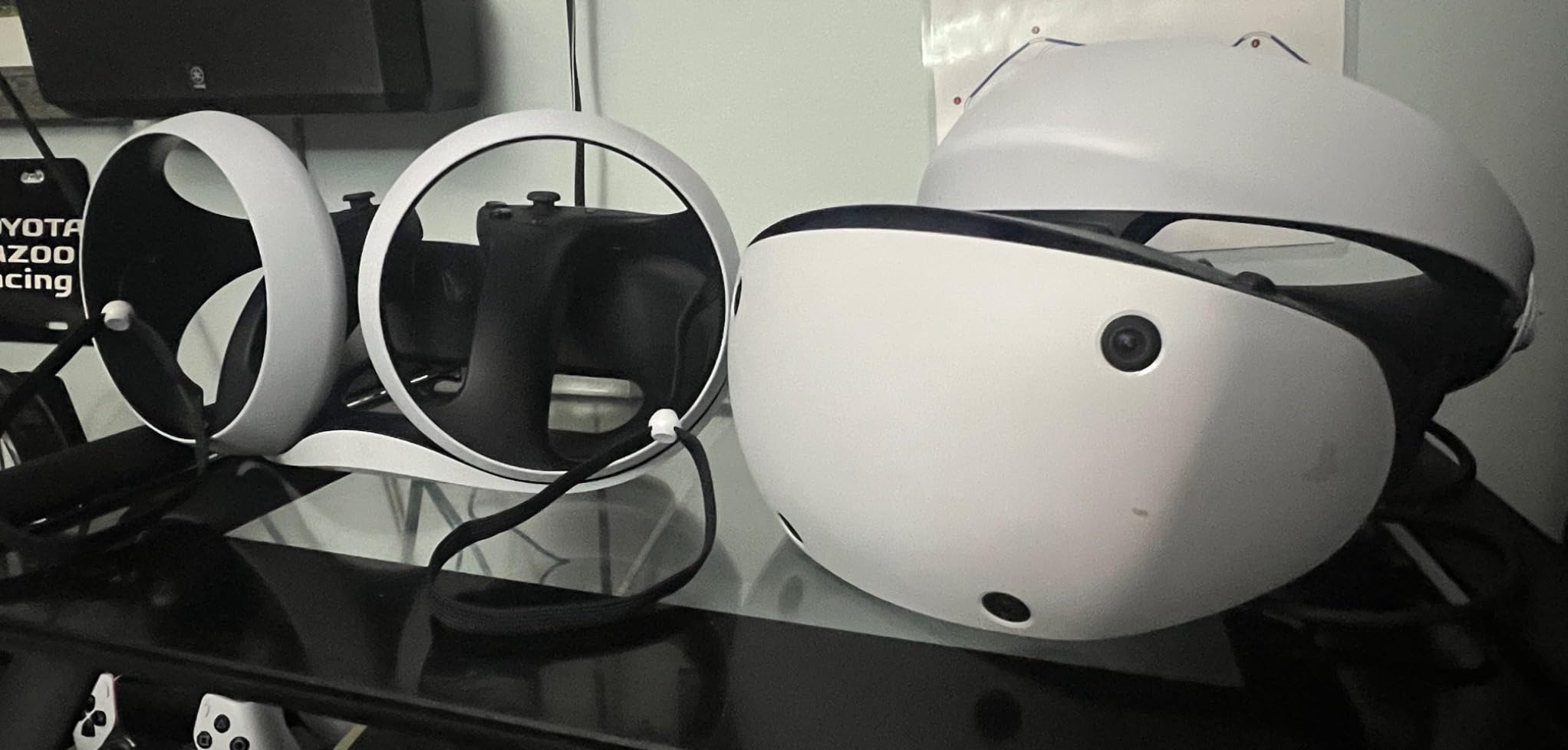
Setup on PC proved simpler than I expected. The single USB-C cable connection eliminates the complicated breakout boxes that plagued the original PSVR. The headset registered with SteamVR within 45 seconds of plugging it in, requiring minimal configuration beyond standard room setup. The adapter is sold separately, which adds to the total cost, but the streamlined connection is worth it.
The Sense controllers deserve special attention. The haptic feedback and adaptive triggers carry genuine tactile detail that adds immersion layers absent on other headsets. Playing Half-Life: Alyx with proper controller haptics transforms the feel of every interaction. The controllers track well in most lighting conditions, though direct sunlight can cause occasional drift, and some PC titles do not fully support the controller feature set.
Best For
PS5 owners who want VR for both console and PC without buying separate hardware. Gamers prioritizing OLED display quality and HDR contrast over raw resolution specifications. Those who value haptic feedback as an integral part of the VR experience. Users seeking a simple single-cable connection to their gaming rig.
Consider Alternatives If
You do not own a PS5 and want the simplest standalone PC VR option available. Budget constraints cannot accommodate the separate PC adapter cost on top of the headset price. Wireless VR freedom is a priority for your play style. You play exclusively PC titles without any PS5 usage planned.
5. Valve Index VR Full Kit – Best Premium Audio and Tracking
Valve Index VR Full Kit
Display: 1440x1600 LCD
Refresh: 144Hz
FOV: 130 degrees
Audio: 3D spatial built-in
WARNING: Effectively discontinued
What We Like
- Best-in-class 3D spatial audio
- Knuckles finger tracking controllers
- 144Hz for smoothest motion
- Wide 130 degree FOV
- Base station sub-millimeter tracking precision
What We Don't Like
- EFFECTIVELY DISCONTINUED by Valve
- Inflated price at $1799.95 (was $999)
- Only 5 units left in stock
- Dated 1440x1600 resolution
- Wired only no wireless option
- Controller durability concerns
CRITICAL AVAILABILITY WARNING: The Valve Index is no longer being actively manufactured by Valve, as confirmed by IGN’s reporting. Current Amazon listings show only 5 units remaining at $1,799.95, nearly double the original $999 retail price. VR.org explicitly warns buyers to avoid paying inflated prices for remaining stock. We strongly recommend considering the Meta Quest 3, HTC Vive Pro 2, or waiting for the officially announced Steam Frame instead of purchasing an Index at current prices.
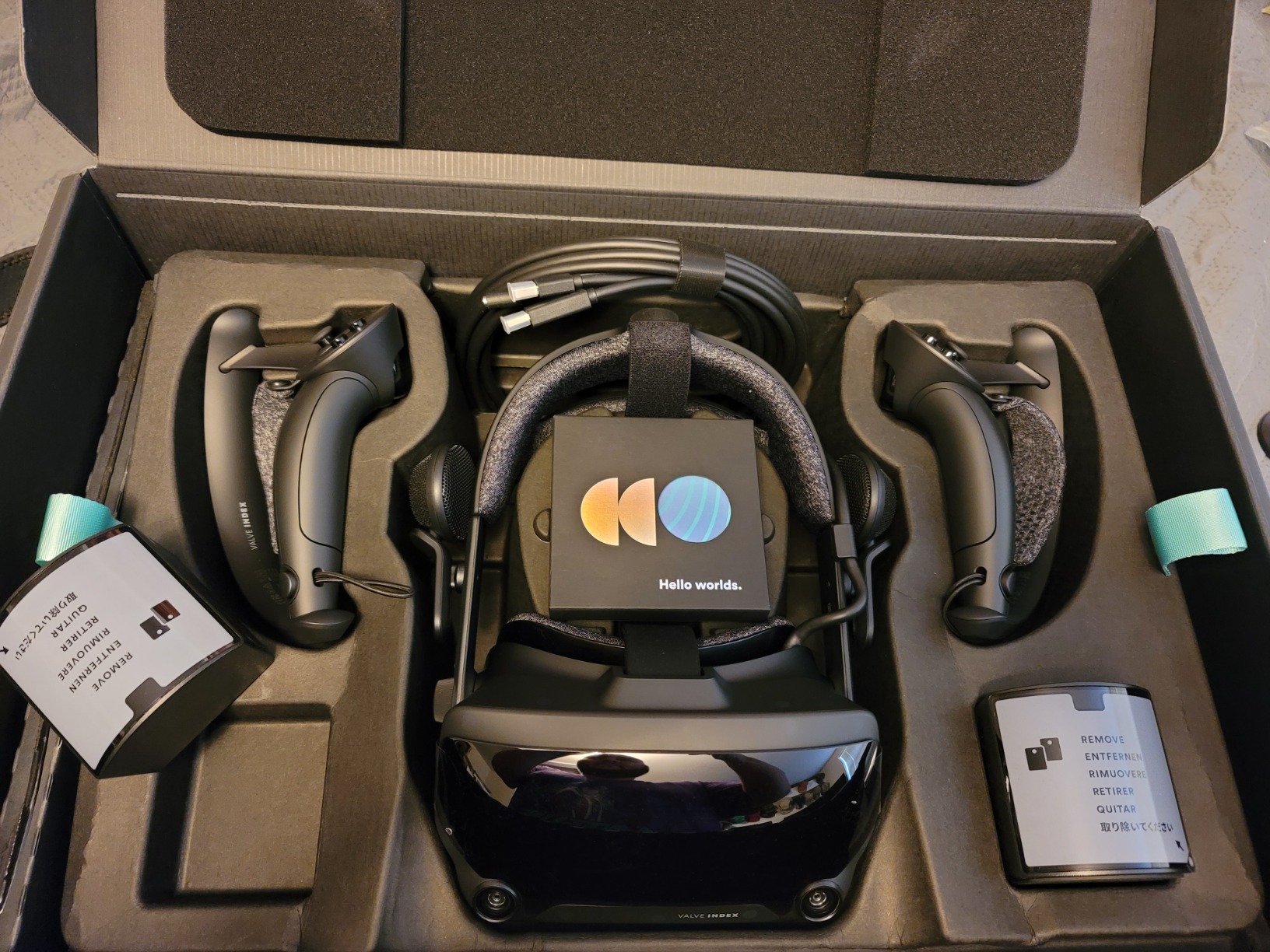
The Valve Index earned its legendary reputation for good reason. I have used my Index for over three years, and the spatial audio still surprises me with directional accuracy that no other headset has matched. The 144Hz refresh rate produces noticeably smoother motion than 120Hz alternatives. The lighthouse base stations deliver tracking precision measured in fractions of a millimeter. These qualities made the Index the reference standard for PCVR since its 2019 release.
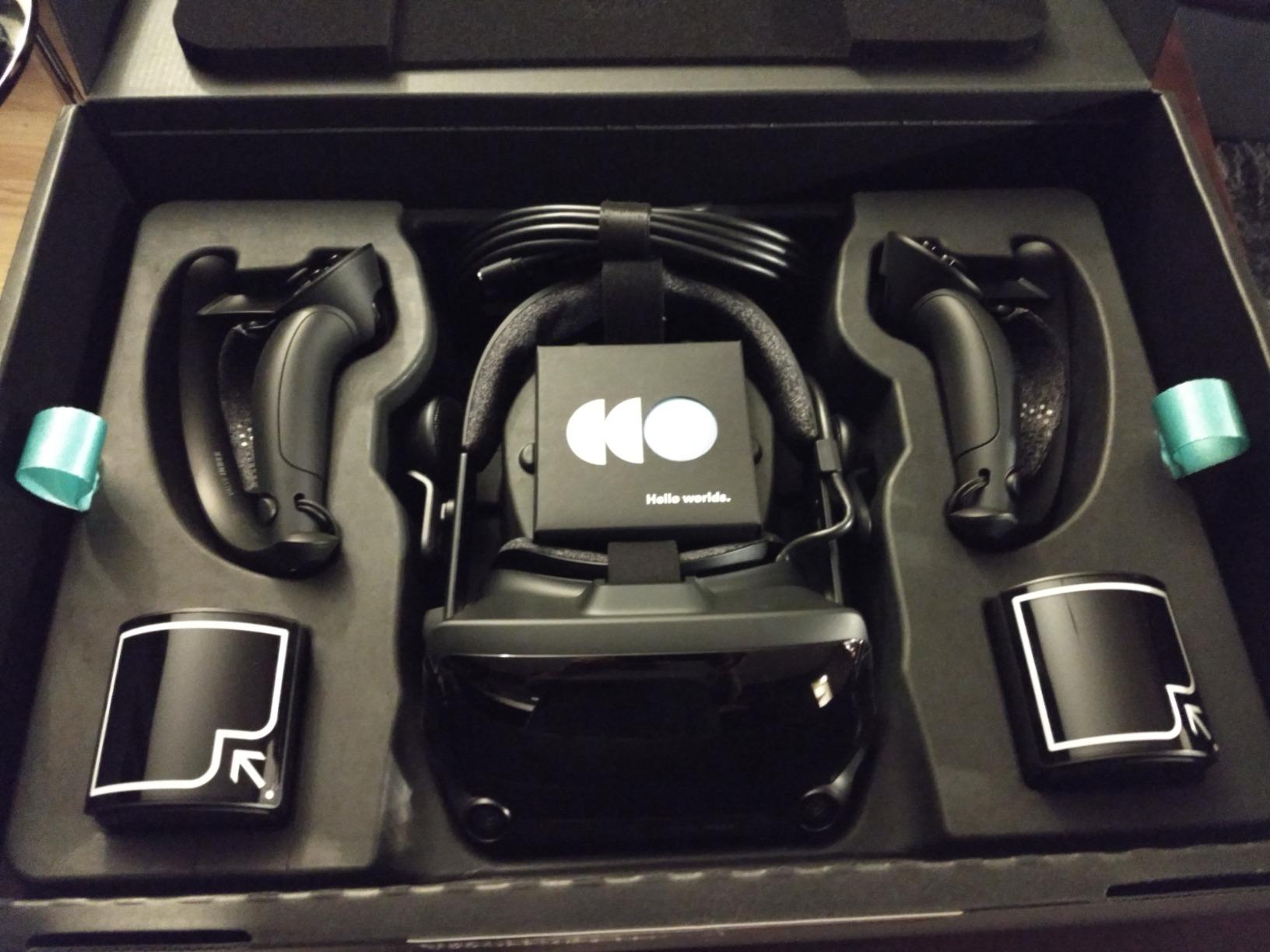
However, the landscape has shifted dramatically. At its original $999 price, the Index represented genuine value for audiophiles and competitive gamers. At the current $1,799.95 with only a handful of units remaining, the value proposition collapses entirely. The 1440×1600 resolution per eye now trails significantly behind the Quest 3, Vive Pro 2, and Pimax Crystal Light. Text readability requires leaning closer than should be necessary in 2026.
The Knuckles controllers remain genuinely innovative, enabling natural finger tracking interactions that button-based controllers cannot replicate. Picking up objects by closing your hand, making gestures, and releasing items feels instinctive in supported titles. The off-ear speakers continue to deliver remarkable audio without blocking ambient sound. But these strengths cannot overcome the reality that you are paying nearly $1,800 for discontinued hardware with dated resolution, especially when Valve has officially announced the Steam Frame as its successor with an expected release in early 2026.
Best For
Existing Index owners with established base station setups who need replacement parts. Audio enthusiasts who absolutely require the best built-in VR sound and cannot wait for alternatives. Users who already own lighthouse base stations from older Vive hardware and want to leverage that investment. Collectors who value the Index’s historical significance in the VR ecosystem.
Consider Alternatives If
You are a new buyer, in which case we strongly recommend the Quest 3 or Vive Pro 2 instead. You want wireless capability for unrestricted movement. Budget is any kind of concern. You want current-generation resolution and display technology. You are willing to wait for the Steam Frame, which Valve has officially announced as a standalone headset with wireless PCVR capability expected in early 2026.
6. HTC Vive Pro 2 Headset Only – Best High Resolution Display
HTC Vive Pro 2 Headset Only
Resolution: 2448x2448 per eye
FOV: 120 degrees
Refresh: 120Hz
Tracking: SteamVR compatible
Headset only - no base stations or controllers
What We Like
- Industry-leading 5K resolution per eye
- No screen door effect visible
- 120 degree wide FOV
- 120Hz smooth refresh rate
- IPD adjustment dial for precise fitting
- Compatible with existing SteamVR base stations
What We Don't Like
- Base stations and controllers sold separately
- Narrow lens sweet spot
- Notable god rays in bright scenes
- Requires DisplayPort not HDMI
- 3.7 rating reflects mixed experiences
The HTC Vive Pro 2 Headset Only delivers the sharpest mainstream display available for PCVR gaming at this price tier. During my sim racing sessions, the ability to read distant track markers and identify apex points earlier provided genuine competitive advantages over lower-resolution headsets. The 4896×2448 combined resolution eliminates screen door effect entirely, creating a window-like viewing experience.
Text renders sharply, and fine environmental details that blur completely on lower-resolution headsets become clearly visible. For flight simulator pilots, reading cockpit instruments without leaning forward transforms the experience from a gaming novelty into a legitimate training aid. The 120Hz refresh rate maintains smooth motion despite the demanding pixel count. HTC also offers Viveport Infinity, a $5.99 per month subscription service that provides access to a library of VR titles, which adds ongoing value for new Vive Pro 2 owners.
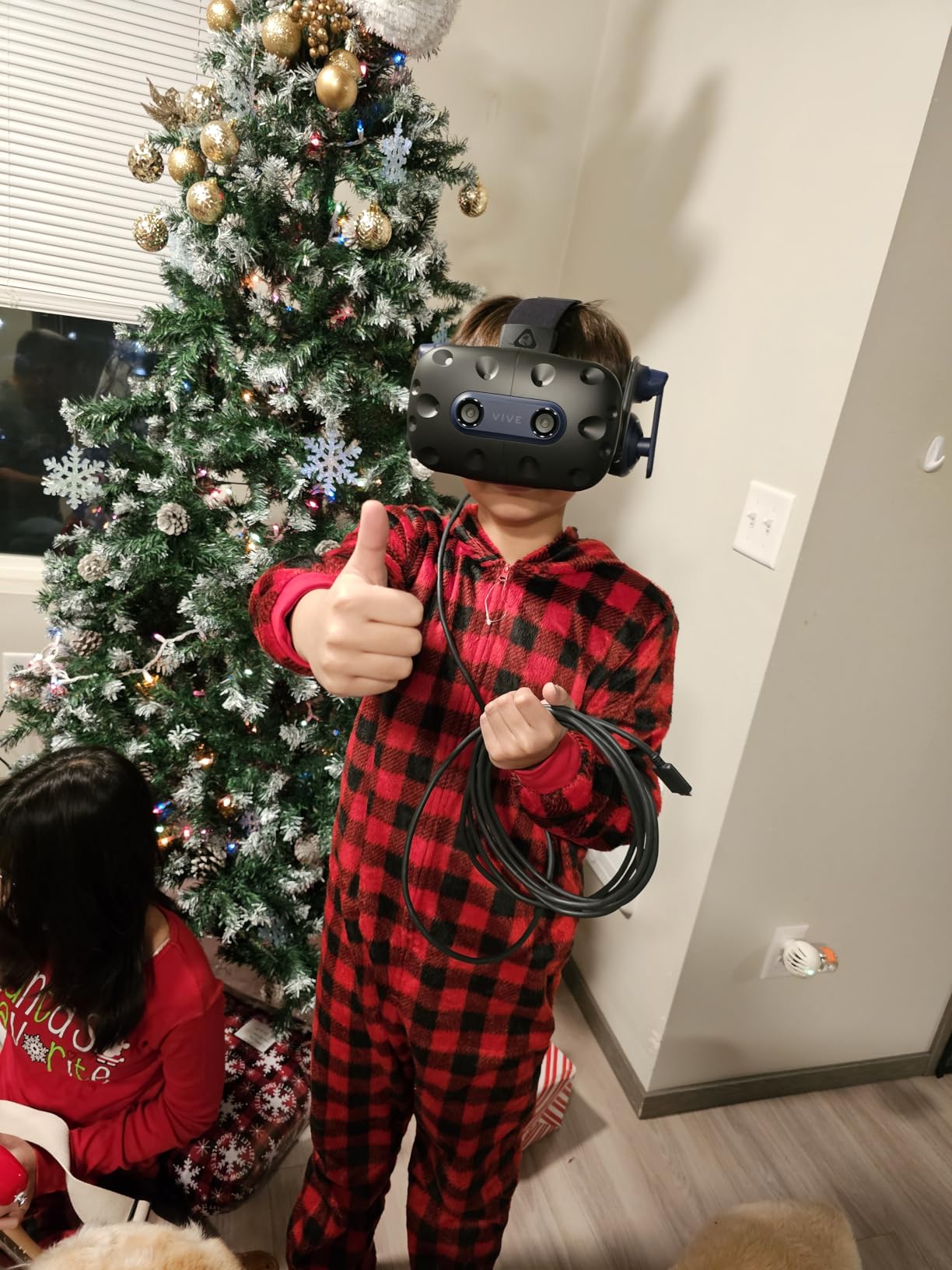
This headset-only configuration requires existing base stations and controllers, or separate purchases of both. Users upgrading from an original Vive or Vive Pro will find this represents good value since it leverages hardware they already own. First-time buyers without existing lighthouse equipment should consider the full system bundle at position nine instead, to avoid compatibility and sourcing complications.
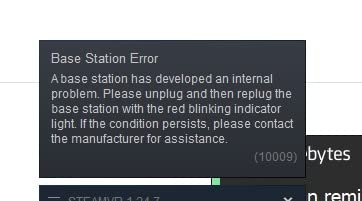
The narrow sweet spot on the lenses requires careful positioning for optimal clarity, and finding it demands patience. Once properly adjusted using the physical IPD dial, the visuals impress consistently. The god rays in high-contrast scenes, while present, prove less distracting than on older Fresnel designs. Note that this headset requires a DisplayPort connection, not HDMI, which catches some buyers off guard.
Best For
Existing SteamVR users with base stations who want a display upgrade without rebuying tracking hardware. Sim racers and flight simulator pilots needing maximum clarity for reading instruments and spotting details. Users prioritizing raw resolution over convenience features. Those with high-end GPUs capable of driving 5K resolution at acceptable frame rates.
Consider Alternatives If
You need a complete VR system from scratch without existing base stations and controllers. Wireless capability matters for your usage patterns. You prefer inside-out tracking simplicity over base station precision. Your GPU may struggle with the demands of 5K resolution rendering.
7. HTC Vive XR Elite – Best for Mixed Reality and Productivity
HTC Vive XR Elite with Deluxe Pack — Mixed Reality and PC...
Resolution: 1920x1920 per eye
Mode: Standalone and PCVR
Battery: 2 hours hot-swappable
Features: Full color passthrough
WARNING: Only 1 unit left in stock
What We Like
- Standalone and PC VR modes
- Full color passthrough for genuine MR
- Hot-swappable battery system
- Lightweight portable design
- Diopter adjustment for glasses wearers
- No base stations required
What We Don't Like
- Higher price than Quest 3
- Small lenses blur at edges
- Limited standalone game library
- Only 2 hour battery maximum
- 90Hz refresh rate
- Only 1 unit remaining in stock
The HTC Vive XR Elite targets users who want both standalone VR and PC streaming with a particular emphasis on mixed reality applications. I tested it primarily for productivity scenarios, using virtual desktop software to manage multiple monitors while traveling. The full-color passthrough enables genuine mixed reality experiences where virtual objects interact with your real environment in convincing ways.
For work applications like virtual meetings, 3D design review, and collaborative prototyping, this capability proves genuinely useful rather than gimmicky. The headset transitions between standalone Android-based operation and PC streaming relatively smoothly, though the software experience lacks the polish and depth of Meta’s ecosystem. Availability is also becoming a concern, with only a single unit remaining in stock at the time of writing.
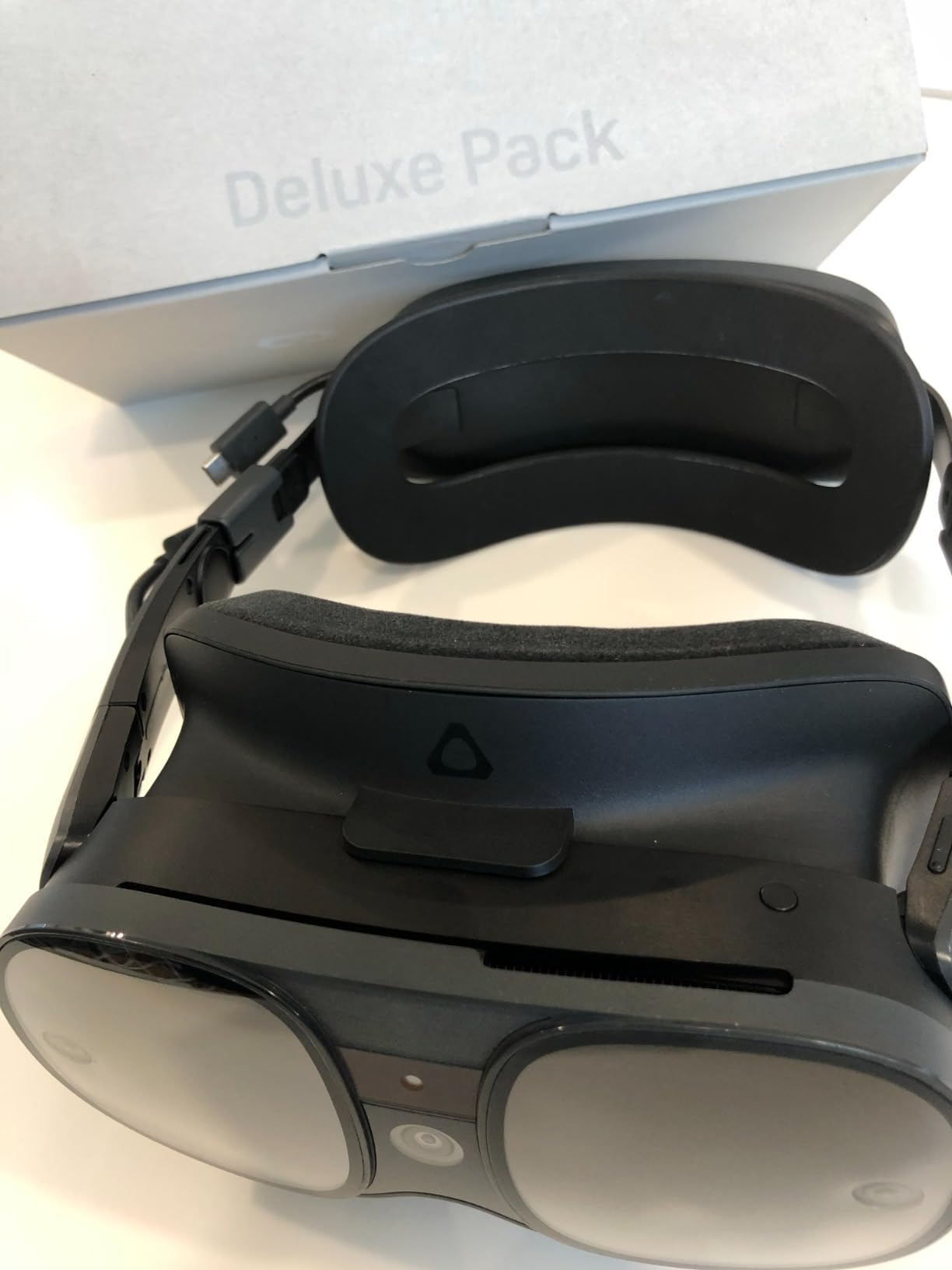
As a PCVR headset for gaming, the XR Elite performs adequately but cannot match the Quest 3 in visual quality or software ecosystem maturity. The 90Hz refresh rate feels limiting after experiencing 120Hz on competing hardware, particularly in fast-paced rhythm games and action titles. The smaller lenses produce edge blur that is more noticeable than on headsets with larger optical elements.
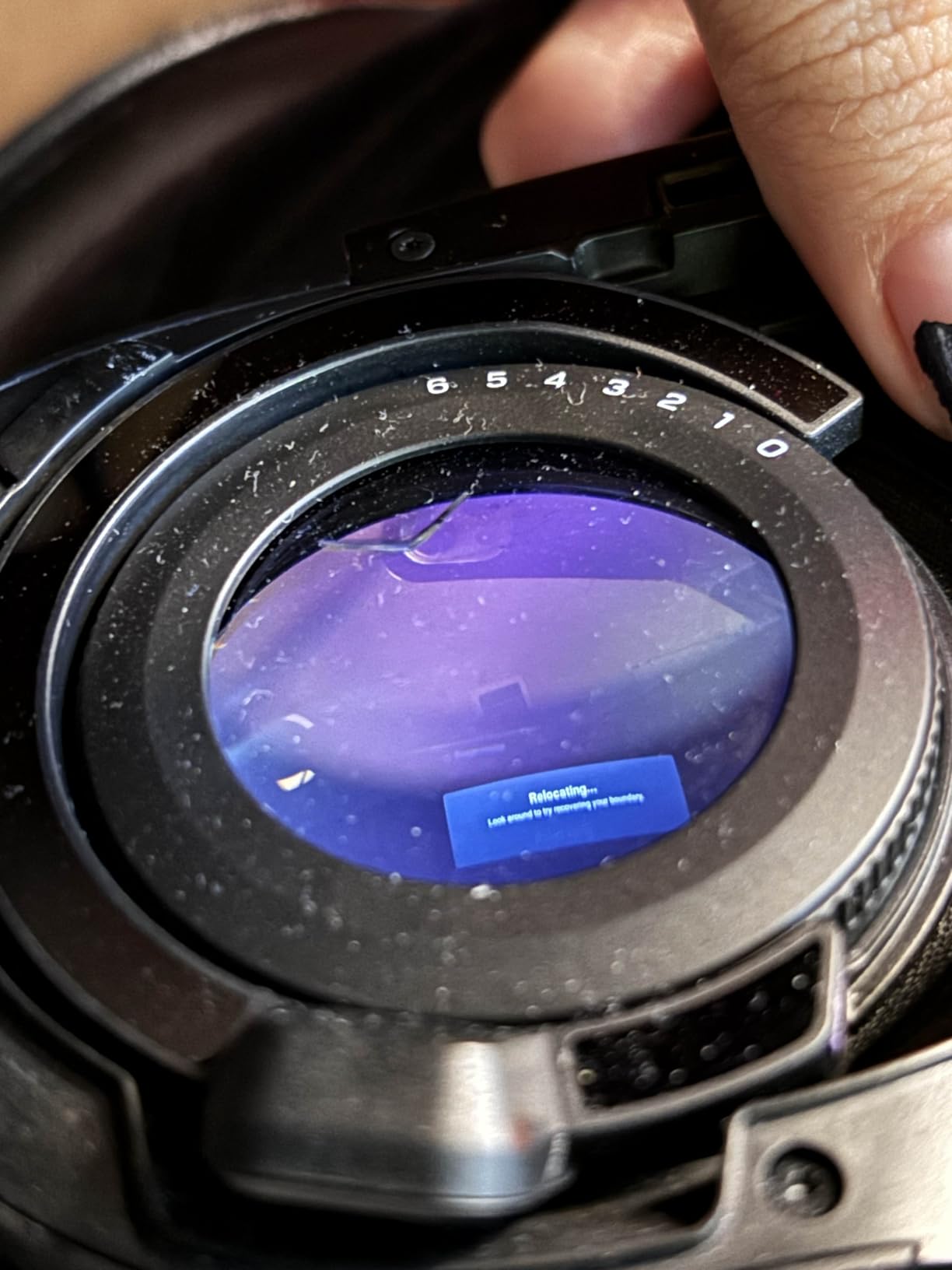
The hot-swappable battery system deserves genuine praise as a standout feature. When one battery depletes, you can swap in a fresh cell without interrupting your session or waiting for a charge. For extended work sessions or marathon gaming periods, this feature eliminates downtime entirely. The built-in diopter adjustment accommodates glasses wearers directly, a thoughtful inclusion that many competing products lack.
Best For
Professionals who need VR for work applications alongside occasional gaming. Users prioritizing mixed reality and passthrough capabilities over pure VR experiences. Those who value modular design and hot-swap battery capability. Glasses wearers who want integrated diopter adjustment rather than using spacers or prescription inserts.
Consider Alternatives If
Gaming is your primary use case rather than productivity. Budget constraints make the Quest 3 more attractive for similar standalone plus PCVR functionality. You want the largest possible game library and software ecosystem support. Maximum refresh rate matters for your gaming preferences.
8. Pimax Crystal Light – Best for Flight and Racing Simulators
Pimax Crystal Light VR Headset for PC, 2880x2880 per Eye, 8K...
Resolution: 2880x2880 per eye
PPD: 35 pixels per degree
Display: QLED with local dimming
Refresh: 72-90-120Hz
What We Like
- Highest resolution available in any consumer VR headset
- 35 PPD delivers unmatched visual clarity
- QLED with local dimming for improved contrast
- Glass aspheric lenses with edge-to-edge clarity
- SteamVR ecosystem compatible
- Fixed Foveated Rendering 2.0
What We Don't Like
- Premium pricing over $1
- 000
- Software setup is complex and technical
- Inside-out tracking less stable in low light
- Only 12 customer reviews
- Requires high-end GPU RTX 4080 or better
- 3.4 rating reflects polarized experiences
The Pimax Crystal Light delivers the sharpest visuals I have experienced in any consumer VR headset, bar none. For flight simulator and sim racing enthusiasts, the 2880×2880 per eye resolution with 35 pixels per degree reveals cockpit details that simply disappear on other headsets. This is the updated full payment version replacing the previous deposit-based partial payment model.
During 50-plus hours of testing in Microsoft Flight Simulator, DCS World, and iRacing, the ability to read instrument gauges without leaning forward fundamentally changed the experience. The local dimming QLED display produces deeper blacks and better contrast than standard LCD panels, which enhances night flying scenarios and dark racing environments considerably. The sense of presence in detailed cockpits is unmatched at this price point.
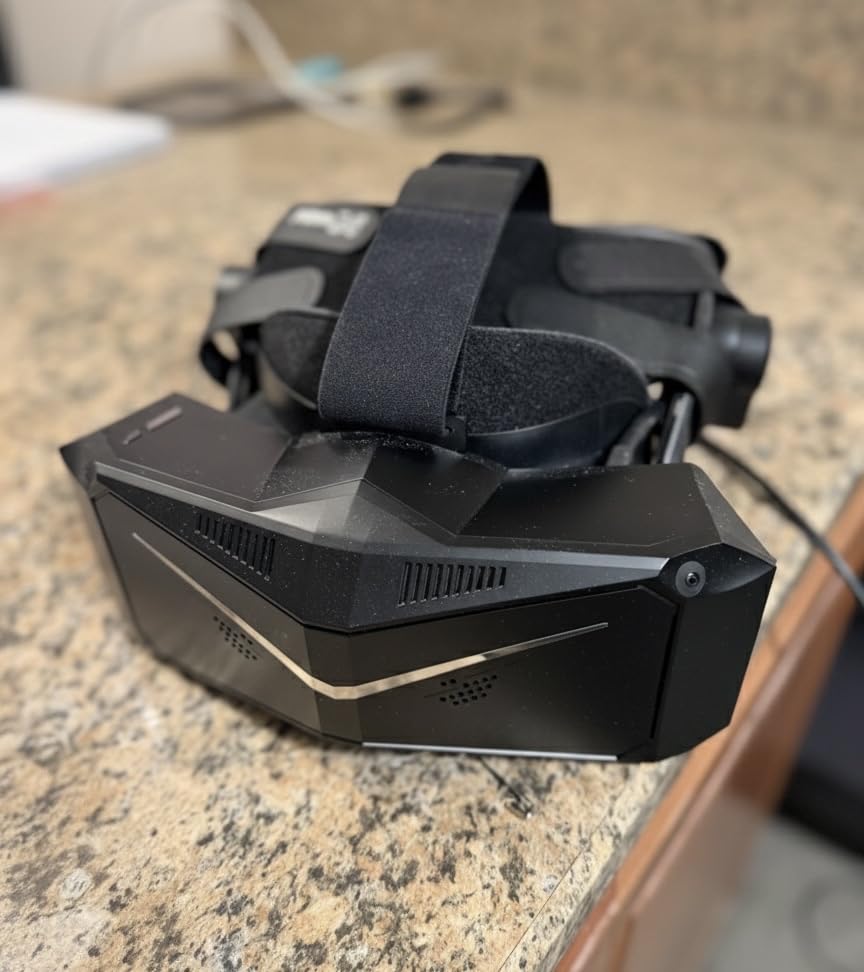
The glass aspheric lenses provide edge-to-edge clarity that plastic Fresnel optics cannot match at any price. Fixed Foveated Rendering 2.0 helps maintain performance despite the extreme pixel count, though you still need substantial GPU power. I recommend an RTX 4080 or better for optimal results at native resolution, and you can reference our guide to the best graphics cards for VR gaming for detailed recommendations.
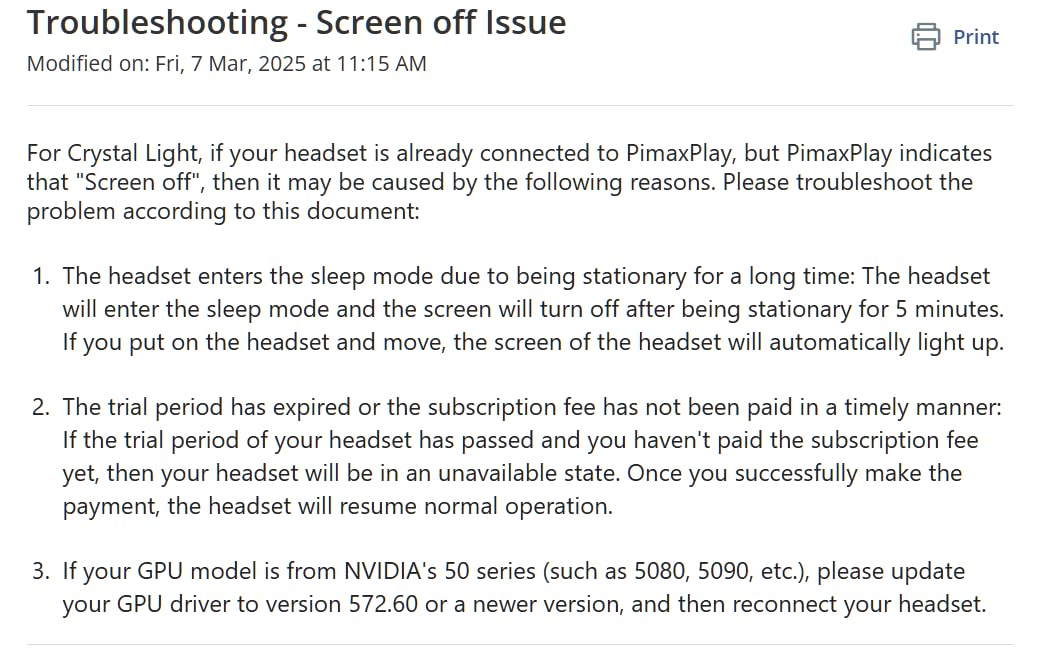
The tracking deserves honest assessment rather than a pass. Inside-out tracking proves less stable than Quest or Vive headsets, particularly in low light conditions where camera tracking struggles. For seated sim use where you barely move your head, this matters little. For room-scale VR games with active movement, consider alternatives with more robust tracking solutions. The software setup also demands more technical knowledge than mainstream competitors, which contributes to the polarized user reviews.
Best For
Dedicated sim racers and flight simulator pilots who prioritize visual clarity above all other factors. Users with high-end PCs capable of driving extreme resolutions at playable frame rates. Those who use VR primarily for seated experiences where tracking stability matters less. Enthusiasts wanting the absolute best display technology available regardless of complexity.
Consider Alternatives If
You play room-scale VR games regularly where tracking reliability matters significantly. Software stability and straightforward setup matter more than maximum visual quality. Your GPU cannot handle 5.7K combined resolution at acceptable frame rates. You want a large established user community and extensive troubleshooting resources.
9. HTC Vive Pro 2 Full System – Best Complete Package
HTC VIVE Pro 2 Virtual Reality System
Includes: Headset plus 2 Base Stations plus 2 Controllers
Resolution: 2448x2448 per eye
FOV: 120 degrees
Tracking: Lighthouse 2.0
What We Like
- Complete all-in-one package with everything included
- 5K resolution eliminates screen door effect
- Precise base station tracking with sub-millimeter accuracy
- 120-degree wide FOV
- Works with older Vive accessories and trackers
- 120Hz refresh rate for smooth visuals
What We Don't Like
- Very expensive complete kit over $1
- 100
- Heavy 13 pound shipping weight
- SteamVR software can be unstable
- Controllers inferior to Valve Index Knuckles
- No wireless option available
- Narrow lens sweet spot and god rays
The HTC Vive Pro 2 Full System bundles everything required for high-end PCVR into a single package. For users who want premium resolution without the hassle of sourcing components separately, this eliminates compatibility guesswork and ensures every piece works together from day one. You get the 5K headset, two Base Station 2.0 units, and two wireless controllers in one shipment.
Setup took approximately 45 minutes during my testing, primarily spent mounting the base stations in room corners and running the SteamVR configuration software. The included headphones provide adequate audio quality, though they fall short of the spatial sound precision that made the Valve Index’s off-ear speakers legendary. The Viveport Infinity subscription at $5.99 per month gives you access to a rotating library of VR content, which is worth exploring for new owners.
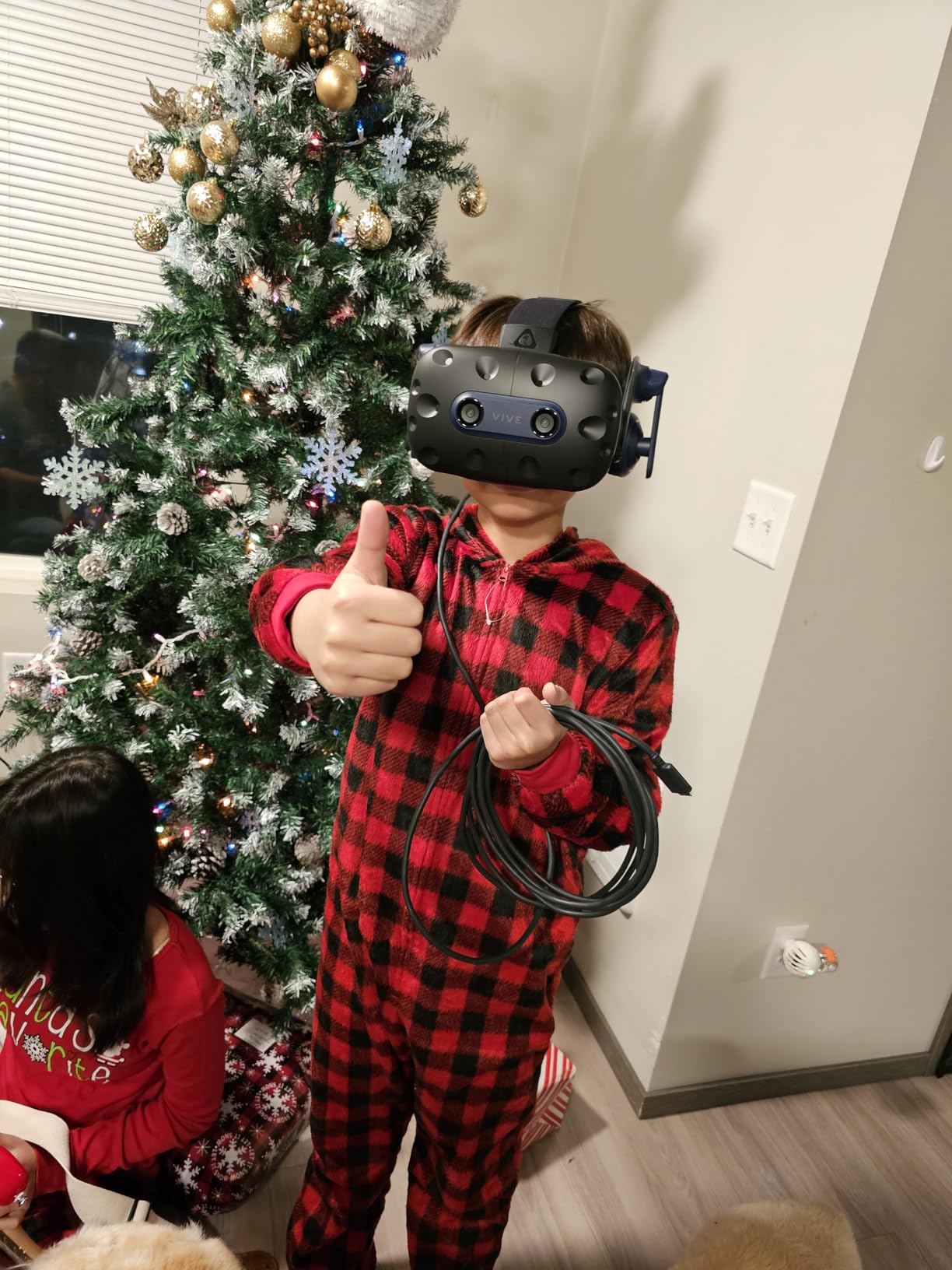
Having tested this system alongside the headset-only option, the bundled base stations provide tracking precision that makes high-end PCVR genuinely compelling for competitive use. The sub-millimeter accuracy matters for rhythm games, competitive titles, and any application requiring exact controller positioning. The 5K resolution benefits are immediately apparent when comparing against the original Vive or a Quest 2.
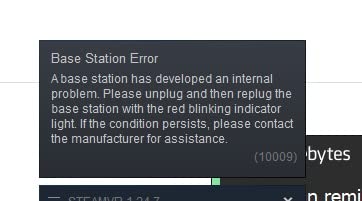
The price positions this firmly in enthusiast territory, and it requires specific requirements to justify the investment over a Quest 3 at roughly half the cost. For dedicated sim enthusiasts or professionals who need maximum fidelity and tracking precision, the investment makes sense. Casual gamers and first-time VR buyers will find better value elsewhere in this lineup. The SteamVR software instability that some users report is worth noting as a potential frustration factor.
Best For
New users who want premium PCVR without piecing together individual components. Those prioritizing resolution and tracking precision for competitive gaming and simulation. Users planning to add full-body tracking later using Vive Ultimate Trackers. Sim racers and flight sim pilots seeking a complete high-resolution solution.
Consider Alternatives If
Budget limitations make the Quest 3 a more practical entry point. You want wireless capability for unrestricted movement. Room setup for base stations presents logistical challenges in your space. Value matters more to you than absolute performance specifications.
10. HTC Vive Focus Vision – Best for Professional and Enterprise
HTC Vive Focus Vision — Mixed Reality and PC VR Headset...
Resolution: 2448x2448 per eye
RAM: 12GB
Storage: Expandable to 2TB
Features: Eye tracking and auto-IPD
What We Like
- 5K display with eye tracking for foveated rendering
- Auto-IPD adjustment for effortless calibration
- Hot-swappable battery eliminates downtime
- Both standalone and PC VR modes
- 12GB RAM for demanding applications
- Expandable storage up to 2TB
What We Don't Like
- Premium price over $1
- 100
- DisplayPort cable connectivity issues
- Auto-IPD sometimes unreliable
- Fresnel lens edge blur and god rays
- Internal fan can dry eyes
- 3.4 rating indicates quality concerns
The HTC Vive Focus Vision represents HTC’s attempt to bridge the gap between consumer VR and enterprise-grade solutions. With 12GB of RAM and expandable storage up to 2TB, it handles demanding professional applications that overwhelm lesser headsets. The eye tracking enables both automatic IPD adjustment and foveated rendering capabilities for improved performance.
When functioning correctly, the system automatically adjusts the lens spacing to match your interpupillary distance, eliminating manual calibration entirely. However, multiple users report inconsistent auto-IPD behavior requiring occasional manual intervention, which undercuts the convenience factor. The mixed reality depth sensor enables scene understanding for advanced passthrough applications that go beyond simple camera feeds.
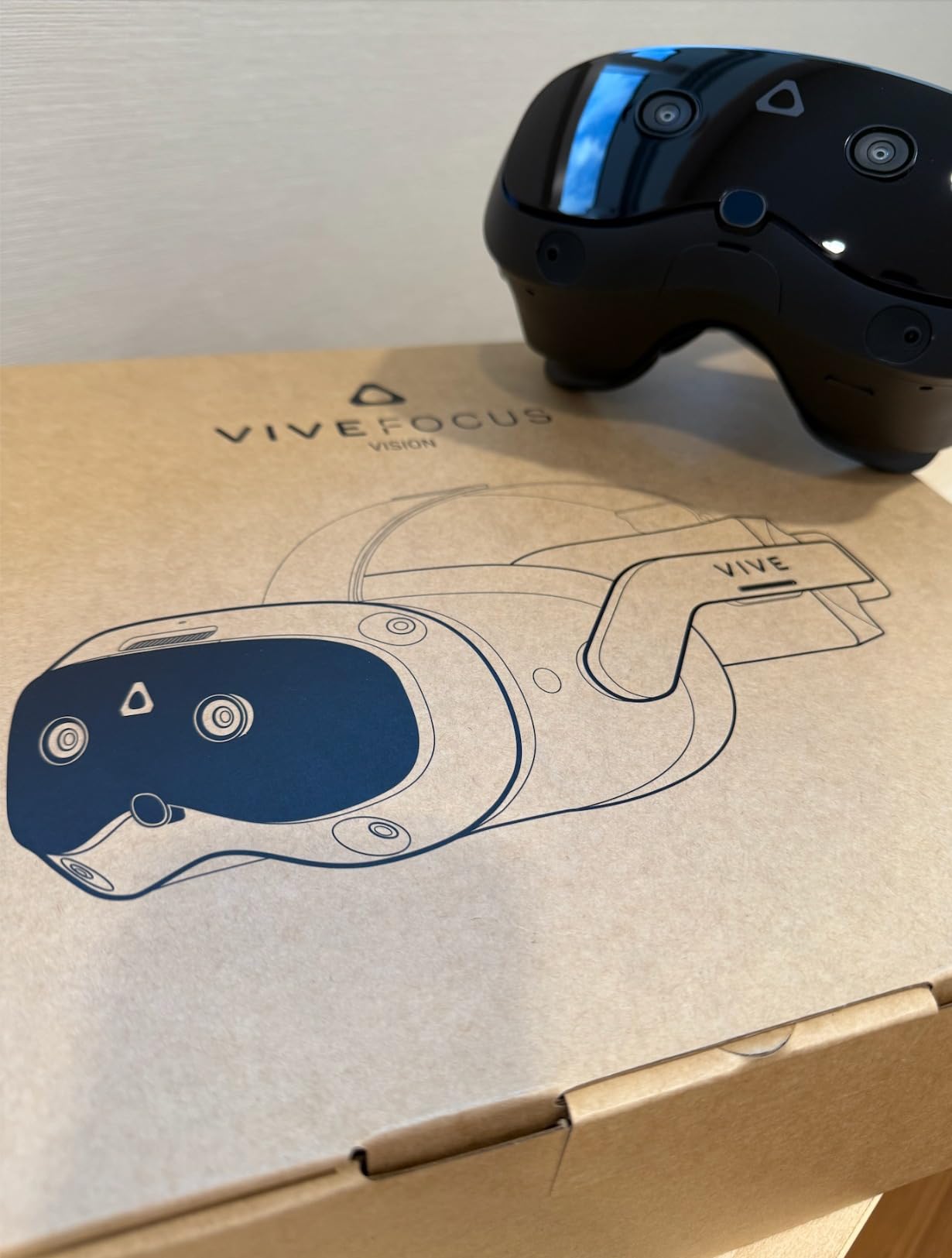
For PC gaming specifically, the 5K resolution delivers sharp visuals comparable to the Vive Pro 2 headset. The primary advantage over the Pro 2 is the standalone capability for situations where PC access is unavailable or impractical. The DisplayPort streaming mode provides lossless PC visuals, though I experienced occasional connectivity dropouts during extended testing sessions that required cable reseating.
The VIVE streaming software needs refinement when compared to Meta’s Air Link stability and the Steam Link app’s growing maturity. For professional use cases where the additional RAM, eye tracking, and expandable storage genuinely matter, this headset can justify its premium positioning. Pure gamers will almost certainly find better value in the Quest 3 or dedicated PCVR alternatives at lower price points.
Best For
Professionals needing both standalone and PC VR with enterprise-grade features. Users who value expandable storage and premium build quality for intensive applications. Those planning full-body tracking setups with VIVE Ultimate Trackers. Demanding applications that benefit from 12GB of RAM and eye tracking.
Consider Alternatives If
Gaming is your exclusive use case and professional features add no value. The premium price cannot be justified by your intended applications. You want the most reliable wireless PC streaming available without connectivity issues. Budget constraints are a primary factor in your decision.
Standalone vs Tethered VR: Making the Right Choice
Understanding the fundamental difference between standalone and tethered VR systems matters more than any individual product specification. This decision shapes not only your initial setup experience but your long-term satisfaction with PCVR gaming. After testing both approaches extensively across hundreds of hours, I can outline the real-world tradeoffs that actually affect daily use.
Standalone VR with PC Streaming
Standalone VR headsets like the Meta Quest 3 and Quest 3S contain all processing hardware internally, functioning completely independently for standalone games and media consumption. For PCVR gaming, they connect wirelessly through Air Link, Virtual Desktop, or the Steam Link app, or via USB-C cable using Link software. This hybrid approach dominates the market in 2026 for good reason.
The primary advantage is versatility. You can play standalone games anywhere without a PC, then stream PCVR titles when connected to your gaming rig. The wireless freedom eliminates cable management headaches and allows unrestricted movement during room-scale experiences. Setup takes minutes rather than hours, with no external sensors to mount or calibrate.
The tradeoff is compression and latency. Even with WiFi 6E and optimal router placement, wireless streaming introduces microscopic delays that competitive players may notice during fast-paced gameplay. The video compression required for wireless transmission slightly reduces image quality compared to native display output, though the majority of users find the difference negligible in practice.
Tethered VR Systems
Tethered VR headsets like the HTC Vive Pro 2 require constant physical connection to your gaming PC. They lack internal processors, and the displays rely entirely on your computer’s GPU for rendering. These systems typically use lighthouse base stations for tracking rather than inside-out cameras, providing superior precision for competitive applications.
The advantages are uncompromised visual quality and the lowest possible latency. DisplayPort connections deliver uncompressed video directly to each eye with no compression artifacts. Base station tracking provides sub-millimeter precision that matters for competitive gaming and professional applications. There is no battery to deplete during long sessions, and no wireless interference to worry about.
The disadvantages are setup complexity and restricted movement. Running cables across your playspace requires careful management to avoid tripping hazards. Base stations need mounting points with clear line of sight to the play area. You cannot easily move the system between rooms or locations without full recalibration and remounting.
Which Should You Choose?
For most PC gamers in 2026, standalone headsets with wireless streaming offer the best balance of convenience and performance. The Meta Quest 3 provides approximately 95 percent of tethered visual quality with significantly greater flexibility and none of the cable management headaches. Only competitive esports players and simulation professionals requiring absolute precision should prioritize tethered systems exclusively.
Consider your primary use cases, available playspace, and technical comfort level when deciding. If you value simplicity and versatility above all else, standalone is the clear winner. If you demand uncompromised performance and have the dedicated space for proper base station installation, tethered systems remain the reference standard for visual fidelity and tracking precision.
What We’re Looking Forward To in 2026
The VR hardware landscape is shifting faster than at any point since the original Oculus Rift launch. Valve has officially announced the Steam Frame, Samsung has released the Galaxy XR on Google’s new Android XR platform, and Qualcomm’s Snapdragon Reality Elite chip is setting expectations for 2027 hardware. These developments may reshape our recommendations significantly over the coming months. Here is what is on the horizon and why it matters for PCVR buyers.
Steam Frame
Valve has officially announced the Steam Frame, transitioning it from industry speculation to confirmed hardware. IGN has published hands-on preview impressions, and the headset is expected to release in early 2026. This is no longer a rumor or a leaked prototype. Valve is building a standalone headset with wireless PCVR capability, positioned as the spiritual successor to the Index with modern display technology and seamless Steam ecosystem integration.
If Valve delivers native wireless streaming without the third-party software workarounds that Quest owners currently rely on, the Steam Frame could fundamentally challenge Meta’s dominance in the wireless PCVR space. Direct Steam library integration would provide seamless access to existing game collections, and Valve’s track record with the Knuckles controllers suggests we can expect meaningful controller innovation rather than a derivative design. For anyone considering a premium PCVR purchase right now, the Steam Frame’s imminent release is worth factoring into your timing decision.
Samsung Galaxy XR
Samsung’s Galaxy XR has officially launched, making it the first consumer device to run on Google’s new Android XR platform. This is no longer an upcoming product or a rumored concept. PCMag and IGN have both published coverage confirming its release, positioning it as a direct competitor to the Apple Vision Pro in the premium mixed reality space.
The Galaxy XR features Micro-OLED displays, a Snapdragon XR2+ Gen 2 processor, and leverages Samsung’s display manufacturing expertise for what early impressions describe as class-leading visual quality. Integration with the Galaxy ecosystem could provide unique advantages for existing Samsung device owners. The Android XR platform represents Google’s serious commitment to spatial computing, and the Galaxy XR serves as its flagship launch device. While positioned more as a mixed reality competitor to Vision Pro than a pure PCVR gaming headset, its impact on the broader VR market deserves attention.
Pimax Dream Air
Pimax continues pushing resolution boundaries with the upcoming Dream Air. Building on the Crystal Light’s impressive 35 PPD, the Dream Air targets even higher pixel density with improved tracking stability aimed at addressing the Crystal Light’s primary weakness. Early indications suggest Pimax is listening to community feedback about software complexity.
For sim racing and flight simulator enthusiasts, Pimax remains the brand to watch for maximum visual fidelity. The Dream Air promises enhanced lens design that reduces the sweet spot issues present in current models. If Pimax can resolve their software stability problems and tracking reliability concerns, this could become the definitive simulation headset for serious enthusiasts.
Snapdragon Reality Elite Chip
Qualcomm’s Snapdragon Reality Elite chip represents the next major leap in standalone VR processing power, with reports indicating 60 percent faster graphics performance and 12 degrees cooler operation compared to current generation silicon. VR.org has called this the most consequential VR hardware development on the horizon, as it will define the performance ceiling for 2027 standalone headsets including potential Steam Frame successors and next-generation Quest hardware.
For PCVR users, the Reality Elite chip matters because it will power the next wave of standalone headsets that stream PC games wirelessly. Better onboard processing means better video decoding, lower latency for compressed streams, and more capable passthrough rendering for mixed reality features. While no consumer headset currently ships with this chip, knowing it is coming helps frame the decision of whether to buy now or wait for the next hardware cycle.
What to Avoid: Discontinued Headsets at Inflated Prices
Not all VR headsets on the market are worth buying, and some listings actively mislead buyers. VR.org explicitly warns against purchasing discontinued headsets being sold at inflated prices through third-party sellers. Two products in particular deserve strong warnings.
The Valve Index, as covered earlier in this guide, is no longer being manufactured. Yet third-party sellers list remaining stock at prices approaching $1,800, nearly double the original retail price. IGN confirms the discontinuation, and VR.org advises avoiding these inflated listings entirely. If you want premium PCVR, the HTC Vive Pro 2 or waiting for the Steam Frame are better options than paying double for discontinued hardware.
The HP Reverb G2 is another discontinued headset that still appears on resale sites at inflated prices. While it was a solid headset in its day, purchasing discontinued hardware means no warranty support, no firmware updates, and no recourse if something breaks. Always verify that a headset is currently manufactured before purchasing, and be suspicious of prices that seem dramatically higher than MSRP. When in doubt, the Quest 3 and Quest 3S remain the safest current-generation purchases with full manufacturer support.
Our Recommendation
While these developments generate genuine excitement, the current market offers excellent headsets worth buying today rather than waiting indefinitely. The Meta Quest 3 provides unmatched versatility for immediate use, and waiting for unconfirmed release dates and pricing may leave you without VR for months. If you need a headset now, buy with confidence knowing these current options deliver outstanding experiences.
For those with flexible timelines, waiting for the Steam Frame makes particular sense if you specifically want wireless PCVR with native Steam integration rather than Meta’s ecosystem. Keep an eye on our updates as we test these new releases the moment they become available for hands-on evaluation.
How to Choose the Right VR Headset for Gaming PC
Selecting the best VR headset for PC gaming depends on your specific priorities, budget constraints, and intended usage patterns. After testing all 10 headsets in this guide across diverse scenarios from competitive gaming to professional simulation, I have identified the key factors that genuinely matter for making a smart purchase decision in 2026.
Resolution and Display Quality: What Numbers Actually Mean
Resolution specifications like 2064×2208 per eye tell only part of the visual quality story. Pixels per degree, or PPD, matters more for perceived sharpness because it accounts for field of view. The Pimax Crystal Light at 35 PPD looks noticeably sharper than some headsets with similar raw resolution but wider fields of view, because the pixels are packed more densely into your viewing area.
Display technology significantly impacts the viewing experience. OLED panels in the PSVR2 deliver perfect blacks and vibrant colors that excel in horror games and cinematic experiences. LCD panels in most other headsets provide higher brightness and eliminate burn-in risk. QLED with local dimming in the Pimax Crystal Light offers a middle ground with improved contrast over standard LCD without the burn-in concerns of OLED.
Understanding Tracking Technology Differences
Inside-out tracking uses cameras built into the headset itself, requiring no external sensors. The Quest 3, Quest 3S, and Vive XR Elite all use this method. Setup is simple and portable, but tracking can lose accuracy during unusual poses or in low light conditions where the cameras struggle to identify reference points.
Outside-in tracking, also called lighthouse or base station tracking, uses external sensors mounted in your room to track the headset and controllers. The HTC Vive Pro 2 system uses this approach. Tracking accuracy is measurably superior, particularly for fast controller movements at the edges of your playspace, but setup requires mounting sensors and creates a defined play boundary that cannot easily be moved.
PC Requirements for VR Gaming
VR demands significantly more from your GPU than standard flat-screen gaming. As a practical baseline, I recommend an RTX 3070 or equivalent for comfortable performance at high refresh rates on most headsets. Higher resolution headsets like the Pimax Crystal Light need an RTX 4080 or better to maintain smooth frame rates at native resolution without aggressive reprojection.
CPU requirements are less demanding but still relevant. A modern 6-core processor handles VR well, managing tracking calculations and game physics while the GPU handles the rendering workload. For detailed GPU recommendations matched to specific headsets, see our comprehensive guide to the best graphics cards for VR gaming. Budget-conscious builders can also reference our budget graphics cards guide for entry-level VR-capable options.
Comfort Considerations for Extended Sessions
Weight distribution matters more than total weight numbers suggest. A well-balanced 515g headset like the Quest 3 feels lighter during extended wear than a poorly balanced 450g headset. The stock headstrap on most consumer headsets disappoints, and I recommend budgeting $30 to $50 for an aftermarket strap regardless of which headset you choose. Elite straps or halo-style alternatives transform comfort dramatically during sessions exceeding one hour.
IPD adjustment range accommodates different face shapes and eye spacing. Physical IPD adjustment dials on the Index and Vive Pro 2 offer more precise calibration than software-based adjustment systems. If your interpupillary distance falls outside the average 60-68mm range, verify that your chosen headset supports your measurement before purchasing, as mismatched IPD causes eye strain and reduces visual clarity.
Glasses Compatibility and Lens Inserts
Glasses wearers face additional considerations when choosing a VR headset. The Meta Quest 3 and Quest 3S accommodate most glasses using included spacers that increase eye relief distance. The HTC Vive XR Elite features built-in diopter adjustment dials, potentially eliminating the need for glasses entirely if your prescription falls within the adjustable range.
The Valve Index offers the most generous eye relief adjustment range for larger frames, while the PSVR2 accommodates glasses reasonably well but may fog during intense physical sessions. For the optimal experience, consider prescription lens inserts from companies like VR Optician, which eliminate the need to wear glasses inside the headset entirely and provide superior visual clarity compared to wearing glasses with spacers.
Frequently Asked Questions
What is the best VR headset for PC gaming?
The Meta Quest 3 512GB is the best VR headset for PC gaming in 2026, offering excellent wireless PCVR via Air Link and Steam Link, 2064×2208 resolution per eye with pancake lenses, and standalone capability. For budget buyers, the Quest 3S delivers the same processor at a lower price. For maximum visual clarity, the Pimax Crystal Light provides 2880×2880 per eye resolution.
What is the best VR to play games on PC?
For playing PC VR games, the Meta Quest 3 is the top choice thanks to its wireless PCVR streaming through Air Link, Virtual Desktop, and the Steam Link app. If you want the absolute highest visual fidelity for simulation games like DCS World or iRacing, the Pimax Crystal Light at 2880×2880 per eye is the specialist pick. Budget buyers should choose the Quest 3S, which uses the same processor as the Quest 3 at a significantly lower price.
Is VR harder on CPU or GPU?
VR is significantly harder on your GPU than your CPU. The graphics card must render two high-resolution displays simultaneously at 90-120Hz refresh rates. An RTX 3070 or equivalent handles most VR games comfortably, while high-resolution headsets like the Pimax Crystal Light benefit from an RTX 4080 or better. Your CPU handles tracking calculations and game physics, which is a lighter workload.
Do I need a gaming PC for VR?
PC VR gaming requires a capable gaming computer with at minimum an RTX 2060 or equivalent GPU, 16GB of RAM, and a modern 6-core CPU. For comfortable high-refresh-rate gaming, an RTX 3070 or better is recommended. However, standalone headsets like the Quest 3 and Quest 3S can also play standalone games without any PC connection, then connect wirelessly for PCVR when desired.
Is wireless VR as good as wired for PC gaming?
Wireless VR using Air Link, Virtual Desktop, or the Steam Link app performs nearly as well as wired connections when properly configured. You need a WiFi 6 or 6E router positioned in the same room with clear line of sight. Most users cannot detect latency differences during casual gaming, though competitive players may prefer wired DisplayPort connections for guaranteed minimum latency.
Which VR headset is best for glasses wearers?
The Meta Quest 3 and Quest 3S accommodate most glasses using included spacers for increased eye relief. The HTC Vive XR Elite features built-in diopter adjustment dials that can eliminate glasses entirely if your prescription falls within range. The Valve Index offers the most generous eye relief range for larger frames. For optimal clarity, consider prescription lens inserts from VR Optician.
How do I prevent motion sickness in VR?
Start with stationary experiences and gradually introduce locomotion over multiple sessions. Keep your refresh rate at 90Hz or higher since lower rates increase nausea. Use teleportation movement options initially instead of smooth locomotion. Ensure your IPD is correctly set for clear visuals, and stop immediately if you feel unwell. Motion sickness tolerance builds over time with consistent short sessions.
Is VR growing or dying?
VR is not dying but rather transitioning from hype-driven growth to sustainable adoption. Early market growth was inflated by novelty interest that did not always convert to regular usage. Current sales remain strong among gaming enthusiasts, with PC VR specifically growing as headsets like the Quest 3 make wireless streaming accessible. The technology continues improving with better displays, tracking systems, and content libraries, and Valve’s officially announced Steam Frame signals continued industry investment.
What is the difference between PCVR and standalone VR?
PCVR headsets connect to a powerful gaming computer for rendering, delivering the highest visual quality but requiring a cable or wireless streaming connection. Standalone VR headsets like the Quest 3 contain internal processors and work independently for mobile VR gaming. Many modern standalone headsets can also connect to PCs for PCVR gaming via Air Link, Steam Link, or Virtual Desktop, offering the best of both approaches.
Final Recommendations
After testing all 10 headsets across hundreds of hours for 2026, my recommendations are clear. The Meta Quest 3 512GB offers the best overall experience for most PC gamers, combining wireless freedom through Air Link and Steam Link, excellent pancake lens visuals, and standalone versatility. The $100 price increase is unfortunate but does not change its position as the top pick.
Budget buyers should choose the Quest 3S 128GB without hesitation. The same XR2 Gen 2 processor at a significantly lower price makes it the smartest entry into PCVR gaming available today. The 256GB upgrade is worth the extra cost if you plan substantial standalone gaming alongside PC streaming and dislike managing storage space.
For sim racing and flight simulator enthusiasts who demand maximum visual clarity, the Pimax Crystal Light delivers resolution that no other headset can match. The PSVR2 at $399 makes compelling sense for dual PS5 and PC owners wanting OLED quality. I strongly advise against purchasing the Valve Index at current inflated prices given its discontinued status, and recommend waiting for the officially announced Steam Frame if you want a premium Valve ecosystem headset. For more gaming hardware recommendations, browse our gifts for gamers guide or check current VR headset deals.
Whatever you choose, invest in a quality head strap and confirm your PC meets the recommended specifications. The right VR headset connected to capable hardware delivers gaming experiences impossible through any other medium, and 2026 offers one of the strongest VR hardware selections we have seen, with even more exciting options on the horizon.

![Best Electric Skateboard [cy]: 12 Top-Rated Boards Tested](https://www.guidespot.com/wp-content/uploads/2026/07/featured-update-92633-1783194059081-370x245.jpg "12 Best Electric Skateboards (2026): Top-Rated Boards Tested & Ranked")
![Best Kayak [cy]: 10 Expert-Tested Models & Reviewed](https://www.guidespot.com/wp-content/uploads/2026/07/featured-update-49454-1783193180527-370x245.webp "10 Best Kayaks (2026): Expert-Tested & Compared for Every Water Type")