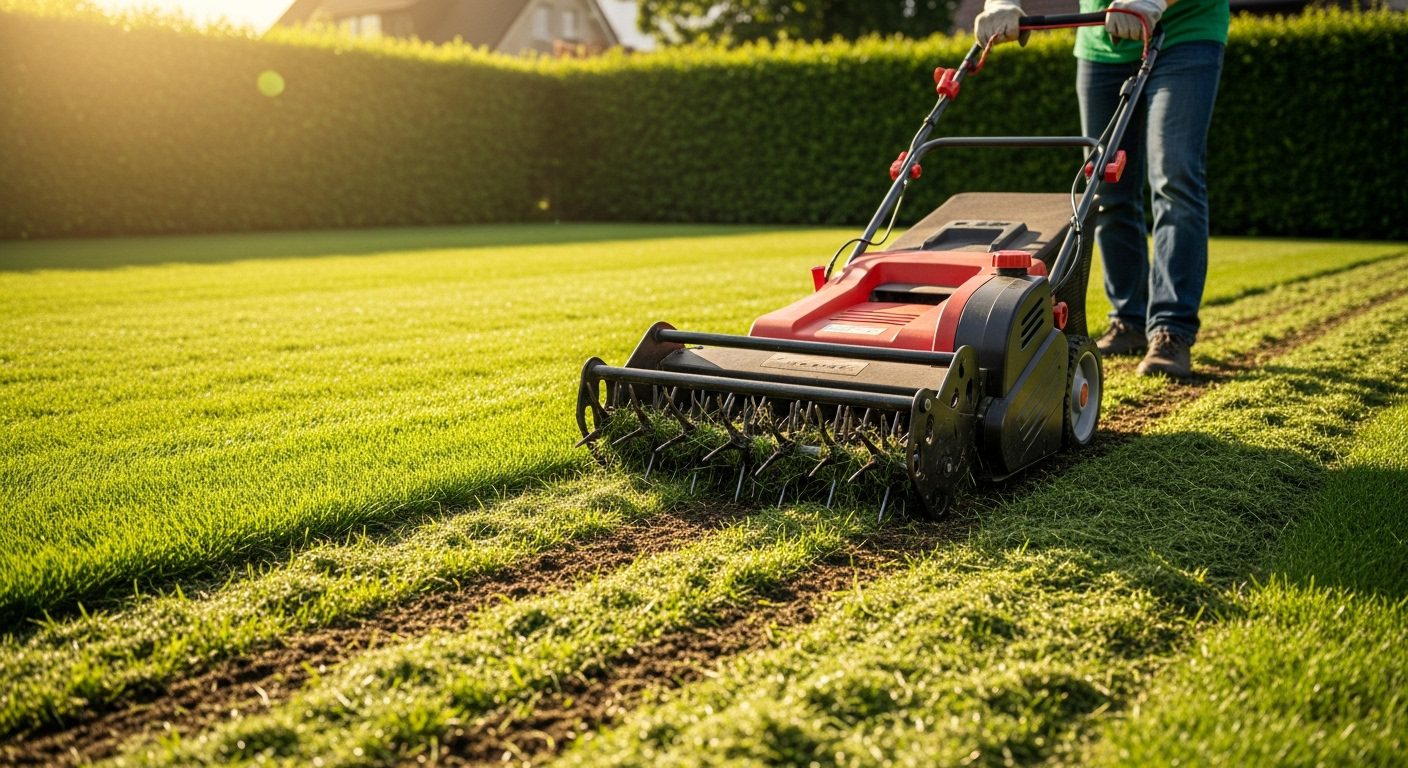
If you’ve noticed your lawn feeling spongy underfoot or water pooling on the surface instead of soaking in, you’re dealing with thatch buildup. I spent years wondering why my grass looked tired despite regular feeding and watering until I discovered the game-changing practice of scarification. The trick isn’t just knowing how to scarify – it’s understanding exactly when to do it for maximum impact.
After helping dozens of homeowners transform their lawns, I’ve learned that timing your scarification correctly can mean the difference between a lush, healthy lawn and months of patchy recovery. The Royal Horticultural Society confirms what I’ve seen firsthand: scarifying at the wrong time can do more harm than good, while perfect timing leads to dramatic lawn improvements within weeks.
Let me share what I’ve learned about finding that sweet spot for scarification timing, whether you’re dealing with cool-season grasses in the north or warm-season varieties down south. We’ll cover everything from reading the signs your lawn sends you to understanding how local weather patterns affect your scarification schedule.
Understanding Scarification: What It Is and Why Timing Matters
Scarification involves using a specialized rake or machine to remove the layer of dead grass, moss, and organic debris (called thatch) that builds up between your grass blades and soil. Think of it as giving your lawn a deep clean that allows water, nutrients, and oxygen to reach the roots where they’re needed most.
I learned the hard way that scarifying isn’t something you can do on a whim. When I first tried it during a hot July weekend, my lawn looked like a disaster zone for the rest of summer. The grass simply couldn’t recover in those harsh conditions. That painful lesson taught me why timing is absolutely critical for scarification success.
Your grass needs to be actively growing to recover from the stress of scarification. This means soil temperatures need to be consistently above 10°C (50°F), with adequate moisture and at least 6-8 weeks of good growing conditions ahead. Scarifying when these conditions aren’t met leaves your lawn vulnerable to weeds, disease, and permanent damage.
The depth and intensity of scarification also plays into timing decisions. Light scarification with a spring-tined rake can be done more frequently and with less concern for perfect conditions. But heavy mechanical scarification that really digs into the thatch layer requires ideal timing to ensure your lawn bounces back strong.
The Two Prime Scarification Windows: Spring vs Autumn
After years of testing different approaches, I’ve found that most lawns respond best to scarification during two key windows: mid-spring (April to May) and early autumn (late August to September). Each season offers unique advantages, and your choice depends on your lawn’s specific needs and your regional climate.
Spring Scarification (April-May)
Spring scarification works best for light maintenance when your lawn needs a gentle refresh after winter. I typically recommend this timing for lawns that don’t have severe thatch problems but could benefit from improved air circulation and nutrient uptake as the growing season kicks into high gear.
The ideal spring window opens when soil temperatures consistently reach 10-12°C (50-54°F) and your grass starts its vigorous spring growth phase. In most regions, this falls between mid-April and late May. I use a simple test: if I need to mow twice within 10 days, the grass is growing fast enough to handle scarification.
Spring scarification offers several advantages. Your lawn has the entire growing season ahead to recover and thicken up. The combination of warming temperatures and spring rainfall creates ideal recovery conditions. Plus, removing moss and dead material early in the season gives your grass a competitive edge against weeds.
However, spring timing has its challenges. You need to wait until the ground firms up after winter wetness – scarifying waterlogged soil causes more harm than good. Spring weather can be unpredictable, with late frosts potentially damaging newly scarified lawns. And if you scarify too early, before consistent growth begins, recovery will be painfully slow.
Autumn Scarification (August-September)
For heavy-duty scarification work, autumn is my preferred season. The soil is warm from summer, encouraging rapid root growth, while cooler air temperatures reduce stress on the grass. This combination creates perfect conditions for aggressive thatch removal and lawn renovation.
The autumn window typically runs from late August through September, though exact timing varies by region. I look for daytime temperatures between 15-20°C (59-68°F) with cooler nights. The grass should still be growing actively but starting to slow from its summer peak.
Autumn scarification allows for more aggressive treatment since your lawn has already built up strength through the growing season. The warm soil promotes quick germination if you’re overseeding after scarification. Reduced weed pressure in autumn means less competition for recovering grass. And removing thatch before winter prevents disease problems during the wet months ahead.
The main drawback of autumn scarification is the shorter recovery window before winter dormancy. You need at least 6-8 weeks of good growing conditions after scarification for full recovery. In northern regions with early winters, this can be challenging to achieve. Heavy autumn rain can also complicate scheduling and delay recovery.
Regional Timing Variations: UK vs US Climate Zones
Where you live dramatically affects your scarification timing. I’ve worked with lawns across different climate zones and learned that following generic advice without considering regional factors often leads to disappointment.
UK Timing Guidelines
In the UK’s maritime climate, we deal with mild, wet conditions that create specific scarification challenges. The consistent moisture promotes rapid thatch buildup and moss growth, making regular scarification essential for lawn health.
For most of England and Wales, I recommend light spring scarification between mid-April and mid-May, once we’re past the risk of hard frosts. The key is waiting for consistent growth – don’t be tempted by a few warm days in March. Our unpredictable spring weather means patience pays off.
Autumn scarification in the UK works best from late August through September. This gives lawns time to recover before the wet winter months. In Scotland and northern England, I’d move this window forward slightly to early August through early September, accounting for the earlier onset of winter conditions.
UK gardeners should pay special attention to soil moisture. Our frequent rainfall means waiting for a dry spell before scarifying. Working wet, compacted soil damages the lawn structure and creates more problems than it solves. I always check the weather forecast for at least a week of dry conditions before starting.
US Climate Zone Considerations
The diverse US climate zones require a more nuanced approach to scarification timing. What works in Maine won’t necessarily work in Texas, and coastal areas play by different rules than inland regions.
In northern states with cool-season grasses (Zones 3-6), the timing mirrors UK recommendations closely. Spring scarification happens from late April through May, while autumn work runs from late August through September. The main difference is dealing with more extreme temperature swings and potential drought conditions.
Southern states with warm-season grasses (Zones 7-10) flip the script entirely. These grasses grow most vigorously in summer, so scarification timing shifts accordingly. Late spring to early summer (May-June) becomes the primary window, when bermudagrass, St. Augustine, and zoysia are entering their peak growth phase.
Transition zone states (parts of Zones 6-7) face the biggest challenge, often maintaining mixed grass types. I recommend focusing on the dominant grass type in your lawn and timing scarification accordingly. When in doubt, early autumn usually provides the safest window for both grass types.
Coastal areas on both coasts benefit from more moderate temperatures but must account for salt stress and humidity. I’ve found these lawns often handle scarification better slightly earlier in spring and later in autumn than their inland counterparts.
Signs Your Lawn Is Ready for Scarification
Knowing when to scarify isn’t just about calendar dates – your lawn will tell you when it’s ready. I’ve developed a checklist of signs that indicate optimal scarification timing, helping you make the right call regardless of what the calendar says.
Physical Lawn Indicators
The most obvious sign is a thick, spongy feel when you walk across your lawn. If your feet sink slightly into a soft layer rather than feeling firm ground, you’ve got significant thatch buildup. I use the pencil test: push a pencil into the lawn, and if you feel resistance after about half an inch, scarification is overdue.
Water behavior provides another clear signal. When water beads up on the surface instead of soaking in quickly, or you notice puddles forming even with light rain, the thatch layer is preventing proper water infiltration. This same barrier blocks fertilizer from reaching roots, explaining why some lawns don’t respond to feeding.
Check your grass color and vigor too. If parts of your lawn look tired and yellowish despite adequate nutrition and water, thatch might be suffocating the roots. Patchy growth patterns, where some areas thrive while others struggle, often indicate uneven thatch distribution that scarification can address.
Growth Rate Assessment
Your mowing frequency tells you everything about scarification readiness. During peak growing seasons, if you’re mowing at least once a week and seeing 2-3 inches of growth between cuts, your lawn can handle scarification stress. Slower growth rates mean waiting until conditions improve.
I also look at how quickly the grass recovers from foot traffic. Step on your lawn and watch how long it takes for the grass to spring back. Quick recovery (within minutes) indicates healthy, actively growing grass ready for scarification. Slow recovery or lasting footprints suggest waiting for better growing conditions.
Soil Temperature Monitoring
Soil temperature trumps air temperature for scarification timing. I use a soil thermometer pushed 2-3 inches deep, checking at different times of day for consistency. You want readings consistently above 10°C (50°F) for cool-season grasses or 18°C (65°F) for warm-season varieties.
Take readings for at least a week before scarifying to ensure temperatures are stable, not just hitting the minimum on warm afternoons. Early morning readings give you the most conservative estimate – if soil temperatures are adequate then, you’re good to go all day.
Weather Conditions and Seasonal Factors
Perfect scarification timing requires aligning multiple weather factors. I’ve learned to read weather patterns like a farmer, knowing that a well-timed scarification window can make all the difference in results.
Ideal Weather Windows
The perfect scarification weather combines moderate temperatures, adequate moisture, and a stable forecast. I look for daytime temperatures between 15-20°C (59-68°F) with cool but not freezing nights. This temperature range promotes grass growth without excessive stress.
Soil moisture should be just right – not waterlogged from recent heavy rain, but not bone dry either. The soil should crumble in your hand without being dusty or forming a mudball. I typically wait 2-3 days after rainfall for the surface to dry while maintaining moisture deeper down.
Check the extended forecast before starting. You want at least a week of stable conditions after scarification – no extreme heat, heavy rain, or frost warnings. A light shower or two actually helps recovery, but torrential rain can wash away grass seed and create problems.
Conditions to Avoid
Never scarify during drought conditions or water restrictions. Your lawn needs consistent moisture for 6-8 weeks post-scarification, and drought stress on top of scarification stress can kill grass permanently. I’ve seen entire lawns lost to poorly timed summer scarification during dry spells.
Extreme temperature swings spell trouble too. If your area experiences 20-degree temperature variations between day and night, wait for more stable conditions. These swings stress grass even without scarification, and adding mechanical stress pushes it over the edge.
Avoid scarifying if heavy rain is forecast within 48 hours. Fresh scarification wounds make grass vulnerable to fungal diseases that thrive in wet conditions. Plus, heavy rain on newly scarified lawns can cause serious erosion and wash away any overseeding you’ve done.
Wind is an often-overlooked factor. Strong winds after scarification dry out exposed soil and stress recovering grass. If you’re dealing with consistently windy conditions, consider light watering more frequently to maintain moisture levels.
Month-by-Month Scarification Calendar
Let me break down the entire year to show you exactly when scarification makes sense and when it’s better to wait. This calendar assumes typical weather patterns, but always let actual conditions override calendar dates.
January-February: Planning Phase
These winter months are strictly off-limits for scarification, but perfect for planning. I use this time to assess my lawn’s condition under winter stress, noting areas with poor drainage or excessive moss growth. Order your scarification equipment now to avoid spring rushes, and service any tools you already own.
If you’re planning major lawn renovation involving heavy scarification, February is when I start monitoring long-range weather forecasts and soil temperatures. In warmer southern regions, late February might see the earliest start of the scarification window for warm-season grasses.
March: Early Spring Prep
March teases us with warm days, but resist the urge to scarify too early. In most regions, soil temperatures are still too cold and grass growth too slow for successful recovery. I might do very light raking to remove winter debris, but save actual scarification for later.
Southern states with warm-season grasses should start monitoring soil temperatures closely. Once you see consistent readings above 18°C (65°F), you’re approaching your window. Cool-season grass areas should focus on feeding and preparing for April scarification.
April-May: Prime Spring Window
This is go-time for most cool-season lawns. By mid-April in southern UK and mid-Atlantic US states, soil temperatures support vigorous grass growth. I typically scarify in late April when spring growth is well established but before the stress of summer heat.
May works better for northern regions and Scotland, where spring arrives later. Warm-season grass areas should definitely scarify by May if needed, as these grasses are entering their peak growth phase. Watch for late frost warnings that could damage newly scarified lawns.
June-July: Summer Caution
June can work for light scarification in cooler climates with adequate irrigation, but I generally avoid it. The combination of heat stress and scarification stress proves too much for most lawns. If you must scarify, do it early in June and ensure consistent watering.
July is a definite no for scarification in most regions. Heat stress peaks, and lawns need all their resources just to survive summer. The exception might be coastal areas with cool, foggy summers, but even then, I’d wait for autumn unless absolutely necessary.
August: Transition Time
Early August marks the beginning of the autumn scarification window in cooler regions. I start checking soil temperatures and growth rates, looking for that sweet spot where summer heat breaks but grass still grows vigorously.
Late August is ideal for heavy scarification in most temperate regions. The soil retains summer warmth while air temperatures moderate. This timing gives your lawn the full autumn growing season to recover before winter dormancy.
September: Autumn Prime Time
September is my favorite month for scarification across most regions. Cool-season grasses experience their second growth surge, while warm-season grasses still have enough warmth for recovery. The combination of warm soil and cool air creates perfect recovery conditions.
In warmer regions, September might be your last chance for scarification before grass growth slows. Northern areas should complete scarification by mid-September to ensure adequate recovery time before the first frost.
October-December: Window Closing
Early October can work in mild climates, but you’re pushing your luck. I only recommend October scarification in areas with extended autumn growing seasons and mild winters. Any later than mid-October risks inadequate recovery before winter dormancy.
November and December are absolutely off-limits for scarification. Grass growth has slowed or stopped, and any damage won’t heal until spring. Use these months for tool maintenance and planning next year’s lawn care schedule.
Common Timing Mistakes to Avoid
Over the years, I’ve made every scarification timing mistake possible and seen countless others repeated by well-meaning gardeners. Learning from these errors will save your lawn from unnecessary stress and disappointing results.
Scarifying Too Early in Spring
The biggest mistake I see is jumping the gun in spring. Those first warm days in March trigger our gardening instincts, but scarifying before consistent growth begins leaves your lawn vulnerable for months. I learned this lesson when an early scarification followed by a late frost left my lawn looking terrible until June.
Wait until you’ve mowed at least twice at normal height and the grass is actively growing. The soil should be dry enough that you don’t leave footprints, and morning soil temperatures should consistently exceed 10°C (50°F). Patience in spring pays dividends all season long.
Scarifying During Drought Stress
Never scarify a stressed lawn. If your grass is already struggling with drought, disease, or nutrient deficiency, scarification will push it past the breaking point. I once tried to “help” a drought-stressed lawn with scarification, thinking it would improve water penetration. Instead, I killed large sections that took months to recover.
Get your lawn healthy first, then scarify. This might mean waiting an entire season, but it’s better than causing permanent damage. Feed your lawn, address any pest or disease issues, and ensure adequate irrigation for at least a month before scarification.
Wrong Timing for Grass Type
Not all grass is created equal when it comes to scarification timing. Cool-season grasses like fescue and ryegrass thrive with spring and autumn scarification. But warm-season grasses like bermudagrass and St. Augustine need late spring to early summer timing when they’re growing most vigorously.
If you’re unsure of your grass type, take a sample to your local extension office or garden center. Scarifying warm-season grass in early spring, before it breaks dormancy, can severely damage or kill it. Similarly, scarifying cool-season grass during summer heat stress often leads to permanent bare patches.
Ignoring Recovery Time Requirements
Every scarification needs 6-8 weeks of good growing conditions for full recovery. I’ve seen too many people scarify in late October, then wonder why their lawn looks terrible all winter and into spring. Without adequate recovery time, scarified areas remain weak and vulnerable to weeds, disease, and winter damage.
Count backwards from your average first frost date or the beginning of summer heat stress. If you don’t have that 6-8 week window, wait for a better opportunity. A properly timed scarification with full recovery produces far better results than rushing to squeeze it in.
Professional Tips for Timing Success
After years of perfecting scarification timing, I’ve developed strategies that consistently produce excellent results. These professional tips will help you nail your timing and achieve the lawn transformation you’re after.
The Two-Week Test Method
Two weeks before your planned scarification date, perform a test on a small, inconspicuous area. Scarify a 2×2 foot section and monitor its recovery. If it bounces back quickly with new growth visible within a week, conditions are ideal for full lawn scarification.
This test method has saved me from several timing disasters. One spring, my test patch showed very slow recovery, alerting me to wait another three weeks. When I finally scarified, recovery was rapid and complete. The test patch investment pays huge dividends in timing confidence.
Weather Pattern Analysis
Don’t just check tomorrow’s forecast – study weather patterns for the past month and projections for the next two months. I look for stable patterns without extreme swings. Consistent conditions matter more than perfect conditions.
Use historical weather data for your area to identify typical scarification windows. In my region, the last two weeks of April have historically provided ideal conditions 7 out of 10 years. This knowledge helps me plan ahead and prepare for the most likely success window.
The Grass Growth Rate Formula
Here’s my simple formula: if your grass grows at least 1 inch per week, it can handle light scarification. For heavy scarification, I want to see 1.5-2 inches of weekly growth. This growth rate indicates the grass has enough energy reserves for rapid recovery.
Track growth rates by marking a few grass blades with food coloring and measuring their growth over a week. This gives you actual data rather than guesswork about your lawn’s readiness for scarification stress.
Coordination with Other Lawn Treatments
Scarification timing must coordinate with your overall lawn care schedule. I scarify 2-3 weeks after spring feeding to ensure the grass has absorbed nutrients and built energy reserves. Never scarify within two weeks of applying pre-emergent herbicides, as this breaks the chemical barrier.
If overseeding after scarification, ensure you have the right temperature window for seed germination. Cool-season grass seed needs soil temperatures between 10-18°C (50-65°F), while warm-season varieties prefer 18-24°C (65-75°F). Time your scarification to hit these windows perfectly.
Frequently Asked Questions About Scarification Timing
Can I scarify a newly seeded lawn?
Wait at least one full year before scarifying a newly seeded lawn, preferably two years for best results. Young grass needs time to establish deep roots and build density before handling scarification stress. I recommend waiting until you’ve mowed the new lawn at least 20-25 times before considering even light scarification.
For newly turfed lawns, the waiting period is shorter but still important. Give new turf at least 6 months to fully root and integrate with your soil. The edges should be completely invisible and the turf should feel firmly anchored before scarification.
How often should I scarify my lawn?
Most lawns benefit from annual light scarification or heavy scarification every 2-3 years. High-traffic lawns or those prone to thatch buildup might need annual attention, while well-maintained lawns with good soil can go longer between treatments.
I scarify my front lawn lightly each spring because it gets heavy use, but my back lawn only needs attention every other year. Monitor your thatch layer thickness – once it exceeds half an inch, it’s time to scarify regardless of your schedule.
Should I scarify before or after fertilizing?
Feed your lawn 2-3 weeks before scarification to build energy reserves for recovery. The nutrients help grass bounce back quickly from scarification stress. Never fertilize immediately before scarification, as you’ll remove much of the fertilizer with the thatch.
After scarification, wait about a week before applying fertilizer. This gives the grass time to start recovering and ensures fertilizer reaches the roots effectively through the newly opened soil surface. Use a balanced fertilizer to support both root and shoot growth during recovery.
What if I miss the ideal scarification window?
Missing your ideal window isn’t a disaster – just wait for the next one. It’s always better to skip scarification than to do it at the wrong time. Your lawn might not look its absolute best, but it won’t suffer the serious damage that comes from poorly timed scarification.
If you absolutely must scarify outside ideal windows due to severe thatch problems, minimize the intensity. Use a spring-tine rake instead of a powered scarifier, work in small sections, and provide extra care during recovery including frequent light watering and careful feeding.
Can I scarify if rain is forecast?
Light rain within 48-72 hours after scarification actually helps recovery by keeping the soil moist. But heavy rain immediately after scarification can cause serious problems including erosion, seed washout, and fungal diseases. Check your forecast for moderate, stable conditions.
I always scarify when there’s a chance of light showers in the following days but no heavy downpours expected. If unexpected heavy rain arrives, improve drainage where water pools and consider a preventive fungicide application to protect vulnerable grass.
Is it ever too late in autumn to scarify?
Yes, scarifying too late in autumn is one of the worst timing mistakes. Once average soil temperatures drop below 10°C (50°F) or you’re within 6 weeks of typical first frost, it’s too late. The grass won’t have time to recover before winter dormancy.
In most temperate regions, mid-September is the latest I’d recommend for scarification. Southern regions might extend to early October, but that’s pushing it. When in doubt, wait for spring rather than risk winter damage to a partially recovered lawn.
Should I water before scarifying?
Your lawn should be moist but not wet when scarifying. If conditions have been dry, water thoroughly 2-3 days before scarification. This softens the soil slightly, making scarification easier and less stressful on grass roots. But never scarify waterlogged soil.
The ideal moisture level is when the soil crumbles in your hand but isn’t dusty. Surface water should have completely drained, and you shouldn’t leave footprints when walking on the lawn. This moisture balance helps the scarifier work effectively without causing compaction.
Conclusion: Mastering Your Scarification Schedule
Timing your scarification correctly transforms it from a risky lawn treatment into a reliable renovation technique. The key lessons I’ve learned over years of lawn care come down to patience, observation, and respecting your grass’s natural growth cycles.
Remember that successful scarification timing combines multiple factors: appropriate season for your grass type, suitable weather conditions, adequate soil temperatures, and sufficient recovery time before stress periods. When all these elements align, scarification produces dramatic improvements in lawn health and appearance.
For most of us with cool-season grasses, late April through May or late August through September provides ideal conditions. Warm-season grass owners should focus on late spring through early summer when their grass grows most vigorously. But always let actual conditions override calendar dates – your lawn will tell you when it’s ready.
Start with light scarification if you’re unsure about timing, and use my test patch method to verify conditions before committing to the full lawn. Monitor soil temperatures, track growth rates, and study weather patterns to identify your perfect window. With experience, you’ll develop an intuitive sense for when conditions align perfectly.
The effort you put into proper timing pays off with faster recovery, better results, and a healthier lawn that resists weeds, disease, and environmental stress. Take the time to get your timing right, and scarification becomes one of the most powerful tools in your lawn care arsenal for achieving that perfect green carpet we all desire.