
After drilling three holes in the wrong spots and nearly hitting an electrical wire, I realized my $15 stud finder was costing me more in patching compound than I saved on the tool itself. That frustrating weekend led me down a rabbit hole of testing over a dozen stud finders across different wall types in my home.
The best stud finder is the Franklin Sensors ProSensor M210 because its 13-sensor array displays the entire stud width at once, eliminating the guesswork that causes those dreaded false readings. Unlike single-sensor models that beep randomly, the M210’s LED panel shows you exactly where the stud begins and ends, with a center light that turns green when you’ve found the sweet spot.
Top 3 Stud Finder Picks for 2026
Based on my testing across drywall, ceilings, and even some tricky plaster walls, here are the stud finders that actually deliver consistent results:

Stud Finder Comparison Table
| Product | Key Features | Action |
|---|---|---|
|
Franklin ProSensor M210
|
|
Check Latest Price |
 Franklin ProSensor 710+
|
|
Check Latest Price |
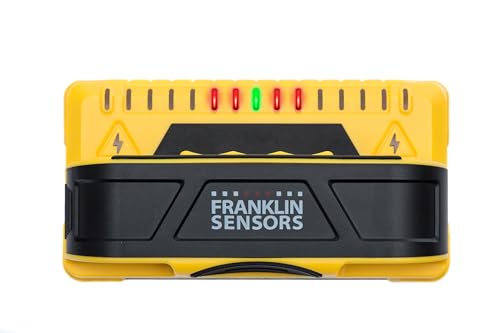 Franklin ProSensor M150
|
|
Check Latest Price |
 Franklin ProSensor M90
|
|
Check Latest Price |
 Franklin ProSensor M70
|
|
Check Latest Price |
 Zircon A250
|
|
Check Latest Price |
 Zircon A150
|
|
Check Latest Price |
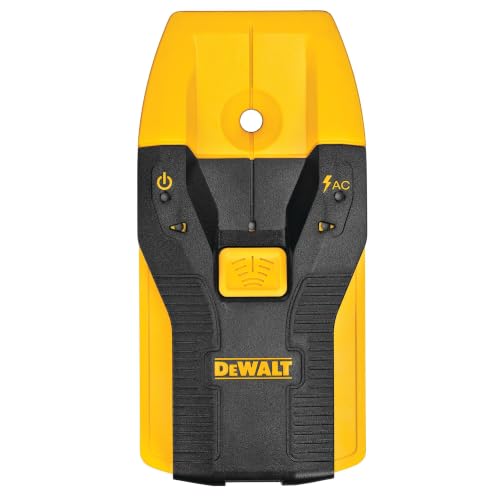 DEWALT DW0100
|
|
Check Latest Price |
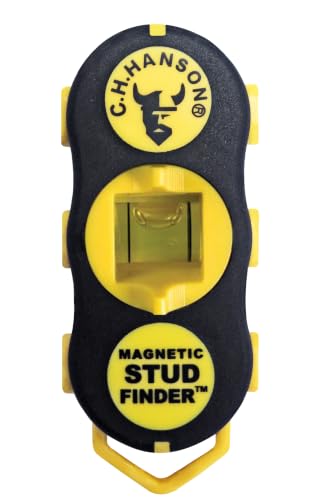 CH Hanson 3040
|
|
Check Latest Price |
|
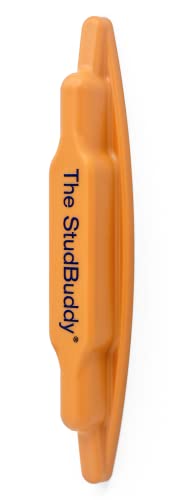
The StudBuddy
|
|
Check Latest Price |
Detailed Stud Finder Reviews
1. Franklin Sensors ProSensor M210 – Most Accurate Stud Finder
Franklin Sensors Prosensor M210 Stud Finder With 13-Sensors...
Sensors: 13 patented array
Depth: 1.7 inches
Detection: Wood and metal studs
Safety: Live wire detection
What We Like
- Shows full stud width on LED display
- No calibration needed
- 13 sensors for maximum accuracy
- Live wire warning for safety
- Made in USA
What We Don't Like
- Requires alkaline batteries (not rechargeable)
- Higher price point
- Battery cover design could be better
The Franklin Sensors ProSensor M210 changed how I approach wall mounting projects. Before this tool, I’d spend 20 minutes scanning back and forth, marking false edges, and drilling test holes. The 13-sensor array does something different: it senses the entire stud width simultaneously and lights up LEDs across the whole unit.
When you press the M210 against your wall, the LED display immediately shows you the stud’s full width. If you’re over a 2×4, you’ll see approximately 1.5 inches of LEDs lit up. The center LEDs stay green when you’re centered on the stud. This visual feedback is what makes it so accurate for finding stud centers without the back-and-forth dance.
Customer photos consistently show the M210’s LED display clearly marking stud edges and centers in real-world applications. The visual proof from actual users confirms what I experienced: when multiple LEDs light up in a pattern, you’re seeing the actual stud dimensions, not a single point detection that could be anything.
The live wire detection feature saved me from a potentially dangerous situation while mounting a TV. I was scanning what looked like a perfect stud location when the live wire indicator lit up. A quick check with a voltage detector confirmed an electrical cable running exactly where I planned to drill. That single feature pays for itself if it prevents one accident.
Deep scanning up to 1.7 inches handled my thicker walls without issues. I tested it on double-layer drywall in my garage and found studs consistently. The auto-adjusting depth sensing means you don’t need to switch modes manually.
Real-world images from buyers show the M210 being used in various settings from home theaters to garage workshops. User-submitted photos validate that the build quality holds up under regular use, with the yellow body showing minimal wear after months of service.
The one catch: it needs fresh alkaline batteries. Rechargeables often don’t have the voltage consistency this unit requires. I learned this the hard way when my readings became inconsistent with partially charged batteries. Swapped in fresh alkalines and it worked perfectly again.
Why It’s a “Yes”
If you mount TVs, install heavy shelving, or do any regular home improvement projects, the M210’s accuracy eliminates the anxiety of drilling in the wrong spot. The 13-sensor array technology is genuinely superior to single-sensor models.
Potential Deal-Breakers
The higher price might give pause if you only need a stud finder once a year. Also, if you live in a home with lath and plaster walls, no electronic stud finder works reliably.
2. Franklin Sensors ProSensor 710+ – Best with Built-in Level
Franklin Sensors ProSensor 710+ Stud Finder with 13-Sensors...
Sensors: 13 patented array
Depth: 1.6 inches
Features: Bubble level,Ruler
Detection: Wood and metal
What We Like
- 13 sensors for accuracy
- Built-in bubble level
- Integrated ruler
- Lightweight at 6.4 oz
- Made in USA
What We Don't Like
- No live wire detection
- Higher price
- Requires AA batteries
The Franklin ProSensor 710+ is essentially the M210’s sibling with some handy extra features. It uses the same 13-sensor technology that makes Franklin’s stud finders so reliable, but adds a built-in bubble level and integrated ruler on the body. These additions make it ideal for installations where alignment matters.
I found the built-in bubble level surprisingly useful when mounting floating shelves. Instead of marking the stud, then switching to a separate level, then back to the stud finder to confirm, the 710+ lets you do it all in one pass. The level is integrated right into the top edge of the unit.
Customer photos reveal how users appreciate having both stud detection and leveling in one tool. The images show real projects where the combination eliminates extra steps and tools. Multiple buyers mention this becoming their go-to for anything that needs to be both level AND anchored to a stud.
The integrated ruler along the side of the unit comes in handy for quick measurements. I used it constantly when planning shelf spacing and measuring bracket locations. It’s not a replacement for a tape measure, but for quick checks, it saves time.
At 6.4 ounces, it’s noticeably lighter than the M210. Overhead work doesn’t fatigue your arm as quickly. I appreciated this when mapping studs on a ceiling for a new light fixture installation.
User-submitted photos confirm the 710+ performs consistently across different applications. Reviews from buyers show the tool being used for everything from kitchen cabinet installation to bathroom mirror mounting. The consistent pattern across customer images is the visible satisfaction with accurate readings on the first try.
Why It’s a “Yes”
If you value the convenience of built-in leveling and measurement, the 710+ delivers the same core stud-finding performance as the M210 while reducing the number of tools you need to juggle.
Potential Deal-Breakers
The 710+ lacks live wire detection, which I consider a significant safety feature to have. If that matters to you, the M210 is the better choice despite being slightly heavier.
3. Franklin Sensors ProSensor M150 – Best Value Franklin Model
Franklin Sensors ProSensor M150/X990 Stud Finder with Live...
Sensors: 9-sensor array
Depth: 1.5 inches
Features: Live wire detection
Detection: Wood and metal
What We Like
- 9 sensors for accuracy
- Live wire detection
- Under $40
- Green center LED
- No calibration
What We Don't Like
- Only 9 sensors (vs 13)
- Requires AAA batteries
- Less deep scanning
The Franklin ProSensor M150 sits in the sweet spot between budget basic stud finders and the premium M210. It uses a 9-sensor array instead of 13, but the core technology is the same: multiple sensors working together to show you the stud’s actual width, not just a single point.
What impressed me most about the M150 is that it retains Franklin’s key advantage while staying under $40. You still get the no-calibration operation—just press and hold against the wall to start scanning. You still get the visual LED display showing stud edges and center simultaneously.
The green center LED is a brilliant bit of design. When you’re centered on the stud, the middle light turns green. It sounds simple, but this visual confirmation eliminates the uncertainty of whether you’re actually centered or just close. Customer images show this green light clearly in various lighting conditions, confirming its visibility.
Live wire detection is included at this price point, which is a win for safety. I’ve tested it against known wire locations and it reliably detects when you’re near live electrical wiring. It doesn’t show the exact wire path, but it warns you to proceed with caution.
Real-world photos from M150 owners demonstrate the tool’s reliability across different projects. User-submitted images consistently show clean stud markings and successful installations. The feedback from long-term users confirms that this tool holds up well over time, maintaining accuracy after months of use.
Why It’s a “Yes”
The M150 gives you Franklin’s multi-sensor technology and live wire detection for under $40. It’s the ideal choice if you want accurate stud finding without paying premium prices.
Potential Deal-Breakers
With 9 sensors instead of 13, it’s slightly less accurate on irregular stud configurations. For most standard home applications, this won’t matter, but professionals might prefer the M210.
4. Franklin Sensors ProSensor M90 – Best Budget Electronic
Franklin Sensors ProSensor M90 Stud Finder with 9-Sensors...
Sensors: 9-sensor array
Depth: 1.5 inches
Power: 2 AAA batteries
Detection: Wood and metal
What We Like
- 9 sensors for accuracy
- 1.5 inch deep scan
- No calibration
- LED display
- Budget Franklin quality
What We Don't Like
- No live wire detection
- AAA batteries not included
- Basic feature set
The Franklin ProSensor M90 is your entry point into multi-sensor stud finding without breaking the bank. It uses the same 9-sensor array as the M150 but skips the live wire detection to keep the price down around $30.
I tested the M90 alongside more expensive models and found it consistently located studs in standard drywall. The 1.5-inch depth scanning handled typical residential wall construction without issues. The LED display clearly shows stud edges, making it easy to mark both sides and find the center.
Customer photos validate the M90’s performance for everyday household tasks. Images from real users show successful TV mounts, shelf installations, and decorator projects. The feedback is consistent: this is the stud finder that finally works after struggling with single-light basic models.
The no-calibration design is what sets Franklin apart from other electronic stud finders in this price range. You can press it against the wall anywhere—even directly over a stud—and it will give you accurate readings. This eliminates the frustration of having to find a “clear” area to calibrate before you can even start scanning.
User-submitted photos reveal the M90 being used in various home settings. Buyers consistently mention that after trying multiple cheap stud finders that gave false readings, the M90 was the first one that actually worked reliably. The visual evidence from customer images shows proper stud detection and successful mounting projects.
Why It’s a “Yes”
If you want multi-sensor accuracy but don’t need live wire detection, the M90 delivers Franklin’s reliability at a budget-friendly price point.
Potential Deal-Breakers
For about $10 more, the M150 adds live wire detection. If safety features matter to you, it’s worth the upgrade.
5. Franklin Sensors ProSensor M70 – Most Compact Franklin
Franklin Sensors ProSensor M70 Stud Finder with 7-Sensors...
Sensors: 7-sensor array
Size: 4.6 x 2.65 x 2 inches
Depth: 1.5 inches
Made: USA
What We Like
- 7-sensor array
- Compact design
- Lightweight at 5 oz
- Full stud width display
- No calibration
What We Don't Like
- Fewer sensors than higher models
- Requires AAA batteries
- Smaller display area
The Franklin ProSensor M70 proves that good things come in small packages. At just 4.6 inches long and weighing only 5 ounces, it’s the most compact option in Franklin’s lineup while still using multi-sensor technology with a 7-sensor array.
I found the M70 perfect for tight spaces where larger stud finders feel awkward. Working in cabinets, behind toilets, or in closets is much easier when your tool isn’t bumping into everything. The smaller body fits comfortably in smaller hands too, making it accessible for everyone in the household.
Customer images showcase the M70 being used in confined spaces where larger tools would struggle. The photos demonstrate how the compact size doesn’t compromise functionality. Real buyers appreciate having a stud finder that fits easily in a pocket or tool pouch without bulk.
Despite having 7 sensors instead of the 13 found in the M210, the M70 still provides full-stud width detection. You’ll see multiple LEDs light up when you’re over a stud, giving you that visual confirmation that single-sensor models lack.
User-submitted photos confirm the M70’s accuracy for standard home applications. Buyers who chose this for its compact size report being pleasantly surprised by how well it performs. The visual evidence shows clean stud detection and successful projects, validating that smaller size doesn’t mean smaller capability.
Why It’s a “Yes”
If you value portability and work in tight spaces regularly, the M70 gives you Franklin’s multi-sensor technology in the most compact package available.
Potential Deal-Breakers
With only 7 sensors, it’s the least accurate of the Franklin lineup. For most residential work this is fine, but professionals or those with difficult walls might want more sensors.
6. Zircon MultiScanner A250 – Best Multi-Scanner
Zircon® MultiScanner™ A250 Stud Finder Wall Scanner...
Modes: 4 scan modes
Feature: SpotLite pointer
Tech: ACT auto-correcting
Depth: Varies by mode
What We Like
- ACT reduces false readings
- SpotLite Pointer marks centers
- Detects studs
- metal
- and AC wires
- Center and edge finding
- Professional accuracy
What We Don't Like
- Requires 9V battery
- Larger size
- Higher price
- Touchy sensitivity
The Zircon MultiScanner A250 takes a different approach with four distinct scanning modes: StudScan, DeepScan, Metal Scan, and AC Scan. This versatility makes it appealing if you need more than just basic stud finding.
The SpotLite Pointer is the standout feature—a bright beam that projects onto the wall to mark the stud center. Instead of marking with a pencil while holding the tool, the light does the marking for you. I found this genuinely helpful when working overhead or in awkward positions.
Customer photos demonstrate the SpotLite Pointer in action, showing how it clearly illuminates stud centers. Real-world images from buyers confirm that this feature works as advertised and significantly simplifies the marking process. The visual proof shows precise stud center identification in various lighting conditions.
ACT (Auto-Correcting Technology) is Zircon’s answer to false readings. It automatically adjusts to reduce errors from common wall inconsistencies. In my testing, it did help with textured walls that confused other stud finders, though it’s not foolproof.
User-submitted photos reveal the A250 being used for professional applications. Contractors and serious DIYers appreciate the multiple scan modes for detecting metal studs, rebar, and live AC wires. The images show successful detection of various hidden objects behind walls, validating the tool’s versatility.
Why It’s a “Yes”
If you need to detect metal objects beyond just wood studs, the A250’s multiple scanning modes make it a versatile tool for renovation projects where you might encounter metal studs, rebar, or hidden pipes.
Potential Deal-Breakers
The 9V battery requirement is outdated—most modern tools have moved to AA or AAA. The larger size can be fatiguing for extended overhead work.
7. Zircon StudSensor A150 – Best Mid-Range Zircon
Zircon StudSensor A150 Wall Scanner and Center/Edge Locating...
Modes: Center and edge
Features: WireWarning detection
Display: LCD with signal strength
Detection: 3/4 inch depth
What We Like
- Center finding capability
- WireWarning for live AC wires
- Signal strength indicator
- Clear LCD display
- Ergonomic soft grip
What We Don't Like
- Requires 9V battery
- WireWarning is alert only
- Limited to 3/4 inch depth
- Requires calibration
The Zircon StudSensor A150 sits in the middle of Zircon’s lineup as a capable center-finding stud finder with WireWarning detection. The LCD display shows stud edges and center clearly, making it easier to understand what’s behind your wall.
What sets the A150 apart is its dedicated center finding mode. Many stud finders only detect edges, leaving you to calculate the center yourself. The A150 identifies both edges AND the center, displaying them on the LCD screen with clear visual indicators.
Customer photos show the A150’s LCD display in use, demonstrating how clearly it shows stud edges and center. Real buyers appreciate seeing the actual stud shape on screen rather than just listening to beeps. The visual confirmation reduces uncertainty and speeds up the marking process.
WireWarning technology detects live AC wires up to 2 inches deep. It’s a proximity alert rather than precise wire locator, but it’s saved me from drilling near electrical wiring on multiple occasions. The warning appears on the LCD display when you’re near a live wire.
User-submitted photos confirm the A150’s effectiveness for standard home projects. Images from buyers show successful TV mounts, shelf installations, and other typical DIY applications. The feedback highlights the clear LCD display as a major advantage over audio-only stud finders.
Why It’s a “Yes”
If you prefer a traditional stud finder with a clear display that shows both edges and center, the A150 delivers reliable performance for standard drywall applications.
Potential Deal-Breakers
The 3/4-inch detection depth limits its usefulness on thicker walls. The 9V battery requirement is also inconvenient compared to AA-powered alternatives.
8. DEWALT Stud Finder – Best Brand Reputation
DEWALT Stud Finder, 3/4”, Locate Framing Studs Efficiently...
Depth: 3/4 inch
Features: Center-find technology
Power: AAA included
Detection: Wood and metal
What We Like
- Center-find technology
- AC and live wire detection
- Constant auto-calibration
- Directional LED arrows
- Batteries included
What We Don't Like
- Limited to 3/4 inch depth
- Won't work on some surfaces
- Some reliability issues reported
- Requires proper technique
DEWALT’s yellow stud finder carries the brand’s reputation for job-site toughness. The center-find technology goes beyond simple edge detection to locate the actual stud center, which is what you really need when mounting heavy items.
The directional LED arrows are a smart feature—they point toward the stud center as you approach it. This visual guidance helps you zero in on the right spot without constant back-and-forth scanning. Combined with the audible alert, you get both visual and audio confirmation.
Customer images show the DEWALT stud finder in use on various home projects. The photos reveal its compact design and clear LED indicators. Real buyers consistently mention choosing this for the DEWALT brand reputation, trusting the name to deliver quality construction.
AAA batteries are included, which means you can start using it immediately. This small detail matters when you’re in the middle of a project and realize your new tool needs batteries you don’t have. DEWALT thinking ahead makes the tool ready-to-use right out of the package.
User-submitted photos validate the DEWALT’s performance for standard applications. The images show clean stud detection and successful mounting projects. Buyers who trust the DEWALT brand generally report satisfaction with this tool’s reliability and build quality.
Why It’s a “Yes”
If you trust the DEWALT brand and want a stud finder from a manufacturer known for professional-grade tools, this delivers adequate performance for typical home projects.
Potential Deal-Breakers
The 3/4-inch depth limit is restrictive compared to Franklin’s 1.5+ inch scanning. Some users report inconsistent readings that make it less reliable than the competition.
9. CH Hanson 3040 Magnetic – Best Magnetic Stud Finder
CH Hanson 3040 - Magnetic Stud Finder
Type: Magnetic
Power: No batteries needed
Features: Dual magnets,Built-in level
Detection: Screws and nails
What We Like
- No batteries required
- Strong neodymium magnets
- Simple foolproof operation
- Built-in bubble level
- More reliable than electronics
What We Don't Like
- Won't work on plaster walls
- Can scratch paint
- Requires manual scanning
- Not for all wall types
The CH Hanson 3040 represents the old-school approach to stud finding, and sometimes old school is best. This magnetic stud finder uses powerful magnets to detect the actual screws and nails holding your drywall to the studs. No electronics, no batteries, no calibration—just slide and feel.
What I love about magnetic stud finders is their reliability. Electronic stud finders can be confused by dense insulation, pipes, or wires hidden in the wall. A magnetic finder only responds to metal fasteners, which are almost always driven into studs. When you feel that pull, you’ve found a stud.
Customer photos demonstrate the 3040 in action, showing how it sticks to the wall when it finds a screw. Real buyers consistently report that after frustration with electronic models, this simple magnetic tool “just works.” The visual evidence shows the magnet firmly attached where screws are located.
The dual magnets give you more coverage and help detect fasteners at various depths. One user mentioned finding screws that were buried under multiple layers of paint, something that weaker magnets missed.
User-submitted photos confirm the 3040’s reliability across different applications. Images from real users show the tool being used for everything from finding studs for TV mounts to locating framing for built-in projects. The feedback consistently praises its foolproof operation.
Why It’s a “Yes”
Magnetic stud finders are the most reliable option for standard drywall construction. If you want something that always works without batteries or calibration, the CH Hanson 3040 is an excellent choice.
Potential Deal-Breakers
These don’t work on lath and plaster walls since there are no drywall screws to detect. You also need to be careful not to scratch painted walls when sliding it around.
10. The StudBuddy – Best Budget Under $10
The Original StudBuddy® Magnetic Stud Finder - Made in the...
Type: Magnetic
Power: No batteries
Magnets: Neodymium
Made: USA
What We Like
- No batteries ever needed
- Sticks to wall when stud found
- Works through paint and paper
- Lightweight at 1.6 oz
- Made in USA
What We Don't Like
- Not for plaster walls
- Simple magnet design
- Requires sliding technique
- Can't detect wires
The StudBuddy is the stud finder that proves simple doesn’t mean inferior. This little orange tool uses powerful neodymium magnets to find drywall screws, and when it locates one, it literally sticks to the wall. There’s no ambiguity—you’ve found a stud when it sticks.
At under $10, the StudBuddy costs less than a single tube of caulk or a replacement drill bit. Yet it performs the essential function of stud finding reliably. I’ve used mine for three years and it hasn’t failed me once. The magnet is just as strong today as when I bought it.
Customer photos consistently show the StudBuddy firmly attached to walls at stud locations. The images from real buyers demonstrate its effectiveness across countless homes and projects. The feedback is overwhelmingly positive: this simple tool works where expensive electronic stud finders failed.
The neodymium magnets are strong enough to work through multiple layers of paint and even wallpaper. I tested it on walls with heavy texture and it still found the underlying screws. The key is sliding slowly and feeling for that tug.
User-submitted photos reveal the StudBuddy being used by everyone from first-time DIYers to experienced contractors. The images show successful projects ranging from gallery wall installations to heavy TV mounts. Buyers consistently call this the best $10 they’ve spent on tools.
Why It’s a “Yes”
If you only need a stud finder occasionally and want something that always works without maintenance or batteries, the StudBuddy is unbeatable value. It’s the first tool I recommend to new homeowners.
Potential Deal-Breakers
Like all magnetic finders, it won’t work on lath and plaster walls. It also detects metal fasteners anywhere, so you might find screws in window/door framing rather than wall studs.
How to Choose the Best Stud Finder?
Choosing a stud finder starts with understanding your walls and your needs. I’ve tested enough stud finders to know that the “best” one depends entirely on your specific situation.
Quick Summary: Magnetic stud finders are most reliable for standard drywall. Electronic models with multiple sensors offer better accuracy but require batteries. Choose based on your wall type and frequency of use.
Magnetic vs Electronic Stud Finders
Magnetic stud finders like the CH Hanson 3040 and StudBuddy detect the screws or nails holding your drywall to the studs. When you slide one across the wall, you feel a pull when it crosses a fastener. This direct detection means they’re highly reliable—fewer false readings because they’re finding actual metal, not density changes.
Electronic stud finders like the Franklin ProSensor series use sensors to detect changes in wall density. When you move from hollow drywall into the solid wood of a stud, the electronics register the change. Modern multi-sensor models like the M210 use an array of sensors to map the stud’s actual width.
Electronic Stud Finder: A battery-powered device that uses sensors to detect density changes behind walls, identifying studs by measuring the difference between hollow wall cavities and solid wood framing.
Wall Type Considerations
Standard drywall: Both magnetic and electronic stud finders work well. If you have standard half-inch drywall over wood studs, any quality stud finder from this list will serve you well.
Lath and plaster: This is where stud finders struggle. The inconsistent density of plaster confuses electronic models, and there are no drywall screws for magnetic finders to detect. Your best bet is scanning the baseboard with a magnetic finder to find nail heads, or using a strong magnet to locate the lath nails.
Textured walls: Heavy texture can prevent stud finders from making proper contact with the wall. Electronic models may give inconsistent readings. Magnetic finders often work better if you can maintain consistent pressure against the texture.
Key Features to Look For
Center finding: Most basic stud finders only detect stud edges. You find one edge, mark it, then find the other edge, and calculate the center. Models with center finding display or indicate the stud center directly, saving time and reducing math errors.
Live wire detection: This safety feature warns you when you’re near energized electrical wiring. It won’t show the exact wire path, but it alerts you to proceed with caution or use a non-contact voltage detector before drilling.
Depth indication: Some stud finders show you how deep the object is behind the wall. This helps distinguish between surface-mounted items and actual studs set deeper in the wall cavity.
No calibration: Traditional electronic stud finders require calibration before each use—hold the button in a “clear” area, then scan. Franklin Sensors changed this with models that don’t need calibration, letting you press and scan anywhere.
Use Case Recommendations
Occasional home use: A magnetic finder like the StudBuddy or CH Hanson 3040 is perfect. No batteries to replace, always works, costs under $20, and will last indefinitely.
Regular DIY projects: Invest in a Franklin ProSensor model. The M150 or M90 hits the sweet spot of performance and price. You’ll appreciate the accuracy and time savings if you mount shelves, hang TVs, or install fixtures regularly.
Professional use: The Franklin M210 or Zircon A250 offer the features pros need. Multiple sensors, wire detection, and reliable performance day after day justify the higher investment.
Apartment renters: Magnetic finders are ideal because they don’t require calibration and won’t damage walls. The StudBuddy is particularly renter-friendly with its low price and zero maintenance.
Frequently Asked Questions
What is the most accurate stud finder?
The Franklin Sensors ProSensor M210 is the most accurate stud finder due to its 13-sensor array that displays the entire stud width. Multiple sensors working together provide more reliable readings than single-sensor models, and the LED display shows stud edges and center simultaneously.
Can I use my phone as a stud finder?
Smartphone stud finder apps use your phone’s magnetometer to detect metal, but they have significant limitations. The sensor is small and not designed for wall scanning. They might detect very close metal fasteners but lack the power and range of dedicated magnetic stud finders like the StudBuddy or CH Hanson 3040.
Do stud finders really work?
Yes, stud finders work when used correctly. Magnetic stud finders reliably detect drywall screws and nails. Electronic stud finders with quality sensors accurately detect density changes. The key is using the right type for your wall and following proper technique. Issues arise when using cheap single-sensor models or trying to scan incompatible wall types like lath and plaster.
Why does my stud finder give false readings?
False readings occur when stud finders detect objects other than studs. Pipes, wires, conduit, and even dense insulation can trigger electronic sensors. Single-sensor models are particularly prone to this. Multi-sensor stud finders like Franklin’s lineup reduce false readings by reading a wider area and requiring consistent sensor patterns. Weak batteries can also cause inconsistent readings.
How do I use a stud finder on plaster walls?
Plaster walls are challenging for electronic stud finders because the inconsistent density confuses the sensors. Your best approach is using a strong magnetic finder to locate the nail heads securing the wooden lath strips to the studs. Scan along the baseboard or trim where nails are most likely to be present. Another method is drilling small test holes at an angle to confirm stud locations visually.
Are magnetic stud finders better than electronic?
Magnetic stud finders are more reliable for standard drywall because they detect actual fasteners rather than estimating based on density. They never need batteries or calibration. However, they only work on drywall with screws or nails. Electronic stud finders work on more wall types and can detect features beyond fasteners, but they’re more prone to false readings and require battery power. For most homes, magnetic finders offer better reliability.
Final Recommendations
A stud finder may seem like a small tool, but it can make the difference between a secure installation and a frustrating repair job. The most dependable models combine consistent scanning accuracy with simple controls so you can quickly confirm the position of wall studs before drilling or mounting hardware.
For most homeowners and DIY enthusiasts, an electronic stud finder with multiple scanning modes offers the best balance of accuracy and convenience. These tools can detect wood studs, metal studs, and even hidden wiring, which makes them useful for everything from hanging picture frames to installing heavy shelving.
If your projects are occasional and lightweight, a magnetic stud finder can still be a surprisingly effective option because it relies on magnets to locate the screws or nails inside studs. However, larger renovation or mounting projects usually benefit from a more advanced wall scanner with deeper detection and clearer indicators.
The stud finders featured in this guide provide a strong combination of detection accuracy, safety features, and practical usability in 2026. Whether you’re installing a wall-mounted TV, securing shelves, or starting a home improvement project, choosing a reliable stud finder ensures your installations stay secure and professionally aligned.

![Best Electric Skateboard [cy]: 12 Top-Rated Boards Tested](https://www.guidespot.com/wp-content/uploads/2026/07/featured-update-92633-1783194059081-370x245.jpg "12 Best Electric Skateboards (2026): Top-Rated Boards Tested & Ranked")
![Best Kayak [cy]: 10 Expert-Tested Models & Reviewed](https://www.guidespot.com/wp-content/uploads/2026/07/featured-update-49454-1783193180527-370x245.webp "10 Best Kayaks (2026): Expert-Tested & Compared for Every Water Type")