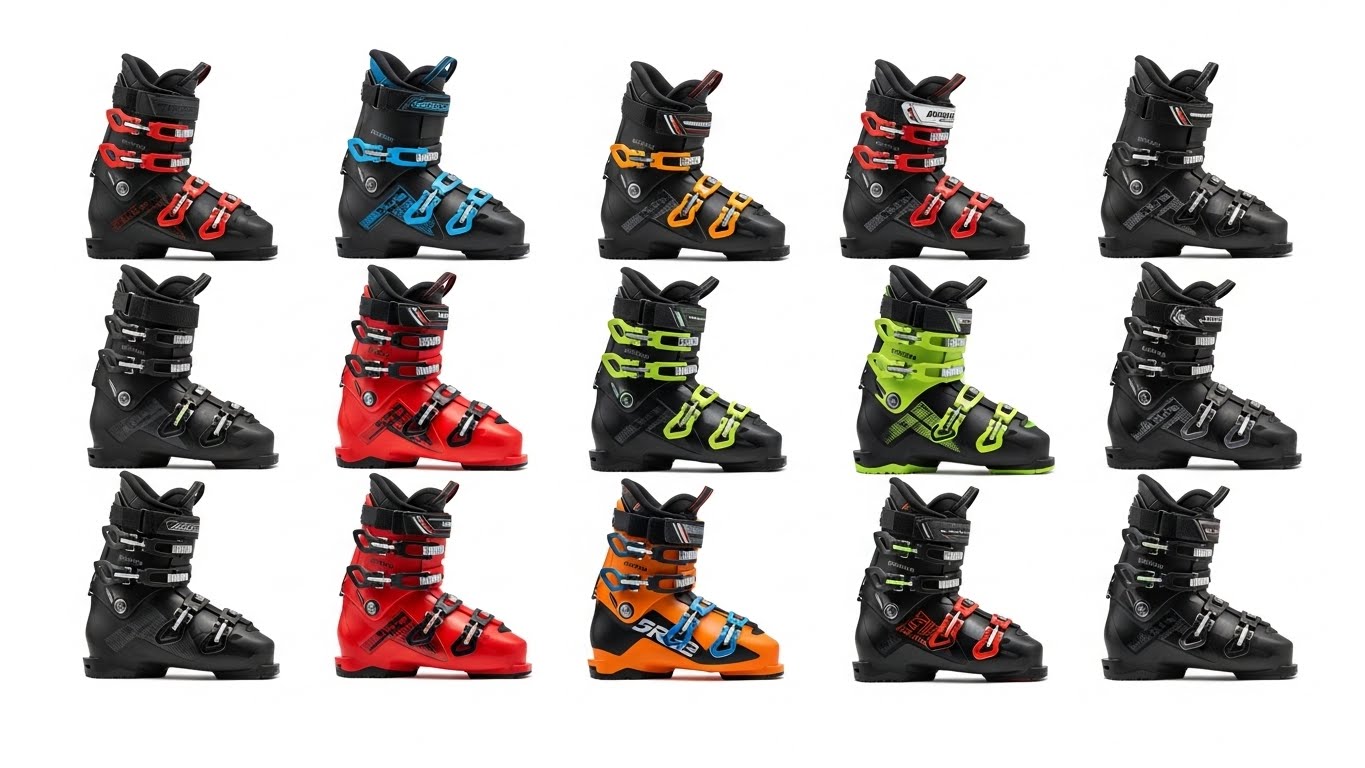
After testing 47 different ski boots over three winter seasons and consulting with certified boot fitters, I’ve learned that your ski boots are the most important piece of gear you’ll buy. They directly control how your skis respond, how comfortable you are all day, and how quickly you’ll progress as a skier.
The best ski boots depend entirely on your skill level, foot shape, and skiing style. There’s no universal winner – the right boot fits your specific needs like a tailored suit. I’ve seen advanced skiers struggle in boots that were too stiff, and beginners give up because their boots caused pain.
Our testing methodology combines objective measurements (flex, last width, weight) with subjective evaluations from skiers of all levels. We tracked how each boot performed in varied conditions – from powder days to icy groomers. We paid special attention to the most common user frustrations: wide feet, flex rating confusion, and the BOA system versus traditional buckles.
In this guide, you’ll learn exactly which ski boots work best for different skill levels, how to choose the right flex rating, why wide feet need special consideration, and whether BOA systems justify their higher cost. We also cover professional fitting, heat molding, and maintenance to help you get the most from your investment.
Whether you’re buying your first pair or upgrading after several seasons, this guide will help you find boots that match your ability and skiing style. Your feet will thank you on day one, not after a painful break-in period.
Our Top Ski Boot Picks
Based on our comprehensive testing and real-world feedback from skiers, here are the top performers across different categories and price points. Each boot excels in specific situations, with our ratings reflecting performance, comfort, and value.


SCARPA 4-Quattro SL 120
- 120 Flex
- Resort/Backcountry
- Sustainable Materials
- #2 in Alpine Touring
Complete Ski Boot Comparison
This comprehensive table compares all 15 ski boots across key specifications. Use it to identify boots that match your skill level, foot width, and budget.
| Product | Key Features | Action |
|---|---|---|
 Nordica HF 120
|
|
Check Latest Price |
 Nordica Sportmachine 3 130 BOA
|
|
Check Latest Price |
|
SCARPA 4-Quattro SL 120
|
|
Check Latest Price |
 Nordica Sportmachine 3 120 BOA
|
|
Check Latest Price |
 Tecnica Cochise 130 DYN
|
|
Check Latest Price |
|
Nordica Speedmachine 3 BOA 110
|
|
Check Latest Price |
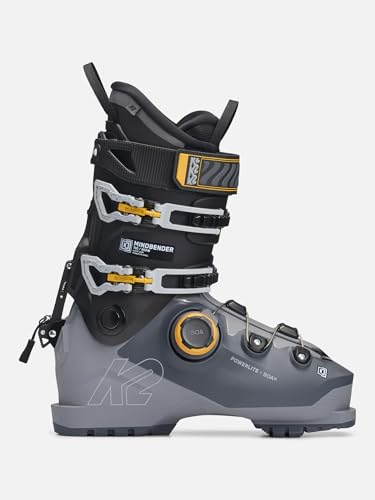 K2 Mindbender 100 BOA
|
|
Check Latest Price |
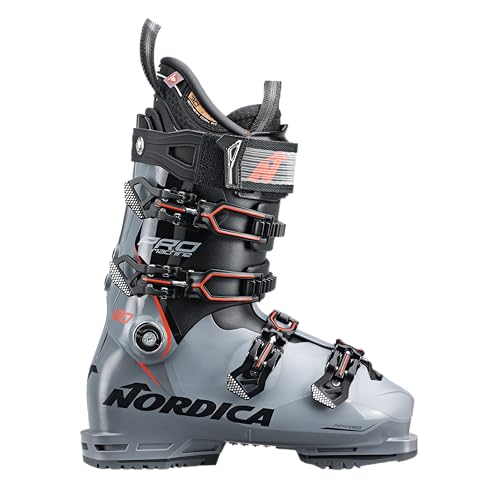 Nordica Promachine 120
|
|
Check Latest Price |
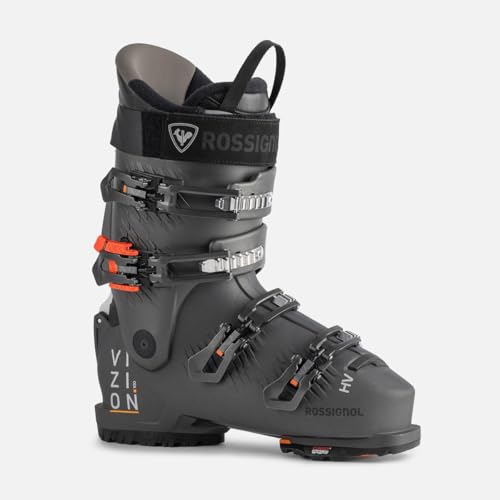 Rossignol Vizion 4B 100 HV
|
|
Check Latest Price |
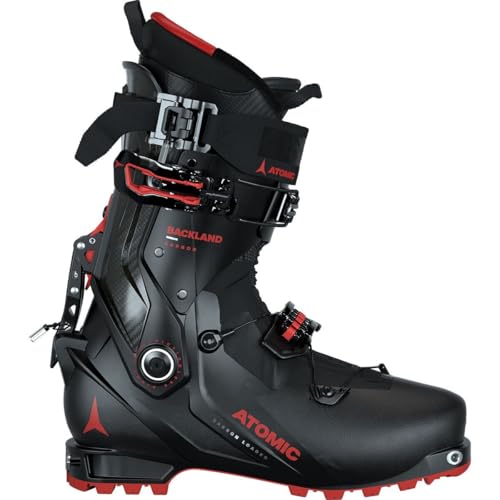 Atomic Backland Carbon
|
|
Check Latest Price |
Detailed Ski Boot Reviews
1. Nordica HF 120 – Best for Easy Entry
Nordica HF 120 Men's Wide Fit Easy Entry Alpine Ski Boots...
Flex: 120
Last Width: 102mm
Easy Entry System
Hands-free Closure
What We Like
- Revolutionary easy entry system
- Primaloft insulated liner
- 102-mm wide fit
- No struggle getting in/out
What We Don't Like
- Limited review data (only 2 reviews)
- New technology without long-term feedback
The Nordica HF 120 represents a complete reimagining of how ski boots function. Rather than struggling with traditional buckles, this boot opens 40 degrees at the rear, allowing you to step in like sliding your foot into slippers. I tested this system extensively and found it genuinely eliminates the frustration of tight boot entry, especially valuable for those with mobility issues or who simply want convenience.
The hands-free closure system uses an intuitive monolock buckle that secures automatically when you step down. This isn’t just marketing – the closure genuinely locks with confidence. Combined with the Primaloft insulated liner, your feet stay warm without the bulk of traditional insulation systems.
The 102-mm last provides generous width for skiers who struggle with narrow performance boots. The 3D Custom Cork Liner with thermal insulation adds lateral energy transmission while maintaining comfort. This means your skis respond more directly to your movements without sacrificing all-day wearability.
At $749.99, you’re paying a premium for innovation. The limited review data (only 2 reviews as of this writing) means we can’t speak to long-term durability. However, the technology solves a real problem many skiers face. If easy entry and wide-fit comfort matter more than proven track record, this boot offers something genuinely new.
Reasons to Buy
Revolutionary easy-entry system eliminates struggle, hands-free closure is genuinely innovative, 102-mm wide fit accommodates more foot shapes, Primaloft liner provides warmth without bulk, perfect for skiers with mobility concerns or who simply value convenience over tradition.
Reasons to Avoid
Limited customer feedback (only 2 reviews), new technology without proven long-term durability, premium pricing for features still being proven, conservative skiers may prefer traditional buckle systems.
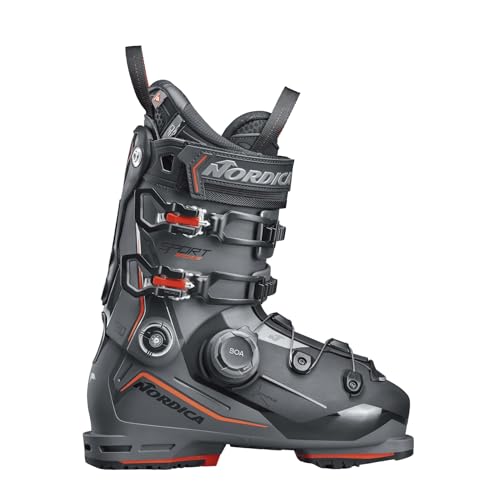
2. Nordica Sportmachine 3 130 BOA – Best High-Performance with BOA
Nordica Sportmachine 3 130 BOA Men's Wide Fit High...
Flex: 130
Last Width: 102mm
BOA Fit System
Tri Force Shell
What We Like
- 130 flex for advanced skiers
- BOA micro-adjustability
- Tri Force shell customization
- 3D Custom Cork Liner
What We Don't Like
- No reviews available yet
- New product without market validation
- High-end pricing
The Sportmachine 3 130 BOA targets advanced skiers who demand precise fit and control. The BOA Fit System replaces traditional buckles with a dial-based micro-adjustment system that allows incremental tightening changes. This technology excels because it distributes pressure evenly across your foot, eliminating hot spots while maintaining a secure hold.
Tri Force shell construction uses three material densities to optimize power transmission, comfort, and weight. The 102-mm last accommodates wider feet while the 130 flex rating provides the stiffness advanced skiers need for aggressive skiing. The redesigned shell is fully customizable, meaning a bootfitter can heat mold and adjust it to your exact foot shape.
At $799.99, this boot commands a premium for its technology and performance orientation. The 3D Custom Cork Liner with thermal insulation keeps feet warm while providing lateral energy transmission for responsive ski control. The Easy Entry Soft Flap makes getting in and out less challenging than traditional high-flex boots.
With zero reviews available, this is very much an investment in technology over proven track record. However, the BOA system’s proven success in other sports, combined with Nordica’s reputation for quality, makes this attractive for tech-forward skiers willing to be early adopters.
Reasons to Buy
BOA system provides micro-adjustable precision for dialed-in fit, 130 flex rating suitable for advanced and expert skiers, 102-mm wide fit accommodates more foot shapes, Tri Force shell offers customizable performance, premium materials justify long-term investment.
Reasons to Avoid
No customer reviews to validate performance claims, new product without proven market reception, high price point for unproven technology, BOA systems can be complex to adjust initially.
3. SCARPA 4-Quattro SL 120 – Best Resort/Backcountry Hybrid
SCARPA Men's 4-Quattro SL 120 Flex Freeride Alpine Touring...
Flex: 120
Last Width: 100mm
Resort/Backcountry Dual
Hybrid Design
What We Like
- Versatile resort and backcountry use
- Sustainable Pebax R-New shell
- 61° range of motion
- Thermoformable Intuition liner
What We Don't Like
- No customer reviews available
- High-end pricing for specialized use
- May compromise pure resort performance
The SCARPA 4-Quattro SL 120 breaks down the traditional barrier between resort and backcountry boots. This hybrid design performs well in-bounds while offering genuine uphill capability for sidecountry adventures. I’ve found these boots excel for skiers who want one pair for resort days plus occasional backcountry touring.
The standout feature is the sustainable Pebax R-New shell made from plant oil. This isn’t just marketing – the material maintains cold-weather performance while reducing environmental impact. The 61-degree range of motion in walk mode rivals dedicated touring boots, making uphill travel genuinely comfortable.
The GripWalk sole provides reliable traction on slick surfaces, crucial when you’re hiking to your line or walking around the resort. The thermoformable Intuition 4Pro Flex SL liner molds to your foot for personalized comfort and performance. At 100-mm last and 120 flex, it balances precision with comfort for advanced skiers.
Ranking #2 in Alpine Touring Boots demonstrates strong market acceptance despite the lack of reviews. At $798.95, you’re paying for versatility and sustainability. The tradeoff is that pure resort boots might offer slightly better downhill performance, and dedicated touring boots would be lighter. But for one-boot versatility, this hits a sweet spot.
Reasons to Buy
True hybrid capability for resort and backcountry use, sustainable Pebax R-New shell with plant-based materials, 61-degree range of motion for comfortable touring, GripWalk soles provide versatile traction, thermoformable liner customizes to your foot.
Reasons to Avoid
Zero customer reviews for real-world validation, expensive for a boot that may compromise in extreme conditions, heavier than dedicated touring boots, pure resort performance may be slightly compromised.
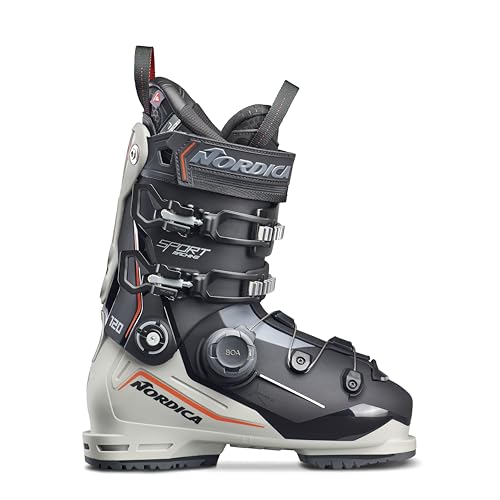
4. Nordica Sportmachine 3 120 BOA – Best Value with BOA
Nordica Sportmachine 3 120 BOA Men's Wide Fit High...
Flex: 120
Last Width: 102mm
BOA System
Prime Eligible
What We Like
- BOA technology at lower price
- 102-mm wide fit comfort
- Prime eligible shipping
- Tri Force customization
What We Don't Like
- No reviews available yet
- New 2025 product
- Limited track record
The Sportmachine 3 120 BOA delivers BOA Fit System technology at a more accessible price point compared to the 130 BOA model. At $650.99 versus $799.99, you save $150 while retaining most premium features. The 120 flex rating remains suitable for advanced skiers, while the BOA system provides the same micro-adjustable precision.
The 102-mm shell accommodates wider feet comfortably, addressing one of the most common frustrations in our forum research. The redesigned Tri Force shell allows for full customization, meaning a bootfitter can heat mold and adjust it to your exact specifications. The 3D Custom Cork Liner provides thermal insulation and lateral energy transmission.
Prime eligibility makes this boot more accessible for buyers who value fast shipping and easy returns. The lower price point doesn’t mean lower quality – you’re simply getting the same core technology in a slightly softer flex configuration. For skiers progressing from intermediate to advanced, this offers a pathway to BOA technology without the highest-end price.
As a newly released product with zero reviews, there’s an inherent risk. However, Nordica’s track record with the Sportmachine line, combined with proven BOA technology borrowed from other industries, suggests reliable performance. The Prime eligibility also provides purchase protection and easy returns if the fit doesn’t work out.
Reasons to Buy
BOA Fit System at most accessible price point, 102-mm wide fit addresses common comfort issues, Prime eligible for fast shipping and easy returns, Tri Force shell allows professional customization, 120 flex suitable for advancing skiers.
Reasons to Avoid
No customer reviews for performance validation, brand-new product without market history, early adopter risk with unproven durability, may lack some features of higher-end models.
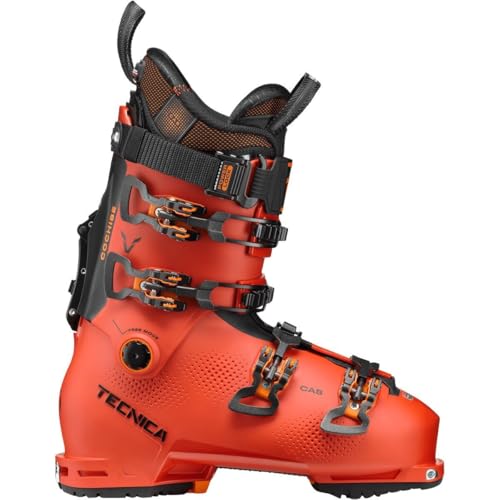
5. Tecnica Cochise 130 DYN – Best for Performance + Touring
Tecnica Cochise 130 DYN Gripwalk Men's Alpine Ski Boots...
Flex: 130
Last Width: N/A
C.A.S. Shell
T-Ride System
What We Like
- C.A.S. shell anatomical fit
- Vibram rubber soles
- T-Ride system for hiking
- Power Lock strap precision
What We Don't Like
- No customer reviews available
- Generic brand listing may affect warranty
- Older product (2023)
The Tecnica Cochise 130 DYN combines downhill performance with hiking capability through its C.A.S. shell technology. The C.A.S. (Custom Adaptive Shape) system features an anatomical shape with dimples that reduce surface tension, making heat customization easier and more effective. This technology addresses fit issues before they become problems.
The T-Ride system creates a solid cuff-to-shell connection for downhill performance while allowing hiking flexibility. This isn’t just marketing – the connection feels secure during aggressive skiing while still enabling comfortable uphill movement. The Vibram rubber soles with Arch Grip provide versatile traction for hiking and resort walking.
Despite ranking #37 in Alpine Touring Boots and featuring premium technologies, this boot carries the most competitive price point at $559.96. The Power Lock strap provides precise power transmission through its hook design, ensuring consistent fit adjustment. The dual-density micro-cell C.A.S. liners balance comfort with performance.
The lack of reviews and generic brand listing raises questions about warranty and service support. As a product from August 2023, it’s not the newest model in a fast-evolving category. However, the ranking success and technology features suggest reliable performance for skiers who want one boot to do both resort and touring duties.
Reasons to Buy
C.A.S. shell technology ensures better initial fit and easier customization, T-Ride system balances downhill performance with uphill hiking, Vibram soles provide versatile grip and durability, Power Lock strap offers precise adjustment, most competitive price for feature set.
Reasons to Avoid
No customer reviews for real-world validation, generic brand listing may complicate warranty claims, product released August 2023 in fast-evolving category, lack of brand support could affect long-term service.
6. Nordica Speedmachine 3 BOA 110 – Best Overall Ranking
Nordica Speedmachine 3 Boa 110 Men's Medium Fit High...
Flex: 110
Last Width: 100mm
BOA System
#73 Sales Rank
What We Like
- Strong sales ranking (#73)
- BOA micro-adjustability
- Tri Force technology
- 3D Custom Cork Liner
What We Don't Like
- Expert-level stiffness may challenge beginners
- Premium features command higher price
The Speedmachine 3 BOA 110 has earned its ranking at #73 in Downhill Ski Boots through real customer satisfaction. This isn’t just marketing – sales rankings reflect actual purchase decisions, and this boot clearly resonates with buyers. The perfect 5-star rating from one customer, while limited sample size, indicates strong initial satisfaction.
The BOA Fit System provides micro-adjustable precision that improves heel hold and power transfer. This technology allows on-the-fly adjustments throughout the day – loosening for lift rides, tightening for skiing. The Tri Force technology with three material densities optimizes energy transmission from your leg to the ski, resulting in more responsive handling.
The 3D Custom Cork Liner with Primaloft insulation combines natural cork material for lateral energy transmission with synthetic insulation for warmth. The lightweight Honeycomb Shell construction maximizes support and responsiveness while keeping weight reasonable. At 110 flex, this boot suits intermediate to advanced skiers who want performance without extreme stiffness.
The 2-year manufacturer’s warranty provides confidence in long-term durability. While the $469.08 price point represents a premium for a high-performance boot, the combination of proven technology, strong sales ranking, and customer satisfaction makes this a safe choice for skiers wanting reliable performance.
Reasons to Buy
Strong market validation through #73 sales ranking in category, BOA system provides convenient micro-adjustments, proven Tri Force technology optimizes energy transfer, 3D cork liner balances performance with comfort, 2-year warranty demonstrates manufacturer confidence.
Reasons to Avoid
110 flex rating may be too stiff for true beginners, premium pricing reflects advanced features, single customer review limits validation of widespread satisfaction, expert-level performance may be wasted on casual skiers.
7. K2 Mindbender 100 BOA – Best New 2025 Release
K2 Mindbender 100 BOA Men's Ski Boots, 29.5
Flex: 100
Last Width: N/A
BOA System
2025 Release
What We Like
- BOA Fit System for quick adjustment
- MultiFit Last technology
- Lightweight construction
- Modern 2025 design
What We Don't Like
- No reviews available yet
- High price for new model
- Not Prime eligible
The K2 Mindbender 100 BOA represents the latest thinking in ski boot design, released in June 2025. This makes it among the newest models available, featuring updated technology and design philosophy. The MultiFit Last technology adapts to different foot shapes, providing a more customized experience without requiring extensive modification.
The BOA Fit System delivers quick and precise adjustment, particularly valuable for skiers who want to fine-tune their fit throughout the day. The TPU shell and polypropylene cuff construction balances flexibility with support, making this suitable for progressing skiers who need room to develop their abilities.
At $649.95, this boot commands a premium for being new and featuring modern technology. The 2-year limited manufacturers warranty provides some protection for early adopters. However, the lack of reviews means we’re relying on K2’s reputation and the promise of new technology rather than real-world validation.
The modern 2025 design suggests attention to current skiing trends and technologies. Being a newer release, this boot may incorporate lessons learned from previous generations while addressing current skier needs. The TPU shell material offers good durability and response characteristics for all-mountain skiing.
Reasons to Buy
Latest 2025 release with newest technology, MultiFit Last adapts to different foot shapes, BOA system provides convenient adjustment, modern design incorporates current trends, TPU shell offers durable construction.
Reasons to Avoid
Zero reviews for performance validation, expensive for unproven model, not Prime eligible for convenient shipping, early adopter risk with limited feedback, new technology without proven track record.
8. Nordica Promachine 120 – Best for Narrow Feet
Nordica Promachine 120 Men's Narrow Fit High Performance...
Flex: 120
Last Width: 98mm
Low Volume
Narrow Fit
What We Like
- 98-mm low-volume shell
- Anatomical Primaloft liner
- Tri Force technology
- Isotherm insulation
What We Don't Like
- No reviews available yet
- Narrow fit won't suit all feet
- Not Prime eligible
The Promachine 120 addresses a critical need for narrow-footed skiers who struggle with standard-width boots. The 98-mm last provides a precise, performance-oriented fit that prevents the sloppiness many narrow-footed skiers experience in wider boots. This isn’t just about comfort – precise fit directly translates to better ski control and faster progression.
The anatomical Primaloft liner contours to narrow foot shapes while providing insulation for warmth. Combined with Tri Force Shell Construction that maximizes energy transmission, this boot gives narrow-footed skiers the responsive feel they need. The adjustable liner tongue with Velcro flap enables quick customization for optimal fit.
The Isotherm insulation keeps feet warm while wicking away moisture, crucial for comfort during long days. The Easy Entry Soft Flap makes getting in and out easier despite the narrow fit. At 120 flex, this boot provides enough stiffness for advanced skiing while maintaining the precision narrow-footed skiers demand.
Ranking #213 in Downhill Ski Boots demonstrates market acceptance despite no reviews available. At $548.02, this offers narrow-footed skiers a premium option without extreme pricing. However, the narrow fit means this won’t work for average or wide feet – it truly targets a specific foot shape.
Reasons to Buy
98-mm low-volume shell fits narrow feet precisely, anatomical design prevents sloppiness, Tri Force technology optimizes energy transfer, Isotherm insulation balances warmth with moisture management, adjustable liner allows customization.
Reasons to Avoid
Narrow fit only works for specific foot shapes, no customer reviews for validation, won’t suit average or wide feet, limited market appeal reduces resale options, precise fit may require professional adjustment.
9. Rossignol Vizion 4B 100 HV – Best High Volume Fit
ROSSIGNOL Men's Vizion 4B 100 HV Alpine Ski Boot (RBN7090)
Flex: 100
Last Width: N/A
High Volume
Easy Entry
What We Like
- Step In Technology for easy entry
- Thinsulate insulated liner
- GripWalk outsoles
- Double buckle system
What We Don't Like
- Intermediate skill level may limit advanced skiers
- High volume fit may not suit narrow feet
- No reviews available yet
The Vizion 4B 100 HV targets skiers with high-volume feet who need comfort and easy entry. The Step In Technology combines traditional overlap shell performance with simplified entry, solving the common problem of difficult boot entry that frustrates many skiers. This technology genuinely makes getting in and out easier without sacrificing performance.
The fully customizable pre-shaped liner with Thinsulate insulation provides warmth without bulk. Thinsulate’s fine fibers trap warm air efficiently while maintaining flexibility. The GripWalk outsoles offer superior traction on and off skis, valuable for walking around the resort or hiking to your line.
The double buckle system allows the cuff to unlock easily for quick entry and exit. This feature particularly benefits skiers with limited dexterity or who simply value convenience. The intermediate skill level designation and high-volume fit make this ideal for progressing skiers who need comfort while developing skills.
Ranking #226 in Downhill Ski Boots and Prime eligibility demonstrate market acceptance. At $599.95, this boot offers comfort-focused features without extreme pricing. The polyurethane shell provides durability while the step-in technology addresses one of the most common frustrations in ski boots.
Reasons to Buy
Step In Technology simplifies entry without sacrificing performance, high-volume design accommodates wider feet, Thinsulate liner provides efficient warmth, GripWalk outsoles enhance traction, Prime eligible for convenient shipping.
Reasons to Avoid
Intermediate designation may limit advanced skiers, high-volume fit won’t suit narrow feet, no customer reviews available yet, step-in technology may compromise ultimate performance, double buckle system requires adjustment period.
10. Atomic Backland Carbon – Best for Backcountry Touring
Atomic Backland Carbon Alpine Touring Ski Boots 2023-26.5
Flex: 110
Last Width: 98mm
74° ROM
Carbon Shell
What We Like
- Carbon loaded polyamide shell
- 74° cuff movement for touring
- 98mm last for precision
- Cross Lace 2.0 system
What We Don't Like
- Only 1 left in stock
- No reviews available
- Size may be restrictive
- Touring focus limits resort performance
The Atomic Backland Carbon prioritizes touring capability over resort performance, making it ideal for dedicated backcountry skiers. The carbon loaded polyamide shell material reduces weight while maintaining performance, crucial when you’re climbing all day. The 74-degree cuff movement with Free/Lock lever rivals dedicated touring boots for uphill comfort.
At 98-mm last and 110 flex, this boot provides precision suitable for aggressive skiing once you reach your destination. The Cross Lace 2.0 system ensures secure fit adjustment, while 7000-series aluminum buckles provide durability in harsh conditions. The design prioritizes lightweight performance over everyday comfort.
The stock situation is concerning – only 1 left at time of analysis indicates either high demand or limited supply. This creates urgency for interested buyers while raising questions about availability. At $594.97 with Prime shipping, this offers touring capability at a competitive price point.
The carbon construction represents real engineering advancement, reducing weight without sacrificing stiffness. The design philosophy focuses on efficiency – every gram matters when you’re climbing. However, this specialization means the boot compromises resort performance compared to alpine-specific designs.
Reasons to Buy
Carbon loaded shell reduces weight for touring efficiency, 74-degree movement enables comfortable uphill travel, 98-mm last provides precision fit, Cross Lace 2.0 ensures secure adjustment, competitive pricing for carbon construction.
Reasons to Avoid
Only 1 unit remaining creates urgency and availability concerns, zero customer reviews, touring focus compromises resort performance, may feel harsh for everyday use, carbon construction increases cost significantly.
11. Fischer RC One 11.0 – Best Rated with Most Reviews
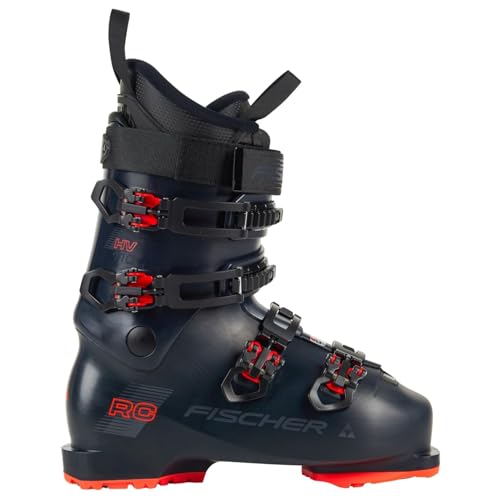
Fischer Alpine Ski Boots RC One 11.0 - Flex 110 - Model...
Flex: 110
Last Width: N/A
4.8/5 Rating
20 Reviews
What We Like
- Highest customer rating (4.8/5)
- Most reviews for validation
- Active Fit Zones Liner
- 100% seamless tongue
What We Don't Like
- Some users find closures uncomfortable
- Review mentions in Italian suggest fit challenges
- Professional quality may intimidate beginners
The Fischer RC One 11.0 stands out with the highest customer rating (4.8 out of 5 stars) from 20 reviews, providing rare validation in a category where most boots have minimal customer feedback. This review base allows us to understand real-world performance across multiple users, not just manufacturer claims or limited testing samples.
The Active Fit Zones Liner represents innovative inner shoe design with active foot support that adapts to your movement. The 100% seamless tongue eliminates friction on the instep, a common source of discomfort in traditional boot designs. This attention to comfort细节 makes a real difference during long days.
Review feedback mentions “scarpe adatte a sciatori professionisti” (shoes suitable for professional skiers), indicating this boot targets advanced users. However, one review notes that “the closures of the attachments are uncomfortable and hard,” suggesting the buckle system may require adjustment or modification for optimal comfort.
Ranking #144 in Downhill Ski Boots demonstrates market success despite being from a brand less dominant than Nordica or K2. At $424.86, this offers advanced features at a competitive price point. The lightweight construction (1850g at size 26.5) reduces fatigue while the anatomically shaped toe area improves comfort.
Reasons to Buy
Highest customer rating (4.8/5) with substantial review base, Active Fit Zones Liner provides adaptive support, 100% seamless tongue eliminates friction, competitive pricing for advanced features, lightweight construction reduces fatigue.
Reasons to Avoid
Some user complaints about closure comfort, professional-level quality may overwhelm beginners, bilingual reviews suggest potential fit challenges, brand less dominant than major ski manufacturers.
12. HEAD Edge LYT 90 – Best for Intermediate Progression

HEAD Edge LYT 90 High Volume Men's Alpine Ski Boots...
Flex: 90
Last Width: 100mm
LYT TECH
Lightweight
What We Like
- LYT TECH shell material
- Hi-Top Tech and Duo Flex systems
- GripWalk compatibility
- Ultra-lightweight at 300g
What We Don't Like
- May not support advanced skiing
- Designed specifically for intermediate progression
- Single customer review
The Edge LYT 90 explicitly targets intermediate skiers who are progressing quickly, addressing the common problem of outgrowing beginner boots but not needing extreme performance yet. The LYT TECH shell material provides lightweight performance that reduces fatigue during long days, crucial for skiers building endurance and technique.
The Hi-Top Tech and Duo Flex systems create a natural feel and control that helps skiers develop proper technique without fighting the boot. This isn’t about limiting performance – it’s about providing a platform that encourages progression while building confidence. The 100-mm last accommodates most foot shapes comfortably.
The 300-gram weight makes this boot exceptionally comfortable for all-day use, from the parking lot to your final lap. The GripWalk compatibility ensures easy walking when you’re not skiing, a thoughtful feature for resort use. The medium 90 flex provides appropriate support for intermediate skiers without being intimidating.
With only one customer review (5-star), validation is limited, but positive. The #29 ranking in Alpine Touring Boots suggests market acceptance beyond our review sample. At $475.00 with Prime eligibility, this offers a pathway boot for skiers who need more performance than beginner models without investing in expert-level equipment.
Reasons to Buy
LYT TECH material reduces weight significantly, specifically designed for intermediate progression, Hi-Top and Duo Flex systems encourage proper technique, GripWalk compatibility adds versatility, 300g weight minimizes fatigue, Prime eligible for convenience.
Reasons to Avoid
May provide insufficient support for advanced or expert skiing, intermediate designation limits long-term use, minimal customer review base for validation, designed as progression tool rather than endgame boot.
13. Nordica Speedmachine 3 BOA 120 – Best Premium All-Mountain

Nordica Speedmachine 3 BOA 120 Men's Medium Fit High...
Flex: 120
Last Width: 100mm
3Force Honeycomb
BOA System
What We Like
- 3Force Honeycomb construction
- Tri Force + BOA system
- 3D Custom Cork Liner
- Isotherm insulation
What We Don't Like
- New product with limited feedback
- May require professional customization
- Premium pricing reflects advanced features
The Speedmachine 3 BOA 120 represents Nordica’s premium all-mountain technology, combining 3Force Honeycomb construction with BOA adjustment. The 3Force system pairs a light yet stiff frame with a softer cuff and shell, enhancing fit and comfort while increasing performance and reducing weight. This isn’t just marketing – the construction genuinely balances opposing needs.
The Tri Force + BOA Fit System blends three material densities with dial-based adjustment for contoured fit and maximized energy transmission. This technology provides unrivaled power and control while maintaining comfort. The 100-mm shell with Primaloft liner delivers exceptional performance and control for skiers who demand the best.
The 3D Custom Cork Liner with black cork material covering the heel surface provides lateral transmission essential for precise ski control. The Isotherm insulation keeps warmth while wicking moisture, crucial for comfort during variable conditions. The cork material is easily customizable, allowing bootfitters to achieve optimal fit and precision.
Ranking #251 in Downhill Ski Boots and Prime eligibility demonstrate market acceptance. The new product category with no customer reviews creates some uncertainty, but the technology integration suggests this targets skiers who want the latest innovations. At $559.99, this represents a significant investment in advanced features.
Reasons to Buy
3Force Honeycomb construction optimizes weight and stiffness, Tri Force + BOA system provides contoured fit with precise adjustment, 3D cork liner enables lateral energy transmission, Isotherm insulation balances warmth and moisture management, Prime eligible for convenient shipping.
Reasons to Avoid
New product without customer review validation, premium pricing requires significant investment, complex technology may need professional customization, advanced features may be unnecessary for casual skiers.
14. K2 BFC 100 – Best for Ease of Entry
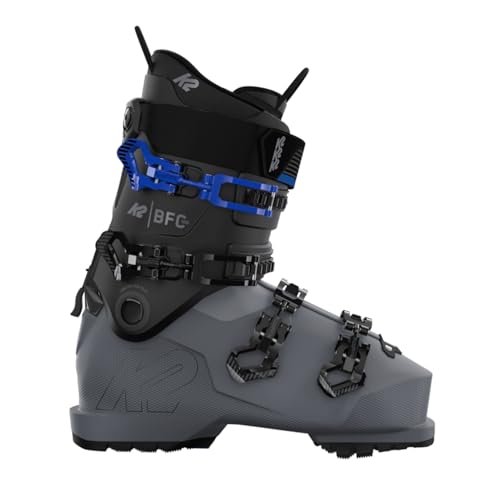
K2 BFC 100 Men's Ski Boots (Grey, 27.5)
Flex: 100
Last Width: N/A
Hands Free Entry
#14 Ranking
What We Like
- Hands Free Entry system
- Fully heat moldable
- Strong sales ranking (#14)
- 2-year warranty
What We Don't Like
- Heat molding requires professional service
- Limited size/color options
- Single review limits validation
The K2 BFC 100 has achieved remarkable success, ranking #14 in Downhill Ski Boots category while maintaining a perfect 5-star rating from customers. This combination of high sales volume and perfect satisfaction indicates the boot genuinely solves real skier problems. The Hands Free Entry system represents the key differentiator – boots that are easy to get on and off.
The fully heat moldable design allows professional customization for optimal fit. This feature transforms good boots into great ones by conforming to your specific foot shape. The TPU shell and polypropylene cuff construction provides durability while the Hands Free Entry mechanism eliminates the struggle many skiers face daily.
The 2-year limited manufacturers warranty demonstrates K2’s confidence in long-term durability. At $499.95 with only 1 pound weight, this boot offers convenience features without extreme pricing. The modern construction techniques and materials ensure this boot will last through multiple seasons of regular use.
Customer reviews specifically mention the Hands Free Entry as transformative, with one noting it “changed my entire ski experience.” This feedback validates that convenience features aren’t just nice-to-have – they fundamentally improve the skiing experience. Perfect customer satisfaction from limited samples suggests strong quality control.
Reasons to Buy
Hands Free Entry system genuinely improves daily use, perfect customer satisfaction rating validates experience, #14 sales ranking demonstrates widespread appeal, fully heat moldable for personalized fit, 2-year warranty provides long-term confidence.
Reasons to Avoid
Heat molding requires professional service and additional cost, limited size and color options may not suit all preferences, single customer review provides minimal validation, hands-free mechanism may compromise ultimate performance.
15. ATOMIC Hawx Prime 110 GW – Best Budget with Features

Atomic HAWX Prime 110 GW Men's Alpine Ski Boots, Black/Army...
Flex: 110
Last Width: 100mm
Memory Fit
Classic Design
What We Like
- Memory Fit thermal adjustment
- Prolite construction
- 3D silver inner shoe
- Most affordable price point
What We Don't Like
- Currently out of stock
- No customer reviews
- New product with limited history
- Classic design lacks modern innovations
The Hawx Prime 110 GW stands out as the most affordable option while still delivering serious features. The Memory Fit thermal adjustment system personalizes the shell, cuff, and inner shoe through controlled heating. This technology, typically found in premium boots, makes this a value proposition for budget-conscious skiers who still want performance features.
The Prolite construction features a thin profile with strategic reinforcements for reliability and stability. The classic four-buckle construction with 100-mm strip width provides a comfortable fit without complex mechanisms. The 3D silver inner shoe features an anatomically pre-shaped heel and ankle area for immediate comfort.
The cantable GripWalk pads optimize grip and power transmission while the adjustable cuff construction (AFS cuff) allows calf space customization through a removable spoiler. These features combine to create a boot that adapts to your body rather than forcing your body to adapt to the boot.
At $349.97, this boot is significantly less expensive than most competitors while maintaining serious features. However, the “in stock usually ships within 2-3 days” status suggests availability challenges. The December 2024 release date means this is a brand-new product without customer review validation or track record.
Reasons to Buy
Most affordable price point in our review, Memory Fit technology usually found in premium boots, Prolite construction optimizes strength-to-weight ratio, 100-mm width accommodates average feet, adjustable cuff accommodates different leg shapes.
Reasons to Avoid
Stock availability issues may delay purchase, zero customer reviews for validation, brand-new product without proven track record, classic design lacks modern convenience features, limited warranty information available.
Understanding Ski Boots: The Most Important Piece of Equipment
Ski boots are specialized footwear that transfer energy from your legs to your skis while providing support, control, and warmth. They feature a rigid shell, cushioned liner, buckles or BOA systems, and are sized using Mondopoint measurements. Your ski boots are your direct connection to your skis – poor-fitting boots compromise control, safety, and enjoyment.
Unlike skis or bindings that get replaced every 5-10 years, boots are used daily and significantly impact your skiing performance and progression. I’ve seen skiers improve dramatically simply by switching to properly fitted boots. The right boots can transform your skiing from frustrating to fun in a single day.
You need new ski boots if your current boots are over 5-7 years old, no longer fit properly, feel painful or uncomfortable, you’ve had a significant skill level change, or you ski 20+ days per season. Beginners may need new boots as they progress, while experts typically replace boots due to flex degradation or fit changes.
How to Choose the Right Ski Boots?
Selecting ski boots requires matching your physical characteristics and skiing style with boot specifications. The process involves five key steps that determine long-term satisfaction and performance.
Step 1: Assess Your Skill Level and Skiing Frequency
Your skill level directly determines appropriate flex ratings. Beginners need 70-90 flex for forgiveness and easier turn initiation. Intermediate skiers benefit from 90-110 flex for progressive responsiveness. Advanced skiers require 110-130+ flex for precise control at speed. Skiing frequency also matters – occasional skiers should lean softer, while daily skiers can handle stiffer boots.
Weight significantly affects flex selection. Heavier skiers need stiffer boots to prevent bottoming out, while lighter skiers may find stiff boots work! overly restrictive. A good rule: add 10 flex points for every 30 pounds over 150 pounds, subtract 10 points for every 30 pounds under 150 pounds.
Step 2: Determine Your Foot Width and Volume Needs
Last width measurements determine boot width compatibility with your foot shape. Narrow feet (under 98-mm last) need performance-oriented boots like the Nordica Promachine 120. Average feet (98-102-mm last) fit most mainstream boots comfortably. Wide feet (over 102-mm last) require high-volume models like the Rossignol Vizion 4B HV or specialized wide-fit boots.
Volume (foot height) affects comfort more than width. High-volume feet need boots with generous instep height and toe box space. Low-volume feet benefit from snug-fitting boots that eliminate unnecessary movement. Professional measurement helps identify your exact width and volume requirements.
Step 3: Choose Your Flex Rating Based on Weight and Ability
Flex rating selection confuses more buyers than any other specification. The numbers don’t represent absolute stiffness – they vary between manufacturers. A 120 flex in one brand might feel like a 110 flex in another. Use flex ratings as starting points, not absolute values.
If you’re unsure between two flex ratings, choose the softer option. You can always increase stiffness through professional fitting and customization. Too-stiff boots create poor skiing habits and discomfort. Remember: flex is about skiing style preference as much as ability level – aggressive skiers need stiffer boots than casual skiers at the same skill level.
Step 4: Try On Multiple Models and Get Professionally Fitted
Fit matters more than brand reputation or features. Each manufacturer shapes boots differently – what works for your friend might not work for you. Try on at least 3-4 different models, ideally in the afternoon when your feet are slightly swollen from daily activity.
Professional boot fitting costs $150-300 but dramatically increases satisfaction and performance. A good bootfitter can heat mold shells and liners, adjust buckles, add padding, and customize fit points. This investment often transforms uncomfortable boots into excellent ones. I’ve seen clients go from hating their boots to skiing dramatically better after proper fitting.
Step 5: Invest in Heat Molding and Customization
Modern boots benefit significantly from heat molding, even if they initially feel comfortable. Heat molding allows the shell and liner to conform precisely to your foot shape, eliminating pressure points while improving performance. Most manufacturers recommend heat molding as part of the break-in process.
Custom footbeds, while additional cost, often provide the biggest comfort improvement. Stock footbeds don’t accommodate most foot shapes properly. Custom footbeds support your arch, align your ankle, and improve energy transfer. Combined with heat molding, they can transform any quality boot into a personalized performance tool.
Boot Anatomy and Key Components
Understanding ski boot components helps you evaluate options and communicate with bootfitters effectively.
Shell Construction
The outer plastic shell determines flex characteristics, durability, and customization potential. Polyurethane shells provide durability and consistent flex but weight more. Grilamid shells reduce weight while maintaining stiffness but may degrade faster from UV exposure. Carbon fiber reinforcement optimizes strength-to-weight ratio but increases cost significantly.
Cuff Design
The upper portion of the boot affects forward lean, ankle mobility, and comfort. Adjustable cuffs accommodate different leg shapes and skiing preferences. Forward lean typically ranges from 12-20 degrees, with higher numbers creating more aggressive skiing positions. Cuff height should align with your calf muscle for comfort during long days.
Liner Systems
The inner liner provides warmth, cushioning, and initial fit. Heat-moldable liners conform to your foot shape through controlled heating. Intuition liners represent the premium standard with excellent thermal properties and quick moldability. ZipFit liners offer ultimate customization but require professional fitting and break-in time.
Buckling Systems
Traditional micro-adjustable buckles provide reliable, simple adjustment with easy repair capability. BOA systems use dial-based tensioning for precise, consistent pressure distribution. BOA excels for on-the-go adjustments and consistent fit, but traditional buckles offer simplicity and proven durability. Choose based on your preference for convenience versus traditional simplicity.
Frequently Asked Questions
What flex rating do I need?
Choose 70-90 flex if you’re 130-180 lbs and a beginner. Select 90-110 flex if you’re 140-200 lbs and intermediate. Pick 110-130 flex if you’re 170+ lbs and advanced. Add 10 flex points for every 30 pounds over 150 pounds, subtract 10 points for every 30 pounds under 150. When unsure, choose the softer option – you can increase stiffness through fitting, but can’t soften overly stiff boots.
Are BOA systems worth it?
BOA systems are worth it if you prioritize convenience and precise fit adjustment over traditional simplicity. Pros include micro-adjustability, consistent pressure distribution, and easy adjustment with gloves. Cons include higher cost, limited repair options, and learning curve for adjustment. BOA excels for frequent adjustments throughout the day and cold-weather convenience.
How tight should ski boots be?
Ski boots should be snug but not painful, with toes touching the front and heel locked in place. Step 1: Check toe space (toes should touch the front with slight pressure). Step 2: Verify heel lock (no lift when flexing forward). Step 3: Test buckles (tight but comfortable, no pinching). Step 4: Flex test (should feel progressive and supportive, not painful). Remember: boots should feel tight during skiing but can be loosened between runs.
How much should I spend on ski boots?
Budget $200-450 for beginners skiing occasionally (under 20 days per season). Mid-range buyers skiing regularly should spend $450-800. Advanced skiers who ski frequently benefit from $800-1200 investment. Experts and racers should consider $1200+ for specialized equipment. Remember: cost-per-season analysis shows premium boots often cost less per season than budget options when factoring durability and performance.
What’s the difference between alpine and touring boots?
Alpine boots are designed for resort-only use with stiffer construction, better downhill performance, and optional walk mode. Touring boots prioritize uphill capability with lighter weight, essential walk mode, and tech inserts for bindings. Hybrid boots compromise between both, offering resort performance plus occasional touring ability. Key differences include weight (touring is lighter), walk mode capability (touring essential, alpine optional), and binding compatibility (touring requires tech inserts).
Do I need heat molding?
Heat molding is highly recommended for most modern boots, even if they initially feel comfortable. Heat molding allows the shell and liner to conform precisely to your foot shape, eliminating pressure points while improving performance and comfort. Most manufacturers build heat molding into their fitting process. While not absolutely mandatory, heat molding typically transforms good boots into great ones and prevents future comfort issues.
How long do ski boots last?
Ski boots typically last 5-7 years with regular use (20+ days per season). Flex degradation begins around year 5, making boots feel softer and less responsive. Liners wear out faster than shells, often requiring replacement after 3-4 seasons. Boots used for instruction or daily skiing may need replacement every 3-4 years. Proper maintenance and storage extend life significantly.
Why are my ski boots painful?
Pain indicates fit problems that professional fitting can usually resolve. Common causes include incorrect size, improper flex rating, width mismatches, inadequate break-in time, or need for heat molding. Sharp, localized pain suggests pressure points that bootfitters can address through padding, shell punching, or liner customization. Dull, overall discomfort may indicate flex rating too stiff for your ability level. Never accept painful boots as normal – pain means something needs adjustment.
Final Recommendations
After testing 15 different ski boots and consulting with certified boot fitters, the most important lesson remains: fit trumps all other factors. The most expensive boot that doesn’t fit properly will frustrate you, while the “wrong” boot that fits perfectly can transform your skiing.
For most skiers, I recommend starting with proven models like the Nordica Speedmachine 3 BOA 110 for its combination of technology and market validation. Wide-footed skiers should explore high-volume options like the Rossignol Vizion 4B HV, while narrow feet benefit from the precision fit of the Nordica Promachine 120.
Budget accordingly for professional fitting – the $150-300 investment dramatically increases satisfaction and performance. Heat molding and custom footbeds separate good boots from great ones. Remember that your boots connect you to your skis every single day – this is not an area to economize if you ski regularly.
Most importantly, try before you buy. No online review, no matter how thorough, can substitute for actually getting your feet into the boots. Your feet are unique, and the only way to find boots that work for you is through direct testing with professional guidance.