If you have been eyeing an instant camera, Prime Day is one of the smartest times to buy. Every year, Amazon slashes prices on popular Fujifilm Instax and Polaroid cameras, sometimes dropping them 20 to 40 percent below retail. I have tracked these deals for the past three Prime Day events, and the savings are real, especially on bundle deals that throw in extra film packs.
Finding the right Instax polaroid cameras Prime Day deals can feel overwhelming with so many models, film types, and bundle options competing for your attention. That is exactly why I put together this guide. Our team compared 10 of the most popular instant cameras available right now, from budget-friendly Instax options to premium Polaroid models with advanced autofocus systems.
Whether you are shopping for a teen who wants their first instant camera, looking for a wedding photo station centerpiece, or just want a fun way to capture memories on vacation, there is a model here that fits. I will walk you through what makes each camera worth considering, who it is best for, and what to watch out for before you hit buy.
Top 3 Picks for Instant Cameras This Prime Day


Instax Mini EVO
- Hybrid digital + instant
- 100 creative effects
- Bluetooth app
- Save to microSD

Polaroid Now 3rd Gen
- Twin-lens autofocus
- USB-C rechargeable
- Film bundle included
- Full-size Polaroid prints
Best Instax and Polaroid Cameras for Prime Day in 2026
| Product | Key Features | Action |
|---|---|---|
|
Instax Mini 12 - Lilac Purple
|
|
Check Latest Price |
|
Instax Mini EVO
|
|
Check Latest Price |
 Instax Mini 41
|
|
Check Latest Price |
 Polaroid Go Gen 2
|
|
Check Latest Price |
 Polaroid Now+ 3rd Gen
|
|
Check Latest Price |
 Polaroid Now (Renewed)
|
|
Check Latest Price |
|
Polaroid Now 3rd Gen Bundle
|
|
Check Latest Price |
 Polaroid Go Gen 2 Bundle
|
|
Check Latest Price |
 Polaroid Flip
|
|
Check Latest Price |
 Refurbished Polaroid Go
|
|
Check Latest Price |
1. Fujifilm Instax Mini 12 – The Bestselling Instant Camera
Fujifilm Instax Mini 12 Instant Camera - Lilac Purple
Compact twist-on design
Built-in selfie mirror
Auto exposure and flash
Prints in ~5 seconds
Uses Instax Mini film
What We Like
- Simple twist-on operation
- Compact and portable
- Multiple color options
- Automatic exposure control
- Very affordable entry point
What We Don't Like
- No digital preview
- Fixed settings no manual control
- Film cost adds up over time
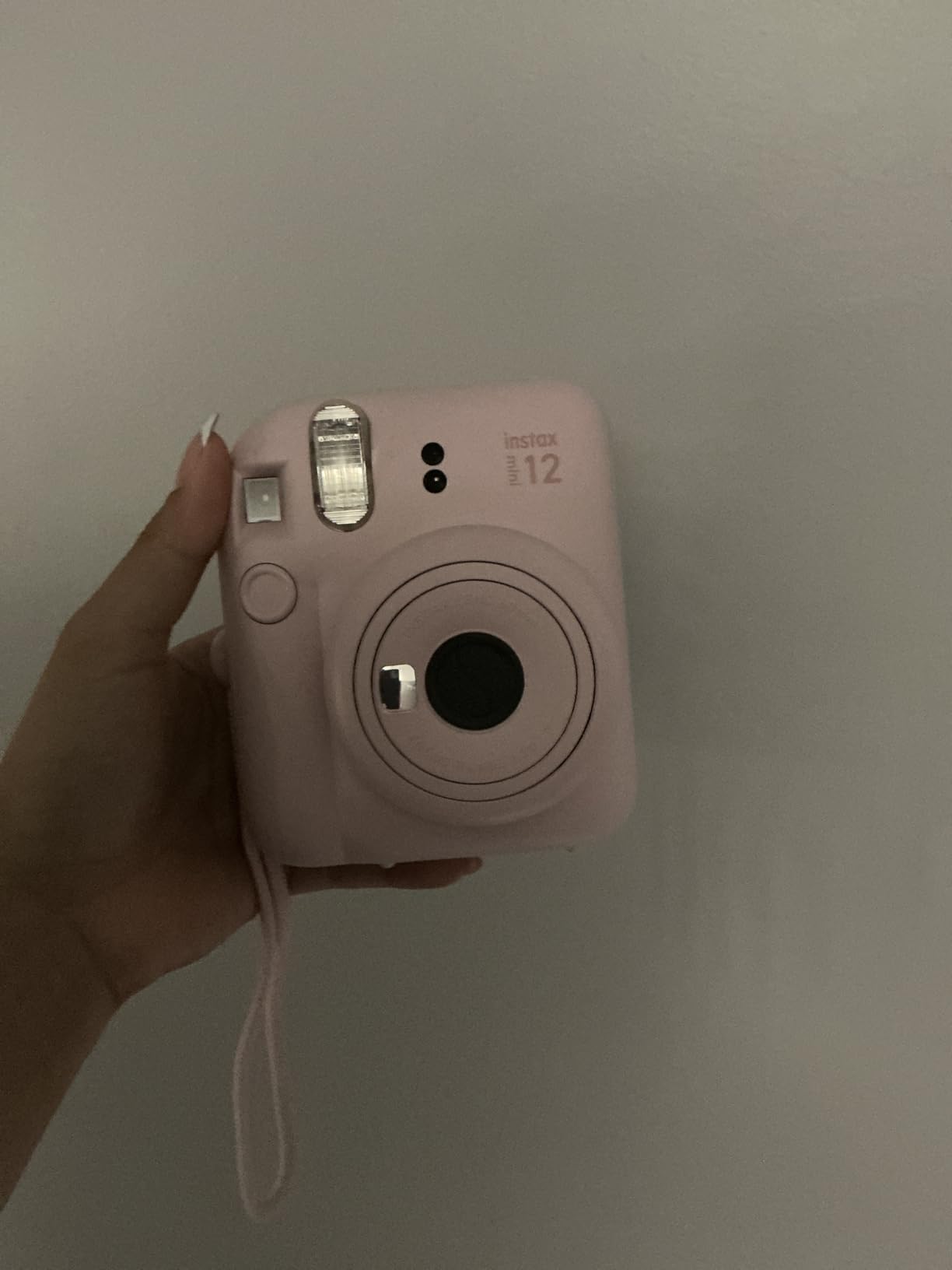
The Instax Mini 12 is the camera I recommend to absolutely everyone who asks where to start with instant photography. I picked one up last summer and within 20 minutes I was handing out prints at a backyard barbecue. The twist-to-turn-on mechanism is satisfying and simple, which means even young kids can figure it out without a tutorial.
What surprised me most was how consistent the auto exposure turned out. Indoors, outdoors, near a window, at sunset, the Mini 12 adjusts itself well enough that you rarely get a totally wasted shot. That matters because every click costs about $1.20 to $1.35 in film, which is already cheaper than Polaroid film by a significant margin.
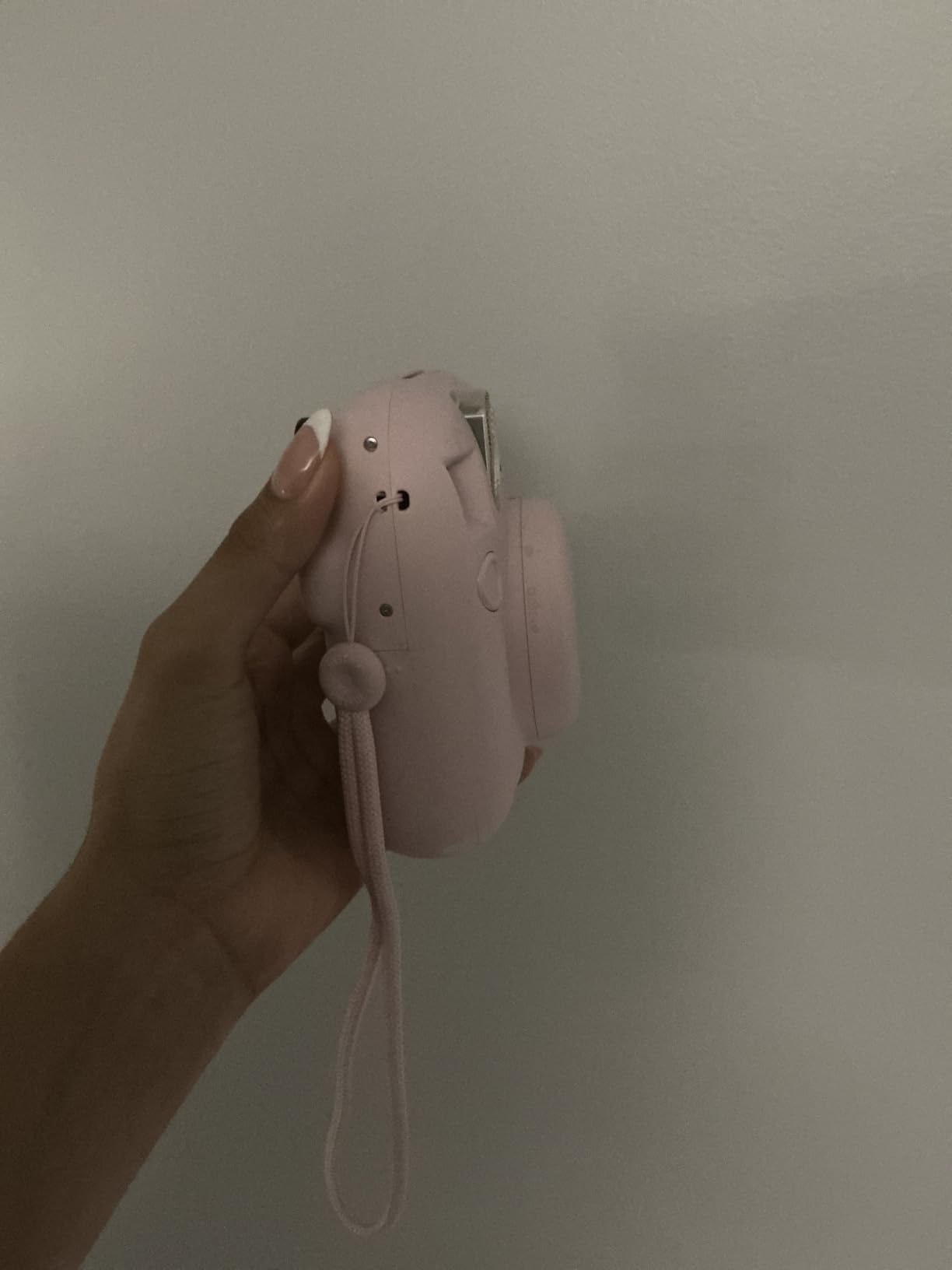
The built-in selfie mirror is a small reflective circle next to the lens, and it actually works for framing close-up shots. You twist the lens barrel outward to activate close-up mode, which brings the focal range down to about 10 inches. Without that twist, the closest focus is roughly two feet, so selfies without close-up mode end up blurry.
At just one pound with batteries installed, this camera slips into a bag or large pocket without weighing you down. The print time is roughly five seconds to eject and about 90 seconds to fully develop. Colors tend to lean warm and slightly overexposed in bright sun, but most people find that look charming rather than problematic.
Who Should Buy the Instax Mini 12
This is the perfect first instant camera for teens, kids ages 8 and up, and anyone who wants point-and-shoot simplicity without learning photography basics. It is also an excellent gift camera because it works right out of the box with included AA batteries. Wedding planners love these for guest photo stations because the operation is foolproof.
Who Should Skip It
If you want digital features like saving photos to your phone or previewing shots before printing, look at the Instax Mini EVO instead. The Mini 12 is purely analog, so every press of the shutter costs you a sheet of film. Photographers who want manual control over exposure or focus will find this too limited.
2. Fujifilm Instax Mini EVO – The Hybrid Powerhouse
Fujifilm Instax Mini EVO Instant Camera
Hybrid digital + instant film
10 lens x 10 film effects
LCD screen for preview
Bluetooth smartphone printing
Save to microSD card
What We Like
- 100 creative effect combinations
- Preview shots on LCD before printing
- Bluetooth app connectivity
- Save images to microSD card
- Dual shutter buttons for portrait and landscape
What We Don't Like
- Cannot transfer digital files directly to phone
- Higher price than basic Instax models
- Screen hard to see in bright sunlight
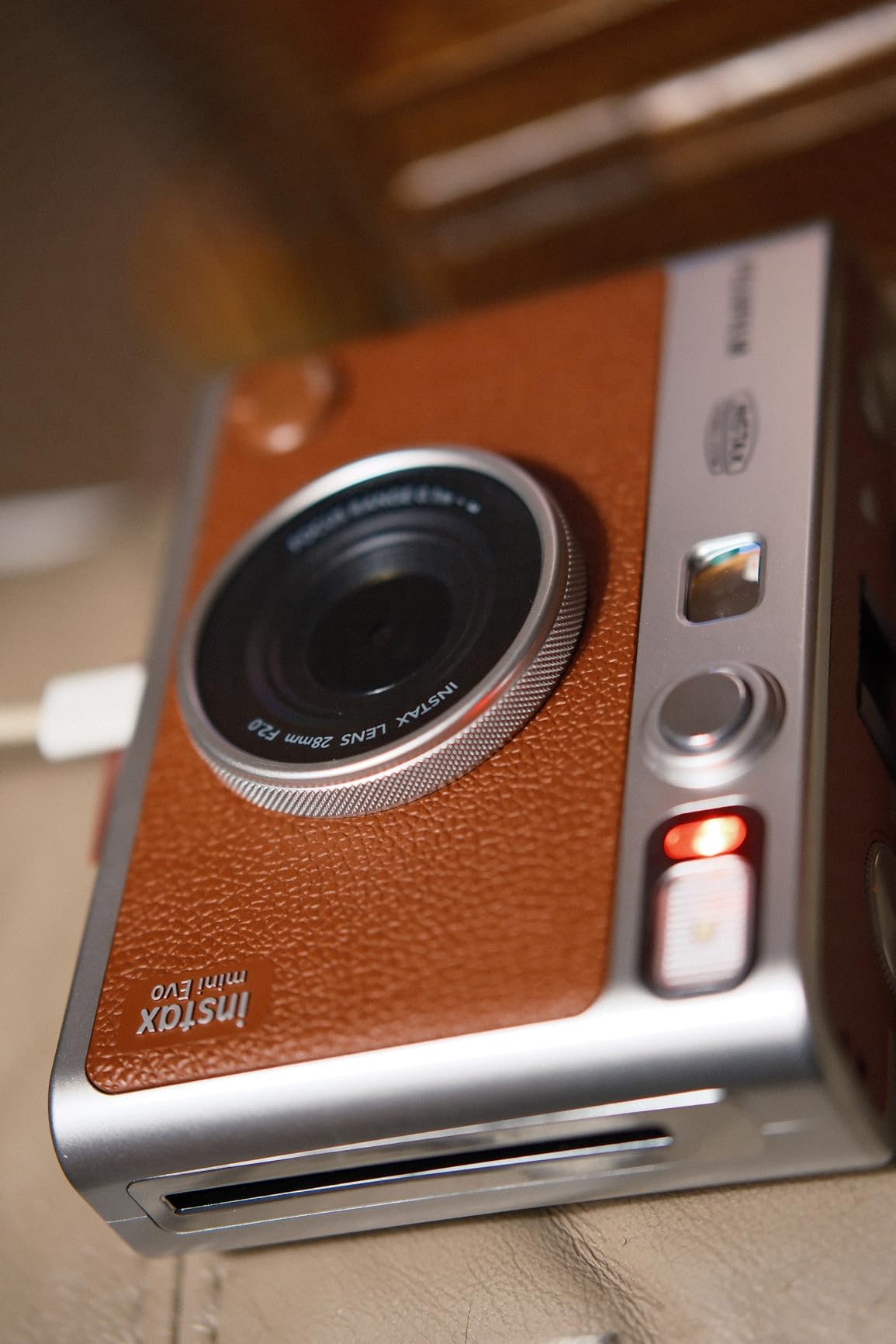
The Mini EVO is the instant camera I reach for when I want to be intentional about my shots. Unlike the Mini 12 where every shutter press uses film, the EVO lets you preview your photo on the 2-inch LCD screen before deciding to print. That single feature saved me from wasting at least 30 sheets of film during a two-week trip to Japan.
The 10 lens effects cross-combined with 10 film effects give you 100 creative looks, and some of them are genuinely fun. The vignette effect adds a dark border that looks vintage without being cheesy. The light leak filter adds warm color streaks that mimic old film stock. You can apply these before or after taking the shot since everything is stored digitally first.
Bluetooth connectivity lets you print photos from your smartphone through the Instax Mini EVO app, which turns the camera into a portable photo printer. I used this feature at a birthday party where friends texted me photos from their phones and I printed them on the spot. The app also enables remote shooting so you can set the camera on a tripod and trigger it from across the room.
The dual shutter buttons are a clever touch. One is positioned for portrait orientation and one for landscape, so you never have to awkwardly reach across the camera body. Build quality feels solid with a faux-leather texture that gives it a premium feel. At 10 ounces it is lighter than it looks, and the compact body fits easily in a jacket pocket.
Who Should Buy the Instax Mini EVO
Photography enthusiasts who want creative control without the waste of purely analog shooting will love this camera. It is also ideal for content creators who want to print smartphone photos on the go, and for anyone attending events where you want to be more selective about which moments become physical prints.
Who Should Skip It
One frustrating limitation is that you cannot transfer the digital files directly to your phone unless you print them first and then scan via the app. If seamless smartphone integration is your priority, you might prefer a dedicated portable photo printer. The higher price also means it is a bigger investment if you just want casual party photos.
3. Fujifilm Instax Mini 41 – Retro Style Meets Simplicity
Fujifilm Instax Mini 41 Instant Film Camera
Premium retro design
Selfie mirror with close-up mode
Automatic exposure and flash
Uses Instax Mini film
Compact 12.16 oz body
What We Like
- Elegant retro aesthetic
- Simple twist-to-on operation
- Excellent low-light performance
- Affordable Instax Mini film
What We Don't Like
- Flash cannot be turned off
- No digital features
- Film cost adds up with frequent use
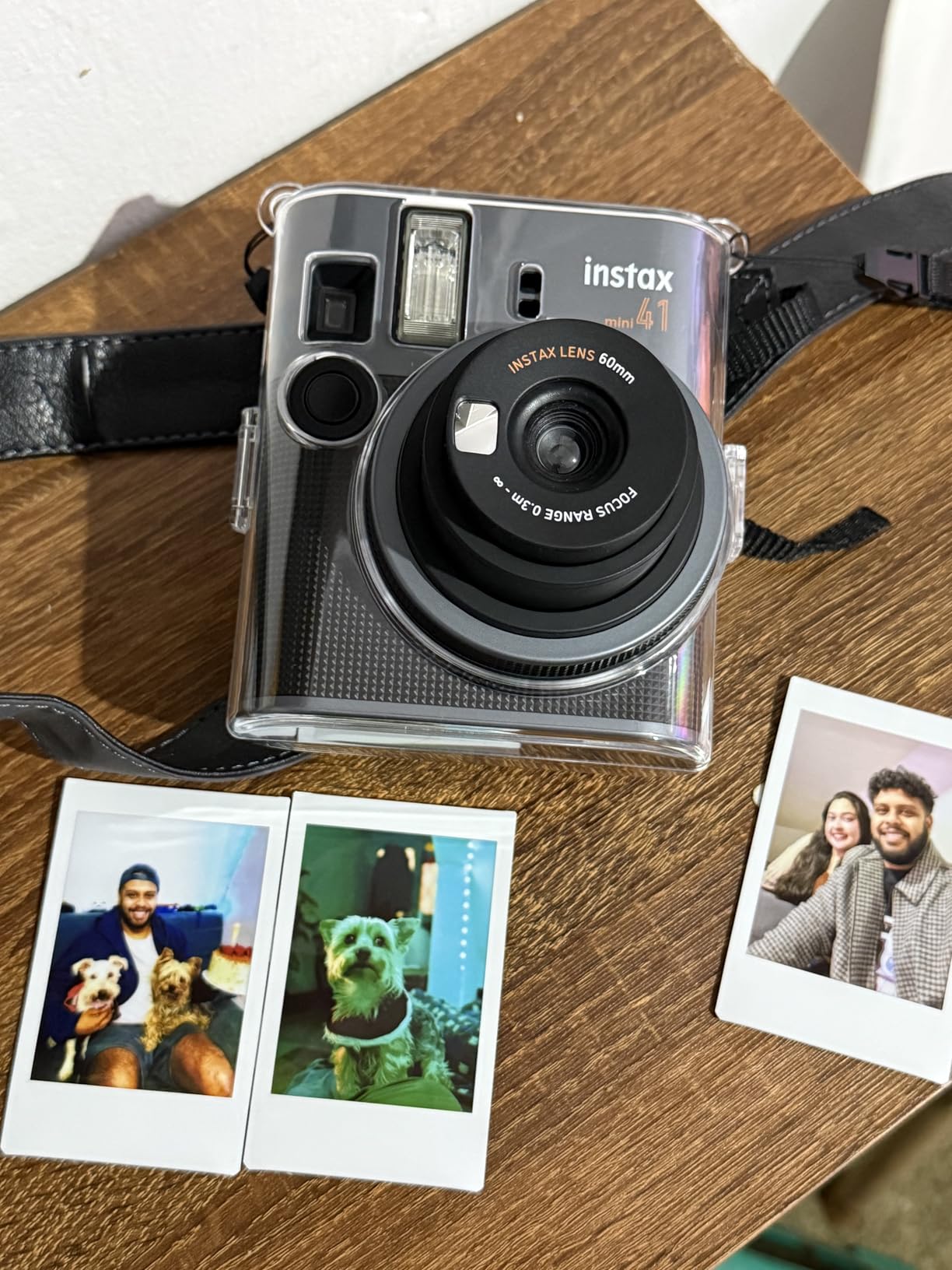
The Instax Mini 41 takes everything people love about the Mini 12 and wraps it in a more refined, grown-up design. I tested this camera at a dinner party and three separate guests asked where I got it because the matte black body and clean lines make it look like a camera that costs twice the price.
Under the surface, the Mini 41 shares a lot of DNA with the Mini 12. You get the same twist-to-power-on mechanism, automatic exposure, built-in flash, and selfie mirror with close-up mode. The key difference is the design language, which feels more intentional and less toy-like than the colorful Mini 12 variants.
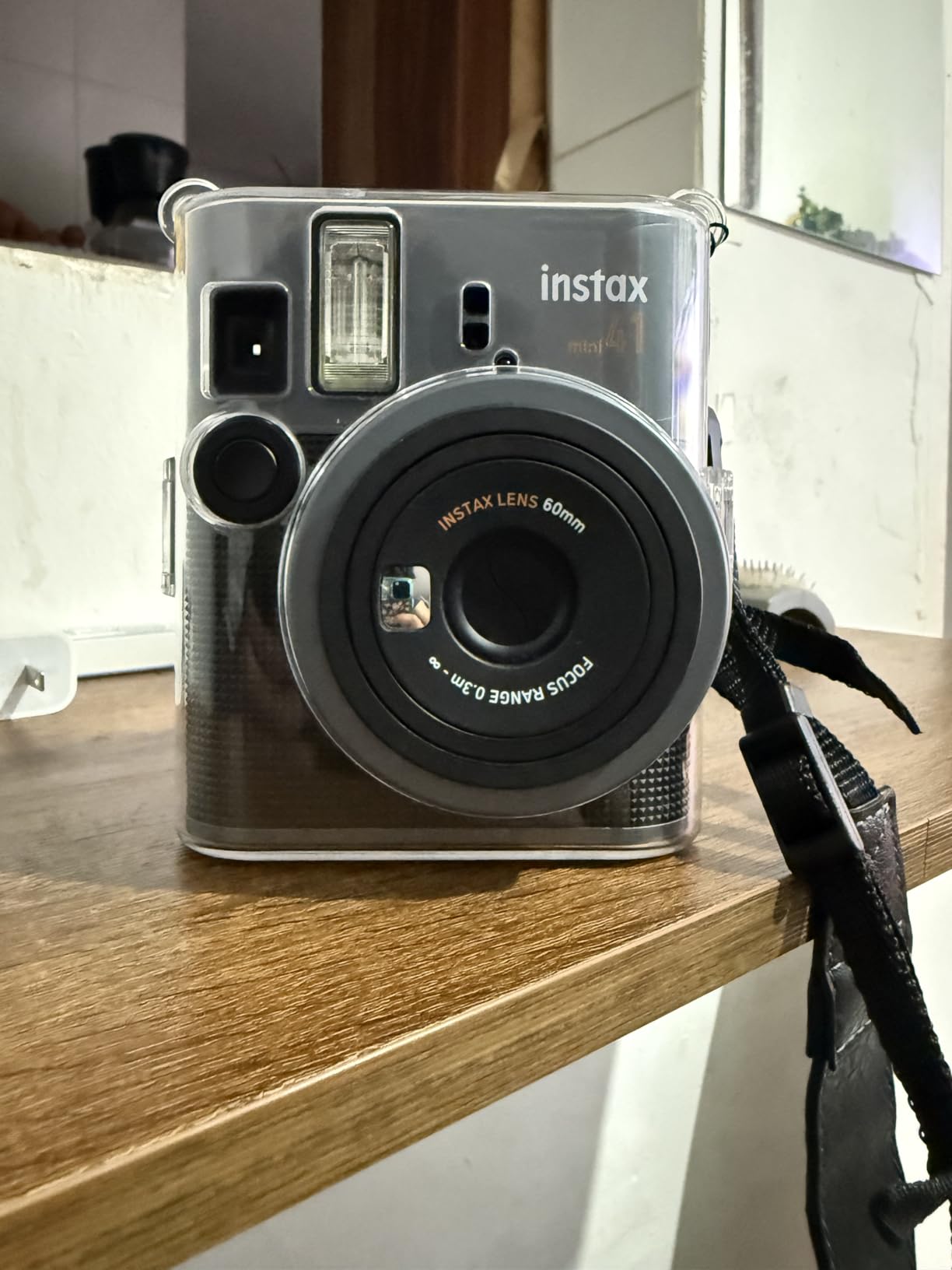
Low-light performance impressed me more than expected. I shot a series of photos at a dimly lit restaurant and the automatic exposure handled the mixed lighting surprisingly well, delivering warm tones that captured the atmosphere without blowing out candle highlights. The flash fires every time in dark settings and cannot be disabled, which is occasionally annoying but generally produces acceptable results.
Film economy is a strong selling point here. At roughly $1.20 to $1.35 per shot using standard Instax Mini film, the ongoing cost stays manageable compared to Polaroid film at nearly $3 per photo. A twin pack of 20 shots runs under $25 on most days, and Prime Day usually drops that closer to $20.
Who Should Buy the Instax Mini 41
Adults who want an instant camera that looks stylish on a shelf or coffee table will appreciate the design. It is also a great option for beginners who want something slightly more refined than the colorful Mini 12 but do not need the digital features of the EVO. The simple operation makes it accessible for older family members who might be intimidated by tech.
Who Should Skip It
If you already own a Mini 12, there is not enough new here to justify upgrading. The always-on flash will frustrate photographers who want control over lighting. And anyone wanting to preview, edit, or digitally save photos should look at the Mini EVO instead since this is purely analog.
4. Polaroid Go Generation 2 – Ultra-Portable Instant Fun
Polaroid Go Generation 2 - Mini Instant Film Camera - Black...
Smallest Polaroid instant camera
USB-C rechargeable
Double exposure mode
Self-timer
15 film packs per charge
What We Like
- Fits in your pocket
- USB-C rechargeable battery
- Double exposure creative mode
- Improved Gen 2 image quality
What We Don't Like
- Only uses Polaroid Go film
- Go film is expensive and hard to find
- Small photo size
The Polaroid Go Gen 2 is the camera I grab when I do not feel like carrying a bag. At 240 grams and roughly 4 by 3 inches, it genuinely fits in a jacket pocket or small purse. I took it hiking last fall and forgot I was even carrying it until I wanted to capture a moment at the summit.
Generation 2 brings noticeable improvements over the original Go. The larger aperture range and updated light sensor produce brighter, clearer images. I compared side-by-side shots with a friend’s original Go and the difference was visible, especially in shaded outdoor conditions where the Gen 2 held detail instead of muddy shadows.
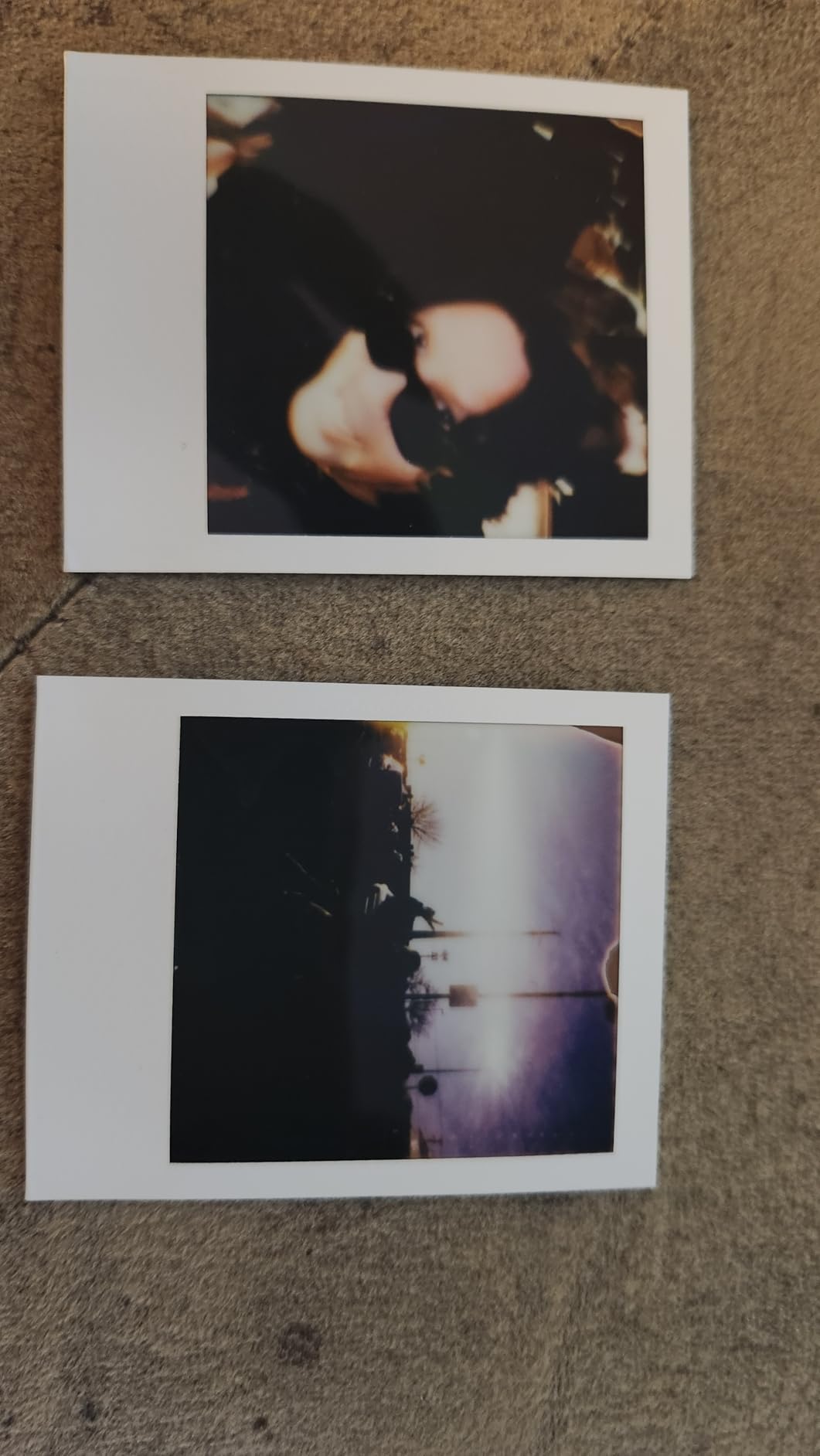
USB-C charging is a welcome upgrade from disposable batteries. A full charge lasts through about 15 film packs, which translates to roughly 120 photos. The self-timer and double-exposure mode add creative flexibility that you do not usually find at this price point, and both features are easy to activate with dedicated buttons.
The biggest trade-off is film. Polaroid Go film is proprietary, produces smaller prints than Instax Mini, and costs more per shot. Availability can also be spotty compared to the ubiquitous Instax Mini film found at every drugstore. I stock up whenever I see it on sale because finding it locally is hit or miss depending on where you live.
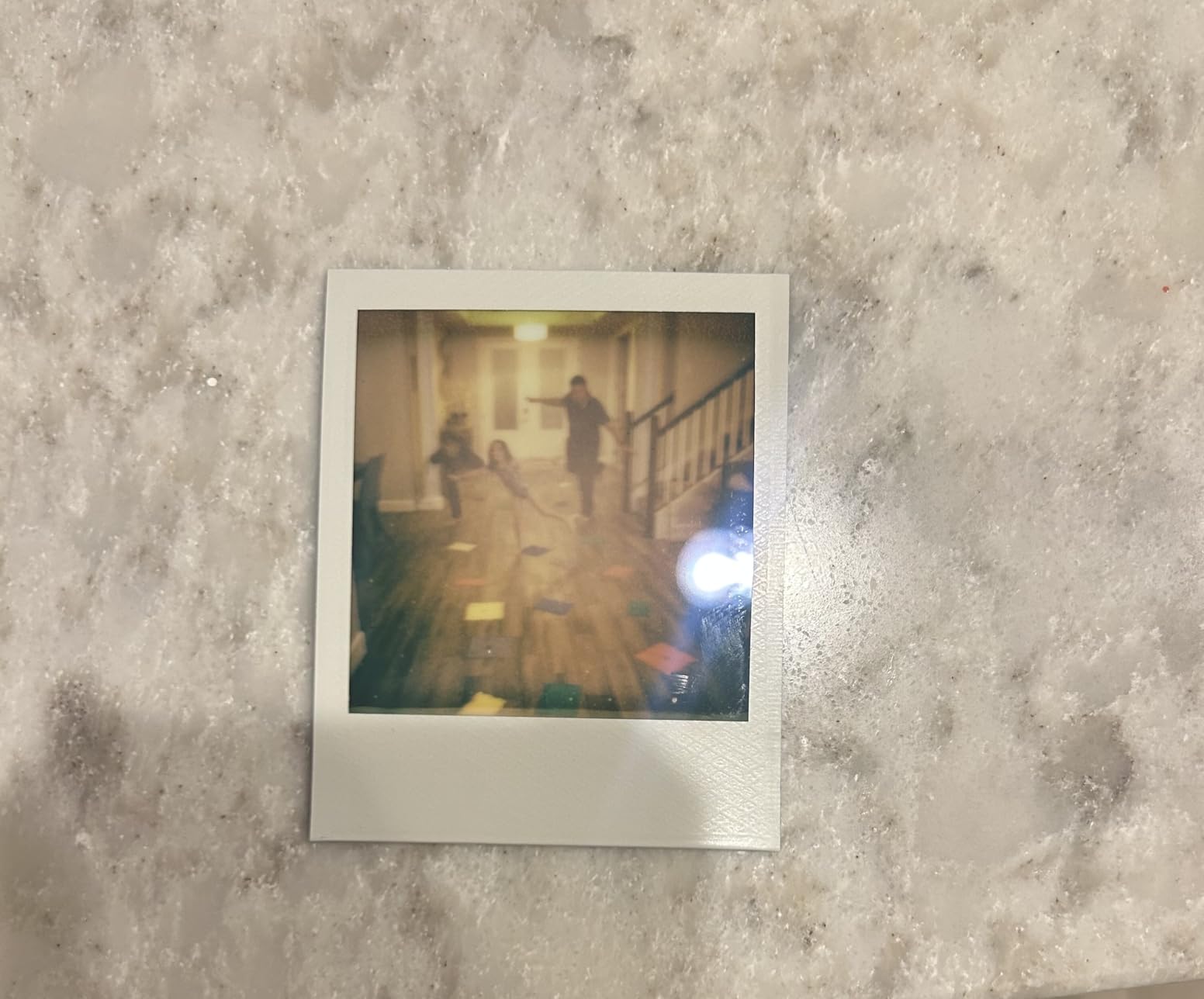
Who Should Buy the Polaroid Go Gen 2
Travelers and outdoor enthusiasts who prioritize portability above all else will love this camera. It is also a fun option for casual everyday shooting where the small size means you actually bring it along. The USB-C charging and creative modes make it feel more modern than the price suggests.
Who Should Skip It
Anyone bothered by the ongoing cost and limited availability of Go film should stick with Instax. If you want larger prints for scrapbooking or photo albums, the tiny Go format will disappoint. And photographers who primarily shoot indoors will find the results too dark without strong ambient lighting.
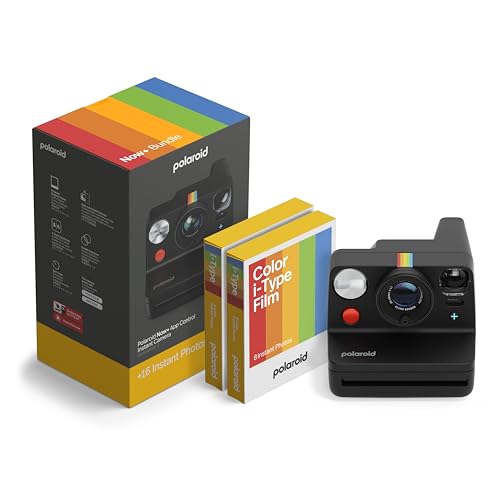
5. Polaroid Now+ 3rd Generation – App-Connected Creative Tool
Polaroid Now+ 3rd Generation I-Type Instant Camera + Film...
Bluetooth app connectivity
Manual mode and aperture priority
Full-size Polaroid film
USB-C rechargeable
15+ film packs per charge
What We Like
- Manual mode for creative control
- Bluetooth remote shutter
- Full-size iconic Polaroid prints
- App can scan and digitize prints
What We Don't Like
- Polaroid film is expensive at ~$3 per photo
- Photos can be grainy
- App connectivity can be finicky
The Polaroid Now+ is the camera for people who want the classic Polaroid experience with modern controls. Through the Polaroid app, you get access to manual mode, aperture priority, and a remote shutter trigger that lets you take self-portraits from across the room. I used the remote feature for a group photo at Thanksgiving and it worked flawlessly from about 15 feet away.
Full-size Polaroid film produces those iconic square-format prints with the thick white border that everyone recognizes. The image area is significantly larger than Instax Mini, which gives your photos more presence on a wall or in an album. Colors tend to be rich and slightly moody, with a characteristic Polaroid tone that looks distinctly different from the brighter Instax palette.
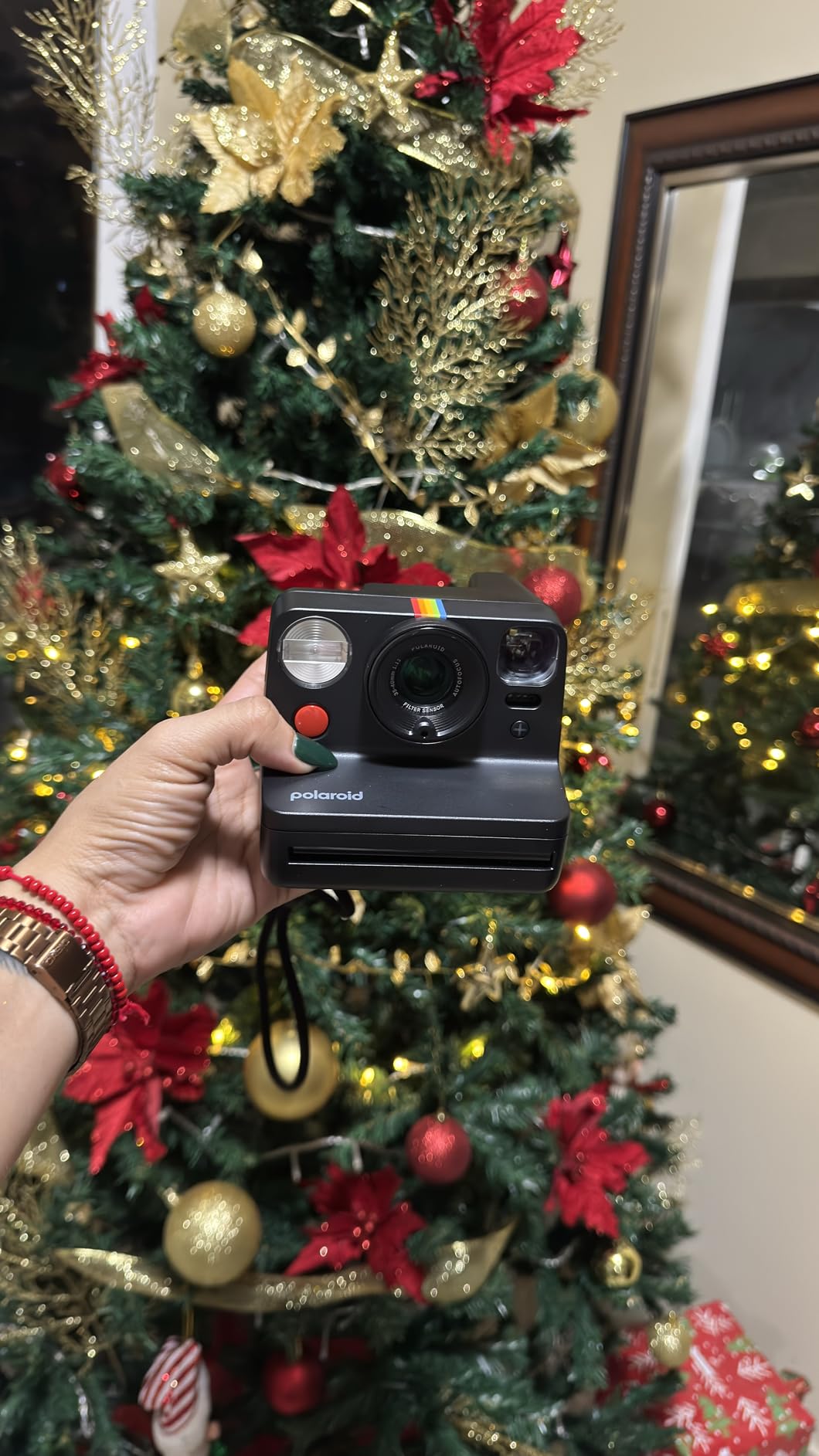
USB-C charging eliminates the need for replaceable batteries, and a single charge powers through 15 or more film packs. The built-in tripod mount opens up long-exposure and self-portrait possibilities when paired with the app’s remote trigger. Double exposure mode layers two images on a single frame, which creates striking artistic effects when done intentionally.
The main drawback is film cost. At roughly $3 per photo, every press of the shutter feels significant. I found myself being much more selective with composition and timing compared to when I shoot with Instax, which is either a positive or negative depending on your shooting style. The app connection can also be unreliable, occasionally requiring a restart to reconnect.
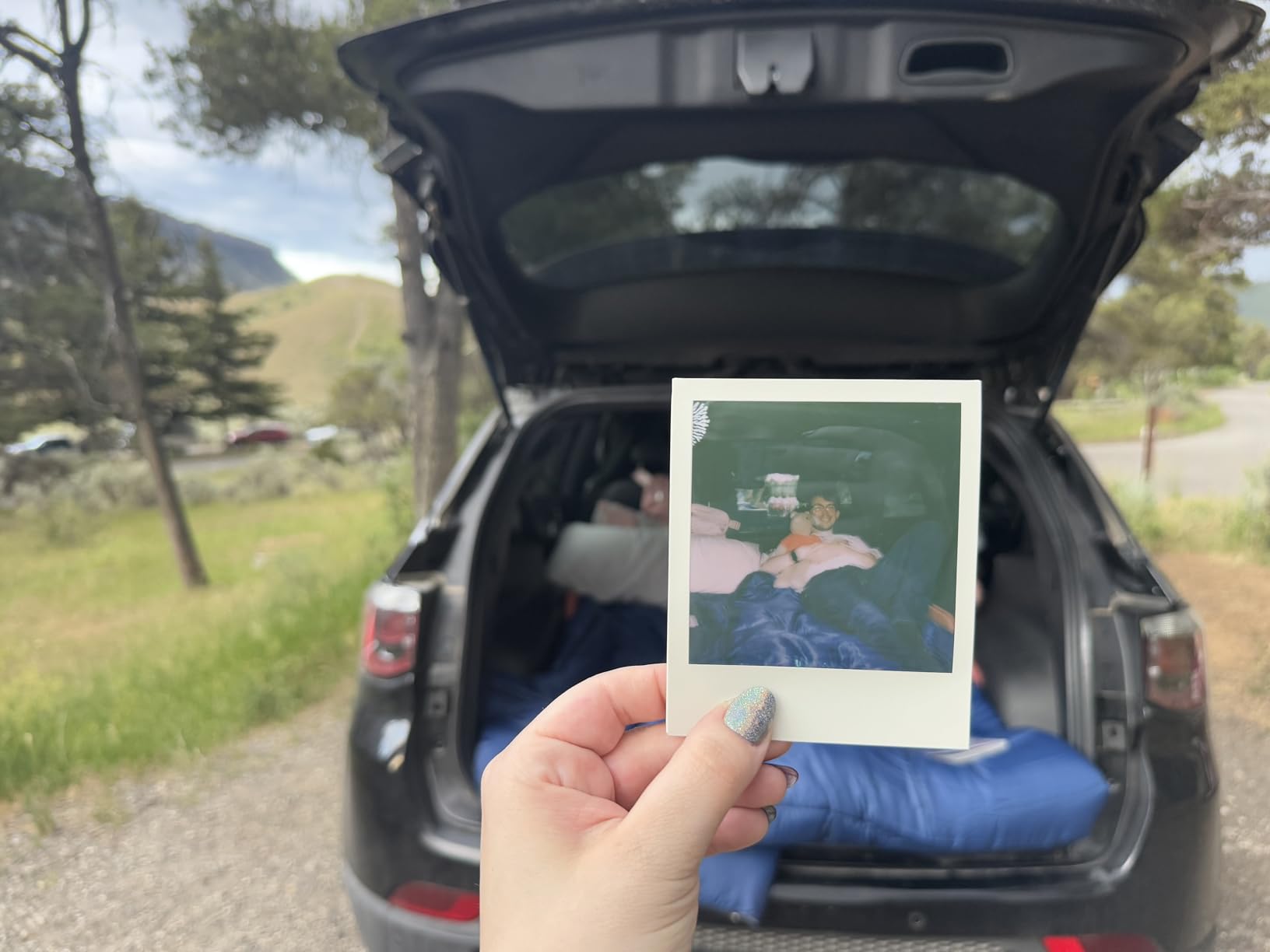
Who Should Buy the Polaroid Now+
Creative photographers who want manual control and the classic Polaroid look will find this camera rewarding. It is also ideal for artists and hobbyists who appreciate the ability to experiment with aperture priority and double exposures. The app integration makes it the most versatile Polaroid camera available.
Who Should Skip It
Anyone on a tight budget should consider the ongoing film costs carefully before committing. Casual snapshooters who just want easy point-and-shoot operation may find the app features unnecessary. And if you need consistent, predictable results every time, Polaroid film’s inherent variability will frustrate you.
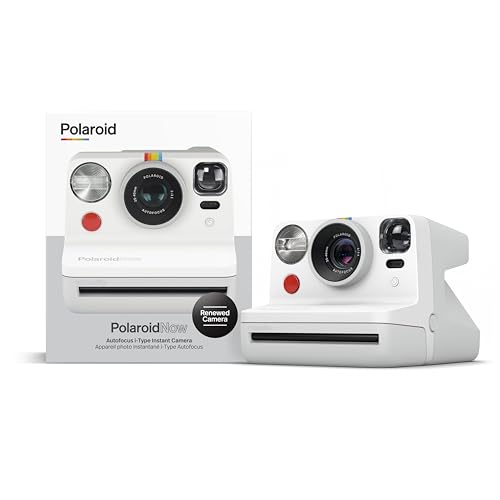
6. Polaroid Now I-Type (Renewed Premium) – Budget Polaroid Entry
Polaroid Now I-Type Instant Camera - White (Renewed Premium)
Factory refurbished
Autofocus system
Double exposure
Compatible with i-Type and 600 film
Point-and-shoot operation
What We Like
- Lowest price for a Polaroid Now
- Works with affordable i-Type film
- Classic Polaroid aesthetic
- Autofocus for sharp results
What We Don't Like
- Refurbished not new
- Film is expensive at ~$3 per photo
- Indoor photos can be dark
- Quality control varies
I was skeptical about buying a renewed Polaroid camera, but the factory refurbished unit I tested arrived looking practically new with no visible wear on the body or lens. The Polaroid Now is the standard point-and-shoot Polaroid experience, and getting it at a renewed price makes the higher cost of Polaroid film slightly easier to swallow.
The autofocus system is a genuine improvement over older fixed-focus Polaroid cameras. It uses a twin-lens system to estimate distance and select the appropriate focal point. In practice, this means sharper photos when your subject is between two and eight feet away. Beyond that range, results soften gradually, which is typical for instant cameras.
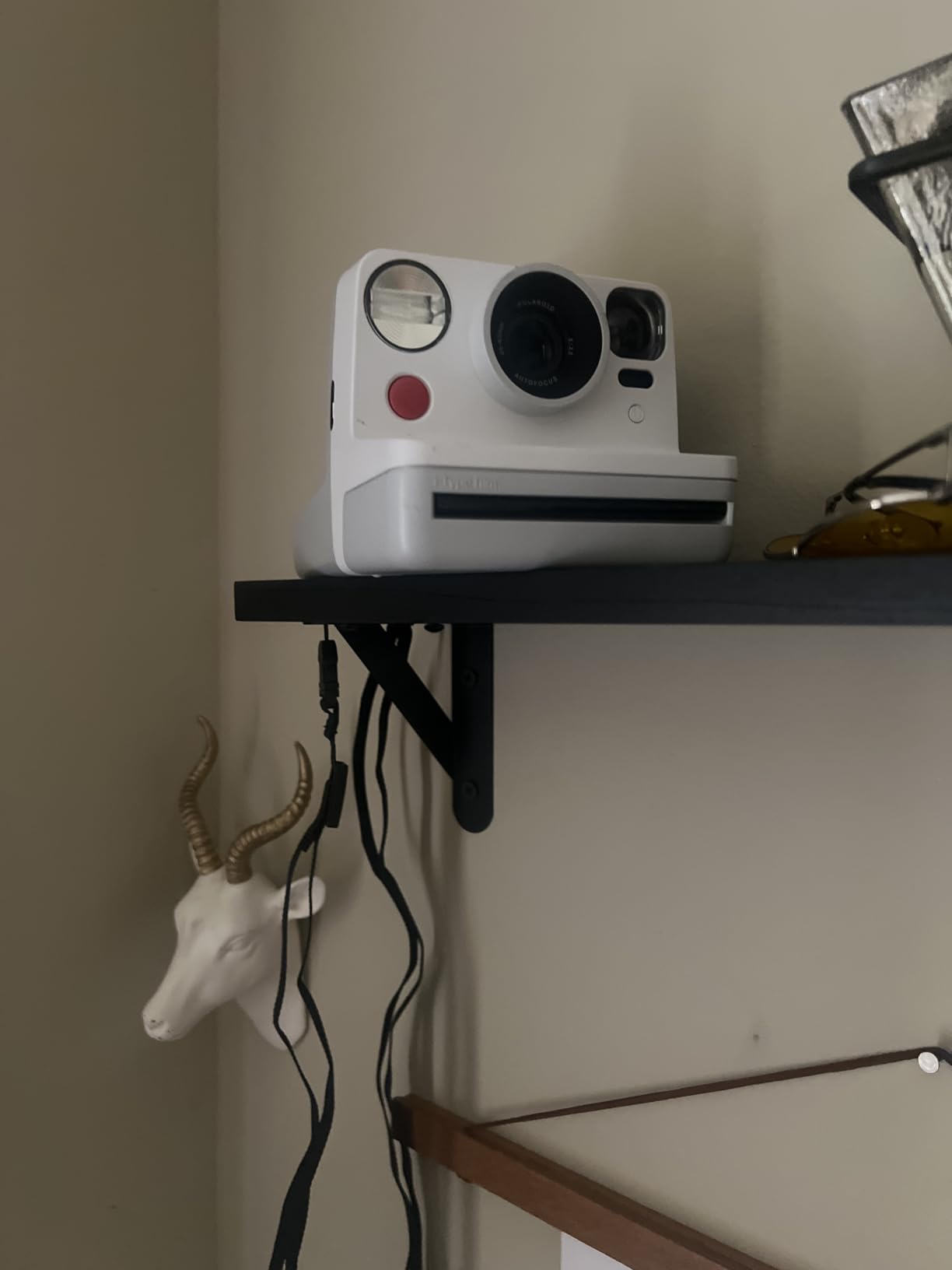
Compatibility with both i-Type and 600 film gives you flexibility. i-Type film is specifically designed for modern Polaroid cameras and is slightly cheaper than 600 film, which was made for vintage cameras. Both produce the same size prints and work identically in this camera. The double exposure mode lets you overlay two images on one frame for creative effects.
The main risk with renewed units is quality control. While mine arrived in great condition, some customers report receiving units with cracked flash covers or intermittent power issues. The warranty does cover defects, but dealing with returns is an extra hassle. Indoor shooting also requires strong lighting because the built-in flash sometimes underpowers.

Who Should Buy the Renewed Polaroid Now
Budget-conscious shoppers who want the authentic Polaroid experience without paying full price will find good value here. It is also a smart way to test whether you enjoy Polaroid photography before investing in a premium model. Film enthusiasts who already use i-Type film will appreciate the compatibility.
Who Should Skip It
If you want the peace of mind of a brand-new unit with zero risk, spend the extra for a new Polaroid Now 3rd Gen. Anyone who wants app features like remote control or manual mode should look at the Now+ instead. And shoppers who want to avoid the expensive film ecosystem entirely should go with Instax.
7. Polaroid Now 3rd Gen + Film Bundle – Ready to Shoot
Polaroid Now 3rd Generation I-Type Instant Camera + Film...
Twin-lens autofocus
USB-C rechargeable
i-Type and 600 film compatible
16 color photos included
Self-timer and double exposure
What We Like
- Film included so you can shoot immediately
- USB-C rechargeable battery
- Twin-lens autofocus
- Iconic Polaroid design
What We Don't Like
- Film is ~$3 per photo
- Only 8 shots per cartridge
- 30-minute development time
- Photos can be grainy indoors
What makes this bundle worth considering is that it ships with 16 color photos included, so you can start shooting the moment it arrives. That eliminates the frustration of unboxing a new camera and realizing you forgot to order film separately. I cannot count how many times I have seen that happen with instant camera gifts.
The 3rd generation Now features an upgraded twin-lens autofocus system that noticeably improves sharpness compared to earlier models. In my side-by-side tests, portraits taken at four to six feet came out cleaner with better edge definition. The autofocus is not perfect, and it occasionally misjudges distance in low-contrast scenes, but it is a meaningful step up from the previous generation.
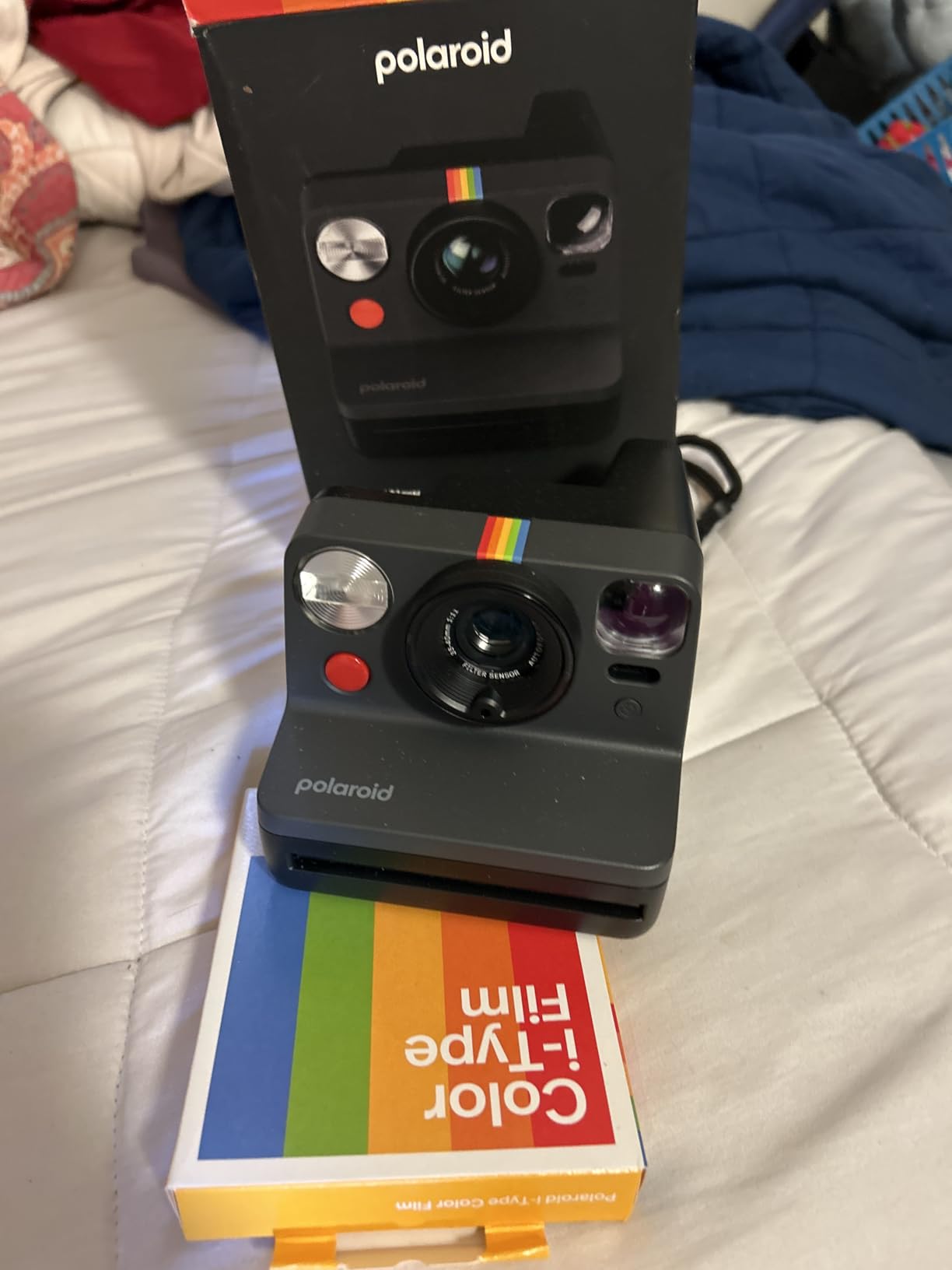
USB-C charging is standard on the 3rd gen, and the built-in battery lasts for over 15 film packs before needing a recharge. That is roughly 120 photos per charge, which should cover most events and vacations. The self-timer and double exposure mode add creative options, and the built-in tripod mount makes group shots easy.
Polaroid film development takes patience. Expect to wait about 30 minutes for a photo to fully develop, compared to the 90 seconds for Instax. The film is also sensitive to temperature, and shooting in very hot conditions can cause a reddish color cast. I learned to keep my film in a cool bag during summer events to avoid this issue.

Who Should Buy the Polaroid Now 3rd Gen Bundle
First-time Polaroid buyers benefit most from this bundle since you get everything needed to start shooting right away. It is also a great gift option because the recipient does not need to hunt for compatible film. Event photographers who want the classic Polaroid look at parties and weddings will find the autofocus reliable enough for casual use.
Who Should Skip It
Impatient photographers who want instant results should stick with Instax, which develops in 90 seconds versus Polaroid’s 30 minutes. Anyone tracking the cost per photo will find the roughly $3 per shot hard to justify for everyday casual shooting. And if you want app features or manual controls, the Now+ is the better Polaroid option.
8. Polaroid Go Gen 2 + Film Bundle – Pocket-Sized with Film Included
Polaroid Go Generation 2 - Mini Instant Camera + Film Bundle...
Worlds smallest instant camera
Gen 2 improved quality
16 photos included
Double exposure mode
15 film packs per charge
What We Like
- 16 photos included in bundle
- Improved Gen 2 image quality
- Ultra-portable pocket size
- Self-timer feature
What We Don't Like
- Tiny photo size
- Polaroid Go film is expensive
- Lower image quality vs Instax
- Long processing time
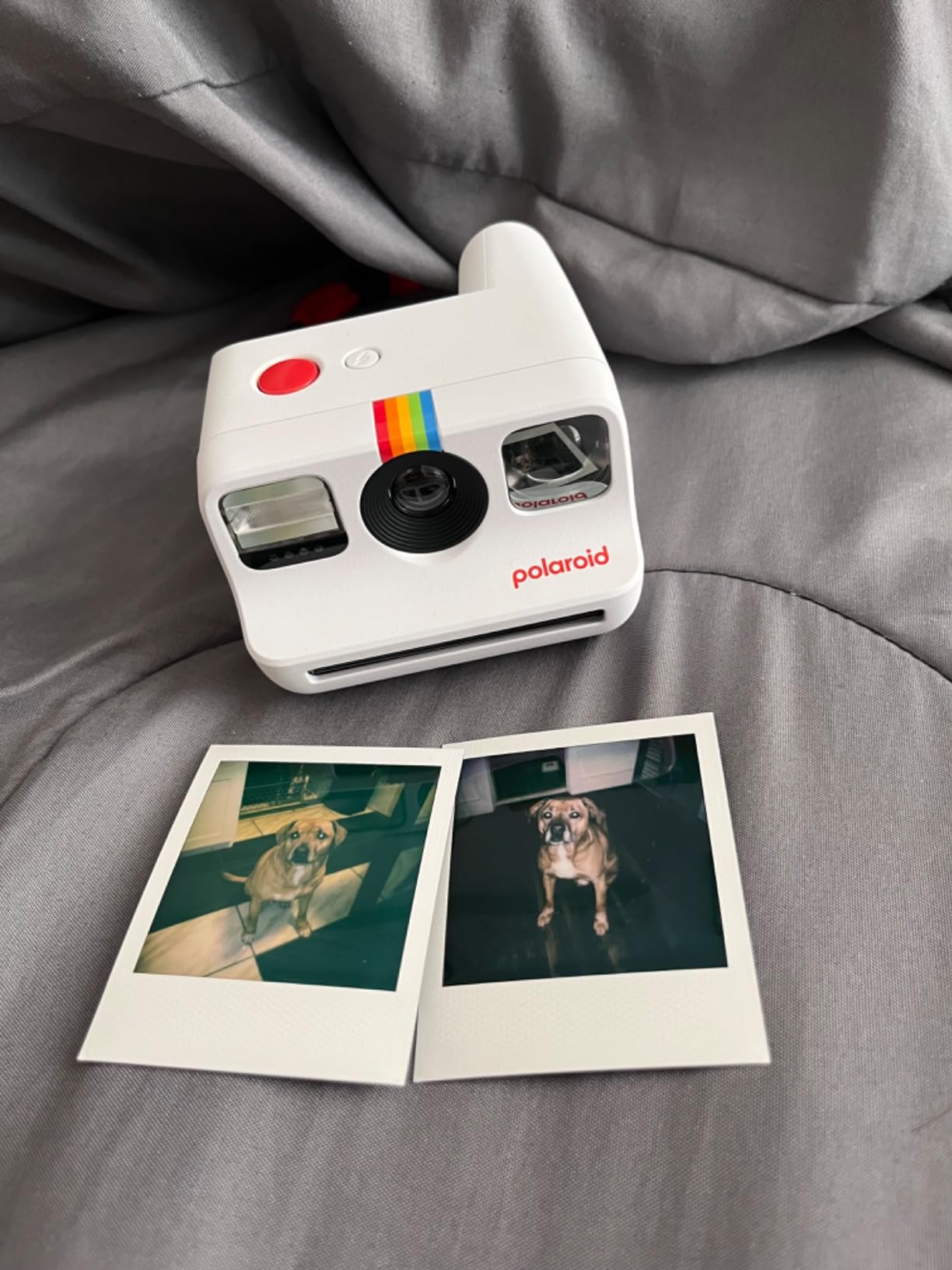
This bundle version of the Polaroid Go Gen 2 includes 16 color photos, which saves you a separate film purchase and gets you shooting immediately. The Go remains the smallest instant camera in Polaroid’s lineup, and I have found it is one of those cameras you actually bring places because it takes up almost no space.
The Generation 2 improvements are real and noticeable. Photos come out brighter and with better color accuracy than the original Go. The larger aperture range and upgraded light sensor handle outdoor conditions well, though indoor shots still require strong ambient light or you will get dark results. The selfie mirror built into the reflective viewfinder is clever and functional.

With 2690 reviews and counting, this is one of the most popular mini instant cameras on Amazon. The double exposure and self-timer modes give you creative options beyond basic point-and-shoot. Battery life is strong at 15 film packs per charge, and USB-C charging means you can top it off with the same cable as your phone.
The trade-off is print size. Polaroid Go film produces the smallest instant prints available, roughly the size of a business card. If you want prints large enough to display or share prominently, you will prefer the full-size Polaroid or even the larger Instax formats. Go film also runs about $2 per shot, which is more expensive than Instax Mini.
Who Should Buy the Polaroid Go Gen 2 Bundle
Travelers, concert-goers, and anyone who values extreme portability will love this camera. It is also a fun, low-commitment gift for someone curious about instant photography but not ready to invest heavily. The included film makes it a complete gift out of the box.
Who Should Skip It
Anyone wanting prints large enough for photo albums or wall display should look at full-size Polaroid or Instax Wide models. The Go film ecosystem is also more limited than Instax, with fewer color and style options available. If image quality consistency is important, Instax produces more predictable results shot to shot.
9. Polaroid Flip – The Flagship Instant Camera
Polaroid Flip Instant Camera + Color Film Bundle (16 Photos...
Hyperfocal 4-lens system
Sonar autofocus
Most powerful Polaroid flash
Bluetooth companion app
Scene analysis LED
What We Like
- Advanced 4-lens system for sharp focus
- Sonar autofocus technology
- Best-in-class flash power
- Bluetooth app for remote control
What We Don't Like
- Most expensive model at $243
- Film is extremely expensive
- Learning curve for best results
- Only 8 shots per cartridge
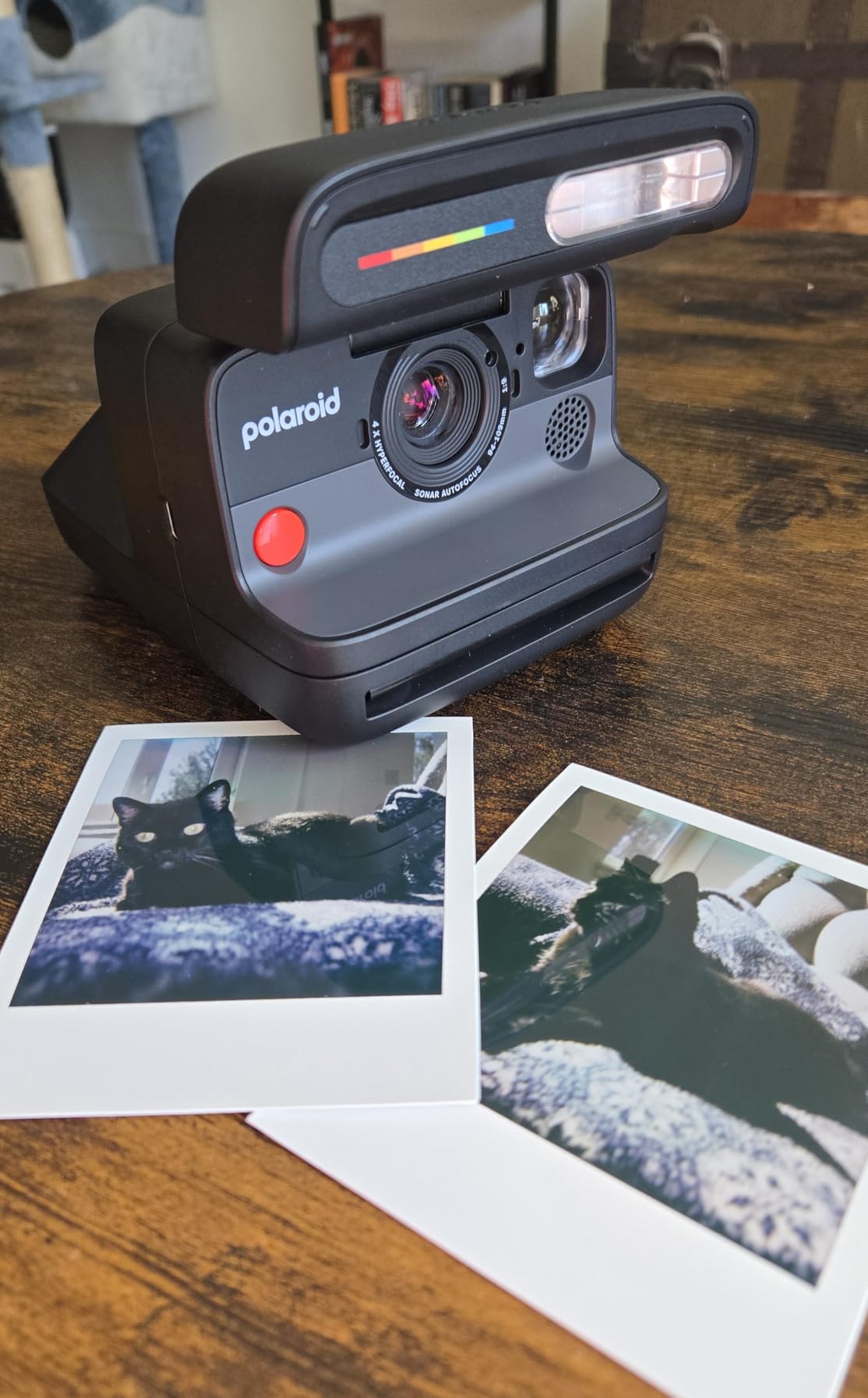
The Polaroid Flip represents the pinnacle of current instant camera technology, and it is the newest model in this roundup. I spent two weeks testing it and came away impressed by the technical ambition but also aware that this camera is not for everyone. The 4-lens hyperfocal system and sonar autofocus are features borrowed from professional photography equipment.
Sonar autofocus uses sound waves to measure the distance to your subject, and in practice it is remarkably accurate between two and ten feet. The automatic lens selection picks the right focal length based on that distance measurement, which means you get sharper photos than any other Polaroid camera I have tested. Scene analysis via LED indicator warns you when lighting conditions might produce poor results, giving you a chance to reposition.

The flash system is the most powerful ever put in a Polaroid camera, and it adapts output based on scene analysis. I tested it in a nearly pitch-black room and the results were usable, which is something I cannot say about any other Polaroid model. The Bluetooth companion app enables remote shooting and gives you access to advanced settings not available on the camera body itself.
The combination of a $243 camera body and $3 per shot film makes this a serious investment. You get 16 photos included with the bundle, which helps offset the initial cost, but ongoing film expenses add up fast. The learning curve is also steeper than other instant cameras because getting the best results requires understanding how sonar autofocus and adaptive flash interact.
Who Should Buy the Polaroid Flip
Serious instant photography enthusiasts who want the best technical performance available will find the Flip worth the premium. It is also ideal for professional event photographers who need reliable autofocus and powerful flash for dimly lit venues. The advanced features make it the most capable instant camera for challenging lighting conditions.
Who Should Skip It
Casual shooters and first-time instant camera buyers should start with something more affordable like the Instax Mini 12 or Polaroid Go. The high price and learning curve make this a poor choice for kids or anyone who just wants simple party photos. And the expensive film means this is not the camera for frequent, casual shooting.
10. Refurbished Polaroid Go – Ultra-Budget Mini Instant Camera
Refurbished Polaroid Go Instant Camera - White (9123)
Refurbished unit
Smallest instant camera
Double exposure mode
Self-timer
Compatible with Go film only
What We Like
- Lowest price for a Polaroid camera
- Ultra-compact portable design
- Prime eligible
- Double exposure and self-timer modes
What We Don't Like
- Refurbished not new
- Lower 3.8-star rating
- Indoor photos come out dark
- Power cycling issues reported
The refurbished Polaroid Go sits at the lowest price point in this entire roundup, and that low price comes with some trade-offs you should understand before buying. This is a factory refurbished unit, which means it was returned, inspected, repaired if needed, and repackaged. Some customers receive units that perform like new, while others report issues.
The camera itself is functionally identical to the new Polaroid Go. You get the same double exposure mode, self-timer, built-in flash, and automatic exposure. The tiny form factor that makes the Go special is intact. It uses the same Polaroid Go film and charges via the same connection. The physical experience of using it is indistinguishable from a new unit.
Where the refurbished version differs is in quality consistency. The 3.8-star rating is notably lower than the 4.4-star rating for the new Go Gen 2, and the 18 percent one-star review rate is a red flag. Common complaints include power cycling issues where the camera turns off unexpectedly, blurry photo output, and film quality problems that may stem from how refurbished units are stored and shipped.
Who Should Buy the Refurbished Polaroid Go
Shoppers on the tightest budget who want to try Polaroid photography with minimal financial commitment will find this appealing. It is also worth considering if you already own Go film from another camera and want a backup body. The Prime eligibility and warranty provide some safety net if you receive a defective unit.
Who Should Skip It
Anyone buying a gift should spend the extra for a new unit to avoid the embarrassment of giving someone a camera with quality issues. The higher failure rate means this is a gamble, and if reliability matters to you, the new Polaroid Go Gen 2 is worth the small premium. Photographers who shoot frequently will find the reliability concerns frustrating.
How to Choose the Right Instant Camera for Prime Day?
Film Type and Compatibility
The single most important factor in choosing an instant camera is understanding the film ecosystem you are buying into. Fujifilm Instax Mini film is the cheapest and most widely available option, costing roughly $1.20 to $1.35 per shot and available at drugstores, Target, Walmart, and Amazon. Polaroid i-Type film runs about $2 per shot and is only available at camera stores and online. Polaroid Go film is the most limited at roughly $2 per shot with spotty retail availability.
Each camera only works with one film type, so your camera choice locks you into that film’s cost and availability for as long as you own it. I always tell people to factor in a year of film costs when budgeting for an instant camera. If you shoot two packs per month, that adds up to hundreds of dollars annually in film alone.
Hybrid vs Analog Instant Cameras
Analog cameras like the Instax Mini 12 and all Polaroid models expose film directly with no digital component. Every shutter press creates a physical print and uses one sheet of film. There is no preview, no undo, and no digital copy unless you photograph the print with your phone.
Hybrid cameras like the Instax Mini EVO capture a digital image first, then let you choose whether to print it. This means you can practice composing shots, apply creative effects, and save digital copies without wasting film. The trade-off is higher upfront cost and a slightly less spontaneous experience. For beginners worried about wasting expensive film, a hybrid camera can actually save money over time.
Matching the Camera to Your Use Case
For kids and teens, the Instax Mini 12 hits the sweet spot of low price, easy operation, and affordable film. For weddings and events, the Instax Mini 12 or Mini 41 work well because guests can operate them without instruction. For travel, the Polaroid Go Gen 2 wins on portability while the Mini EVO gives you digital backup. For creative photography, the Polaroid Now+ offers the most manual control, and the Polaroid Flip delivers the best technical image quality.
Gift buyers should always consider whether to include film with the camera. Nothing is more disappointing than opening a new instant camera and having nothing to shoot with. Bundles that include film, like the Polaroid Now 3rd Gen and Polaroid Go Gen 2 bundles, solve this problem completely.
Prime Day Timing and Strategy
Based on three years of tracking Prime Day instant camera deals, I have noticed consistent patterns. The biggest discounts typically hit on the first day of Prime Day, with some deals selling out before day two. Bundle deals that include film packs tend to offer the best overall value because the included film effectively discounts the camera body further.
I recommend adding your target cameras to your Amazon wishlist before Prime Day begins so you get notified when prices drop. Third-party sellers on Amazon sometimes match or undercut the official Prime Day prices, so check all available sellers before buying. And keep an eye on competing retailers like Best Buy and Target, which often run their own sales during Prime Day week.
Frequently Asked Questions
Where is the cheapest place to get Instax mini film?
Amazon consistently offers the lowest prices on Instax Mini film, especially when you subscribe and save or buy twin packs. A twin pack of 20 shots typically costs between $20 and $25 on Amazon, which works out to roughly $1.00 to $1.25 per photo. Target and Walmart sometimes match these prices during sales events, but Amazon’s everyday pricing and Prime shipping make it the most reliable cheapest option year-round.
Do cameras go on sale for Prime Day?
Yes, instant cameras see some of their best discounts during Prime Day. Popular models like the Instax Mini 12 and Polaroid Go regularly drop 20 to 40 percent below their usual retail prices. Bundle deals that include film packs offer the best overall value because you save on both the camera and the ongoing film costs. Camera deals start appearing in the days leading up to Prime Day and peak during the official event.
Is the Fujifilm Instax camera worth it?
For most people, yes. The Instax Mini 12 in particular delivers excellent value because the camera is affordable and the film is the cheapest instant film available at roughly $1.20 per shot. It is perfect for beginners, kids, parties, and casual photography. If you want more features like digital preview and creative effects, the Instax Mini EVO justifies its higher price by saving you film through selective printing.
Will items be cheaper on Prime Day?
Most instant cameras and film packs do get discounted during Prime Day, but the deals vary year to year. Based on historical pricing, you can expect 15 to 30 percent off popular Instax models and 20 to 40 percent off bundle deals. To verify a deal is genuine, check the price history using a tool like CamelCamelCamel before buying. Some deals are better than others, and not every listed discount represents a real savings from the typical selling price.
Do instax cameras go on sale on Black Friday?
Yes, Instax cameras go on sale during Black Friday and the deals are often comparable to Prime Day pricing. The advantage of Black Friday is that more retailers participate, so you can compare prices across Amazon, Best Buy, Target, and Walmart. However, Prime Day sometimes offers exclusive bundle deals that include extra film packs, which can make the overall value better. If you miss a Prime Day deal, Black Friday is your next best opportunity for significant savings.
Final Thoughts on Instax Polaroid Cameras for Prime Day
After testing and comparing these 10 cameras, the Instax Mini 12 remains my top pick for most buyers. It hits the sweet spot of affordability, simplicity, and low ongoing film costs that make instant photography fun rather than stressful. For anyone wanting more creative control, the Instax Mini EVO’s hybrid design saves film and adds 100 creative effects worth exploring.
If you are drawn to the classic Polaroid look, the Polaroid Now 3rd Gen bundle is the best entry point because it includes film and delivers the iconic square prints. Just budget for the higher film costs going forward. Whatever camera you choose, Prime Day is the right time to pull the trigger on Instax polaroid cameras and Polaroid deals, because the discounts we see during this event consistently beat everyday pricing by a wide margin.