

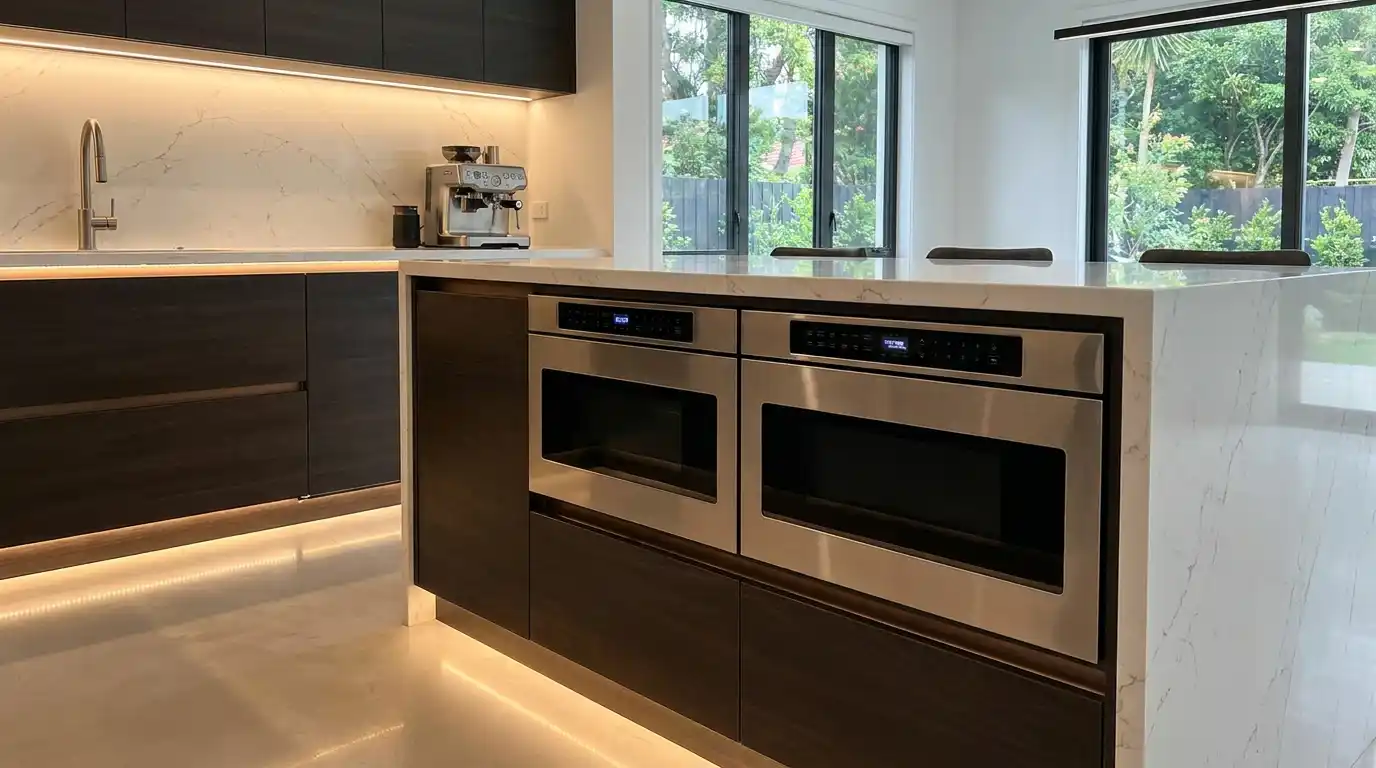
Drawer microwaves have become the go-to solution for homeowners who want to reclaim their kitchen counter space without sacrificing convenience. If you are planning a kitchen renovation or simply tired of your countertop microwave taking up valuable workspace, understanding how these built-in appliances work could transform your cooking space. This guide covers everything you need to know about drawer microwaves, from how they function to whether they are worth the investment for your home in 2026.
Our team has researched the latest models, analyzed service reliability data from over 37,000 appliance service calls, and gathered real user experiences from Reddit forums and appliance professionals. You will learn which manufacturers actually produce these units, what features matter most, and how to avoid common purchasing mistakes that cost homeowners time and money. By the end of this article, you will have the knowledge to decide if a drawer microwave fits your kitchen needs and budget.
What Are Drawer Microwaves?
A drawer microwave is a built-in kitchen appliance that installs under your counter or in a kitchen island, opening horizontally like a drawer rather than swinging open on a hinge. Unlike traditional countertop models that sit on your surface or over-the-range units mounted above your stove, drawer microwaves integrate seamlessly into your cabinetry for a clean, modern appearance. The design places the magnetron on the roof of the unit rather than the side, which eliminates the need for a turntable while still heating food evenly from above.
The sliding mechanism extends outward smoothly, allowing you to load and access food from the top rather than reaching in from the front. This top-loading design differs fundamentally from standard microwave ovens and creates a more natural motion when transferring hot items to your counter. Most drawer microwaves operate with either a touch button that electronically opens the drawer or a gentle pull handle that activates the sliding mechanism.
The technology behind drawer microwaves is otherwise similar to conventional units. They use the same 2.45 GHz microwave frequency to agitate water molecules in food, creating heat through molecular friction. The cooking cavity is lined with metal to contain the radiation, and the door seals maintain safety standards during operation. The key difference lies in the form factor and placement, which opens up new possibilities for kitchen layout and accessibility that traditional microwaves cannot match.
Sharp introduced the first microwave drawer in 2001, revolutionizing how homeowners could incorporate microwave cooking into kitchen designs. Before this innovation, your options were limited to countertop placement, which consumed workspace, or over-the-range installation, which created ergonomic and ventilation challenges. The drawer concept solved both problems by utilizing the under-counter space that previously held nothing but storage.
Benefits of Drawer Microwaves
Space-Saving Design
Drawer microwaves free up your valuable counter space by relocating the appliance to an under-counter position or kitchen island installation. For small kitchens or those with limited prep areas, this relocation can add several square feet of usable workspace that would otherwise be occupied by a bulky countertop appliance. Many homeowners install them in kitchen islands specifically to keep the main cooking area clear while maintaining easy access from multiple sides.
Unlike over-the-range microwaves that demand cabinet space above your stove and interfere with ventilation hoods, drawer microwaves utilize the often-underused base cabinet area. This placement keeps your sight lines clear and eliminates the visual bulk of a microwave hanging above your cooktop. The result is a cleaner, more streamlined kitchen appearance that aligns with modern design preferences and open-concept layouts.
The space savings extend beyond just the countertop. By removing the microwave from above your range, you can install a proper ventilation hood that effectively removes smoke, steam, and cooking odors. Professional chefs and appliance experts consistently recommend dedicated range hoods over microwave ventilation, which typically offers inadequate CFM ratings for serious cooking.
Ergonomic Advantages
The primary ergonomic benefit is eliminating the need to reach overhead or bend down awkwardly to access hot food. With a drawer microwave, you simply pull open the drawer at counter height and lift items straight up without straining your shoulders or back. This design reduces physical strain compared to reaching up into an over-the-range unit or bending down for a low countertop placement that forces you to lift hot items upward.
Our research found multiple users praising this accessibility feature, particularly those with mobility limitations or anyone who finds overhead reaching uncomfortable. One Reddit user with a ten-year-old Sharp drawer noted they love that it is not above the stove or counter, making daily use much more pleasant. The side-to-side transfer motion when moving hot items from microwave to counter is more stable and safer than the vertical lift required with traditional placements.
You are less likely to spill hot liquids or drop heated dishes when you do not need to lift them overhead or crane your neck to see inside. This ergonomic advantage becomes more significant as we age or if you have existing back or shoulder issues. Universal design principles recommend drawer microwaves for aging-in-place renovations because they accommodate a wider range of physical abilities.
Safety Features
Drawer microwaves include robust child lock features that prevent curious children from accessing hot contents or operating the unit unsupervised. The electronic controls can be locked completely, and the drawer mechanism itself adds a physical barrier that toddlers cannot easily open. Parents consistently mention this as a deciding factor in their purchase decisions, particularly for families with young children who are drawn to appliance buttons and displays.
The lower placement also means hot food is easier to handle safely without the risk of spilling down from an overhead position. If something does spill, it happens at counter level rather than above your head or onto your stove where it could create burns or additional cleanup. The controlled drawer opening prevents the door-swing hazard of traditional microwaves in tight kitchen quarters.
Additionally, many models are ADA compliant, meeting accessibility standards for users with disabilities who need appliances that accommodate wheelchairs or limited mobility. The touch controls can be operated without gripping strength, and the drawer height places contents within the reach range recommended for accessible design. These features make drawer microwaves an excellent choice for multi-generational households or anyone planning for future accessibility needs.
Limitations and Considerations
Price Premium
Drawer microwaves cost significantly more than countertop alternatives, with prices typically ranging from $1,000 to $2,999 depending on brand, features, and finish options. A basic countertop microwave might cost $150 to $300 and perform the same heating functions, while even budget drawer models start around $1,000. This price difference reflects the built-in design, specialized sliding mechanism, premium positioning of the category, and the fact that most units are essentially the same Sharp-made components with different branding.
Installation adds another $200 to $500 if you hire professionals, making the total investment substantially higher than simply plugging in a countertop unit. Forum discussions reveal this cost barrier as the most common reason homeowners hesitate, despite appreciating the design benefits and space savings. You need to weigh whether the ergonomic advantages and aesthetic improvements justify the premium for your specific situation and how long you plan to stay in your home.
Some retailers offer significant discounts during promotional periods. Reddit users have reported finding GE Profile drawer microwaves for as low as $529 during Home Depot sales events, compared to the $1,500 list price. Shopping these sales and rebate programs can reduce the financial barrier considerably if you have flexibility in your purchase timing and brand preferences.
Drawer Speed and Operation
The motorized drawer mechanism opens and closes slower than simply swinging open a traditional microwave door. Some users report this tested their patience initially, particularly when they were accustomed to the instant access of a hinged door. The drawer typically takes three to five seconds to fully extend, which feels longer than it sounds when you are standing in front of it with food to heat.
Most users adapt within a few weeks of daily use and no longer notice the delay. The motion is smooth and controlled, preventing the jarring door-slam that sometimes happens with traditional microwaves. However, if you use your microwave dozens of times per day for various tasks, the cumulative time difference may continue to bother you. Consider your usage patterns and patience level when evaluating this limitation.
Additionally, drawer microwaves lack a turntable, which means you may need to manually reposition food during heating for completely even results. While the roof-mounted magnetron design helps distribute microwaves from above, some users note they still interrupt cooking cycles to rotate items or stir contents. The interior lighting can also be harder to see into compared to front-facing traditional models, making it more difficult to monitor food without opening the drawer.
Installation Requirements
Installing a drawer microwave requires proper cabinet dimensions, electrical wiring, and often professional help to ensure safety and warranty compliance. Unlike countertop models that plug into any standard outlet, drawer microwaves need dedicated wiring and precise cabinet modifications that account for ventilation and weight support. The installation is more complex than a standard built-in appliance because of the sliding mechanism and the need for proper alignment.
You cannot simply place a drawer microwave on a shelf; it needs proper support built into the cabinet structure and adequate airflow to prevent overheating. The electrical connection must meet local building codes, and the unit needs to be level for the drawer mechanism to operate smoothly. DIY installation is possible for experienced homeowners with carpentry and electrical skills, but most buyers hire professionals to ensure proper fit and function.
Installation timing matters if you are coordinating with other kitchen work. Delays in cabinet completion or electrical work can leave you with an expensive appliance you cannot use. Plan your project timeline carefully and confirm all preparatory work is complete before your drawer microwave arrives. This planning prevents the frustration of having the unit sitting in your garage while you wait for other trades to finish their portions of the project.
Key Features to Consider
Size Options: 24-Inch vs 30-Inch
Drawer microwaves come in two standard widths: 24-inch and 30-inch models that correspond to common cabinet dimensions. The 24-inch size fits standard base cabinet openings and offers approximately 1.2 cubic feet of interior capacity. This size accommodates most dinner plates, standard casserole dishes, and typical microwave-safe containers that families use daily without issue.
The 30-inch models provide the same interior capacity but fill wider cabinet openings, often used in custom kitchen designs or when matching other 30-inch appliances for visual consistency. Your choice depends on your existing cabinet configuration or new kitchen design plans. If you are replacing an existing appliance, measure your cabinet opening carefully to ensure proper fit and avoid costly cabinet modifications.
Both sizes offer identical interior cooking space, so the decision is purely about exterior dimensions and aesthetics. A 30-inch model in a 24-inch opening requires cabinet work, while a 24-inch model in a 30-inch opening leaves gaps that need trim kits or filler panels. Verify your measurements twice before ordering, as return policies for large appliances often include restocking fees.
Power and Wattage
Most drawer microwaves operate at either 950 watts or 1000 watts of cooking power, with some premium models reaching 1100 watts. The difference between 950W and 1000W is minimal for everyday reheating and defrosting tasks, though the extra 50 watts in higher-powered models slightly reduces cooking times for larger items. For typical household use reheating coffee, warming leftovers, or defrosting meat, either wattage performs adequately.
Lower wattage models may take 10 to 15 seconds longer for certain tasks, but this rarely impacts overall satisfaction unless you are extremely time-sensitive. Higher wattage becomes more relevant if you use your microwave for actual cooking rather than just reheating, or if you frequently heat large portions that require more energy penetration. The convection models add traditional oven heating elements that require higher amperage circuits and professional installation.
Power levels can usually be adjusted manually if you need lower power for specific tasks like softening butter or melting chocolate. Look for models with at least ten power levels for maximum flexibility. The inverter technology found in some premium countertop microwaves is less common in drawer models, which typically use traditional transformer-based power delivery.
Cooking Technology
Sensor cooking technology detects moisture and humidity levels inside the microwave cavity, automatically adjusting cooking time and power for optimal results. This feature prevents overcooking and takes the guesswork out of reheating various foods that have different moisture contents. Most mid-range and premium drawer microwaves include some form of sensor cooking for common items like popcorn, beverages, frozen meals, and reheated plates.
Convection cooking is available in select drawer microwave models, adding the ability to bake, roast, and brown foods like a traditional oven. The Sharp SMD2499FS is currently the only convection microwave drawer on the market as of 2026, offering expanded cooking capabilities beyond standard microwave functions. If you want your drawer microwave to double as a secondary oven for small dishes, convection capability is worth the premium price and additional installation requirements.
Additional features to consider include auto-defrost programs that calculate time based on weight, preset cooking modes for common foods like popcorn and pizza, melt and soften functions for butter and ice cream, and quick-start buttons for common time increments. Touch controls vary between models, with some offering hidden control panels that only appear when touched, maintaining a sleek appearance when not in use. Wave-to-open features let you activate the drawer with a hand motion when your hands are full or dirty.
Installation Types
Drawer microwaves install as either flush mount or proud mount configurations, each offering different aesthetic results. Flush installation places the microwave front perfectly aligned with surrounding cabinetry for a seamless, integrated look that high-end kitchen designs demand. This requires precise cabinet dimensions and often additional trim kits to achieve the clean lines that make the appliance disappear into the kitchen design.
Proud installation leaves the microwave front slightly protruding from the cabinet by about one inch, which is easier to achieve and still looks professional in most kitchens. The choice depends on your aesthetic preferences and how precisely your cabinets were built. Some homeowners prefer the proud install because it provides a visual frame around the unit and can be easier to clean around the edges.
Trim kits are available for both installation types to fill gaps between the microwave and cabinet opening. Stainless steel trim is standard, but some manufacturers offer black stainless or custom panel options to match specific kitchen aesthetics. Consider the finish of your other appliances when selecting trim options, as mismatched metallics can look unprofessional in an otherwise cohesive kitchen design.
Brand and Manufacturer Overview
Sharp: The Original Manufacturer
Sharp invented the microwave drawer in 2001 and remains the dominant manufacturer, producing units for themselves and many other premium appliance brands. According to Yale Appliance data and extensive industry consensus, Sharp manufactures the internal components for nearly all drawer microwaves sold in North America, regardless of the brand name on the front panel. When you buy a Bosch, Thermador, or KitchenAid drawer microwave, you are essentially getting a Sharp unit with different exterior styling and control interfaces.
Sharp-branded models offer the most variety, including basic entry-level models, mid-range units with sensor cooking, IoT-connected versions with WiFi and app control, and the only convection drawer microwave available. Their experience in the category shows in refined drawer mechanisms and reliable performance after two decades of production and refinement. The company continues to innovate, adding smart features and improved sensors while maintaining their core sliding drawer technology.
The Sharp microwave drawer lawsuit from a few years ago concerned specific models manufactured between 2015 and 2018 that allegedly had control panel and drawer mechanism defects. Sharp settled the class-action case, and affected consumers received repairs or compensation. Current models manufactured after 2018 incorporate design improvements addressing these issues, and service rates have improved accordingly.
Luxury Brand Partnerships
Bosch, Thermador, KitchenAid, Wolf, GE Profile, Monogram, and other premium appliance brands source their drawer microwaves from Sharp but apply their own design language and control systems. Bosch focuses on flush installation capabilities and minimalist interfaces that match their broader appliance aesthetic of clean lines and understated controls. Their models typically command a price premium for the brand name and extended warranty options.
Thermador often packages their drawer microwaves with other appliances in rebate programs, sometimes bringing effective prices down to competitive levels that approach mid-range brands. Their Masterpiece and Professional series offer different styling to match various kitchen designs. KitchenAid offers models that coordinate with their stand mixer color schemes and design elements, appealing to loyal brand enthusiasts who want a cohesive kitchen look.
Wolf and Monogram position their versions in the ultra-premium segment with extended warranties and white-glove service programs that justify their higher prices. JennAir and Cafe offer designer options with customizable finishes and hardware. The differences between these brands are primarily cosmetic and warranty-related rather than functional, since the core microwave technology comes from the same Sharp manufacturing lines.
Warranty and Service Considerations
Standard drawer microwaves carry one-year warranties covering parts and labor, which is typical for the appliance industry and matches most other kitchen appliances. Some premium brands and private label offerings extend this coverage, with Yale Appliance’s private label YMD241AS featuring a five-year warranty that provides significant peace of mind for long-term ownership. When comparing models, factor warranty length into your value calculation along with the reputation of local service providers.
Yale Appliance’s service data from over 37,000 service calls shows drawer microwaves with a service rate under 5%, making them more reliable than many other kitchen appliances including ranges and refrigerators. This reliability data contradicts some forum complaints and suggests that while problems do occur, they are not as widespread as internet discussions might imply. The drawer mechanism itself is generally reliable, with electronic control boards being the most common service issue when problems arise.
Availability of local service matters when choosing a brand. Sharp has widespread service networks through major retailers and independent appliance repair companies. Luxury brands like Wolf and Thermador offer their own certified service technicians but may have longer wait times for appointments depending on your location. Consider the service infrastructure in your area before committing to a brand that might leave you waiting weeks for repairs.
How to Choose the Right Drawer Microwave?
Measure Your Space
Start by measuring your cabinet opening width, height, and depth to determine whether you need a 24-inch or 30-inch model. Check electrical requirements; most drawer microwaves need a dedicated 15-amp circuit that is not shared with other appliances. Verify you have adequate ventilation space as specified in the installation manual, typically requiring specific clearances around the unit for air intake and exhaust.
If you are building new cabinets, confirm your cabinet maker understands drawer microwave specifications and has built for these appliances before. For retrofits into existing cabinetry, you may need modifications to achieve flush installation or proper support that can handle the weight. Take photos of your current setup including electrical connections and consult with an appliance professional before purchasing to avoid costly mistakes.
Consider the path the microwave will take from your front door to the kitchen. Drawer microwaves are heavy and bulky, requiring clear pathways without tight turns or narrow doorways. Measure hallways, door frames, and stairwells if applicable to ensure delivery is possible. Some homeowners have discovered too late that their dream appliance cannot physically reach their kitchen.
Set Your Budget
Entry-level drawer microwaves from brands like Cosmo and ZLine start around $1,000, while premium models from Wolf and Thermador can reach $2,500 to $3,000 for top-tier finishes and features. Mid-range options from Sharp, Bosch, and KitchenAid typically fall in the $1,200 to $1,800 range that balances features with value. Installation costs add $200 to $500 depending on your location, installation complexity, and whether electrical work is needed.
Look for rebate programs, particularly from Thermador and other luxury brands that package appliances together in builder or renovation programs. These rebates can effectively reduce drawer microwave prices to under $800 when combined with other appliance purchases. Home Depot and Lowe’s occasionally run promotions that discount drawer microwaves significantly, with some Reddit users reporting prices as low as $529 during sales events.
Factor in the long-term value of extended warranties when comparing prices between models. A $200 price difference matters less if the more expensive option includes a five-year warranty versus one year. Consider energy costs as well; drawer microwaves typically use more standby power than countertop models due to their electronic controls and connectivity features in smart models.
Prioritize Features
Make a list of must-have versus nice-to-have features based on how you actually use your microwave rather than imagining idealized cooking scenarios. If you primarily reheat coffee and leftovers, basic sensor cooking and reliable operation matter more than convection capability or smart home integration. Families who use the microwave for actual cooking or defrosting large items should prioritize higher wattage, larger capacity, and robust sensor technology.
Consider who will use the microwave most often and their specific needs. Households with young children should prioritize robust child lock features and easy-to-clean interiors that resist fingerprints and smudges. Users with accessibility needs should verify ADA compliance and control panel placement that does not require reaching or bending. Think about your cooking habits and choose features that support them rather than paying for technology you will rarely use.
Smart features like WiFi connectivity and app control appeal to tech enthusiasts but offer limited practical benefit for most users. The Sharp IoT models allow remote monitoring and control through a proprietary app, but ask yourself whether you will actually use these capabilities or if they are just marketing bullet points. Basic models without connectivity often provide the same core cooking performance at lower prices.
Installation Planning
Decide whether you will hire professionals or attempt DIY installation based on your skills and comfort level. Professional installation ensures proper electrical connections, cabinet modifications, and warranty compliance while providing someone to call if problems arise. DIY is feasible for those with carpentry and electrical experience, but mistakes can void warranties and create safety hazards that professional installers carry insurance against.
Plan your installation timeline around other kitchen projects to avoid conflicts between trades. Drawer microwaves work well as part of complete kitchen renovations or as standalone upgrades depending on your cabinet situation. If you are replacing an existing microwave, consider what happens to the old unit and whether your cabinet needs structural modifications beyond just fitting the new appliance.
Order your microwave to arrive after cabinet work is complete and electrical connections are ready. Having an expensive appliance sitting in your garage for weeks risks damage and creates clutter during construction. Coordinate delivery timing with your contractor or installer to ensure a smooth installation process that gets your microwave operational quickly.
Along with drawer microwaves, many homeowners also invest in other essential kitchen appliances that complement their cooking workflow and kitchen design. Consider how your microwave choice integrates with your broader kitchen ecosystem including ranges, refrigerators, and ventilation systems.
Frequently Asked Questions
Who makes the best drawer microwave?
Sharp makes the best drawer microwaves according to industry experts and service data. They invented the category in 2001 and manufacture units for most other brands including Bosch, Thermador, KitchenAid, and Wolf. Sharp offers the most model variety, including the only convection drawer microwave available.
What are the disadvantages of drawer microwaves?
Drawer microwaves cost significantly more than countertop models ($1,000-$3,000 vs $150-$300), have slower drawer operation compared to hinged doors, lack turntables requiring manual food rotation, and require professional installation. They also have limited interior visibility compared to front-opening models.
What brand of microwave is the most reliable?
Sharp drawer microwaves demonstrate the best reliability with service rates under 5% according to Yale Appliance data from over 37,000 service calls. This makes them more reliable than ranges and many other kitchen appliances. The drawer mechanism itself rarely fails; control boards are the most common service issue.
What should I look for in a microwave drawer?
Look for proper size (24-inch for standard cabinets, 30-inch for wider openings), adequate wattage (950W or 1000W), sensor cooking technology, child lock features, and warranty coverage. Consider whether you need convection cooking, smart features, or flush installation capability based on your budget and cooking needs.
Are drawer microwaves still popular?
Yes, drawer microwaves remain popular for kitchen renovations and new construction, particularly in modern and contemporary kitchen designs. Their popularity grows as homeowners prioritize clean sight lines, accessible appliance placement, and maximizing counter space. The category has matured with more options available than when Sharp first introduced the concept.
What is the Sharp drawer microwave lawsuit?
Sharp faced a class-action lawsuit regarding certain microwave drawer models manufactured between 2015 and 2018. The lawsuit alleged defects in the control panel and drawer mechanism. Sharp settled the case, and affected consumers may have been eligible for repairs or compensation. Current models manufactured after 2018 incorporate design improvements addressing these issues.
Final Thoughts
Drawer microwaves offer a compelling solution for homeowners seeking to maximize kitchen space and improve appliance accessibility. While the price premium over countertop models is significant, the ergonomic benefits, safety features, and design integration make them worth considering for kitchen renovations and new construction. Sharp’s dominance in manufacturing means most brands offer similar core performance, so your choice comes down to exterior styling, warranty coverage, and specific features that match your cooking habits.
Before purchasing, carefully measure your space, set a realistic budget including installation costs, and prioritize features that match your actual cooking habits rather than imagined scenarios. The reliability data supports drawer microwaves as a sound long-term investment, with service rates lower than many other kitchen appliances. If you value clean kitchen design, accessible appliance placement, and maximizing your counter space, a drawer microwave could be the upgrade your kitchen needs in 2026.

![Best Gaming Mice [cy]: Expert Reviews of 12 Top Models](https://www.guidespot.com/wp-content/uploads/2026/07/featured-update-43907-1783632861121-370x245.jpg "12 Best Gaming Mice (2026): Expert-Tested for Speed, Precision & Comfort")
![Best Flight Sticks of [cy]: 8 Controllers Tested for Realism](https://www.guidespot.com/wp-content/uploads/2026/07/featured-update-85916-1783632666924-370x245.jpg "Best Flight Sticks 2026: 10 Controllers Tested for Realism")

![Best Electric Skateboard [cy]: 12 Top-Rated Boards Tested](https://www.guidespot.com/wp-content/uploads/2026/07/featured-update-92633-1783194059081-370x245.jpg "12 Best Electric Skateboards (2026): Top-Rated Boards Tested & Ranked")