

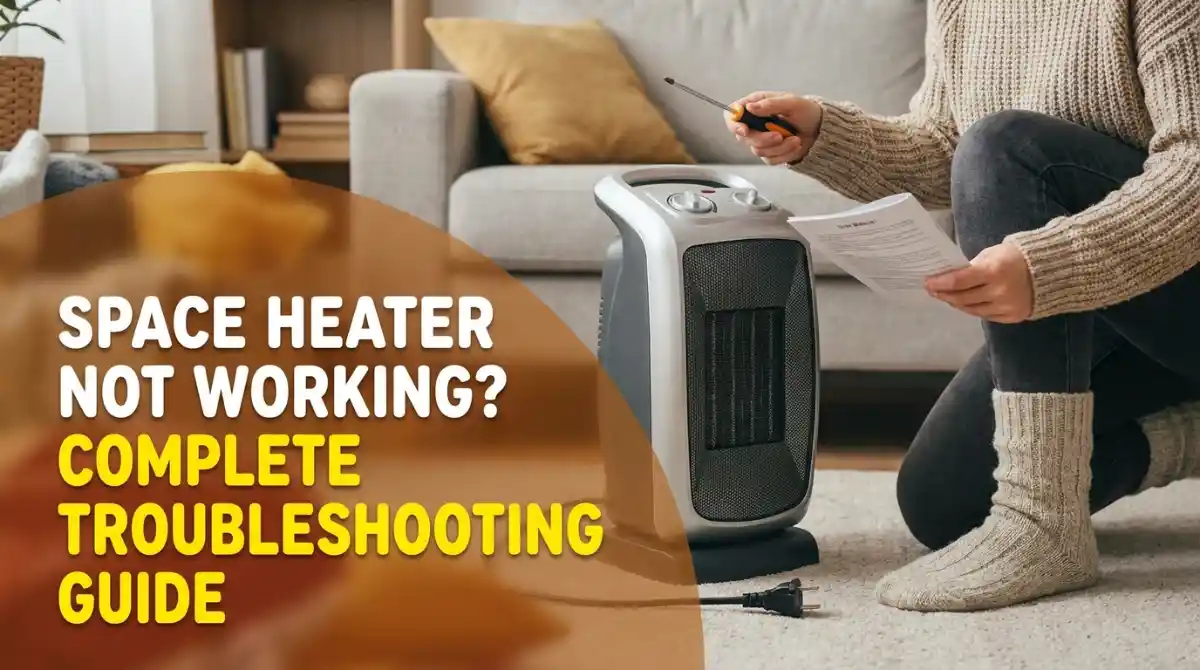
Disclaimer: Never attempt to open the heater casing if the device is plugged in. If you suspect internal electrical damage or smell burning plastic, unplug the device immediately and discontinue use. We recommend professional repair for internal electrical faults.
You wake up on a cold winter morning, reach for your space heater’s power button, and nothing happens. Or worse, the light turns on but no heat comes out. I’ve been there myself, and after helping dozens of friends and family troubleshoot their heaters over the years, I’ve learned that most space heater failures have surprisingly simple fixes. This guide walks you through exactly how to diagnose and fix a space heater not working, from basic power checks to internal component repairs.
Quick Fix: Check These First!
- The Tip-Over Switch: Most heaters have a small button on the bottom. If it’s not pressed down, the heater won’t turn on.
- Power Outlet: Plug a lamp into the same outlet to ensure the power source actually works.
- Circuit Breaker: Check your home’s electrical panel to see if the circuit was tripped by the heater’s high power draw.
Safety First: What to Know Before You Start?
Never open a space heater while it’s plugged in. Unplug the unit completely before touching any internal components, even if the power button is off. Space heaters draw significant power, and the heating element can retain heat long after shutdown.
Check for visible damage before troubleshooting. Look for frayed cords, scorch marks, or a burning smell. If you spot any of these signs, stop immediately and consider replacement. A damaged heater is a fire hazard, not a DIY project.
Know your limits. If you’re uncomfortable working with electrical components, call a professional. The cost of a service call is far less than the risk of injury or fire from an improper repair.
Quick Troubleshooting Checklist
Start with these rapid checks before diving deeper. Many space heater issues resolve in under five minutes with these simple steps.
Check the outlet. Plug a phone charger or lamp into the same outlet to verify it’s working. Outlets controlled by wall switches or tripped GFCI breakers are common culprits.
Inspect the cord. Look for damage along the entire length. Pets, vacuum cleaners, and furniture can damage cords over time. Even small nicks can cause failure.
Reset the heater. Unplug for 15 minutes, then plug back in. This resets the thermal protection switch that shuts down the unit when it overheats.
Check the tip-over switch. Many heaters have a safety switch on the bottom that cuts power if the unit tilts. Ensure the heater sits on a flat, level surface.
Test the circuit breaker. Space heaters draw 1,500 watts on high setting, which can trip breakers. Check your electrical panel for any tripped switches.
If your space heater keeps tripping the breaker, your wiring might be overloaded. For efficient, low-draw alternatives, see our 12 Best Air Fryers Guide—often these energy-efficient tools help manage home utility loads better than old heaters.
Why Your Space Heater Stopped Working: Common Causes
Understanding what causes space heater failures helps you diagnose the right fix quickly. Here are the most common issues I encounter.
Power Supply Problems
Power issues top the list of space heater failures. The heater may not be getting electricity even when everything looks normal.
Start with the outlet itself. Test with another device to confirm power flows. If the outlet works intermittently, the wiring behind the wall may be loose. Avoid using extension cords or power strips with space heaters, as these often can’t handle the 12+ amps that heaters draw.
Check your circuit breaker or fuse box. Space heaters on high setting often trip 15-amp breakers, especially if other devices share the circuit. Look for a tripped breaker or blown fuse and reset or replace as needed.
Thermal Fuse Failure
The thermal fuse is a safety device that permanently cuts power if the heater overheats. Unlike a circuit breaker, you cannot reset a thermal fuse. Once it blows, it must be replaced.
According to forum discussions on Reddit’s r/appliancerepair, thermal fuses are the most commonly replaced part in space heaters. They cost under $5 and many users report successfully replacing them at home with basic tools.
Signs of a blown thermal fuse include a completely dead heater with no lights, sounds, or response. The unit was working fine, then suddenly stopped with no warning.
Tip-Over Switch Issues
The tip-over switch is a safety feature that cuts power if the heater tilts past a certain angle. It’s a small button or lever on the bottom of the unit.
These switches can stick or fail over time. Press the switch manually with your finger while the heater is unplugged. It should move freely and spring back when released. If it feels stuck or doesn’t return to position, the switch may need cleaning or replacement.
Forum users report that placing the heater on carpet or uneven surfaces can prevent the switch from engaging properly. Try testing on a hard, flat surface first.
Thermostat Malfunctions
A faulty thermostat may prevent the heater from turning on or cause it to cycle incorrectly. The thermostat controls when the heating element activates based on room temperature.
Test the thermostat by setting it to maximum heat. If the heater works on high but not on lower settings, the thermostat may be the issue. Some thermostats can be cleaned with compressed air to remove dust that interferes with temperature sensing.
Digital thermostats on newer models can fail electronically. If the display shows error codes or doesn’t respond to button presses, the control board may need professional service.
Heating Element Burnout
The heating element is the core component that converts electricity to heat. After years of use, these elements can burn out just like a light bulb.
Signs of heating element failure include a running fan with no heat production, or the heater turning on but staying cold. You may also notice a burning smell before complete failure occurs.
Heating element replacement is possible but often not economical for cheaper heaters. Elements cost $15-40 plus the time for disassembly. For heaters under $50, replacement usually makes more sense.
Step-by-Step Troubleshooting Guide
Follow these steps in order for systematic diagnosis. Each step eliminates possible causes before moving to more complex fixes.
Step 1: Verify Power Source
Plug the heater into a different outlet that you know works. Avoid extension cords during testing, as they can mask power issues.
If the heater works in a new outlet, your original outlet or circuit is the problem. Call an electrician if outlets show scorch marks, feel warm, or produce any burning smell.
Step 2: Reset the Thermal Protection
Unplug the heater completely. Wait at least 15 minutes for all internal components to cool and the thermal protection to reset. Some models require up to 30 minutes.
Plug the heater back in and test. If it works, the thermal protection had activated due to overheating. Check for blocked air vents or dust buildup that caused the initial shutdown.
Step 3: Check Safety Switches
Inspect the tip-over switch on the bottom of the unit. Clean any dust or debris around the switch mechanism. Press it several times to ensure it moves freely.
Look for any other safety switches. Some models have overheat sensors near the heating element or intake vents. These small cylindrical components can sometimes be reset by pressing a small button in the center.
Step 4: Test Different Settings
Try all heat settings on the control panel. If the heater works on high but not low, the thermostat or lower setting switch may be faulty.
Test the fan-only mode if your heater has one. A working fan but no heat points to heating element issues. No fan at all suggests power supply or control board problems.
Step 5: Inspect Internal Components
If you’re comfortable opening the heater, unscrew the back panel while the unit remains unplugged. Look for obvious issues like disconnected wires, scorch marks, or a blown thermal fuse.
The thermal fuse is typically a small cylindrical or rectangular component near the heating element. Use a multimeter to test continuity if you have one. No continuity means the fuse has blown and needs replacement.
Take photos before disconnecting any wires. This helps ensure proper reassembly later.
Step 6: Consider Professional Service or Replacement
If none of these steps resolve the issue, internal electrical faults may be present. Control board failures, wiring shorts, and motor problems require specialized knowledge.
For heaters over $100, professional repair may be worthwhile. Contact the manufacturer for authorized service centers. For budget heaters under $50, replacement is usually the smarter financial choice.
Brand-Specific Troubleshooting Tips
Different brands have common issues based on their design choices. Here are the most frequent problems reported for popular brands.
Lasko Heaters
Lasko heaters often show a red power light even when the unit isn’t producing heat. This confuses many users into thinking the heater should be working. The red light only indicates power reaching the unit, not that all components function.
If your Lasko shows a red light but no heat, check the thermostat setting first. These units require the thermostat to be set above room temperature to activate the heating element. Try turning the dial to maximum and wait five minutes.
Lasko models with digital displays may show error codes. Refer to your manual for code meanings, or contact Lasko customer support with the specific code displayed.
Honeywell Heaters
Honeywell space heaters frequently have timer functions that cause unexpected shutdowns. Check if an accidental timer setting is active. Press and hold the timer button for five seconds to cancel any active timer.
The tip-over switch on Honeywell tower heaters is particularly sensitive. Ensure the unit sits on a perfectly flat surface. Even slight carpet compression can trigger the switch on some models.
Honeywell’s overheat protection is aggressive and may trigger in warm rooms even before the heater feels hot to touch. Move the unit to a cooler area and try again.
Generic and Budget Brands
Comfort Zone, Mainstays, and similar budget heaters often lack replaceable parts. The thermal fuse may be soldered directly to the circuit board, making DIY repair difficult.
These units prioritize cost over repairability. If basic troubleshooting doesn’t work, replacement is usually your only option. The good news is that replacement units cost less than professional service on premium brands.
Repair vs Replace: Making the Right Decision
Sometimes fixing a space heater costs more than buying new. Here’s how to decide based on real-world costs and safety considerations.
Calculate the repair cost first. A thermal fuse costs $3-8. Heating elements run $15-40. Professional labor adds $50-100 per hour with minimum charges. Add shipping if you order parts online.
Consider the heater’s age and original cost. Units over five years old or originally under $40 rarely justify professional repair. Newer premium heaters over $80 may be worth fixing, especially if under warranty.
Safety is the deciding factor for many repairs. Any heater that has been dropped, exposed to water, or shows physical damage should be replaced regardless of repair cost. Internal damage can create fire hazards even after apparent fixes.
Preventing Future Space Heater Problems
Regular maintenance prevents most space heater failures before they happen. These simple habits extend heater life and maintain safety.
Clean the air intake and exhaust vents monthly. Use a vacuum with a brush attachment to remove dust and pet hair. Blocked airflow causes overheating, which triggers thermal protection shutdowns and blows thermal fuses.
Never use extension cords or power strips. Plug directly into wall outlets rated for the heater’s amperage. This prevents voltage drops that strain internal components.
Store heaters properly during off-seasons. Clean thoroughly before storage and keep in a dry location. Moisture and dust accumulation during storage causes many failures when units are first used again in fall.
Frequently Asked Questions
Why did my space heater suddenly stop working?
The most common cause is thermal protection activation from overheating. This safety feature cuts power when the unit gets too hot. Unplug the heater for 15-30 minutes to reset. Other causes include tripped circuit breakers, blown thermal fuses, or stuck tip-over switches.
How to reset a space heater electric?
Unplug the heater completely from the wall outlet. Wait at least 15 minutes for the thermal protection switch to cool and reset. Plug back into a working outlet and test. Some models have a physical reset button that you press with a paperclip or pen.
What is the lifespan of a space heater?
Quality space heaters typically last 3-5 years with regular use. Budget models may last 1-3 years. Lifespan depends on usage hours, maintenance, and build quality. Units used daily during winter months wear faster than occasionally used heaters.
Why is my space heater light on but no heat?
A lit power indicator with no heat usually means the thermostat is set too low, the heating element has burned out, or a thermal fuse has blown. Try adjusting the thermostat to maximum. If still no heat after 10 minutes, the heating element likely needs replacement.
How do I know if my space heater fuse is blown?
A blown thermal fuse causes complete power failure. The heater shows no lights, makes no sounds, and doesn’t respond to the power button. You can test the fuse with a multimeter for continuity. No continuity means the fuse is blown and must be replaced.
Why does my space heater keep shutting off?
Repeated shutdowns usually indicate overheating from blocked air vents, a faulty tip-over switch, or an overly sensitive thermal sensor. Clean all vents thoroughly and ensure the unit sits on a flat, stable surface. If problems continue, the thermal protection switch may be faulty.
Conclusion
A space heater not working doesn’t always mean replacement. Start with the quick checklist, work through the systematic troubleshooting steps, and you’ll likely find a simple fix. Most failures come from power issues, thermal protection activation, or dirty vents that you can resolve yourself.
If your heater needs parts or professional service, weigh the repair cost against a new unit. Safety always comes first. Any heater with physical damage, burning smells, or scorch marks belongs in the trash, not the repair shop. With proper maintenance and these troubleshooting skills, you’ll stay warm all winter long.
Once your heat is back on, check your home’s digital climate—ensure your setup is optimized by reading our 12 Best Phones for Mobile Gaming to keep your media devices running as cool as your house is warm.

![Samsung washer dryer sale [cy]](https://www.guidespot.com/wp-content/uploads/2026/06/featured-1782334501651-370x245.webp "8 Best Samsung Washer Dryer Sale Deals 2026")