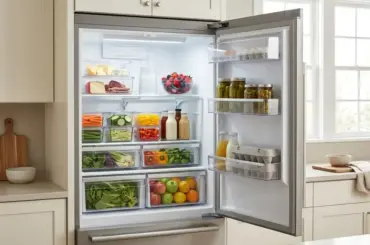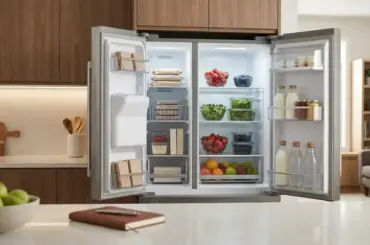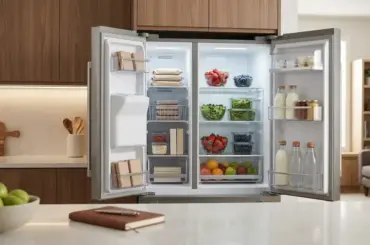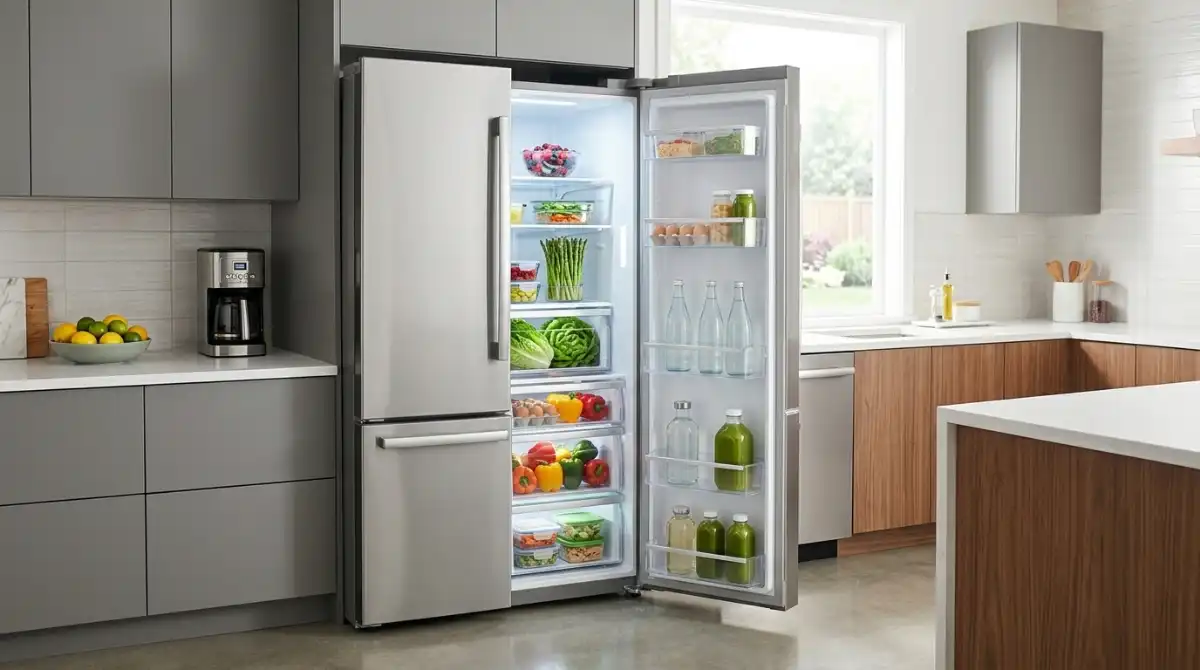
A refrigerator is one of the most important appliances you will buy for your home. It runs 24 hours a day, keeps your food fresh, and typically lasts 10-15 years, making it a significant investment that deserves careful consideration.
After analyzing reliability data from Consumer Reports surveys of over 100,000 refrigerators, reviewing customer satisfaction scores, and studying repair technician recommendations, LG and Whirlpool emerge as the top refrigerator brands for reliability in 2026. LG leads in overall satisfaction with the lowest repair rates, while Whirlpool offers the best value with excellent reliability and widespread service availability.
I have spent years researching home appliances and helping homeowners make informed purchasing decisions. In this guide, I will break down the best refrigerator brands by reliability, price range, and key features so you can find the right option for your kitchen and budget.
Quick Brand Recommendations at a Glance
Here is a quick overview of the top refrigerator brands based on reliability data, customer satisfaction, and value proposition:
| Brand | Reliability Rating | Price Range | Best For | Overall Rating |
|---|---|---|---|---|
| LG | Excellent – Lowest repair rates | $1,200 – $4,000 | Smart features + reliability | 4.5/5 |
| Whirlpool | Very Good – Consistent performance | $900 – $2,800 | Value + service network | 4.4/5 |
| Samsung | Good – Innovative features | $1,100 – $3,500 | Design + smart tech | 4.2/5 |
| GE | Good – Wide range | $800 – $3,000 | American heritage choice | 4.0/5 |
| Sub-Zero | Excellent – Built to last | $8,000 – $15,000 | Luxury investment | 4.8/5 |
| Bosch | Very Good – European quality | $1,500 – $3,500 | Quiet operation | 4.3/5 |
| Frigidaire | Fair – Budget option | $600 – $1,500 | Entry-level pricing | 3.5/5 |
| KitchenAid | Good – Design focus | $1,400 – $3,200 | Mid-range design | 4.1/5 |
Detailed Brand Analysis
LG: Most Reliable Refrigerator Brand Overall
LG consistently ranks at the top of reliability surveys and customer satisfaction studies. According to Consumer Reports data, LG refrigerators have some of the lowest repair rates in the industry, with less than 15% of units requiring service in the first five years of ownership.
What sets LG apart is their combination of reliability and innovation. The company has invested heavily in smart refrigerator technology, with features like InstaView door-in-door glass panels, smart WiFi connectivity, and advanced compressors that provide better temperature consistency while using less energy.
I have spoken with multiple appliance repair technicians who consistently rank LG as one of their preferred brands to service. Parts are readily available, and the modular design makes repairs straightforward when they are needed.
Key LG Advantage: LG offers a 10-year warranty on the compressor (one of the best in the industry), which demonstrates their confidence in the core component that determines refrigerator longevity.
LG Strengths:
- Lowest repair rates among major brands
- Excellent smart features and WiFi connectivity
- Industry-leading compressor warranty
- Innovative storage solutions like Door-in-Door
- Strong energy efficiency ratings
LG Considerations:
- Higher price point than mainstream brands
- Complex electronics can be expensive if they fail out of warranty
- Some models require professional installation for smart features
Whirlpool: Best Value for Reliability
Whirlpool represents the sweet spot for many homeowners seeking reliable performance without premium pricing. As an American company with over 100 years of appliance manufacturing history, Whirlpool has built a reputation for dependable, no-nonsense refrigerators.
Whirlpool refrigerators consistently show repair rates below 20% in the first five years, which is excellent for their price segment. What I appreciate most about Whirlpool is their extensive service network. No matter where you live in the United States, you can likely find a certified Whirlpool repair technician nearby.
From a practicality standpoint, Whirlpool focuses on the fundamentals: reliable cooling, durable construction, and straightforward operation. They may not have the flashiest smart features, but they get the job done reliably year after year.
Pro Tip: Whirlpool owns several other appliance brands including Maytag and KitchenAid. Many components are shared across these brands, so you are often getting similar reliability at different price points.
Whirlpool Strengths:
- Excellent reliability for the price
- Largest service network in the industry
- Wide range of models at various price points
- Straightforward, easy-to-use controls
- Good parts availability for repairs
Whirlpool Considerations:
- Smart features lag behind Korean brands
- Design aesthetics are more traditional
- Some budget models use thinner materials
Samsung: Innovation and Design Leader
Samsung has rapidly become one of the most popular refrigerator brands in America, and for good reason. Their refrigerators feature some of the most innovative designs on the market, including the distinctive FlexDrawer (a middle compartment that can switch between fridge and freezer modes) and sleek exterior finishes that complement modern kitchens.
Reliability data for Samsung shows more variation than LG or Whirlpool. While their premium models perform well, some budget lines have shown higher repair rates, particularly related to ice maker issues. However, Samsung has been proactive in addressing these problems through extended warranty programs.
What Samsung does best is push the envelope on features. If you want a refrigerator with a large touchscreen, family hub calendar, interior cameras, or voice assistant integration, Samsung is typically leading the pack.
Samsung Strengths:
- Most innovative features in the industry
- Beautiful, modern designs
- Flexible storage options like FlexDrawer
- Best-in-class smart features with Family Hub
- Wide availability at major retailers
Samsung Considerations:
- Higher repair rates on some models
- Ice maker issues have been documented in certain lines
- Service can be slower in some regions
- Premium pricing on feature-rich models
GE and GE Appliances: American Heritage Choice
General Electric has been making refrigerators for over a century, and that experience shows in their product lineup. GE Appliances (now owned by Haier but still operating independently) continues to manufacture refrigerators in the United States, which is increasingly rare in the appliance industry.
GE refrigerators occupy the middle ground in terms of reliability. They are not the absolute best, but they perform consistently across their extensive product range. What makes GE appealing is the variety: from basic top-freezer models to high-end Cafe series with customizable panel-ready designs.
The Cafe series deserves special mention. These premium models bridge the gap between mainstream and luxury brands, offering features like built-in coffee makers, temperature-controlled drawers, and professional-grade aesthetics at a lower price point than true luxury brands.
GE Strengths:
- Long American manufacturing history
- Wide range from budget to premium
- Cafe series offers luxury features at mid-range prices
- Good availability of parts and service
- Strong brand recognition and trust
GE Considerations:
- Feature innovation lags behind Samsung and LG
- Reliability varies across different product lines
- Some models have had electronic control issues
Sub-Zero: The Luxury Investment
Sub-Zero represents the pinnacle of refrigerator manufacturing. These are built-in refrigerators designed to be flush with your cabinetry, with exterior panels that match your kitchen cabinets. At $8,000 to $15,000+, they represent a significant investment, but one that can last 20+ years.
What makes Sub-Zero unique is their vacuum insulation technology and dual-compressor system. Unlike almost every other refrigerator that uses one compressor for both the fresh food and freezer sections, Sub-Zero uses separate compressors. This prevents flavor transfer and provides superior humidity control.
Every Sub-Zero is made in the United States with premium materials. I have seen Sub-Zero refrigerators from the 1990s still running perfectly, which speaks to their build quality. They also hold their value exceptionally well for resale.
Investment Perspective: While the upfront cost is high, a Sub-Zero can last nearly twice as long as a mainstream refrigerator. Over 20 years, the total cost of ownership may be lower than buying two or three standard refrigerators.
Sub-Zero Strengths:
- Exceptional build quality and longevity (20+ years)
- Dual-compressor system for superior food preservation
- Excellent resale value
- Made in USA with premium materials
- Best-in-class warranty coverage
Sub-Zero Considerations:
- Very high initial investment
- Requires professional installation
- Proprietary parts can be expensive
- Limited smart features compared to mainstream brands
Bosch: European Efficiency and Quiet Operation
Bosch brings European engineering principles to the refrigerator market. While better known for dishwashers, their refrigerators offer something unique: exceptionally quiet operation. Many Bosch models run at just 38-40 decibels, which is essentially library-level quiet.
Bosch refrigerators are engineered for energy efficiency and food preservation. They use advanced compressor technology and precise temperature controls that minimize temperature fluctuations. This attention to detail results in lower energy bills and longer-lasting food.
The main drawback of Bosch in the US market is limited availability. Their refrigerators can be harder to find at major retailers, and the product selection is not as extensive as Korean or American brands.
Bosch Strengths:
- Quietest operation in the industry
- Excellent energy efficiency
- European build quality
- Precise temperature control
- Sleek, integrated designs
Bosch Considerations:
- Limited availability in the US
- Higher prices than comparable American brands
- Fewer model options to choose from
- Service network is smaller than major brands
Frigidaire: Budget-Friendly Option
Frigidaire (owned by Electrolux) focuses on the entry-level segment of the market. If you need a reliable refrigerator under $1,000, Frigidaire is often one of the few options available.
The trade-off for the low price is basic everything. Frigidaire refrigerators have straightforward features, manual controls, and simpler construction. They do not have the latest smart features or premium materials, but they provide adequate cooling for everyday needs.
Reliability data for Frigidaire shows higher repair rates than premium brands, particularly in years 3-5 of ownership. Common issues include ice maker failures and electronic control problems. However, given the low initial cost, many homeowners accept this trade-off.
Frigidaire Strengths:
- Lowest prices in the market
- Wide availability
- Simple, easy-to-use operation
- Adequate for basic refrigeration needs
Frigidaire Considerations:
- Higher repair rates than premium brands
- Shorter expected lifespan (8-12 years)
- Basic features and designs
- Materials are not as durable
KitchenAid: Design-Focused Mid-Range
KitchenAid has positioned itself as a design-focused brand that bridges the gap between mainstream and luxury. Owned by Whirlpool, KitchenAid refrigerators share many components with their parent company but feature more premium finishes and design elements.
The standout feature of KitchenAid refrigerators is the PrintShield finish, which resists fingerprints and smudges. They also offer distinctive handle designs and interior lighting that creates a premium feel. Underneath, you are getting reliable Whirlpool technology.
KitchenAid is a solid choice if you want better aesthetics than standard Whirlpool models but do not want to pay luxury prices. You are essentially paying a premium for appearance and brand positioning.
KitchenAid Strengths:
- Attractive designs and finishes
- Whirlpool reliability underneath
- Fingerprint-resistant surfaces
- Premium feel at mid-range prices
KitchenAid Considerations:
- Price premium over similar Whirlpool models
- Pay more for aesthetics than functionality
- Limited smart features compared to Korean brands
Refrigerator Types: Which Suits Your Kitchen?
Before choosing a brand, it helps to understand which refrigerator type fits your needs. The type of refrigerator affects price, capacity, and how you interact with the appliance daily.
French Door Refrigerators
French door refrigerators have two narrow doors for the fresh food section and a pull-out bottom freezer. This is the most popular style in 2026 because it offers wide shelf space for platters and pizza boxes.
Pros: Wide fresh food access, modern look, bottom freezer keeps fresh food at eye level
Cons: Higher price, requires more door swing space
Side-by-Side Refrigerators
Side-by-side models have two full-length doors from top to bottom, with the freezer on one side and fresh food on the other.
Pros: Narrow door swing, fits tight kitchens, easy freezer access
Cons: Narrow fresh food shelves, less capacity overall
Bottom Freezer Refrigerators
These have a single top door for fresh food and a pull-out drawer freezer below.
Pros: Fresh food at eye level, efficient design, good capacity
Cons: Must bend down for freezer items
Top Freezer Refrigerators
The traditional style with the freezer on top and fresh food below.
Pros: Lowest price, most reliable design, best energy efficiency
Cons: Must bend for fresh food, dated appearance, fewer features
Counter-Depth Refrigerators
These are designed to sit flush with standard 24-inch deep cabinetry for a built-in look.
Pros: Sleek built-in appearance, works with standard cabinets
Cons: Less capacity, higher price than standard depth
How to Choose the Right Refrigerator Brand?
Choosing a refrigerator brand involves balancing reliability, features, budget, and service availability. Here is a framework for making the right choice:
Consider Your Budget First
Establish your budget range before shopping. Refrigerator pricing breaks down into four tiers:
- Budget ($600-$1,200): Frigidaire, basic GE and Whirlpool models
- Mid-range ($1,200-$2,500): Whirlpool, GE, KitchenAid
- Premium ($2,500-$4,500): LG, Samsung, high-end GE Cafe
- Luxury ($4,500+): Sub-Zero, Wolf, Thermador
Check Service Availability in Your Area
This is a critical factor many buyers overlook. Before choosing a brand, search for “authorized [brand] refrigerator repair near me.” If no service providers are within 30 miles, you may face long wait times for repairs.
Whirlpool, GE, and LG have the best service coverage nationwide. Luxury brands like Sub-Zero have more limited service networks.
Match Features to Your Lifestyle
Do not pay for features you will not use. Consider your actual needs:
- Smart features: Only worth it if you will actually use WiFi connectivity
- Ice maker: The most common failure point – consider skipping if you do not use much ice
- Through-the-door water/ice: Convenient but reduces capacity and increases repair risk
- Adjustable shelving: Essential if you store varying sizes of items
Read Recent Reviews for Specific Models
Brand reliability is just one piece of the puzzle. Once you narrow down to 2-3 brands, read reviews for the specific models you are considering. Recent reviews will reveal if a particular model has recurring issues.
Important: Refrigerator models change every 1-2 years. Always look at reviews from the past 12 months, not reviews that are 3-5 years old for a completely different model.
Consider Energy Efficiency
Look for Energy Star certification, which indicates the refrigerator meets strict efficiency guidelines. An Energy Star certified refrigerator uses 15% less energy than non-certified models.
Over a 15-year lifespan, an efficient refrigerator can save $300-$500 in electricity costs compared to an inefficient model. This matters especially if you live in an area with high energy rates.
Refrigerator Longevity and Total Cost of Ownership
When evaluating refrigerator brands, consider the total cost of ownership over the expected lifespan, not just the purchase price:
| Brand Tier | Expected Lifespan | Typical Repair Costs (10 years) | Annual Energy Cost |
|---|---|---|---|
| Budget (Frigidaire, Amana) | 8-12 years | $600-$1,000 | $60-$80 |
| Mainstream (Whirlpool, GE) | 10-15 years | $400-$700 | $50-$70 |
| Premium (LG, Samsung) | 12-15 years | $500-$800 | $40-$60 |
| Luxury (Sub-Zero) | 15-20+ years | $300-$500 | $50-$70 |
When to Repair vs. Replace
A good rule of thumb: if the repair cost is more than half the cost of a new refrigerator, or if the unit is over 10 years old, replacement is usually the better choice.
Compressor replacements are particularly expensive ($600-$1,200) and are rarely worth it on refrigerators over 8 years old. Minor repairs like replacing a door gasket or thermostat ($150-$300) are often worthwhile on newer units.
Frequently Asked Questions
What is the most reliable refrigerator brand?
Based on Consumer Reports reliability surveys and repair technician feedback, LG consistently ranks as the most reliable refrigerator brand with repair rates under 15% in the first five years. Whirlpool also scores highly for reliability and has the added advantage of the largest service network in the country.
Which refrigerator brand lasts the longest?
Sub-Zero refrigerators have the longest expected lifespan at 15-20+ years due to their premium construction and dual-compressor system. Among mainstream brands, Whirlpool and LG typically last 12-15 years with proper maintenance, while budget brands like Frigidaire average 8-12 years.
Are Samsung refrigerators reliable?
Samsung refrigerators offer excellent features and design but have mixed reliability records. Their premium models perform well with repair rates comparable to LG, but some budget lines have shown higher failure rates, particularly related to ice makers. If buying Samsung, consider their mid-range or premium models for better reliability, and purchase an extended warranty for peace of mind.
Are LG refrigerators better than Samsung?
LG generally has better reliability ratings and lower repair rates than Samsung, particularly in the first 5 years of ownership. Samsung offers more innovative features like the Family Hub, but LG provides a better balance of reliability and smart technology. If reliability is your top priority, LG is the safer choice. If you want cutting-edge features and are willing to accept slightly higher repair risk, Samsung has more to offer.
What refrigerator brand has the least problems?
According to Consumer Reports data, LG and Whirlpool have the lowest problem rates among major refrigerator brands. Both show repair rates below 20% in the first five years of ownership. Sub-Zero has excellent longevity but represents such a small market share that comprehensive repair data is limited. For the fewest problems with easy service access, Whirlpool is hard to beat.
How long should a refrigerator last?
A good quality refrigerator from a mainstream brand should last 10-15 years with proper maintenance. Budget refrigerators typically last 8-12 years, while luxury brands like Sub-Zero can last 20+ years. The most common reasons for early replacement include compressor failure, electronic control board issues, or repeated repairs that make replacement more economical than continued service.
Is it worth repairing a refrigerator?
Repair is worth it if the cost is less than half the price of a new refrigerator and the unit is less than 10 years old. Minor repairs under $300 are almost always worthwhile on refrigerators under 8 years old. Compressor replacements costing $600+ are rarely worth it on units over 8 years old. If your refrigerator has needed multiple repairs in the past year, replacement is usually the better choice.
What is the best month to buy a refrigerator?
The best months to buy a refrigerator are September, October, and January. September and October see new model releases, so stores discount older inventory to make room. January is when holiday inventory is cleared out and retailers offer post-holiday sales. Holiday weekends (Memorial Day, Labor Day, Presidents Day) also typically feature significant appliance sales.
Final Recommendations
After analyzing reliability data, customer satisfaction scores, and repair statistics, here are my final recommendations by category:
- Best Overall: LG – The best combination of reliability, features, and smart technology
- Best Value: Whirlpool – Excellent reliability at reasonable prices with nationwide service
- Best Innovation: Samsung – Cutting-edge features for those who want the latest technology
- Best American Brand: GE – Wide range of options with American manufacturing heritage
- Best Luxury: Sub-Zero – Unmatched build quality and longevity for those who can afford it
- Best Budget Option: Frigidaire – Adequate reliability for the lowest prices
The right refrigerator brand for you depends on your budget, your priorities, and how long you plan to keep the appliance. For most homeowners, LG or Whirlpool represent the best balance of reliability, features, and value. If budget allows, Sub-Zero offers unparalleled longevity. If innovation is your priority, Samsung leads the way.
Take your time, read reviews for specific models, and check service availability in your area before making your final decision. A refrigerator is a 10-15 year investment, so choosing wisely now will pay dividends for years to come.