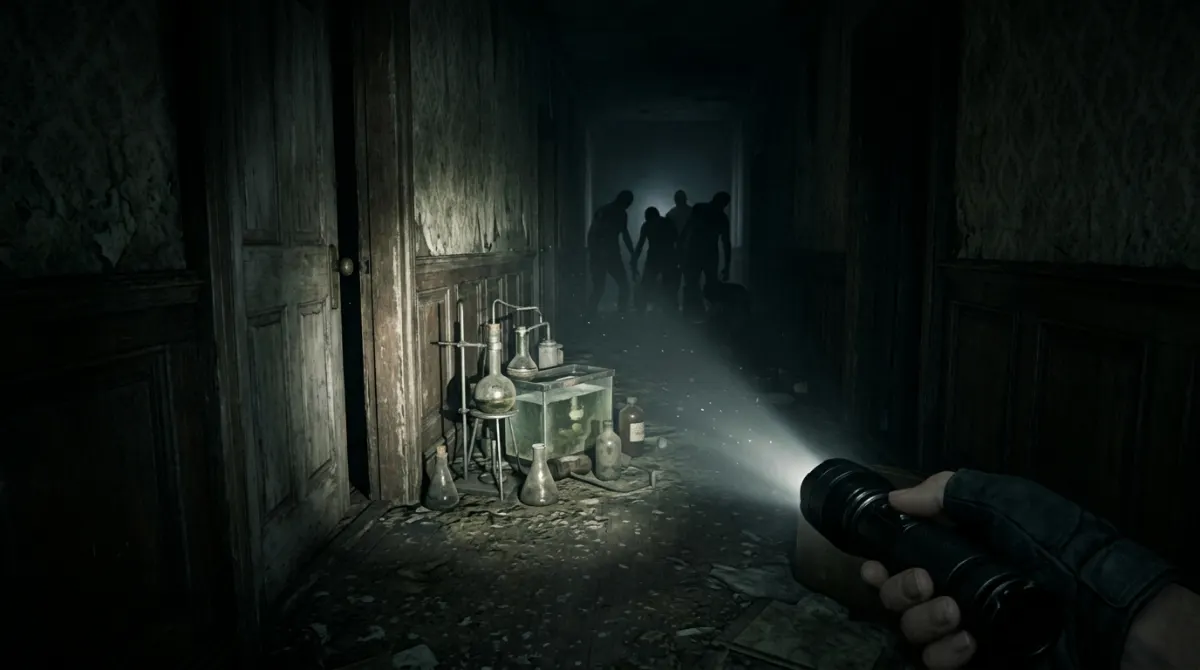
The Resident Evil franchise has defined survival horror for nearly 30 years. Since its debut in 1996, Capcom’s flagship series has evolved from fixed-camera horror to third-person action and first-person terror. After analyzing every mainline entry, I can tell you that Resident Evil 4 (2005 original) remains the series’ pinnacle for its revolutionary gameplay, while RE2 Remake perfects classic survival horror for modern audiences.
Whether you’re a horror veteran seeking genuine scares or an action fan wanting thrilling combat, Resident Evil offers something exceptional. Having played through every entry multiple times across different platforms, I’ve seen the series transform while maintaining its core identity. The franchise has sold over 150 million copies worldwide, proving its enduring appeal across generations.
This ranking considers gameplay innovation, horror elements, story impact, and modern playability. I’ve spent countless hours testing each game on current hardware, comparing original versions to remakes, and evaluating how these classics hold up today. Some games revolutionized the industry, while others perfected established formulas.
You’ll discover which games defined survival horror, which ones pioneered modern action mechanics, and which entries newcomers should tackle first. I’ve also included platform recommendations and whether you should play remakes or originals. Let’s dive into the definitive ranking of Resident Evil games.
How We Ranked These Horror Masterpieces
My ranking methodology balances innovation, execution, and lasting impact. I evaluated each game on five key criteria: gameplay mechanics (30%), horror atmosphere (25%), story and characters (20%), technical achievement (15%), and modern playability (10%). Games that pioneered new mechanics or perfected existing formulas ranked higher.
Modern playability matters because tank controls and fixed cameras, while revolutionary in 1996, can frustrate new players today. That’s why remakes often rank higher than originals—they preserve the vision while updating controls for modern audiences. I also considered each game’s influence on the broader gaming industry.
The Definitive Resident Evil Games Ranking (1-10)
1. Resident Evil 4 (2005)
Resident Evil 4 didn’t just save the franchise—it revolutionized third-person action games. The over-the-shoulder camera it introduced became the standard for the next decade, influencing games from Gears of War to The Last of Us. What makes RE4 special is how it balanced horror with action, creating tension through resource scarcity rather than jump scares.
The game’s setting—a remote Spanish village filled with infected villagers called Los Ganados—provided a perfect backdrop for this new direction. Gone were the slow-moving zombies; instead, players faced intelligent enemies who wield weapons, coordinated attacks, and transformed into monstrous forms. The inventory system, weapon customization, and quick-time events added depth without overwhelming the horror atmosphere.
Every location feels handcrafted, from the ominous village square to the ominous castle and the industrial island base. The boss battles remain some of the series’ best—particularly the fight against the towering El Gigante and the relentless Verdugo. Leon’s one-liners might be cheesy, but they cemented his status as gaming’s most charismatic action hero.
Available on nearly every platform imaginable, the original RE4 still plays beautifully today. The PC version offers uncapped frame rates and mouse support, making precision aiming easier than ever. For those wanting enhanced graphics, the 2023 remake modernizes the visuals while preserving the core gameplay that made the original a masterpiece.
2. Resident Evil 2 Remake (2019)
Capcom achieved the impossible with RE2 Remake—it improved upon perfection while respecting the original’s legacy. The 1998 classic defined zombie horror for a generation, but the remake transforms it into a modern survival horror masterpiece. The fixed cameras are gone, replaced by an over-the-shoulder view borrowed from RE4, but the terror remains palpable.
The Raccoon City Police Department feels like a character itself—each hallway tells a story through environmental details, from desperate scrawled messages to evidence of last stands. The zombie design is phenomenal; these aren’t shambling corpses but terrifying threats that can burst through walls and endure headshots. The sound design deserves special praise—every groan, shuffling footstep, and distant gunshot builds unbearable tension.
What elevates RE2 Remake above other horror games is its perfect pacing. The scarcity of ammunition forces every decision to matter, while the puzzle design strikes the right balance between challenging and rewarding. Playing as both Leon and Claire provides distinct perspectives on the outbreak, with their storylines intersecting in meaningful ways.
The remake adds quality-of-life improvements that make the original more accessible without dumbing it down. The updated inventory system and smoother controls reduce frustration while maintaining challenge. Whether you’re a veteran who memorized every room layout or a newcomer experiencing Raccoon City’s fall for the first time, RE2 Remake delivers unforgettable horror.
3. Resident Evil 7: Biohazard (2017)
After the action-heavy RE6, Capcom returned to horror roots with RE7—and the result was terrifying. The first-person perspective puts you directly in the shoes of Ethan Winters as he searches for his missing wife in a dilapidated Louisiana mansion. This isn’t just a cosmetic change; the POV makes every encounter personal and every shadow menacing.
The Baker family ranks among the series’ best villains, particularly the towering Lady Dimitrescu (though she appears more in Village). Jack Baker’s relentless pursuit through the house creates genuine dread—you can lock doors, but he’ll eventually break through. The game excels at psychological horror too, with documents revealing the family’s tragic story while the environment tells its own tale of decay.
RE7 understands that horror comes from vulnerability. Limited resources and unfamiliar surroundings keep you constantly off-balance. The crafting system encourages exploration but also risks exposure. Unlike action-focused entries, combat feels desperate rather than empowering—each shot is a last resort.
The VR version transforms an already scary game into a nightmare-inducing experience. Playing in VR isn’t recommended for the faint of heart, but it showcases how immersion amplifies horror. RE7 proved that first-person horror could work in Resident Evil, setting the stage for Village’s success.
4. Resident Evil Village (2021)
Building on RE7’s first-person foundation, Village delivers a more action-oriented but still terrifying experience. The game is divided into distinct sections, each with its own atmosphere and threats—from the gothic horror of Castle Dimitrescu to the industrial nightmare of Heisenberg’s factory. This variety keeps the experience fresh throughout its 10-hour runtime.
The four lords each represent different horror subgenres. Lady Dimitrescu embodies vampire horror, towering over players in her castle. Moreau provides body horror with his grotesque transformations. Angelo brings ghostly supernatural elements. And Heisenberg merges horror with industrial action, piloting a massive mech in the game’s climax. This variety prevents the horror from becoming stale.
Where Village improves upon RE7 is in its combat. The gunplay feels responsive and satisfying, with a weapon upgrade system that encourages experimentation. The Duke serves as a merchant, allowing players to purchase supplies and upgrades between major areas. This streamlines the experience while maintaining tension.
The story connects to broader Resident Evil lore in meaningful ways, finally giving closure to Ethan’s journey while teasing future entries. Chris Redfield’s ambiguous role adds mystery, and revelations about the mold’s true nature expand the universe’s mythology. Village strikes the perfect balance between horror and action, making it accessible to newcomers while satisfying longtime fans.
5. Resident Evil Remake (2002)
The original Resident Evil defined survival horror, but the 2002 remake perfected it. Capcom rebuilt the entire game from scratch while preserving what made the original special. The Spencer Mansion remains one of gaming’s most iconic locations—a labyrinth of puzzles, secrets, and bio-organic weapons waiting around every corner.
The remake’s greatest achievement is its atmosphere. The pre-rendered backgrounds are gorgeous, each room telling a story through detail. Lighting plays a crucial role in creating tension, with shadows potentially hiding threats. The sound design remains exceptional, with creaking floorboards, distant groans, and sudden musical cues keeping players constantly on edge.
Gameplay improvements modernize the experience without compromising the original’s vision. The defensive weapons mechanic allows you to stab zombies with knives or shoot them with grenades when grabbed, adding a layer of strategy to encounters. Crimson Head zombies—zombies that revive as faster, stronger enemies if not properly disposed—create constant tension.
Playing as Jill Valentine or Chris Redfield offers distinct experiences. Jill has more inventory space and access to the lockpick, while Chris can carry more items and deals more damage. This replayability extends the game’s value, encouraging multiple playthroughs. The HD Remaster version makes this masterpiece accessible on modern platforms with improved controls and widescreen support.
6. Resident Evil 3: Nemesis (1999)
Before Mr. X stalked players in RE2 Remake, Nemesis pioneered the relentless pursuer concept in RE3. This hulking tyrant, programmed specifically to hunt S.T.A.R.S. members, appears unexpectedly throughout the game, forcing players to either fight or flee. His introduction changed survival horror forever—enemies were no longer confined to rooms but could follow you between areas.
RE3’s setting—a zombie-infested Raccoon City on the brink of destruction—creates urgency unmatched in the series. The city feels alive with chaos, from burning buildings to military operations trying (and failing) to contain the outbreak. This apocalyptic backdrop gives the game a sense of scale missing from other entries.
Jill Valentine stars as one of gaming’s most capable protagonists. Her journey from survivor to freedom fighter provides emotional weight, particularly in her confrontations with Nemesis. The dodge mechanic adds depth to combat, rewarding skilled timing with evasion opportunities. The ammunition creation system lets players craft different bullet types, adding strategy to resource management.
The game’s pacing is relentless compared to other entries. Clocking in around 6-8 hours, RE3 focuses on action over puzzle-solving. While some purists criticized this shift at release, the game’s brevity makes it replayable. The choices system, though limited, adds replay value by affecting certain encounters and endings.
7. Resident Evil 2 (1998)
The original RE2 set the standard for zombie games that wouldn’t be surpassed for years. Its Raccoon City Police Department became one of gaming’s most memorable locations—a perfect blend of mundane realism and nightmare fuel. The game’s A/B scenario system, where playing as Leon then Claire (or vice versa) revealed different perspectives on the same events, was revolutionary for its time.
What makes RE2 special is how it balanced horror, action, and puzzle-solving. The police department’s layout encourages exploration, with keys and items unlocking new areas. The puzzle design remains clever—finding the spade key to access the west wing or arranging medallions in the library feels rewarding rather than tedious.
The zombie design established conventions that persist today. Different enemy types require different approaches—some rush you while others shamble menacingly. The Licker, with its exposed brain and long tongue, remains one of gaming’s most terrifying creature designs. The sound of its crawling on ceilings signals impending danger.
While the controls feel dated by modern standards, the game’s atmosphere and storytelling hold up remarkably well. The relationship between Leon and Claire, the mystery surrounding Ada Wong, and the tragedy of Chief Irons create compelling drama. The game’s multiple endings and unlockable scenarios added value long before achievements became standard.
8. Resident Evil 5 (2009)
RE5 divides the fanbase, but as a co-op action game, it delivers unparalleled thrills. The decision to go full action—dropping most horror elements for set-piece explosions and epic boss battles—alienated some purists. However, played with a friend, RE5 provides one of gaming’s best cooperative experiences.
The African setting provides visual variety, from dusty shantytowns to underground ruins and active volcanoes. The inventory system, though controversial in single-player, works brilliantly in co-op, forcing communication and coordination between players. Real-time item management adds tension during firefights—deciding whether to reload or heal your partner can determine success.
Chris Redfield’s muscular transformation provided comic relief, but Sheva Alomar proved a capable partner. Their dynamic explored themes of bio-terrorism and corporate responsibility, maintaining series lore relevance. The boss battles are spectacular—particularly the fights against the giant Ndesu and the final confrontation with Wesker.
The Mercenaries mode became a fan-favorite, offering endless replayability through score-based challenges. Its success led to standalone releases and influenced future entries. While RE5 sacrificed horror for Hollywood spectacle, it perfected Resident Evil’s action formula, making it essential for co-op enthusiasts.
9. Resident Evil 0 (2002)
RE0 serves as a fascinating prequel, exploring the outbreak’s origins before the mansion incident. Its unique mechanic—partner switching between Rebecca Chambers and escaped convict Billy Coen—adds puzzle-solving depth. Characters have different abilities: Rebecca can mix herbs while Billy can move heavy objects and withstand more damage.
The train opening sequence remains one of the series’ most atmospheric beginnings. The Ecliptic Express, abandoned and filled with zombie passengers, creates immediate tension. This moving environment adds claustrophobia, with limited escape routes making encounters more dangerous. The later settings—a training facility and secret laboratory—continue the series’ tradition of architecturally interesting locations.
The item dropping system, where you can leave items anywhere instead of finding item boxes, initially seems innovative but becomes tedious in practice. Remembering where you left crucial items in earlier areas creates unnecessary backtracking. Despite this flaw, the game’s puzzles are among the series’ most clever, particularly those requiring both characters’ cooperation.
Leech Man enemies introduced a grotesque new threat type. These creatures, formed from masses of leeches, could slither through vents and attack unexpectedly. The story revelations about James Marcus and the Umbrella Corporation’s early experiments added depth to series lore, even if some plot points strained credibility.
10. Resident Evil 6 (2012)
RE6’s ambition is both its strength and weakness. Four intersecting campaigns with different gameplay styles attempted to please everyone—Leon’s campaign offered classic horror, Chris’s delivered military action, Jake’s provided adventure elements, and Ada’s served as stealth-focused puzzle-solving. This variety makes RE6 the series’ longest entry but also its most unfocused.
The controls are undeniably smooth, with improved melee systems and fluid movement. The ability to slide, dodge, and counter makes combat more dynamic than ever. However, the abundance of action set-pieces—chases, escapes, and vehicle sequences—diminishes the horror elements that defined the series. The J’avo enemies, who can mutate mid-fight, are interesting but sometimes feel like generic soldiers rather than horror monsters.
Where RE6 succeeds is in its sheer scale. The global pandemic storyline raises the stakes beyond previous entries. The character reunions—Leon and Helena, Chris and Piers, Jake and Sherry, Ada’s solo mission—provide fan service while advancing the overarching narrative. The Mercenaries mode is the series’ best, offering endless replayability with diverse character abilities.
Despite its flaws, RE6 deserves credit for its technical achievements and attempt to evolve the series. While it strayed too far from horror roots, it perfected the action formula that would later be refined in Village. Played with friends, the co-op campaigns provide enjoyment, even if they don’t capture Resident Evil’s essence.
Honorable Mentions: Worth Your Time
Code Veronica (2000) remains one of the series’ most underrated entries. Its continuation of Claire’s story and introduction of Alexia Ashford provide essential lore. The plane and Antarctic facilities offer unique environments, while the crossbow weapon adds variety. Unfortunately, some frustrating boss battles and/backtracking hurt the experience.
The Revelations games return to horror focus between major entries. Revelations 1’s episodic structure works well, with the Queen Zenobia ship providing atmospheric terror. Revelations 2 improves upon its predecessor with its RAID mode and compelling relationship between Moira and Natalia. Both are worth playing for horror fans.
Resistance, the asymmetric multiplayer mode included with RE3 Remake, offers brief distraction. One player controls the Mastermind, setting traps and spawning monsters, while four survivors try to escape. While it didn’t develop a lasting community, the concept shows potential for future Resident Evil multiplayer experiments.
New to Resident Evil? Here’s Where to Start
With 29 games across multiple platforms, newcomers often wonder where to begin. Based on your preferences, here’s my recommendation:
For action gamers: Start with Resident Evil 4 (2005 original). Its revolutionary gameplay holds up perfectly and introduces the series’ modern direction. The pacing is excellent, balance between horror and action is ideal, and it requires no previous knowledge of the series.
For horror enthusiasts: Begin with Resident Evil 7: Biohazard. It’s a soft reboot that requires no prior knowledge, delivers genuine scares, and introduces first-person horror. The standalone story makes it accessible while still connecting to broader lore for those interested.
For series traditionalists: Play Resident Evil 2 Remake followed by the original RE2 Remake. This gives you the modern experience first, then lets you appreciate how the series evolved. The connections between versions enhance appreciation of Capcom’s design philosophy.
Best Platforms for Each Game
Current-gen owners have excellent options across all platforms. PS5 and Xbox Series X offer performance modes targeting 60fps for most recent entries. PC provides the best visuals if your hardware can handle it, with mod support enhancing older games. Nintendo Switch versions of RE4, RE5, and RE6 are surprisingly competent portable options.
For the definitive Resident Evil 4 experience, I recommend playing on a gaming TV that handles dark scenes well, as lighting plays a crucial role in atmosphere creation. OLED displays excel here, with perfect black levels enhancing the horror. The LG C3 OLED particularly shines with RE4’s contrast between light and shadow.
If playing on PC, ensure your system meets minimum requirements. RE4 Remake and Village require modern GPUs for stable performance. Budget builders should consider affordable CPU combos that can handle these demanding titles. Pairing with appropriate graphics cards ensures smooth gameplay.
Playing Order Recommendations
Release order works best for understanding series evolution: Start with RE1 Remake (2002), then RE2 (1998), RE3 (1999), Code Veronica (2000), RE4 (2005), RE5 (2009), RE6 (2012), RE7 (2017), and Village (2021). This lets you appreciate how mechanics and themes changed over time.
For story-focused players, chronological order reveals deeper connections: Begin with RE0, then RE1, RE2, RE3, Code Veronica, RE4, RE5, Revelations 1, Revelations 2, RE6, and RE7. Village takes place after RE7 but can be played independently.
Most importantly, don’t feel pressured to play every entry. The main story arcs are largely self-contained. Pick games that appeal to your preferences—whether that’s classic horror, action thrills, or psychological terror. Each mainline entry offers a complete experience on its own.
Frequently Asked Questions
What is the best Resident Evil game ranked?
Resident Evil 4 (2005) ranks as the best for revolutionizing third-person action games, while RE2 Remake perfects survival horror for modern audiences. RE4 influenced countless games with its over-the-shoulder camera, making it historically significant. However, RE2 Remake offers superior horror atmosphere and polished gameplay. Your preference depends on whether you value innovation or perfection.
Which Resident Evil game should I start with?
Newcomers should start with Resident Evil 4 (2005) for action fans or RE7: Biohazard for horror enthusiasts. RE4 requires no prior knowledge and introduces the series’ modern direction. RE7 serves as a soft reboot, making it accessible while still connecting to broader lore. Both games explain necessary backstory through environmental storytelling and documents.
Are Resident Evil games connected?
Yes, most mainline games share continuity, but each tells a mostly self-contained story. Characters like Chris Redfield, Jill Valentine, and Leon Kennedy appear across multiple entries. The overall story involves the Umbrella Corporation creating bio-weapons, followed by bioterrorism threats in later games. You can enjoy most games individually without playing predecessors, though playing in release order reveals deeper connections.
What order should I play Resident Evil?
Play in release order: RE1 Remake (2002), RE2 (1998), RE3 (1999), Code Veronica (2000), RE4 (2005), RE5 (2009), RE6 (2012), RE7 (2017), Village (2021). This lets you appreciate gameplay evolution and story developments naturally. For just the essentials: play RE4, RE2 Remake, and RE7—they represent the series’ three major phases.
Is Resident Evil 4 original or remake better?
The 2005 original maintains superior pacing and camp charm, while the 2023 remake offers modern graphics and refined gameplay. The original’s treasure hunting and merchant system remain more engaging, but the remake improves combat and boss fights. Both are excellent—play the original first to appreciate its historical significance, then experience the remake’s improvements.
The Evolution of Survival Horror
From its humble beginnings with fixed cameras and tank controls to modern first-person terror, Resident Evil has constantly evolved while maintaining its core identity. The series pioneered survival horror, then reinvented third-person action, and finally returned to horror roots with first-person perspectives. This willingness to innovate while respecting legacy explains its 29-year longevity.
With Resident Evil 9 (codenamed Requiem) reportedly in development, the franchise continues to push boundaries. Recent rumors suggest a return to more traditional horror with open-world elements. Whatever direction it takes, Resident Evil’s legacy as gaming’s premier horror franchise is secure.
Whether you’re drawn to classic atmospheric tension, adrenaline-pumping action, or psychological terror, there’s a Resident Evil game for you. The series’ diversity is its greatest strength—proving that horror can take many forms while still delivering the thrills that keep players coming back for more. Choose your starting point wisely, and prepare for unforgettable terror.


![Best Pokemon Fan Games [cy]: 12 Incredible ROM Hacks & Fan Creations](https://www.guidespot.com/wp-content/uploads/2026/07/featured-update-83341-1784756639351-370x245.webp "Best Pokémon Fan Games 2026: 16 Incredible ROM Hacks")
![38 Best Minecraft Seeds ([nmf] [cy]): Java & Bedrock Tested](https://www.guidespot.com/wp-content/uploads/2026/07/featured-update-60481-1784749974713-370x245.jpg "38 Best Minecraft Seeds (August 2026): Java & Bedrock Tested")