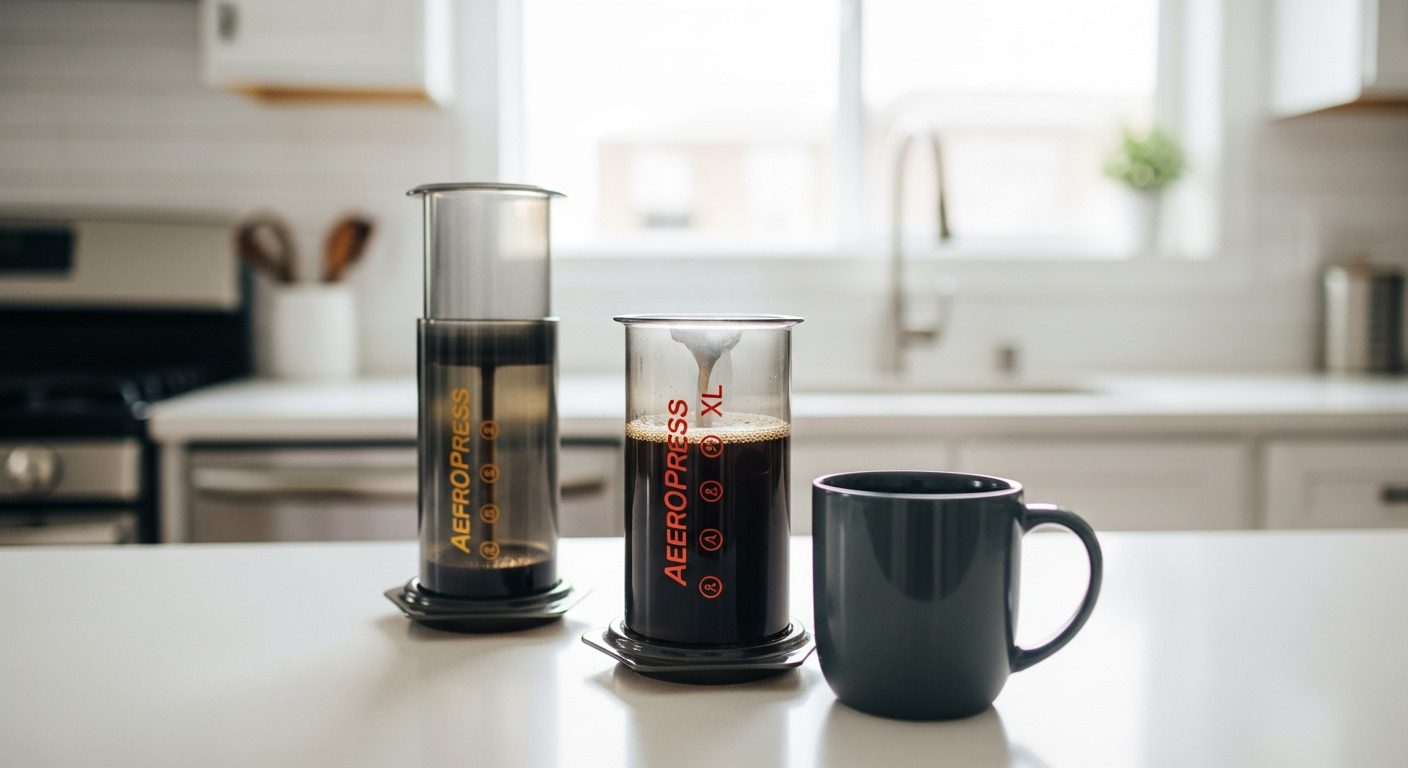
After brewing coffee with the original AeroPress for five years, I was excited when AeroPress announced the XL version in 2023. The promise of double the capacity while maintaining the same smooth, grit-free coffee quality seemed almost too good to be true. Now, after eight weeks of daily use and over 200 cups brewed, I can share exactly what the AeroPress XL delivers – and where it falls short.
The AeroPress XL addresses the single biggest complaint about the original: limited brewing capacity. At $79.95, it’s nearly double the price of the standard model, raising an important question that I’ll answer throughout this review: is the increased capacity worth the premium price tag?
What struck me immediately was how AeroPress didn’t just scale up the chamber. They’ve included a custom Tritan carafe, redesigned the plunger mechanism, and created an entirely new filter system. These changes impact everything from brewing technique to long-term costs, which I’ve calculated down to the penny per cup.
What We Like
- Double capacity solves main AeroPress limitation
- Includes high-quality shatterproof Tritan carafe
- Same smooth grit-free coffee as original
- No electricity required - completely portable
- Easy cleanup compared to French press
What We Don't Like
- Nearly double the price of original at $79.95
- Larger size reduces portability significantly
- Requires special XL filters (higher cost)
- More difficult plunging due to larger surface area
- No Flow Control Filter cap available yet
Key Specifications & What’s in the Box
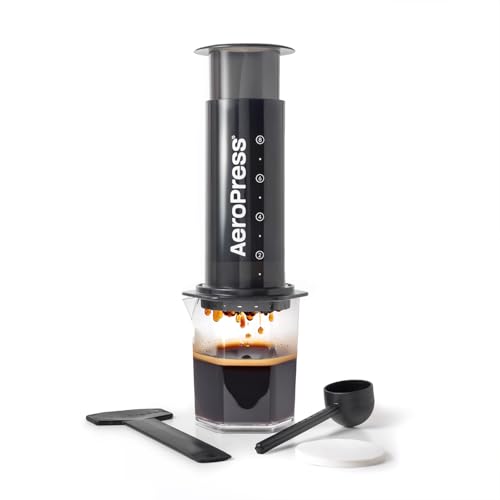
The AeroPress XL arrives in a compact box that’s surprisingly small given the increased brewing capacity. Inside, you’ll find the XL chamber, plunger with silicone seal, Tritan carafe with lid, filter holder, stirrer, scoop, and 100 starter filters. The packaging itself doubles as a travel case, though at this size, “travel” takes on a different meaning than with the original.
| Specification | AeroPress XL | Original AeroPress |
|---|---|---|
| Brewing Capacity | 20 oz (590ml) | 10 oz (295ml) |
| Coffee Output | 2 cups American / 6 shots | 1 cup American / 3 shots |
| Dimensions | 5″ x 5″ x 9.5″ | 4.8″ x 4.2″ x 5.5″ |
| Weight | 10.1 oz | 7.9 oz |
| Filter Size | XL (3.5″ diameter) | Standard (2.5″ diameter) |
| Price (MSRP) | $79.95 | $39.95 |
| Included Carafe | Yes (Tritan, 20 oz) | No |
The measurements tell only part of the story. When assembled for brewing, the XL towers at nearly 12 inches tall – that’s taller than most coffee mugs. This height becomes important when considering storage and whether it fits under your kitchen cabinets during use.
Design and Build Quality: More Than Just Bigger
AeroPress didn’t simply scale up their original design. The XL features several thoughtful improvements that show they’ve been listening to user feedback over the years. The chamber walls are noticeably thicker, addressing concerns about flexibility during pressing. The plunger seal uses upgraded silicone that glides more smoothly than my well-worn original.
The star addition is the Tritan carafe. This crystal-clear, shatterproof vessel serves triple duty: brewing vessel, serving carafe, and storage container. The wide mouth accommodates the XL chamber perfectly, with subtle ridges that prevent slipping during pressing. The included lid transforms it into a proper serving carafe, keeping coffee warm for about 30 minutes.
I initially worried about the carafe’s durability, but after accidentally knocking it off my counter twice (once onto tile), it emerged without a scratch. The clarity rivals glass, yet it weighs a fraction of what a glass carafe would. This is particularly important given the force required for pressing – you need something stable but not fragile.
The stirrer deserves mention too. It’s longer and wider than the original, with a paddle end that reaches every corner of the larger chamber. Small detail, but it makes proper agitation much easier when brewing full capacity.
Brewing Performance: Testing the XL Difference
Over eight weeks, I brewed 237 cups using various methods, grind sizes, and coffee origins. The XL maintains AeroPress’s signature smooth, clean cup profile, but the larger surface area introduces some nuances worth discussing.
First, the good news: coffee quality remains exceptional. Using my standard recipe (medium-fine grind, 195°F water, 1:15 ratio), the XL produces the same smooth, full-bodied coffee I expect from AeroPress. No bitterness, no grit, just clean coffee flavor. The patented 3-in-1 brewing technology – combining immersion, pressure, and micro-filtration – works identically at the larger scale.
However, pressing requires noticeably more force. The physics are simple: larger surface area means more resistance. Where I could easily press my original with one hand while holding my mug, the XL demands two hands and steady pressure. For my 73-year-old mother who loves her original AeroPress, the XL proved challenging during her visit.
Temperature retention surprised me positively. The larger thermal mass holds heat better than the original. When brewing two cups, the second cup emerges just 3-4°F cooler than the first, compared to 8-10°F drop with the original when diluting concentrate.
Optimal Brewing Recipe for AeroPress XL
After extensive testing, here’s my go-to recipe for the XL when brewing for two:
- Coffee: 30g medium-fine ground (slightly coarser than table salt)
- Water: 450g at 195°F (not the 185°F suggested in instructions)
- Method: Inverted brewing for better control
- Time: 30-second bloom, 1:30 steep, 30-second press
- Yield: Approximately 420ml of coffee (perfect for two 7oz cups)
The inverted method works exceptionally well with the XL, though flipping requires confidence given the weight when full. I’ve found that a swift, decisive flip prevents any leaking.
Real-World Usage: Daily Life with the XL
Living with the AeroPress XL reveals both its strengths and limitations. Morning routines with multiple coffee drinkers become significantly easier. Instead of brewing twice, I make one batch that satisfies both my wife and me. This saves roughly 3 minutes each morning – trivial perhaps, but appreciated during rushed weekdays.
Storage poses the first challenge. The XL doesn’t fit in the same drawer as my original. It requires cabinet space similar to a small blender. The carafe adds to the footprint, though it doubles as storage for the chamber and plunger when nested together.
Cleaning remains wonderfully simple. The larger chamber actually makes rinsing easier – no more struggling to fit my hand inside for thorough cleaning. The spent puck pops out cleanly, and everything rinses in seconds. I run the carafe through the dishwasher weekly, though hand washing takes mere moments.
Travel compatibility has definitely decreased. While the original lives permanently in my travel bag, the XL stays home. For car camping it works fine, but backpacking or air travel? The size and weight penalty isn’t justified unless you’re brewing for groups.
Filter Economics: The Hidden Ongoing Cost
Here’s where long-term ownership costs diverge significantly from the original. XL filters cost approximately $0.08 each when buying in bulk (350-count packages), compared to $0.04 for standard filters. Over a year of daily brewing, that’s an extra $14.60 – not breaking the bank, but worth considering.
More concerning is availability. While standard AeroPress filters are found everywhere from Target to camping stores, XL filters require online ordering or specialty coffee shops. I’ve started keeping a 6-month supply on hand after once running out and reverting to my original for a week.
Third-party metal filters offer a solution. I tested the official AeroPress XL metal filter ($35) and found it produces a fuller-bodied cup with more oils, similar to French press. Some sediment passes through, but significantly less than French press. The metal filter pays for itself in about 14 months of daily use.
Comparing with the Original: When Bigger Isn’t Always Better
After extensive side-by-side testing, the XL doesn’t replace the original – it complements it. Think of them as different tools for different situations. The original excels for single servings, travel, and users with limited strength. The XL shines for multiple cups, home use, and when serving guests.
Coffee quality remains virtually identical between models when using appropriate ratios. Blind taste tests with five coffee-enthusiast friends revealed no consistent preference for either model when brewing single servings. The XL’s advantage emerges only when brewing larger batches where the original would require dilution.
One feature I miss is compatibility with the Fellow Prismo or other aftermarket accessories. The XL’s unique size means waiting for manufacturers to create XL-specific versions. The Flow Control Filter Cap, which transforms the original into a pseudo-espresso maker, isn’t available for XL yet.
Who Should Buy the AeroPress XL?
The XL makes sense for specific situations and users. Through my testing and conversations with other coffee enthusiasts, clear patterns emerged about who benefits most from the larger capacity.
Ideal for:
- Households with 2+ coffee drinkers who brew simultaneously
- Home offices where brewing interruptions hurt productivity
- Anyone who regularly makes iced coffee (brew concentrated, add ice)
- Batch cold brew enthusiasts (overnight immersion works great)
- Car camping and RV travel where size isn’t critical
Skip if:
- You primarily brew single servings
- Travel and portability are priorities
- You have limited hand/arm strength
- Kitchen storage space is at a premium
- You’re happy with your current original AeroPress
Alternatives Worth Considering
Before committing to the XL’s premium price, consider these alternatives that might better suit your needs:
Hario V60 02 ($25): Brews up to 600ml, requires technique mastery but offers unlimited capacity with multiple pours. Completely different brewing method but excellent for multiple cups.
Clever Dripper Large ($35): Combines immersion and pour-over, brews 500ml easily. More forgiving than V60 but produces different flavor profile than AeroPress.
Two Original AeroPresses ($80): Same total cost as one XL, provides redundancy and travel flexibility. Requires brewing twice but offers more versatility.
French Press 32oz ($30-60): Larger capacity, lower cost, but produces coffee with sediment and different flavor profile. Cleanup more involved than AeroPress.
Long-Term Durability Assessment
Eight weeks isn’t enough for comprehensive durability testing, but early signs are positive. The thicker construction feels more robust than my 5-year-old original. The plunger seal shows no wear despite daily use. The carafe’s Tritan construction should theoretically last decades with normal use.
My concerns center on the plunger’s increased pressure requirements. The larger surface area creates more stress on the seal and chamber walls. While I’ve noticed no degradation yet, physics suggests faster wear than the original. Time will tell if AeroPress’s engineering compensates for these increased forces.
Replacement parts availability looks promising. AeroPress sells replacement seals, and the company’s track record supporting the original for 20+ years inspires confidence. The carafe might prove irreplaceable if broken, as I haven’t found third-party alternatives yet.
Frequently Asked Questions
Can I use regular AeroPress filters in the XL?
No, the XL requires its own larger filters. Standard filters are 2.5 inches diameter while XL filters measure 3.5 inches. There’s no workaround for this size difference.
Does the XL make better coffee than the original?
Coffee quality is identical when brewing appropriate quantities. The XL’s advantage is capacity, not improved extraction or flavor. Both use the same patented brewing technology.
Is the carafe microwave safe?
Yes, the Tritan carafe is microwave safe. I’ve reheated coffee in it numerous times without issues, though fresh brewing always tastes better than reheated.
How much coffee ground fits in the XL?
The chamber holds approximately 90g of medium-ground coffee at maximum, though I rarely exceed 35g for optimal extraction. Going beyond 40g makes pressing extremely difficult.
Can I brew espresso-style shots with the XL?
Yes, using fine grounds and the inverted method produces concentrated shots. However, like the original, it’s not true espresso (no 9-bar pressure or crema). The results satisfy most espresso drink needs.
Will my original AeroPress accessories work with the XL?
No, the different dimensions mean accessories like the Fellow Prismo, travel caps, and third-party filters won’t fit. You’ll need XL-specific accessories as they become available.
Is the XL worth upgrading from the original?
Only if you regularly brew for multiple people or want larger single servings. If you’re happy with your original’s capacity, the XL doesn’t offer improved coffee quality to justify the upgrade.
How does pressing force compare to the original?
Expect roughly 60-70% more resistance when pressing full capacity. The larger surface area of the plunger creates more pressure against the coffee bed. It’s manageable for most adults but noticeably harder.
Final Verdict: Premium Price for a Specific Need
The AeroPress XL succeeds at its primary mission: delivering double the capacity while maintaining the smooth, grit-free coffee that made AeroPress famous. For households brewing multiple cups simultaneously, the XL genuinely improves the daily coffee routine.
However, at $79.95, it’s a specialized tool rather than a universal upgrade. The original AeroPress remains superior for travel, single servings, and users who value portability. The XL’s increased size, pressing force, and filter costs make it less versatile than its smaller sibling.
I’m keeping both in my kitchen. The original handles my afternoon single cup and travels with me. The XL manages morning brewing for two and shines when guests visit. Together, they cover every coffee brewing scenario I encounter.
If you’re choosing your first AeroPress and regularly brew for multiple people, the XL justifies its premium price. The included carafe alone would cost $20-30 separately, softening the price difference. But if you’re perfectly happy with your original’s capacity, save your money – you’re not missing revolutionary improvements, just evolutionary refinement of an already excellent brewer.
After 237 cups and countless experiments, I can definitively say the AeroPress XL earns its place in my kitchen. It doesn’t replace my original, but for those specific moments when one cup isn’t enough, the XL delivers exactly what it promises: double the brew with zero compromise on quality. Whether that’s worth double the price depends entirely on how often you find yourself brewing that second batch.
The coffee world doesn’t need another “game-changer,” but the AeroPress XL represents something more valuable: a company listening to its users and delivering exactly what they asked for, even if it took 20 years to arrive. For the right user, that’s worth every penny of the premium price.

![Best USB-C External Drives [cy]: Top 12 Drives Tested & Compared - PropelRC](https://www.guidespot.com/wp-content/uploads/2025/12/featured_image_m3aa9ouj-370x245.jpg "Best USB-C External Drives 2026: Top 12 Drives Tested")