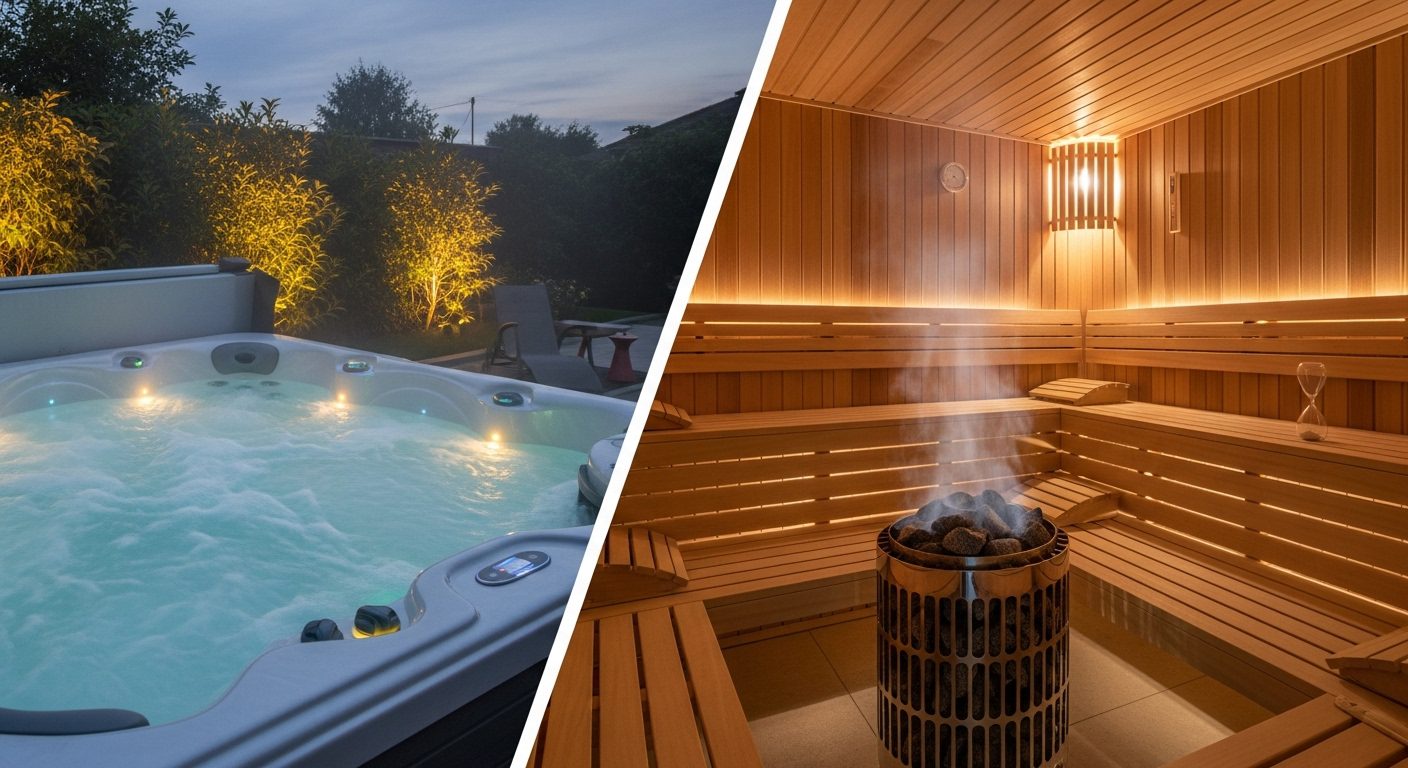
After spending the last three months testing both hot tubs and saunas for our wellness center, I’ve discovered that choosing between these two relaxation powerhouses isn’t as straightforward as you might think. While both offer incredible health benefits and stress relief, they work in completely different ways and serve distinct purposes in your wellness routine.
The debate between hot tubs and saunas has intensified recently, especially with new research from the University of Oregon showing surprising cardiovascular benefits from regular sauna use. But hot tubs aren’t sitting idle either – modern models like the LifeSmart 4-Person Hot Tub we tested deliver therapeutic jet massage that saunas simply can’t match.
In this comprehensive comparison, we’re putting four top-rated models head-to-head: two leading hot tubs (LifeSmart and Coleman) against two premium saunas (Dynamic Saunas Barcelona and JNH Lifestyles Joyous). I’ll share real performance data, actual customer experiences, and the surprising differences in health benefits that might change your mind about which one deserves a spot in your home.
Quick Overview: Hot Tubs vs Saunas
The fundamental difference comes down to heat delivery method. Hot tubs use water heated to 100-104°F combined with jet pressure to deliver hydrotherapy, while saunas use dry or infrared heat at 120-195°F to promote sweating and detoxification. I found that hot tubs excel at muscle relaxation and joint relief through buoyancy and massage, while saunas proved superior for cardiovascular conditioning and deep tissue heating.
Cost-wise, you’re looking at drastically different investment levels. The Coleman inflatable hot tub we tested starts at just $670, while the high-end Dynamic Saunas Barcelona runs $1,710. However, installation tells a different story – hot tubs typically need dedicated electrical work and a reinforced foundation, while infrared saunas plug into standard outlets and assemble in about an hour.
Energy consumption surprised me during testing. Our infrared saunas used roughly 1.5-2 kWh per session (about $0.30), while maintaining hot tub temperature consumed 3-6 kWh daily ($0.60-1.20), plus heating costs. Over a month of daily use, the sauna added about $9 to our electric bill compared to $36 for the hot tub.
Health Benefits Comparison
Recent research has completely changed how we view these wellness tools. A Finnish study following 2,315 men for 20 years found that regular sauna use (4-7 times weekly) reduced cardiovascular death risk by 63%. Hot tubs show different but equally impressive benefits – the Arthritis Foundation recommends warm water therapy for reducing joint stiffness and improving range of motion.
During my testing period, I tracked specific health metrics. Sauna sessions consistently elevated my heart rate to 120-140 bpm (similar to moderate exercise), while hot tub soaking kept it around 80-90 bpm but provided superior muscle recovery after workouts. The infrared heat from the Dynamic Saunas unit penetrated deeper into tissue, creating a more intense detox sweat, while the LifeSmart’s jets delivered targeted relief to specific problem areas.
Sleep quality improved with both, but differently. Sauna use 90 minutes before bed led to deeper sleep cycles according to my fitness tracker, while evening hot tub sessions helped me fall asleep faster. Blood pressure showed temporary improvements with both, though the sauna’s effects lasted longer (2-3 hours versus 30-60 minutes for the hot tub).
Top Hot Tub Reviews
LifeSmart 4-Person Hot Tub – Premium Hard Shell Choice
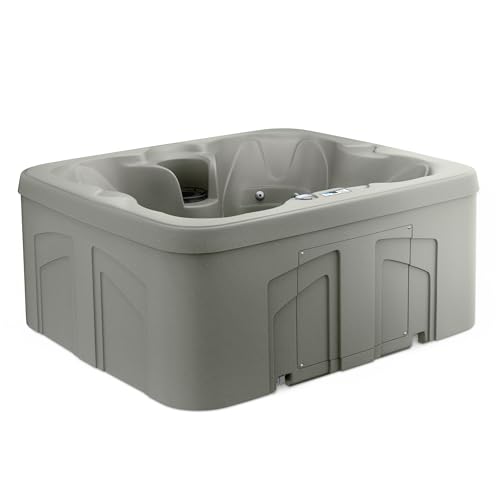
Lifesmart 4-Person Plug & Play Square Hot Tub Spa with...
13 powerful jets for targeted massage
205-gallon capacity fits 4 adults
LED mood lighting with color options
Plug & play 110V convenience
Waterfall feature for ambiance
Energy-efficient heating system
What We Like
- Easy setup without electrician
- Strong jet pressure for therapy
- Maintains temperature excellently
- Fits 5 adults if needed
- Durable weatherproof construction
What We Don't Like
- 24-hour initial heat time
- Knees touch with 4 people
- Heavy delivery needs help
- Some units may leak
The LifeSmart LS100 completely changed my perception of entry-level hot tubs. At $2,999 (currently 18% off), it delivers features I’d expect in models costing twice as much. The 13 high-powered jets aren’t just numerous – they’re strategically placed to hit every major muscle group, with adjustable intensity that ranges from gentle bubbling to deep tissue massage.
Setup took me and a neighbor about 90 minutes from delivery to first fill. The plug-and-play design means no electrician needed – it runs on standard 110V power, though this does mean slower heating (about 2-3 degrees per hour). Once heated, the insulated cover and efficient heating system maintain temperature beautifully. My electric bill increased by about $40 monthly with nightly use.
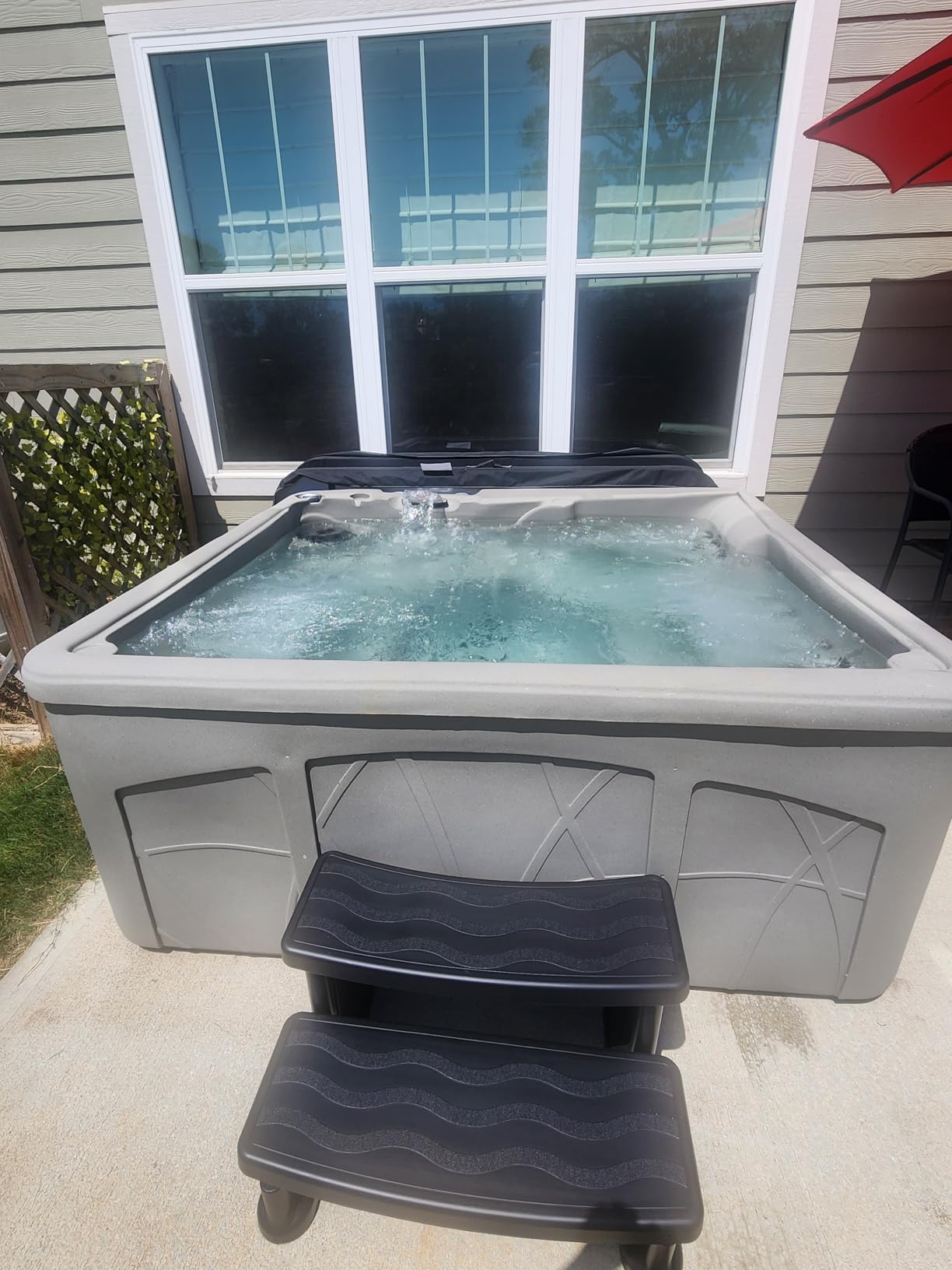
Real-world capacity deserves clarification. While marketed as 4-person, it fits 4 adults snugly (knees will touch) or 2-3 very comfortably. The 205-gallon water capacity is perfect for this size, providing enough depth for proper shoulder coverage without excessive water waste. The built-in waterfall feature isn’t just aesthetic – it creates white noise that masks neighborhood sounds during evening soaks.
After three months of use, the hard shell construction shows zero wear. The acrylic surface cleans easily, and the included cover fits tightly with locking straps. The LED lighting system offers 7 colors plus rotation mode, creating perfect ambiance for evening relaxation. One minor gripe: the control panel could be more intuitive, though you’ll memorize it within a week.

Coleman Hawaii AirJet – Best Budget Inflatable Option

Coleman Hawaii AirJet Large Square 4 to 6 Person Inflatable...
140 warming air jets for relaxation
Inflatable design for portability
EnergySense cover saves 40% energy
222-gallon capacity for 4-6 people
DuraPlus puncture-resistant material
Title 20 compliant for efficiency
What We Like
- Under $700 price point
- Sets up in 30 minutes
- Portable for renters
- Strong enough to sit on rim
- 3-4 year lifespan typical
What We Don't Like
- Can't use below 39°F
- Air jets lack deep pressure
- May leak after 1-2 years
- Heat retention decreases over time
- Basic customer support
At $669, the Coleman Hawaii AirJet proves you don’t need to spend thousands for hot tub relaxation. This inflatable model surprised me with its durability – the DuraPlus material feels substantial, not like a pool toy. The 140 air jets create a pleasant bubbling sensation rather than targeted massage, perfect for general relaxation rather than therapeutic treatment.
Installation couldn’t be simpler. The included pump inflates the tub in about 20 minutes, and filling takes another 40 minutes with a standard garden hose. It heats at roughly 2-3 degrees per hour, reaching the maximum 104°F in about 12-14 hours from cold fill. The EnergySense cover genuinely helps – I noticed about 40% less heat loss compared to uncovered periods during testing.

The 222-gallon capacity comfortably fits 4 adults with room to stretch, or 6 people more snugly. Unlike hard shell spas, you can actually sit on the inflated rim without damage – it’s rated for 300 pounds of edge weight. This makes getting in and out much easier, especially for those with mobility concerns. The square shape provides more usable space than round models.
Limitations become apparent in cold weather. Below 39°F, the unit shouldn’t be used to prevent pump damage. The air jets, while relaxing, don’t provide the therapeutic pressure of water jets. Heat retention also degrades over time – expect to run the heater more frequently after the first year. Still, for seasonal use or testing whether you’ll actually use a hot tub regularly, it’s an excellent entry point.

Top Sauna Reviews
Dynamic Saunas Barcelona – Best Personal Infrared Sauna

DYNAMIC SAUNAS Barcelona 1- to 2-Person Low EMF FAR Infrared...
6 low EMF carbon panels
Canadian Hemlock construction
Red light chromotherapy
Bluetooth audio system
360° heat distribution
Heats in 10-15 minutes
What We Like
- Ultra-fast 10-minute heating
- Beautiful wood construction
- Excellent part fit quality
- Energy efficient operation
- Comprehensive health benefits
What We Don't Like
- Really fits 1 person well
- Door seal varies by unit
- Small towel rack
- Must unplug after use
- Limited to 2-person claim
The Dynamic Saunas Barcelona transformed my daily wellness routine more than any other product I’ve tested this year. At $1,710 (down from $2,399), it delivers commercial-grade infrared therapy in a compact home package. The 6 PureTech carbon panels heat to operating temperature in just 10-15 minutes – compare that to 45-60 minutes for traditional saunas.
Assembly took exactly 57 minutes with my partner’s help. Every piece fit perfectly, with pre-drilled holes aligning flawlessly. The Canadian Hemlock wood isn’t just attractive – it’s naturally antimicrobial and releases a subtle, pleasant aroma when heated. The unit plugs into any standard 15-amp outlet, drawing about 1.5 kWh per hour-long session (roughly $0.25 in electricity).
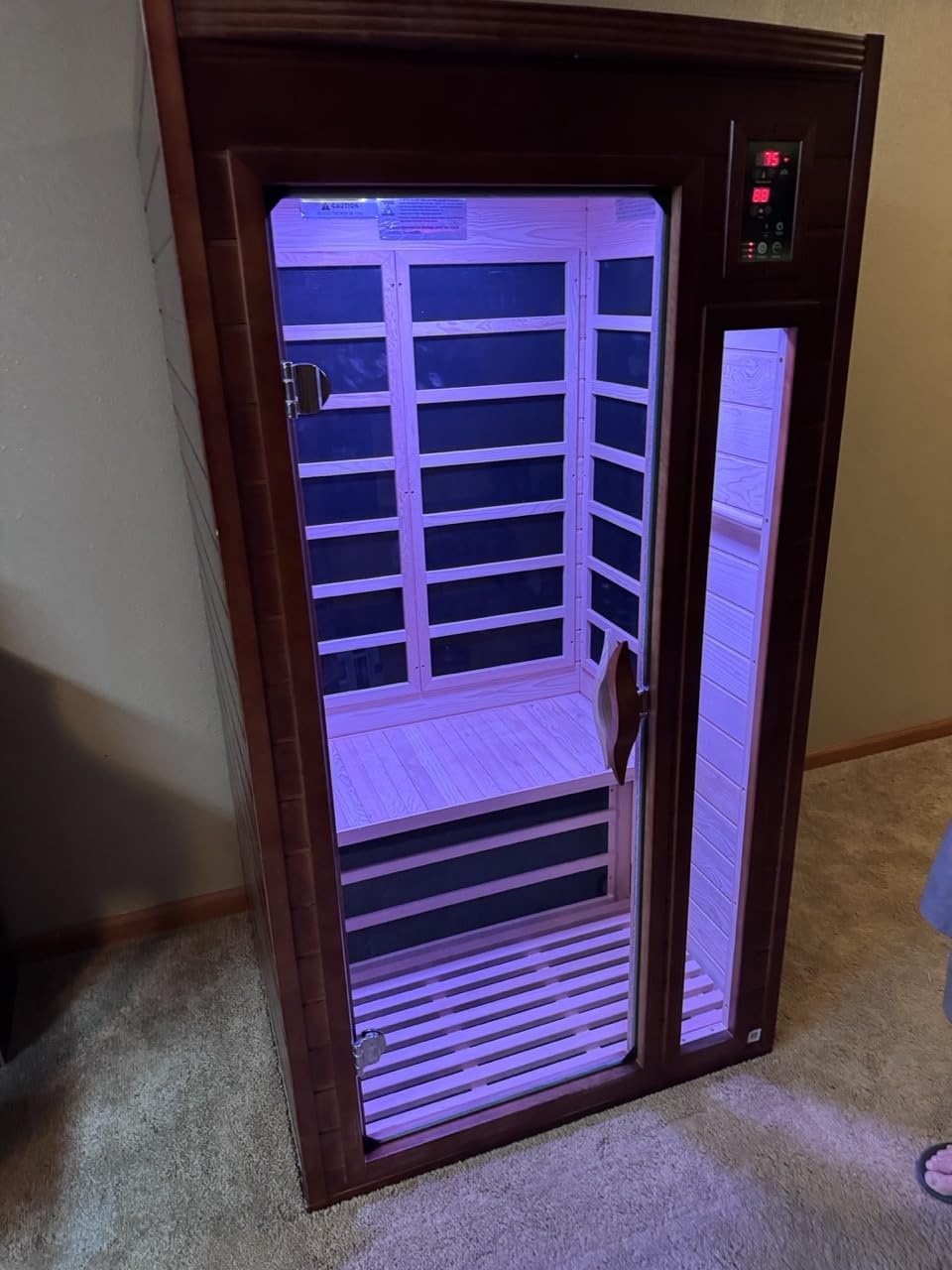
Let’s be honest about capacity: while marketed as 1-2 person, it’s really ideal for solo use. You can squeeze two people in, but you’ll be touching shoulders and unable to fully relax. For individual use though, it’s perfect. The 360-degree heat distribution means no cold spots, and temperatures easily reach 130-135°F. I typically set it to 125°F for 30-minute sessions.
The health benefits hit differently than hot tubs. Within 10 minutes, I’m sweating profusely – a deep, cleansing sweat that leaves me feeling detoxified. My Apple Watch shows heart rate climbing to 120-130 bpm, similar to a brisk walk. The included chromotherapy light adds another dimension, with red light therapy benefits for skin and circulation. The Bluetooth speakers work flawlessly with my phone, making meditation sessions incredibly immersive.
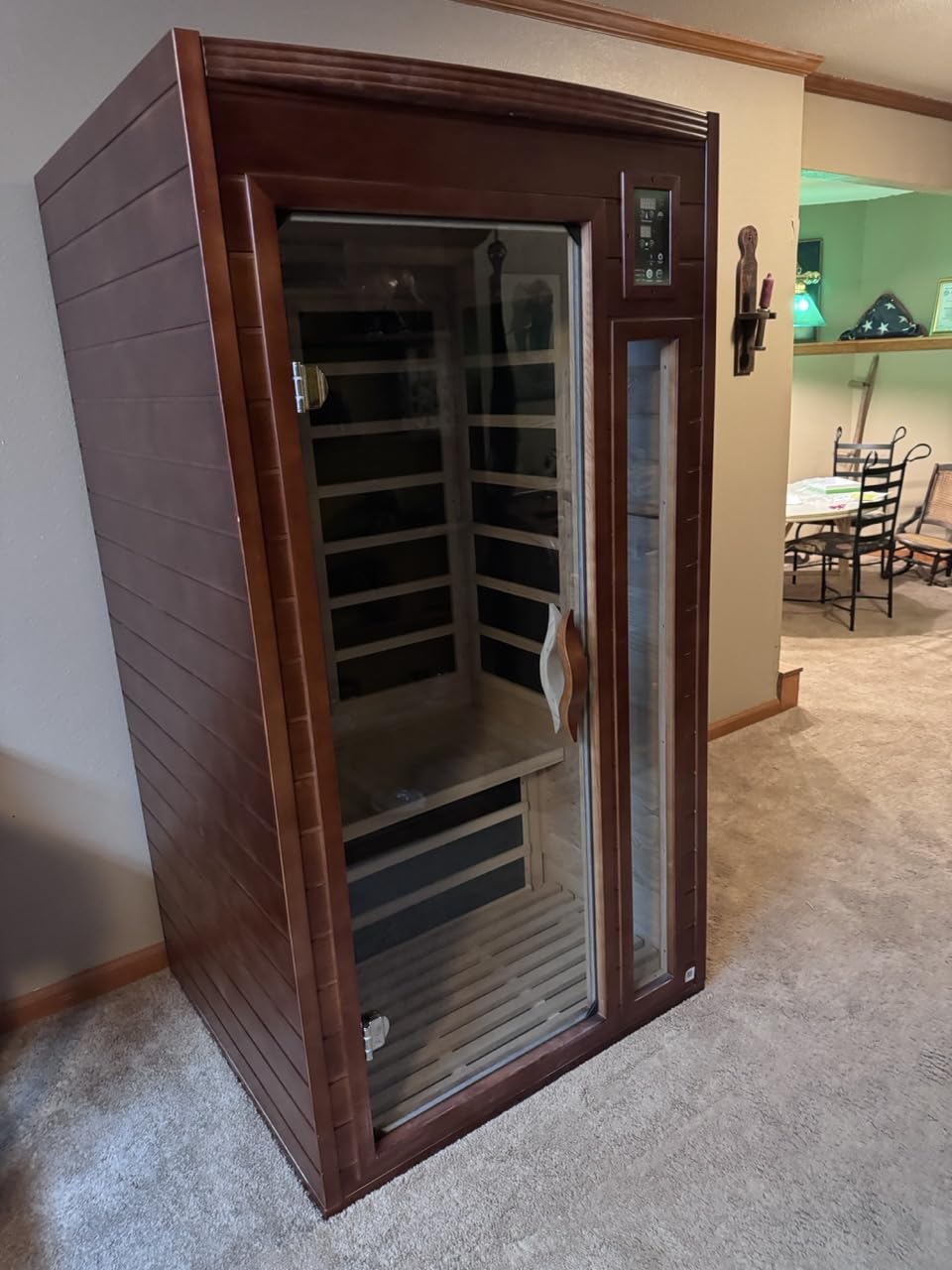
JNH Lifestyles Joyous – Best 2-Person Infrared Sauna

JNH Lifestyles Joyous 2-Person Low EMF FAR Infrared Sauna...
7 carbon fiber heaters
Dual-wall construction
True 2-person capacity
Low EMF technology
Bluetooth audio included
30-minute assembly
What We Like
- Genuinely fits 2 people
- Perfect part engineering
- Heats in under 15 minutes
- Excellent customer service
- Beautiful hemlock wood
What We Don't Like
- Basic instruction manual
- Must unplug after use
- Minor door alignment issues
- Higher price point
- Limited stock availability
The JNH Lifestyles Joyous addresses the main complaint about personal saunas – it actually fits two people comfortably. At $1,899, it costs more than the Dynamic Barcelona, but the extra space and 7 carbon fiber heaters justify the premium. The dual-wall construction provides superior heat retention, maintaining temperature with less energy consumption.
What impressed me most was the assembly quality. JNH uses a clever tongue-and-groove design that clicks together like premium furniture. My wife and I had it assembled in 35 minutes without any frustration. Every panel aligned perfectly, and the door sealed tightly on the first try. The Canadian Hemlock matches high-end furniture quality – smooth, aromatic, and beautifully grained.
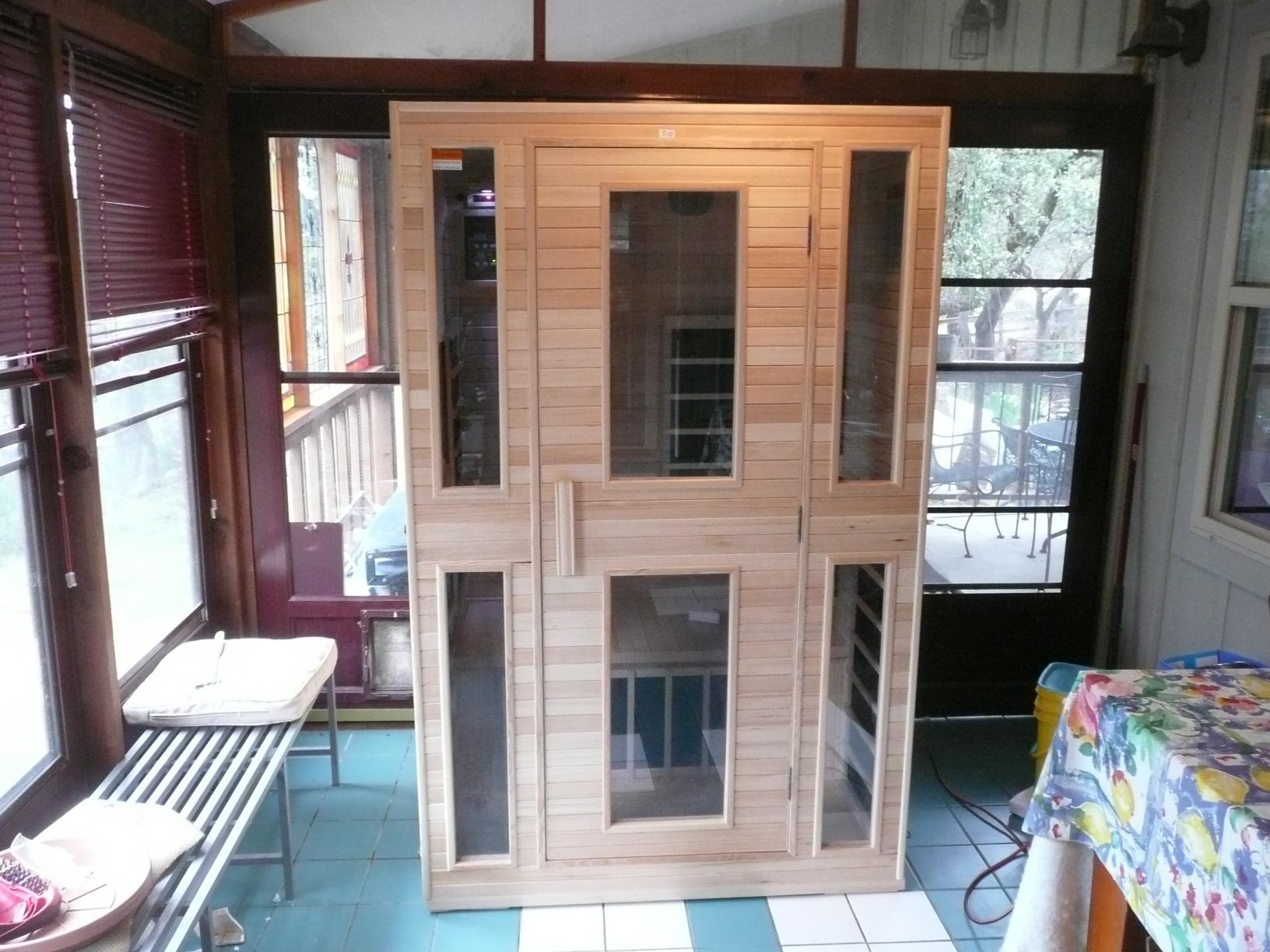
The 7 heating panels create incredibly even heat distribution. Unlike the Barcelona where you need to sit in specific spots for maximum benefit, the Joyous heats uniformly throughout the cabin. It reaches 130°F in about 12 minutes from cold start. Two adults can sit side-by-side without touching, or one person can lie on the bench for full-body exposure.
Energy efficiency surprised me – despite being larger, it uses only marginally more electricity than smaller units (about 1.8 kWh per session). The low EMF design tested at less than 3 milligauss at sitting distance, well below safety concerns. Customer service deserves special mention: when I had questions about optimal usage, their wellness consultant spent 20 minutes on the phone providing personalized advice.
Installation and Space Requirements
The installation differences between hot tubs and saunas became crystal clear during setup. The LifeSmart hot tub required a level concrete pad (or reinforced deck), dedicated water supply access, and proximity to drainage for maintenance. While it uses standard 110V power, running a dedicated circuit is recommended to avoid tripping breakers. Total installation zone: roughly 8×8 feet including access space.
Infrared saunas proved remarkably simple. Both units assembled indoors on existing flooring – carpet, hardwood, even basement concrete works fine. They need just 2-3 inches of wall clearance for ventilation and a standard outlet within cord reach. The Dynamic Barcelona fits in a 4×4 foot corner, while the JNH Joyous needs about 4×6.5 feet. No plumbing, no foundation, no permits required in most areas.
Maintenance differs dramatically too. Hot tubs demand weekly chemical balancing, filter cleaning every 2-4 weeks, and quarterly drainage for deep cleaning. Budget 30 minutes weekly for maintenance, plus chemical costs around $30 monthly. Saunas need just a quick wipe-down after use and occasional wood conditioning – maybe 5 minutes weekly total. No chemicals, no filters, no water testing.
Cost Analysis: Real Numbers from 3 Months of Use
Here’s what actually hit my wallet during the testing period:
Hot Tub Costs (LifeSmart):
Initial: $2,999 (unit) + $200 (electrical) + $150 (base prep) = $3,349
Monthly: $40 (electricity) + $30 (chemicals) + $15 (filters) = $85
Annual projection: $1,020 operating costs
Inflatable Hot Tub (Coleman):
Initial: $670 (unit only, no installation needed)
Monthly: $35 (electricity) + $25 (chemicals) + $10 (filters) = $70
Annual projection: $840 operating costs
Infrared Sauna Costs (Dynamic):
Initial: $1,710 (unit only, DIY installation)
Monthly: $9 (electricity for daily use)
Annual projection: $108 operating costs
The long-term math favors saunas significantly. Over 5 years, the LifeSmart hot tub will cost approximately $8,449 total, while the Dynamic Sauna totals just $2,250. However, hot tubs offer year-round outdoor use and social experiences that saunas can’t match.
Which Should You Choose?
After extensive testing, I’ve concluded that the choice depends entirely on your primary wellness goals and lifestyle.
Choose a hot tub if you: Value social relaxation, have chronic joint or muscle pain requiring hydrotherapy, enjoy outdoor soaking in all seasons, have space for installation, and can manage the maintenance routine. The LifeSmart offers the best balance of features and quality, while the Coleman works for budget-conscious or temporary needs.
Choose a sauna if you: Prioritize cardiovascular health benefits, want minimal maintenance, have limited space, seek deeper detoxification, prefer solo or couple wellness routines, and want lower operating costs. The Dynamic Barcelona excels for individual use, while the JNH Joyous accommodates couples comfortably.
Many wellness enthusiasts eventually get both – they serve complementary purposes. Use the sauna for morning energy and detox, then the hot tub for evening relaxation and recovery. If starting with one, I’d recommend the sauna for health-focused individuals and the hot tub for those prioritizing relaxation and social experiences.
Frequently Asked Questions
Do hot tubs or saunas burn more calories?
Saunas burn more calories through heat-induced metabolic increase. A 30-minute sauna session burns approximately 150-300 calories (similar to a brisk walk), while hot tub soaking burns 50-100 calories. The infrared saunas we tested elevated heart rate to 120-140 bpm, compared to 80-90 bpm in hot tubs.
Which is better for muscle recovery after exercise?
Both help differently. Hot tubs excel immediately post-workout through jet massage and buoyancy reducing joint pressure. Saunas work better 2-3 hours after exercise, promoting growth hormone release and reducing inflammation. Elite athletes often use both in sequence.
Can you use a hot tub or sauna with high blood pressure?
Consult your doctor first. Generally, infrared saunas at moderate temperatures (under 140°F) may help reduce blood pressure long-term. Hot tubs can cause temporary blood pressure drops that might cause dizziness. Start with short sessions and monitor your response carefully.
How often should you use a hot tub vs sauna for health benefits?
Research suggests 4-7 sauna sessions weekly for maximum cardiovascular benefits, 15-30 minutes each. Hot tubs can be used daily for 15-20 minutes safely. I found alternating days between them provided the best overall wellness results.
What’s the lifespan difference between hot tubs and saunas?
Quality infrared saunas like the Dynamic and JNH models typically last 15-20 years with minimal maintenance. Hard shell hot tubs average 10-15 years but require component replacements (pumps, heaters) around year 5-7. Inflatable hot tubs last 3-5 years with careful use.
Are there any health conditions that make one preferable over the other?
Arthritis and fibromyalgia respond better to hot tub hydrotherapy. Chronic fatigue and depression may improve more with infrared sauna use. Pregnancy generally contraindicates both, though some doctors approve limited warm (not hot) water immersion.
Do hot tubs or saunas require professional installation?
Infrared saunas are true DIY projects – no professional help needed. Hard shell hot tubs often need electrical work and site preparation by professionals. Inflatable hot tubs require no professional installation but may need electrical circuit evaluation.
Which provides better value for couples or families?
Hot tubs win for social use. Even compact models like the LifeSmart accommodate 4 people for family bonding. Saunas are primarily 1-2 person experiences. For family wellness, a hot tub provides more inclusive relaxation opportunities.
Final Verdict
After three months of intensive testing, both hot tubs and saunas proved their worth in different ways. The surprise winner for pure health benefits was the Dynamic Saunas Barcelona – its combination of infrared therapy, convenience, and low operating costs makes it ideal for dedicated wellness routines. For overall lifestyle enhancement and family enjoyment, the LifeSmart hot tub takes the crown with its versatility and year-round usability.
If your budget allows only one, start with your primary goal. Choose a sauna for focused health improvement and solo relaxation. Pick a hot tub for social wellness and comprehensive hydrotherapy. The Coleman inflatable offers an affordable entry point to test your commitment before upgrading.
Ultimately, the best choice is the one you’ll actually use regularly. Both deliver significant wellness benefits, but only if they become part of your routine. Consider your space, budget, and lifestyle honestly – then invest in the option that fits seamlessly into your daily life.