Lighting a charcoal grill properly sets the foundation for your entire grilling experience. Whether you’re preparing burgers for a weekend cookout or slow-smoking ribs, understanding the right way to light your charcoal makes the difference between perfectly cooked food and a frustrating afternoon. I’ve spent years perfecting different lighting techniques, and I’ll share everything you need to know to get your coals burning safely and efficiently.
The art of lighting charcoal has evolved significantly from the days of dousing briquettes in lighter fluid and hoping for the best. Today, we have multiple safe, effective methods that produce better results with less hassle. More importantly, proper technique ensures safety – the Consumer Product Safety Commission reports that improper charcoal use causes approximately 30 deaths annually from carbon monoxide poisoning, typically from indoor use. Understanding safe lighting methods protects both you and your family while delivering superior grilling results.
Before diving into specific techniques, it’s worth understanding what happens when charcoal ignites. The process involves heating carbon-based material to its ignition point (around 600°F), where it begins combining with oxygen to produce heat and light. This combustion process continues as long as fuel and oxygen remain available. Different lighting methods simply vary in how they achieve that initial ignition temperature.
Essential Safety Preparation
Safety preparation begins before you even open your bag of charcoal. The National Fire Protection Association requires maintaining at least 10 feet of clearance between your grill and any structures, including your home, garage, or deck railings. This distance prevents fire spread and ensures adequate ventilation. Additionally, keep a 5-foot safety zone around the grill clear of combustible materials like dry leaves, paper products, or lighter fluid containers.
Never, under any circumstances, use a charcoal grill indoors, in a garage, or inside a tent. Charcoal produces carbon monoxide – an odorless, colorless gas that can be fatal in enclosed spaces. This applies even if you think you have adequate ventilation. The CPSC’s warning labels on charcoal packages exist because people continue to underestimate this deadly risk.
Before lighting, inspect your grill for damage or excessive grease buildup. Clean out old ash from previous grilling sessions, as accumulated ash restricts airflow and makes lighting more difficult. Check that your grill’s vents operate smoothly – you’ll need to adjust these for temperature control once the coals are lit. Keep a fire extinguisher or bucket of sand nearby as a precaution, though properly managed charcoal rarely causes flare-ups like gas grills.
Method 1: The Chimney Starter (Recommended)
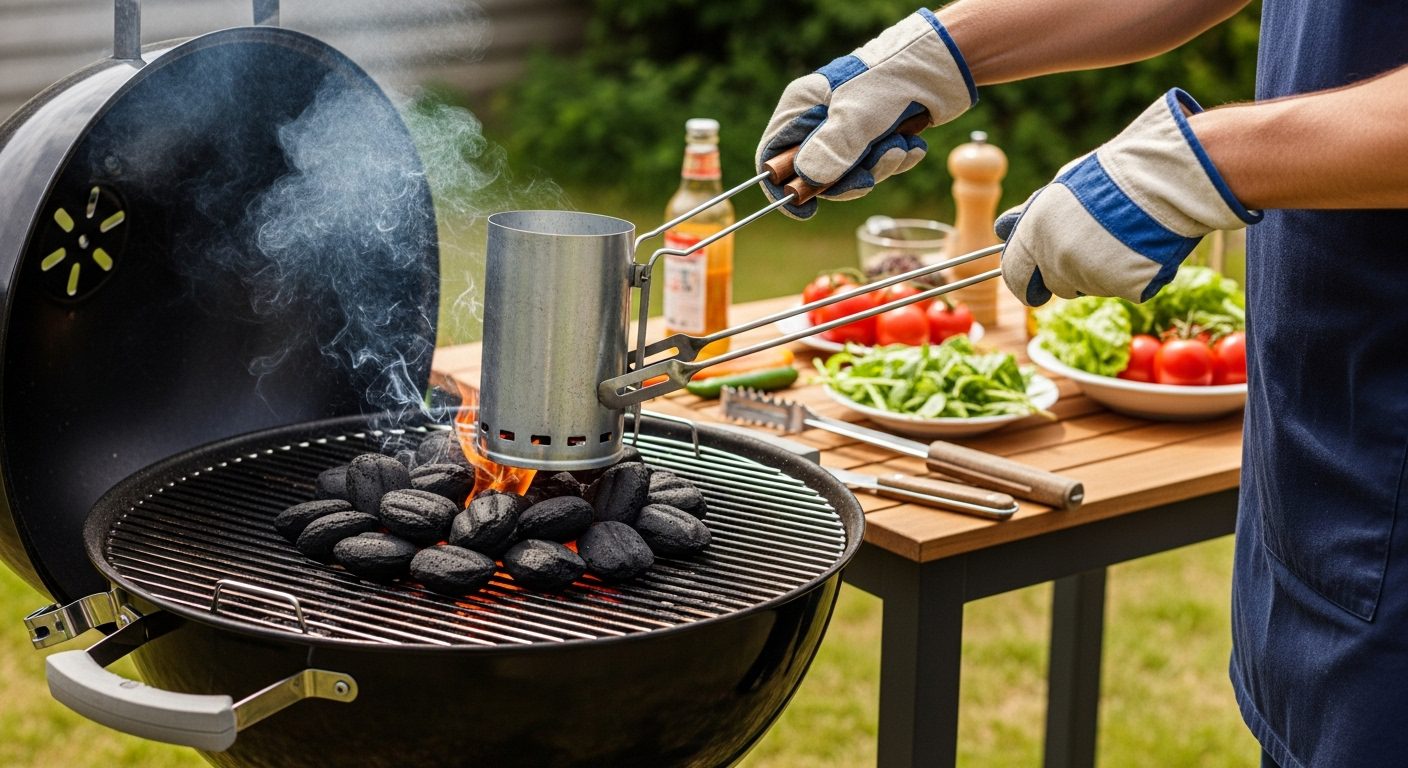
The chimney starter has become the gold standard for lighting charcoal among grilling enthusiasts and professionals. This simple device uses newspaper and natural convection to light coals evenly without chemical accelerants. I switched to a chimney starter five years ago and haven’t looked back – it’s faster, cleaner, and produces more consistent results than any other method.
To use a chimney starter, first crumple two sheets of newspaper and place them in the bottom chamber beneath the wire grate. Don’t pack the paper too tightly – it needs air circulation to burn properly. Fill the upper chamber with charcoal, using about 5-6 pounds for a standard 22-inch kettle grill. Light the newspaper through the holes at the bottom using a match or lighter. The flames will travel upward through the chimney, igniting the charcoal from bottom to top.
Within 15-20 minutes, you’ll see orange flames flickering above the top coals and gray ash forming on the upper layer. This indicates the charcoal is ready. Using heat-resistant gloves, carefully pour the hot coals onto your grill’s charcoal grate. The beauty of this method lies in its simplicity and consistency – the same amount of charcoal lights in roughly the same time every session.
Pro tip: If you’re grilling in windy conditions, place the chimney starter on your grill’s lower grate while lighting. This provides wind protection and contains any sparks. Some grillers use fire starter cubes or wax-coated wood shavings instead of newspaper for more reliable ignition, especially in damp conditions.
Method 2: Lighter Fluid (With Caution)
While not the preferred method among grilling purists, lighter fluid remains popular due to its convenience and availability. If you choose this route, proper technique and safety precautions are absolutely critical. Use only lighter fluid specifically designed for charcoal – never gasoline, kerosene, or other accelerants, which can cause explosive flare-ups.
Arrange your charcoal in a pyramid shape in the center of your grill. The pyramid configuration promotes airflow and helps flames spread from coal to coal. Apply lighter fluid according to package directions – typically about 1/4 cup per pound of charcoal. Squeeze the fluid evenly over the pyramid, avoiding excessive pooling in any one area. Let the fluid soak in for 30 seconds before lighting. This crucial waiting period allows the fluid to penetrate the charcoal’s porous surface.
Light the charcoal using a long match or grill lighter, standing back as you do so. Initial flames will be high and yellow – this is the lighter fluid burning off, not the charcoal igniting. Never add more lighter fluid after lighting, even if flames die down. This dangerous practice causes flare-ups and can result in serious burns. If the coals don’t catch, wait for them to cool completely before starting over.
The coals are ready when they’re covered in gray-white ash, typically 20-30 minutes after lighting. Spread them evenly for direct grilling or bank them to one side for indirect cooking. Many people complain about lighter fluid taste in their food – this usually results from cooking before the fluid completely burns off. Always wait until coals are fully ashed over before adding food to the grill.
Method 3: Electric Charcoal Starter
Electric starters offer a clean, reliable alternative that’s particularly useful for frequent grillers. These devices consist of a heating element (similar to an electric stove coil) attached to a handle. They require access to electricity but eliminate the need for newspaper, lighter fluid, or other ignition sources.
To use an electric starter, pile charcoal around and over the heating element, creating good contact between coals and the starter. Plug in the device and wait 8-12 minutes. You’ll see the coals directly touching the element begin glowing red. Once several coals are lit, remove the starter and set it on a heat-safe surface to cool. The lit coals will gradually ignite their neighbors through radiant heat transfer.
This method works exceptionally well in adverse weather conditions where wind or dampness might prevent other methods from working effectively. The consistent heat output means reliable results every time. However, the need for an electrical outlet limits portability, making this method less suitable for camping or tailgating.
Method 4: Natural Fire Starters
Natural fire starters provide an eco-friendly alternative to chemical accelerants. Options include wax-coated wood shavings, paraffin cubes, or compressed sawdust starters. These products burn longer than newspaper, making them excellent for lighting charcoal without a chimney starter.
Place 2-3 fire starter cubes in the center of your charcoal grate and arrange charcoal in a pyramid around them. Light the starters – they’ll burn for 10-15 minutes, providing sustained heat to ignite surrounding coals. This method works particularly well with natural lump charcoal, which lights more easily than briquettes.
You can even make DIY fire starters using household materials. Cotton balls soaked in petroleum jelly, dryer lint stuffed in cardboard egg cartons and covered with melted wax, or wood shavings mixed with candle wax all work effectively. These homemade options cost pennies and burn long enough to ignite even stubborn charcoal.
Understanding When Coals Are Ready
Knowing when your coals are properly lit is crucial for successful grilling. Cooking over improperly prepared coals results in uneven heat, off-flavors, and potentially unsafe food. Look for these indicators that your charcoal is ready for cooking:
First, the coals should be covered in gray-white ash during daylight or glowing red in low light. This ash layer indicates complete combustion of any volatiles and stabilized heat output. Individual coals should maintain their shape – if they’re crumbling or breaking apart easily, they may be nearly spent. You should see minimal smoke – properly lit charcoal produces heat with very little visible smoke.
Test the heat level by holding your hand about 6 inches above the coals. If you can hold it there for 2-3 seconds, you have high heat (450-500°F). 4-5 seconds indicates medium-high heat (400-450°F), while 6-7 seconds means medium heat (350-400°F). This hand test helps you gauge whether coals are ready and where to position food for optimal cooking.
Temperature Control and Coal Management
Once your coals are lit, managing temperature becomes your primary concern. Unlike gas grills with simple knob controls, charcoal grilling requires understanding airflow and coal arrangement. Your grill’s vents are the key to temperature control – open vents increase oxygen flow and raise temperature, while closing them reduces heat.
For direct grilling of steaks, burgers, or vegetables, spread coals evenly across the bottom grate. This creates a uniform high-heat cooking surface. For indirect grilling or smoking, bank all coals to one side, creating a hot zone and a cool zone. Place food on the cool side and close the lid, turning your grill into an outdoor oven.
Add more charcoal as needed for longer cooking sessions. Pre-light new coals in a chimney starter rather than adding unlit charcoal directly to burning coals. Unlit charcoal can produce acrid smoke and lower grill temperature while igniting. For smoking sessions lasting several hours, consider the “minion method” – surround a small amount of lit charcoal with unlit briquettes, which slowly catch fire and maintain steady temperature.
Troubleshooting Common Lighting Problems
Even experienced grillers occasionally struggle to light charcoal. Understanding common problems and solutions saves frustration and gets you grilling faster.
If your charcoal won’t light, moisture is often the culprit. Charcoal is hygroscopic, meaning it absorbs moisture from the air. Store charcoal in a dry location, and consider keeping opened bags in sealed containers. Old charcoal that’s been exposed to humidity may be salvageable – try mixing it with fresh charcoal at a 1:1 ratio.
When charcoal lights but quickly goes out, insufficient airflow is usually to blame. Ensure bottom vents are fully open during lighting. Don’t pack charcoal too tightly – air needs to circulate between pieces. Clean out ash before each use, as accumulated ash blocks air vents and smothers coals.
Uneven lighting often results from poor coal arrangement or inadequate starter placement. Whether using a chimney, lighter fluid, or fire starters, ensure ignition sources contact multiple pieces of charcoal. Once partially lit, use long-handled tongs to rearrange coals, placing lit pieces next to unlit ones to encourage spread.
Weather Considerations
Weather conditions significantly impact charcoal lighting and grilling performance. Wind accelerates burning but can blow out initial flames before charcoal fully ignites. Position your grill perpendicular to prevailing wind and use a wind screen if necessary. In very windy conditions, light charcoal in a sheltered area before transferring to your grill.
Cold weather requires more charcoal and longer preheating time. Charcoal must work harder to maintain temperature when ambient temperature is low. Plan on using 25-50% more charcoal in winter compared to summer grilling. Keep your grill’s lid closed as much as possible to retain heat.
Rain and high humidity make lighting challenging but not impossible. Protect your lighting area with a grill umbrella or canopy, but ensure adequate ventilation. Electric starters and fire starter cubes perform better than newspaper in damp conditions. Once coals are lit, rain won’t extinguish them, though it will lower grill temperature.
Environmental and Cost Considerations
Different lighting methods have varying environmental impacts and costs. Chimney starters using newspaper have minimal environmental impact and near-zero ongoing cost. Electric starters use electricity but eliminate chemical accelerants and disposable materials. At typical electricity rates, an electric starter costs about $0.02 per use.
Lighter fluid, while convenient, releases volatile organic compounds (VOCs) into the atmosphere. A typical bottle costs $3-5 and lasts 15-20 uses, making it moderately expensive long-term. Natural fire starters cost more per use ($0.50-1.00) but burn cleaner than petroleum-based products.
Consider charcoal type as well. Natural lump charcoal lights faster and burns hotter than briquettes but costs more and burns out quicker. Briquettes provide consistent, longer-lasting heat but contain binders and additives. Your choice affects both lighting ease and overall grilling cost.
Cleanup and Disposal
Proper disposal of used charcoal is essential for safety and environmental responsibility. Allow coals to burn out completely and cool for at least 48 hours before disposal. Even coals that appear extinguished can retain heat for days, potentially igniting trash or compost.
To expedite cooling, close all vents to starve coals of oxygen. Never use water to extinguish charcoal unless absolutely necessary – the sudden temperature change can damage porcelain-coated grill grates and create caustic ash paste that’s difficult to clean.
Once completely cool, charcoal ash can be disposed of in regular trash or added to compost in small quantities. Wood ash from natural lump charcoal makes excellent garden fertilizer, providing potassium and raising soil pH. However, briquette ash containing additives should not be used in gardens.
Frequently Asked Questions
How long does it take for charcoal to be ready for cooking?
Most methods require 15-30 minutes from lighting to cooking readiness. Chimney starters typically take 15-20 minutes, while lighter fluid methods need 20-30 minutes for all fluid to burn off. Electric starters may require 20-25 minutes for full coal coverage.
Can I reuse partially burned charcoal?
Yes, partially burned charcoal can be reused. After grilling, close all vents to extinguish coals. Once cool, shake off loose ash and store remaining charcoal in a dry location. Mix saved charcoal with fresh briquettes for your next grilling session.
Why does my food taste like lighter fluid?
This occurs when cooking begins before lighter fluid completely burns off. Always wait until coals are covered in gray ash before adding food. Additionally, using too much fluid or adding fluid after lighting can cause persistent chemical flavors.
Is it safe to add more charcoal while grilling?
Yes, but add only pre-lit charcoal to maintain temperature and avoid smoke. Light additional charcoal in a chimney starter, then add to existing coals. Adding unlit charcoal directly creates acrid smoke and temperature drops.
What’s the difference between lump charcoal and briquettes for lighting?
Lump charcoal lights faster and reaches cooking temperature quicker than briquettes due to its irregular shape and lack of binders. However, briquettes provide more consistent heat and longer burn time once lit. Lump charcoal responds better to natural fire starters, while briquettes work well with any lighting method.
How much charcoal should I use?
For direct grilling on a standard 22-inch kettle grill, use about 5-6 pounds of charcoal. This creates a single layer of coals sufficient for 30-45 minutes of high-heat cooking. For indirect grilling or longer cooking times, start with 7-8 pounds arranged for two-zone cooking.
Conclusion
Mastering charcoal lighting transforms grilling from a chore into an enjoyable ritual. While multiple methods exist, the chimney starter stands out as the safest, most reliable option for consistent results. It eliminates chemical tastes, reduces environmental impact, and costs virtually nothing per use after initial purchase.
Regardless of your chosen method, prioritizing safety ensures enjoyable grilling for years to come. Never use charcoal grills indoors, maintain proper clearances from structures, and allow complete cooling before disposal. These simple precautions prevent the vast majority of grilling-related accidents.
Practice makes perfect when lighting charcoal. Each grill behaves slightly differently, and factors like altitude, humidity, and charcoal brand affect lighting time and technique. Keep notes about what works best for your specific setup. Soon, you’ll develop an intuitive feel for your grill’s quirks and preferences.
The investment in proper lighting technique pays dividends in better-tasting food and more enjoyable grilling experiences. Whether you’re searing steaks over high heat or slow-smoking brisket, it all starts with properly lit coals. Take time to master these fundamentals, and you’ll build a solid foundation for all your outdoor cooking adventures.