Last year, I calculated something that made my jaw drop: I was spending $487 on dry cleaning. That’s more than my monthly car payment. The worst part? Most of those clothes didn’t even need professional cleaning. After months of testing different home care methods and tracking every penny saved, I’ve completely transformed how I maintain my wardrobe. The result: I’m saving over $400 annually, my clothes last longer, and I spend maybe 20 minutes a week on clothing care instead of making trips to the dry cleaner.
My breaking point came when I picked up three items from the dry cleaner and paid $62. For three pieces of clothing. That’s when I decided something had to change. I started researching, experimenting, and documenting what actually works for home clothing care. What I discovered surprised me: about 90% of “dry clean only” labels are just manufacturers playing it safe, and with the right techniques and tools, you can care for almost everything at home.
The Real Cost of My Dry Cleaning Addiction
Before I made this change, I was a typical dry cleaning customer. Every two weeks, I’d drop off a pile of work clothes, special occasion outfits, and anything with a “dry clean only” tag. Let me break down my actual monthly expenses from January 2026:
- 2 suits per month: $46
- 6 dress shirts: $30
- 3 dresses: $45
- 1 winter coat (seasonal): $30
- 2 sweaters: $24
- Random items (ties, scarves): $15
That’s $190 in just one month. And this was during winter when I was wearing heavier items. My summer bills were slightly lower, but the annual total still hit nearly $500. When I factor in the time spent driving to and from the dry cleaner (30 minutes each trip, twice monthly), plus waiting in line, I was investing both money and about 2 hours monthly into this habit.
The hidden costs went beyond money and time. Several of my favorite pieces came back damaged or with that distinctive chemical smell that lingered for days. One silk blouse returned with a mysterious stain that wasn’t there before. A wool sweater came back stretched out. My suits started developing a shine from over-pressing. I was paying good money to slowly destroy my wardrobe.
My Home Clothing Care Arsenal: The $127 Investment That Changed Everything
I didn’t go crazy buying equipment. After researching what actually works, I invested in five essential items that have paid for themselves many times over:
1. A Quality Steamer ($45)
I bought a standing garment steamer that heats up in 45 seconds. This single purchase eliminated 80% of my dry cleaning needs. It removes wrinkles better than ironing, refreshes fabrics, and even helps eliminate odors. I use it on everything from silk blouses to wool suits.
2. Wool Dryer Balls ($15)
These little miracle workers go in the dryer with delicate items on low heat. They prevent static, reduce drying time, and keep fabrics soft without chemical fabric softeners. I have six and they’ve lasted over a year with no signs of wear.
3. Mesh Laundry Bags ($12)
I bought a set of five different sizes. These protect delicate items in the washing machine, preventing snags, stretching, and tangling. Everything from bras to cashmere sweaters goes in these bags before washing.
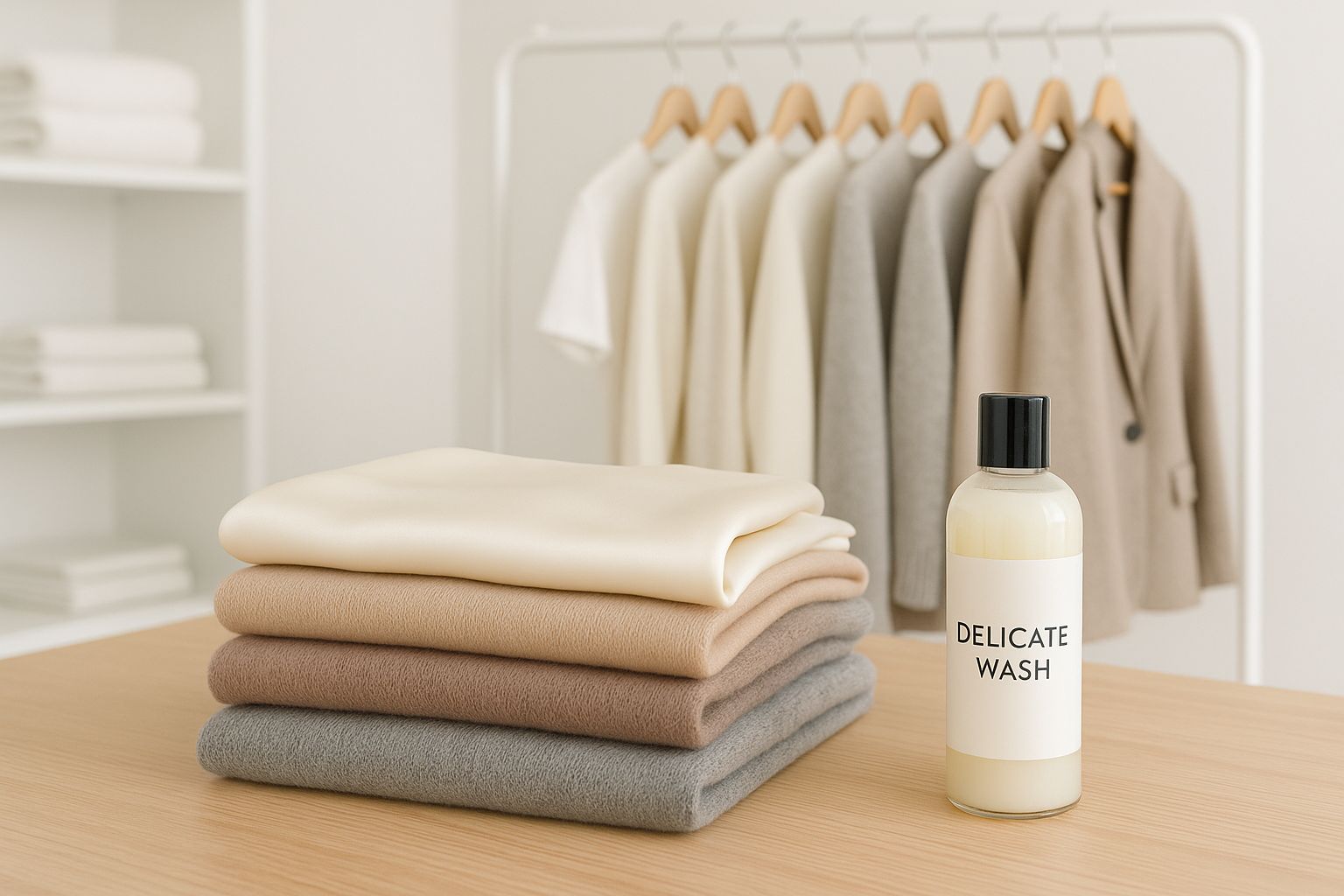
4. Specialty Detergent for Delicates ($20)
One bottle of enzyme-free, pH-neutral detergent specifically designed for wool, silk, and delicates. A little goes a long way – I’m still on my second bottle after 10 months.
5. Cedar Blocks and Lavender Sachets ($35)
Natural pest deterrents and fresheners for storage. No more moth damage or musty closet smell. These also help maintain fabric freshness between wears.
Total investment: $127. That’s less than what I used to spend on dry cleaning in three weeks.
The Washing Methods That Actually Work
Through trial and error (and yes, one ruined silk scarf that taught me a valuable lesson), I’ve developed reliable methods for different fabric types. Here’s exactly what I do:
Silk and Delicate Fabrics
Silk was my biggest fear, but it’s actually easier to care for than I thought. I fill a clean sink with cool water and add a teaspoon of delicate detergent. I let the garment soak for 3-5 minutes, gently swish it around (never wring or twist), then rinse with cool water until the water runs clear. The key is to press excess water out gently between two clean towels, then hang or lay flat to dry away from direct sunlight.
For silk blouses, I often don’t even wash them after every wear. Instead, I hang them in the bathroom during a hot shower – the steam refreshes them naturally. A quick steam with my garment steamer removes any wrinkles. I’ve worn some silk pieces 4-5 times between actual washes using this method.
Wool and Cashmere
Wool intimidated me until I learned it’s actually self-cleaning to some degree. Wool fibers naturally resist odors and stains. Most of the time, my wool sweaters just need airing out overnight on a hanger. When they do need washing (maybe every 5-7 wears), I use the cold water hand-wash method or my washing machine’s delicate cycle with wool detergent.
The secret to preventing wool from shrinking? Never use hot water, never wring it out, and never hang it wet (this causes stretching). I reshape wool items while damp and dry them flat on a clean towel. My cashmere sweaters have never looked better – they’re actually softer now than when I was dry cleaning them.
Suits and Structured Garments
This was my biggest breakthrough. My work suits rarely need actual cleaning – they need refreshing and de-wrinkling. After each wear, I brush them with a soft-bristled garment brush (forgot to mention this $8 purchase earlier) to remove surface dust and lint. Then they hang for 24 hours before going back in the closet. This airing-out period is crucial.
Every few weeks, I steam my suits thoroughly. The steam kills bacteria, removes odors, and eliminates wrinkles. For spot cleaning, I use a damp cloth with a tiny amount of gentle detergent, working from the outside of the stain inward. I’ve worn my navy suit to 15+ meetings over three months and it still looks and smells fresh – no dry cleaner needed.
The jacket shoulders get special attention. I invested in good wooden hangers that maintain the jacket shape. Never use wire hangers – they create shoulder bumps and don’t allow proper air circulation.
Cotton Dress Shirts
Here’s where I save the most money. Dress shirts cost me $5 each at the dry cleaner, but they’re the easiest to care for at home. I wash them on cold, hang them while slightly damp, and give them a quick steam. The whole process takes less time than driving to the dry cleaner. Pro tip: hang shirts immediately after washing and button the top button and every other button down. This maintains the shape and reduces wrinkles significantly.
The Stain Removal Techniques That Saved My Favorite Pieces
Stains used to send me running to the dry cleaner. Now I handle most of them myself with better results. The key is acting fast and knowing what works for different stain types.
Wine and Coffee: I immediately blot (never rub) with a clean cloth, then apply cold water from the back of the fabric. For set-in stains, I make a paste with baking soda and water, let it sit for an hour, then wash normally. This method saved my favorite white silk blouse from a red wine disaster at a wedding.
Grease and Oil: Dish soap is the secret weapon here. I apply a small amount directly to the stain, work it in gently with my fingers, let it sit for 10 minutes, then rinse with warm water. This technique removed bike chain grease from my khakis – something the dry cleaner said was impossible.
Deodorant Marks: These used to plague my dark clothes. Now I use a clean sock or pantyhose to rub them away – works instantly. For stubborn buildup, I make a paste with baking soda and water, apply it before washing, and the residue disappears.
Mystery Stains: When I don’t know what caused a stain, I start with the gentlest method: cold water and gentle detergent. If that doesn’t work, I try white vinegar diluted with water. As a last resort before considering professional cleaning, I use a tiny amount of rubbing alcohol on a cotton swab, testing first on a hidden area.
Seasonal Storage Without the Dry Cleaner
I used to dry clean everything before storing it for the season. Now I know better. Clean clothes before storage, yes, but dry cleaning isn’t necessary. Here’s my seasonal routine that keeps clothes fresh and protected:
Spring Storage (Winter Clothes): I wash or steam clean everything, ensure it’s completely dry, then store in breathable garment bags or clean cotton storage boxes. Cedar blocks go in with wool items. I avoid plastic bags which trap moisture and cause yellowing. My winter coats get brushed thoroughly, spot cleaned if needed, steamed, and hung in garment bags with cedar hangers.
Fall Storage (Summer Clothes): Lighter fabrics get washed, and delicate summer dresses are hand washed using my sink method. Everything is stored with lavender sachets which repel insects and add a fresh scent. White items get wrapped in acid-free tissue paper to prevent yellowing.
I learned the hard way that storing dirty clothes, even if they look clean, attracts pests and causes permanent stains. That invisible deodorant residue or food splatter becomes a yellow stain after six months in storage. Now everything gets cleaned first, but using my home methods instead of harsh dry cleaning chemicals.
The Time Investment: Less Than You Think
People assume home clothing care takes forever. Let me break down my actual weekly time investment:
- Daily garment brushing and hanging: 2 minutes
- Weekly steaming session (5-6 garments): 15 minutes
- Hand washing delicates (when needed): 10 minutes
- Spot treating stains (as they happen): 5 minutes
Total: About 30 minutes per week, mostly while doing other things. I steam clothes while listening to podcasts. I hand wash items while dinner cooks. Compare this to my old routine of driving to the dry cleaner, waiting in line, and making the return trip. I’m actually saving time.
The daily maintenance is key. By brushing suits after wearing and immediately treating stains, I prevent the buildup that requires intensive cleaning. It’s like maintaining your car – regular oil changes are easier than engine repairs.
My Clothing Lasts Longer Now
This wasn’t an expected benefit, but my clothes look better and last longer with home care. Dry cleaning chemicals are harsh. They strip natural oils from wool and silk, causing brittleness. The high heat and pressing flatten fibers and create shine on dark fabrics. My suits used to look worn after a year of regular dry cleaning. Now they look nearly new after two years of home care.
The gentle hand washing preserves elasticity in knits. My cashmere sweaters haven’t pilled or stretched. Silk blouses maintain their luster. Even my everyday cotton shirts look crisper because I’m not subjecting them to harsh chemicals and excessive heat.
I’ve also become more mindful about wearing clothes appropriately. I don’t wear my silk blouses for messy meals. I change out of work clothes immediately when I get home. This consciousness means clothes need less frequent cleaning overall.
The Clothes That Still Need Professional Cleaning
I’m not completely dry cleaning-free. Some items genuinely need professional care, and I’ve learned to recognize them:
Leather and Suede: These require specialized cleaning I can’t replicate at home. My leather jacket goes to a leather specialist once a year.
Heavily Structured Items: My winter coat with shoulder pads and interfacing needs professional attention annually. The structure is too complex for home care.
Beaded or Sequined Items: Special occasion wear with delicate embellishments goes to the professionals. I wear these rarely, so the expense is minimal.
Vintage or Valuable Pieces: My grandmother’s 1960s cocktail dress stays with the professionals. Some things are too precious to risk.
Down Items: While I wash my down vest at home successfully, my expensive down coat goes to a cleaner specializing in down. They have the right equipment to ensure proper drying and loft restoration.
I now spend about $60 annually on necessary dry cleaning versus nearly $500 before. That’s a 88% reduction.
The Environmental Bonus I Didn’t Expect
While saving money was my primary motivation, I’ve discovered significant environmental benefits. Traditional dry cleaning uses perchloroethylene (perc), a chemical linked to environmental and health concerns. By avoiding dry cleaning, I’m reducing my exposure to these chemicals and preventing them from entering the environment.
My home care routine uses biodegradable detergents, no single-use plastic bags, and no chemical-laden disposal. The cedar blocks and lavender sachets are renewable and compostable. Even my electricity usage is lower since I’m not driving to the dry cleaner twice monthly.
There’s also less packaging waste. No more plastic covers, paper tags, safety pins, and hangers accumulating from the dry cleaner. My closet is cleaner and more organized without the dry cleaning detritus.
Troubleshooting Common Home Care Disasters
I’ve made mistakes along the way. Here’s how I’ve fixed them:
Shrunken Wool: I accidentally washed a wool sweater in warm water. Solution: Soak it in lukewarm water with hair conditioner for 30 minutes, gently stretch it back to size, and lay flat to dry. It worked about 80% – wearable but not perfect.
Water Spots on Silk: Early attempts at spot cleaning silk left water marks. Now I always clean the entire garment rather than spot treating silk. If water spots appear, I re-wet the entire garment and dry it evenly.
Static Cling: Without dry cleaning’s anti-static treatment, some garments developed static. Solution: A light mist of water mixed with fabric softener in a spray bottle. Or simply running a dryer sheet over the garment.
Wrinkled Items After Storage: Some stored items emerged wrinkled despite careful folding. My steamer handles these easily, but hanging items with space between them prevents most storage wrinkles.
Lingering Odors: My first attempts at freshening suits didn’t eliminate odors completely. Now I use a vodka-water spray (1:1 ratio) which kills odor-causing bacteria without leaving a scent. Sounds crazy, but it works.
Building Your Own Home Care Routine
If you’re ready to break your dry cleaning habit, start small. Pick one category of clothes – maybe dress shirts or sweaters – and master home care for those items first. Track your savings to stay motivated. My first month, I saved $47 just by washing dress shirts at home.
Invest in quality tools gradually. Start with a good steamer – it’s the most versatile tool. Add other items as you expand your home care repertoire. Keep a stain treatment guide handy (I have one taped inside my laundry cabinet) until techniques become second nature.
Create a routine that works with your schedule. I do my hand washing on Sunday evenings while meal prepping. Steaming happens Wednesday mornings while my coffee brews. Building these habits into existing routines makes them sustainable.
Document what works for your specific garments. I keep notes on my phone about washing temperatures and methods for different items. After a few cycles, you’ll remember naturally, but notes prevent early mistakes.
The Hidden Benefits Beyond Money
This journey taught me more than just clothing care. I’ve become more intentional about my wardrobe. I buy better quality items knowing I can maintain them properly. I’m more confident wearing expensive pieces because I know how to care for them.
There’s satisfaction in self-sufficiency. Removing a stain myself or reviving a seemingly ruined garment feels genuinely accomplishing. I’ve shared these skills with friends who are amazed that I maintain professional-looking clothes without dry cleaning.
My mornings are less stressful without dry cleaning runs. Everything is ready in my closet, fresh and pressed. No more realizing the outfit I want is at the cleaners. No more chemical smell on clothes I need to wear immediately.
Your First Month Game Plan
Ready to start? Here’s your week-by-week plan:
Week 1: Buy a steamer and practice on cotton shirts and casual clothes. Learn your steamer’s settings and techniques. Start timing yourself to see how efficient you can become.
Week 2: Try hand washing one delicate item. Start with something you’re not emotionally attached to. Master the gentle washing and drying technique before moving to precious items.
Week 3: Invest in mesh bags and appropriate detergent. Wash a load of delicates on your machine’s gentle cycle. Compare results with hand washing to see what works best for different items.
Week 4: Calculate your first month’s savings. You’ll likely save $30-50 just from these initial efforts. Use some savings to invest in additional tools like cedar blocks or a garment brush.
The $400+ Annual Savings Breakdown
Let me show you my actual annual savings:
Previous Annual Dry Cleaning Costs:
- Monthly average: $40.58
- Annual total: $487
Current Annual Clothing Care Costs:
- Initial equipment investment: $127 (one-time)
- Specialty detergent (2 bottles): $40
- Necessary professional cleaning: $60
- Miscellaneous supplies: $15
- First year total: $242
- Subsequent years: ~$115
First Year Savings: $245
Annual Savings After First Year: $372
These numbers don’t include time saved (worth at least $100 in my hourly calculation), gas money, or the extended lifespan of my clothes. Factor those in, and I’m easily saving $500+ annually.
Final Thoughts: It’s Easier Than You Think
Eighteen months ago, I was convinced certain clothes required professional cleaning. Now I confidently care for 90% of my wardrobe at home with better results than dry cleaning ever provided. My clothes look better, last longer, and smell fresher without chemical residue.
The money saved has been significant – over $600 so far – but the skills gained are invaluable. I’m no longer held hostage by “dry clean only” labels or afraid to wear my nice clothes. Every month that passes, the savings compound, and the habits become more natural.
Start with one garment, one technique, one small change. You don’t need to revolutionize your entire clothing care routine overnight. Pick the items you dry clean most frequently and learn to care for those first. Your wallet will thank you, your clothes will thank you, and you might discover, like I did, that taking care of your own clothes is surprisingly satisfying.
The dry cleaning industry wants you to believe clothing care is complicated and risky. It’s not. With basic knowledge, the right tools, and a little practice, you can maintain a professional wardrobe at home. My $487 annual dry cleaning bill is now under $60, my clothes look better than ever, and I’ve reclaimed hours of my time. If I can do it, anyone can. The question isn’t whether you can quit dry cleaning – it’s how much you’ll save when you do.