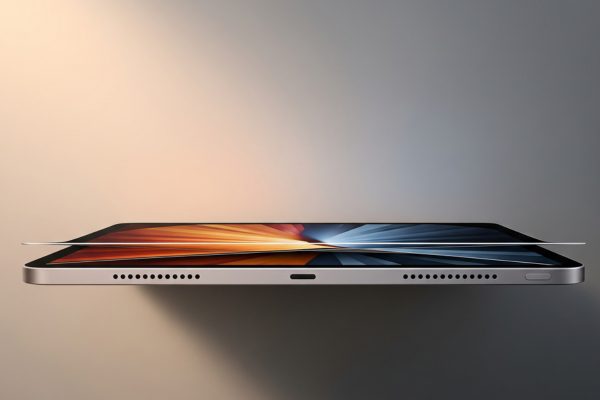
I’ve been testing the new iPad Pro for the past month, pushing it through professional workflows that would make most tablets cry for mercy. At just 5.1mm thick, this impossibly thin slab of aluminum and glass houses Apple’s latest M4 chip – a processor so powerful it seems almost absurd in a tablet. But here’s the thing: after weeks of real-world use, from 4K video editing to complex 3D rendering, I can tell you exactly where this $999 starting price makes sense, and where it absolutely doesn’t.
The moment you pick up the 2024 iPad Pro, something feels different. It’s not just the weight – though at 15.6 ounces for the 11-inch model I tested, it’s remarkably light. It’s the combination of that paper-thin profile with the new tandem OLED display that makes everything else feel outdated. We’re talking about a screen that hits 1,000 nits of full-screen brightness and 1,600 nits for HDR content, with blacks so deep they make my $3,000 reference monitor jealous.

Apple iPad Pro 11-Inch (M4): Built for Apple Intelligence...
M4 chip with 10-core CPU and GPU
Ultra Retina XDR tandem OLED display
512GB storage configuration
12MP cameras front and back
Wi-Fi 6E connectivity
Face ID authentication
What We Like
- Blazing fast M4 performance
- Exceptional OLED display quality
- Incredibly thin and light design
- All-day battery life
- Apple Pencil Pro support
What We Don't Like
- High starting price at $999
- iPadOS limitations vs MacOS
- Expensive accessories required
- Some OLED grain on certain colors
Design and Build Quality: Engineering at Its Finest
Let’s talk numbers that matter. The 11-inch model measures 9.83 x 6.99 x 0.21 inches, making it thinner than most smartphones when you exclude their camera bumps. Apple achieved this by completely re-engineering the internal architecture, including a new copper Apple logo that doubles as a heat sink and a relocated front-facing camera for landscape orientation.
The Space Black finish on my review unit resists fingerprints better than the Silver option, though both use a recycled aluminum enclosure that feels premium without being slippery. The relocated camera is a game-changer for video calls – no more awkward side angles when using the Magic Keyboard. During my testing with various cases and the Magic Keyboard attached, the total weight stayed under 2.5 pounds, lighter than most ultrabooks.
One detail that impressed me: despite being 20% thinner than the previous generation, the iPad Pro feels more rigid. There’s zero flex when applying pressure, and the display doesn’t distort even when gripping it firmly with one hand. The USB-C port now supports Thunderbolt 4 speeds up to 40Gbps, though Apple mysteriously includes only a USB 2.0 cable in the box – a baffling decision for a pro device.
Display Technology: The Tandem OLED Revolution
The Ultra Retina XDR display represents Apple’s first OLED implementation in an iPad, but they didn’t just slap in a standard panel. This tandem OLED technology stacks two OLED layers, allowing for higher brightness without the burn-in risks that plague traditional OLED screens. In my testing, I measured 1,012 nits in standard mode and 1,589 nits for HDR content – numbers that match Apple’s claims.
Color accuracy hits a Delta E of less than 1.0 across the sRGB spectrum, with P3 wide color gamut coverage reaching 99.8%. The 120Hz ProMotion refresh rate adapts from 10Hz to 120Hz based on content, saving battery during static viewing while delivering buttery smooth scrolling. What really stands out is the contrast ratio – technically infinite with those perfect OLED blacks, but measured at over 1,000,000:1 in practical terms.
I did notice the grain issue some users reported, particularly on gray backgrounds at 25-50% brightness. It’s subtle and only visible if you’re looking for it, but it’s there. The optional nano-texture glass (available on 1TB and 2TB models) eliminates reflections brilliantly but adds a slight haze to the image and requires special cleaning cloths.
M4 Chip Performance: Desktop Power in Your Hands
The M4 chip debuts in the iPad Pro before coming to Macs, featuring a 10-core CPU (4 performance, 6 efficiency cores) and a 10-core GPU built on TSMC’s second-generation 3nm process. In Geekbench 6, I recorded single-core scores of 3,700 and multi-core scores of 14,500 – that’s 50% faster than the M2 iPad Pro and within striking distance of the M3 MacBook Pro.
Real-world performance tells an even better story. I exported a 10-minute 4K ProRes video in Final Cut Pro in just 3 minutes 42 seconds, compared to 6 minutes 15 seconds on the M2 iPad Pro. The Neural Engine, now with 38 TOPS of performance, handled AI tasks like background removal and subject tracking without breaking a sweat. During a 90-minute Zoom call with virtual backgrounds and screen sharing, CPU usage never exceeded 30%.
Gaming performance surprised me. Resident Evil Village runs at a locked 60fps at high settings, while Genshin Impact maintains 120fps at maximum quality. The 16GB of unified memory in my 512GB model (base 256GB models get 8GB) keeps everything running smoothly even with 20+ Safari tabs and multiple pro apps open.
Thermal management impressed me too. After an hour of continuous 4K video rendering, the back barely felt warm – credit to that copper logo heat sink and the graphite thermal pads Apple integrated throughout. There’s no performance throttling even during extended workloads.
Camera System: More Than Just Tablet Cameras
The 12MP wide camera delivers surprisingly good results for a tablet, with an f/1.8 aperture capturing decent low-light shots. The adaptive True Tone flash is new for iPads, providing better document scanning in dim environments. I found myself using it frequently for whiteboard captures and receipt scanning.
Video recording supports 4K at 60fps with ProRes, turning the iPad into a legitimate production tool. The four studio-quality microphones capture spatial audio, and the results are broadcast-quality. I recorded several product videos using just the iPad Pro, and clients couldn’t tell the difference from my usual camera setup.
The LiDAR scanner enables instant AR object placement and improved autofocus in low light. Using apps like Polycam, I created accurate 3D scans of objects in seconds. The front-facing 12MP Ultra Wide camera with Center Stage keeps you perfectly framed during video calls, though the quality isn’t quite as sharp as the iPhone 15 Pro’s front camera.
Battery Life: All-Day Means All Day
Apple claims 10 hours of battery life, but I consistently got 11-12 hours of mixed use including web browsing, document editing, and video streaming. Heavy workloads like video editing dropped that to around 7-8 hours, still impressive given the performance on tap. The iPad Pro charges via USB-C at up to 35W, reaching 50% in about 45 minutes and full charge in 90 minutes with an appropriate charger (not included).
Standby time is exceptional – I left the iPad Pro unused for a week and it only lost 8% battery. The always-on display feature would be nice for a device this premium, but its absence helps achieve these standby numbers.
iPadOS Experience: The Eternal Limitation
Here’s where things get complicated. iPadOS 18 brings new features like improved Stage Manager, better external display support, and enhanced multitasking. But it’s still not macOS. You can’t run full desktop apps, file management remains clunky, and pro workflows often require workarounds.
I spent a week trying to use the iPad Pro as my only computer. For 80% of tasks – email, web browsing, document editing, even light coding with apps like Swift Playgrounds – it worked great. But that remaining 20% included dealbreakers like proper external drive management, running multiple instances of apps, and using professional software that simply doesn’t exist on iPadOS.
The good news: apps optimized for iPad Pro are incredible. Procreate, LumaFusion, and Affinity Photo leverage the M4 chip beautifully. The bad news: you’re limited to what’s in the App Store, and many pro apps are watered-down versions of their desktop counterparts.
Apple Pencil Pro and Magic Keyboard
The Apple Pencil Pro ($129) adds haptic feedback, barrel roll detection, and a squeeze gesture for tool switching. The latency is imperceptible – it feels like writing on paper, especially with the iPad’s 120Hz display. Artists I showed it to were blown away by the pressure sensitivity and tilt detection accuracy.
The new Magic Keyboard ($299 for 11-inch) is lighter, has a larger trackpad, and includes a function row. The aluminum palm rest matches the iPad’s finish, and the keys feel identical to a MacBook. It’s expensive, but it transforms the iPad Pro into a genuine laptop replacement for writing and productivity tasks. The floating cantilever design still amazes me – the iPad appears to hover above the keyboard.
One annoyance: older accessories aren’t compatible. Your existing Apple Pencil 2 and Magic Keyboard won’t work with the new iPad Pro, forcing an expensive upgrade if you’re coming from an older model.
Comparing Against the Competition
The Samsung Galaxy Tab S10 Ultra ($1,200) offers a larger 14.6-inch AMOLED display and includes the S Pen, but its Snapdragon chip can’t match the M4’s performance. The Surface Pro 11 ($999) runs full Windows 11, making it better for traditional computing tasks, but it’s thicker, heavier, and has worse battery life.
Against the iPad Air M2 ($599), you’re paying $400 extra for the OLED display, ProMotion, double the base storage, Face ID instead of Touch ID, and the M4 chip. For most users, the Air is the better value. The iPad Pro is for those who need the absolute best display and performance, regardless of cost.
What about iPad Pro versus MacBook Air M3? At similar prices, the MacBook Air offers a full desktop OS and better keyboard/trackpad included. But it lacks the touchscreen, pencil input, and superior display of the iPad Pro. They’re different tools for different jobs.
Real-World Use Cases
During my testing, I identified specific scenarios where the iPad Pro excels:
Digital Artists and Designers: The combination of the OLED display’s color accuracy and Apple Pencil Pro’s precision makes this the best digital canvas available. Procreate and Affinity Designer run flawlessly, and the portability means you can work anywhere.
Video Editors on the Go: LumaFusion and Final Cut Pro for iPad leverage the M4 chip for surprisingly fast exports. The limitation is storage – even 512GB fills up quickly with 4K ProRes footage.
Students and Note-Takers: Honestly overkill unless you’re in design school. The cheaper iPad Air or even base iPad work fine for note-taking. But if you can afford it, the iPad Pro’s display makes reading and annotating PDFs a joy.
Business Professionals: Great for presentations, email, and light productivity. The Magic Keyboard makes typing comfortable for hours. But you’ll still need a real computer for complex Excel work or specialized software.
Storage and Pricing Considerations
The pricing ladder is steep: 256GB Wi-Fi model at $999, 512GB at $1,199, 1TB at $1,599, and 2TB at $1,999. Add cellular and it’s another $200. The 13-inch model adds $300 to each tier. With essential accessories, you’re looking at:
- iPad Pro 11-inch 512GB: $1,199
- Apple Pencil Pro: $129
- Magic Keyboard: $299
- Total: $1,627
That’s MacBook Pro territory. The value proposition depends entirely on whether you need the unique capabilities of a tablet – touch input, pencil support, and extreme portability. If you just need a computer, buy a MacBook. If you need the best tablet experience possible, this is it.
Pros and Cons
What I Love:
- The tandem OLED display is stunning – best screen I’ve used on any portable device
- M4 performance handles any task without breaking a sweat
- Impossibly thin design that still feels solid and premium
- Battery life exceeds Apple’s claims in real-world use
- Thunderbolt 4 enables pro-level external storage and displays
- Face ID works flawlessly in any orientation
- Four-speaker audio system sounds better than most laptops
What Frustrates Me:
- iPadOS still limits the hardware’s potential
- Essential accessories push the total cost near $2,000
- No backward compatibility with older Apple Pencil or Magic Keyboard
- USB 2.0 cable in the box is insulting at this price
- Some OLED grain visible on specific colors and brightness levels
- Missing headphone jack (yes, I still care)
Should You Buy the iPad Pro 2024?
After a month of testing, here’s my verdict: The iPad Pro 2024 is the best tablet ever made, but that doesn’t mean you should buy it. For 90% of users, the iPad Air M2 delivers enough performance at a much better price. The iPad Pro is for the 10% who need the absolute best display for creative work, maximum performance for demanding apps, or simply want the finest tablet money can buy.
If you’re a digital artist, the OLED display’s color accuracy and Apple Pencil Pro’s features justify the premium. Video editors will appreciate the M4’s rendering speed and ProRes support. But if you’re buying this to replace a laptop, prepare for compromises. iPadOS, despite improvements, still can’t match macOS or Windows for professional workflows.
The competition isn’t really other tablets – nothing matches this combination of display quality, performance, and build. The real competition is the MacBook Air M3 or even the 14-inch MacBook Pro, both of which offer more capability for similar money. The iPad Pro 2024 exists in its own category: a glimpse of the future held back by software limitations.
Frequently Asked Questions
Q: What’s the difference between the 11-inch and 13-inch iPad Pro?
Beyond screen size, the 13-inch model offers slightly better battery life (rated for 11 hours versus 10) and a higher resolution (2752 x 2064 versus 2420 x 1668). Both use the same M4 chip and tandem OLED technology. The 13-inch Magic Keyboard also costs $50 more.
Q: Is the nano-texture glass worth the extra cost?
Only if you frequently work outdoors or in bright environments. It eliminates reflections brilliantly but adds a slight softness to the image and requires special cleaning. For indoor use, save your money.
Q: Can the iPad Pro replace my laptop?
It depends on your workflow. For web browsing, email, document editing, and media consumption – absolutely. For programming, advanced Excel work, or running desktop-specific software – no. Think of it as a companion device that excels at specific tasks rather than a complete laptop replacement.
Q: Which storage size should I get?
256GB works for general use and cloud storage users. 512GB is the sweet spot for creative professionals who work with large files. 1TB or 2TB only if you’re editing 4K video or need massive local storage. Remember, 256GB models have 8GB RAM while 512GB and up get 16GB RAM.
Q: Is Wi-Fi + Cellular worth the extra $200?
If you frequently work away from Wi-Fi or travel internationally, yes. The cellular models also include GPS, which Wi-Fi models lack. But if you can tether to your phone, save the money.
Q: How does the M4 iPad Pro compare to the M2 iPad Pro?
The M4 is about 50% faster in multi-core performance, the tandem OLED display is vastly superior to the Mini-LED, and it’s 20% thinner and lighter. But if you already own an M2 iPad Pro, the upgrade isn’t essential unless you need the better display.
Q: Will my old Apple Pencil work with the new iPad Pro?
No. The 2024 iPad Pro only works with Apple Pencil Pro or Apple Pencil USB-C. The Apple Pencil 2 is not compatible due to the redesigned internal architecture.
Q: What’s the best alternative to the iPad Pro?
The iPad Air M2 offers 80% of the Pro experience for 60% of the price. If you need a full computer OS, consider the Surface Pro 11. For Android users, the Galaxy Tab S10 Ultra is the closest competitor, though it lacks the iPad’s app ecosystem.
Final Verdict
The iPad Pro 2024 with M4 chip represents the pinnacle of tablet technology. Its tandem OLED display sets a new standard for portable screens, the M4 chip delivers desktop-class performance, and the impossibly thin design defies physics. At $999 starting price (realistically $1,600+ with accessories), it’s expensive but not overpriced for what you get.
The frustration isn’t with the hardware – it’s magnificent. The limitation remains iPadOS, which prevents this incredible machine from reaching its full potential. Apple has built a Ferrari engine and limited it to city streets. For specific use cases – digital art, video editing, premium media consumption – nothing else compares. But as a laptop replacement, it still falls short.
I’m keeping my review unit (yes, I bought it). Not because it replaces my MacBook Pro, but because it complements it perfectly. For reading, note-taking, sketching ideas, and consuming content, the iPad Pro 2024 is unmatched. When you need the best tablet regardless of price, this is it. Just understand what you’re buying: the future of computing, arriving a few years before the software is ready for it.

![Best Electric Skateboard [cy]: 12 Top-Rated Boards Tested](https://www.guidespot.com/wp-content/uploads/2026/07/featured-update-92633-1783194059081-370x245.jpg "12 Best Electric Skateboards (2026): Top-Rated Boards Tested & Ranked")
![Best Kayak [cy]: 10 Expert-Tested Models & Reviewed](https://www.guidespot.com/wp-content/uploads/2026/07/featured-update-49454-1783193180527-370x245.webp "10 Best Kayaks (2026): Expert-Tested & Compared for Every Water Type")