If you recently switched from a manual toothbrush to an electric one, or you’re considering making the change, understanding the proper technique is essential for maximizing your oral health benefits. According to the American Dental Association, both manual and powered toothbrushes can effectively remove plaque when used correctly, but electric toothbrushes offer distinct advantages that can transform your dental care routine.
I’ve spent considerable time researching dental health guidelines from leading authorities, and the consensus is clear: electric toothbrushes can remove significantly more plaque than manual brushing when used properly. The Cleveland Clinic reports that electric toothbrushes produce thousands of brush strokes per minute, far exceeding what we can achieve manually. However, these benefits only materialize when you use the correct technique.
Recent data from the UK Government Adult Oral Health Survey 2021 reveals that 59% of adults now use electric toothbrushes, compared to 51% who still prefer manual options. This shift reflects growing awareness of the advantages electric toothbrushes provide, particularly for individuals with dexterity challenges, elderly users, and children who struggle with proper manual brushing technique.
Understanding Your Electric Toothbrush
Before we dive into the proper technique, let’s understand what makes electric toothbrushes different. Unlike manual toothbrushes that rely entirely on your hand movements, electric models use motorized bristle movements to enhance plaque removal. There are primarily two types of electric toothbrush technologies: oscillating-rotating brushes that spin in circular motions, and sonic toothbrushes that vibrate at high frequencies.
The National Institute of Dental and Craniofacial Research emphasizes that plaque removal is critical for preventing tooth decay and gum disease. Electric toothbrushes excel at this task because they maintain consistent motion and pressure, something that’s challenging to achieve with manual brushing. The automated movements ensure thorough cleaning even when your technique isn’t perfect.
Most modern electric toothbrushes come equipped with built-in timers, pressure sensors, and multiple cleaning modes. These features aren’t just marketing gimmicks – they address common brushing errors that dental professionals see regularly. The two-minute timer ensures you brush for the recommended duration, while pressure sensors prevent the aggressive brushing that can damage tooth enamel and irritate gums.
Preparation: Setting Yourself Up for Success
Proper preparation is the foundation of effective electric toothbrush use. Start by ensuring your toothbrush is fully charged. A dying battery reduces the brush’s effectiveness, turning your high-tech tool into an expensive manual toothbrush. Most electric toothbrushes can hold a charge for several days to two weeks, depending on the model and usage frequency.
Choose the right brush head for your needs. Smaller brush heads generally provide better access to hard-to-reach areas, particularly the back molars where plaque tends to accumulate. The bristles should be soft to medium – hard bristles can damage enamel and gums, regardless of whether you’re using an electric or manual toothbrush. Replace your brush head every three months, or sooner if the bristles appear frayed or splayed.
Apply a pea-sized amount of fluoride toothpaste to the brush head. Here’s an important tip that many people overlook: don’t turn on the toothbrush until it’s in your mouth. Starting the brush outside your mouth often results in toothpaste splatter across your bathroom mirror – we’ve all been there! Position the brush head against your teeth at a 45-degree angle to the gum line before activating it.
The Proper Electric Toothbrush Technique: Step by Step
Now for the main event – the actual brushing technique. This is where many users go wrong, treating their electric toothbrush like a manual one. The key principle to remember is that electric toothbrushes do the work for you. Your job is simply to guide the brush to each tooth surface.
Step 1: Divide Your Mouth into Quadrants
Think of your mouth as having four sections: upper right, upper left, lower right, and lower left. Plan to spend 30 seconds on each quadrant for a total of two minutes. Most electric toothbrushes will pause or beep every 30 seconds to signal when to move to the next section. This systematic approach ensures you don’t miss any areas or spend too much time in one spot.
Step 2: Position and Angle
Hold the brush head at a 45-degree angle where your teeth meet your gums. This angle allows the bristles to reach slightly under the gum line where plaque accumulates. The brush head should cover one or two teeth at a time. Unlike manual brushing, you don’t need to apply much pressure – let the brush’s motion do the cleaning.
Step 3: The Gliding Motion
Here’s where electric toothbrush technique differs dramatically from manual brushing. Instead of scrubbing back and forth, simply glide the brush slowly from tooth to tooth. Spend about 3-4 seconds on each tooth surface before moving to the next. The brush’s oscillating or sonic action will remove plaque without any scrubbing motion from you.
For oscillating-rotating brushes, hold the brush head against each tooth surface and let it work. For sonic toothbrushes, you can use a very gentle sweeping motion, but avoid the vigorous scrubbing you might use with a manual brush. Think of yourself as a guide, not the engine.
Step 4: Don’t Forget the Inside Surfaces
The inside surfaces of your teeth, especially the lower front teeth, are prone to tartar buildup. Tilt the brush vertically to clean these areas effectively. For the inside surfaces of your front teeth, hold the toothbrush vertically and use the tip of the brush head to clean each tooth individually. This is particularly important for the tongue-side of your lower front teeth where saliva pools and minerals can accumulate.
Step 5: Clean the Chewing Surfaces
The chewing surfaces of your molars have grooves and pits where food particles and bacteria collect. Hold the brush flat against these surfaces and let it work for a few seconds on each tooth. The automated bristle action is particularly effective at cleaning these irregular surfaces that are difficult to reach with manual brushing.
Step 6: Finish with Your Tongue and Gums
After completing all tooth surfaces, many electric toothbrushes have a gentler mode for cleaning your tongue and massaging your gums. Use the back of the brush head or a dedicated tongue cleaner if your model includes one. Gently brush your tongue from back to front to remove bacteria and freshen breath. Some models include a gum care mode that provides a gentle massage to stimulate blood flow and promote gum health.
Common Mistakes to Avoid
Even with the best electric toothbrush, poor technique can undermine your oral health efforts. Let’s address the most common mistakes I see people make, based on dental professional observations and research.
Mistake 1: Applying Too Much Pressure
This is by far the most common error. Many people press hard, thinking it will clean better, but excessive pressure can cause gum recession and enamel wear. Electric toothbrushes are designed to work with light pressure – about the weight of an orange. If your brush has a pressure sensor, pay attention to it. The light usually turns red when you’re pressing too hard. Trust the technology and let the brush do its job.
Mistake 2: Moving Too Fast
Rushing through your routine defeats the purpose of using an electric toothbrush. When you move too quickly from tooth to tooth, the bristles don’t have enough contact time to effectively remove plaque. Remember, you have two full minutes – that’s 30 seconds per quadrant. If you find yourself finishing before the timer, you’re moving too fast.
Mistake 3: Using the Wrong Brushing Motion
Old habits die hard, and many people continue the back-and-forth scrubbing motion they learned with manual toothbrushes. This not only reduces the effectiveness of your electric toothbrush but can also cause uneven wear on your teeth and irritate your gums. Remember: guide, don’t scrub.
Mistake 4: Neglecting to Replace Brush Heads
Worn bristles don’t clean effectively, regardless of how advanced your toothbrush technology is. Set a reminder to replace your brush head every three months. Some brush heads have indicator bristles that fade when it’s time for a replacement. If you’ve been sick, consider replacing the brush head sooner to avoid reintroducing bacteria to your mouth.
Mistake 5: Not Cleaning the Toothbrush Properly
After each use, rinse the brush head thoroughly under running water to remove toothpaste and debris. Once a week, remove the brush head and clean the connection point where it attaches to the handle. Bacteria and gunk can accumulate here, potentially affecting the brush’s performance and hygiene.
Troubleshooting Common Issues
Even when you understand the proper technique, you might encounter some challenges. Let’s address the most common issues and their solutions.
Sensitive Teeth or Gums
If you experience sensitivity when using your electric toothbrush, first check your pressure. You might be pressing too hard without realizing it. Many electric toothbrushes offer a sensitive mode with gentler vibrations. Start with this setting and gradually work up to normal mode as your teeth and gums adjust. If sensitivity persists beyond two weeks, consult your dentist as it might indicate an underlying issue.
Gum Bleeding
Some bleeding during the first week of switching to an electric toothbrush is normal, especially if your gums weren’t healthy to begin with. The improved plaque removal can initially irritate inflamed gums. However, this should improve within a week or two as your gum health improves. If bleeding continues or worsens, you might be using too much pressure or need professional dental care.
Battery Life Issues
If your toothbrush isn’t holding a charge well, first ensure you’re charging it correctly. Some models need to be completely drained before recharging, while others work best with regular top-ups. Check your manual for specific instructions. If battery problems persist, the battery might need replacement, which unfortunately often means replacing the entire unit for sealed models.
Toothpaste Splatter
Beyond starting with the brush in your mouth, you can minimize splatter by using less toothpaste (a pea-sized amount is sufficient) and keeping your mouth slightly closed around the brush while brushing. Some people find gel toothpastes splatter less than traditional pastes.
Maintenance and Care
Proper maintenance extends your electric toothbrush’s life and ensures it continues working effectively. After each use, rinse the brush head thoroughly under warm water while the brush is still running. This helps dislodge any trapped particles. Turn off the brush, remove the head, and rinse both the head and the handle’s connection point separately.
Once a week, deep clean your toothbrush. Soak the brush head in antibacterial mouthwash for two minutes to kill germs. Clean the handle with a damp cloth, paying attention to any rubber grips or crevices where grime accumulates. Never submerge the handle in water unless it’s specifically designed for full submersion.
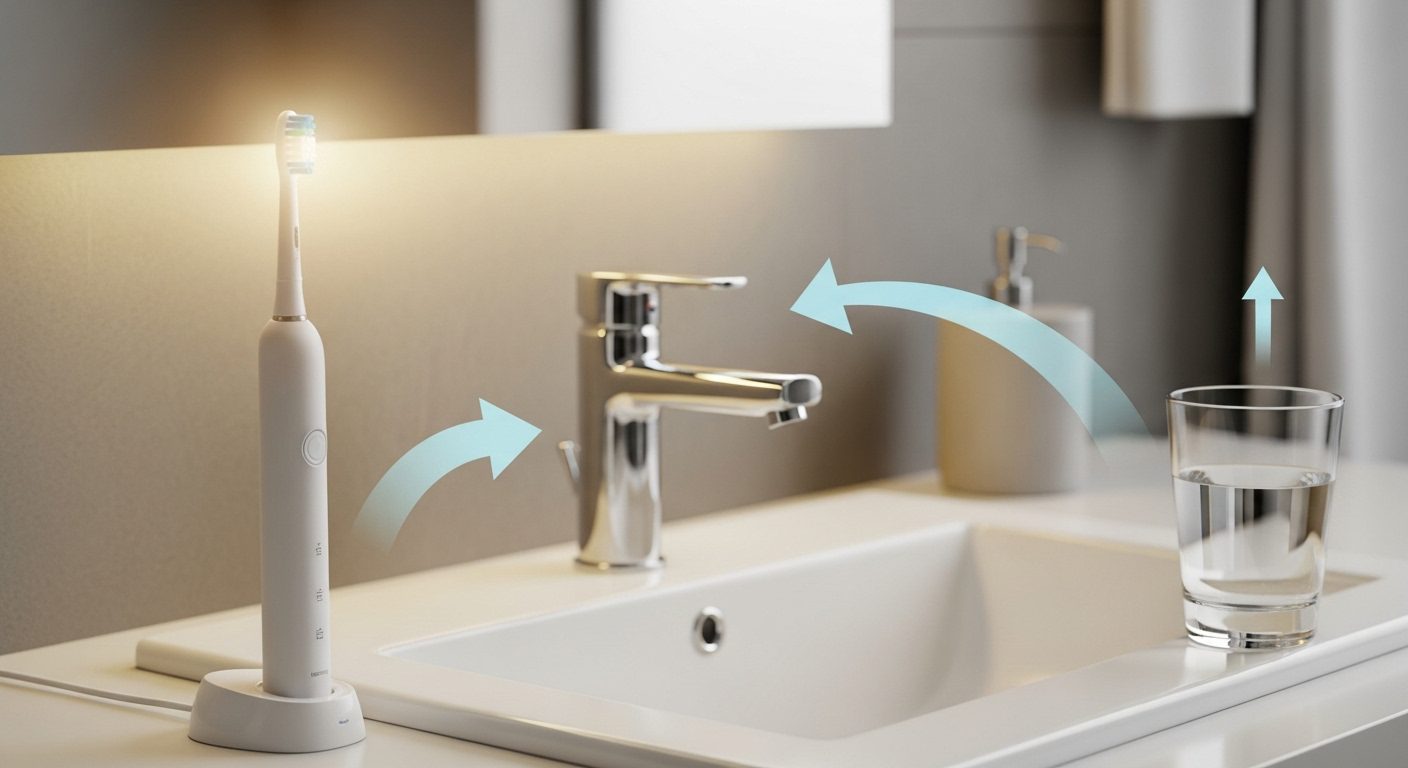
Store your toothbrush upright in a holder that allows air circulation. Avoid closed containers that can harbor bacteria and keep the bristles damp. If you travel with your electric toothbrush, ensure it’s completely dry before packing it in a travel case to prevent bacterial growth.
Special Considerations
For Children
Children can start using electric toothbrushes from age three, though they’ll need supervision until about age seven or eight. Choose a child-specific model with softer bristles and fun features like music or timers that make brushing enjoyable. Teach them the same gentle, systematic technique, emphasizing that the toothbrush is not a toy and shouldn’t be pressed hard against teeth.
For Seniors
Electric toothbrushes are particularly beneficial for seniors who might have arthritis, limited mobility, or dexterity issues. The larger handles are easier to grip than manual toothbrushes, and the automated motion compensates for limited hand movement. Look for models with easy-to-press buttons and clear indicators for battery life and modes.
For Braces and Dental Work
If you have braces, bridges, or implants, an electric toothbrush can be especially helpful for cleaning around these structures. Use an orthodontic brush head if available, and spend extra time around brackets and wires where food and plaque accumulate. Be gentle around any recent dental work and follow your dentist’s specific care instructions.
Integrating Electric Toothbrush Use into Your Complete Oral Care Routine
While proper electric toothbrush technique is crucial, it’s just one component of comprehensive oral care. Brush twice daily – once in the morning and once before bed. Wait at least 30 minutes after eating before brushing, especially after consuming acidic foods or drinks, as immediate brushing can damage temporarily softened enamel.
Flossing remains essential even with an electric toothbrush. No toothbrush, regardless of technology, can effectively clean between teeth where cavities often develop. Floss at least once daily, preferably before your evening brushing session. Consider using an antimicrobial mouthwash after brushing to reach areas your toothbrush and floss might miss.
Regular dental checkups every six months allow professionals to catch problems early and provide personalized advice for your oral health needs. Your dentist or hygienist can also observe your brushing effectiveness and suggest technique improvements specific to your mouth’s unique characteristics.
Frequently Asked Questions
How long should I brush with an electric toothbrush?
The American Dental Association recommends brushing for two minutes, twice daily. Most electric toothbrushes have built-in timers to ensure you meet this recommendation. The timer typically pulses every 30 seconds to remind you to move to the next quadrant of your mouth.
Can I use regular toothpaste with an electric toothbrush?
Yes, any fluoride toothpaste works with electric toothbrushes. You might find you need less toothpaste than with manual brushing – a pea-sized amount is sufficient. Some people prefer gel toothpastes with electric brushes as they tend to splatter less.
How often should I replace my electric toothbrush head?
Replace your brush head every three months, or sooner if the bristles become frayed. Some brush heads have indicator bristles that fade to signal replacement time. If you’ve been ill, consider replacing the brush head once you’ve recovered to avoid reinfection.
Is it normal for my gums to bleed when I first start using an electric toothbrush?
Minor bleeding during the first week can be normal as your gums adjust to more thorough cleaning. However, bleeding should decrease as your gum health improves. If bleeding persists beyond two weeks or worsens, consult your dentist and check that you’re not applying too much pressure.
Can I share my electric toothbrush handle with family members?
Yes, you can share the handle, but each person must have their own brush head. Never share brush heads as this can transfer bacteria and increase infection risk. Many electric toothbrushes come with colored rings to help family members identify their personal brush head.
Should I use mouthwash before or after brushing with an electric toothbrush?
Use mouthwash after brushing and flossing. If you use mouthwash immediately after brushing, avoid rinsing with water first to maintain the fluoride concentration from your toothpaste. Some dentists recommend waiting 30 minutes after brushing before using mouthwash to maximize fluoride benefits.
Can electric toothbrushes damage my teeth or gums?
When used properly with light pressure, electric toothbrushes are safe and beneficial. However, aggressive brushing or excessive pressure can cause enamel wear and gum recession. Always use gentle pressure and let the brush do the work. If your model has a pressure sensor, pay attention to its warnings.
Do I still need to floss if I use an electric toothbrush?
Absolutely. Even the best electric toothbrush cannot clean effectively between teeth where food particles and plaque accumulate. Daily flossing remains essential for preventing cavities and gum disease in these interdental spaces.
Conclusion
Mastering proper electric toothbrush technique transforms a daily chore into an effective preventive health practice. The key points to remember are simple: let the brush do the work, use gentle pressure, follow a systematic approach, and maintain the full two-minute duration. By avoiding common mistakes like pressing too hard or moving too fast, you’ll maximize the benefits of your electric toothbrush investment.
The transition from manual to electric brushing might feel awkward initially, but with consistent practice, the proper technique becomes second nature. The payoff – improved plaque removal, healthier gums, and potentially fewer dental issues – makes learning the correct technique worthwhile. Combined with regular flossing, professional cleanings, and a healthy diet, proper electric toothbrush use forms the foundation of excellent oral health.
Remember that while electric toothbrushes offer technological advantages, they’re tools that require proper use to be effective. Take time to understand your specific model’s features, maintain it properly, and don’t hesitate to ask your dental professional for personalized guidance. Your teeth and gums will thank you for the investment in both the technology and the technique.