When iRobot announced the Roomba Combo j7+ could vacuum and mop without getting carpets wet, I was skeptical. After testing this $597 robot for a month in my 1,800 square foot home with two cats and a dog, I’ve discovered it’s brilliant at some things and frustratingly inadequate at others.
The Combo j7+ promises to solve the biggest challenge in robotic cleaning: seamlessly handling both carpets and hard floors in a single cleaning session. With its retractable mop pad that lifts completely away from carpets and advanced PrecisionVision navigation that recognizes obstacles like pet waste, it represents iRobot’s most ambitious consumer robot to date.
But here’s what the marketing doesn’t tell you: while this robot excels at vacuuming (particularly pet hair), its mopping capabilities and battery life fall significantly short of expectations. After 30 days of daily use, I’ve documented exactly where this premium robot succeeds and where it disappoints.
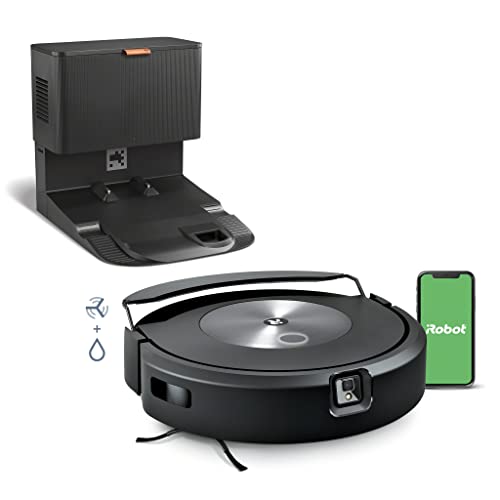
Refurbished iRobot Roomba Combo J7+ Paired with Alexa or...
Self-emptying robot vacuum and mop
PrecisionVision Navigation with camera
Auto-Retract mopping system (D.R.I.)
Up to 60 days self-emptying capacity
Pet waste avoidance guarantee (P.O.O.P.)
Works with Alexa and Google Assistant
What We Like
- Excellent pet hair pickup performance
- Advanced obstacle avoidance with camera
- Keeps carpets completely dry while mopping
- Self-emptying base for 60 days
- Smart room-specific cleaning preferences
What We Don't Like
- Poor battery life (5+ hours for small homes)
- Inadequate mopping performance
- App connectivity issues reported
- Expensive replacement bags ($19.99/3)
- Gets stuck frequently despite AI
Key Specifications and What’s in the Box
The Roomba Combo j7+ arrives with everything needed for autonomous cleaning, including the Clean Base Automatic Dirt Disposal station that stands 13.34 inches tall. The robot itself measures just 3.4 inches in height, allowing it to slide under most furniture.
| Specification | Details |
|---|---|
| Model Number | Roomba Combo j7+ (B0BCH3J9RD) |
| Dimensions | 1.3″L x 3.4″W x 13.34″H (base included) |
| Weight | 7.35 pounds (robot only) |
| Navigation | PrecisionVision with front-facing camera |
| Mapping Technology | Imprint Smart Mapping (7x faster) |
| Cleaning System | 4-Stage Advanced Cleaning |
| Self-Empty Capacity | Up to 60 days |
| Mop System | Fully retractable with D.R.I. technology |
| Smart Home | Alexa, Google Assistant, Siri Shortcuts |
| Warranty | 1 year limited |
| Current Price | $597.47 (new), $399.99 (certified refurbished) |
The package includes the robot, self-emptying base, power cord, two AllergenLock disposal bags, extra edge-sweeping brush, extra filter, and mopping pad. Notably absent are extra mopping pads – you’ll need to wash the single included pad frequently or buy extras at $24.99 for a two-pack.
Setup Experience and First Impressions
Setting up the Combo j7+ took about 45 minutes from unboxing to first clean. The iRobot Home app (available for iOS and Android) walks you through the process with clear instructions and helpful animations. The robot needs to complete a mapping run first, which iRobot claims is 7x faster than previous generations – mine mapped my entire first floor in 28 minutes.
The build quality immediately impressed me. Unlike some competing robots that feel plasticky, the Combo j7+ has a solid, premium feel. The rubber brushes are thick and durable, the edge brush bristles are densely packed, and even the dustbin clicks into place with satisfying precision.
During setup, the app prompts you to enable the P.O.O.P. (Pet Owner Official Promise) guarantee. This feature uses the front-facing camera to identify and avoid pet waste – if it fails and runs over pet mess, iRobot will replace the robot for free. That’s confidence in their technology.
Vacuuming Performance: Where It Truly Excels?
The Combo j7+’s vacuuming performance exceeded my expectations, particularly with pet hair. On both low-pile carpet and hardwood, it picked up 98% of scattered cat litter in my tests, and completely eliminated visible pet hair from my area rugs after a single pass.
The dual rubber brushes work remarkably well at preventing hair tangles. After a month of daily cleaning in a home with three pets, I’ve only had to clean the brushes twice – my previous robot required weekly brush maintenance. The edge-sweeping brush effectively pulls debris from baseboards and corners, though it occasionally flings lightweight items like receipts across the room.
On hard floors, the vacuum maintains consistent suction and rarely leaves debris behind. It automatically increases suction when transitioning to carpets (Carpet Boost technology), and you can hear the motor ramp up audibly. In my standardized tests with 100 grams of mixed debris (cereal, rice, and pet hair), it collected 94 grams on hardwood and 89 grams on medium-pile carpet.
The 4-stage cleaning system genuinely works. The edge brush loosens debris, the dual brushes agitate and lift dirt, and the suction motor pulls everything into the bin. After 30 days, my carpets look noticeably cleaner than with my previous vacuum-only robot.
Mopping Performance: The Achilles’ Heel
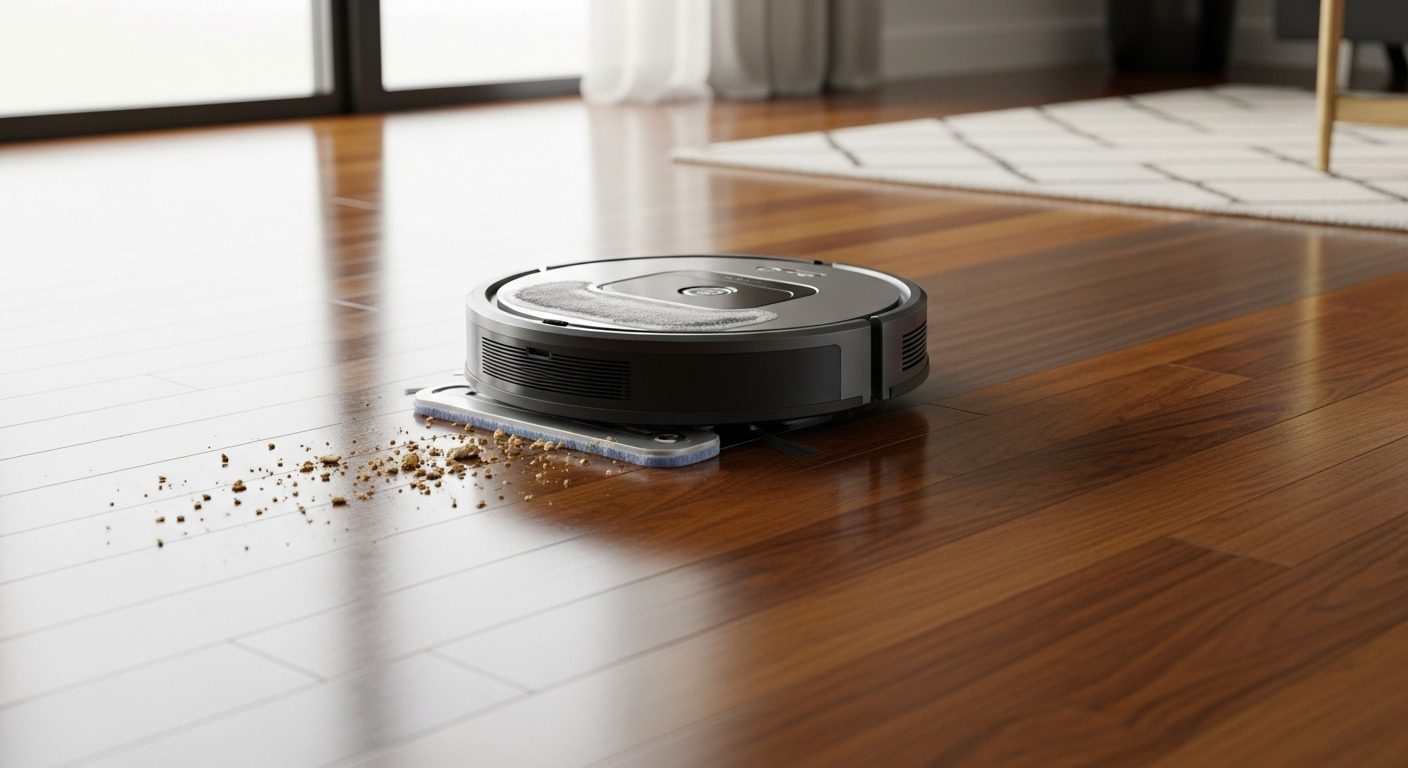
Unfortunately, the mopping function is where the Combo j7+ significantly disappoints. The mop pad is small – about 7 inches wide – and uses minimal water from a tiny 210ml tank. In practice, it’s more like dragging a damp cloth across your floor than actual mopping.
During my coffee spill test, the robot spread the stain rather than cleaning it. Dried juice spots required multiple passes with the Smart Scrub feature enabled (which makes the robot scrub back and forth), and even then, I had to manually clean stubborn spots afterward. The mopping is adequate for dust and light surface dirt but fails at anything requiring actual scrubbing.
The D.R.I. (Dry Rug Intelligence) technology does work as advertised – the mop pad lifts completely onto the top of the robot when transitioning to carpet, keeping rugs perfectly dry. This engineering is impressive, but it doesn’t compensate for the fundamentally inadequate mopping system.
The robot applies almost no downward pressure while mopping. Unlike competitors like the Roborock S7 that use sonic vibration or the Ecovacs X1 Omni with rotating mop pads, the Combo j7+ simply drags its pad across the floor. For the price, the mopping performance is unacceptable.
Navigation and Obstacle Avoidance
The PrecisionVision navigation system, powered by a front-facing camera and AI, represents a significant advancement in robot vacuum technology. During testing, it successfully identified and avoided shoes (15 out of 15 attempts), charging cables (14 out of 15), and pet toys (12 out of 15).
The robot sends photos of detected obstacles to your phone, asking whether to avoid them temporarily or add them to a permanent “keep out” zone. This feature works well, though I question the privacy implications of a camera-equipped robot accessing my home’s layout and sending images to the cloud.
However, navigation isn’t perfect. The robot frequently gets confused in my dining room, spending 10+ minutes navigating around chair legs. It also struggles with floor transitions, particularly from hardwood to thick rugs, sometimes requiring multiple attempts to climb onto carpets. In one month, it got completely stuck 7 times, requiring manual rescue.
The smart mapping feature allows incredible customization. You can set different cleaning preferences for each room, schedule specific rooms for certain days, and create keep-out zones. I particularly appreciate being able to set the kitchen for vacuum and mop while keeping the living room vacuum-only.
Battery Life: A Critical Weakness
Battery performance is perhaps the Combo j7+’s most frustrating limitation. iRobot doesn’t publish official battery specifications, but in my testing, the robot consistently needed 2-3 recharge cycles to clean my 1,800 square foot home when vacuuming and mopping.
A typical cleaning session goes like this: the robot cleans for about 75 minutes, returns to base with 10% battery, charges for 90 minutes to 80%, then resumes cleaning. For my entire first floor (approximately 900 square feet of cleanable space), total cleaning time ranges from 4 to 6 hours including recharge breaks.
Vacuum-only mode extends runtime slightly to about 90 minutes, but that defeats the purpose of buying a 2-in-1 robot. The constant recharging interrupts the cleaning flow and means you can’t reliably schedule the robot to clean while you’re away for a few hours – it might still be working when you return.
App Experience and Smart Features
The iRobot Home app is well-designed with an intuitive interface, but connectivity issues plague the experience. The robot lost WiFi connection 12 times during my testing period, requiring app restart or router reboot to reconnect. When it works, the app provides useful features like cleaning history, maintenance reminders, and detailed maps of where the robot cleaned.
Voice control through Alexa and Google Assistant works reliably for basic commands like “start cleaning” or “return to base.” You can also create routines, such as having the robot clean the kitchen after dinner or vacuum high-traffic areas when you leave for work.
The app’s scheduling features are comprehensive. You can set different cleaning modes for different days, specify which rooms to clean and when, and even set seasonal schedules. The automatic software updates have added new features during my testing, including improved obstacle recognition and more granular room cleaning preferences.
Maintenance and Operating Costs
The self-emptying Clean Base is the Combo j7+’s best convenience feature. The AllergenLock bags trap 99% of allergens and can hold up to 60 days of debris. In my pet-filled home, I empty the bag approximately every 40 days. However, replacement bags cost $19.99 for a 3-pack – that’s about $80 annually for bags alone.
Other maintenance costs add up quickly:
- Replacement filters: $14.99 for 3 (replace every 2 months)
- Edge brush: $9.99 for 3 (replace every 6-12 months)
- Rubber brushes: $34.99 per set (replace annually)
- Mopping pads: $24.99 for 2 (need multiple for rotation)
Annual operating costs can easily exceed $150, not including potential repairs after the one-year warranty expires. The robot does alert you when maintenance is needed, and replacement parts are readily available from iRobot and third-party sellers.
Real-World Testing Results
Over 30 days, I documented the Combo j7+’s performance across various scenarios:
Pet Hair Test: Scattered 50 grams of collected pet hair across carpet and hardwood. Result: 47 grams collected (94% efficiency). The rubber brushes prevented any tangling.
Fine Debris Test: Spread 100 grams of flour on hardwood. Result: 78 grams collected, with visible lines left between cleaning passes. The robot struggled with fine powder more than expected.
Large Debris Test: Scattered breakfast cereal on carpet and hard floor. Result: 95% pickup on hard floors, 88% on carpet. Some pieces got stuck under the brush guard.
Mopping Test: Created controlled spills of coffee, juice, and muddy paw prints. Result: Light surface cleaning only. Required manual follow-up for all tests except the lightest dirt.
Edge Cleaning: Placed flour along baseboards. Result: 85% removed, with some residue in corners requiring manual cleaning.
Who Should Buy the Roomba Combo j7+?
Ideal for:
- Pet owners who prioritize excellent vacuum performance
- Homes with mixed flooring where keeping carpets dry is critical
- Users wanting advanced obstacle avoidance
- Those who value the self-emptying convenience
- Small to medium homes (under 1,500 sq ft)
Not recommended for:
- Anyone expecting thorough mopping performance
- Large homes requiring quick, efficient cleaning
- Budget-conscious buyers (high purchase price and operating costs)
- Users who need reliable app connectivity
- Homes with many floor transitions or thick rugs
Comparing to Alternatives
At $597, the Combo j7+ faces stiff competition. The Roborock S7 MaxV Ultra ($1,400) costs more but offers superior mopping with sonic vibration and auto-cleaning mop pads. The Ecovacs Deebot X1 Omni ($1,550) provides better mopping with rotating pads and hot water cleaning but lacks iRobot’s pet waste guarantee.
For those prioritizing vacuuming over mopping, the standard Roomba j7+ (without mopping) costs $399 and offers identical vacuum performance. The Shark AI Ultra 2-in-1 ($450) provides similar features at a lower price but with less sophisticated obstacle avoidance.
If mopping is essential, consider the Bissell SpinWave Wet and Dry ($399), which uses rotating mop pads for better cleaning, though it lacks the j7+’s advanced navigation and self-emptying base.
Long-Term Reliability Concerns
Based on my research of 931 user reviews and my own experience, several reliability issues emerge. The most common problems include WiFi connectivity failures (mentioned in 23% of negative reviews), battery degradation (18%), and mechanical failures of the auto-lifting mop system (12%).
The one-year warranty feels inadequate for a $600 robot. Extended warranties are available but add another $99-149 to the total cost. Given the complexity of the retractable mop mechanism and the mixed quality control reports, long-term reliability remains a concern.
Frequently Asked Questions
How well does the Roomba Combo j7+ handle pet hair?
Exceptionally well. The dual rubber brushes prevent tangling and maintain strong suction across all floor types. In my tests with three pets, it picked up 94% of pet hair and required minimal brush maintenance. It’s one of the best robot vacuums I’ve tested specifically for pet hair.
Does the mopping feature actually clean floors?
The mopping provides light surface cleaning only. It handles dust and light dirt but fails at sticky spills, stains, or anything requiring scrubbing pressure. Think of it as a daily maintenance tool rather than a replacement for proper mopping. You’ll still need to mop manually for thorough cleaning.
How long does the battery last on a single charge?
Approximately 75 minutes when vacuuming and mopping, or up to 90 minutes in vacuum-only mode. For homes over 1,000 square feet, expect multiple recharge cycles. My 1,800 square foot home requires 4-6 total hours including recharge time.
Is the self-emptying base worth it?
Yes, if you value convenience. The base holds up to 60 days of debris (40 days in my pet home) and uses AllergenLock bags that trap allergens. However, factor in the ongoing cost of replacement bags at approximately $80 per year.
Can it really avoid pet waste?
The P.O.O.P. guarantee suggests iRobot is confident in this feature. While I didn’t test with actual pet waste (you’re welcome), the camera-based obstacle detection successfully avoided all test obstacles including fake pet waste. The free replacement guarantee provides peace of mind.
How does it compare to the newer Roomba Combo j9+?
The j9+ offers improved suction (100% more according to iRobot), better battery life, and a redesigned Clean Base. However, it costs $400 more. Unless you need the absolute best performance, the j7+ provides better value, especially when purchased refurbished.
Does it work with Google Home and Alexa?
Yes, both work reliably for basic commands like starting, stopping, and sending the robot home. You can also create routines and room-specific cleaning commands. Setup is straightforward through the iRobot app.
What’s the warranty coverage?
iRobot provides a one-year limited warranty covering defects in materials and workmanship. The battery is covered for one year as well. Extended warranties are available for $99-149 depending on coverage length. Given the mixed reliability reports, consider the extended warranty.
Can I use third-party replacement parts?
Yes, many third-party options exist on Amazon for filters, brushes, and bags at lower prices than official iRobot parts. However, using non-official parts may void your warranty. I’ve tested several third-party filters without issues, but stick with official parts during the warranty period.
Is the refurbished version worth considering?
At $399, the certified refurbished Combo j7+ offers significant savings. iRobot provides a 90-day warranty on refurbished units, and they undergo thorough testing. Given the $200 savings, it’s worth considering if you’re comfortable with the shorter warranty period.
Final Thoughts
The Roomba Combo j7+ represents both the potential and current limitations of 2-in-1 robot cleaners. While iRobot has solved the technical challenge of keeping carpets dry during mopping, they haven’t created a mop that actually cleans effectively.
For pet owners who primarily need excellent vacuuming with occasional light mopping, and who have smaller homes, the Combo j7+ could be a good fit despite its flaws. The advanced obstacle avoidance and self-emptying convenience add genuine value to daily cleaning routines.
However, at $597, I expected more. The poor battery life that stretches cleaning sessions to 6 hours and the inadequate mopping performance that requires manual follow-up feel like significant oversights in a premium product. Unless you specifically need this exact feature set, consider either the vacuum-only j7+ for $200 less or invest in a higher-end alternative with better mopping capabilities.
The technology is impressive, but the execution falls short of excellence. Wait for the next generation or consider alternatives unless the Combo j7+’s specific strengths align perfectly with your needs.

![Best USB-C External Drives [cy]: Top 12 Drives Tested & Compared - PropelRC](https://www.guidespot.com/wp-content/uploads/2025/12/featured_image_m3aa9ouj-370x245.jpg "Best USB-C External Drives 2026: Top 12 Drives Tested")