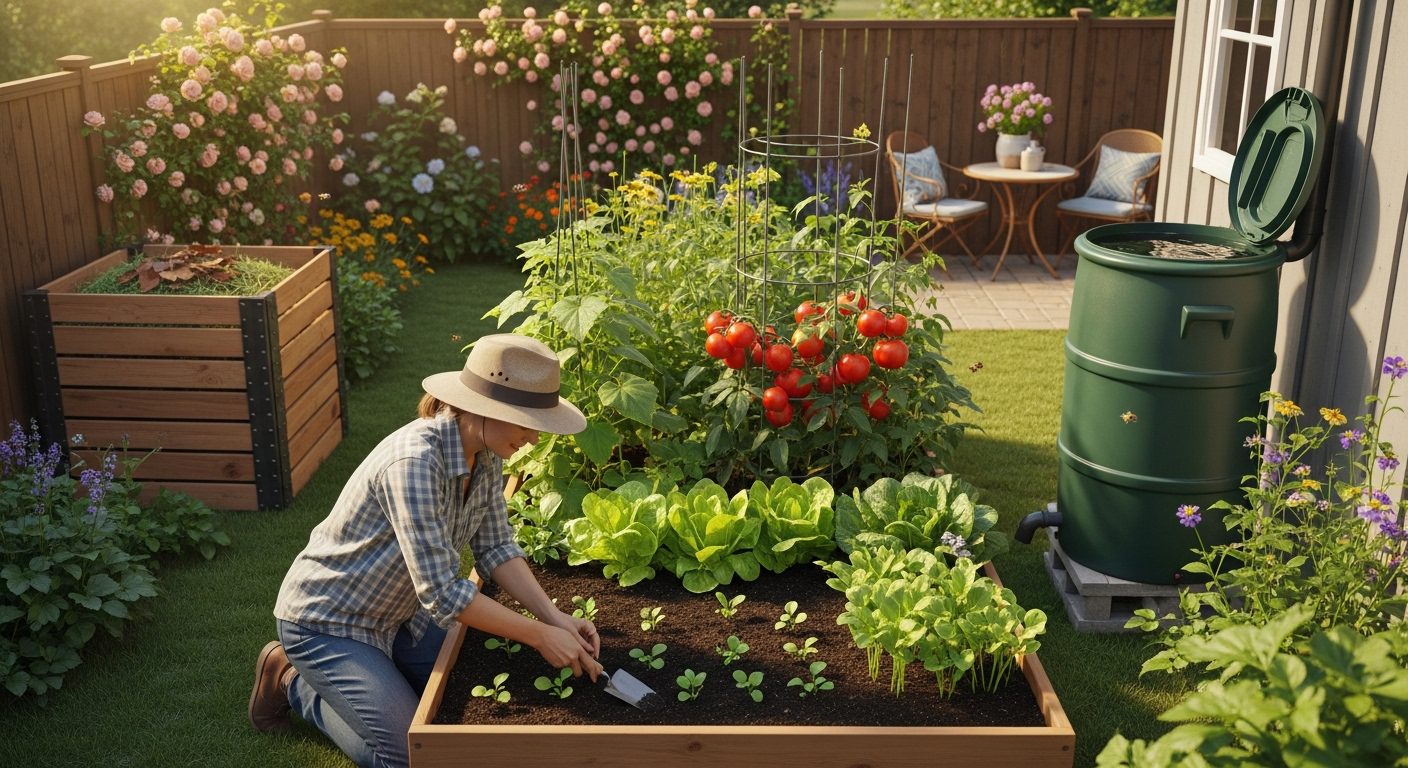
Last year, I watched my neighbor’s water bill triple during the summer drought while my garden thrived with minimal irrigation. The difference? I’d switched to sustainable gardening practices that not only saved me money but also created a healthier, more resilient outdoor space.
Sustainable gardening isn’t about perfection or completely overhauling your garden overnight. It’s about making small, intentional changes that benefit both your plants and the environment. Whether you’re managing a sprawling backyard or a few containers on a balcony, these practical tips will help you create a garden that works with nature, not against it.
According to the USDA People’s Garden Initiative, sustainable practices create healthy environments for plants, animals, and people while significantly reducing carbon emissions. Even better, research from the University of Maryland Extension shows that home gardeners can be an important part of the climate change solution through simple, actionable techniques.
Let’s explore 15 sustainable gardening tips that you can start implementing today, regardless of your experience level or garden size.
1. Start Composting Your Kitchen and Garden Waste
Composting transforms your kitchen scraps and yard waste into nutrient-rich soil amendment that your plants will love. Instead of sending organic matter to landfills where it produces methane, you’re creating what gardeners call “black gold” right in your backyard.
You don’t need fancy equipment to get started. A simple three-bin system or even a designated corner of your yard can work. Add a mix of “greens” (nitrogen-rich materials like vegetable scraps and grass clippings) and “browns” (carbon-rich materials like dried leaves and cardboard). Keep the pile moist like a wrung-out sponge and turn it every few weeks. Within 3-6 months, you’ll have rich compost ready to feed your garden.
2. Choose Native Plants for Your Region
Native plants are the foundation of sustainable gardening. These species have evolved to thrive in your local climate, soil, and rainfall patterns, which means they require less water, fertilizer, and maintenance once established. The Missouri Botanical Garden emphasizes that native plants are key to working with nature rather than against it.
Research native species for your area through local extension offices or native plant societies. Start by replacing just a portion of your garden with natives – even a small native plant border can provide habitat for local wildlife and reduce your maintenance needs significantly.
3. Harvest and Use Rainwater
The Royal Horticultural Society reports that rainwater harvesting can save significant carbon emissions while reducing your water bills. Installing a rain barrel or cistern system captures free, soft water that’s perfect for your plants.
A basic rain barrel system connected to your downspout can collect hundreds of gallons during a single rainfall. This stored water is especially valuable during dry spells when municipal water restrictions might be in place. Plus, rainwater is naturally soft and free of chemicals like chlorine, making it ideal for sensitive plants.
4. Practice No-Till Gardening
Traditional tilling disrupts soil structure, kills beneficial organisms, and releases stored carbon into the atmosphere. No-till gardening preserves soil health by maintaining its natural layers and protecting the complex ecosystem of microorganisms that live there.
Instead of tilling, add a 2-3 inch layer of compost or organic mulch on top of your soil each season. Plant directly through this layer, and let earthworms and other soil organisms do the work of incorporating organic matter naturally. Your soil will become richer and more water-retentive over time.
5. Create a Pollinator Paradise
Supporting pollinators isn’t just good for the environment – it’s essential for your garden’s productivity. The Woodland Trust notes that organic approaches protect wildlife and pollinators, creating a balanced ecosystem in your garden.
Plant a diverse mix of flowering plants that bloom throughout the growing season. Include native flowers like coneflowers, black-eyed Susans, and native milkweed. Leave some areas of bare soil for ground-nesting bees, and avoid pesticides that harm beneficial insects. A single pollinator garden can support hundreds of species while improving fruit and vegetable yields.
6. Use Organic Mulch Generously
Mulching is one of the simplest yet most effective sustainable gardening practices. A 3-4 inch layer of organic mulch suppresses weeds, retains moisture, regulates soil temperature, and slowly breaks down to improve soil health.
Use locally sourced materials when possible – wood chips from tree services, fallen leaves, grass clippings (from untreated lawns), or straw. Apply mulch around plants but keep it a few inches away from stems and trunks to prevent rot. You’ll water less frequently and spend far less time weeding.
7. Grow Your Own Food
Growing even a small portion of your own food reduces transportation emissions, packaging waste, and the environmental impact of commercial agriculture. Research published in the National Center for Biotechnology Information shows that home gardens significantly contribute to food security and environmental sustainability.
Start small with easy-to-grow crops like lettuce, herbs, and tomatoes. Use succession planting to maximize yields from limited space, and preserve excess harvest through freezing, canning, or dehydrating. Every meal featuring homegrown produce is a step toward sustainability.
8. Implement Companion Planting
Companion planting mimics nature’s diversity by growing mutually beneficial plants together. This practice can reduce pest problems, improve soil fertility, and maximize space utilization without synthetic inputs.
Classic combinations include tomatoes with basil (which repels aphids and whiteflies), corn with beans and squash (the “Three Sisters” method), and carrots with onions (which deter each other’s pests). Research successful combinations for your region and experiment to find what works best in your garden.
9. Choose Perennials Over Annuals
Perennial plants return year after year, developing deep root systems that improve soil structure, prevent erosion, and require less water once established. They also sequester more carbon than annuals and provide consistent habitat for beneficial insects.
Replace some annual flower beds with perennial alternatives. Consider perennial vegetables like asparagus, rhubarb, and perennial herbs. While the initial investment might be higher, you’ll save money and resources in the long run.
10. Make Your Own Natural Fertilizers
Skip synthetic fertilizers and create nutrient-rich amendments from materials you already have. Compost tea, made by steeping finished compost in water, provides a gentle liquid fertilizer. Grass clippings left on the lawn return nitrogen to the soil naturally.
Try making “weed tea” by soaking nutrient-rich weeds like comfrey or nettles in water for several weeks. The resulting liquid is packed with nutrients and can be diluted for use as a foliar spray or soil drench. These homemade fertilizers feed your plants while keeping organic matter cycling through your garden.
11. Practice Integrated Pest Management
Instead of reaching for pesticides at the first sign of trouble, integrated pest management (IPM) uses a combination of techniques to manage pests naturally. This approach protects beneficial insects while keeping pest populations under control.
Start by correctly identifying pests and learning about their life cycles. Use physical barriers like row covers, hand-pick larger pests, and encourage natural predators like birds and beneficial insects. Only use organic pesticides as a last resort, and choose targeted options that won’t harm beneficial species.
12. Plant Trees and Shrubs Strategically
The Royal Horticultural Society emphasizes that trees are brilliant at drawing down carbon from the atmosphere. Strategic placement of trees and shrubs can also reduce your home’s energy consumption by providing shade in summer and windbreaks in winter.
Plant deciduous trees on the south and west sides of your home for summer cooling. Evergreen windbreaks on the north side reduce winter heating costs. Choose species appropriate for your climate and available space, considering their mature size to avoid future problems.
13. Reduce Lawn Areas
Traditional lawns require significant resources – water, fertilizer, fuel for mowing – while providing minimal ecological value. Reducing lawn areas in favor of productive or wildlife-friendly plantings is a significant step toward sustainability.
Convert portions of your lawn to vegetable gardens, native plant beds, or groundcover alternatives. If you maintain some lawn, choose drought-tolerant grass varieties, mow high (3 inches or more), and leave clippings to decompose naturally. Consider allowing clover and other beneficial “weeds” that fix nitrogen and support pollinators.
14. Save and Share Seeds
Seed saving connects you to gardening traditions while reducing packaging waste and transportation emissions. Seeds saved from your best-performing plants are naturally adapted to your specific growing conditions.
Start with easy-to-save seeds from self-pollinating plants like tomatoes, beans, and lettuce. Allow fruits to fully ripen, extract and dry seeds properly, and store them in cool, dry conditions. Join local seed swaps to share your varieties and discover new ones adapted to your region.
15. Create Wildlife Habitats
A sustainable garden supports the entire ecosystem. By providing food, water, shelter, and nesting sites, you create a haven for birds, butterflies, beneficial insects, and other wildlife that contribute to garden health.
Install a small water feature or birdbath, leave some areas “messy” with brush piles or standing dead plants for overwintering insects, and plant a variety of native species that provide berries, seeds, and nectar throughout the seasons. The University of Leeds Sustainability Service notes that multi-functional garden spaces supporting biodiversity are key to sustainable development.
Getting Started: Your Sustainable Garden Action Plan
Transitioning to sustainable gardening doesn’t happen overnight. Start by choosing 2-3 tips from this list that resonate with you and fit your current situation. As these practices become routine, gradually incorporate more sustainable methods.
Begin with simple changes like starting a compost bin or reducing your lawn area. These provide immediate benefits while building your confidence. Document your progress with photos and notes – you’ll be amazed at the transformation over time.
Remember that sustainable gardening is a journey, not a destination. Every small change contributes to a healthier environment and a more resilient garden. Your efforts, combined with millions of other gardeners making similar choices, create a significant positive impact on our planet.
Frequently Asked Questions
What is sustainable gardening and why is it important?
Sustainable gardening involves practices that support ecological balance, conserve resources, and minimize environmental impact. It’s important because gardens can either contribute to environmental problems or be part of the solution. Sustainable practices reduce carbon emissions, support biodiversity, conserve water, and create healthier growing environments without relying on synthetic chemicals.
How can I make my garden more eco-friendly on a budget?
Many sustainable practices actually save money. Start composting kitchen scraps (free fertilizer), collect rainwater in repurposed containers, save seeds from your harvest, and use free mulch materials like fallen leaves or grass clippings. Focus on native plants that don’t require expensive amendments or frequent watering. Trade plants and seeds with other gardeners instead of buying new.
What are the best plants for sustainable gardening?
Native plants are always the best choice for sustainability as they’re adapted to local conditions and support local wildlife. Perennials offer better long-term value than annuals. For food gardens, choose disease-resistant varieties suited to your climate. Plants that attract beneficial insects, fix nitrogen (like legumes), or provide multiple functions (food, beauty, and wildlife value) maximize sustainability.
How much water can I save with sustainable gardening practices?
Implementing water-wise practices can reduce garden water use by 50% or more. Mulching alone can reduce watering needs by 25-50%. Native and drought-tolerant plants may need no supplemental watering after establishment. Rainwater harvesting can provide hundreds of gallons of free water per rainfall event. Combined with drip irrigation and proper soil management, these practices dramatically reduce water consumption.
Can sustainable gardening really help fight climate change?
Yes, home gardens can significantly contribute to climate change mitigation. According to University of Maryland Extension research, sustainable gardening techniques slow warming by reducing carbon emissions and increasing carbon storage in soil and plants. Practices like composting, no-till gardening, and growing trees actively sequester carbon while reducing the emissions associated with lawn care, synthetic fertilizers, and food transportation.
Conclusion
Sustainable gardening represents a powerful way for individuals to make a positive environmental impact while creating beautiful, productive outdoor spaces. These 15 tips provide a roadmap for gardeners at any level to reduce their ecological footprint, save resources, and work in harmony with nature.
The beauty of sustainable gardening lies in its accessibility – you don’t need special equipment or extensive knowledge to begin. Start where you are, use what you have, and make gradual improvements. Each sustainable choice, from composting your first banana peel to planting your first native flower, contributes to a larger movement toward environmental stewardship.
As we face increasing environmental challenges, our gardens can become part of the solution. By implementing these sustainable practices, you’re not just growing plants – you’re cultivating a healthier future for generations to come. Your sustainable garden will reward you with reduced maintenance, lower costs, increased biodiversity, and the satisfaction of knowing you’re making a difference, one plant at a time.