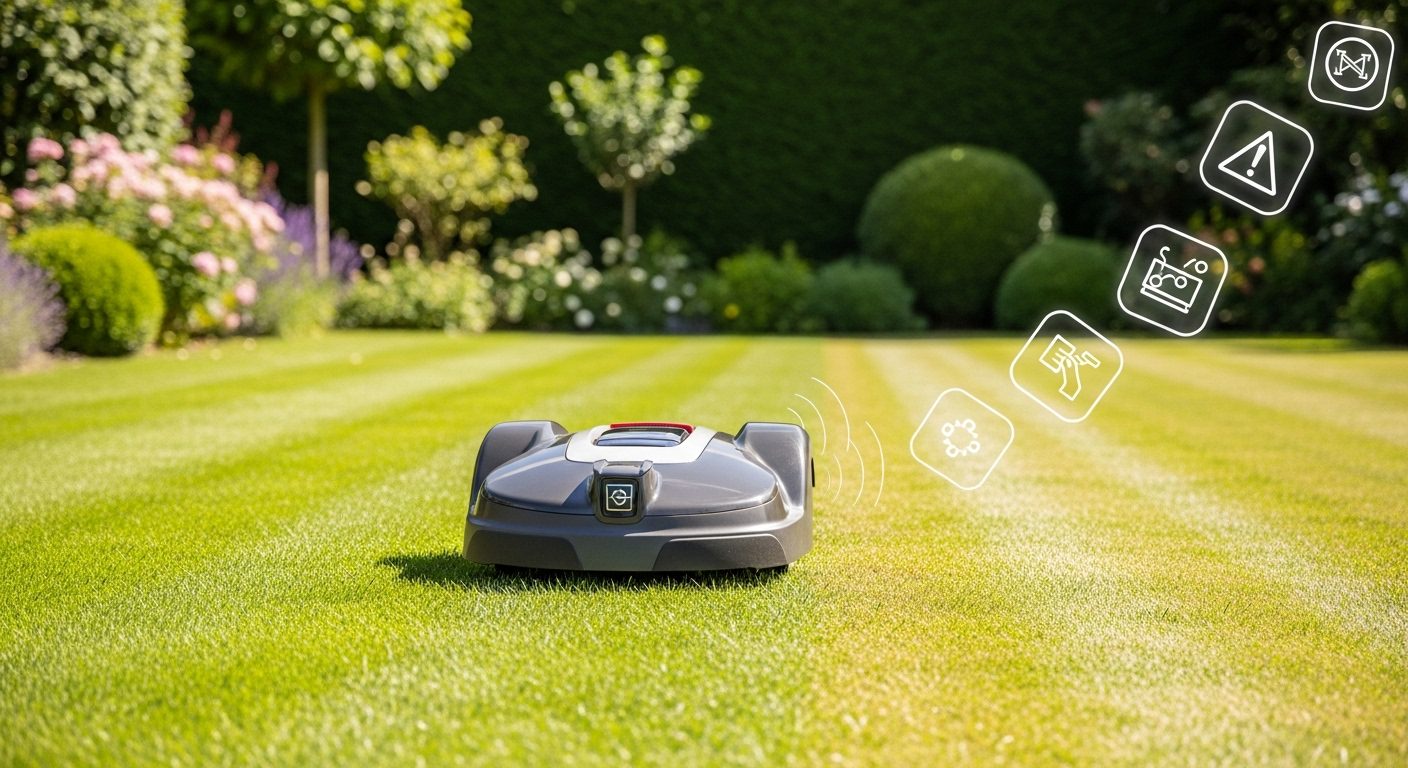
After watching countless neighbors struggle with their robot lawn mower purchases, I’ve compiled the most expensive and frustrating mistakes that buyers make. The robotic lawn mower market is projected to reach $4.70 billion by 2030 according to Mordor Intelligence, growing at an impressive 14.4% annually. This rapid growth means more options but also more opportunities for costly mistakes.
What makes these mistakes particularly painful is that robot lawn mowers represent a significant investment, typically ranging from $600 to $5,000. Unlike a traditional mower where you might compromise on features, choosing the wrong robot mower can mean dealing with an expensive lawn ornament that doesn’t actually cut your grass effectively.
I’ve spent the last three months researching buyer experiences, analyzing technical specifications, and consulting with installation professionals to create this comprehensive guide. Whether you’re considering your first robot mower or upgrading from a disappointing model, these insights will save you thousands of dollars and countless hours of frustration.
Mistake #1: Ignoring Your Lawn’s Actual Square Footage
The single most expensive mistake buyers make is underestimating their lawn size. Manufacturers rate their models for specific coverage areas, and these ratings assume ideal conditions that rarely exist in real yards. When a manufacturer says their mower handles 0.5 acres, they’re calculating based on a perfectly flat, rectangular lawn with no obstacles.
Your actual lawn likely has trees, flower beds, pathways, and irregular shapes that reduce the effective coverage by 20-30%. I’ve seen homeowners with 0.4-acre lawns struggle with mowers rated for 0.5 acres because they didn’t account for their pool area, kids’ playground, and multiple garden islands.
The solution is straightforward but often overlooked: measure your actual grass area, not your property size. Use a measuring wheel or a lawn measurement app, then add 30% to that number when selecting your mower’s capacity. This buffer ensures your mower can handle the job without running constantly or wearing out prematurely.
Additionally, consider future landscaping changes. If you’re planning to expand your lawn area or remove obstacles, factor that into your decision. Buying a slightly larger capacity mower now costs far less than replacing an undersized model in two years.
Mistake #2: Overlooking Slope and Terrain Limitations
Every robot mower has a maximum slope rating, typically between 15% and 45% grade. What buyers don’t realize is that a 20% slope looks deceptively gentle but can completely defeat a mower rated for only 15% grades. This miscalculation leads to mowers getting stuck, creating uncut patches, or worse, sliding down hills and damaging themselves.
To properly assess your slopes, you need to measure them accurately. Use a level and measuring tape: for every 10 feet of horizontal distance, measure the vertical rise. A 2-foot rise over 10 feet equals a 20% grade. Don’t guess – I’ve watched confident homeowners insist their “gentle slope” was maybe 10%, only to measure it at 28%.
The terrain texture matters just as much as the angle. Wet grass, loose soil, and uneven surfaces all reduce a mower’s climbing ability. If your slope is anywhere near the mower’s maximum rating, choose a model rated for at least 10% steeper grades to ensure reliable operation in all conditions.
Some premium models offer all-wheel drive or specialized traction systems specifically designed for challenging terrain. While these cost more initially, they’re essential for properties with significant slopes or difficult terrain features.
Mistake #3: Neglecting Boundary Wire Installation Requirements
Most buyers focus on the mower’s features while completely overlooking the boundary wire installation, which can make or break your robot mower experience. The boundary wire defines your mowing area and keeps the mower from wandering into flower beds, pools, or your neighbor’s yard.
Professional installation typically costs $500 to $1,500, depending on your lawn’s complexity. Many buyers skip this expense, attempting DIY installation without realizing they need specialized tools and techniques. Improper wire placement causes endless problems: the mower crosses boundaries, gets stuck in gardens, or leaves unmowed strips along edges.
The wire must be buried 1-3 inches deep or securely pinned to prevent damage from aerators, foot traffic, and the mower itself. It needs proper spacing from obstacles – typically 10-14 inches from fixed objects and 20-30 inches from slopes or water features. Getting these measurements wrong means redoing the entire installation.
Consider newer models with GPS or camera-based navigation that eliminate boundary wires entirely. While these cost more upfront, they save installation costs and eliminate wire-related maintenance issues that plague traditional models.
Mistake #4: Underestimating Cutting Width Impact
Cutting width directly affects how long your mower needs to maintain your lawn. A narrow 7-inch cutting width might seem adequate, but on a half-acre lawn, it means your mower runs almost continuously, increasing wear, energy consumption, and noise exposure.
The relationship between cutting width and efficiency isn’t linear. A mower with a 9-inch cutting width doesn’t just cut 28% more grass than a 7-inch model – it completes the job significantly faster because it makes fewer passes and spends less time overlapping previous cuts.
For lawns under 0.25 acres, a 7-8 inch cutting width works fine. For 0.25 to 0.5 acres, look for 9-10 inches minimum. Larger lawns benefit from 11-12 inch or wider cutting decks. Remember that wider cutting widths typically mean larger, more expensive mowers, but the time savings and reduced wear make them worthwhile for appropriate lawn sizes.
Also consider your lawn’s shape. Narrow passages between houses or garden areas might limit your maximum practical cutting width. Measure your tightest passages and ensure your chosen mower can navigate them with at least 6 inches of clearance on each side.
Mistake #5: Ignoring Weather Operation Capabilities
Many buyers assume robot mowers work like traditional mowers – just push a button and go. In reality, most budget models can’t operate in rain, heavy dew, or extreme temperatures. This limitation becomes a serious problem in regions with frequent precipitation or temperature extremes.
Basic models use rain sensors that stop operation when moisture is detected. While this protects the mower, it means your lawn goes uncut during wet seasons. In Seattle or Florida, this could mean weeks of overgrown grass during certain times of the year.
Weather-capable models feature sealed electronics, rust-resistant blades, and enhanced traction systems. They continue operating in light rain and resume quickly after heavy downpours. The price premium for weather resistance typically runs $300-500, but it ensures consistent lawn maintenance regardless of conditions.
Temperature tolerance matters too. Some models shut down above 95°F or below 40°F. If you live in Phoenix or Minneapolis, verify your chosen model’s temperature range matches your climate. Otherwise, you’ll face extended periods when your expensive mower sits idle while your grass keeps growing.
Mistake #6: Choosing Inadequate Battery Life and Charging Systems
Battery specifications can be misleading. A “90-minute runtime” sounds impressive until you realize that includes traveling to and from the charging station, navigating obstacles, and dealing with thicker grass that slows cutting speed. Real-world cutting time often falls 30-40% below advertised specifications.
For efficient operation, your mower should complete at least one full zone on a single charge. If it constantly returns for charging mid-job, it wastes time traveling and creates visible patterns where it repeatedly starts and stops. This inefficiency compounds on larger lawns where travel distances increase.
Fast-charging capability becomes crucial for lawns over 0.3 acres. A mower that needs 4 hours to charge after 60 minutes of operation will struggle to maintain larger lawns. Look for models with charge times under 90 minutes or those featuring swappable battery systems.
Consider the battery’s expected lifespan too. Lithium-ion batteries typically last 2-5 years depending on usage and care. Replacement batteries cost $150-400, so factor this into your total ownership cost. Some premium brands offer extended battery warranties that provide valuable protection for this wearing component.
Mistake #7: Overlooking Edge Cutting Capabilities
The disappointing truth about most robot mowers is they can’t cut grass right up to edges like traditional mowers do. They typically leave a 6-12 inch strip of uncut grass along fences, walls, and garden borders. This means you’ll still need to trim edges manually every week or two.
Some buyers discover this limitation only after installation, facing the frustration of maintaining the exact tedious task they hoped to eliminate. The uncut edges look particularly messy against the perfectly manicured robot-mowed lawn, creating an unkempt appearance that defeats the purpose of automated mowing.
Premium models with “edge cutting” modes get closer to boundaries, leaving only 2-3 inches uncut. While this still requires some trimming, it dramatically reduces the manual work. Some innovative designs feature offset cutting decks or special edge-following sensors that minimize uncut areas.
If eliminating all manual work is your goal, budget for either a premium edge-cutting model or plan to install hard borders like paving stones that the mower can slightly overlap. These borders create clean edges without grass to trim, though they require significant upfront investment.
Mistake #8: Failing to Consider Noise Levels and Operating Schedule
Robot mowers operate differently than traditional mowers. Instead of one loud weekly session, they run frequently for extended periods. A model producing 65 decibels might seem quiet compared to a 90-decibel gas mower, but when it runs 4 hours daily, that constant hum becomes intrusive.
Noise sensitivity varies by situation. If you work from home, enjoy outdoor dining, or have noise-sensitive neighbors, even “quiet” models can create problems. Some homeowners program night operation to avoid noise issues, only to discover their “quiet” mower keeps them awake or violates local noise ordinances.
Look for models under 60 decibels if noise is a concern. This level allows comfortable conversation nearby and won’t disturb indoor activities with windows open. Some premium models operate below 58 decibels – genuinely quiet enough for night operation without disturbing anyone.
Consider your property layout too. Sound reflects off walls and fences, potentially amplifying noise in certain areas. If your patio or bedroom window faces the lawn, prioritize quieter models even if the specifications seem acceptable.
Mistake #9: Misunderstanding Smart Features and App Requirements
Marketing materials tout smartphone control and smart home integration as essential features, but many buyers discover these features are poorly implemented or require additional subscriptions. A frustrating number of “smart” mowers have apps that constantly disconnect, lack basic functions, or only work when you’re on the same WiFi network.
Some manufacturers charge monthly fees for advanced app features like scheduling, GPS tracking, or theft alerts. These subscriptions typically cost $5-10 monthly, adding $60-120 to your annual operating costs. Over five years, that’s $300-600 in unexpected expenses.
Before buying, download the manufacturer’s app and read recent reviews. Look for complaints about connectivity, missing features, or subscription requirements. If possible, test the app with a demo account to verify it meets your expectations before committing to that brand.
Consider whether you actually need extensive smart features. Basic scheduling and start/stop controls might suffice, especially if the mower operates reliably without constant adjustment. Sometimes simpler models with basic controls prove more reliable than complex smart systems.
Mistake #10: Neglecting Security and Anti-Theft Features
Robot mowers are expensive, portable, and often left unattended – making them attractive theft targets. Basic models lacking security features disappear from yards regularly, leaving owners with no recourse beyond insurance claims that might not cover the full replacement cost.
Essential security features include PIN code protection, alarm systems, and GPS tracking. The PIN code prevents thieves from using the stolen mower, while alarms deter theft attempts. GPS tracking helps recover stolen units, though it typically requires a subscription service.
Some models become completely inoperable when separated from their charging station, making them worthless to thieves. Others feature geofencing that triggers alerts when the mower leaves your property. These features add $100-300 to the purchase price but provide valuable protection for your investment.
Physical security matters too. Install the charging station in a visible location near your home rather than in remote yard corners. Some owners add security cameras or motion lights near the charging area. Consider a lockable storage solution if your mower will sit unused for extended periods.
Mistake #11: Underestimating Maintenance Requirements
The “set it and forget it” marketing message misleads many buyers. Robot mowers require regular maintenance to operate effectively. Blades need replacement every 1-3 months depending on usage, costing $20-50 per set. Skipping blade replacement results in torn rather than cut grass, creating a brown, unhealthy lawn.
Weekly cleaning prevents grass buildup that impairs sensors and reduces cutting efficiency. The underside needs scraping, wheels require debris removal, and sensors need wiping. Neglecting this maintenance causes navigation problems, uneven cutting, and premature wear.
Annual professional service typically costs $150-300 but extends the mower’s lifespan significantly. This service includes deep cleaning, component inspection, software updates, and preventive part replacement. Some dealers offer service contracts that include parts and labor, providing predictable maintenance costs.
Winter storage requires specific procedures to protect the battery and electronics. Improper storage leads to battery damage, moisture problems, and spring startup failures. Factor in the time and effort for proper maintenance when evaluating the true convenience of robot mowing.
Mistake #12: Ignoring Local Wildlife and Pet Considerations
Robot mowers and wildlife create unexpected problems. Small animals like hedgehogs, frogs, and baby rabbits can’t escape the approaching mower, leading to tragic injuries. Some countries now recommend against night mowing specifically to protect nocturnal wildlife.
Pets require careful consideration too. While most dogs learn to ignore or avoid the mower, some see it as a toy or threat. Curious dogs might damage the mower or injure themselves investigating the moving blades. Cats typically avoid mowers but might sleep in tall grass where they’re vulnerable.
Birds present another challenge. They learn that mowers expose insects and worms, following closely behind to feed. While charming, this behavior leads to bird strikes and creates ethical concerns about wildlife dependency on artificial feeding patterns.
Consider models with enhanced object detection or ultrasonic animal deterrents if wildlife is common in your area. Schedule mowing during daylight hours when animals are most alert and able to escape. Install wildlife corridors or unmowed refuge areas where small animals can shelter safely.
Mistake #13: Not Planning for Lawn Layout Changes
Your lawn layout will change over time, but many buyers choose mowers that can’t adapt. Kids grow up and trampolines disappear. Gardens expand or shrink. Trees grow larger, creating new obstacles and shade patterns. Pool installations, deck additions, and landscaping projects all alter mowing requirements.
Flexible boundary wire systems allow relatively easy adjustments, though they still require time and effort to modify. GPS-based systems adapt more easily to layout changes but might struggle with new obstacles that aren’t programmed into their maps.
Multi-zone capability becomes valuable even if you currently have a simple lawn. This feature lets you define separate mowing areas with different schedules and settings. When you add a garden or divide your lawn with a pathway, multi-zone support prevents the need for a mower upgrade.
Consider how your mower handles temporary obstacles too. Kids’ toys, garden hoses, and outdoor furniture shouldn’t require boundary wire adjustments. Models with robust obstacle detection navigate around temporary items, while basic models get stuck or create damaged areas trying to push through.
Mistake #14: Falling for Unrealistic Marketing Claims
Manufacturers’ performance claims often assume perfect conditions that don’t exist in real yards. “Cuts 1 acre” might mean on a perfectly flat, obstacle-free lawn with ideal grass conditions. Your sloped, tree-filled yard with thick bermuda grass might overwhelm that same mower at half the claimed area.
Battery life claims particularly mislead buyers. “2-hour runtime” might include idle time, traveling, and operation in eco mode on thin grass. Cutting thick spring growth at full power might drain the battery in 45 minutes. Always assume real-world performance will fall 25-30% below claims.
Reviews from verified purchasers provide more realistic expectations than marketing materials. Look for reviews from users with similar lawn sizes, grass types, and terrain challenges. Pay attention to reviews after 6-12 months of use, when initial enthusiasm fades and real problems emerge.
Independent testing organizations like Consumer Reports provide unbiased performance data based on standardized testing. While their test conditions might not match your yard exactly, they offer consistent comparisons between models that marketing materials don’t provide.
Mistake #15: Choosing the Wrong Dealer and Support Network
Online prices might tempt you away from local dealers, but robot mowers aren’t simple appliances. They require setup assistance, warranty service, and ongoing support that distant sellers can’t provide effectively. Saving $200 online means nothing when you need warranty service and face weeks of shipping delays.
Local dealers provide crucial services beyond the initial sale. They assess your property, recommend appropriate models, handle professional installation, and service your mower when problems arise. Many offer loaner units during repairs, ensuring your lawn stays maintained even when your mower needs service.
Manufacturer support varies dramatically between brands. Some provide excellent phone support, comprehensive documentation, and readily available parts. Others offer minimal English documentation, unresponsive customer service, and parts only available through international shipping.
Research the dealer network and support infrastructure before choosing a brand. A slightly more expensive model with strong local support proves far more valuable than a cheaper option requiring DIY troubleshooting and mail-in repairs. Check if your area has certified service centers and whether parts are readily available.
How to Make the Right Robot Lawn Mower Decision?
After understanding these common mistakes, you’re ready to make an informed decision. Start by accurately measuring your lawn’s cuttable area, including slopes and terrain challenges. Document obstacles, narrow passages, and special requirements like quiet operation or wildlife protection.
Create a realistic budget that includes the mower, installation, maintenance supplies, and potential service costs. Remember that a quality $2,000 mower with good support often provides better value than a problematic $1,000 model requiring constant attention and repairs.
Test whenever possible. Some dealers offer demo programs or rental options letting you try models before purchasing. This hands-on experience reveals issues that specifications and reviews might miss. Pay attention to noise levels, app functionality, and how the mower handles your specific terrain.
Consider starting with a quality mid-range model rather than the cheapest or most expensive option. This approach lets you learn what features matter for your situation without overcommitting financially. You can upgrade later with better knowledge of your actual needs.
The Future of Robot Lawn Mowing
The robot mower industry continues evolving rapidly. Current developments include AI-powered navigation, solar charging, improved obstacle detection, and completely wire-free operation. Prices are dropping while capabilities increase, making robot mowers accessible to more homeowners.
According to market research from Allied Market Research, the industry will reach $10.62 billion by 2032, driven by technological improvements and growing consumer acceptance. This growth means better products, more options, and stronger support networks for buyers.
Environmental considerations increasingly influence design. Manufacturers focus on quieter operation, reduced energy consumption, and wildlife protection features. Some jurisdictions offer rebates for electric lawn equipment, including robot mowers, making them more affordable.
Integration with smart home systems continues improving. Future models will coordinate with weather stations, irrigation systems, and other smart yard equipment to optimize lawn care automatically. These advances promise truly autonomous lawn maintenance, though they’re still several years from mainstream availability.
Frequently Asked Questions
How long do robot lawn mowers typically last?
Quality robot mowers last 8-10 years with proper maintenance. The main unit remains functional much longer, but batteries require replacement every 2-5 years, and blades need regular replacement. Premium brands often outlast budget models due to better construction and available replacement parts.
Can robot mowers handle leaves and debris?
Most robot mowers mulch light leaf coverage effectively, but heavy leaf accumulation causes problems. They can’t bag or collect debris like traditional mowers. You’ll need to clear heavy leaf coverage manually or with a traditional mower before the robot can resume normal operation.
Do robot mowers work with all grass types?
Robot mowers handle most common grass types including Kentucky bluegrass, perennial ryegrass, tall fescue, and Bermuda grass. They struggle with extremely thick varieties like St. Augustine in southern climates or very tall grass over 4 inches. Regular mowing prevents grass from growing too tall for effective cutting.
What happens during power outages?
During power outages, the charging station stops working, but most mowers return to the station and wait. Once power restores, they resume their schedule automatically. The boundary wire remains active on battery backup for several hours, preventing the mower from leaving its designated area.
Can I install a robot mower myself?
DIY installation is possible but challenging. It requires precise boundary wire placement, proper station positioning, and programming setup. Most first-time installers need 8-12 hours for a typical yard. Professional installation costs $500-1,500 but ensures optimal performance and usually includes initial programming and training.
How do robot mowers affect lawn health?
Robot mowers actually improve lawn health through frequent cutting and natural mulching. They cut small amounts regularly, returning fine clippings that decompose quickly and fertilize the lawn. This approach produces healthier, denser grass compared to weekly traditional mowing that removes larger clippings.
Are robot mowers safe for children?
Modern robot mowers include multiple safety features like lift sensors, tilt sensors, and blade stops that activate instantly when the mower is lifted. However, they’re not toys and children should be taught to respect them. Schedule mowing when children aren’t playing outside for maximum safety.
What about HOA requirements and neighbor relations?
Most HOAs accept robot mowers as long as lawns stay properly maintained. The quiet operation actually reduces noise complaints compared to traditional mowing. However, verify your HOA allows visible charging stations and boundary wires before purchasing. Some associations have specific rules about lawn equipment visibility.
Final Thoughts
Avoiding these common mistakes transforms robot mower ownership from potential frustration into genuine convenience. The key lies in matching the mower to your specific situation rather than choosing based on price or features alone.
Take time to thoroughly evaluate your property, understand your maintenance tolerance, and research support options. A properly chosen and installed robot mower delivers years of reliable service, freeing you from weekly mowing while maintaining a beautiful lawn.
The technology continues improving, but current models already provide excellent results when properly matched to appropriate lawns. By avoiding these 15 mistakes, you’ll join the growing number of satisfied owners who wonder how they ever managed without their robot mower.
Remember that perfection isn’t the goal – improvement is. Even if your robot mower handles only 80% of your lawn work, that’s still hours of time saved weekly during growing season. With realistic expectations and proper selection, a robot mower becomes one of your best home automation investments.